
Black Widow explains the revolving death door
Posted: 03/08/2013 Filed under: Characters, Marvel 8 CommentsBefore we start today, I want to do something I haven’t done before: plug. After my Deadpool/Kid Apocalypse article, I received word from a rapper named Kid Apocalypse who raps exclusively about comic books. And regardless of your opinion about anything I’ve just said, shouldn’t we as a community do everything possible to support our own? Any comic book fan attempting something new and creative with our shared passion deserves our support. Go watch his YouTube videos, especially the first one that uses a remix of the X-Men 90s cartoon theme as his beat. They’re professional and everything.
Kid Apocalypse – Kid Apocalypse Rising
Kid Apocalypse – Came from the Chain
Okay, let’s jump into our story today. During any major Marvel event, major character deaths are inevitable. We accept this, and it’s sort of fun to see if we can figure out who it’ll be before Marvel drops the press release a few days before the issue goes on sale. During Fear Itself, Bucky Barnes (at the time wielding the Captain America mantle) died at the god-infused power of Red Skull’s daughter Sin. Sad stuff.
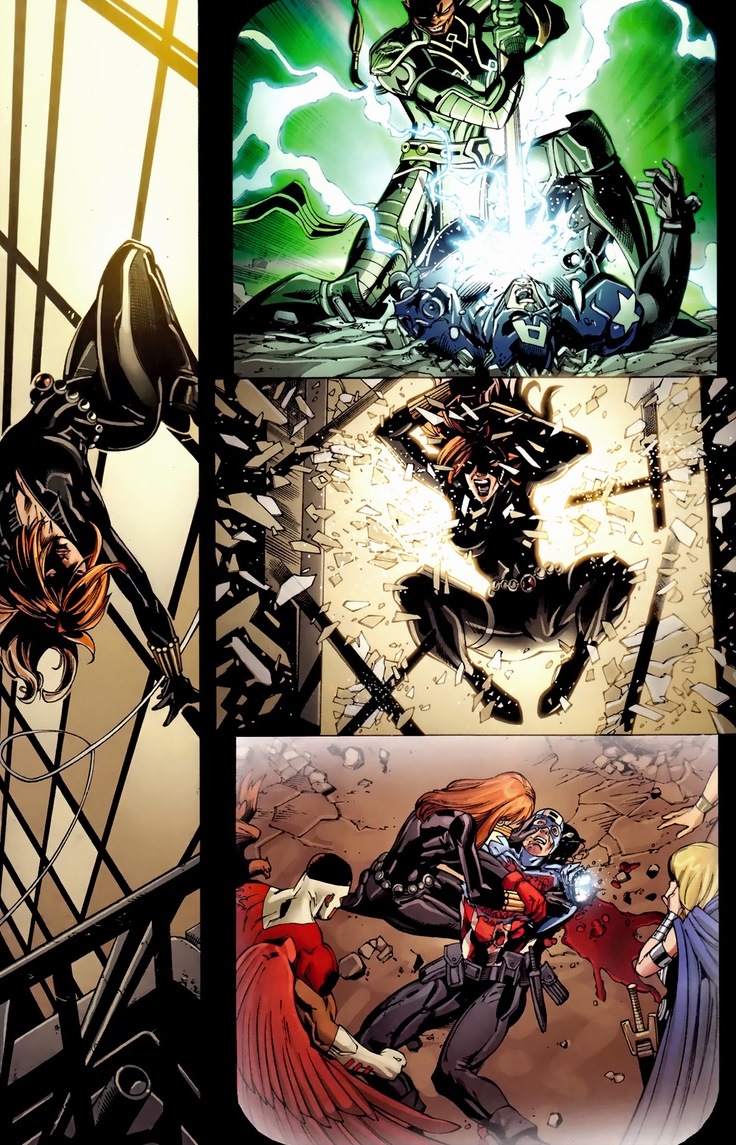
You know who took it the hardest? Her name’s in the title of the article. Bucky and Black Widow (aka Natalia Romanova) first met and fell in love as brainwashed Soviet assassins during the Cold War. Finally reunited a year or two before Siege, the two picked up almost instantly where they left off. Y’know, until he died, and in Secret Avengers #15, written by Nick Spencer and drawn by Scot Eaton, a tabloid tries to take advantage of the situation for financial gain.

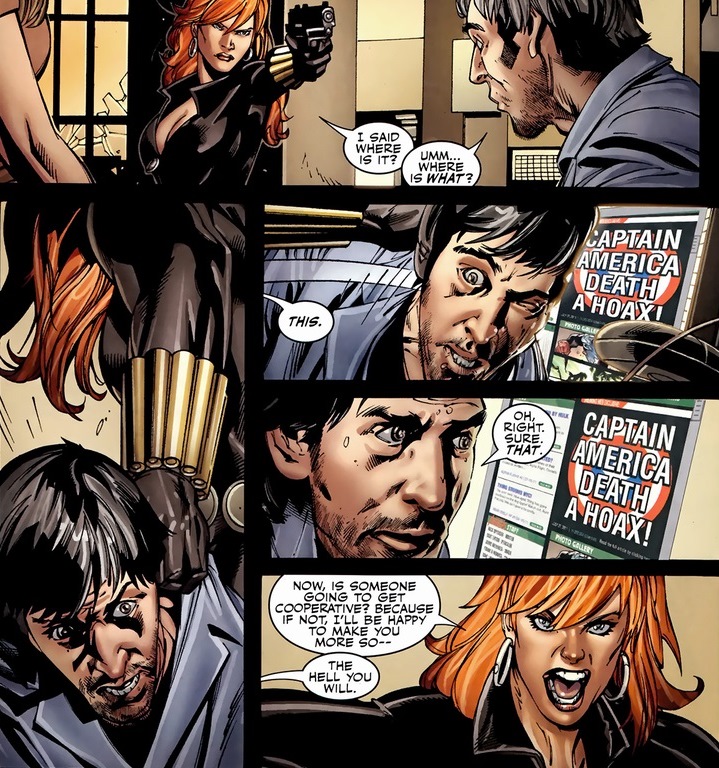
Look, I know it seems frivolous for Black Widow to crash through a trashy magazine’s window and scarily scream at the staff when major battles and wars are being fought all over the world at this exact moment. But as I’ve said in my other Black Widow post, the superhero commanders figured that Black Widow should get some down time before her emotions endanger her and her allies in the real fight. Good call, as you’ve just seen. Eventually Natalia does rejoin in the final battle and even receives some cool purple swords to slice up the baddies. Right now, though? Bloggers need to be yelled at.
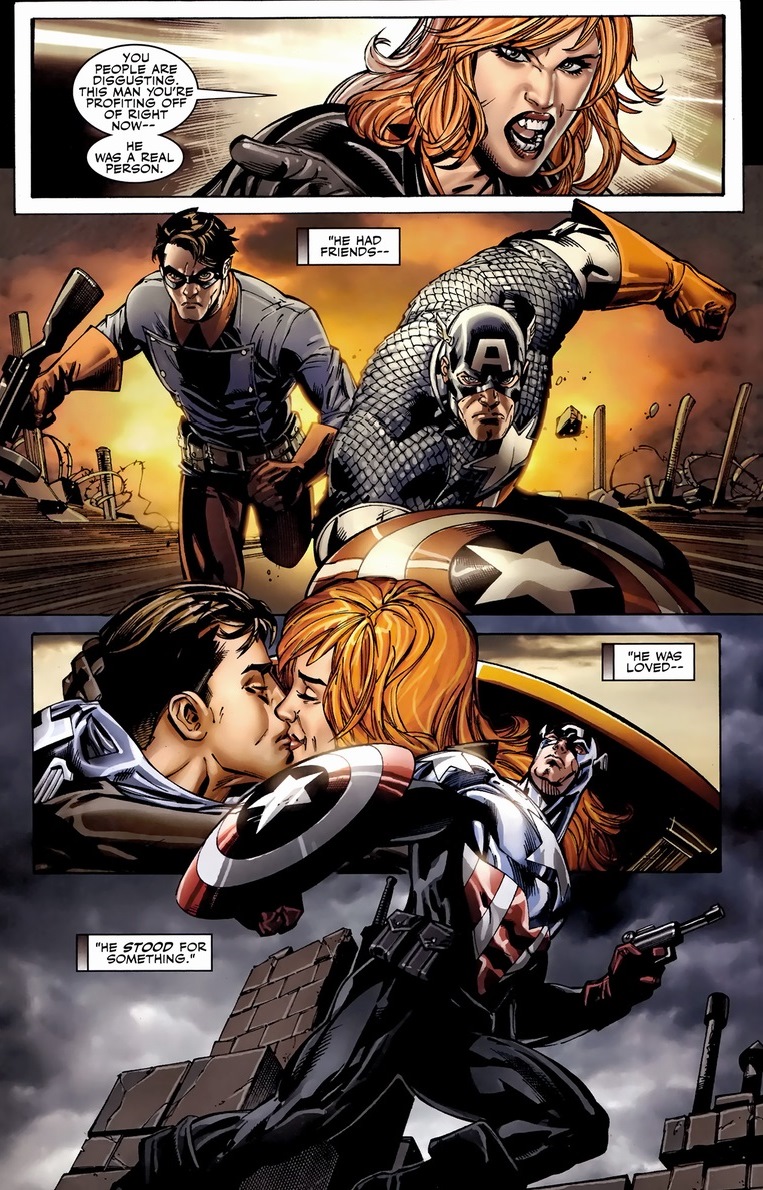
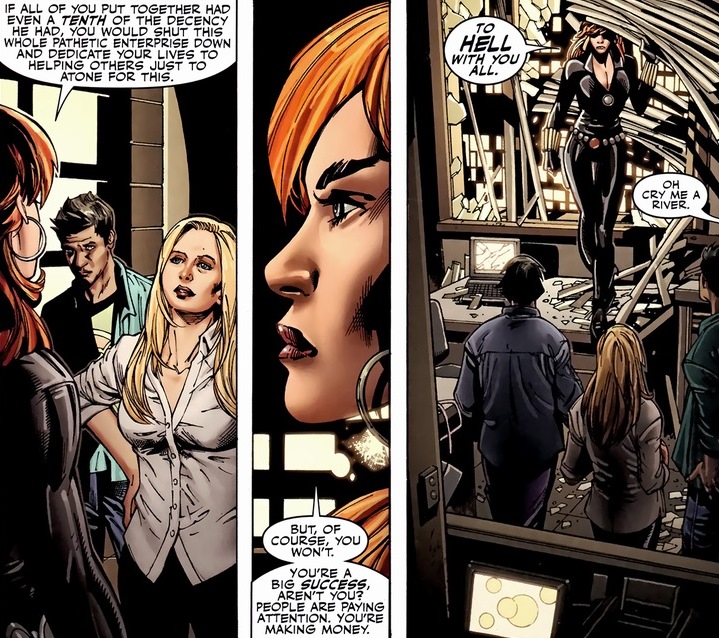
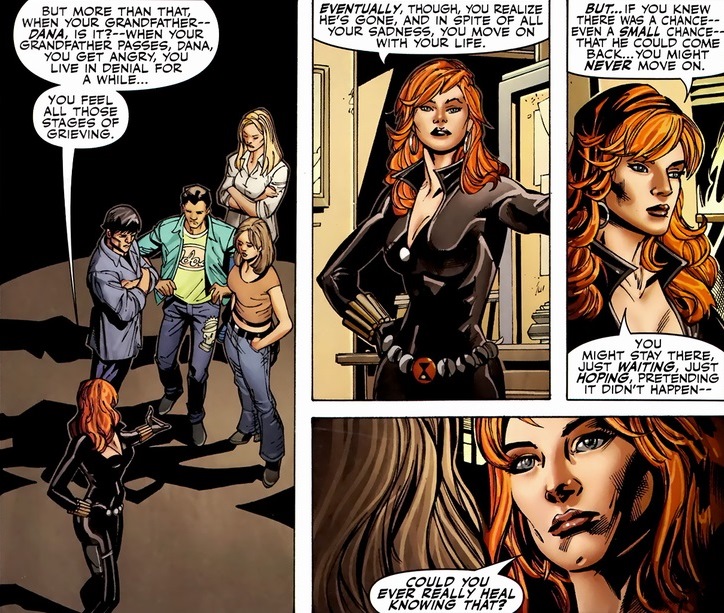
Maybe because the staff knows Black Widow’s a good guy, but they act surprisingly calm against a woman with zero superpowers who just swung in from engaging a Thor-level baddie. Hawkeye and Black Widow don’t get enough credit for fighting alongside the Avengers when every one of their foes outpowers them. In the middle of Natalia’s scary rant, a single reasonable point turns the tables on the entire issue.
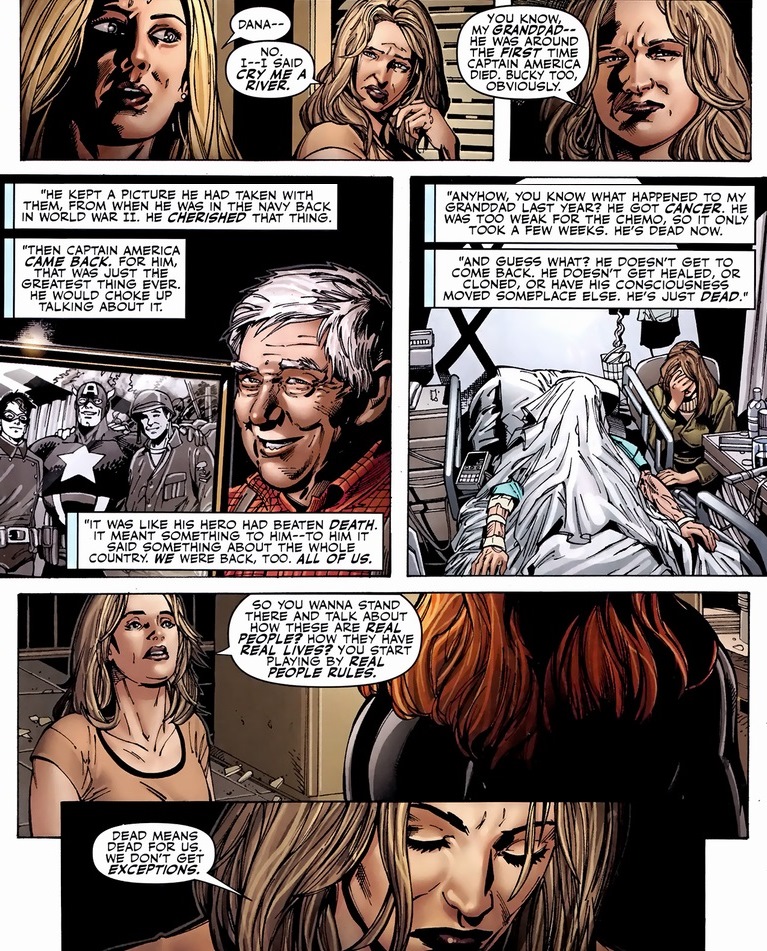
To this young girl, why not reveal the Captain America death a hoax? A betting man would place money on Bucky springing from the dead a few months later (and truthfully, it takes less time than that), but we always forget about the civilians populating our superhero world. They don’t get wizards or demons or LMDs to save their slaughtered hides.
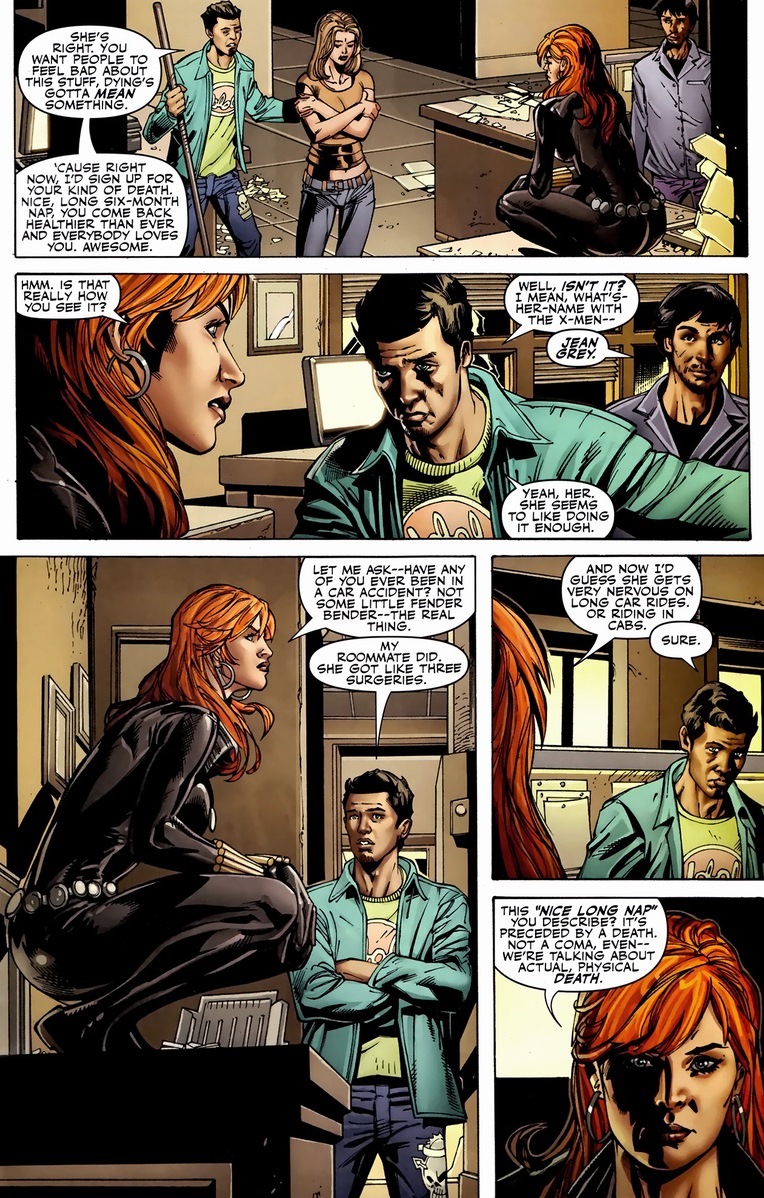
And this issue has just spurned off into a debate. What’s worse: the constant resurrection or single finality? While Black Widow makes her points magnificently, I would be remiss to mention she argues while sitting wildly uncomfortable on top of a desk.
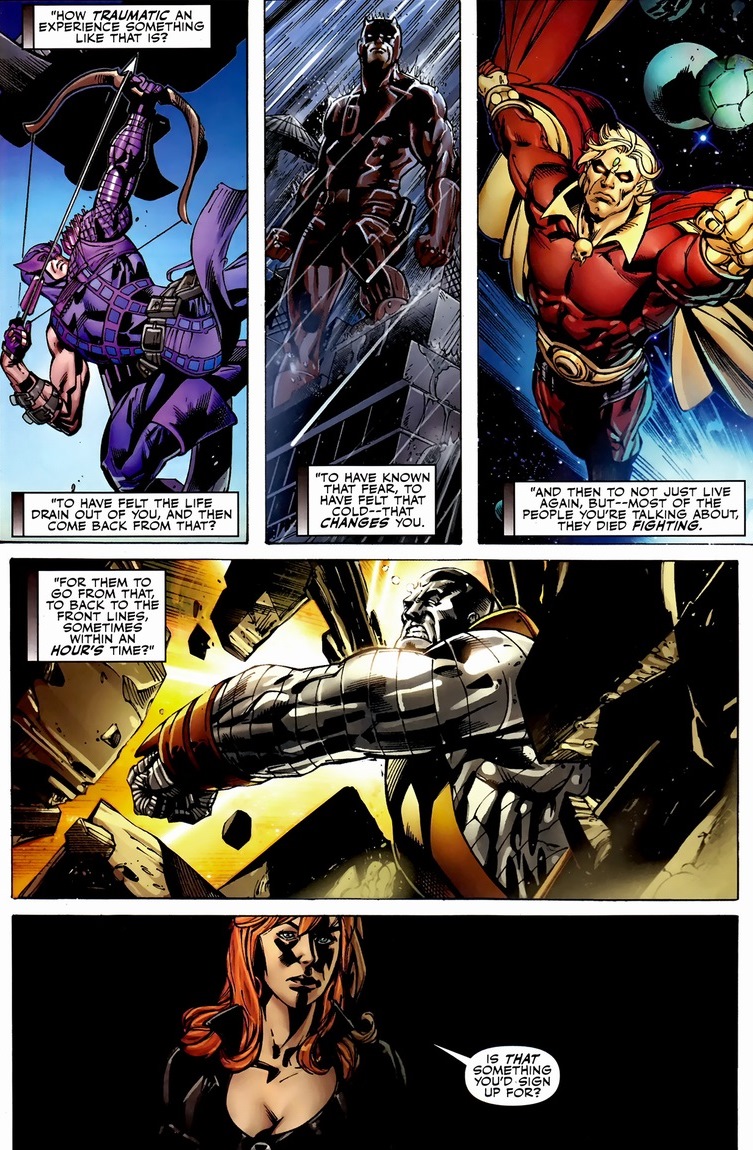
Let’s say a man gets mauled from a tiger. As soon as he leaves the hospital after months of surgery and therapy, he’s told on the hospital steps that a family of tigers now camps out inside his minivan. A pat on the back and good luck. No wonder superheroes’ mental stability cracks against the smallest of pebbles.
Rebuttal:
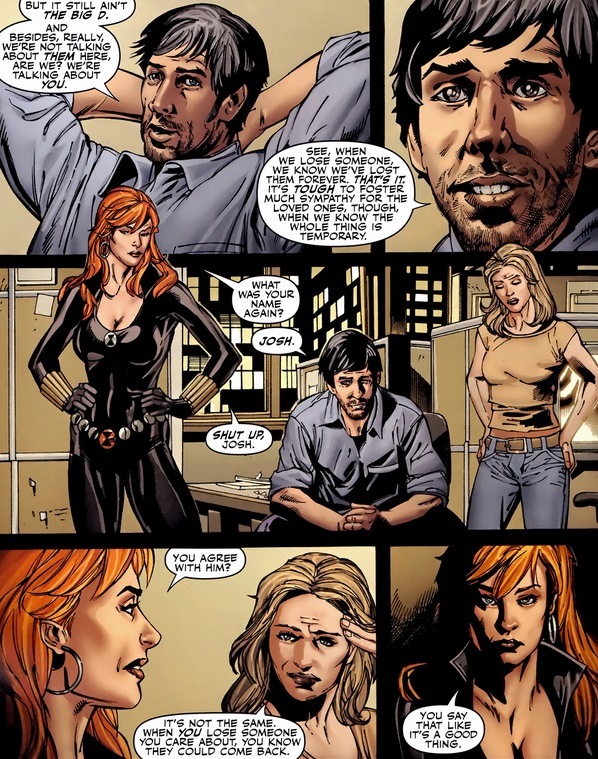
Like a roundhouse kick to the throat, Black Widow incapacitates her opponent’s rhetoric. Or not, depending on how you personally feel.

Both sides can be effectively persuasive. Though at the core, we’re still talking about fictional characters that wear sparkly costumes and shoot fire from their hands. It took me many reads to understand the final pages of this issue, but I think this sums up the whole debate appropriately:
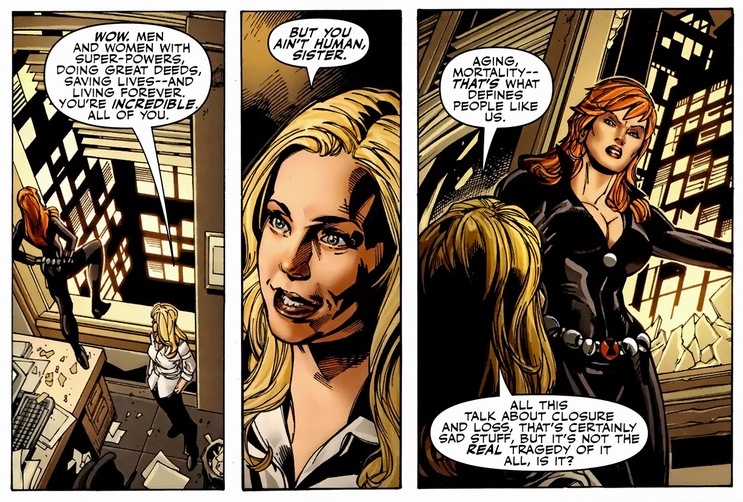
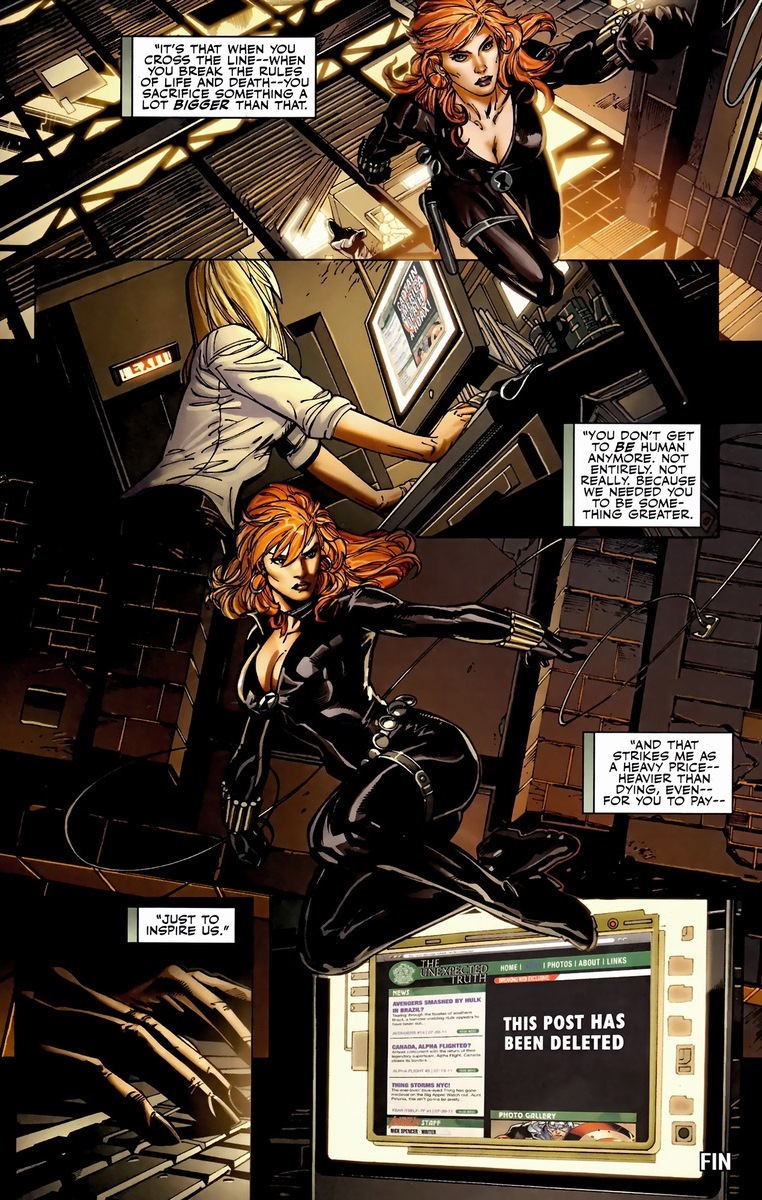
Moment of honesty: I’ve erased and rewritten this paragraph three times now. I’m having difficulty articulating my assumption of Spencer’s point. He may desire this woman to comment on the deity-like abilities of these superheroes to watch and protect the helpless, even as they selflessly and (more importantly) endlessly sacrifice their bodies and minds in their struggle against the hordes of evil. He could also be breaking the fourth wall and commenting on the motivational impact these characters have on the reader’s own life as pillars for the downtrodden, ignored, and abused to aspire towards. I really don’t know, but I believe I can confidently say this: we call them “heroes” for a reason. Fictional drawings on paper aside, we should appreciate and embrace positive role models in any format. We can acknowledge that, right?
I mean, that and all those cool punches and explosions.
The tragic love of Black Adam & Isis
Posted: 03/05/2013 Filed under: DC, Relationships 4 CommentsLet me tell you a story. A brutal dictator sits on a throne, ruling his people with a tightly clenched iron fist. A foreign group, hoping to make peace, sends this dictator the most beautiful woman in their land (and two million dollars cash). Initially unswayed, this dictator falls for this woman’s charms, changing into a kinder, gentler, wonderful man. Then she gets murdered by a disease spewing supervillain. Welcome to the origin story of Black Adam and Isis.
To be honest with you, my Captain Marvel/Shazam knowledge falls perilously embarrassing. I do know this: Billy Batson, a young preteen, finds a secret wizard lair who turns him into the adult superhero Captain Marvel every time he screams “Shazam!” I’m talking Superman-levels of strength. But centuries ago, the wizard’s first attempt Black Adam (real name Teth-Adam and an ancient, skinny Egyptian prince) ended badly when all that awesome power in his muscle-bound superhuman form made the royal into a murdering jerk. More importantly, Captain Marvel and Black Adam consider themselves arch-nemeses. Though with all that power, something must be said about Black Adam when his greatest foe is a twelve year-old.
We pick up today in the finale of Black Adam: The Dark Age #6, written by Peter J. Tomasi and drawn by Doug Mahnke. Black Adam, finally having gathered all the magical amulets/bones of his lost love Isis, seeks assistance from fellow evildoer Felix Faust for the exciting revival.
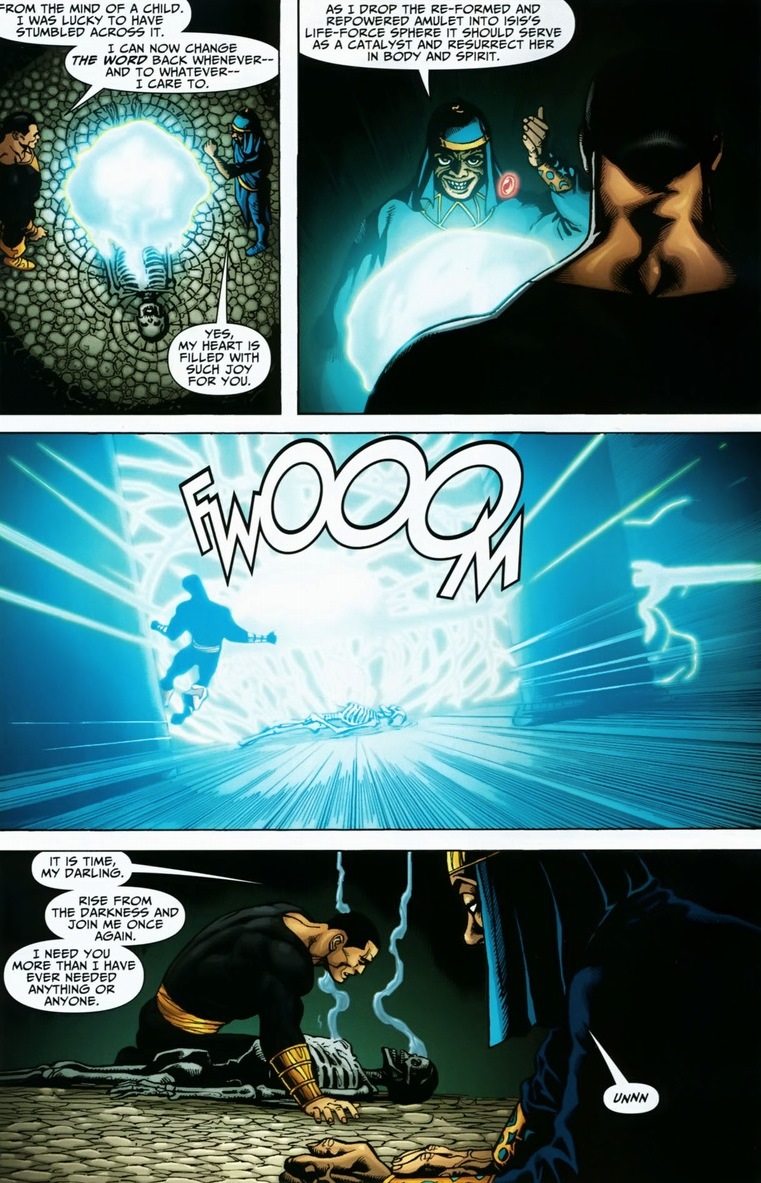
Doesn’t work. Not enough magical power left or something like that. As expected, Black Adam doesn’t take the news terribly well.
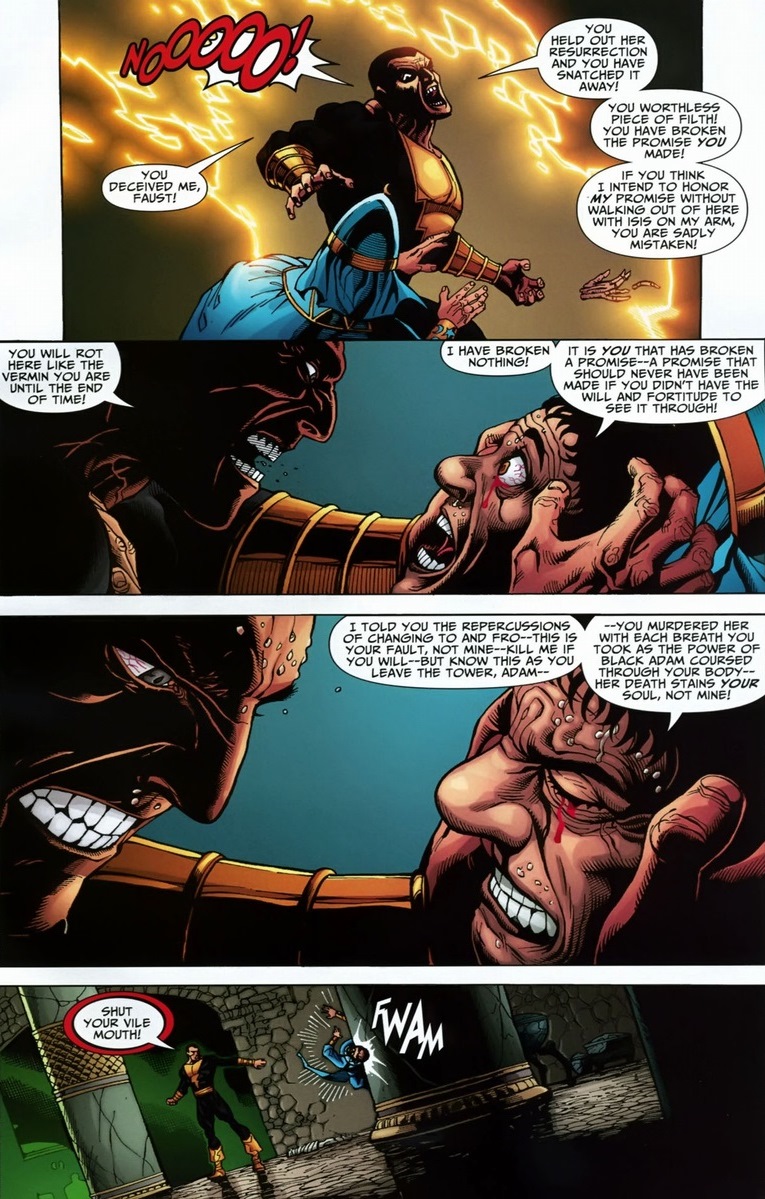
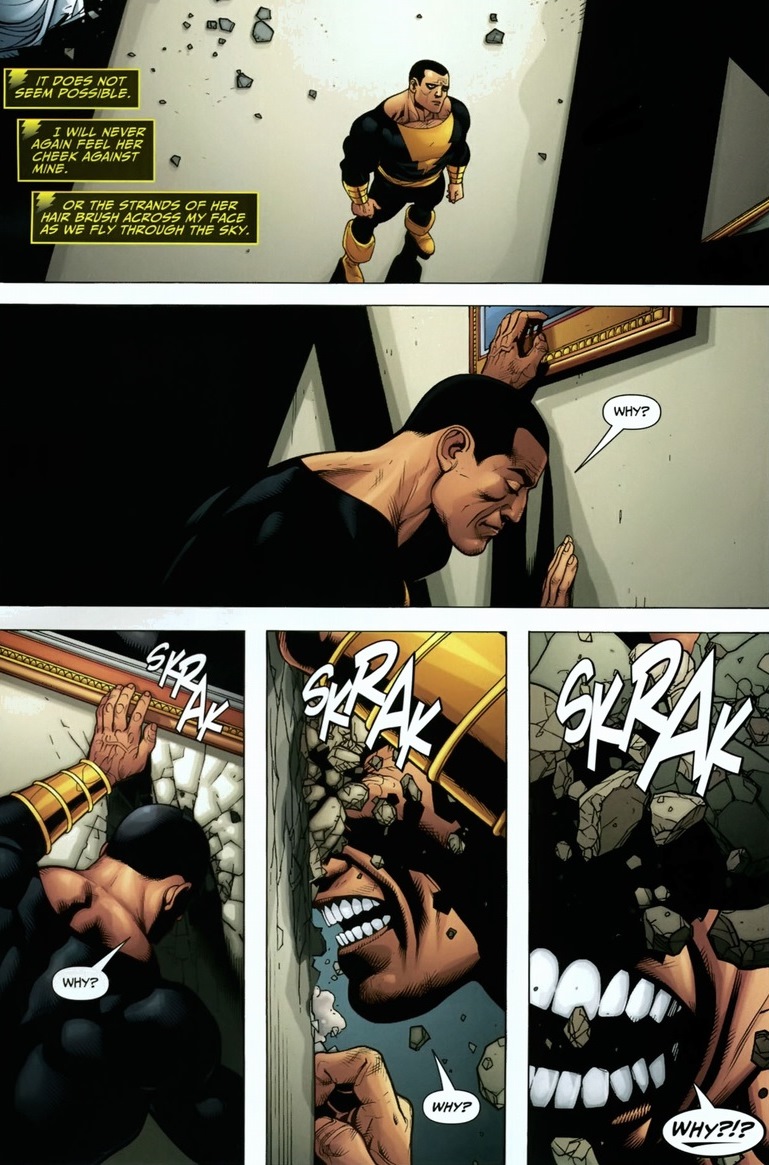
You know why supervillain teams don’t have the lasting power and teamwork that the good guys have? Turns out supervillains tend to be a tad selfish. Like say, Felix Faust tricked his buddy with the wrong skeleton so he could revive Isis in private and have the gorgeous queen for himself. That could totally happen.
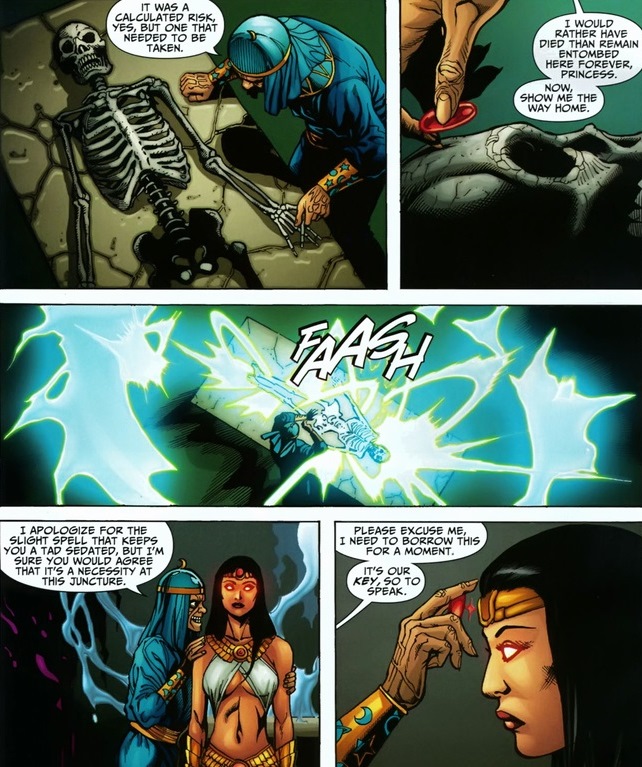
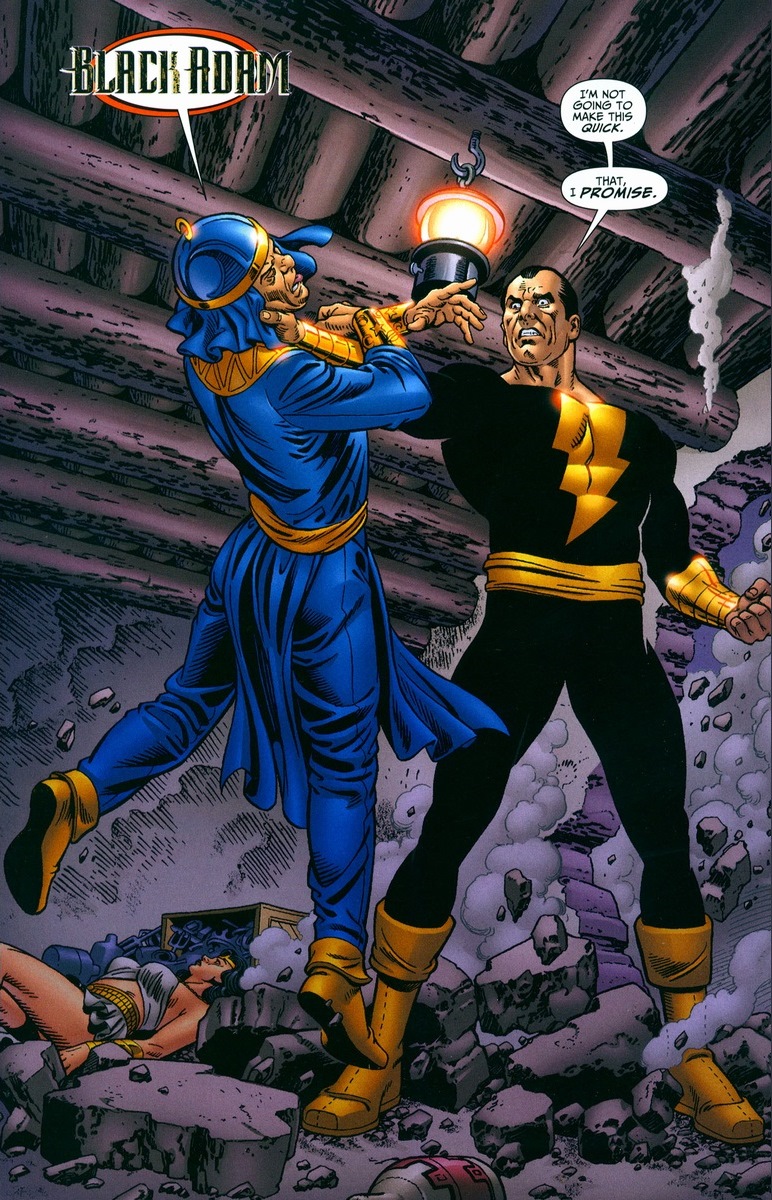
We pick up a while later, in Justice Society of America #23-25, written by Geoff Johns & Jerry Ordway and drawn by Ordway. Now, I’m not opposed to supervillains having their emotions defiled. We all know they deserve it. But a certain risk comes from lying to a man with the powers of a god when Faust is basically the David Blaine of bad guys. And when Black Adam discovers Faust’s scheme, well, you know.
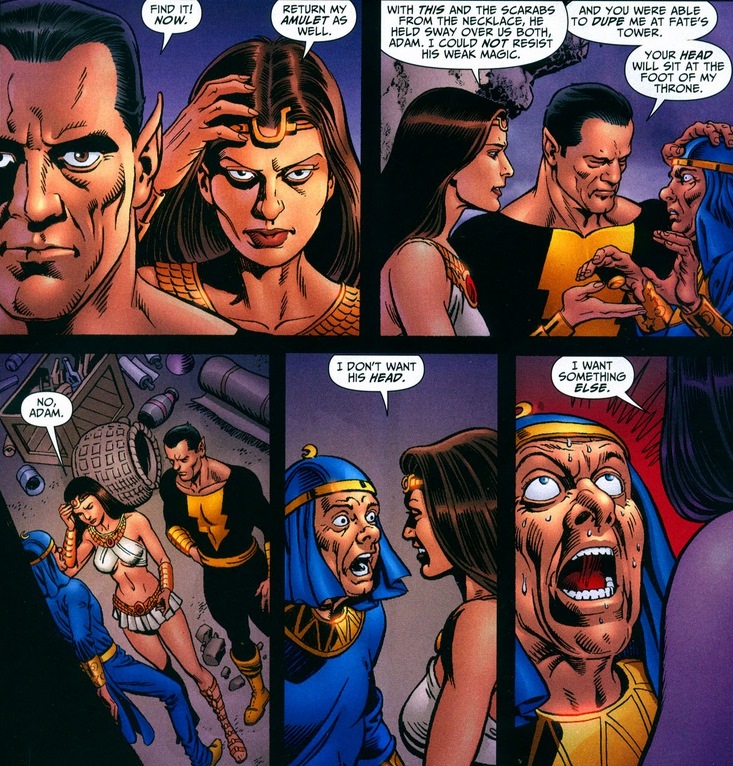
Notice anything different about Isis than from the story told at the beginning? Remember how Isis’ kindness and passion actually drove Black Adam to abandon his evil ways? No more of that. After being killed, resurrected, and then ravished by Faust for months, her generosity subsided sharply. Plus, her dear brother got murdered recently before this. The girl has been through a lot, but first step of business — gather up some of the cool Shazam magic.
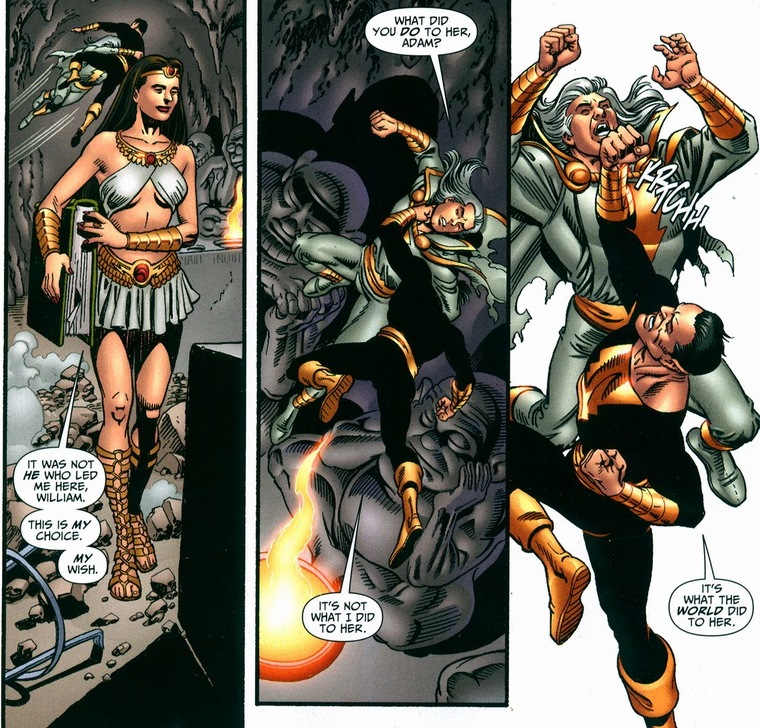
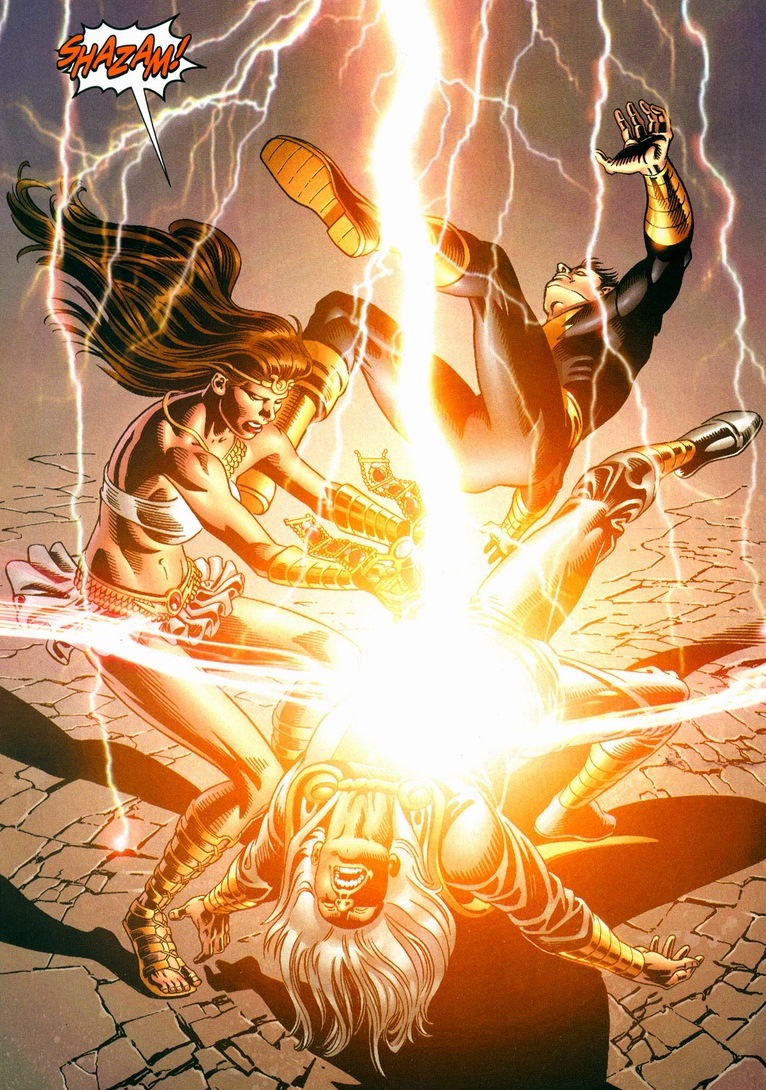
Presently, Billy Batson guards the Shazam power as the new wizard. I mean, he used to. Because after this fiasco, the kid’s totally powerless. Though Isis just received a delightful new set of skills.
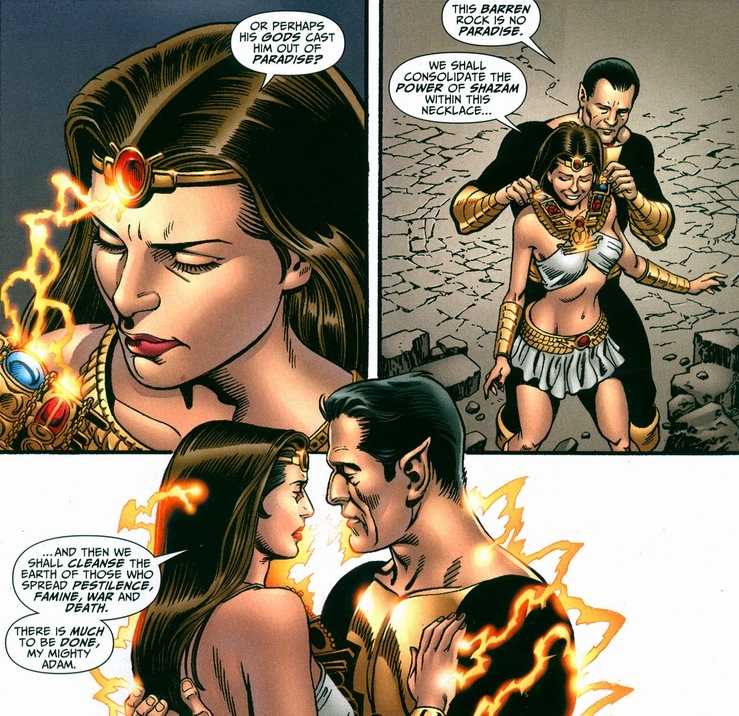
Unfortunately, her definition of pestilence, famine, war, and death has become slightly more broad than before. Such as everyone everywhere.
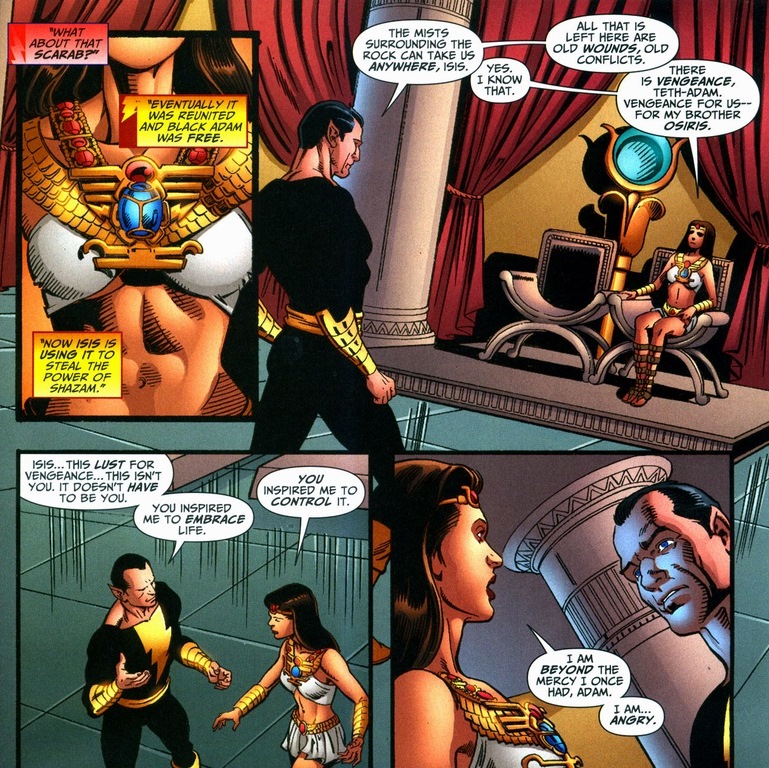
The Justice Society of America (JSA) shows up in Black Adam’s country to stop all this madness. Superheroes tend to have a fairly assuming attitude towards evil when it rips apart any usefulness Captain Marvel used to possess. To be fair, Black Adam’s still sort of a villain. Isis’ plan to massacre most of the world isn’t going to cost Black Adam any sleep, and just to ensure victory, he even hires some outside help:
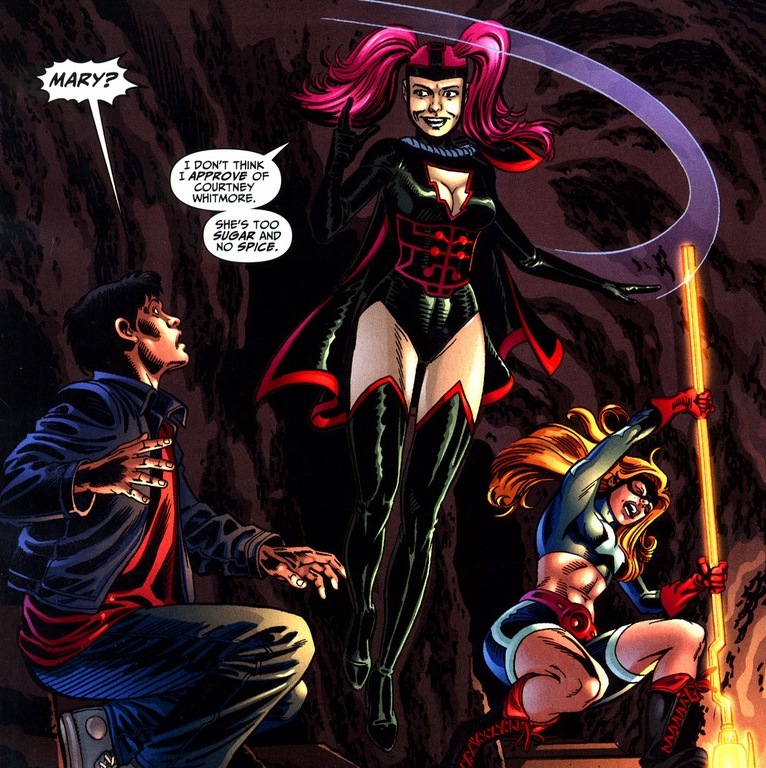
Meet Mary Marvel, Captain Marvel’s sister. She used to share some of that delicious Shazam power, but now she’s all evil and Black Adam-y. And a dominatrix, I guess. Here, appreciate some extra Billy Batson characterization:
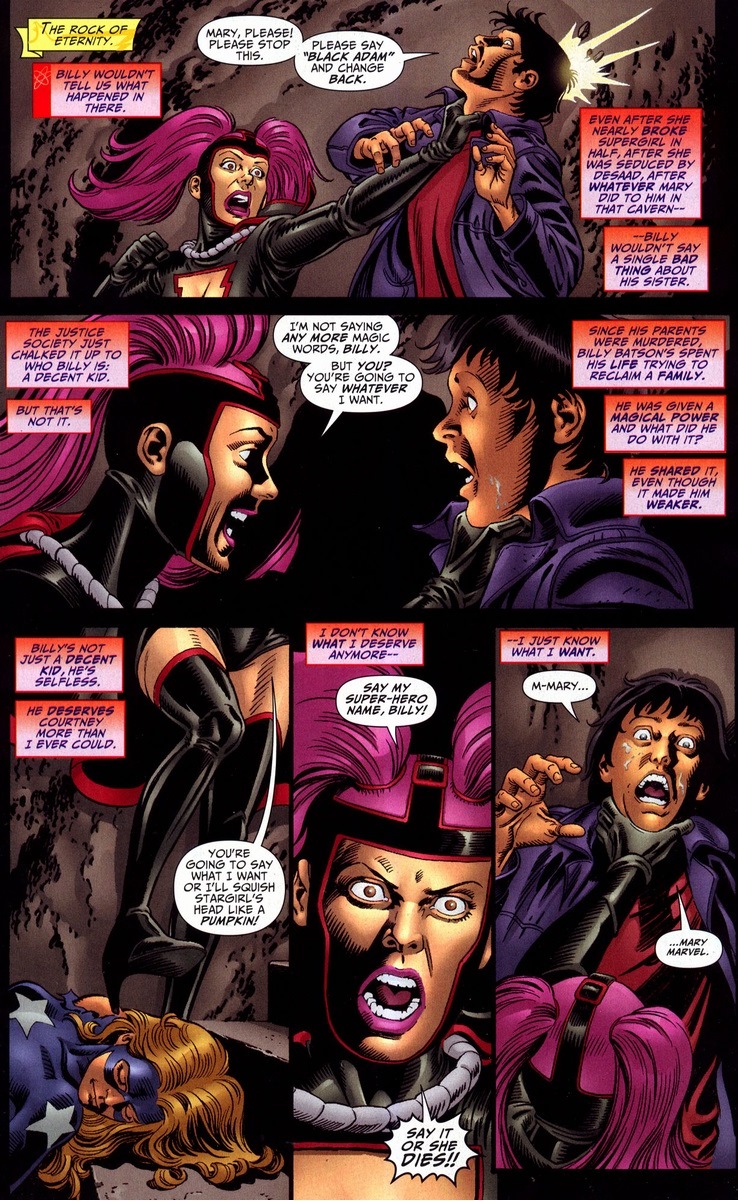
More on those two later. Currently, Black Adam battles the JSA outside his castle/manor/lair.
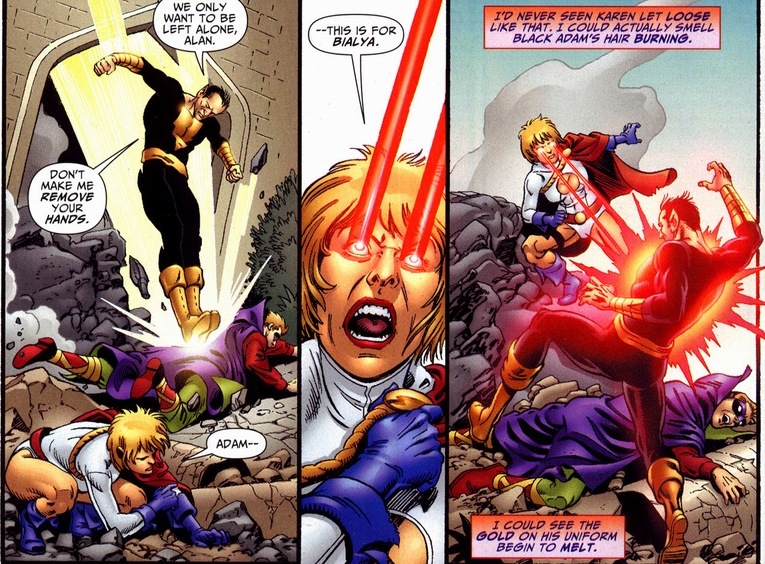
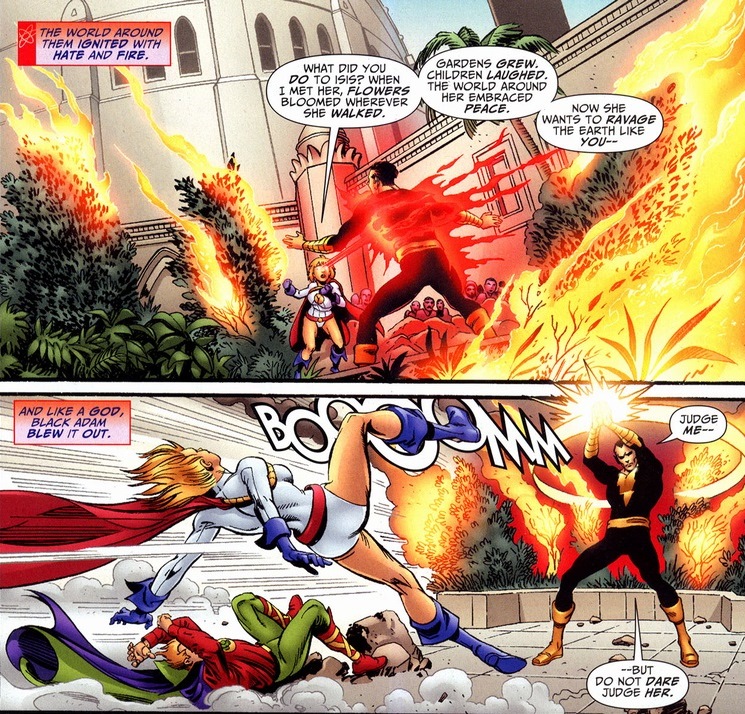
And while Black Adam almost certainly has the power to take out the entire JSA singlehandedly (especially now that Billy can’t summon Captain Marvel), the whole situation gets far worse when the blushing bride shows up.
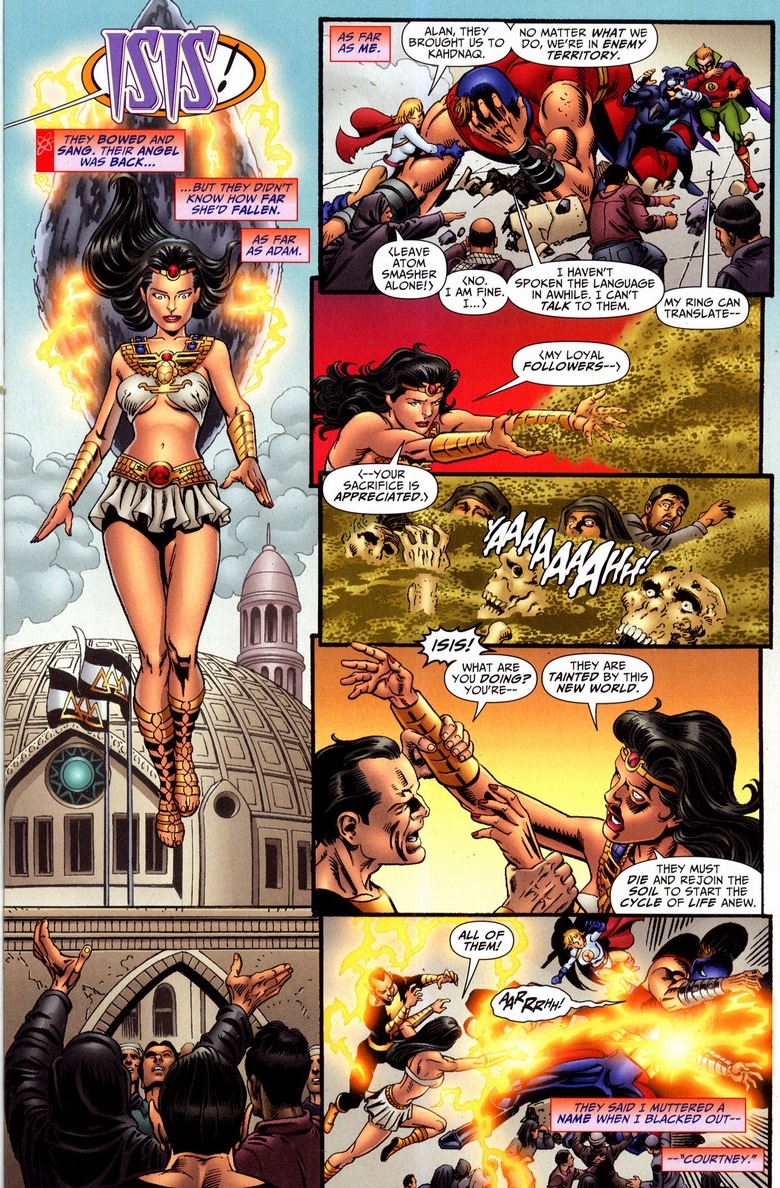
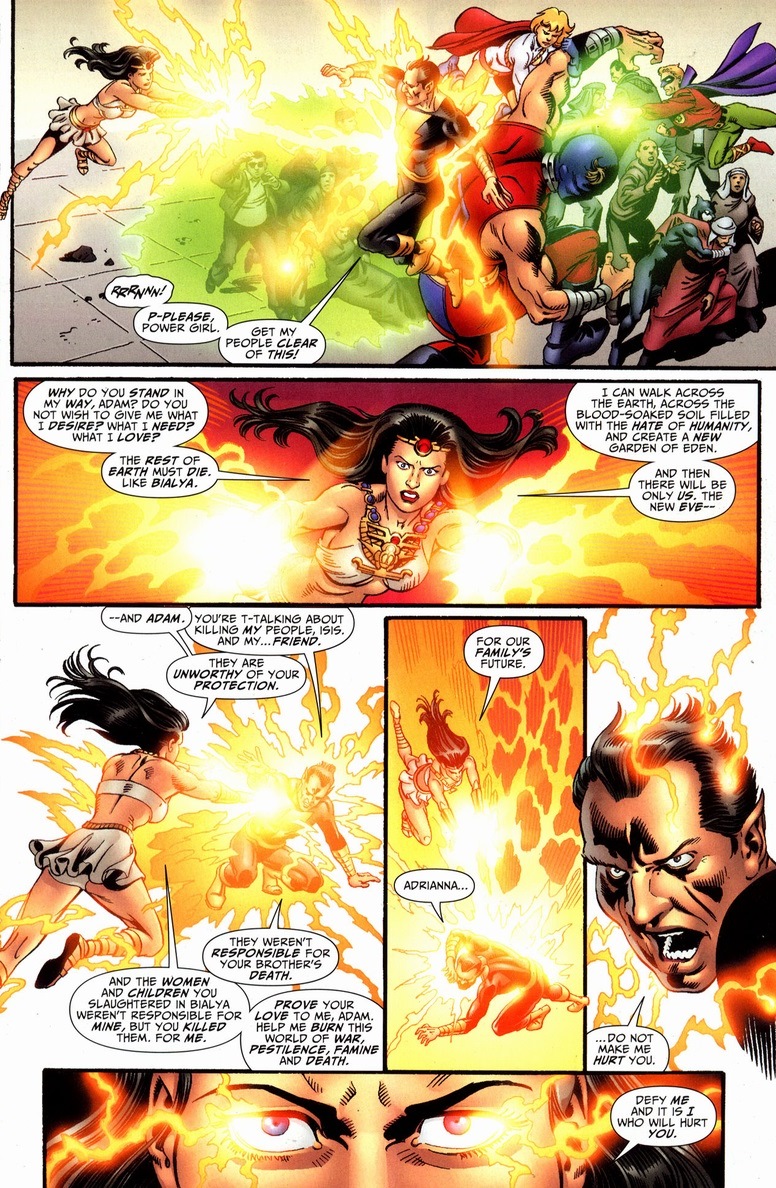
Look, Black Adam’s all for death and destruction, but those people Isis wiped out? They were his people. His subjects. His responsibility. He stands proudly as their protector and caretaker — that’s the point of a ruler. Now our dear king has to choose between his country and his lover. Plus, Mary Marvel turned Captain Marvel into a leather fetishist like herself:
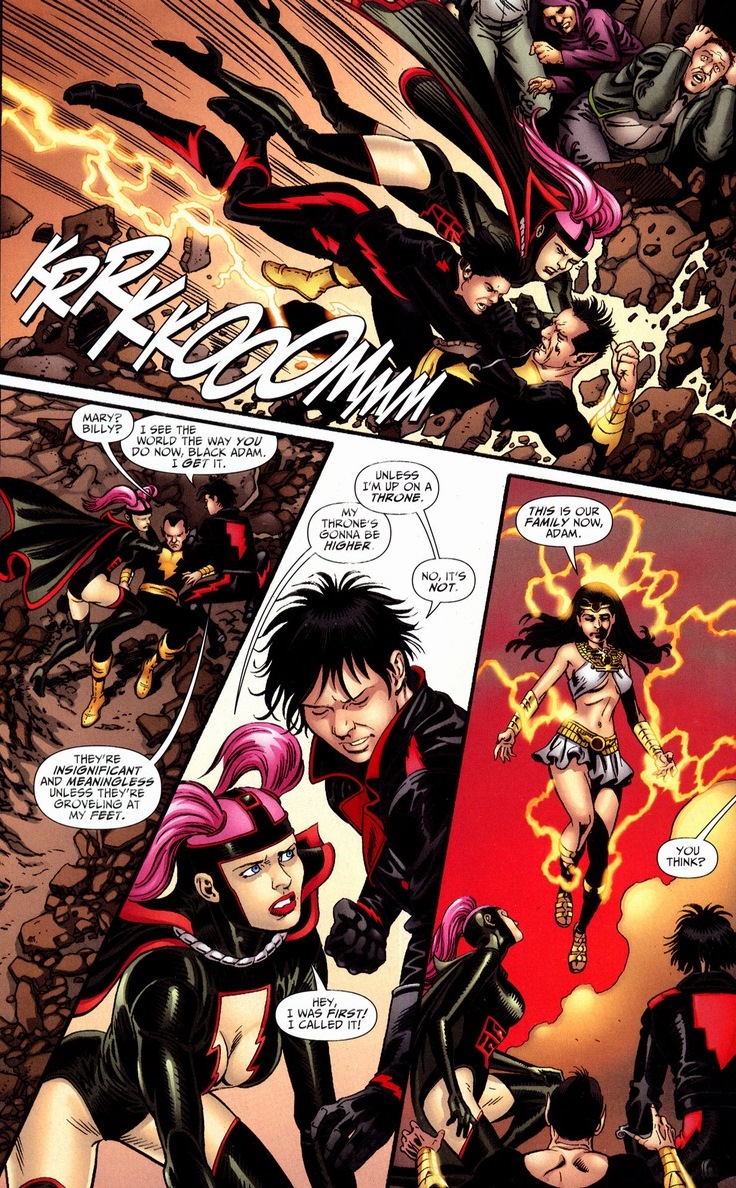
When all seems hopeless, when Black Adam has to pick between two horrific evils, a third option presents itself. A still terrible option, but way better than smushing either his love into paste:
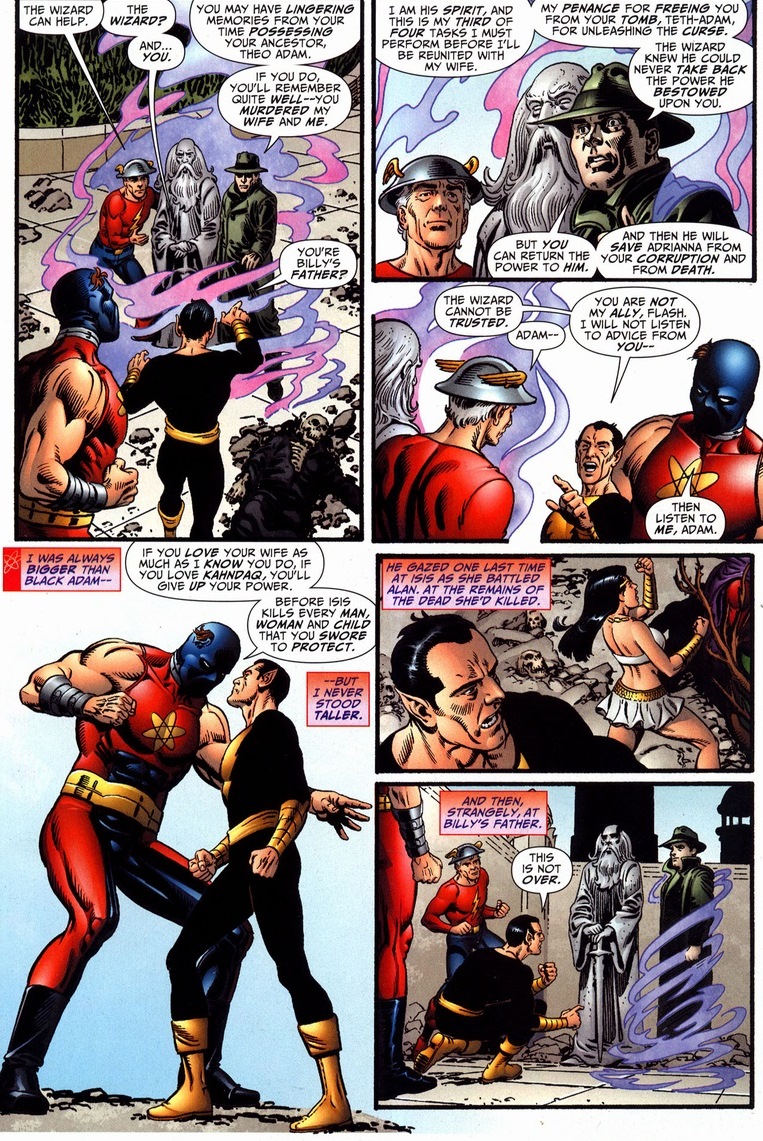
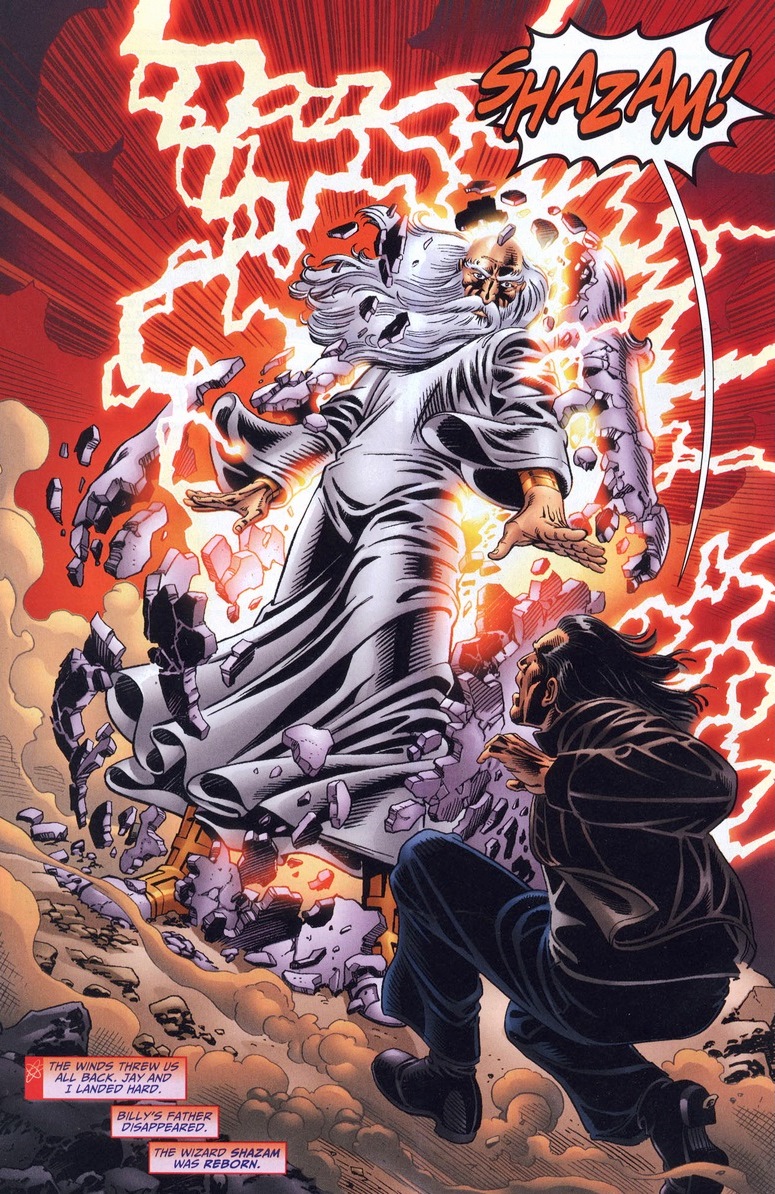
By sacrificing his own Black Adam power (that’s what he looks like normally) to revive Shazam himself, the wizard can use his revitalized strength to strip Isis of her craziness and power. Except for one small problem: old men get grumpy when encased in stone.
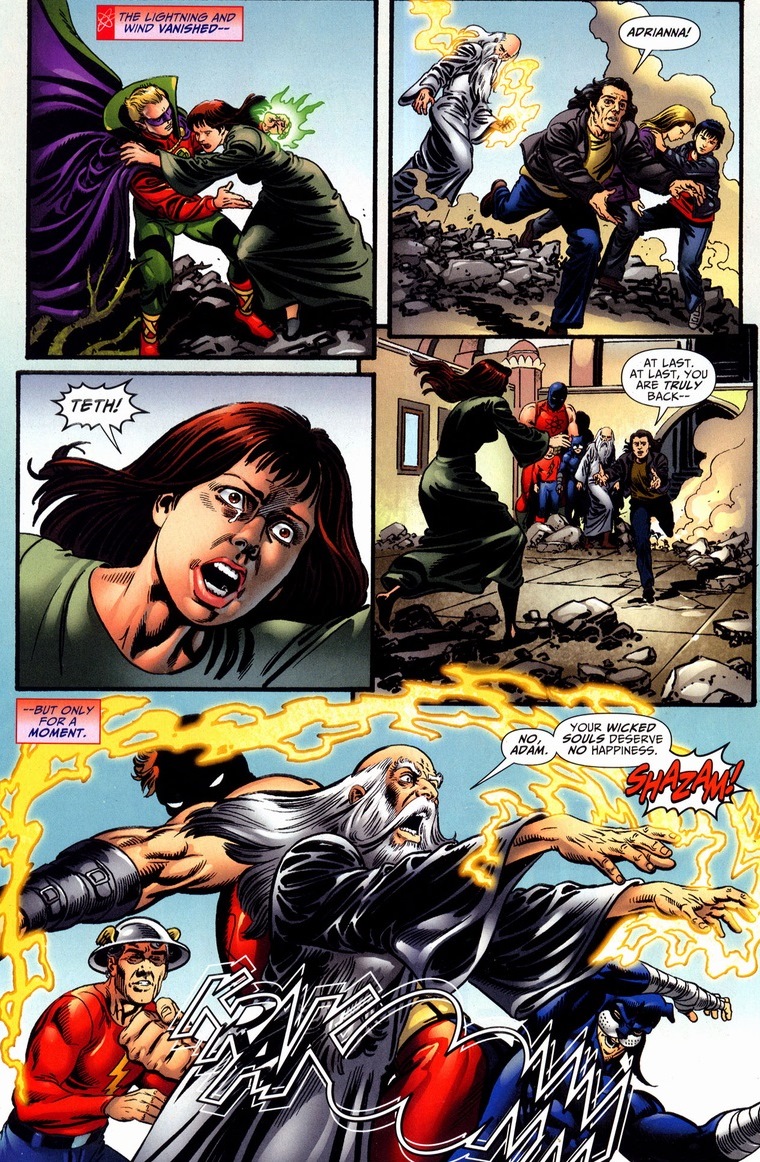
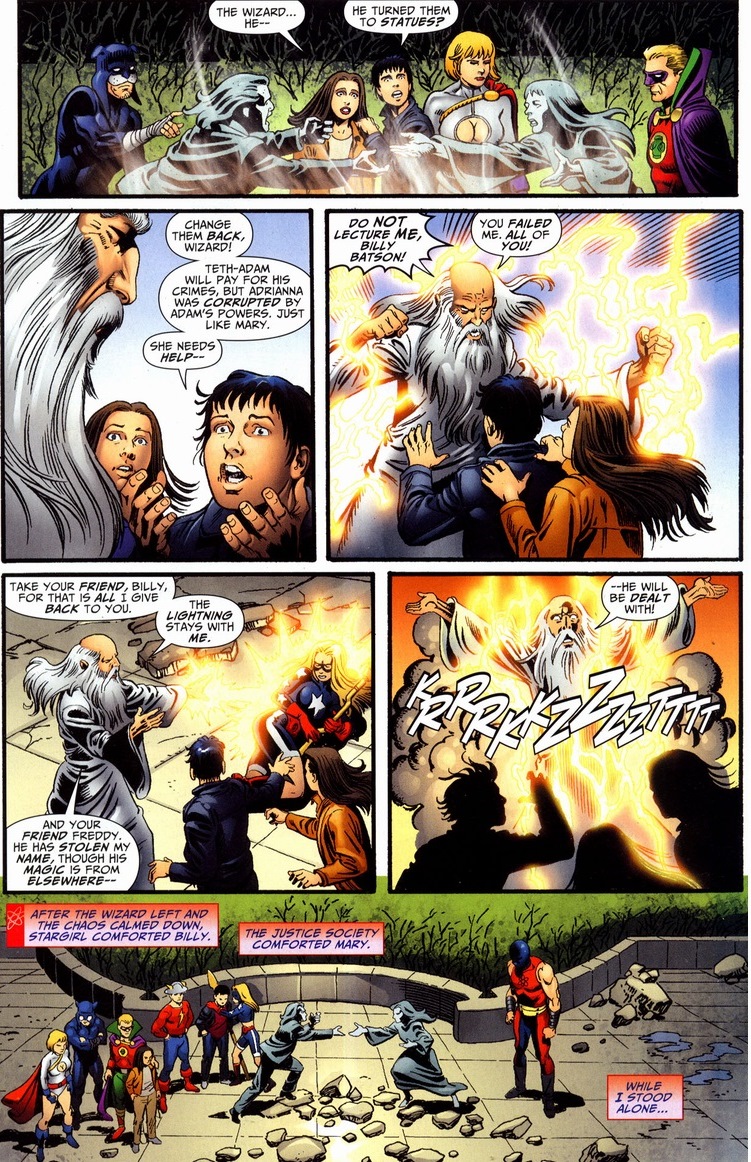
With that, the story of Black Adam and Isis ends. I’m serious — when the DC universe rebooted, both of them were still statues. Plus, Billy Batson hadn’t received his stripped power back from Shazam as well. Lately, rumors have spread that Black Adam will play a part in the upcoming DC event Trinity War, but until then, the fate of these two lovers remains forever star-crossed:
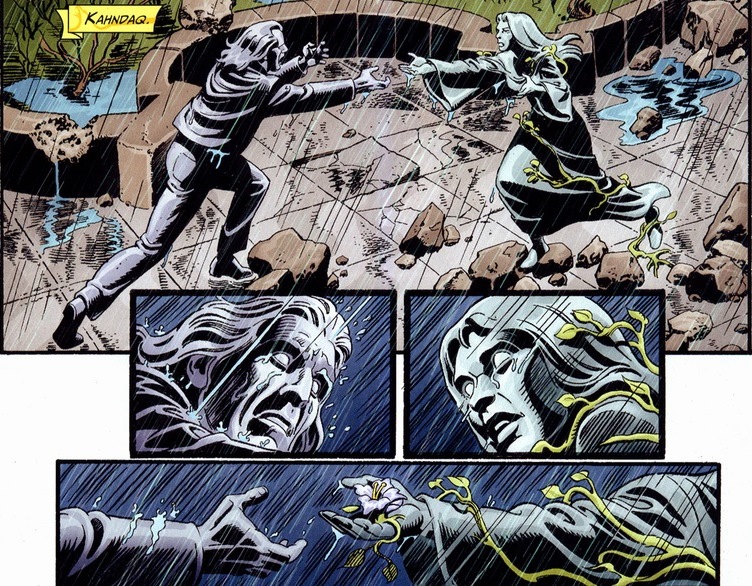
Wipe that single tear off your cheek.
Fighting crime with Manhunter
Posted: 03/03/2013 Filed under: DC, Fights 2 CommentsIf you disregard Gotham City, most cities in the DC universe have one, maybe two superheroes each. Superman has Metropolis. Green Arrow has Star City. Flash has Keystone City. Hawkman and Hawkgirl have St. Roch. You get the idea. But you know where superheroes aren’t showing their faces? Real cities. Like Los Angeles. About time they get their own vigilante.
The Manhunter superhero title goes back to the 1940s. A half dozen men donned the uniform and an entire species of Manhunter robots run amok in space. Luckily, in 2004, Kate Spencer — the best federal prosecuter in Los Angeles, of course — took a shot at the mantle. I’m so glad she did. Marc Andreyko, the writer for the Manhunter series, made Spencer into someone both flawed and beloved. She’s wildly insecure, yet horribly overconfident. Spencer smokes and can barely muster being sub-par mother to her six year-old, though we so deeply root and care for her. Most importantly, we as readers get to see the progression of Manhunter as a beginning superhero into the capable powerhouse she rocks today.
In Manhunter #1, written by Andreyko and drawn by Jesus Saiz, we see the initial superhero transformation. Lots of misplaced justice and frustration at an ineffective legal system — a classic origin story.
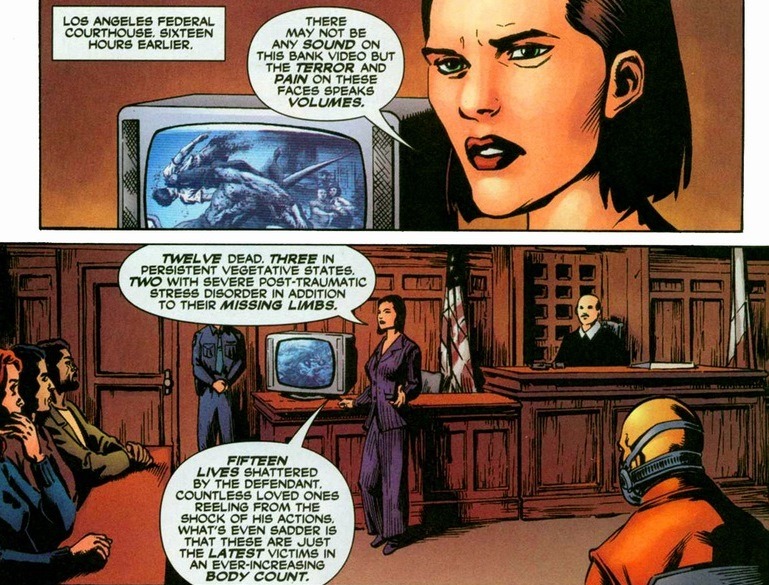
Copperhead, a D-list supervillain sewer monster who actually precedes the way more popular Killer Croc, has cannibalized and devoured a dozen innocent victims. After a recent arrest, Copperhead gets put on trial by a jury of his peers, as bad guys should. Except one problem:
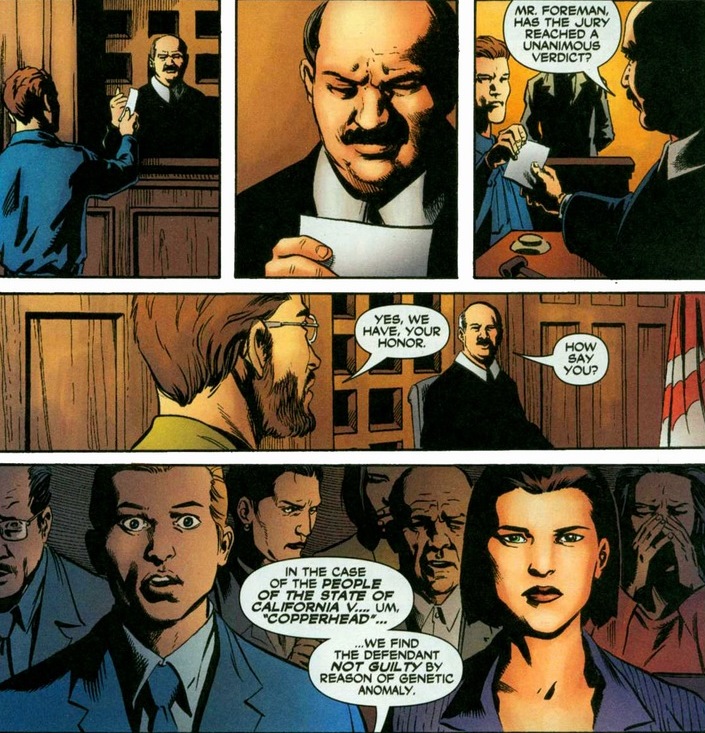
Now let’s be fair, Spencer can handle a loss in the court room — she’s a big girl. But once a crazed snake monster, always a snake monster.
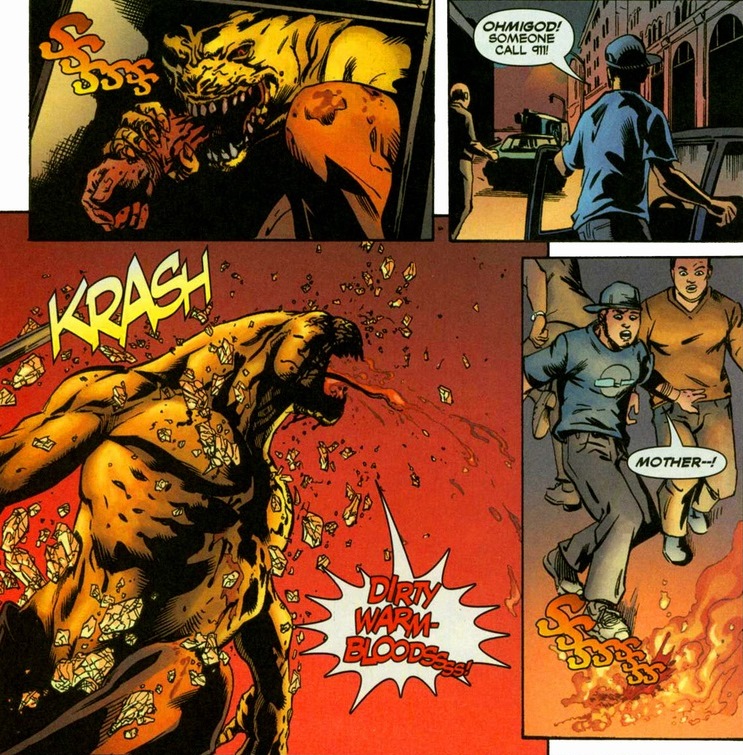
And thus a new Manhunter rises from the ashes of obscurity to punish supervillains like the justice system can’t. With violence.
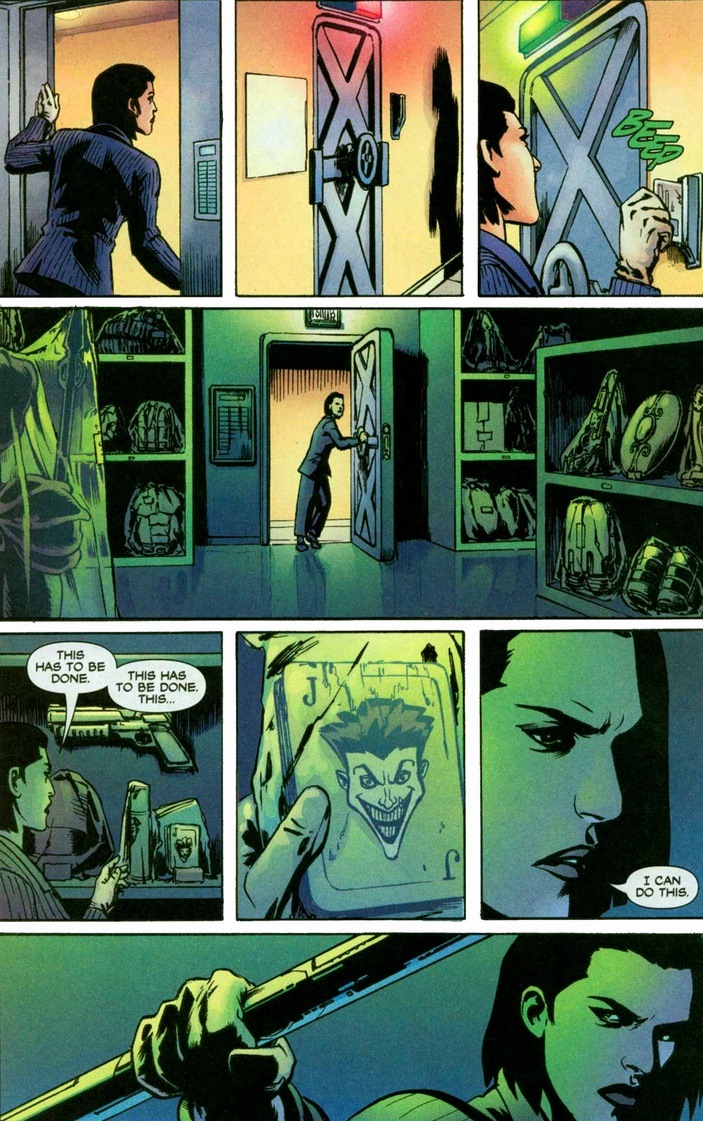
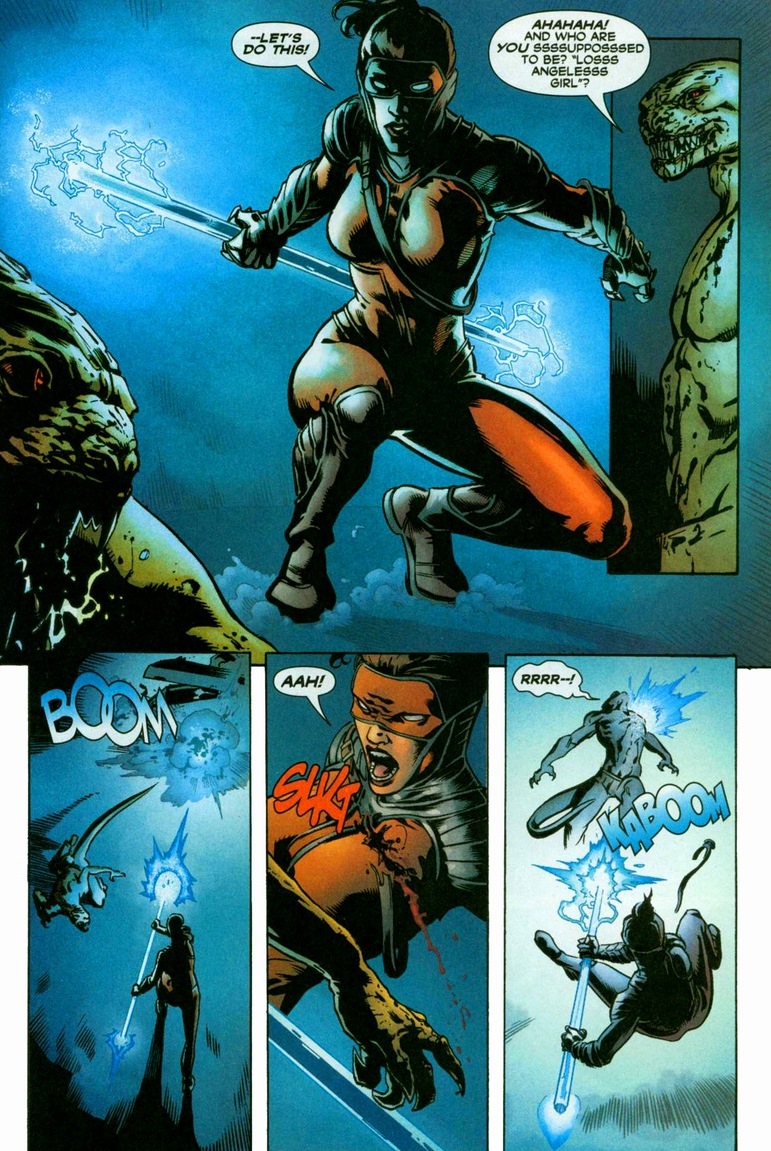
Quick explanation as to her stolen equipment. The gauntlets are the same ones worn by Azrael when he paraded around Gotham as Batman while Bruce Wayne nursed a Bane-induced broken back. The uniform comes from a member of the Darkstars, a group of alien policemen. And the staff shoots electricity, what else do you need?
Since this marks the first time that Spencer has ever actually fought crime, the battle goes as you expect. Truthfully, her athletic or martial arts background hasn’t really been touched upon, but you have to imagine that if she decides to kung fu a monstrous supervillain, she must have been at least on her college’s gymnastics team. That and the suit gives her a (very slight) increased level of strength, durability, and speed.
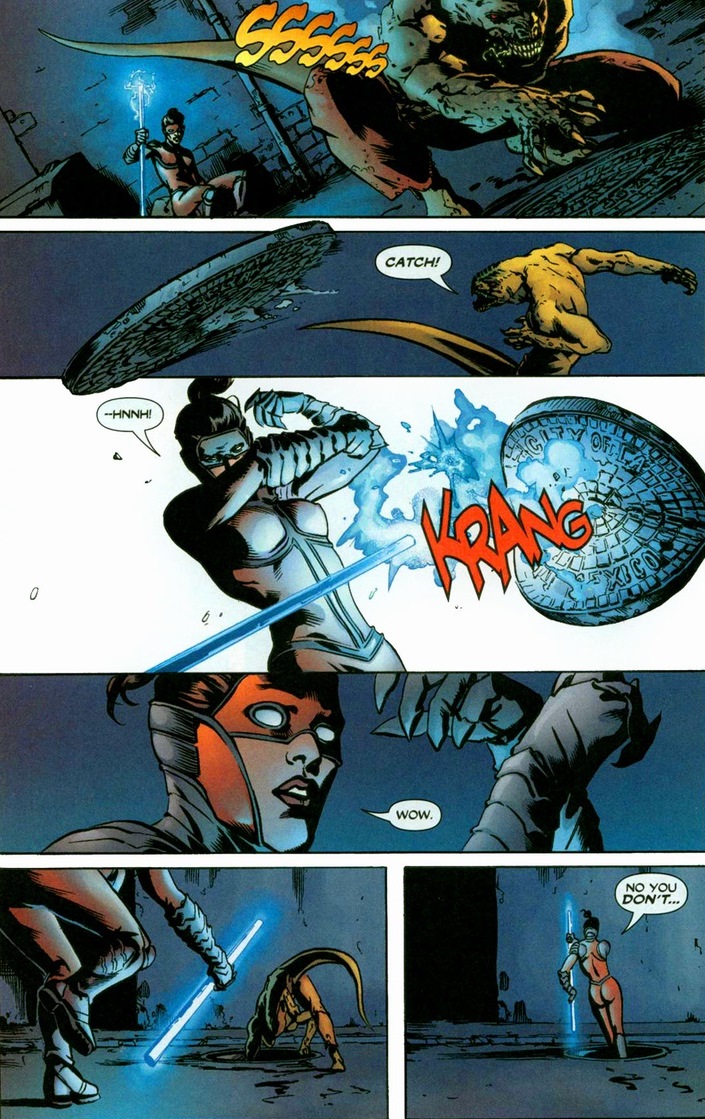
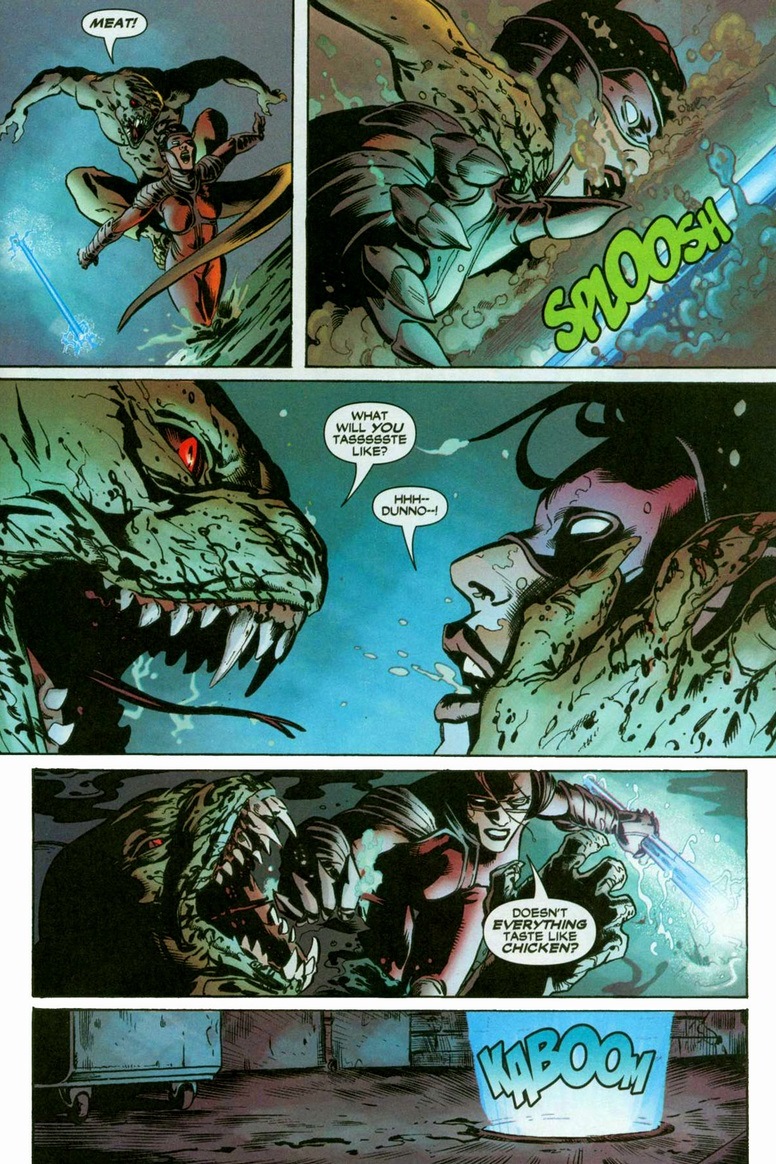
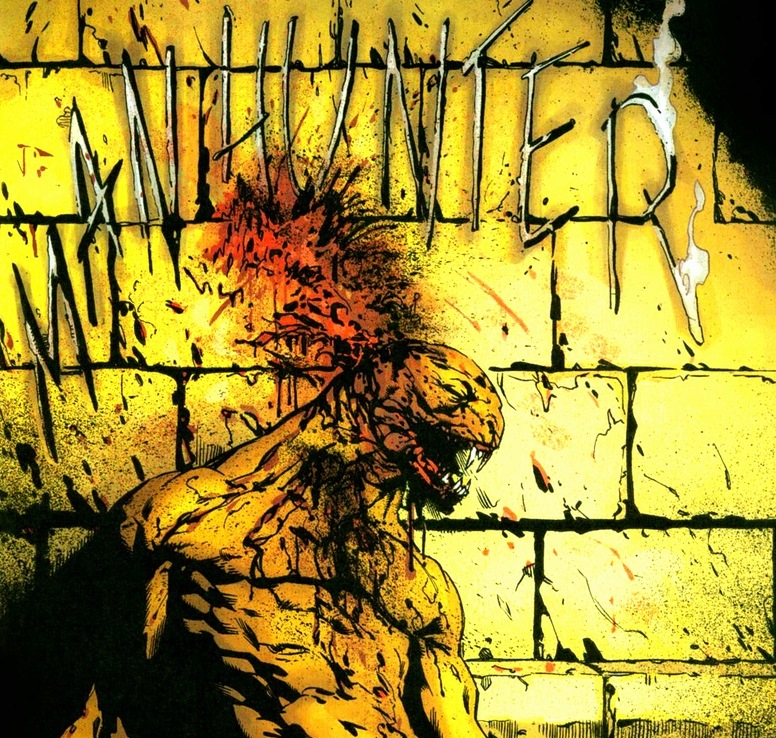
And her calling card? Introduction in a city like Los Angeles requires a powerful first impression:
As we browse a few more of her fights, watch as she improves with each subsequent supervillain she brawls. I mean, she’s not fighting Sinestro or Braniac or anything, but the danger level remains plenty high. Plus, the superhero learning curve climbs steeply, like in Manhunter #3, written by Andreyko and drawn by Saiz,
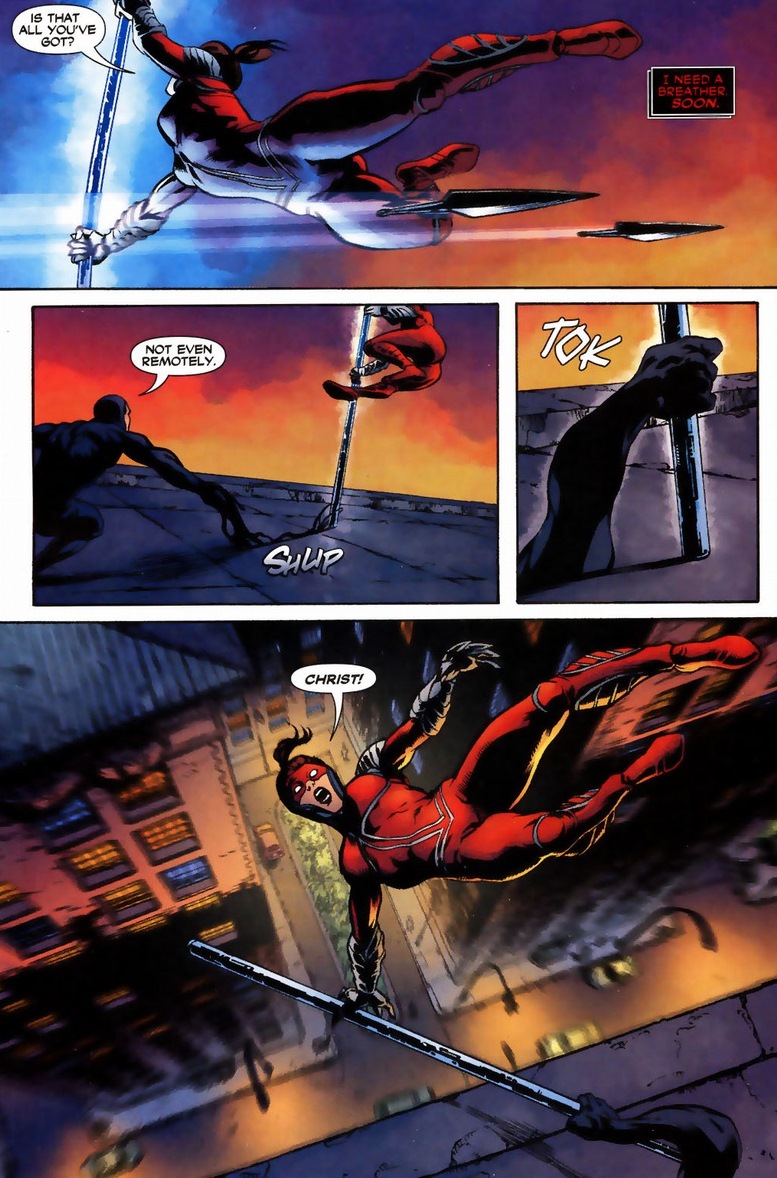
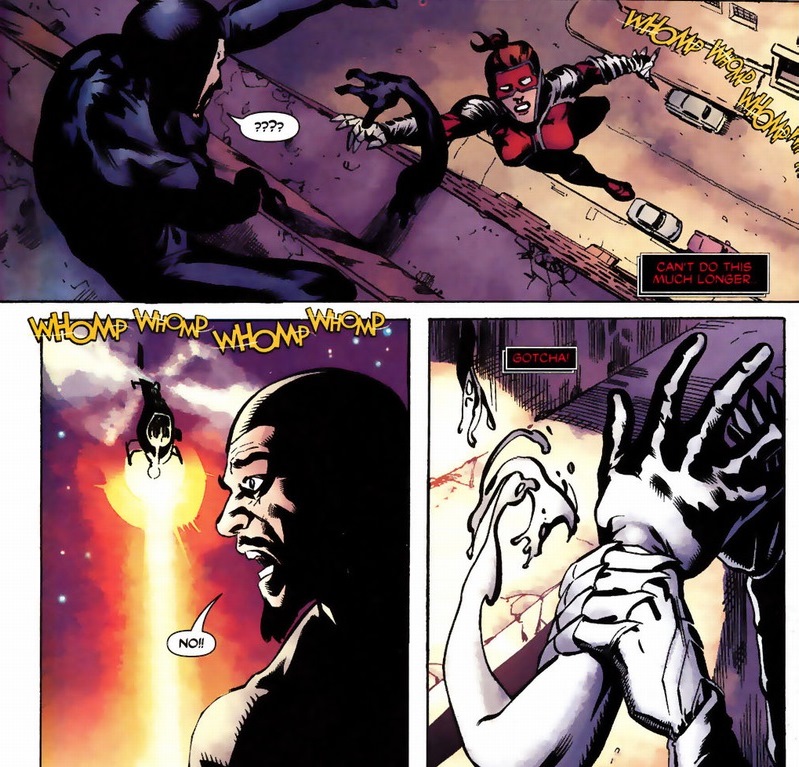
Unfortunately, her suit doesn’t have any flight mechanisms, grappling hooks, Batplanes, magic carpets or anything that can prevent her splattering on the ground below. Remember that:
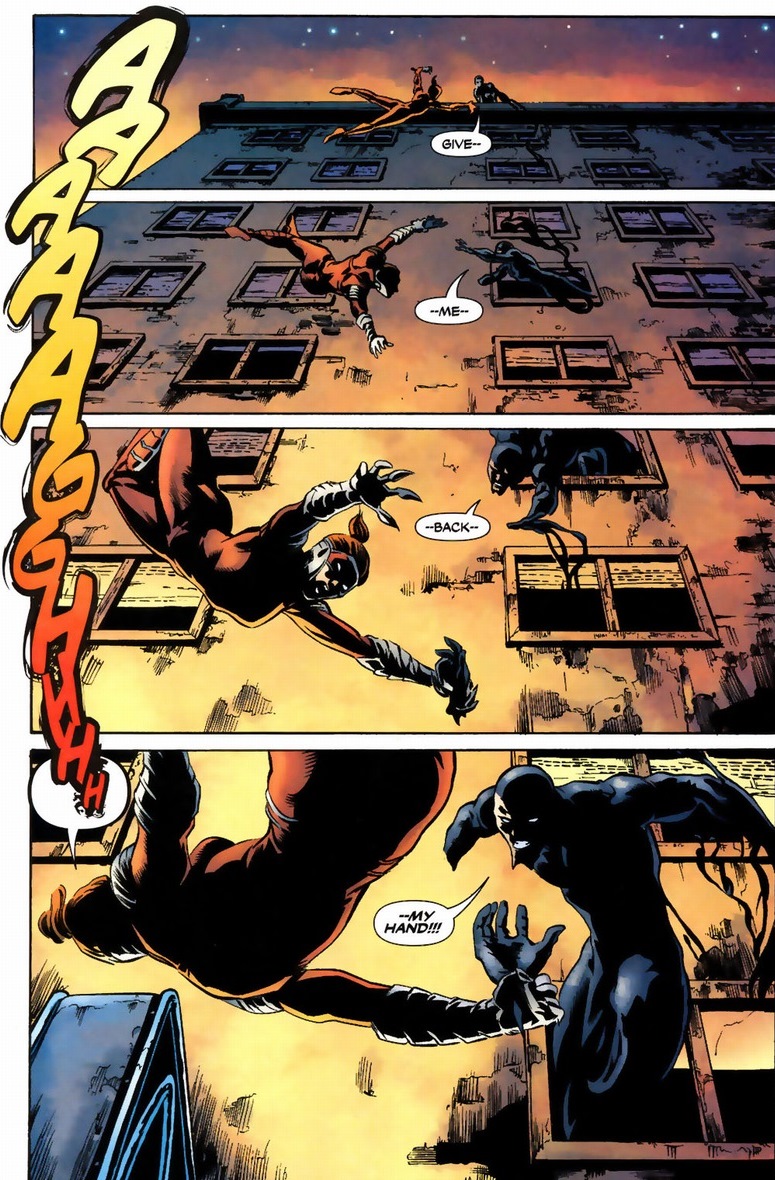
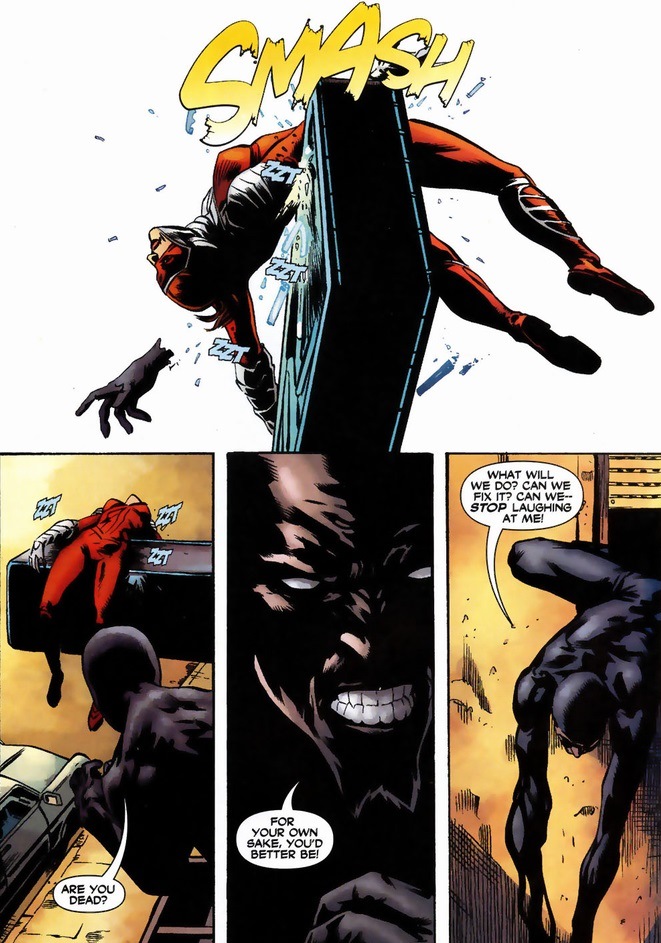
Ow. But even Batman didn’t punish bad guys too efficiently his first few months or so. Though now that I think about it, Batman probably should have done better, what with that decade of combat training under his belt before tackling Gotham’s underworld. Luckily for dear Manhunter, practice makes perfect, such as in Manhunter #6, written by Andreyko and drawn by Jesus Saiz.
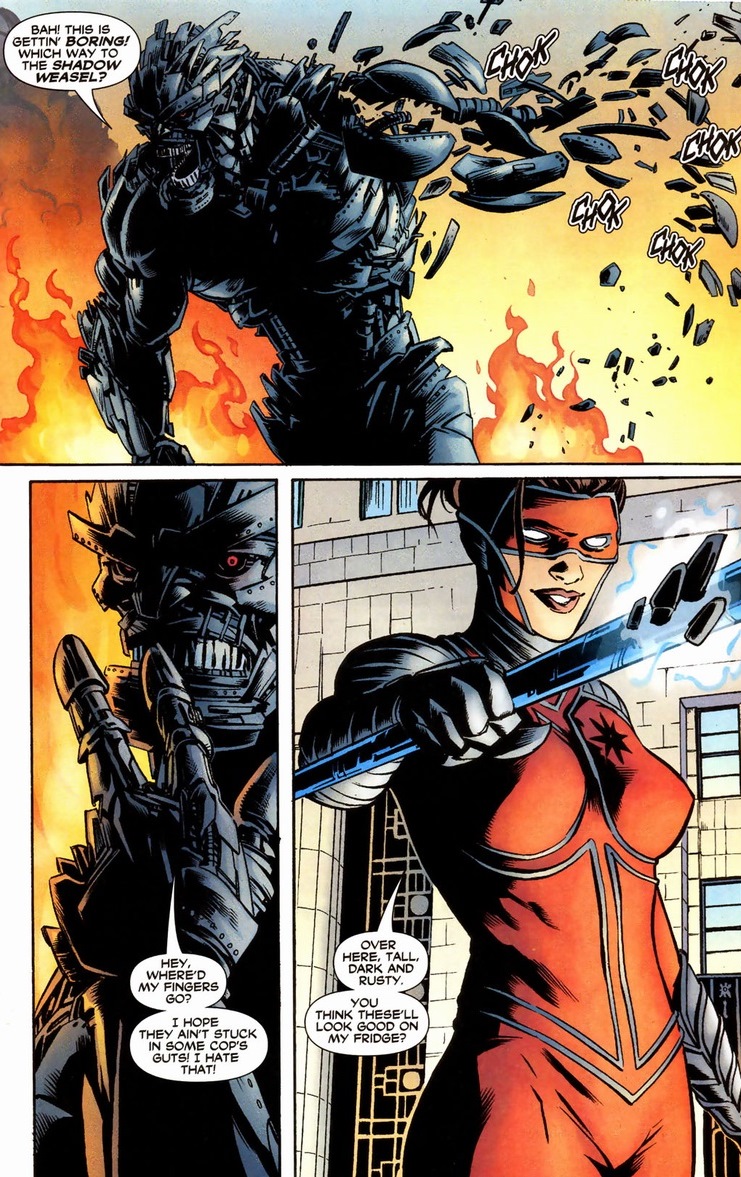
Ever heard of Shrapnel? Cyborg psychopath? No? I wouldn’t worry about it.
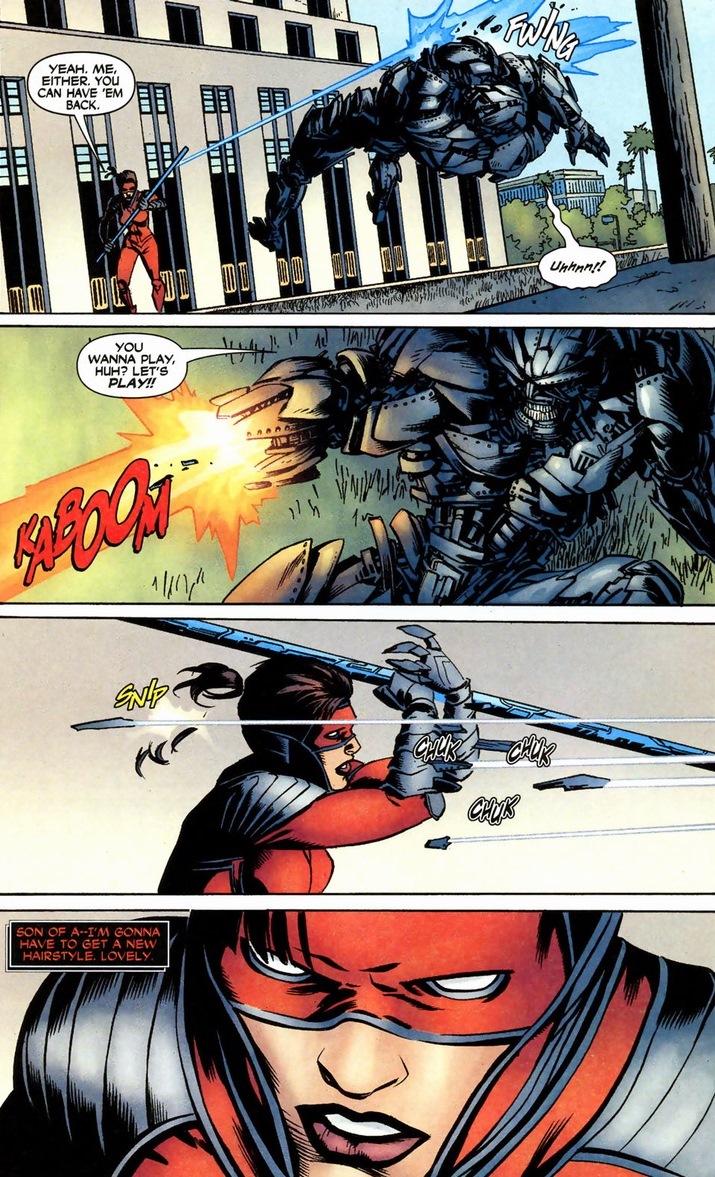
How does one beat a villain that usually scraps with superheroes classes above Manhunter?
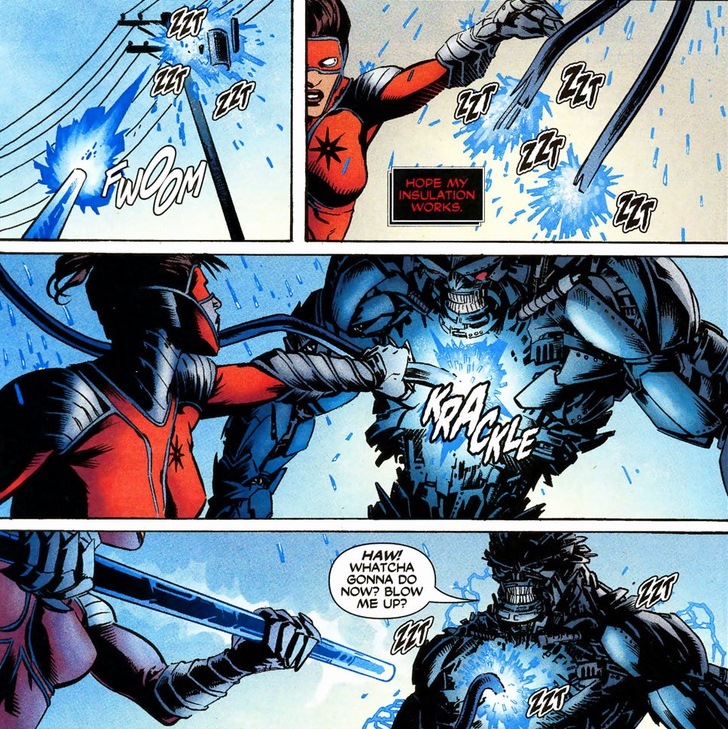
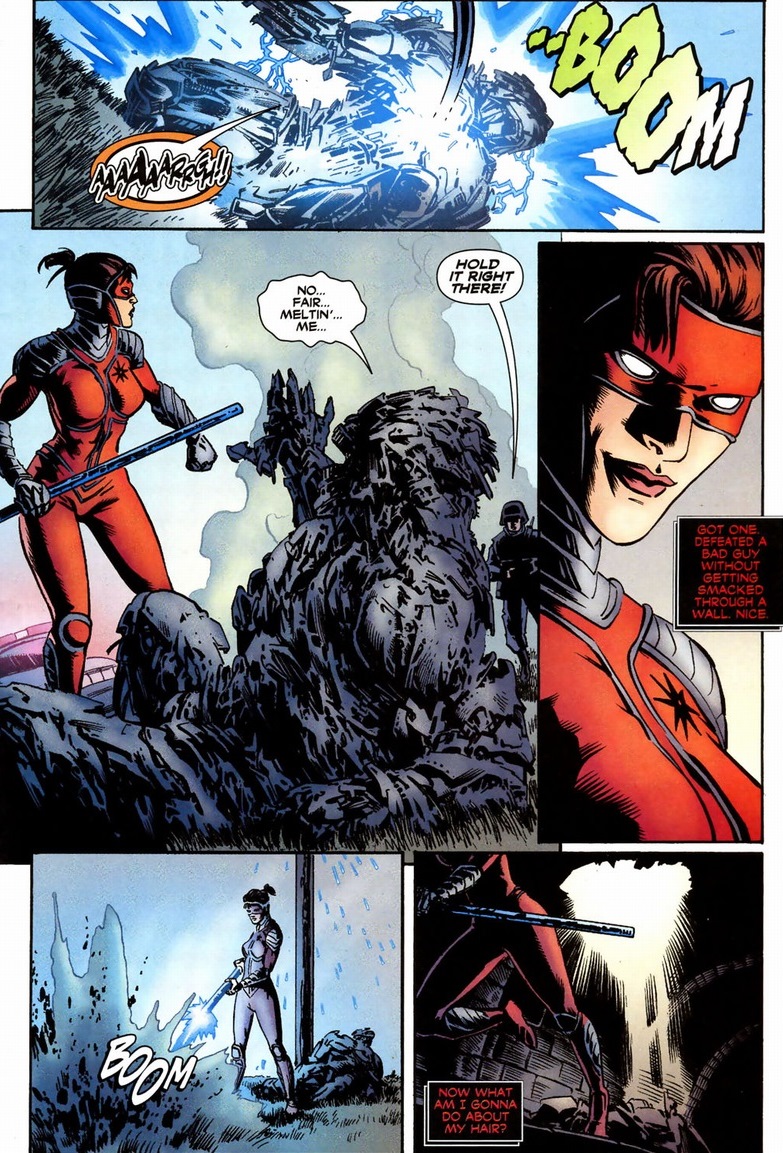
Hotshot lawyer and genius strategist. Can’t be a superhero without a ton of talents. Even then, luck and circumstances play key roles in victory as well. I feel for our costumed heroes — no pay, nightly beatings, and a disturbing lack of appreciation from the citizens of their devoted city. But y’know, a hobby’s a hobby.
In Manhunter #25, written by Andreyko and drawn by Javier Pina, our protagonist has fought crime for a little over two years, including fighting alongside the rest of DC’s best in Infinite Crisis’ Battle of Metropolis. Big time stuff. Spencer totally qualifies as the real deal now, and the supervillain Sweeney Todd learns this the hard way.
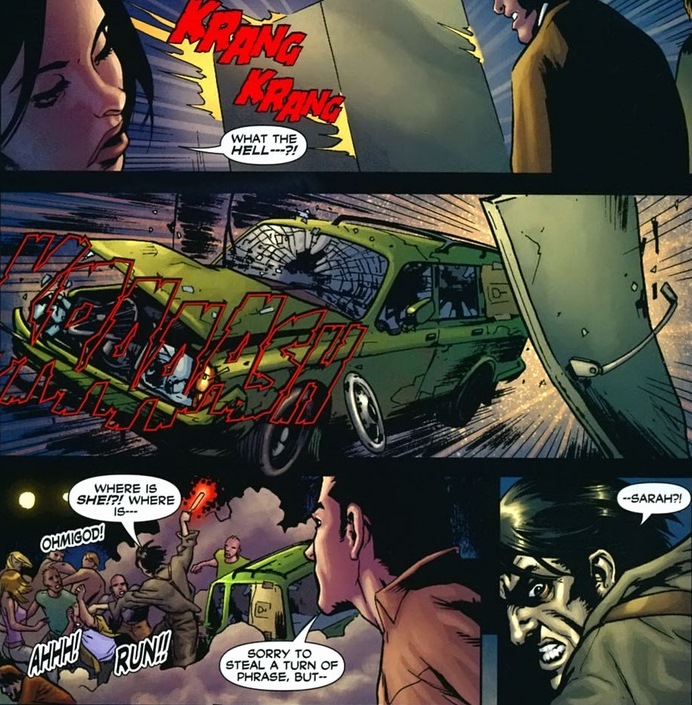
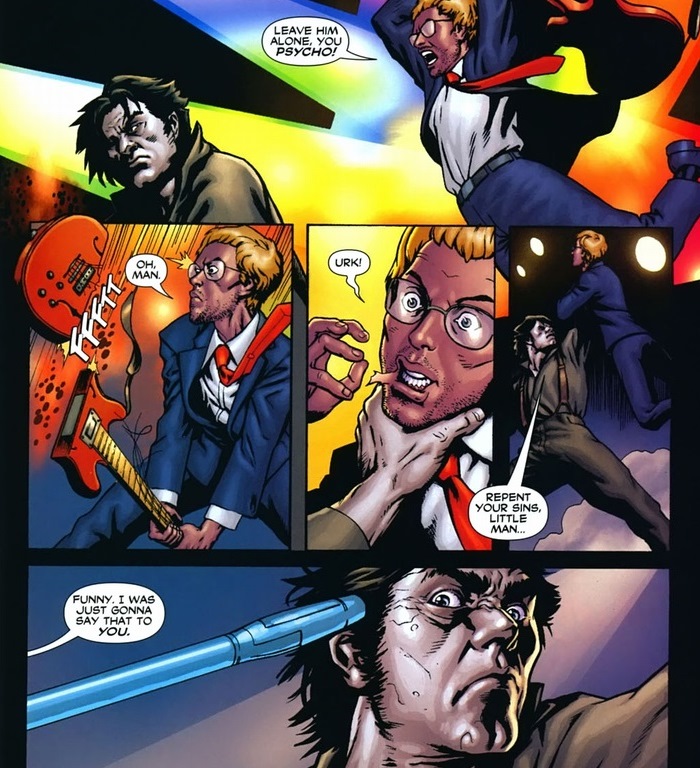
A supervillain so minor that Sweeney Todd doesn’t even have a Wikipedia page, the guy cuts up women or something. Look, motive isn’t important, just know the baddie’s tough.
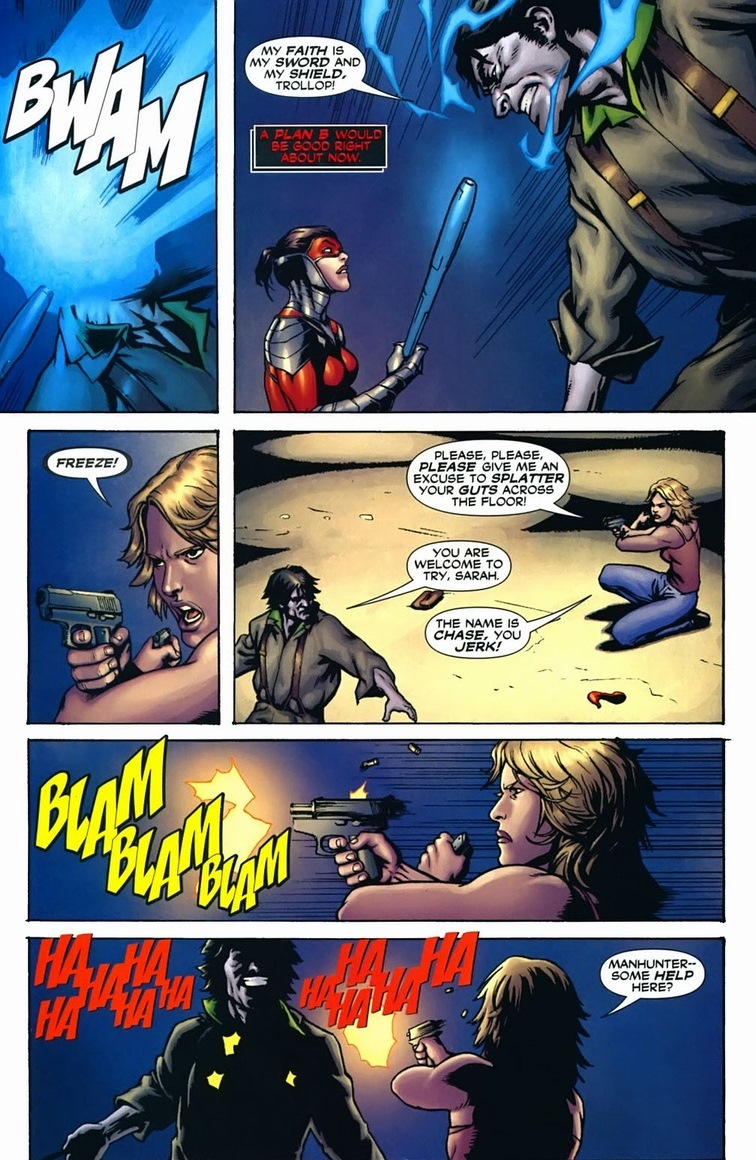
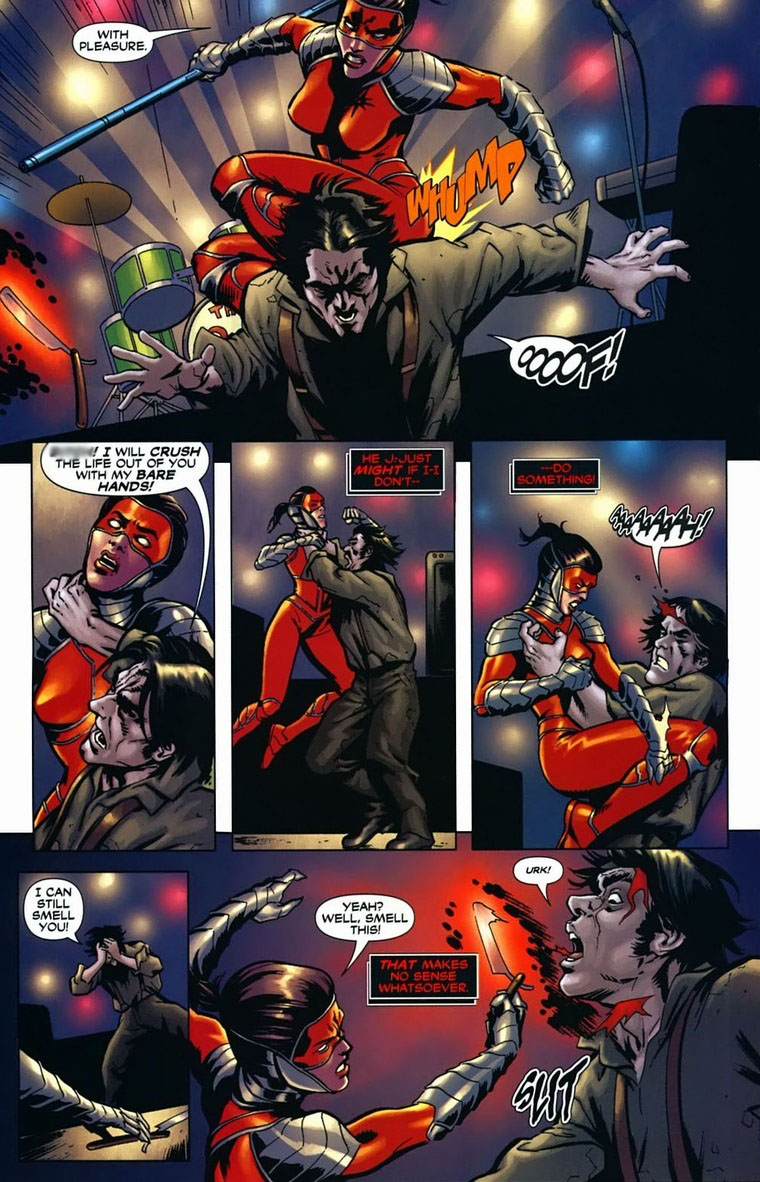
Batman wouldn’t do this. But Batman and Manhunter don’t like each other anyway.
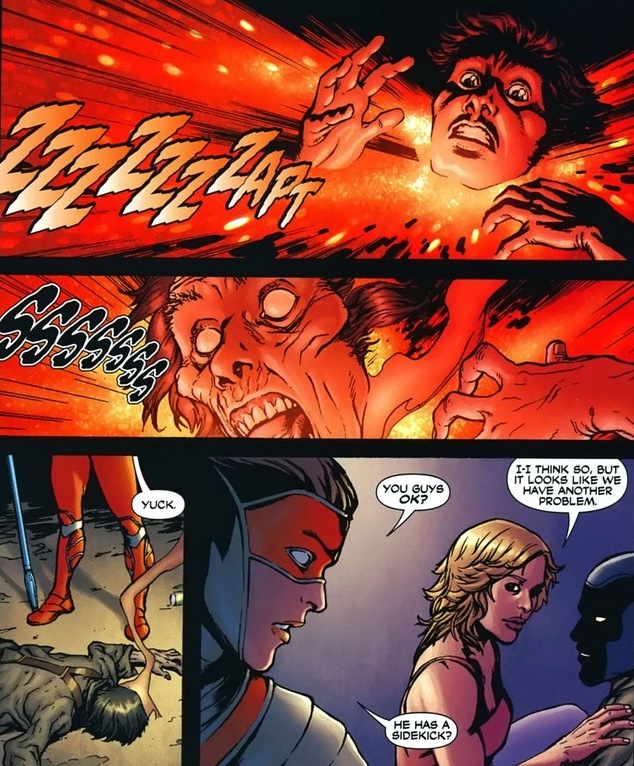
On a final note, what makes Los Angeles a different city than say, Gotham? The celebrations tend to be grandiose, or at the very least, good for the self-esteem. Or because unlike the Dark Knight, Manhunter actually smiles once in a while.
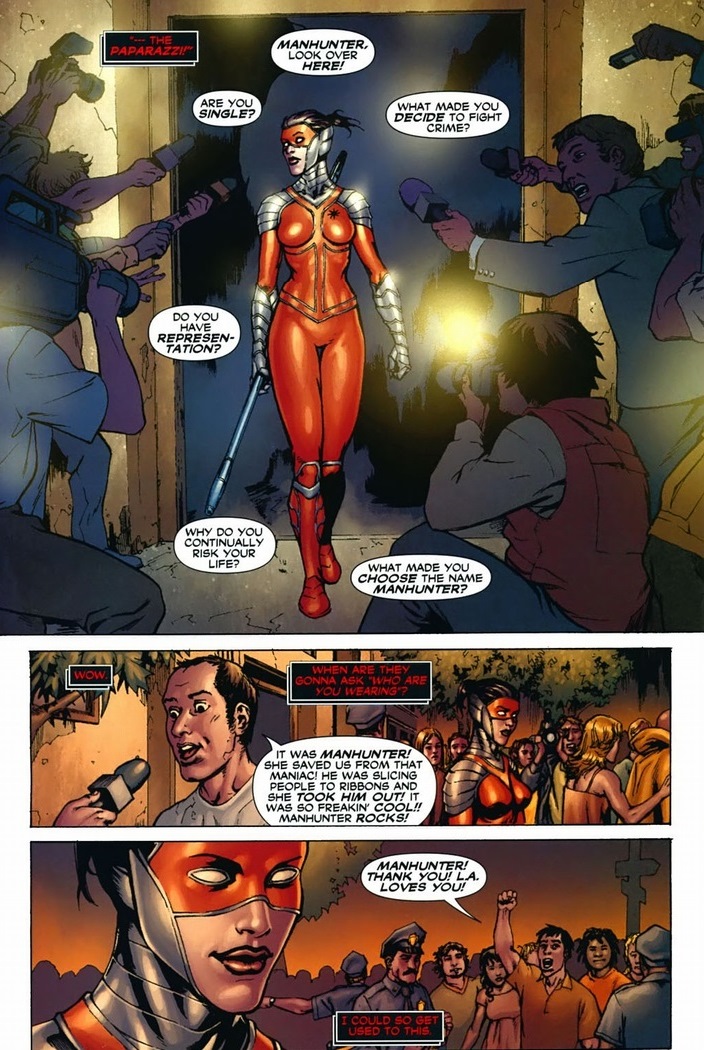
Eventually Spencer moves to Gotham City, probably because the dozen or so superheroes currently patrolling the city still can’t break that bloody wall of never-ending violence. Or maybe she likes a challenge. Or maybe she wants to date Nightwing. Either way, I hope she pops up in the New 52 soon.
 Arousing Grammar