
Flash Thompson: superhero, Pt. 2
Posted: 09/05/2013 Filed under: Characters, Marvel 3 CommentsAfter Flash Thompson lost his legs heroically saving a fellow soldier, it seems as if both his athletic and hero career has ended. Well, one did at least. You can probably infer what’s going to happen to Peter Parker’s buddy from the issues used today:
Amazing Spider-Man Extra! #3, written by Marc Guggenheim and drawn by Fabrizio Fiorentino & Patrick Olliffe
Amazing Spider-Man #591, written by Dan Slott and drawn by Kitson & Jesse Delpergang
Amazing Spider-Man #654, written by Slott & Fred Van Lente and drawn by Stefano Caselli
Amazing Spider-Man #654.1, written by Slott and drawn by Humberto Ramos
Venom #1, written by Rick Remender and drawn by Tony Moore
Venom #5, written by Remender and drawn by Moore & Tom Fowler
Venom #30, written by Cullen Bunn and drawn by Thony Silas & Roger Robinson
Venom #31, written by Bunn and drawn by Declan Shalvey
When Flash gets leaves the hospital, we get not only a clear message of Flash’s current contentment, but also proof of the good Spider-Man provides to the moral fiber of the Marvel universe. Sure, Spider-Man’s strong and fast. But he’s not that strong and fast. Can you name a Spider-Man comic that doesn’t end with him standing barely triumphant while beaten, bruised, and wearing a tattered costume? But the very next issue, he’s back in action. Spider-Man takes the bullets so the innocents don’t have to (well, bullets and jump kicks, laser beams, electric shocks, pumpkin grenades, etc.). Flash totally gets it.
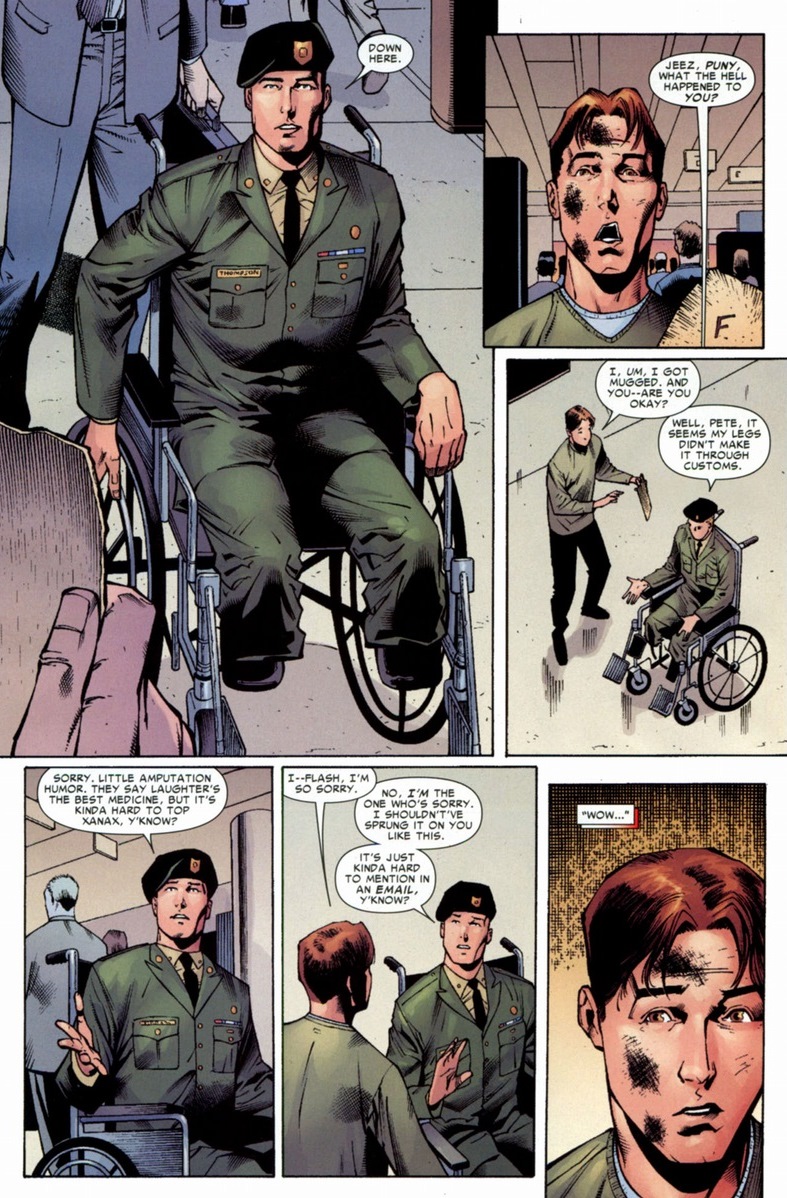
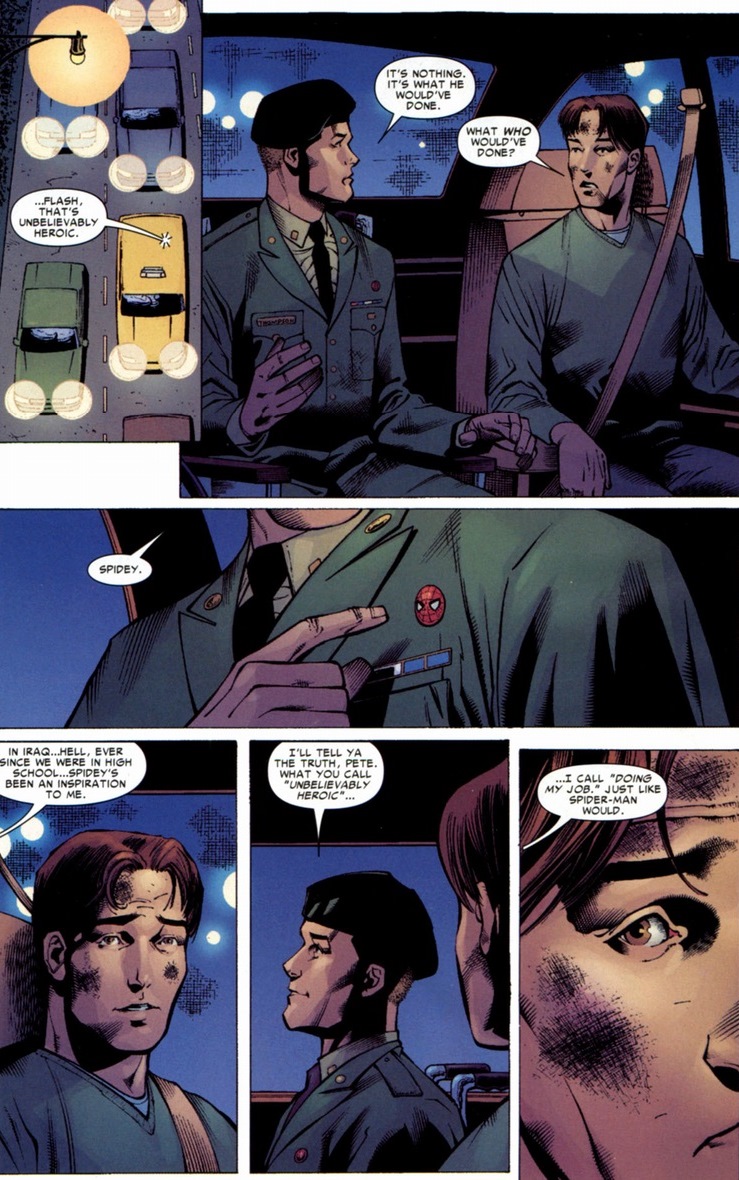
And because Flash strove to be number one his entire life — y’know, standard bully jock hiding inferiority complex stuff — he continues to succeed without legs. That’s what champs do.

Spider-Man’s in an alternate dimension with the Fantastic Four, but that’s a different story. More importantly, when Norman Osborn’s siege of Asgard failed, that meant good news for the government. Y’see, all those cool weapons and toys Osborn played with now belong to the good ol’ USA. Including one weapon that makes tanks, bazookas, and Goblin Gliders look like Super Soakers.


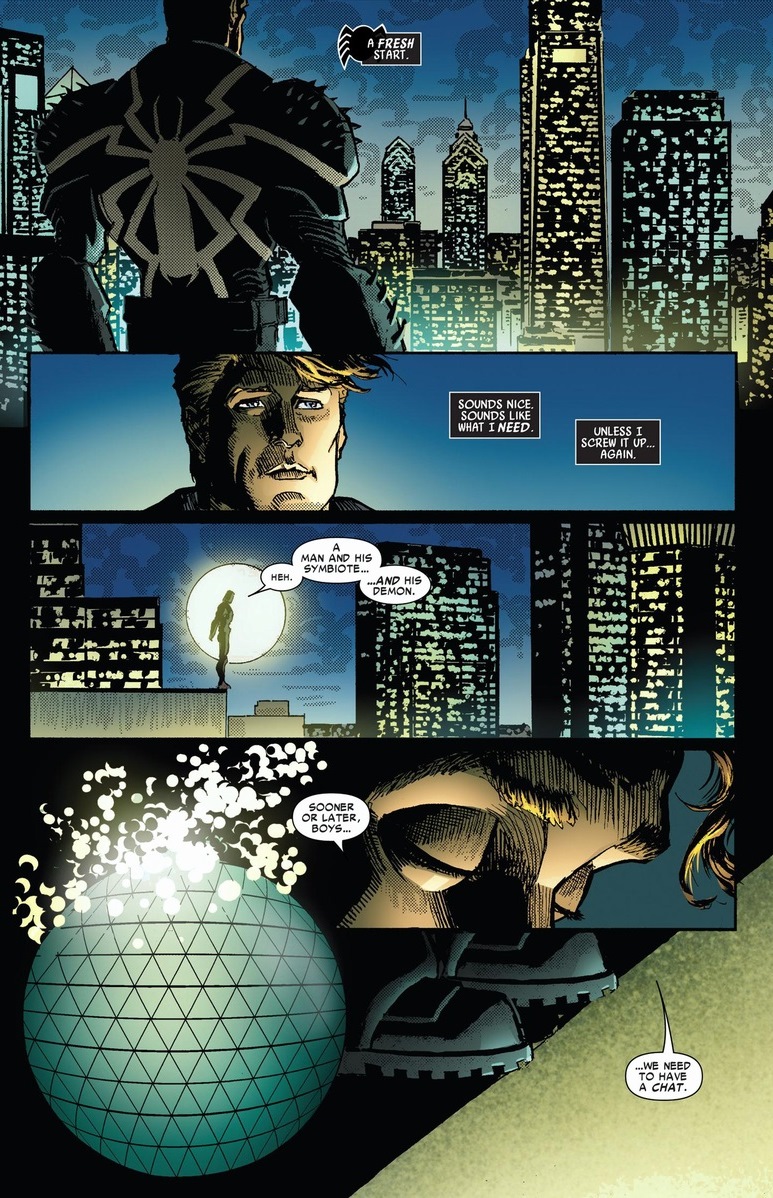
Venom basically acts as a suit of armor, just with an alien personality that eats superheroes instead of kevlar. With the proper equipment and a correctly chosen host, it makes any soldier into Captain America with tentacles. Like Flash Thompson, war hero and president of the Spider-Man fan club.
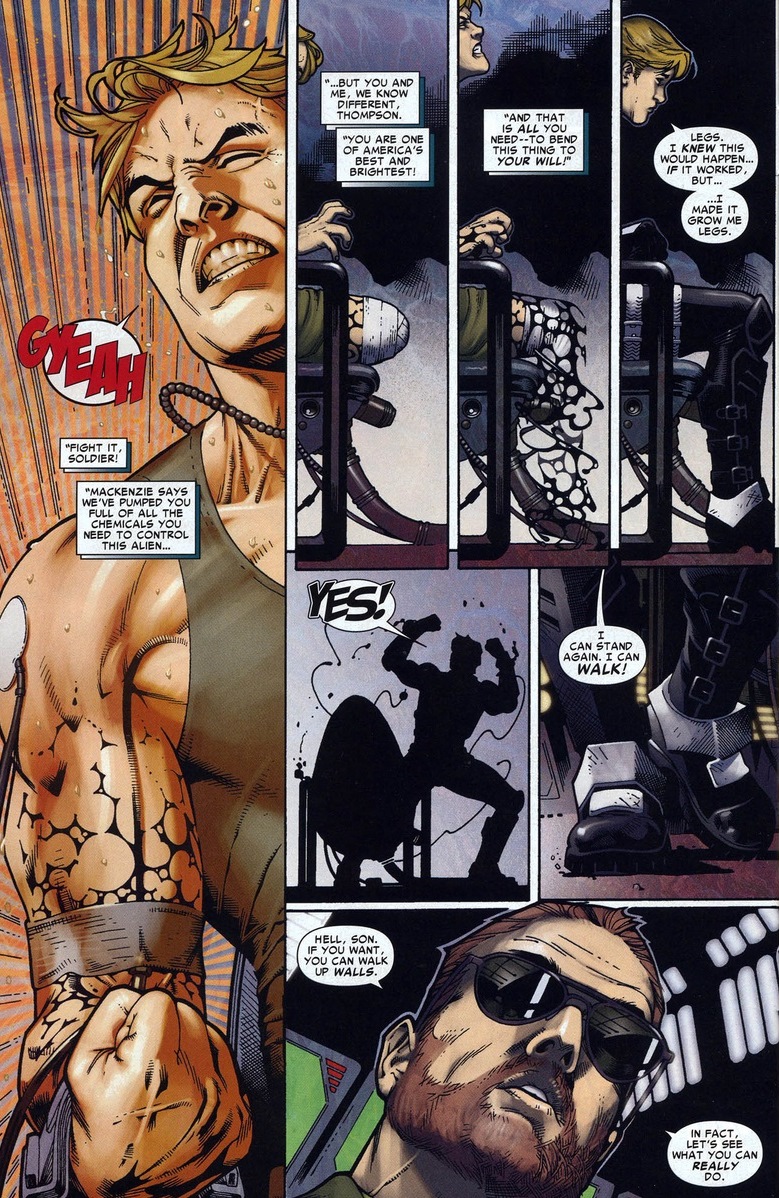

At first, Venom (now referred to as Agent Venom) serves as a point-and-shoot weapon for the government. Flash “puts on” Venom, jumps into the battleground, completes target objectives, and Venom goes back in the tank — and his legs with it. Over time, both Flash and Venom evolve. But we’re not there yet. First up, all those cool missions:


Super cool, right? A super solider doing super soldier stuff. Flash even earns himself a place on the Secret Avengers roster, which totally qualifies him as a real (secret) Avenger. But you know how Venom is actually a crazy evil alien monster the government desperately hopes to control? They certainly do their best. Sometimes.


Anyway, Flash gets his very own solo series, something Spider-Man supporting characters rarely enjoy. I mean, Mary Jane will get a one-shot Valentine’s Day issue, but she only rarely transforms into a hulking supervillain who cannibalizes enemy soldiers. Still, Flash turns out to be a fantastic character for holding his own comic. He receives an arch-nemesis (Jack O’Lantern — far scarier, deadlier, and more complicated than the name suggests), a love interest (Betty Brant and Valkyrie), and even saves the world from literal Hell on Earth with his new best friends Red Hulk, X-23, and Ghost Rider. Actually, you should go pick up that little Marvel event, I greatly enjoyed it. Oh, and Flash’s former alcoholism? It runs in the family.


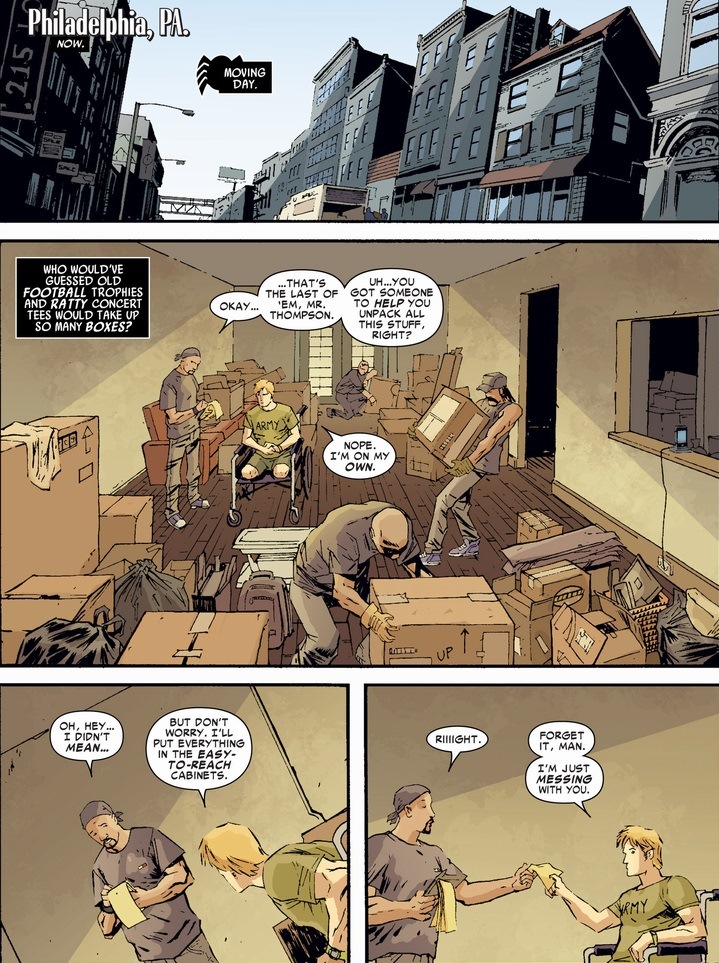
Though Flash exhibits the self-loathing present in all superheroes (which even Captain America has moments of), he essentially broke free of government control and serves as an actual patrolling superhero, with Venom just hanging out inside him at all times. Like a gooey pudding that won’t digest. Most importantly, he’s also the only superhero in Philadelphia. For excitement, thrills, and combat, supervillains should totally hang out in New York City. But if they actually wanted to make money, it’d be smart to move — really any other major city would do.
While Venom ends in two issues with #42, it’s well worth it to pick up the older issues, if just because now you’re guaranteed closure. Some closure at least.
Flash Thompson: superhero, Pt. 1
Posted: 09/03/2013 Filed under: Characters, Marvel 2 CommentsThe one-time Peter Parker bully turned Spider-Man’s #1 fan turned alcoholic turned war hero turned superhero. That Flash Thompson. Remember his first appearance in Amazing Fantasy #15, written by Stan Lee and drawn by Steve Ditko? Boy, stereotypes did not grow subtle in the 1960s.

But as time went on, Flash Thompson has evolved into one of the most interesting and complex characters in the Marvel universe today. We’ll take the first half of this journey today in Amazing Spider-Man #108, written by Stan Lee and drawn by John Romita, and Amazing Spider-Man #574, written by Marc Guggenheim and drawn by Barry Kitson
During Eugene “Flash” Thompson’s stint at Empire State University, his number pops up to serve his country in Vietnam. Due to Marvel’s sliding time scale (and also because Flash isn’t now 60 years old), it’s some unnamed military conflict. No fighting the good fight alongside the Punisher deep in the jungles of Hanoi. But he did see some stuff over there, man.
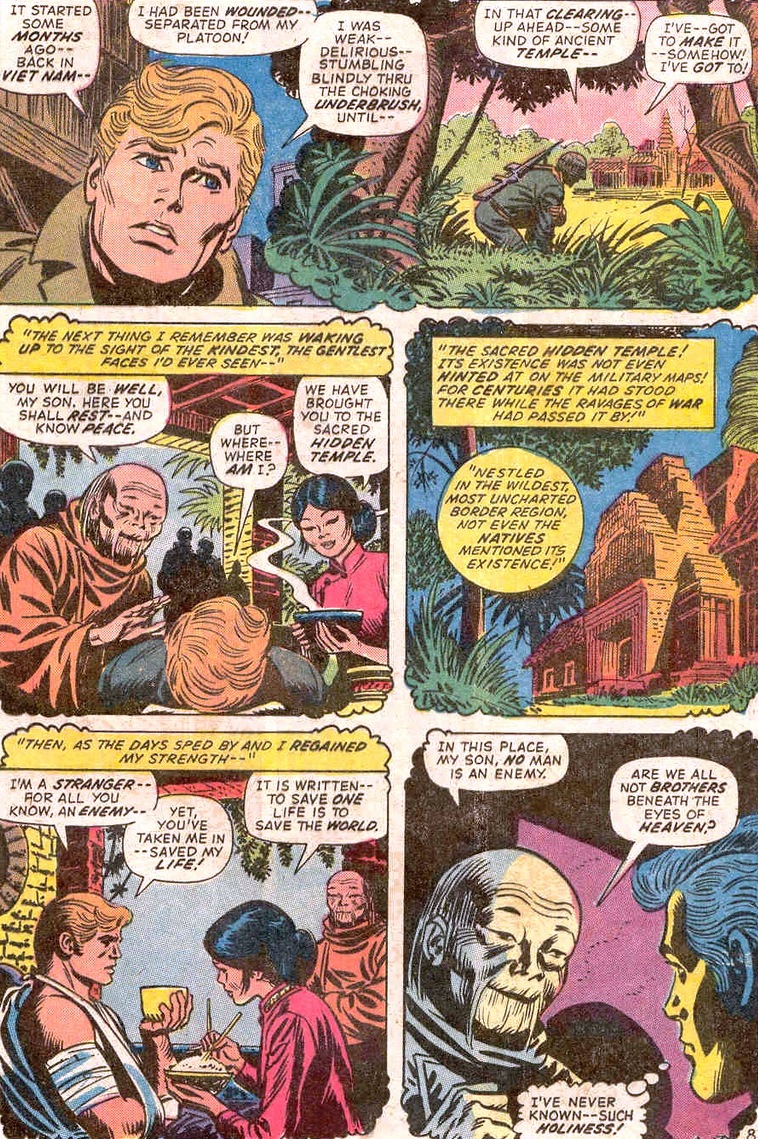


As you can imagine, Flash handles the PTSD badly. He dives into some serious alcoholism — the same disease that affects his father –although he does become one of Parker’s dear friends as well (watching a village or two explode sort of makes bullying seem petty). Then the Green Goblin puts him in a coma. Bad times. Eventually time heals all wounds, as Flash awakens and trains young minds in the art of dodgeball and stuff as a P.E. coach. But when war in the Middle East rears its ugly head in the late 2000s, Flash steps up to serve his country. And thus begins one of the most powerful stories ever told in a Spider-Man comic.


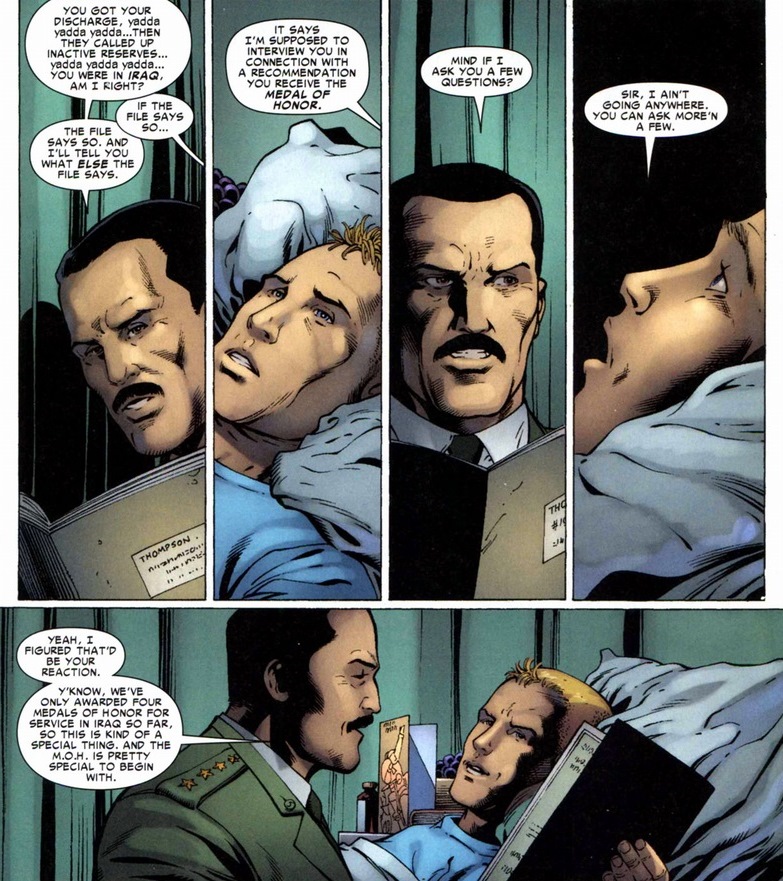
So what happened during Flash’s most recent army gig? Heroism, that’s what. The decades of comics have been kind to Flash’s personality. His fanboy-ism towards Spider-Man becomes genuine respect, so much so that Flash’s entire morality has been shaped around what he’s seen Spider-Man accomplish. Guggenheim does a great job incorporating Flash’s decisions based around the simple idea of, “What would Spider-Man do?”

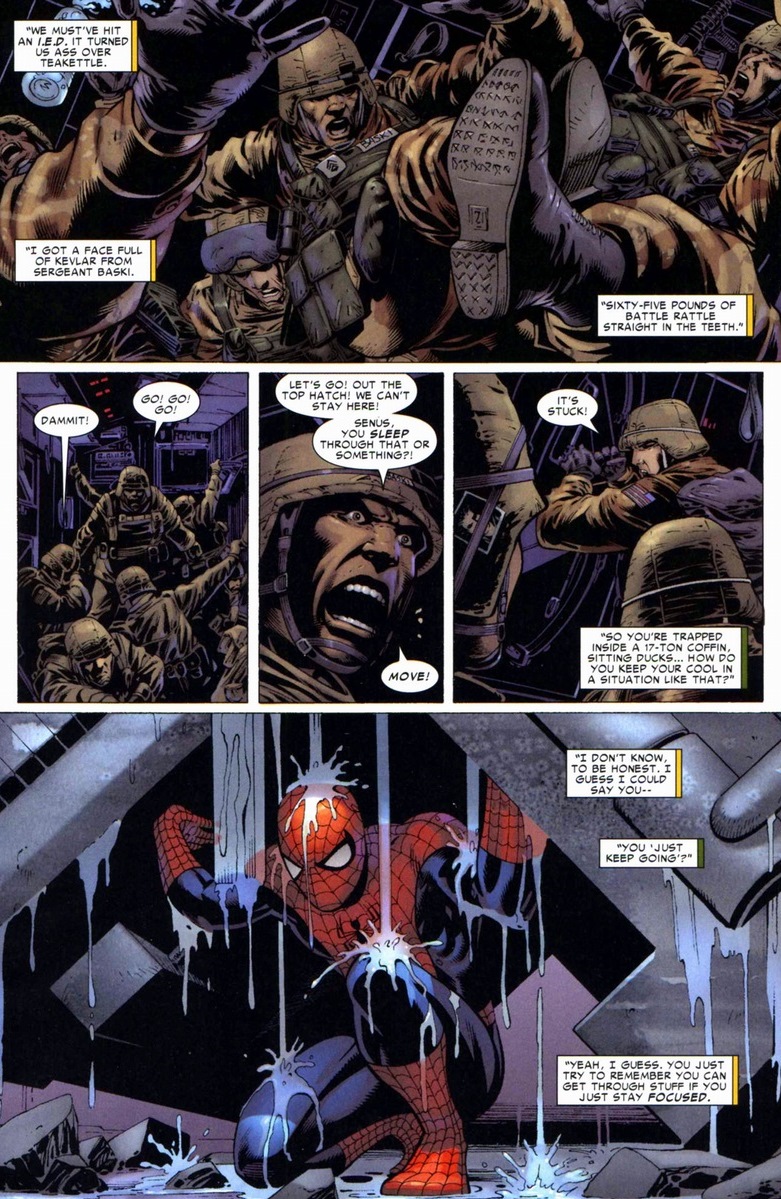
And while punching the Rhino or dodging pumpkin grenades certainly makes web-slinging a scary game, nothing compares to that real life stuff.


Everything goes bad. Everything. As many SHIELD agents flung across the helicarrier by an angry Hulk can tell you, a rifle and grit alone rarely provide the protection needed that, say, a healing factor or optic blasts do.
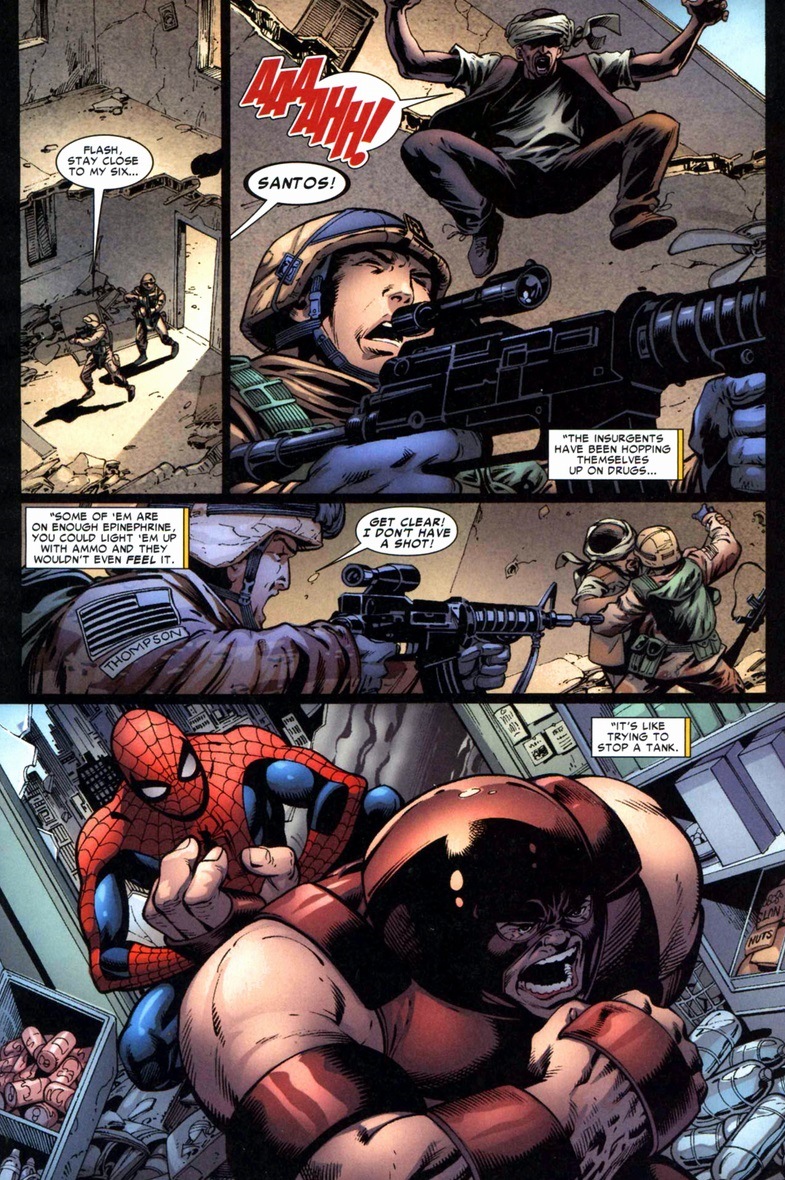

Everything gets worse. Much worse. Y’know, I remember before the assassination of Captain America during the Iraq war, the left wanted him on street corners protesting this war and the right wanted him in the trenches punching terrorists. But the more I think about it, a man with a shield and flamboyantly bright costume kind of cheapens the war. Makes it silly. And this is not silly, though I so wish it was.
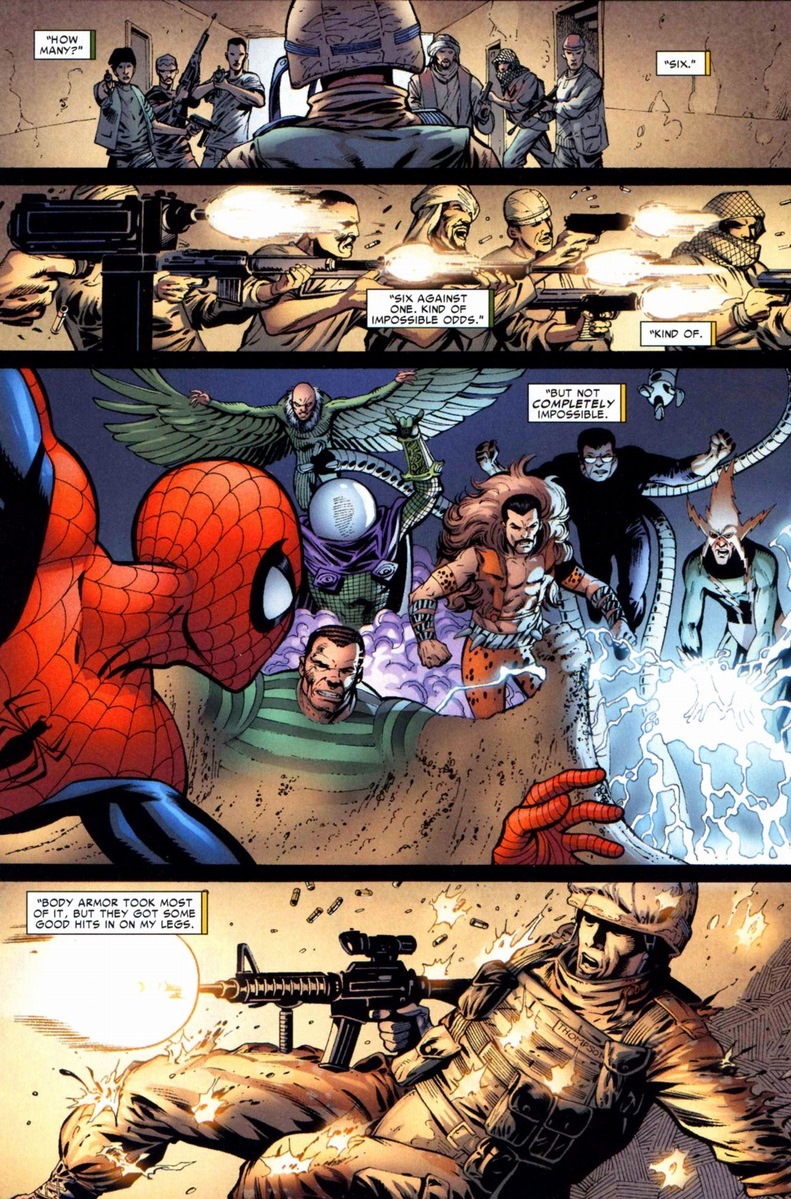


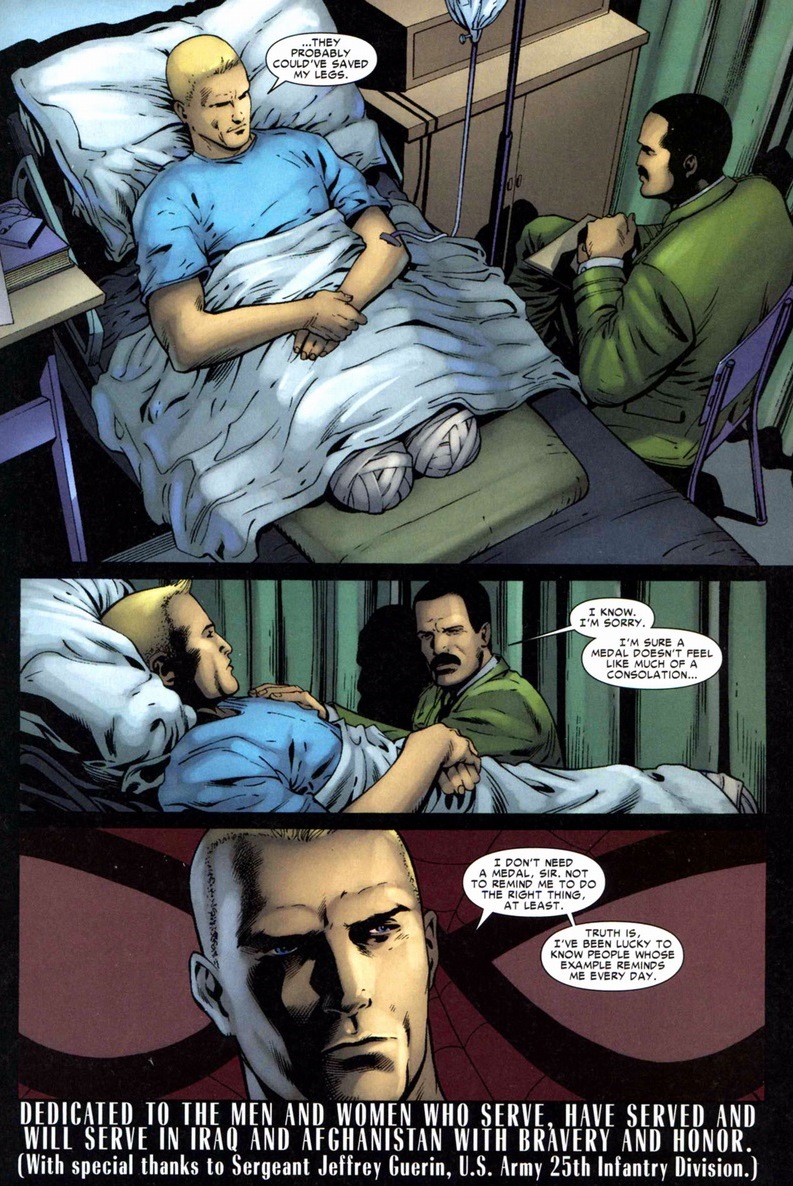
On Friday, we’ll watch as he becomes the man he deserves to be — and I’ll show you slivers of the past five years as he deals with recovery, rekindled relationships, alien symbiotes, and some major daddy issues. But those’re spoilers, and we’re better than that.
A Spider-Man love story interlude
Posted: 09/02/2013 Filed under: Marvel, Relationships 5 CommentsThanks to my new best friend Doug Fuchs (whose website you should totally visit), I realized how long it’s been since a Spider-Man article. So let’s have a week of them. Or two. Or three. We deserve it.
I know I’m not interrupting anything, and an “interlude” title makes no sense, but today I want us to see an adorable little side story from Spider-Man Unlimited #4, written by Robert Kirkman and drawn by Cory Walker & Scott Hanna. And truthfully, Spider-Man only plays a side role (a punching side role). But when something charms me like this short story does, I’d be a jerk not to share it with those I love (readers).
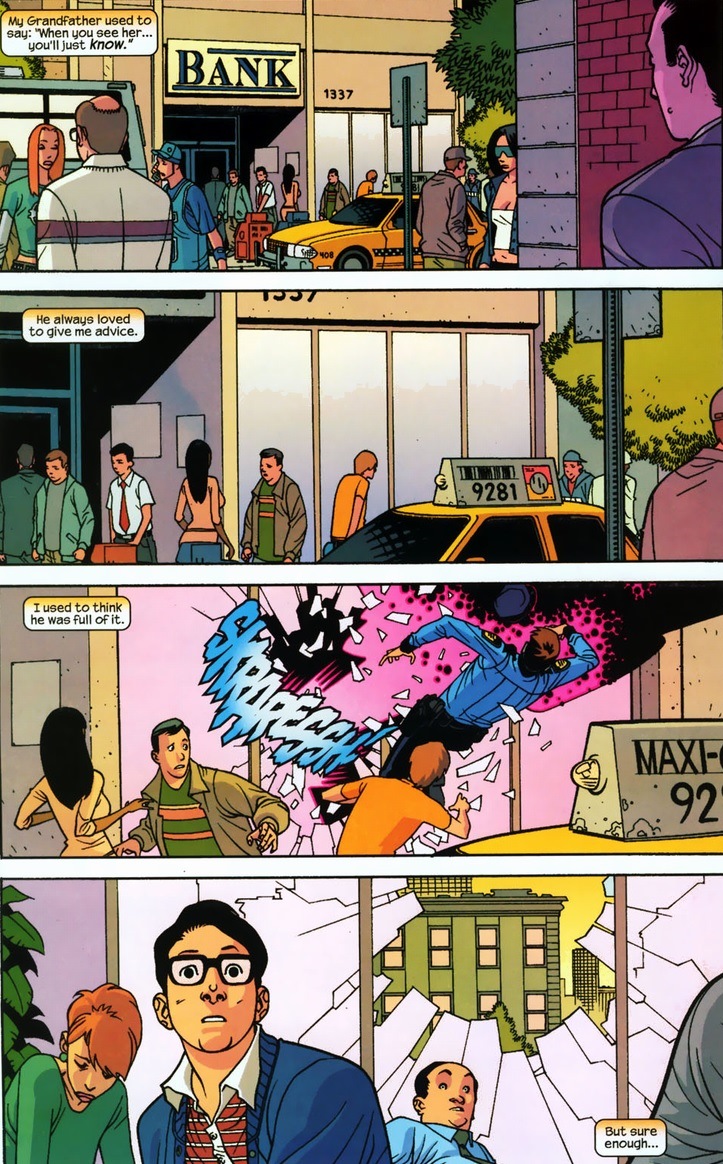
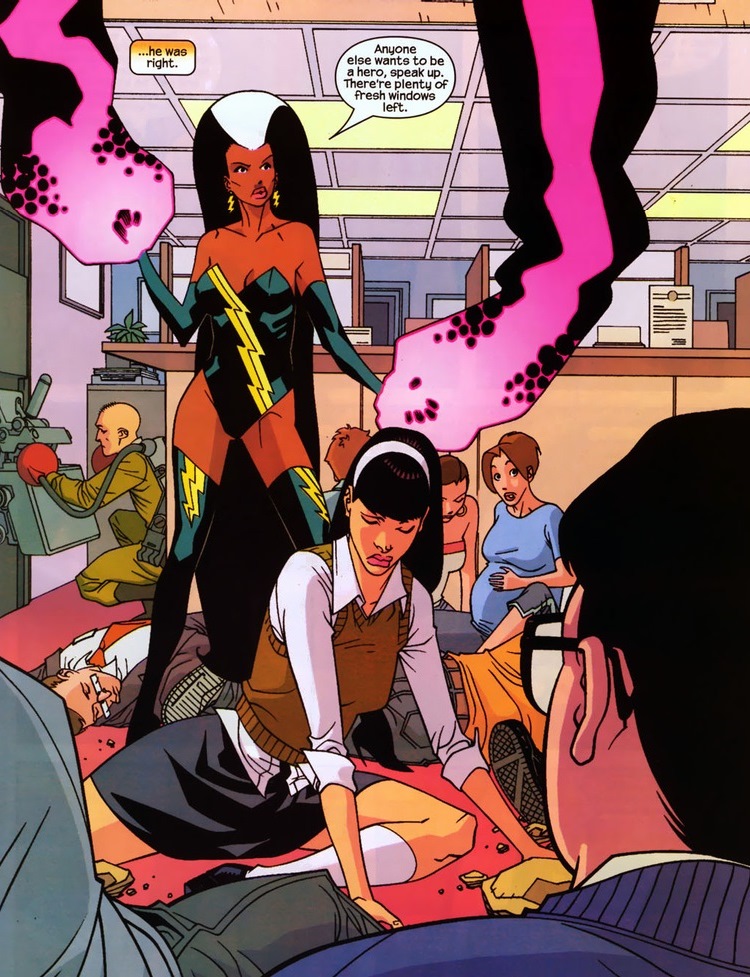
A man trapped in an ongoing bank robbery witnesses the girl of his dreams. No better way to tell your grandkids how you met than during a traumatic bonding experience. I’m a big fan of blossoming love, especially in comics.
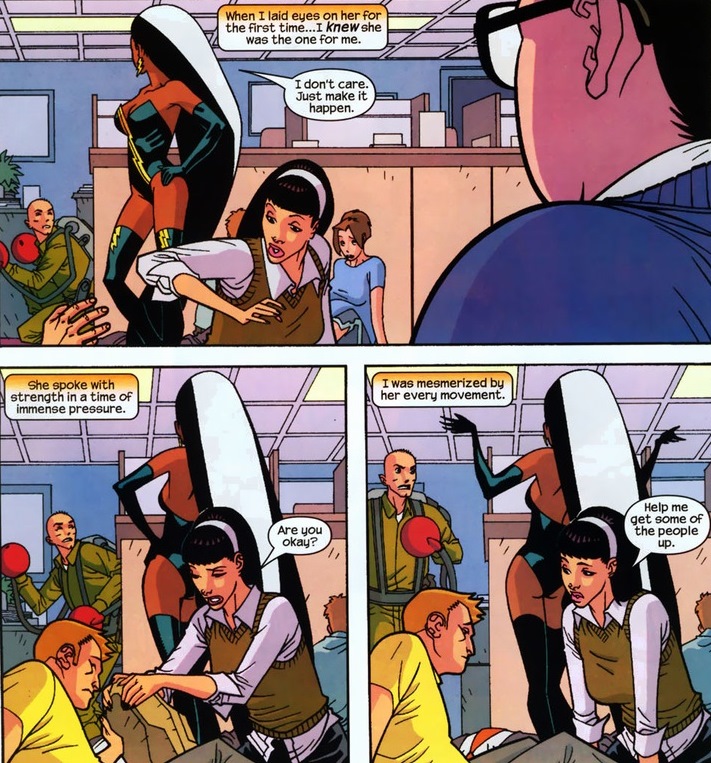
Do you know the supervillains Powerhouse and Masterblaster? You do? You’re amazing, because they’re wildly minor X-Men villains. I had to look them up on Wikipedia. Oh yeah, and Spider-Man shows up. His name adorns the title of the series, after all.
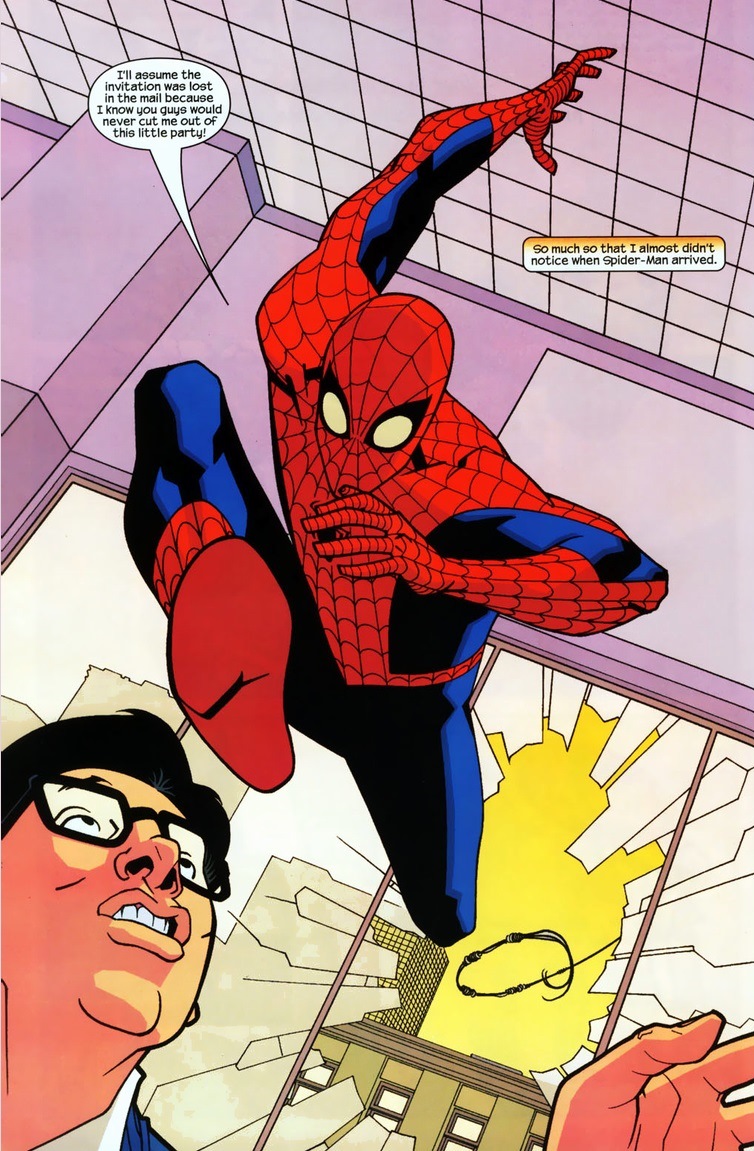
Sometimes I’m surprised dojos don’t line every street corner in New York City. The collateral damage these superpowered fights alone involves expertly dodging all sorts of glass, rubble, and recently kung fu’d bodies. Sure, Spider-Man can do a flying jump kick across a city block, but he can’t web every piece of debris hurling through the air. I mean, he probably could, depending on the writer (or in my heart).
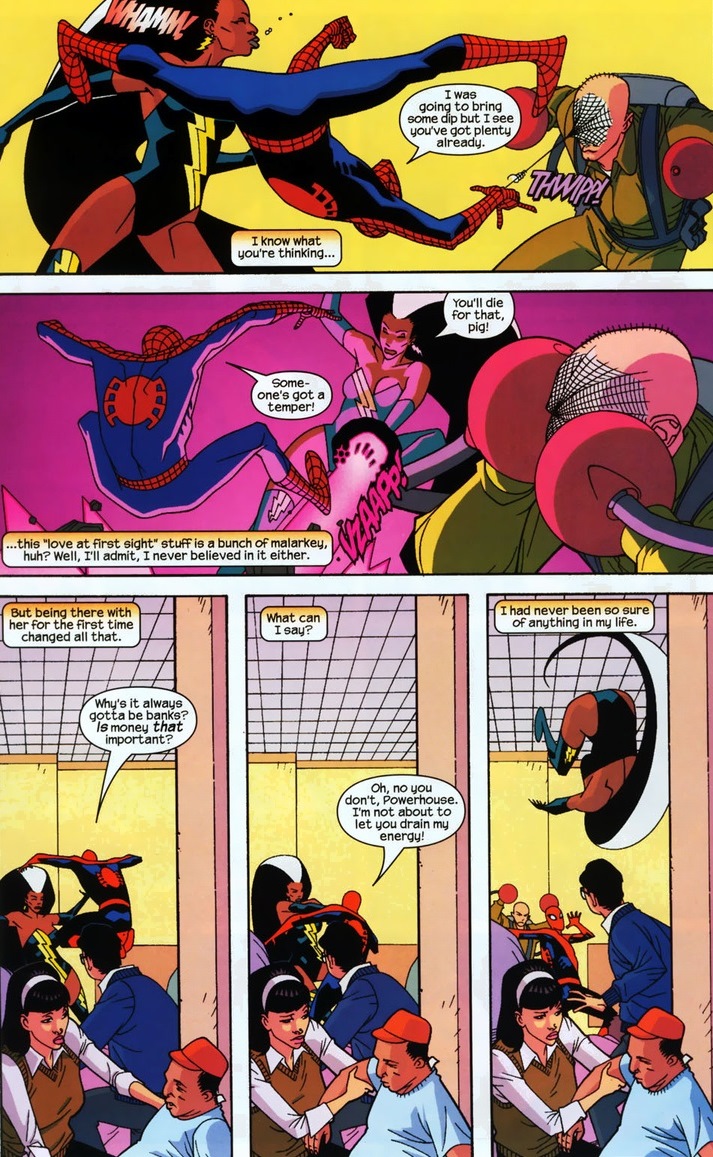

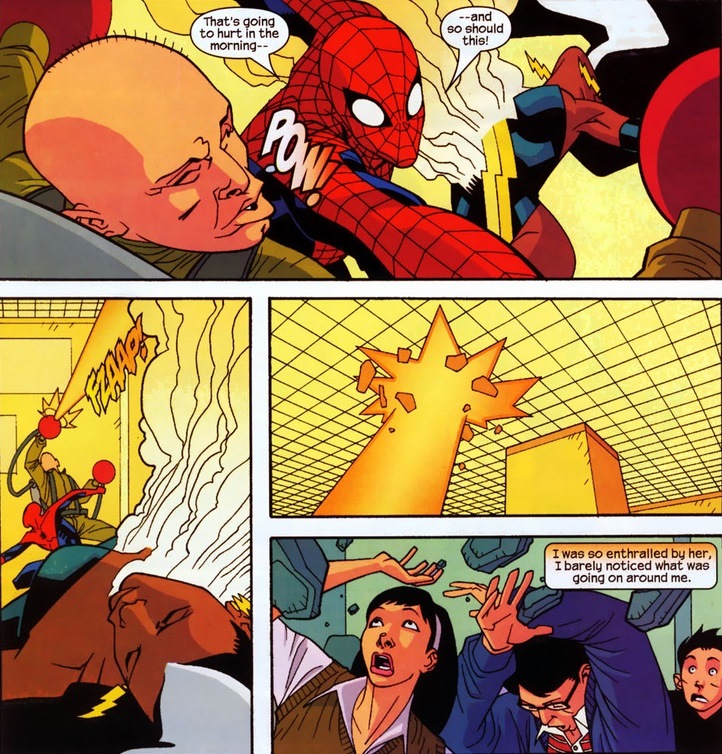
You wonder why people think Spider-Man’s a menace? Because they see buildings collapse around them every day from his brawls. Captain America goes to space, announces he took down Thanos, and everyone politely claps. Or maybe propaganda’s in bad taste when the man holds the name of our country. And fought in every major battle of World War II. And went into space and took down Thanos. Either way, at least Spider-Man didn’t prevent true love today.
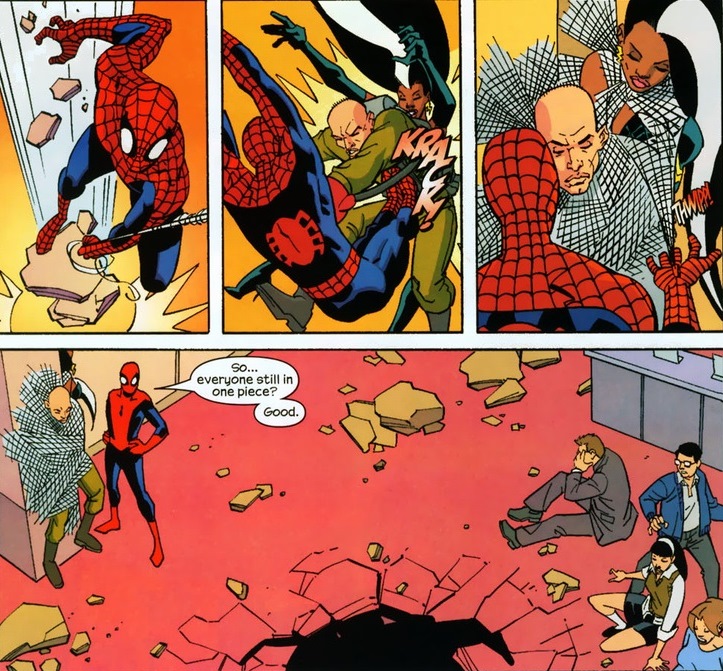
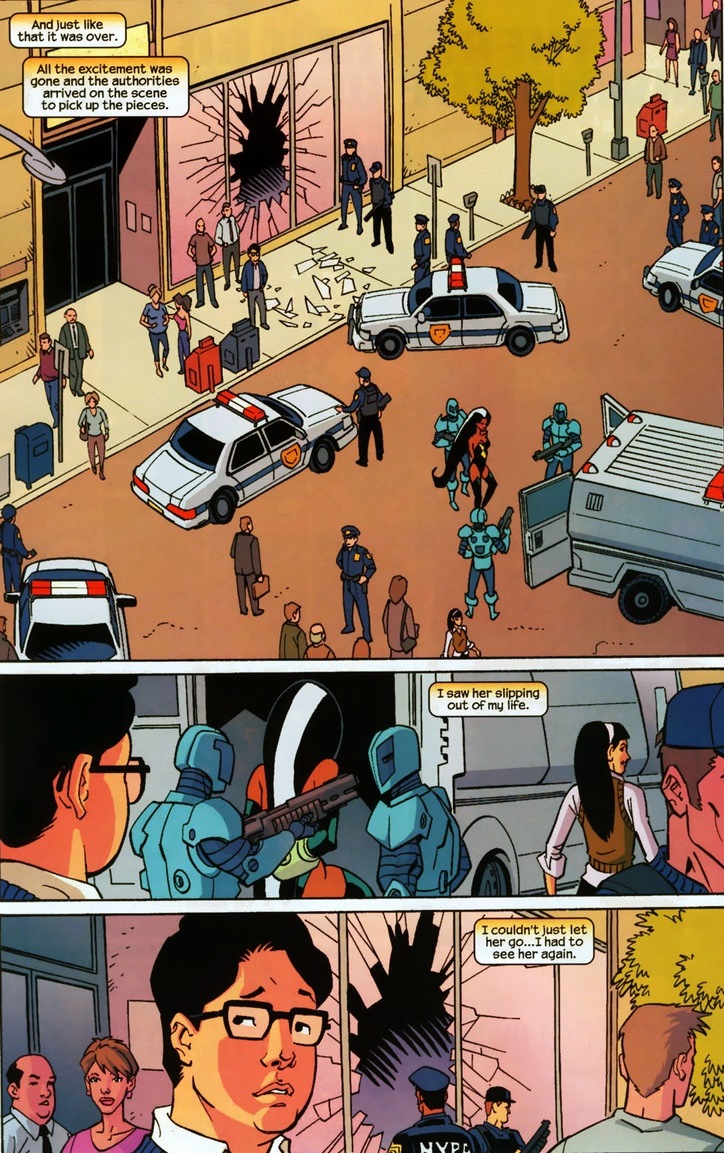
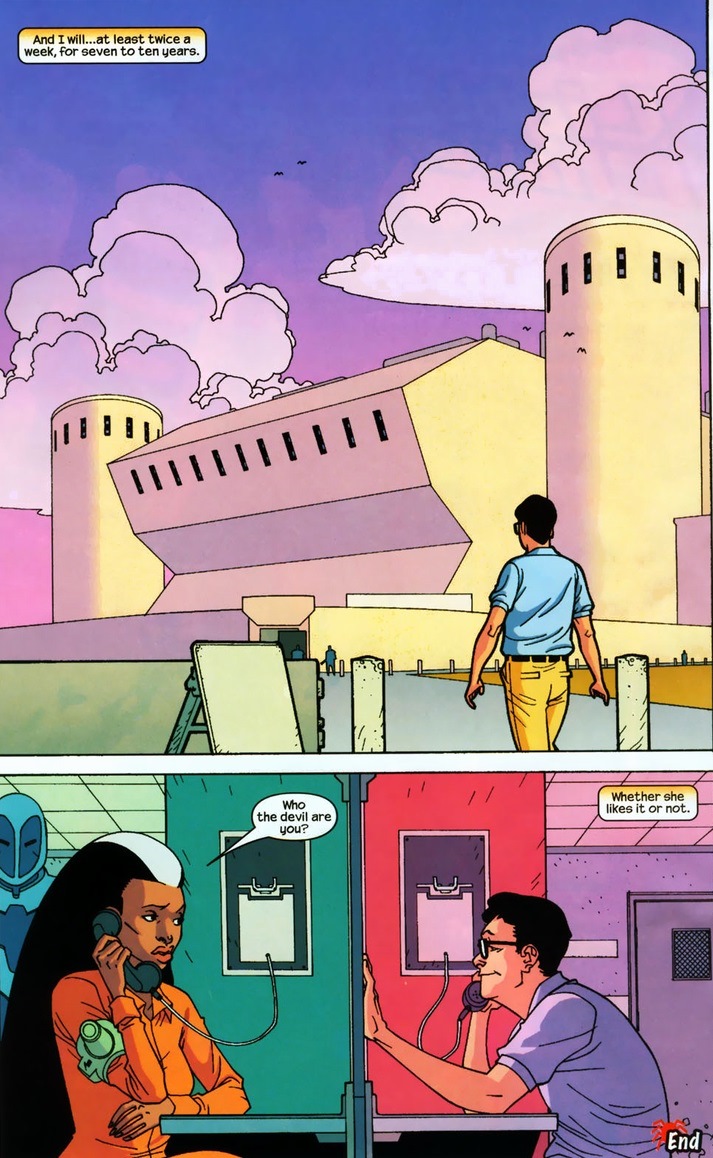
See? Super charming. You’re in a better mood for having read this story. Next time we’ll jump into Spider-Man’s supporting cast. It’s investigative, which is when I feel the most important.
 Arousing Grammar