
A study on Transmetropolitan or why you want to be like Spider Jerusalem
Posted: 09/13/2012 Filed under: Marvel 2 CommentsHey everyone. Jason has kindly allowed me to make to make a guest post while he does other things related to his grown up life. Don’t worry, he’ll be back on Monday with new material so don’t fret just yet. So today, we are going to talk about one of my favorite comic series, Transmetropolitan. I tend to go with more words than pictures, so I hope you can be more patient with the bombardment of words.
This is Spider Jerusalem…


A former journalist that is forced through circumstances beyond his control to return to the place he hated. A mountain man in every sense of the word, you wouldn’t be able to notice his past life, the life that he decided to leave behind. When he comes back to the City, immediately gets his old job back when asked for it, and goes to get ready at his new apartment, complete with a drug addled 3-D printer.


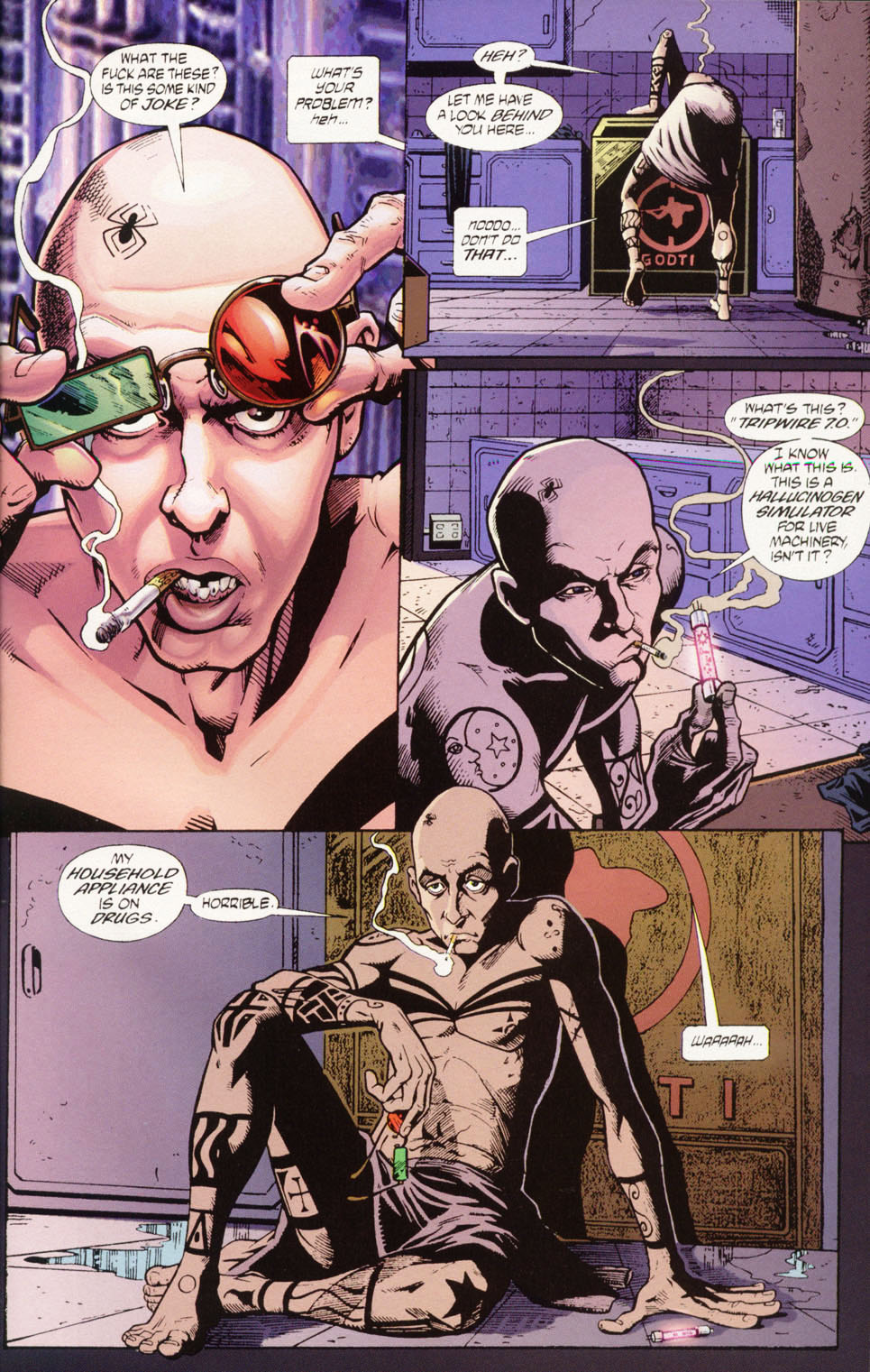
Of course, this does not fully highlight the level of insanity that he displays, this occurs much later at a religious convention.
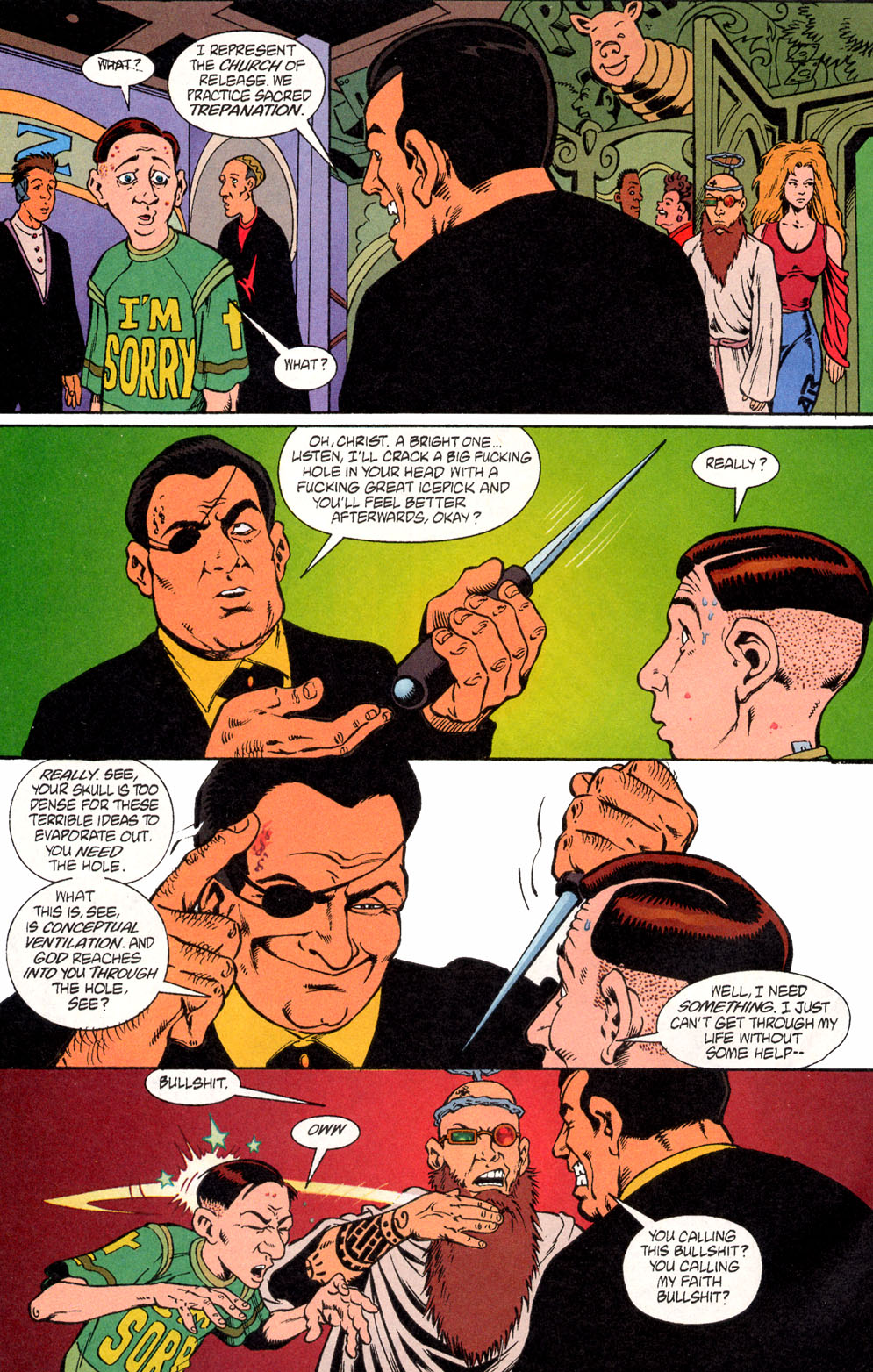

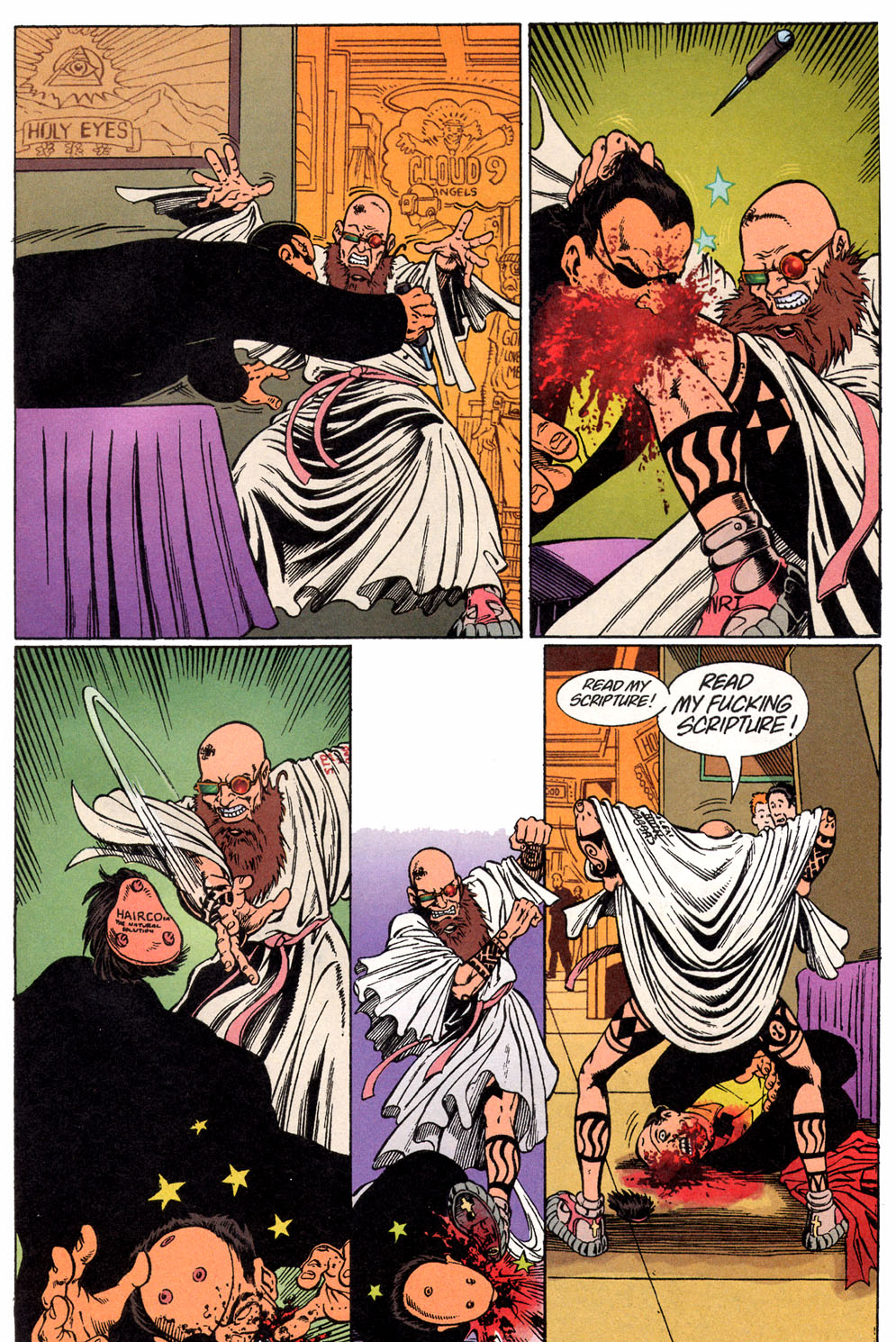

Yes, that’s Spider dressed as Jesus throwing a fit at a convention because he sees faith as nothing more than bullshit. Yes, it would be a terrible thing to see in real life. But a part of us, depending on our views, would love to see someone do that at a similar situation.
Now why would you want to be anything like him? He’s a sociopath, seemingly drug addled, and a menace to society at large. And yet, that is exactly the reason why one would be inclined to read the comic in the first place. Because we can live vicariously through his exploits and survive. We are going to talk about the dark and sinister feelings that one has towards the place they live in. And of course, these are the feelings that we are deathly afraid to show to other people, because it is a very good way to get arrested or ostracized. Because while we may feel compelled to do these very bad things, we know better than to do it.
The City itself is pretty ridiculous. But in its own way, it is very similar to the world we live in now. Sure, our robots don’t develop a drug habit and you don’t have trans-species surgeries to deal with, but even in its gross exaggeration, there are things that we can connect and relate to. And even if you leave a continuous 9-5 existence, you are, at the very least, exposed to the place you live in and it shapes you in some way or another. And in some ways, we hate it too. We hate authority, we hate other people for various reasons, and we hate the consistent and predictable lifestyle that we live in. So for the most part, we get pissed because John from Accounting is being a prick or because the boss told us we have to work overtime. Don’t you want to visit horrible and painful things for those people? If you do, you need help, but for everyone else that doesn’t have consistent fantasies of introducing your boss to a chainsaw, there are ways to be able to live out your own fantasies, and for a period of time, don’t think about your own life and how terrible it is. These fantasies help when taken into moderation. We can take another point of view and see what the person sees. Experience what they experience. We can be as clean and orderly as Superman or as dirty but honest as Spider Jerusalem. And that’s the beauty of it. We don’t have to get down and dirty with nasty things like Lex Luthor plan to send an artificial tsunami to hit Metropolis and the implications that it brings. We can save the day.
There is this underlying theme of man struggling with the city as. Spider is hardly someone that meshes well with the city life. It is the attention that was placed on him, his integration that was occurring between him and the very City itself that made him opt to leave in the first place. And we can relate to that in some form or fashion. Granted, unless you are really unlucky, you won’t really have to deal with mass police brutality. Some of us get upset with authority just by getting a ticket or having to show up for jury duty. But our interactions with authority or with day to day life is frustrating and difficult to deal with. And depending on what happens to you or what shows up on the news, you can also feel a sense of outrage as well depending on the news item. There is a sense of helplessness that comes with living in close proximity of so many people. And we can relate to it, because we’ve been there. We know what it is like to be completely drained by our jobs and our families and our friends. And to see someone fight against the very City itself, well to some comes a desire to do much of the same in our own way. And to see the protagonist win against all odds, since no one likes a sad ending.
And the comic even draws from the life of Hunter S. Thompson, a notable and celebrated journalist of his time, which goes to show that even our larger than life protagonist has real world connections. If you need any proof of this connection, there is an obituary that Hunter S. Thompson wrote on Nixon that should help connect the dots (1). Granted, he didn’t run around utilizing his own brand of vigilante journalism, but he hardly led a safe and easy life. And most of us, when given the opportunity to do what he did, wouldn’t do it because we are more than content to leave safe and boring lives. But that doesn’t mean that the excitement of such a life is unappealing either. We just want to experience it in the comfort of our basements.
In essence, this is the power of any media, but in particular, comics. They can show us far different worlds, help make the connections between the reader and characters, and allow us to consider other perspective, realize any feelings that we have. Media of any time and place help broaden and sharpen our perspectives. You may be at total odds with Spider Jerusalem’s way of doing things or his philosophy, but that also serves in setting a point where your values can run opposite of. And if you are cheering on Spider as he pisses off every single person of power, at least you can do it without being beaten and thrown to jail. Because, let’s face it, the vast majority of things that Spider does could lead you to a rather lengthy prison sentence. Like for example, shooting a bowel disruptor at the sitting President.

And honestly, the fact that we can enjoy this sort of scene without being shot and killed in the process goes to show that comics are a safe medium to explore topics that otherwise would ensure a spot and a mention on the nightly news.
All images come from Transmetropolitan , written by Warren Ellis and drawn by Darick Robertson.
(1): http://www.theatlantic.com/magazine/archive/1994/07/he-was-a-crook/308699/
Professor X: memory hog
Posted: 09/12/2012 Filed under: Characters, Marvel 1 CommentI interrupt our normal schedule for a special current event article!
So Professor X died today in Avengers vs. X-Men #11, written by Brian Michael Bendis and Olivier Coipel. Killed by Cyclops, currently possessed by the Phoenix power. Remember? That fiery thing that can destroy entire worlds with mere thoughts? I just want you to know that Professor X didn’t go out like a punk.

His actual death scene is plastered all over the Internet, but don’t forget that beforehand the professor gave his star pupil a righteous spanking. While this certainly will make for a few months of gloomy, nostalgic X-Men comics, Professor X is kind of a jerk. You see, when you’re a mutant with omega-level telepathy skills (no matter how good the intentions), there will come a time when you abuse them. Because you always know everyone’s waking thoughts, movements, motivations, and pasts. All I’m saying is that just because you can totally blame Cyclops for Professor X’s death (the Marvel universe certainly will), the good professor ain’t exactly innocent himself.
Let’s go back to 2006 and take a look at some select scenes from X-Men: Deadly Genesis #4-6, written by Ed Brubaker and drawn by Trevor Hairsine and Scott Hanna.

You might need some back story. Scarlet Witch, the reality-controlling mutant, destroyed and then recreated the world. Everyday X-Men stuff. But when the world went back to normal, Professor X (real name Charles Xavier) found he could suddenly walk. Only one problem: he no longer had any mutant powers.
And that angry guy with the yellow glow? His name’s Vulcan, and his team once rescued Cyclops (real name Scott Summers) from the evil Krakoa island. Oh, and one more important thing:
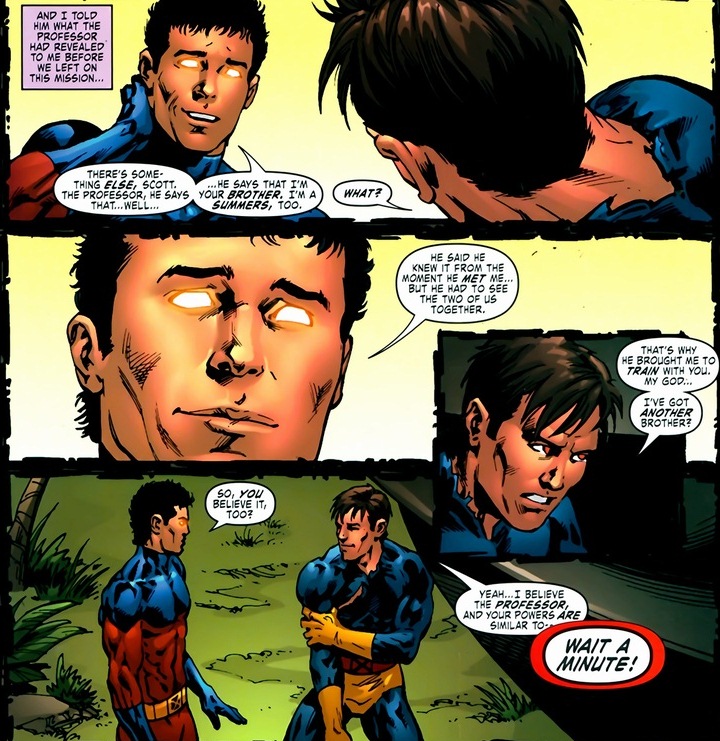
Delighted by the flashback above, right? Cyclops finds a lost sibling! Except once you scrape off the initial layer of puppies and rainbows, the truth cake gets moldy and filled with shards of glass.

After the rescue, Cyclops returned to the mansion and Professor X looked through his memories to find out what happened. He did not like what he saw. Y’see, our Summers thought the Krakoa Island released him to go gather more mutants. Nope:
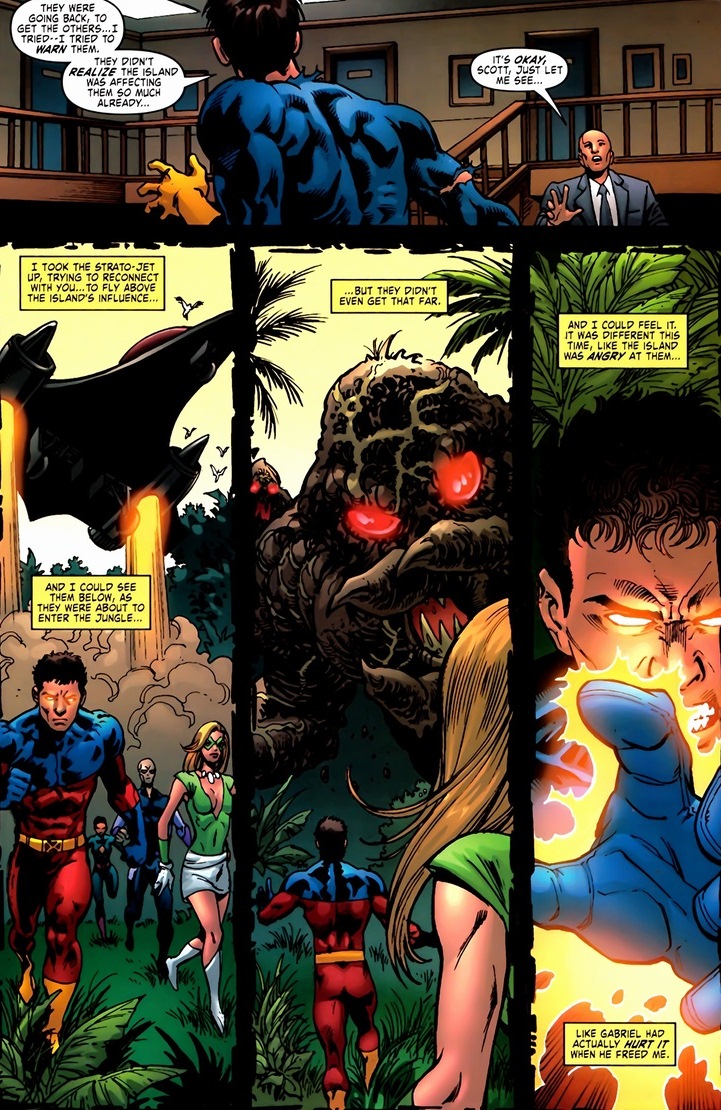

After saving Cyclops, the entire rescue team was then murdered by a lava monster. Ouch indeed. That and Cyclops just saw his brother incinerated. Professor X took a drastic step.
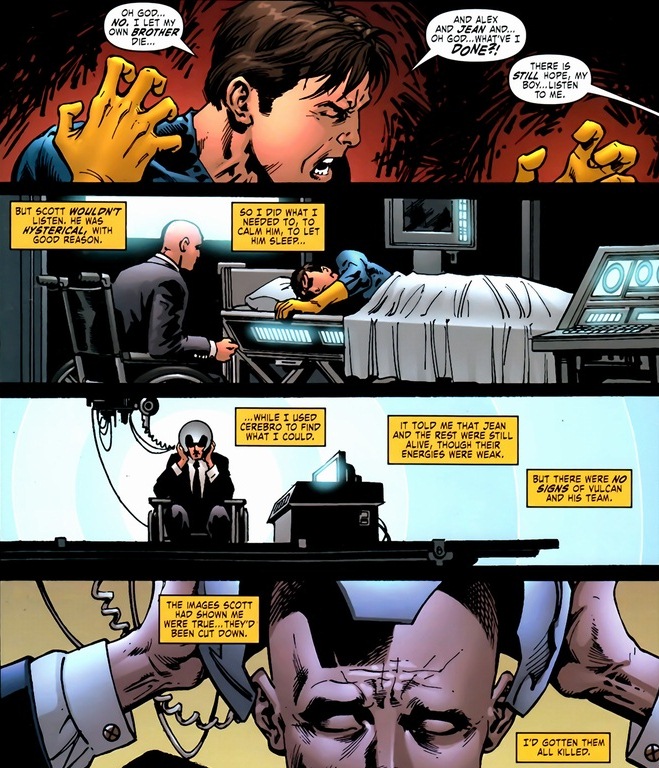
Oh, did I forget to mention a crucial part of our story? You know where Professor X said he’d gotten them all killed? No lie. Looking to rescue his own X-Men, he plopped over to his friend Dr. Moira MacTaggert’s place and borrowed her majorly unprepared mutant team. Proof:
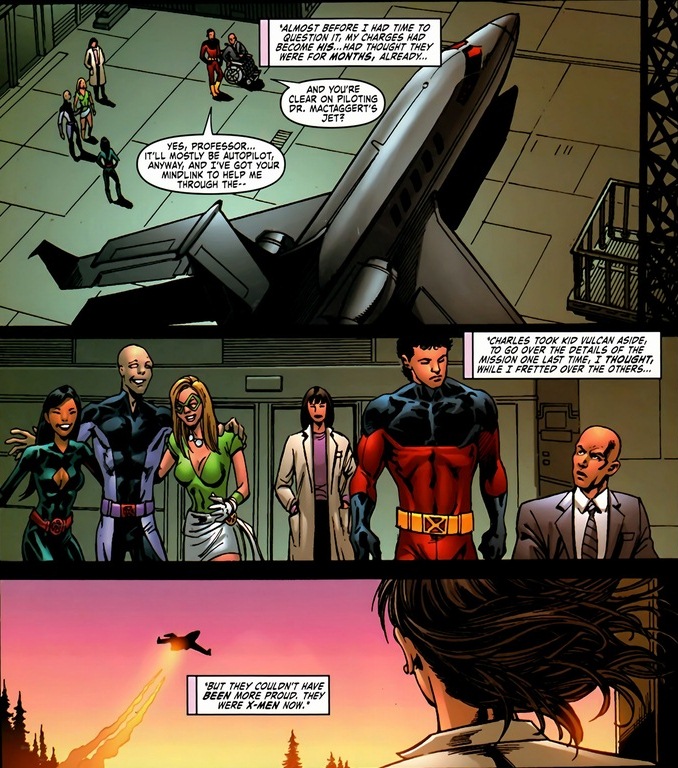
MacTaggert’s children lured by dreams of fighting in the big leagues, Xavier gave them a quick training session and then promptly sent them to their death. So his decision of what to do with Cyclops’ memory ain’t exactly selfless.
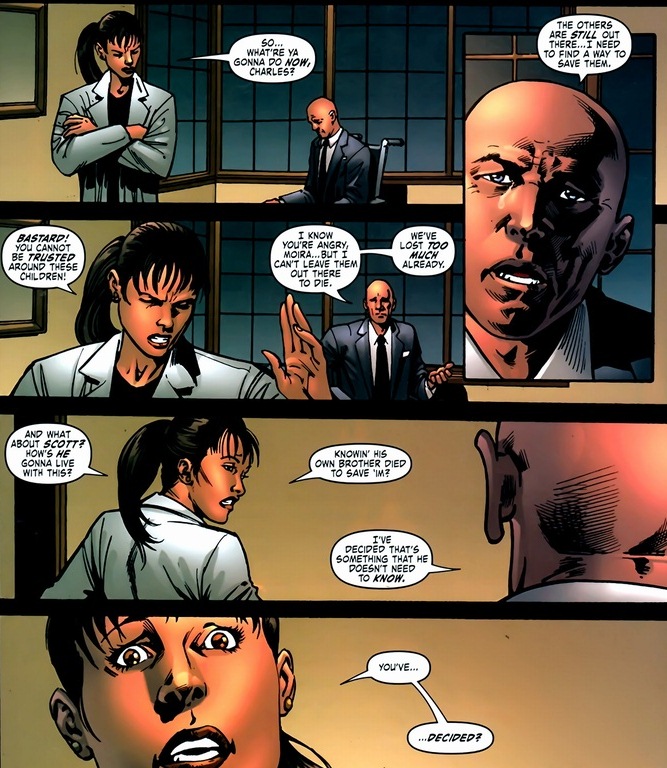

Just in case I haven’t made it perfectly clear, Professor X had no intention of having his rescue team get slaughtered by a lava monster. But overwhelmed by guilt, Xavier erased Cyclops’ memory of the events and basically hoped everyone would forget all this happened. And they did, except that Vulcan survived and now the truth has been revealed.
The aftermath? Well, first to deal with the miniseries’ antagonist and the immediate threat:
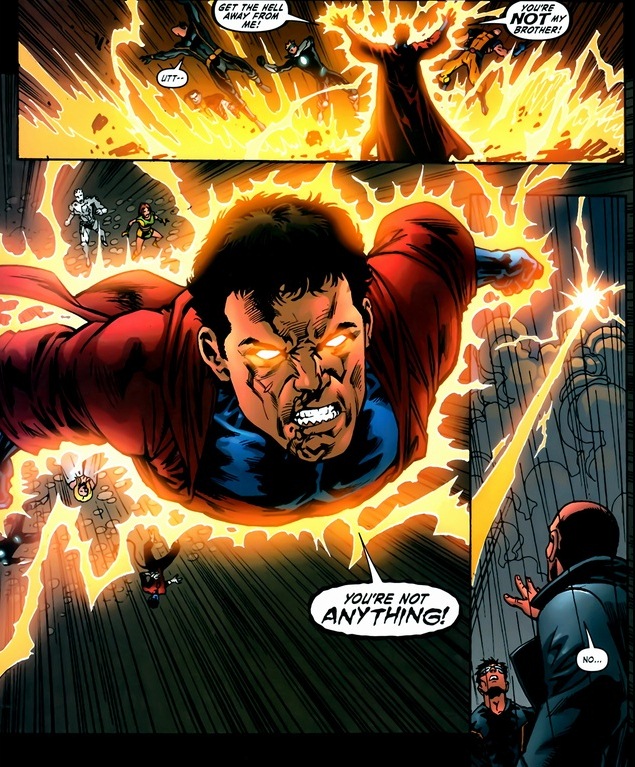
If you want to read more about Vulcan, who’s a pretty cool villain, he spends his days attempting to beat up all the cosmic Marvel heroes, the fancy name given to the superheroes who go on space adventures (like Nova, Rocket Raccoon, Silver Surfer, Black Bolt, a talking tree, and others).
With the revelation of Professor X subtly manipulating the memories and minds of his students throughout the years, he received his appropriate punishment.

Eventually he gets his powers back and joins the fight against the Phoenix Force. Despite his faults, at least Professor X dies the way he deserves. Like a superhero.
Catwoman loves Batman
Posted: 09/11/2012 Filed under: DC, Relationships 3 CommentsIn a complicated sort of way. Look, I believe that Batman and Catwoman are the closest the two have to soul mates. Probably somewhat to do with the severe emotional issues both of them possess. But I also personally think the DC reboot was a smart choice and the Superman/Wonder Woman relationship is fantastic, so my opinions are less scholarly and more optimistic. Though Catwoman #81-82, written by Will Pfeifer and drawn by David Lopez, explains my Batman/Catwoman theory far better than I can.
In her solo series, Catwoman’s (real name Selina Kyle) had some major crazy events go on in her life. Even with the Black Mask stuff excluded, she birthed a child named Helena she gave up for adoption, infiltrated of a violent Amazon tribe, got stuck with Lex Luthor on a crazy prison planet, and finally, her sidekick/best friend Holly Robinson fled Gotham City for good.
After nonstop horrible crap thrown at her for half a decade, Catwoman’s old habits kick in again, like a smoker lighting a cigarette after a half decade of nonstop horrible crap.
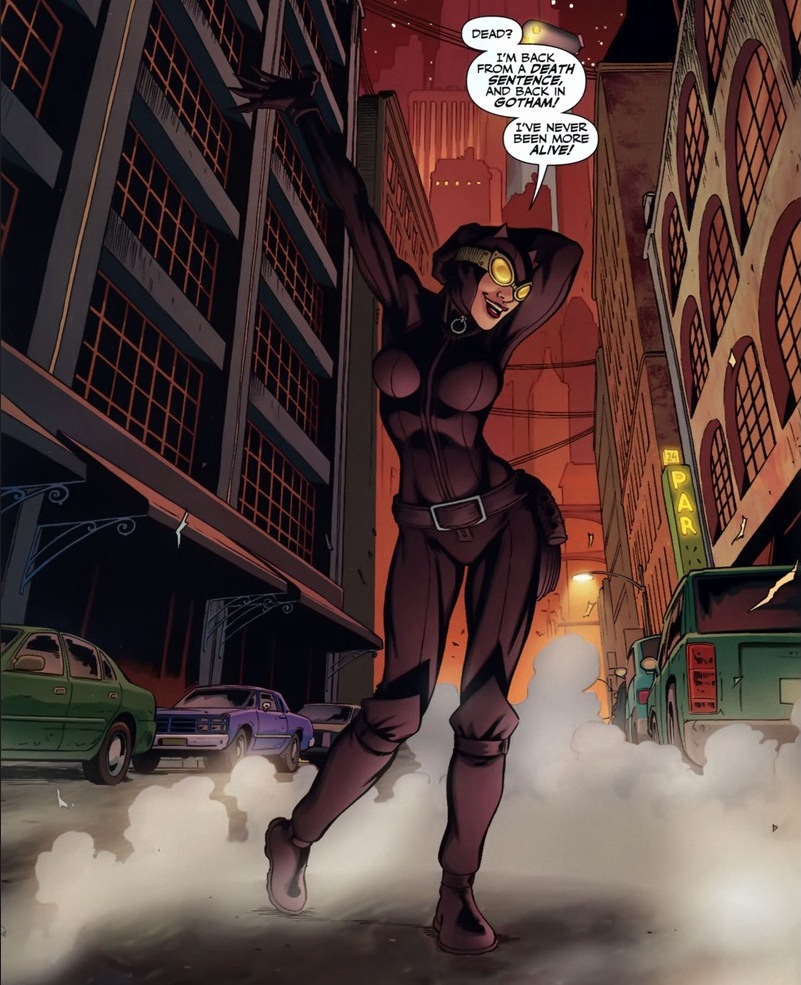
Because Catwoman isn’t Batman. He has devoted his life to fighting crime, no matter how grim or bad it gets. Not Catwoman. Besides an obvious breaking point, she has a different reason to don her costume. But more on that later. She enjoys a few issues of good old fashioned antics.
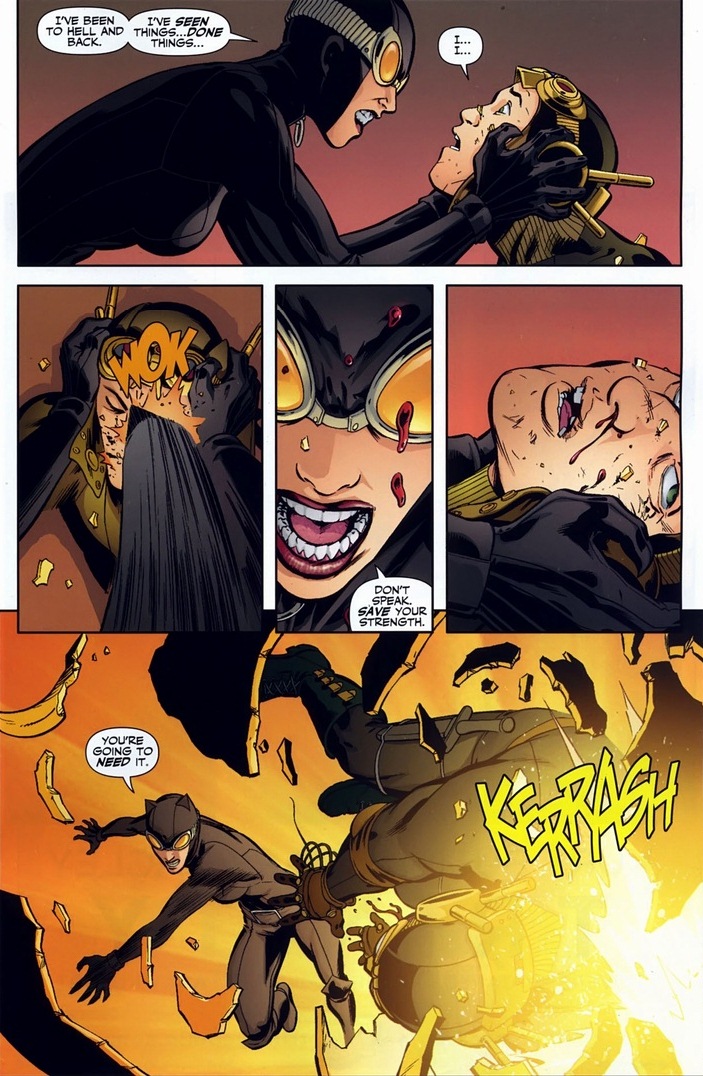
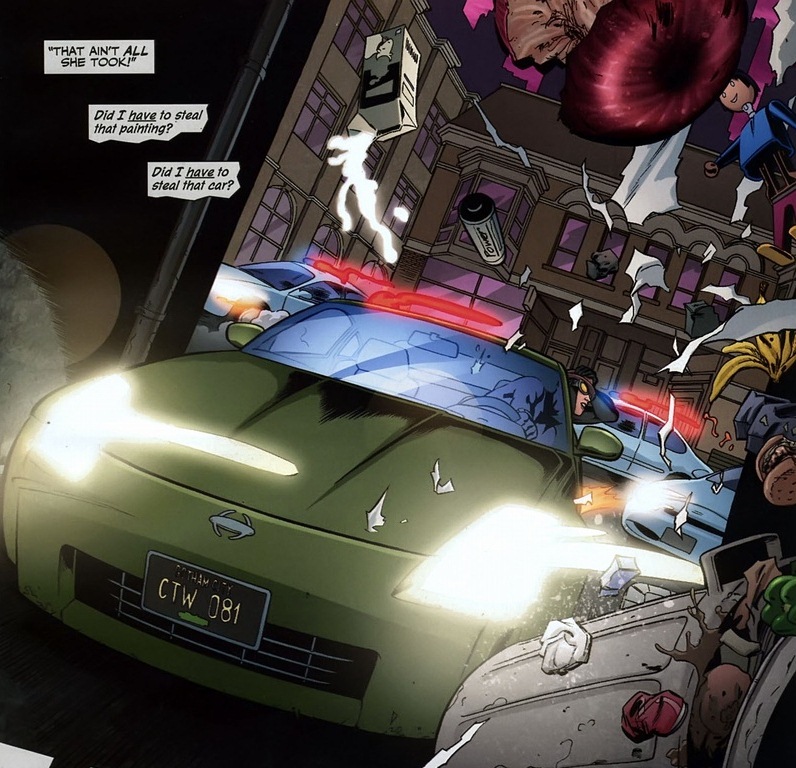
Eventually, her behavior gets noticed by the Dark Knight, most likely because the bat computer updates Batman on what criminals eat for breakfast, much less major antihero crime sprees. He ain’t smiling, though honestly, he hasn’t really smiled in years.
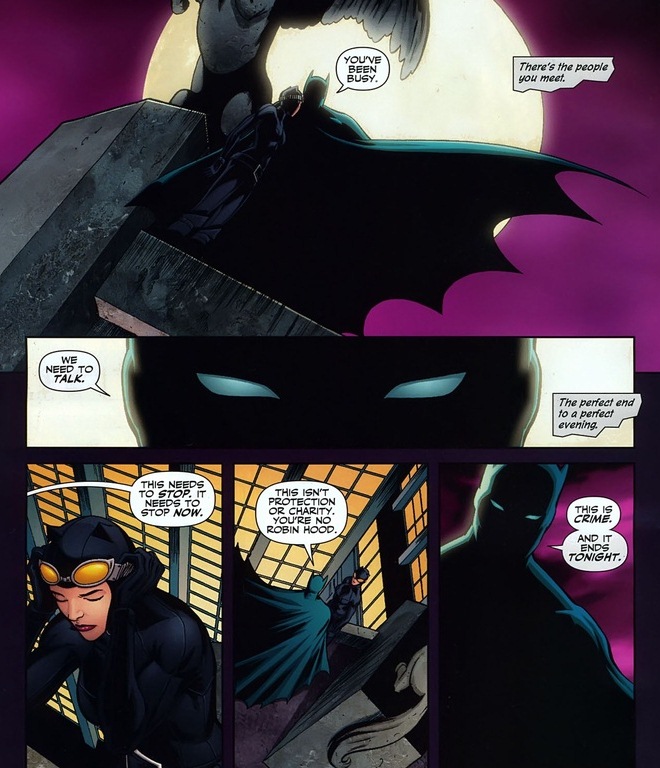


How ominous! In her current fragile state, the next twenty pages may very well all be because Batman barked an order. But mostly it’s cry for help to gain some sort of normalcy in her life after 80 issues of tears, murders, and vengeance. I mean, if we’re being optimistic.
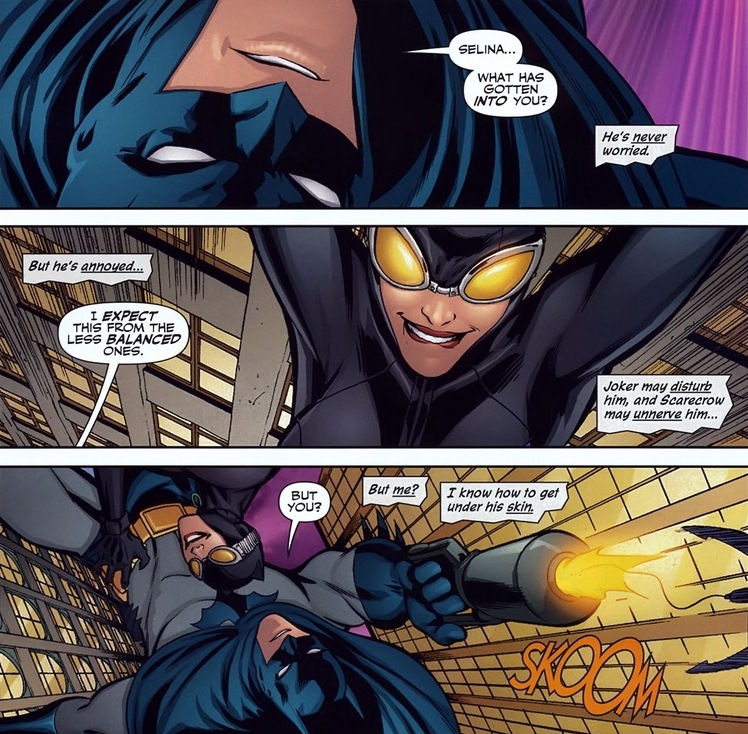
Thus begins a dozen pages of chase scenes where Batman uses his world’s greatest detective skills on her mood swings while she just runs around being a jerk. Watch for those little moments where Batman forces himself to hold back on his usual problem-solving technique: face punching.
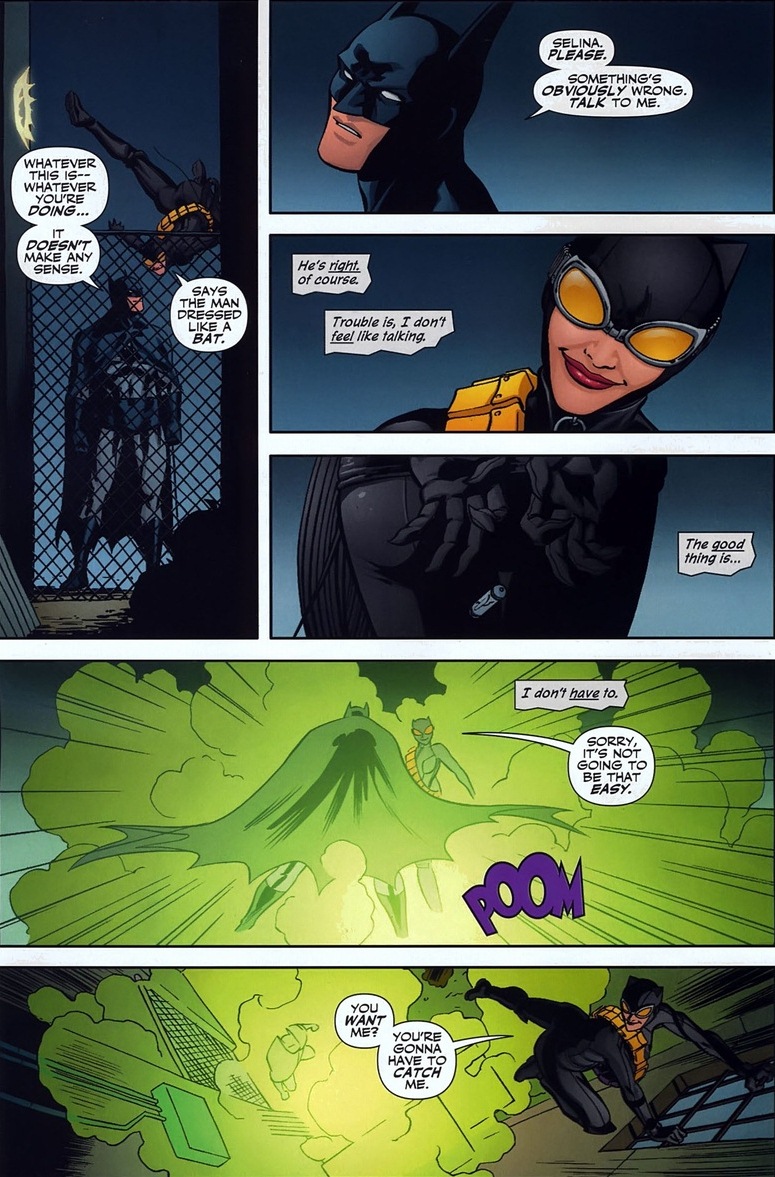


I’m only showing you the highlights, but if you want to see the full Gotham rooftop triathlon, pick up the issue.
As much fun as the costumed pursuit contains (lots), we have to eventually get to the heart of the problem. The thing, you see, is that neither of them really know what’s bugging the cat.
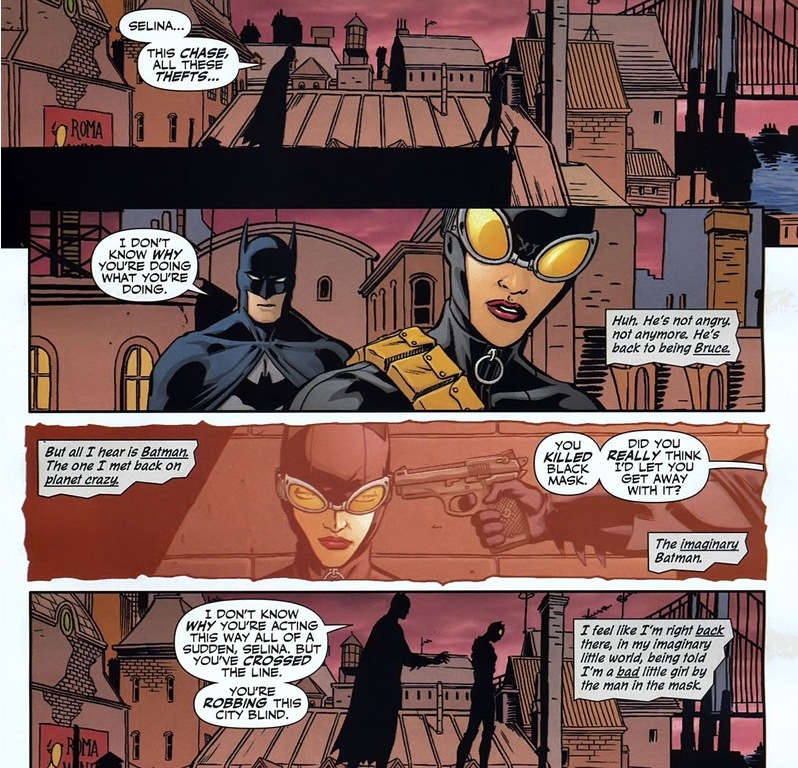
Does she do the right thing and sit down with quite possibly the most important person in her life, patiently and therapeutically discuss her problems and past events in the rational manner Batman wishes? Of course not. Remember those severe emotional issues I mentioned in the beginning?

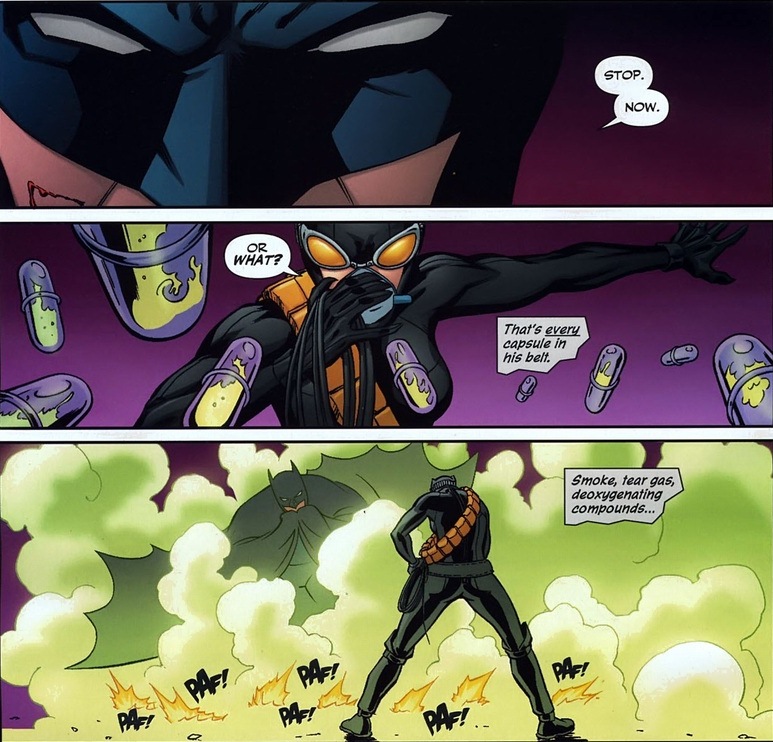
Oh, you mean this isn’t how a normal woman in her early to mid 30s acts? Though immaturity may be a legitimate reason why the entire DC roster got de-aged by a decade when they rebooted. Still, you know who doesn’t take antagonizing very well? Hint: he also happens to be a billionaire philanthropist.

Since she used all of Batman’s weapons already, Catwoman’s forced to use her own secret weapon.
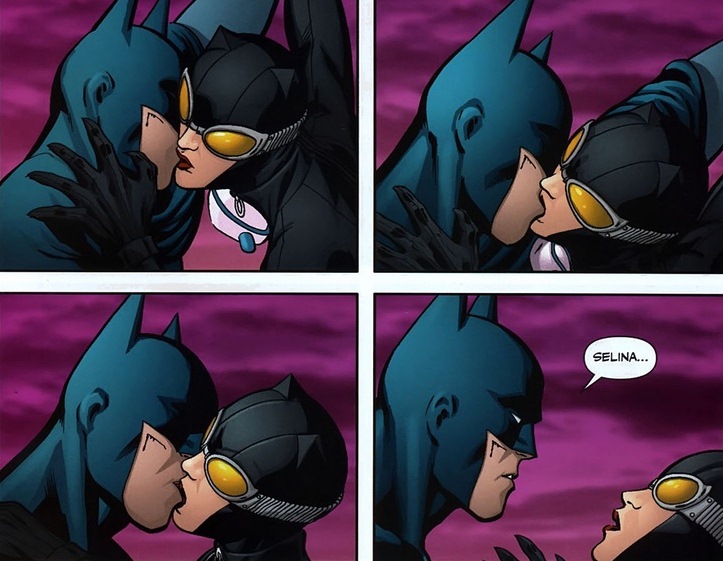
Maybe the Joker should try that next time he’s dangling off a gargoyle nursing a concussion. Finally, Selina drops the whole charade and bares her broken soul to the one man in Gotham whose lack of sympathy is only matched by his lack of leniency.

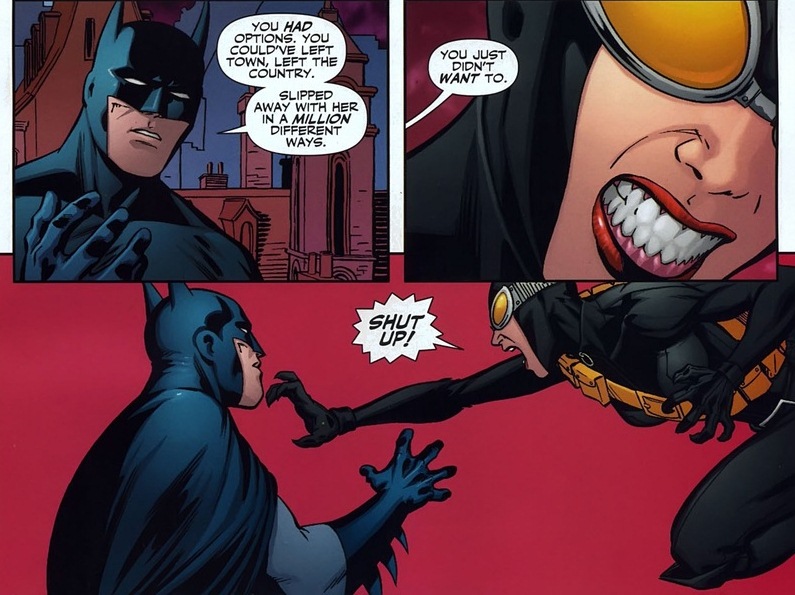
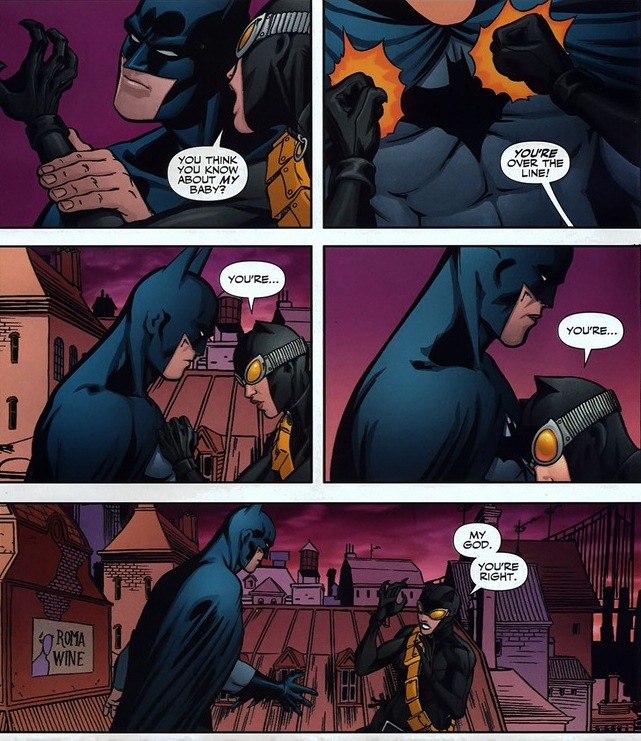
Not to ruin the moment, but I have no idea where Batman’s glove went. I scoured the issue, but one panel he has it and the next he doesn’t. Let’s just say WayneTech made some invisible glove gadgets and move on to our finale.

There you go, the truth we’ve sort of subtly knew all along. Nothing does Catwoman enjoy more than being Catwoman, including motherhood. She attempted every possible angle and thrill, but only that skintight costume brings her the happiness she has sought her entire life after. And truthfully, Batman completely empathetic, seeing as how he’s the exact same way just with brooding and darkness and whatnot. If both of them have to be in costume, why not together? Maybe some of Catwoman’s lighthearted playfulness will rub off on Batman and some of Batman’s stoic responsibility will affect Catwoman. Soul mates, I tell you! So how does she thank Batman for helping her realize the truth and snap back to reality?

Nothing wins Batman’s heart like Batmobile theft. Just don’t tell Jason Todd that.
Taskmaster’s amnesia quest
Posted: 09/10/2012 Filed under: Characters, Marvel 3 CommentsDo you know about the supervillain Taskmaster? Well, all those bad guys don’t become awesome overnight. Y’see, someone has to train them and get them properly punching Spider-Man and the other do-gooders. That’s where Taskmaster comes in.
He first appeared in The Avengers #196, volume 1, written by David Micheline and George Perez in 1980. Easily one of the worst costumes in the Marvel universe, but also totally one of the most unique and interesting villains.

All those weapons and tools? Tony Masters (aka Taskmaster) has the special ability of photographic reflexes. Once he sees something done, he can imitate it perfectly. Hence the replica of Captain America’s shield and Hawkeye’s bow and arrows. Here he is in his first fight against the Avengers:
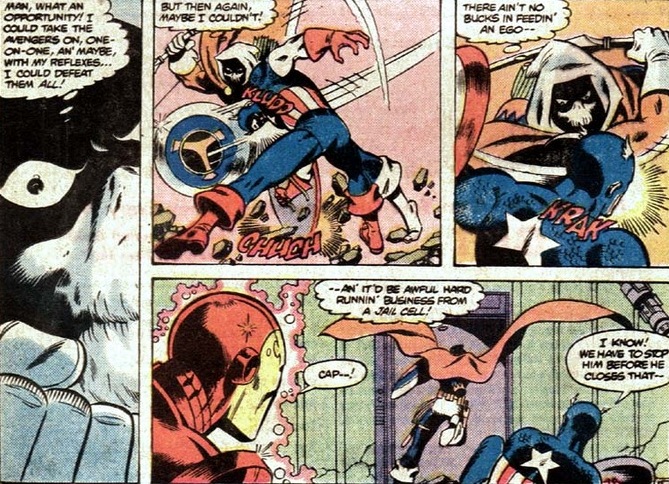
I love the logical, yet cowardly retreat. As the decades went by and Norman Osborn took command of the legion of superheroes and villains employed by the government, someone needed to pump these guys and gals into fightin’ shape. So Taskmaster became super important. Until Osborn attacked Asgard, his reign collapsed, and Taskmaster was forced to go into hiding.
We pick up in Taskmaster #1-4, volume 2, written by Fred Van Lente and drawn by Jefté Palo.

Turns out poor Taskmaster has some amnesia. Look, I’m not a scientist, but I’m pretty sure the human brain can only hold so much information. You try to photographic reflexively memorize a whole bunch of fighting styles and eventually stuff like names, faces, and birthdays will be forever lost. Probably. My theories tend to be right about a third of the time. I know Taskmaster #3 explains all this far better than I ever can. Though he definitely has amnesia and he got it from his special powers.

And this is where everything goes bad. After all, this is a superhero comic.


One of my favorite things about this comic is the neat way the Van Lente and Palo show his imitated skills during the combat scenes. Cool touch, right?

In true destiny-laced storytelling fashion, Taskmaster’s takes the waitress with him on his journey:

Thus, the two go on a few wacky adventures. Like fighting a Día de los Muertos Zorro:

And a town full of Hitlers:
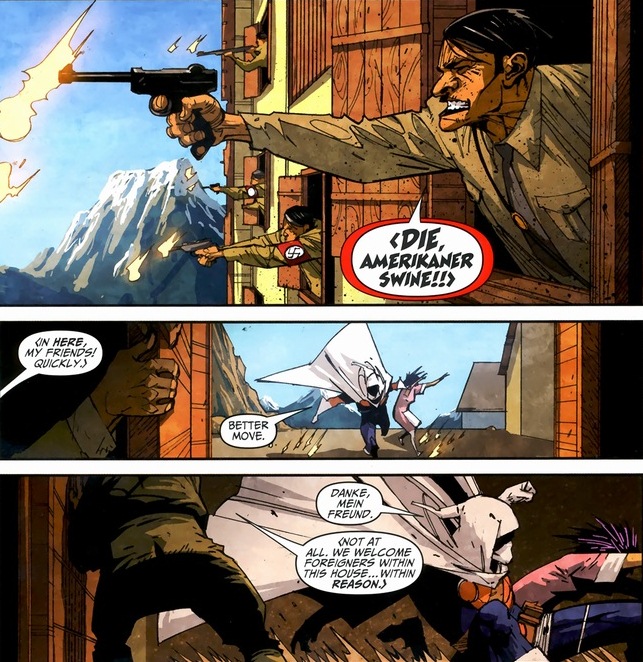

Most importantly, gotta mix in some soul-searching and somber contemplation:

A delightful comic! But now we have to get to the heart of the miniseries and the reason I chose to write an article about it. Taskmaster finds out some of his origin secrets. Back in the day, he injected himself with a Nazi serum. Thankfully, not the skin-burning one Red Skull used on himself.

With his identity fully realized, only one thing left in a fantastic story formula. Plot twist!

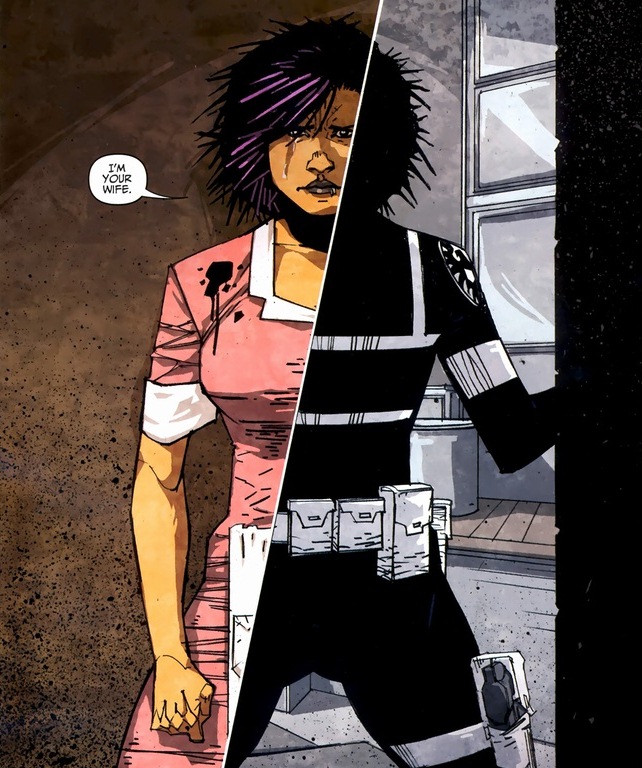
Isn’t that awesome? Also, further proof Taskmaster has zero control over his own life. Lots of tragic manipulation going on. Frustrated that no matter how firm a grasp he makes on his future, it will always slip out of his slimy hand, Taskmaster makes a decision. Time to go to a secret warehouse to arm up for a final stand against the Org and the battle for his life.


Battle goes well. I mean, guy trains supervillains for a living.

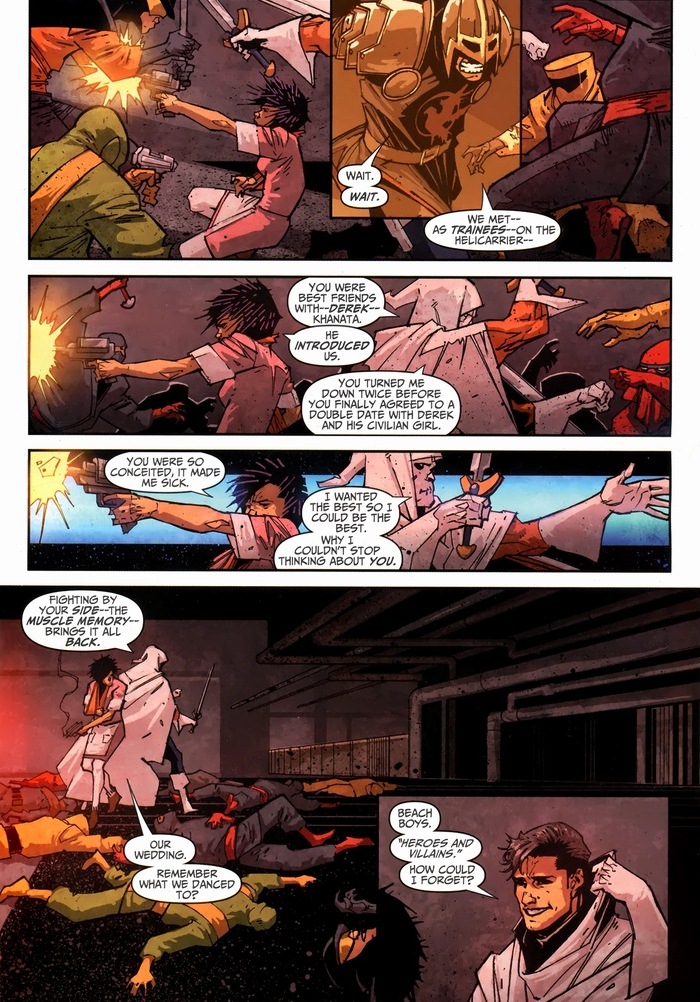
Though our story ain’t complete without the last boss kicking and punching our hero amid the littered bodies of bloodied henchmen.


The dilemma? Let Taskmaster educate you:

Either he’ll be killed by the bad guy or win the fight and lose all his memories again, including any knowledge of his wife/happiness.
Want another reason that when done well, comics can be a medium of storytelling that words alone can’t match? Watch on the second page as we witness his decision between two horrible options without a single word:

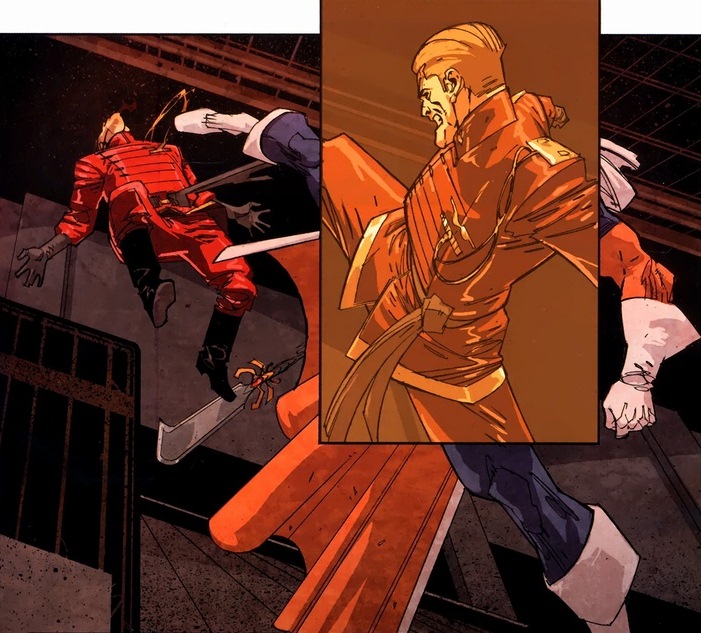
You know what happens next. Victory came with a price.

The epilogue of this story remains beautiful, emotional, and absolutely heartbreaking. And I’m not going to show it to you, I’m sorry. I wanted to, but it relies on facts and imagery from conversations and actions I didn’t touch on. Oh well. But now when Taskmaster shows up in comics you read, at least under that silly costume you can appreciate the threat he poses. And that’s all a supervillain can ask for.
Arch-nemesis rumble: Fantastic Four
Posted: 09/09/2012 Filed under: Fights, Marvel 1 CommentI’d like to start the week with something simple. How about the Fantastic Four vs. Dr. Doom?
Their rivalry goes back to Fantastic Four #5, volume 1, written by Stan Lee and drawn by Jack Kirby all the way back in 1962.

Exciting, right? I’d like to touch more on what happens in their first encounter, but it gets weird:

Let’s jump ahead a few decades. Now, instead of being the lovable trickster he first appeared to be, the character has transformed into one of the most feared and dangerous villains in the Marvel universe. If my research is accurate, Dr. Doom has appeared in almost 2,000 issues of comics, making him the third most frequent villain in both DC and Marvel history (only behind Lex Luthor and Magneto). Nowadays he rules his own tiny Eastern European country and with politics/diplomacy how they are, it takes a lot of paperwork for him to step onto US soil.
Our story picks up in Fantastic Four #536-537, written by J. Michael Straczynski and drawn by Mike McKone. Let’s enjoy a nice, quick brawl between the top superhero family and their arch-nemesis.

I’ll tell you what happened! In the middle of rural Oklahoma, something flew down from the sky and created a big ol’ crater. Remind you of movie Thor’s origin? It should.

Yup, Mjolnir, the super cool hammer that gives Thor all his super cool superpowers. With Thor not around to claim his property, Dr. Doom swoops in, because that’s what Dr. Doom does.

What are Doombots you ask? Robots that look, act, and have most of the powers of Dr. Doom. Mainly used so when the good guys take out Dr. Doom, it’s actually a Doombot and the supervillain lives to fight another day. Or, I guess, as an army. Good news for this story, though, because no Doombot could possibly lift Mjolnir, the real thing has to be there. Which one? No idea, but at least the (burned) flesh and (boiled) blood will be fighting alongside the robot lookalikes.


Okay, you’re getting highlights of the fight. But surely, this’ll be enough smashing to satisfy.


Now as politically damaging as this little escapade is for the Latverian dictator, supervillains tend not to ponder the breaking of laws and consequences of their actions. Plus, no one can really punish him. Diplomatic unity or some other stuff I don’t understand.
More importantly, Mr. Fantastic and the Invisible Woman pose an interesting inquiry.

Everything said in the previous panel is absolutely 100% true. Dr. Doom became stranded in Hell with no way out. Happens to the best of us. Trust me, Hell ain’t a bed of roses and baby farm animals, even for the evilest of comic book wrongdoers:

How awesome is that panel even out of context? But he did get out, and yes, it involved Mjolnir. No, I’m not going to get into it. We’re here for the clobberin’.


With that, Doom can giddily grab Thor’s hammer and rule the world.

Y’know, except for that whole “if he be worthy” part. Oh well. The Excalibur of Marvel ain’t going to budge for the bad doctor. Now he only has an army of Doombots, mastery of the dark arts, a genius scientific mind, and the adoration of an entire nation. Hopefully that’ll tide him over until his next power play.
Batgirl’s death duel against Lady Shiva
Posted: 09/06/2012 Filed under: DC, Fights 1 CommentWhat makes a good comic book assassin? Raised from birth by a killer sociopath and deprived of speech and human contact, trained to read body language and intentions instead? Well, that’s a good start. Also the origin story of Cassandra Cain, the third Batgirl. Why should you care about her? Cassandra became the first Batgirl to get her own solo series and is also one of the most beloved Asian superheroes in the DC universe. C’mon, those are big deals.
The opening arc of her series decided that having a mute lead might hurt story potential, so her brain was rewritten telepathically to gain the ability to speak. Unfortunately, that also messed up her ability to read opponents’ body language, losing all those defense skills such as avoiding punches and dodging bullets. Our story takes place in select scenes from Batgirl #7-9, 23, 25, written by Kelley Puckett and drawn by Damion Scott.
With her martial arts now terrible, Batman tries his normal method to get Batgirl’s special ability back.

Wait, that’s not his normal method.

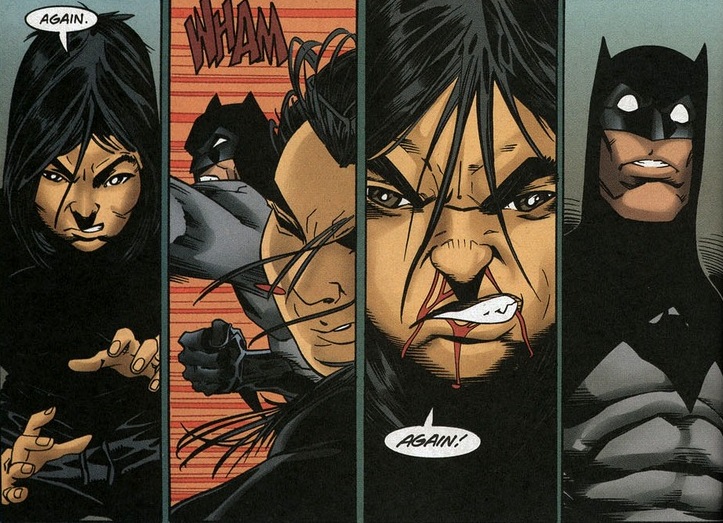
There we go, that’s the Batman training course. Have a grown man punch a seventeen year-old girl in the face repeatedly. Dojos better not try to steal that idea.
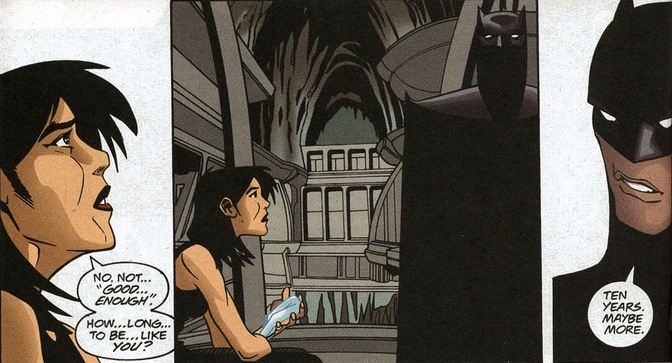
Cassandra has a serious problem. It’s like you waking up one day and you’re suddenly illiterate (which Batgirl also is). Luckily, she has the Dark Knight backing her up, inspiring her with realistic and disheartening facts about her recovery.

Since making a deal with the devil seems to be the theme for this week, I’d hate to disappoint. Oracle, the first Batgirl and now paralyzed information and technology whiz, casually goes through Batman’s rogue gallery in a flashback.
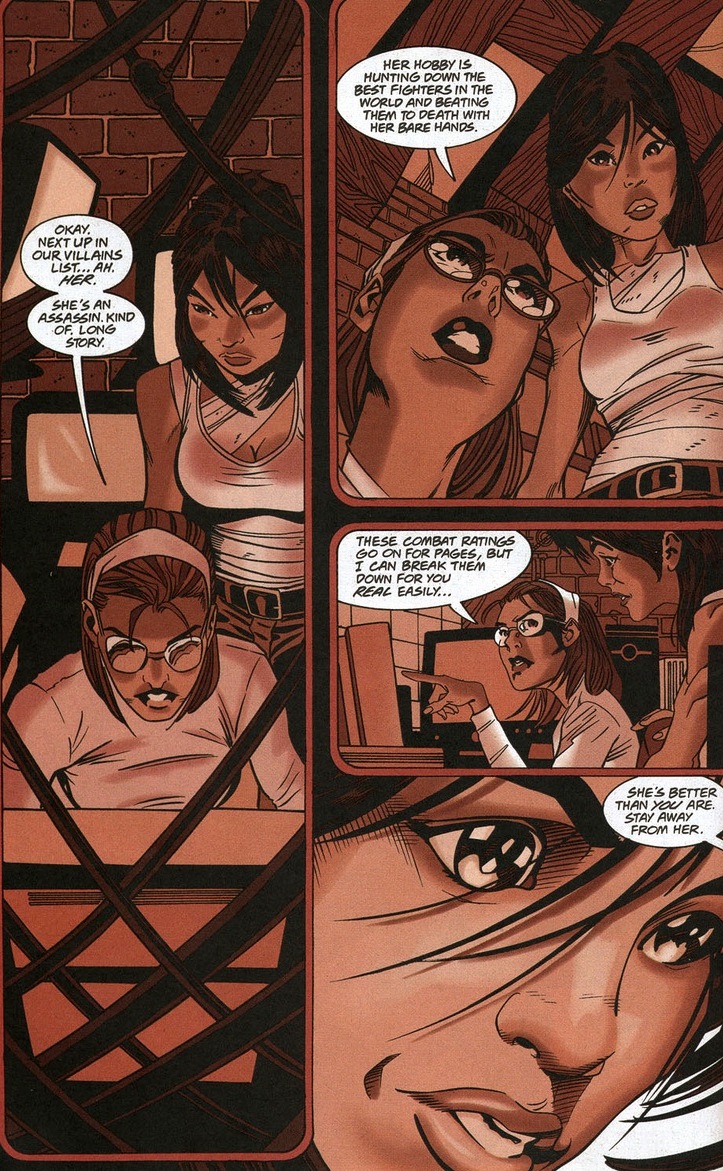
Meet Lady Shiva. The world’s greatest martial artist. Not an exaggeration. As in Batman’s never defeated her, probably because Lady Shiva isn’t seventeen year-old girl. But this gives Batgirl an idea.
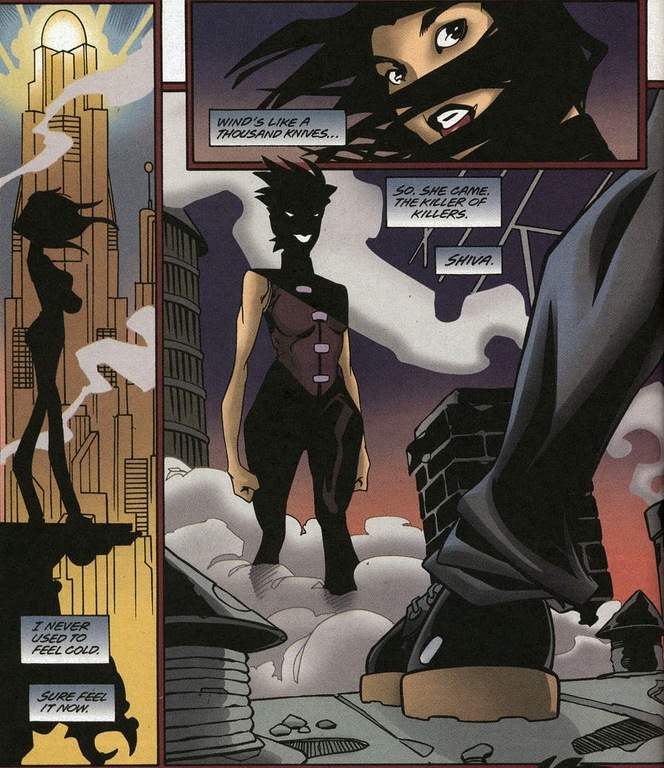
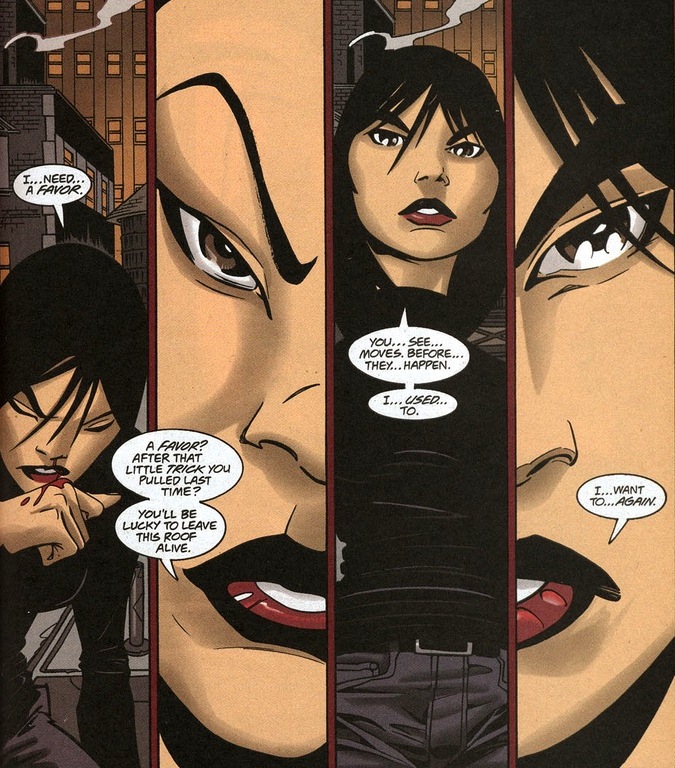
Okay, so I skipped their first fight and this isn’t the first time they’ve met. You can read it in Batgirl #8. Spoiler alert: Cassandra gets her butt handed to her.


Awesome plot idea, right? Lady Shiva can’t be beaten, and a death duel happens to totally be just that. So she either gets back all her previous skills for a single year, or she’ll be decent within the decade. As you’ve figured, she totally takes the deal, because I wouldn’t have titled the article as I did if she hadn’t.
Of course, she tries to keep this deal secret, but Oracle knows everything. That’s kinda Oracle’s thing. But I do want to build suspense, so let’s read Batman and Oracle’s conversation about this whole problem.
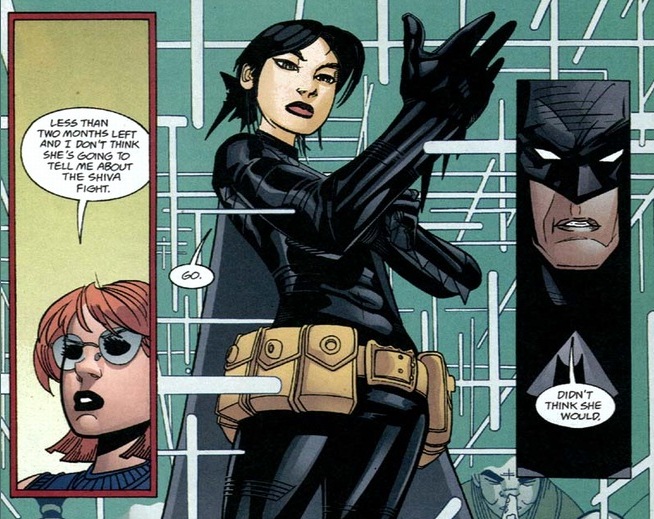
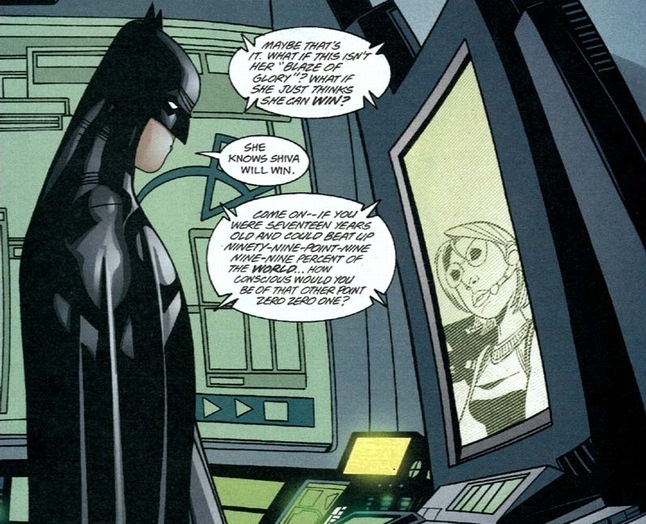
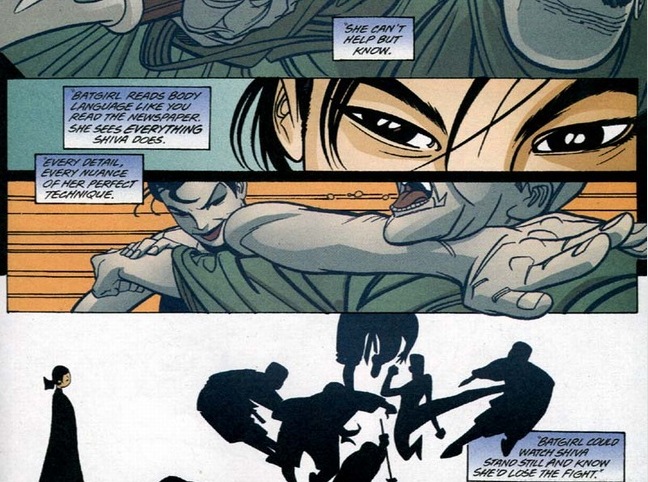
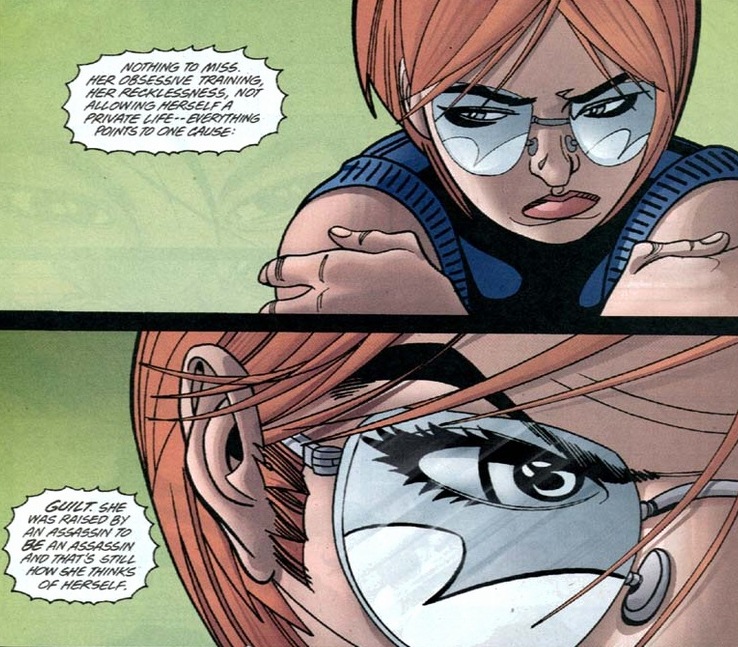
Batman’s theory hinges on Batgirl sacrificing herself as punishment for killing a man when she was eight. Oracle refuses, mainly because she looks at Cassandra not just as her successor, but as a daughter. Luckily, Batman doesn’t deal with such stuff like emotional attachments.

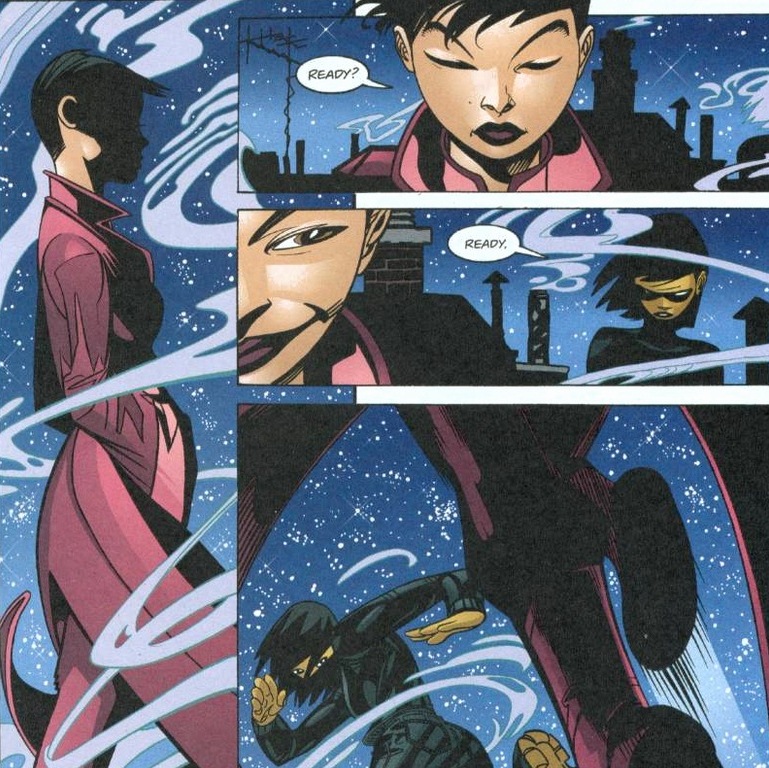
Here we go! The death duel! A half dozen pages of kung fu I’m not going to show you! But trust me, the fight goes pretty much as you expect.

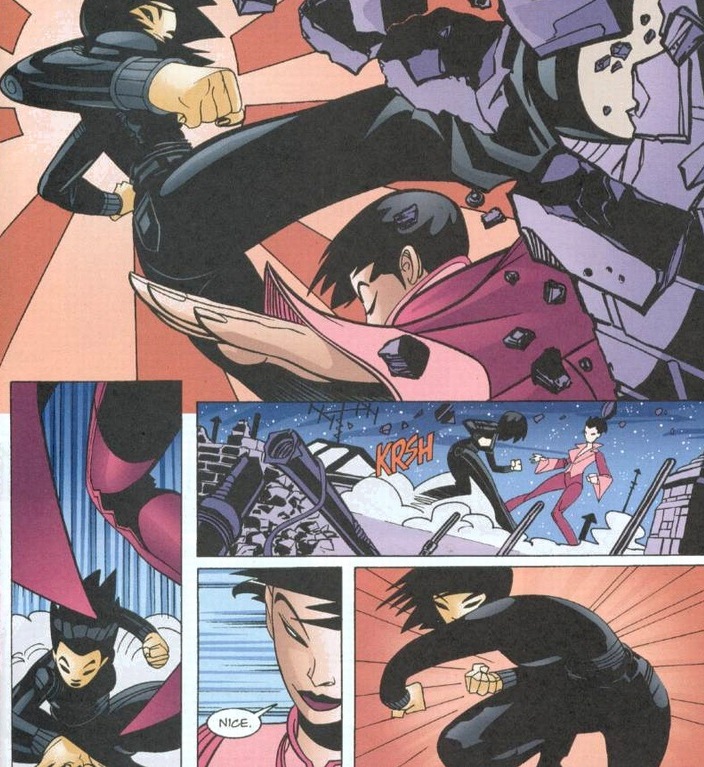

Batman may be many things, but a liar isn’t one of them. Batgirl’s dead. The end. I mean, not really, because that would be a super terrible way to end the series. Though, she did die.
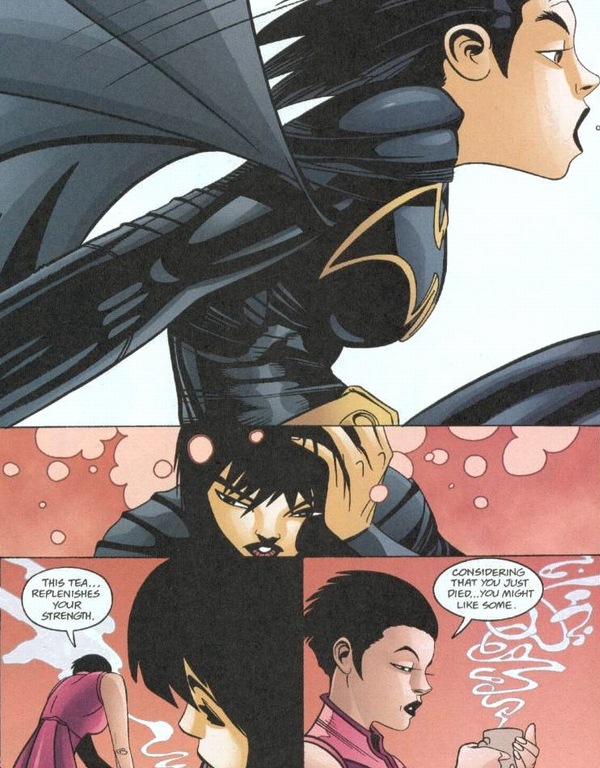
How did Lady Shiva revive Cassandra? I don’t know; it’s not really touched upon. What matters is that she did, and for some reason Lady Shiva dressed the young lady in her Batgirl costume. But why did she revive Cassandra? That I can answer.
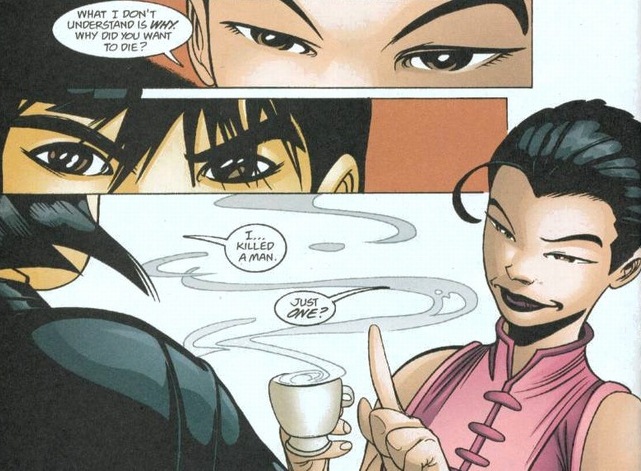
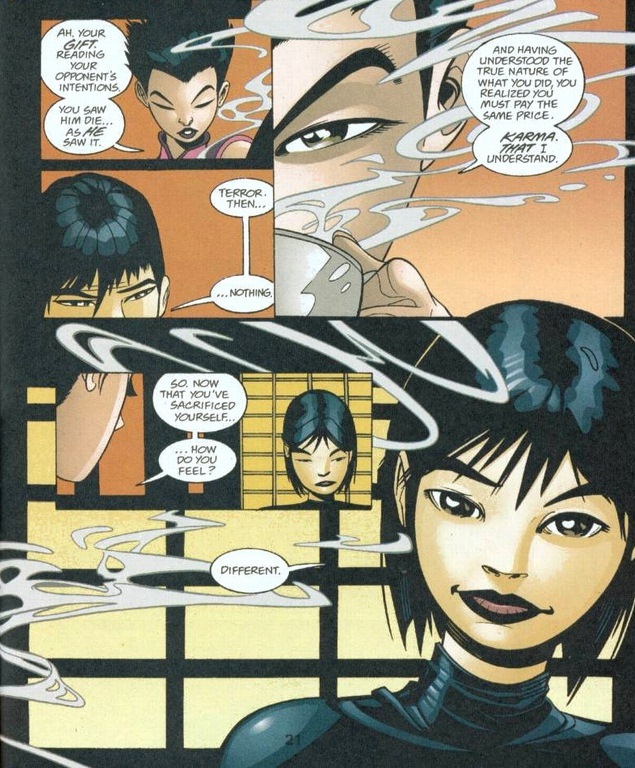
Please understand, Lady Shiva and Batgirl are not friends. Actually, Lady Shiva may or may not be Batgirl’s mother, but that’s a story for another time and 50 issues later. So why the inquisitive nature from our unbeatable supervillain? Duh, jealousy.

You like kung fu fights? Another half dozen pages I’m not going to show, unfortunately.
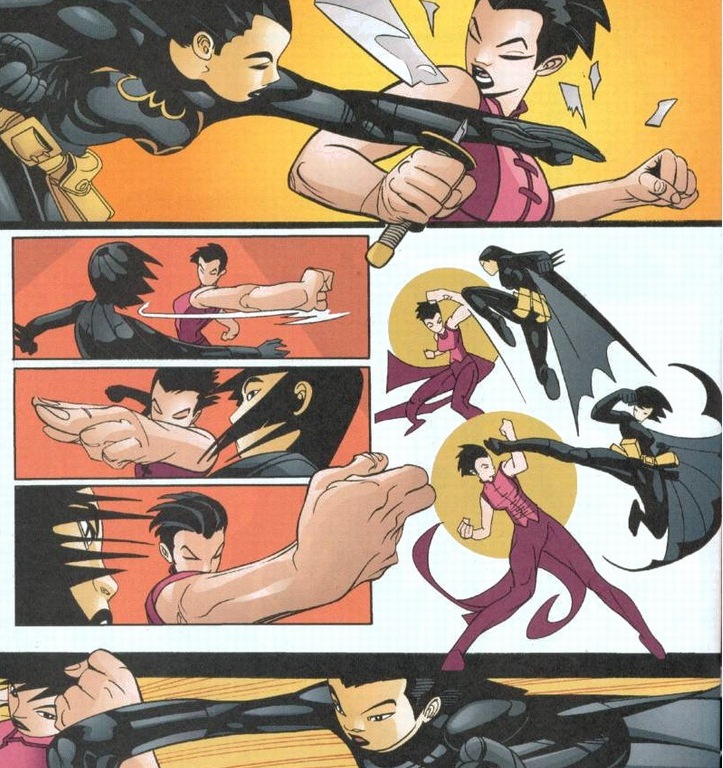
Oh, the true intention for resurrecting Batgirl?

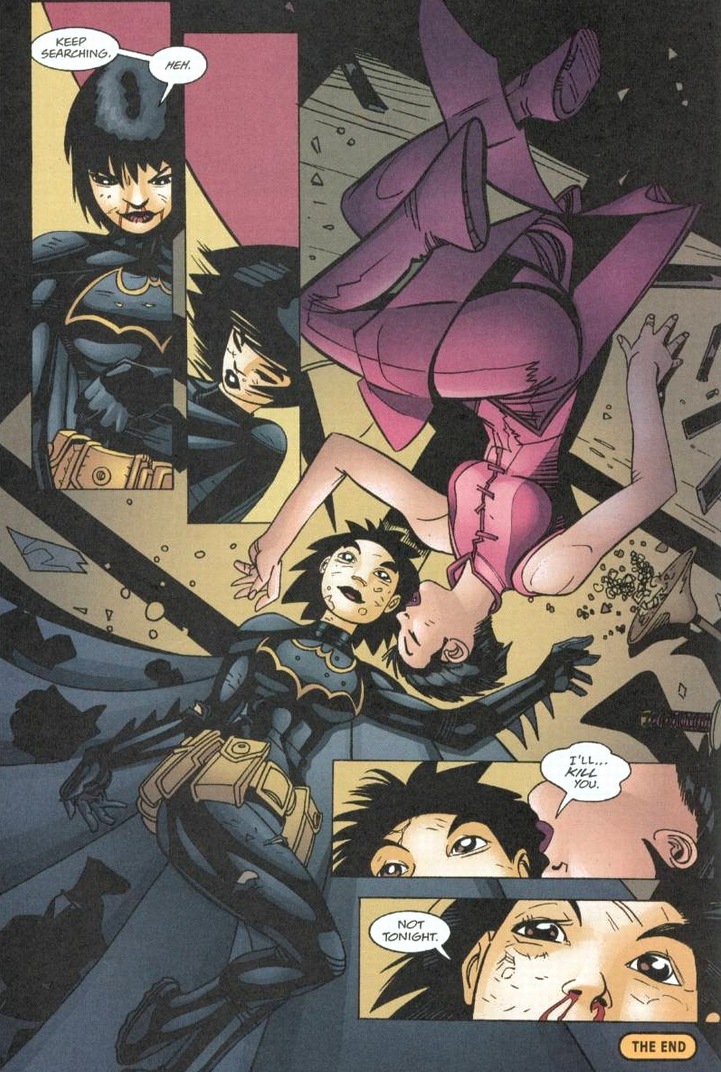
Victory! For the praise and congratulations that follow beating the world’s finest martial artist, you’ll have to read the next couple issues yourself. A few years after this, Cassandra hands over the Batgirl mantle to Stephanie Brown (her sorta sidekick during the series) and heads to Hong Kong as part of Batman Incorporated. She hasn’t shown up since DC rebooted their universe, but it’s only a matter of time. I really, really hope.
Raising a superfamily with the Cages
Posted: 09/05/2012 Filed under: Marvel, Relationships 1 CommentWhile we’re on the subject of Norman Osborn (the Green Goblin) from yesterday’s article, we might as well read about some more of his misdeeds. Though, the Cages take center stage today.
I’d like to get into the backstory and history of Luke Cage, his wife Jessica Jones, and their daughter Danielle — mainly to increase word count — but I’ve already covered it in a previous article. Instead we can jump straight into the meat of two select Cage family stories.
Our first one takes place in Pulse #5, written by Brian Michael Bendis and drawn by Mark Bagley and Scott Hanna. Jessica Jones finds out she’s pregnant at the end of her solo series Alias, which is sort of the prequel to Pulse. Unfortunately, being a semi-retired superhero surrounded all day by other superheroes tends not to be good for a mom-to-be. You know, when stuff like this happens:

Oh, and add in an abnormal amount of hormones, you get this:

Fun fact: Spider-Man and Jessica Jones went to high school together. She had a big crush on Peter Parker, though it’s safe to say that as she got older, her taste in men changed dramatically. Oh, and Norman Osborn just exploded her out a building and killed her baby. She reacts accordingly.

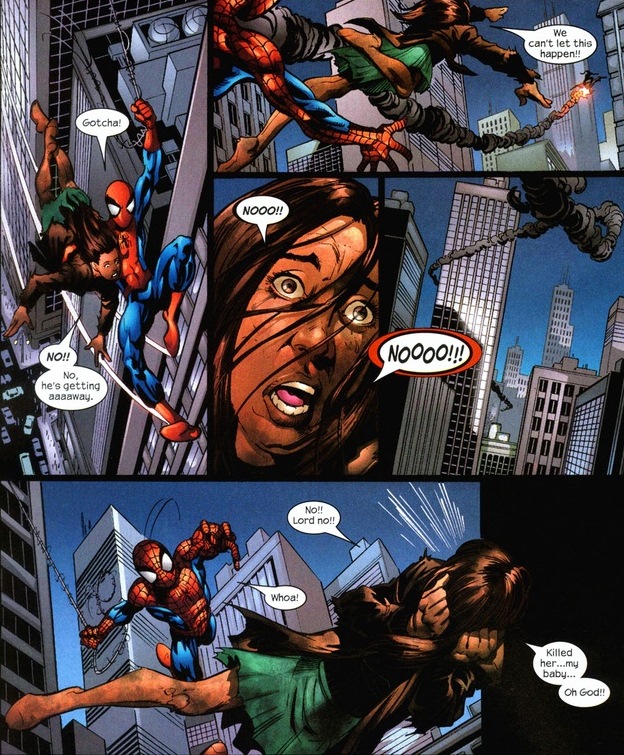
I’ve had enough sad stories for this week (one?). Don’t worry, being a superhero comes with a superwomb.

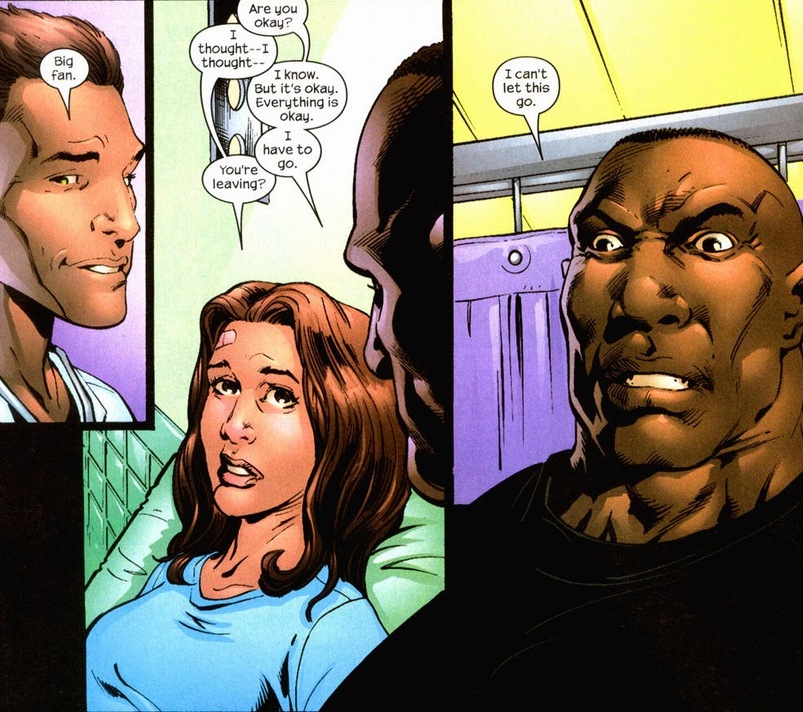
Jessica Jones got lucky. Not with the tough baby, but with her choice in boyfriends. Because the moment baddies mess with her, they now have to deal with the giant, angry, super strong and (I guess) super virile Luke Cage.
For good measure, here’s a creepy, sadistic Osborn tirade beforehand.

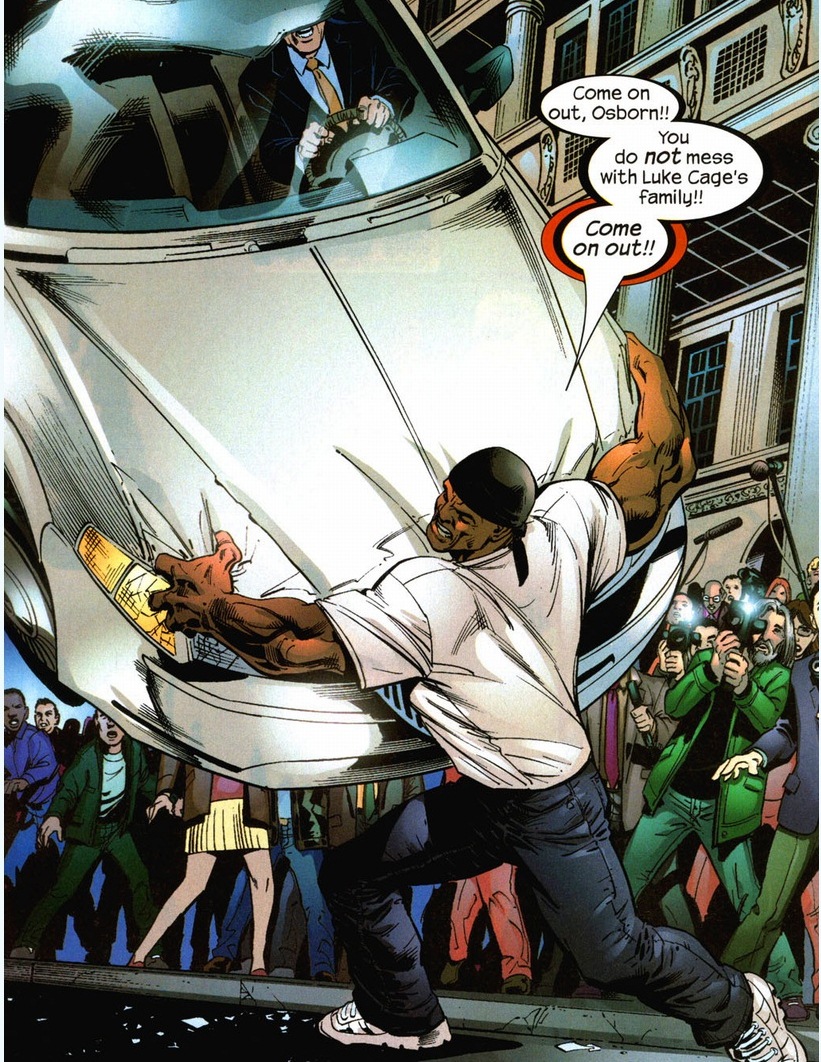
Watch as he gives a fantastic answer to Spider-Man’s appropriate inquiry:
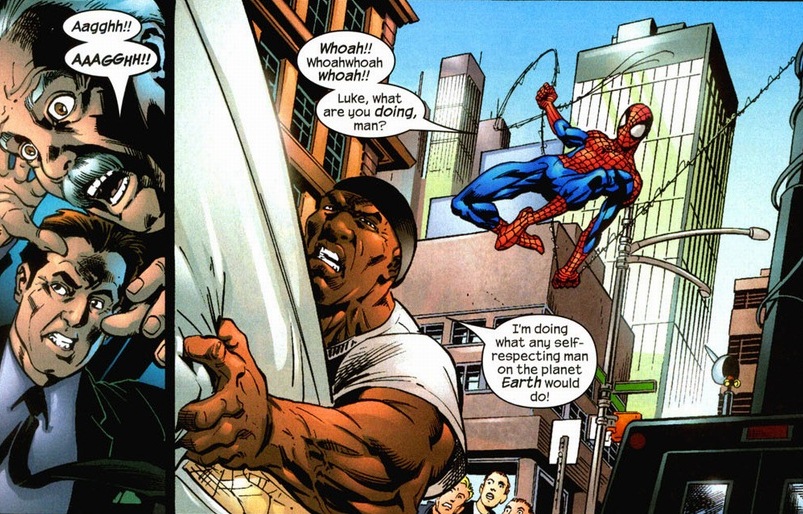
Only one problem. Osborn’s a psychopathic supervillain and Luke Cage just picked a fight with him in the middle of a very public crowd. One of the two doesn’t care about civilian casualties. Can you guess who?


Avenging complete! As delightful as any superhero story is when the supervillain gets exactly what they deserve, why bother showing you this specific story? My dear reader, Luke Cage and Osborn have a fairly tumultuous relationship, and you’ve just witnessed the beginning.
We jump ahead a few years to the very end of Marvel’s Secret Invasion event. The shapeshifting aliens Skrulls have been defeated and Osborn turned out to be the hero that saved Earth. Good for him. Though, a final loose end to wrap up.
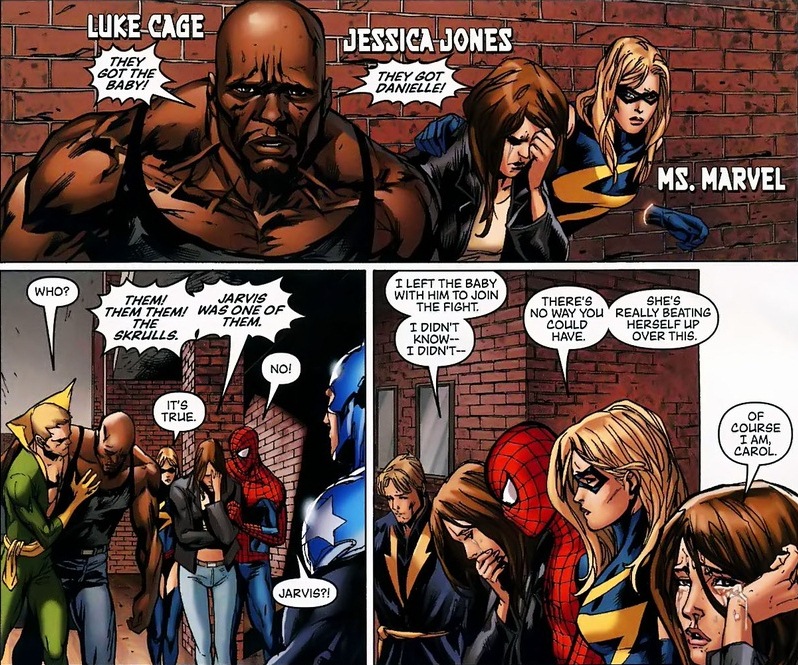
Jarvis, the butler of the Avengers and Marvel’s Alfred, happened to be a Skrull secretly portraying him. He also kidnapped the couple’s infant child. We follow along with the events of the New Avengers #48-49, written by Brian Michael Bendis and drawn by Billy Tan. After a dozen pages of calling in favors and frantic searching, Jessica Jones stumbles upon (clobbers) a lead.
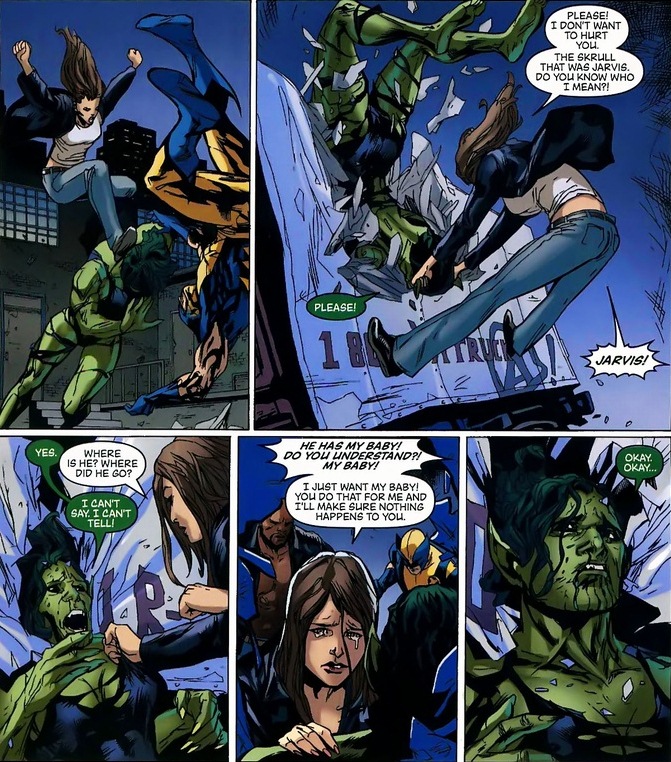
Of course, like any good action movie, what’s a plot without a few complications? In this case, trigger happy SHIELD jerks, the henchmen of the good guys.
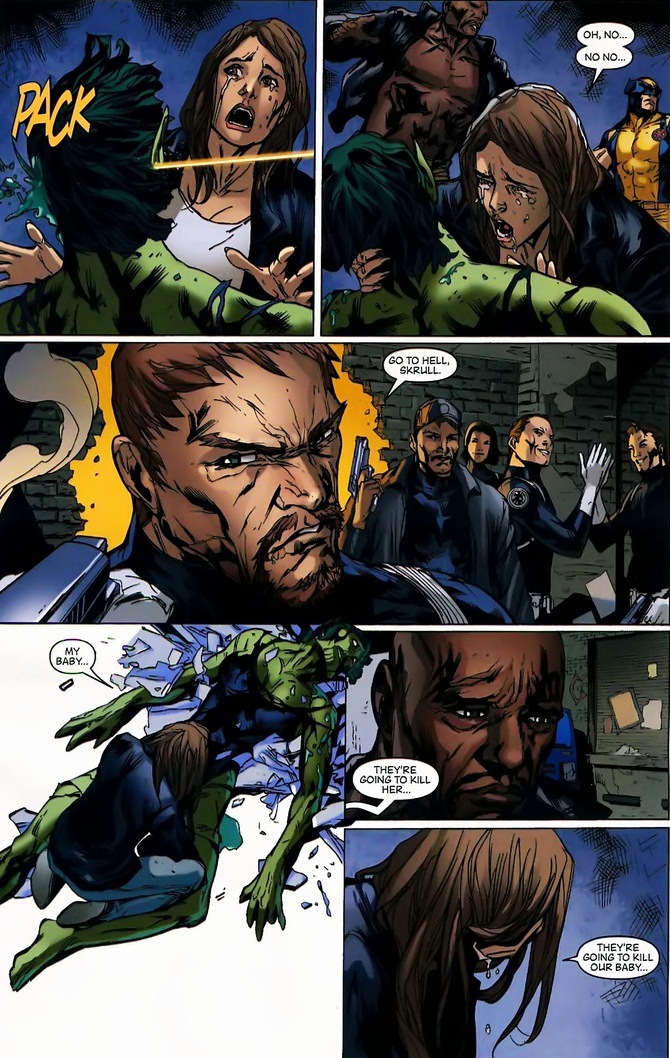
Luke Cage, being a good father and realizing the Avengers are out of options, desperately turns to the only possible person who could help him. You know who it is. Hint: Spider-Man punches him in the face like once a year.
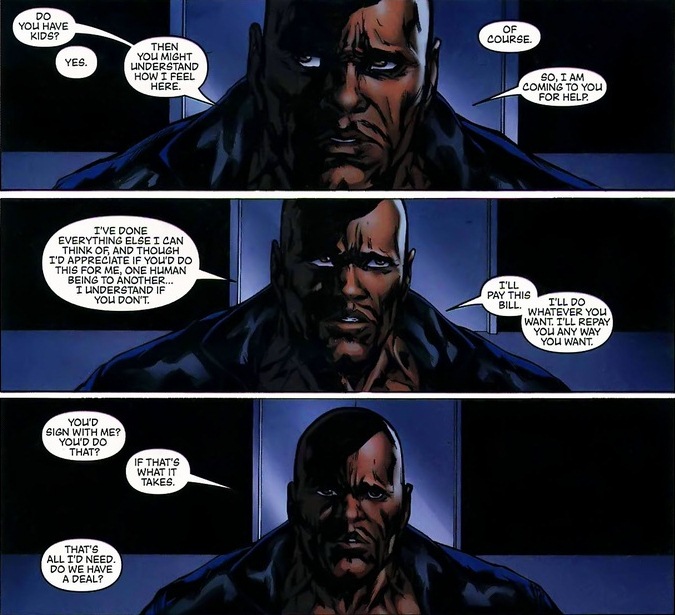
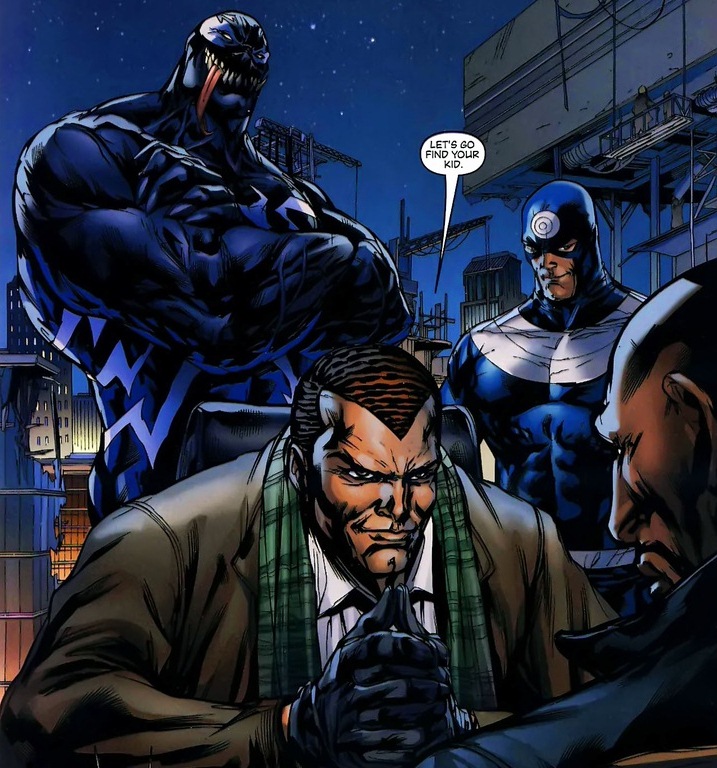
But why Osborn, you ask? Because with the Superhuman Registration Act still in place (and the Avengers unregistered and in hiding) added to Osborn’s new promotion to America’s top cop, he has the resources beyond beating up a few thugs at grimy bars. Though clearly the man reeks of evil and will make Luke Cage do horrible immoral stuff when he joins Osborn’s team. Unfortunate sacrifice.


Want to see the difference between superheroes and supervillains? Right here:

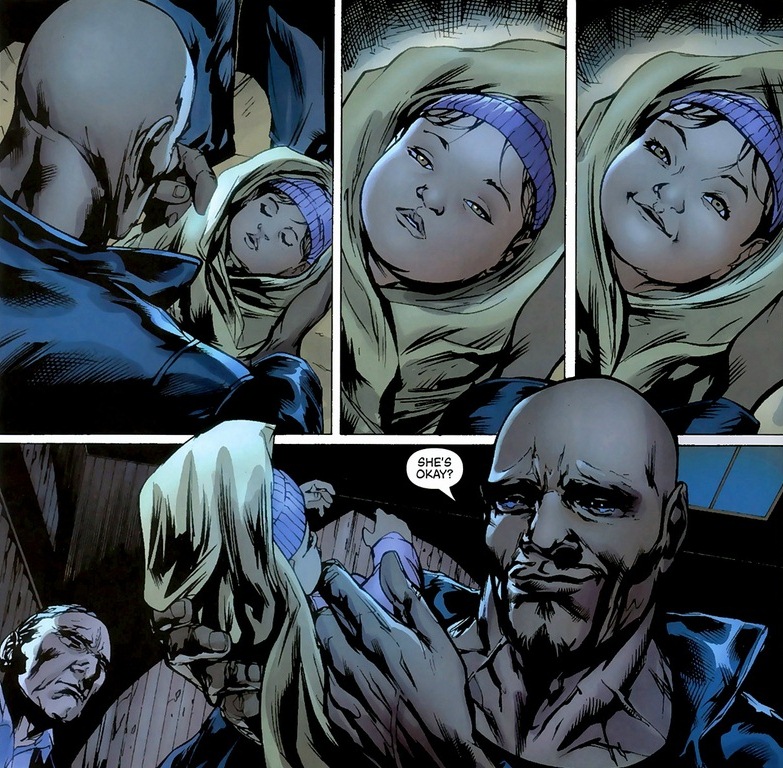
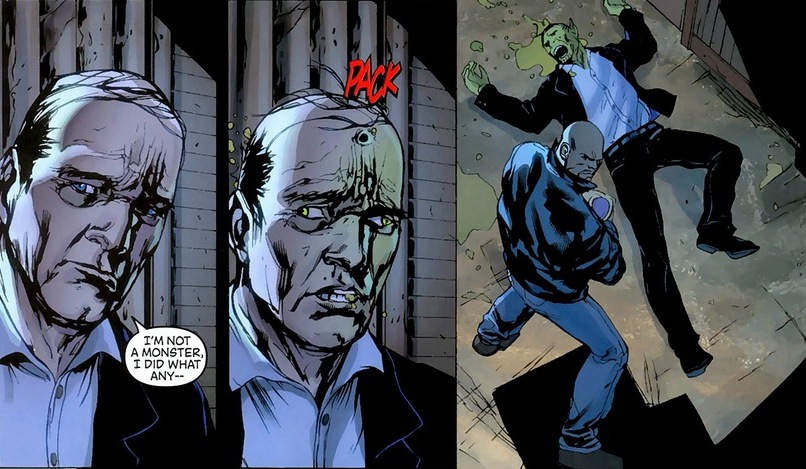
Y’see, despite the Skrull kidnapping his baby and sending every superhero in New York into a state of extreme panic for several days, Luke Cage’s still very much willing to let the alien go free as long as the baby’s okay. But you know those pesky supervillains, they don’t play nice. Luckily, Luke Cage has no worries bending some rules of his own. Though not yet.
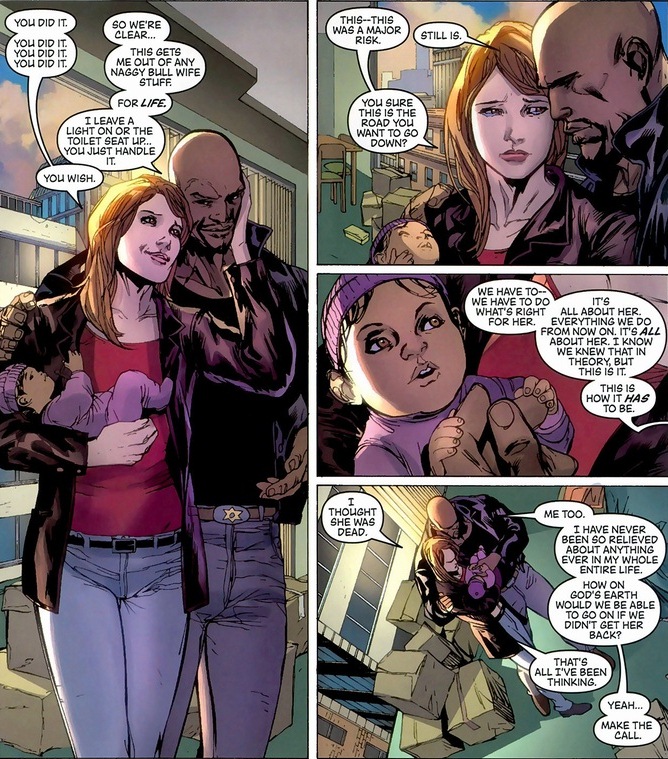
Okay, now.
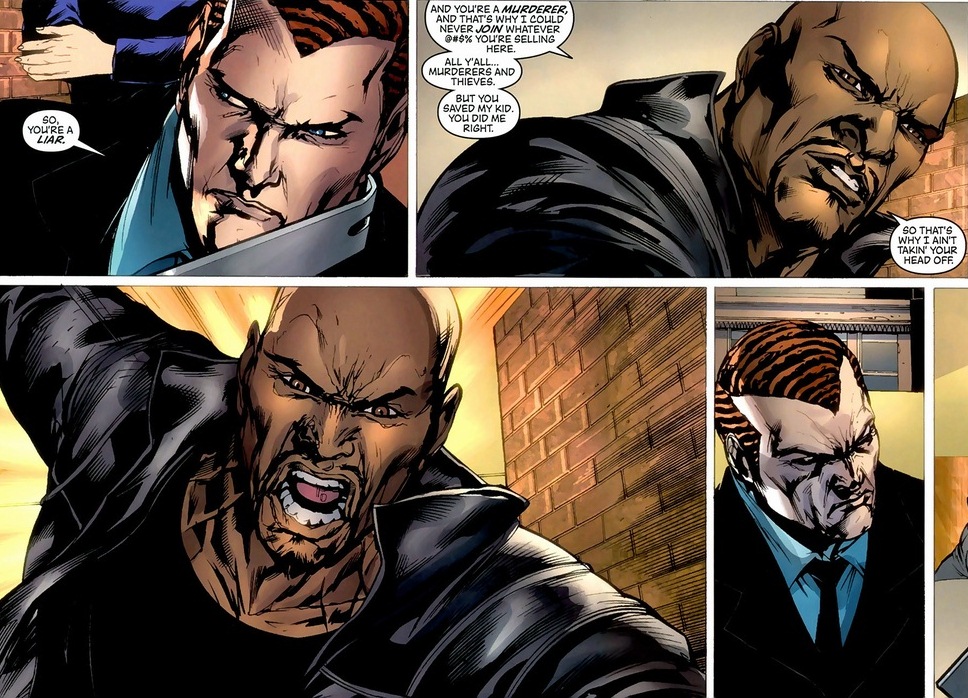

Hard to argue being a superhero parent is easy. Still, with a mother whose insecurity is only matched by her self-loathing and a father that struggles daily with daily bouts of immaturity and a fiery temper, they’re doing pretty well. Right?
Green Goblin vs. Swordsman
Posted: 09/04/2012 Filed under: Fights, Marvel Leave a commentA week ago, we touched on the Thunderbolts battle against Jack Flag. Super cool fight. As I continued to read the series, I found the next arc absolutely amazing. And we’re going to check out a few fights from it.
So, Norman Osborn, Spider-Man’s arch-nemesis and scheming jerk, gained control of the government’s supervillain reformation program the Thunderbolts after convincing SHIELD director Tony Stark that he wanted redemption and a heavy supply of bipolar medication. Of course, he still plans to betray everyone and grab power and blah blah blah. Supervillains never change. One of the recruits for the Thunderbolts team happens to be Andreas von Strucker, the current Swordsman. Why should you care? I’ll tell you, don’t be rude.
Swordsman’s the son of Baron Strucker, the World War II evil Nazi maniac that founded HYDRA, one of the two major terrorist organizations that pop up all the time in comics (the other’s AIM). Andreas’ father, being a bad guy, experimented on the womb of the mother of his twin children, giving them magic powers or something. Now Swordsman can shoot electricity out of his sword, as long as he’s touching his sister. One problem. Sister’s dead. In a super creepy move, Andreas flayed his sister’s skin and wrapped it around his sword so his special powers still activate. Gross. Anyway, by joining the Thunderbolts, Osborn promised to clone his sister and reunite the happy family. One more problem. Swordsman has waited far too long and his patience has given out. You know what that means: mutiny on the helicarrier!
Get ready for three battles and a monologue from Thunderbolts #116-121, written by Warren Ellis and drawn by Mike Deodato Jr.
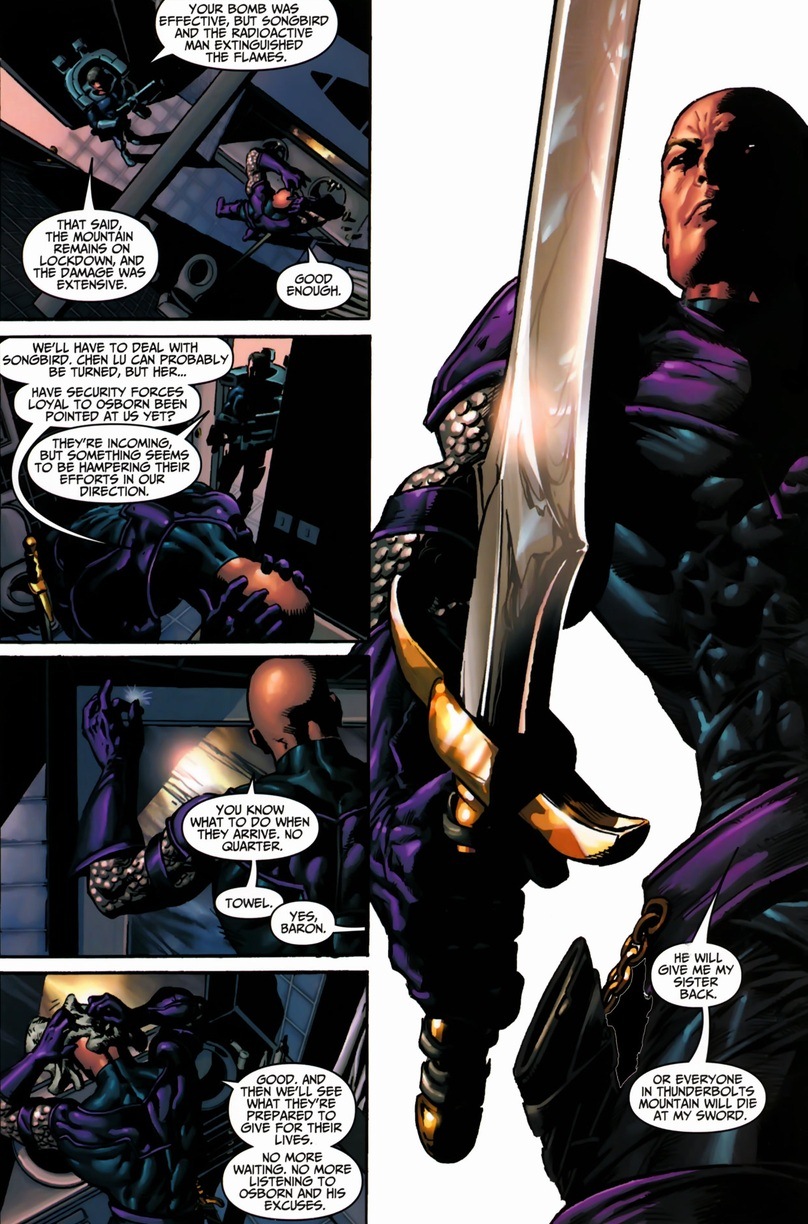
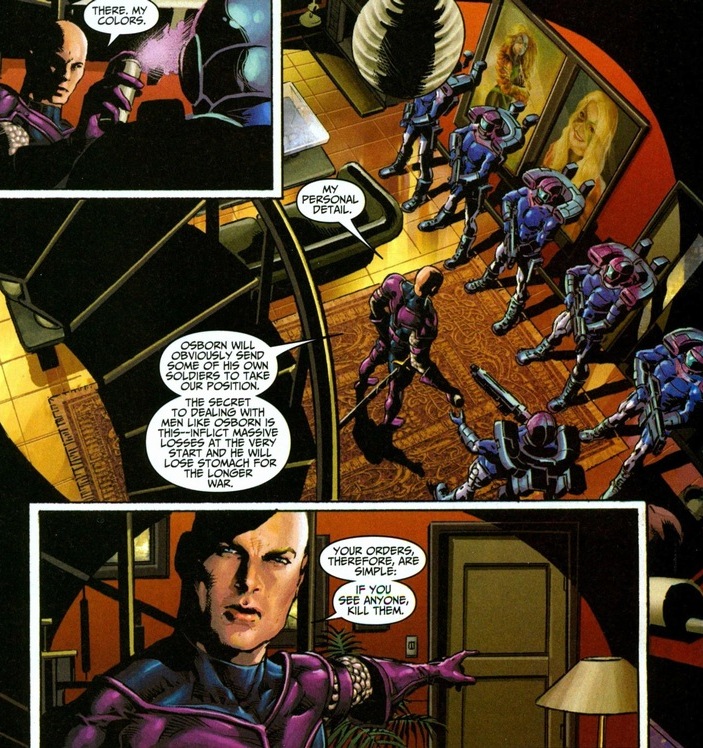
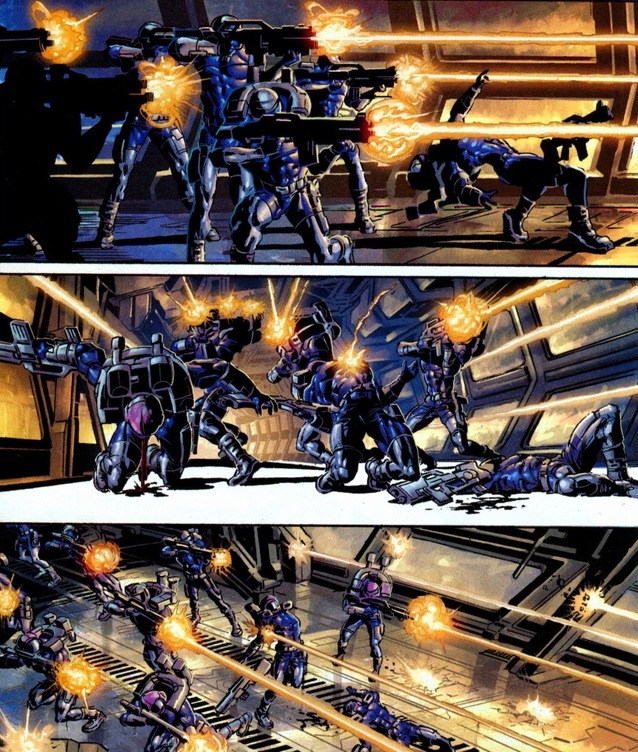
Yeah, he’s royalty, but truly, he’s just a dude with a sword and minor twin powers. For you naysayers, Hawkeye has zero powers and his superheroic accomplishments would take thousands of words. Plus, I’m about to prove his stuff to you.
Round 1: Swordsman vs. Soldiers

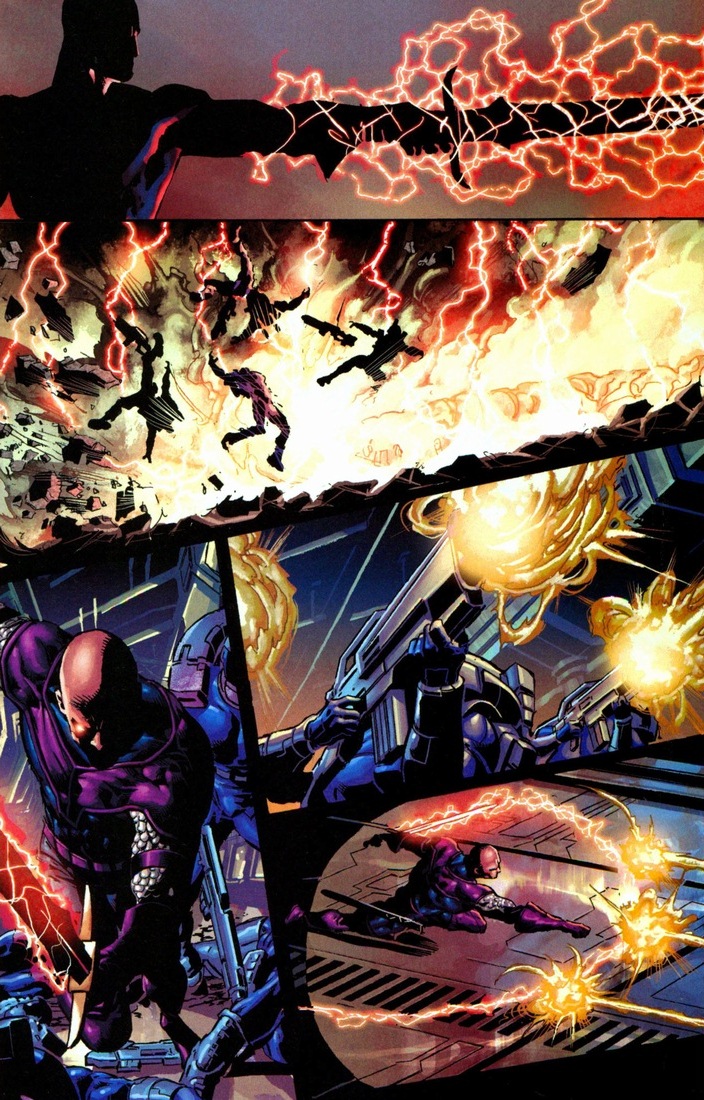

Unfortunately for groups of nameless henchmen, either good or bad, they tend not to live long. Dudes usually serve as methods for the superhero/supervillain to show off their powers or fighting skills. Y’know, so you aren’t wondering why a guy with a sword can mow down the best of the Marvel universe. Because you see, he’s already taken on a dozen dudes at once. What’s one more big scary supervillain? I guess it depends on the supervillain.
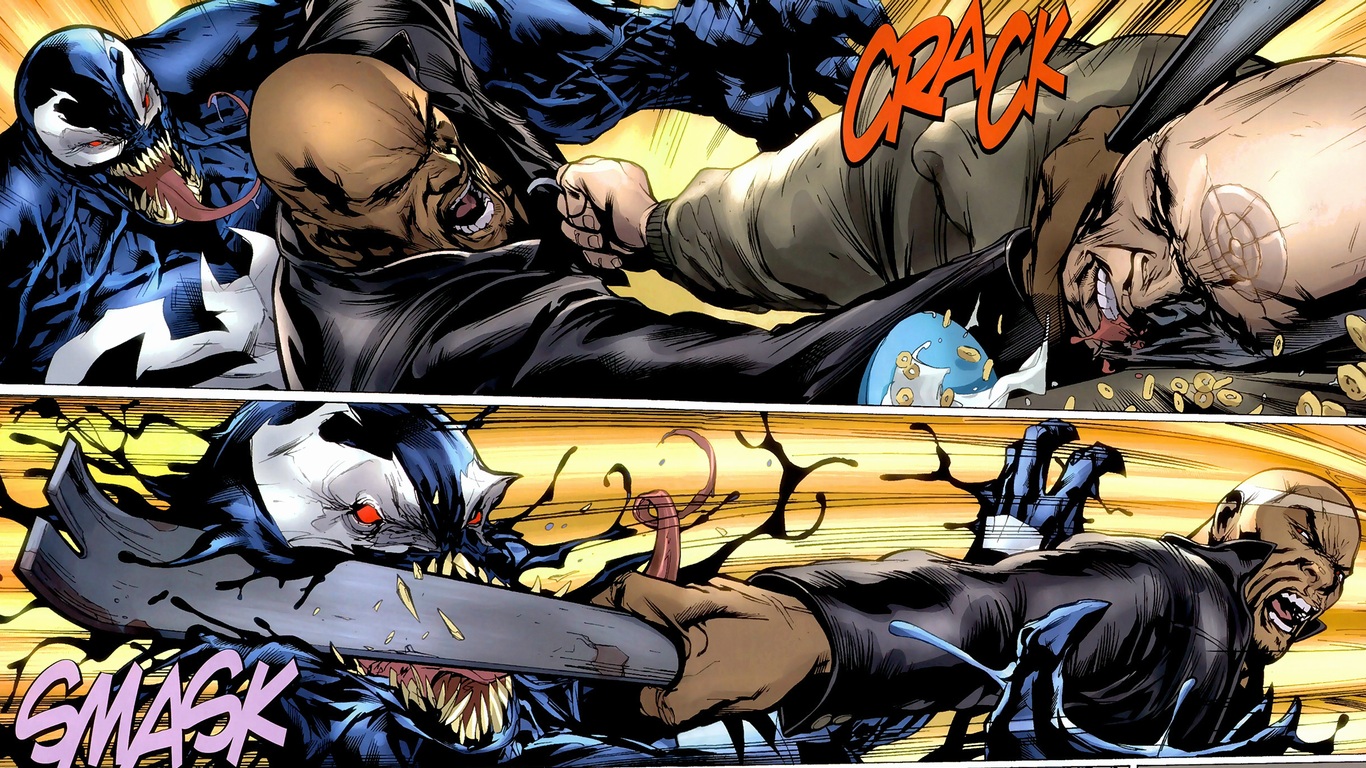
Round 2: Swordsman vs. Venom
Why’s the next image so small? Excuse me while I heap a paragraph of praise on Ellis and Deodato. Essentially, comic books are just another medium to tell a story, like TV, movies, books, etc. But it’s the next pages that prove how comic books can tell a story in a way that no other form of art can. Please click on the next two images to view the full large versions and see the battle progress in such a manner that other expressive forms don’t have the capability to do. Storytelling as art.

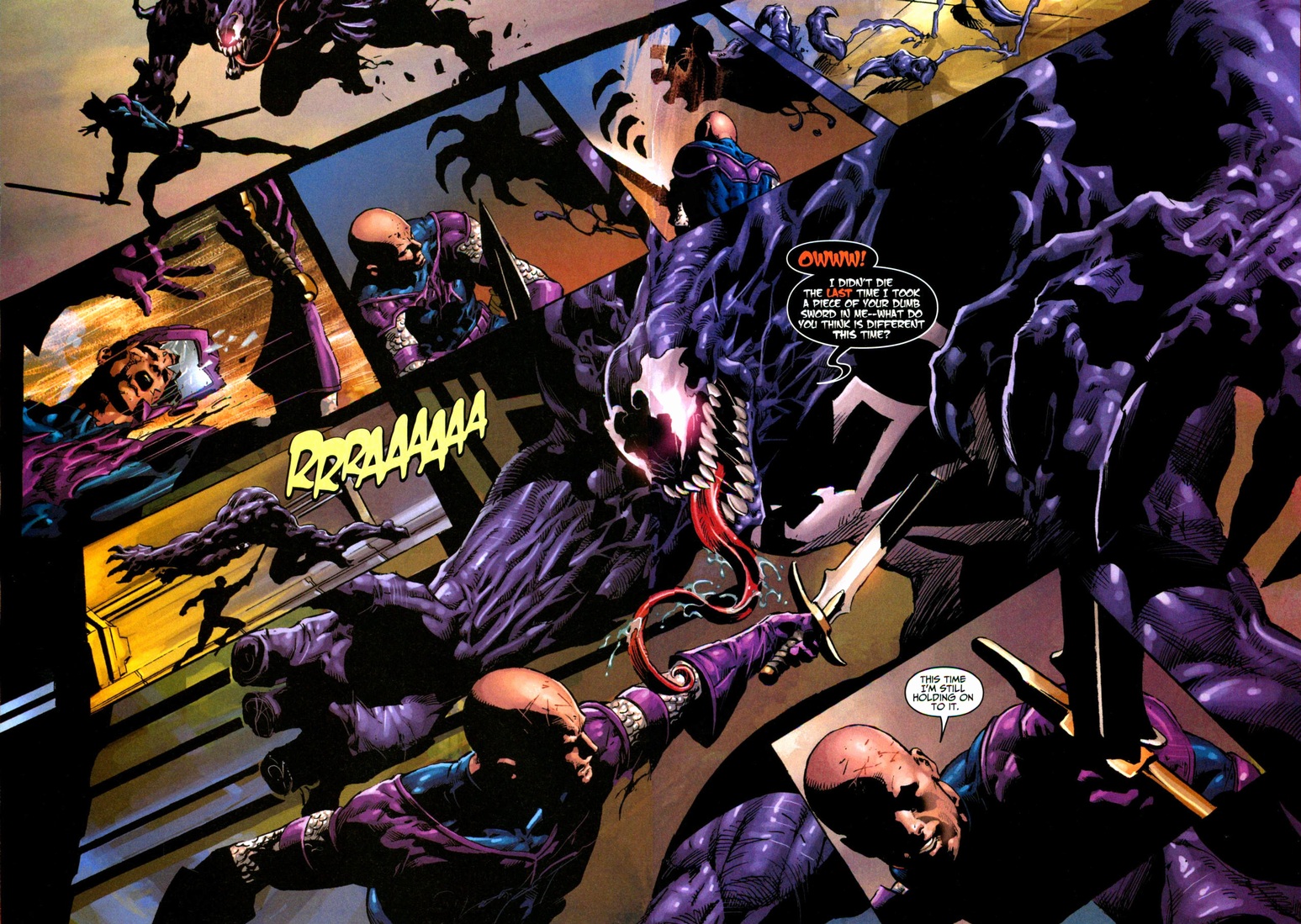
Oh, absolutely gorgeous. If I ended my blog here, I’d be satisfied in proving the sheer magnificence of comics. Plus, technology has been kind to this art form, making comics far prettier than the past few decades. As you can tell, Andreas emerges the victor.

Gross. What now? Swordsman easily defeated one of Spider-Man’s toughest foes and Andreas is significantly weaker than the webslinger. Well, Venom can be dangerous, but he’s not the most dangerous. For Swordsman’s coup to succeed, he has to go through the toughest, scariest, and most dangerous of Spider-Man’s rogue gallery. Rite of passage, I guess.
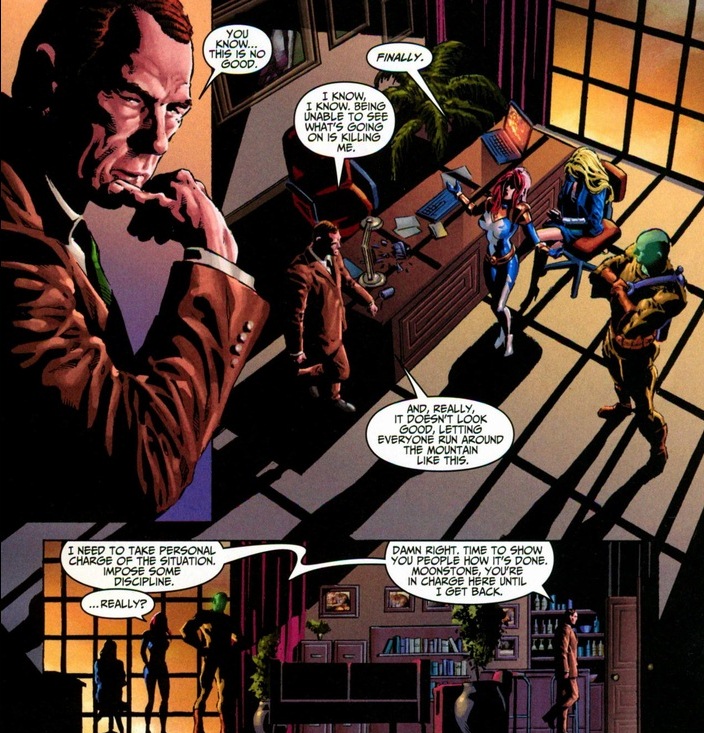
I present to you the absolute best monologue ever given by a supervillain. Ellis gives Osborn more character development in the next four pages than he’s been given in years. It’s a gorgeous, insane rant and just a perfect characterization of the craziest man in the entire good ol’ USA.
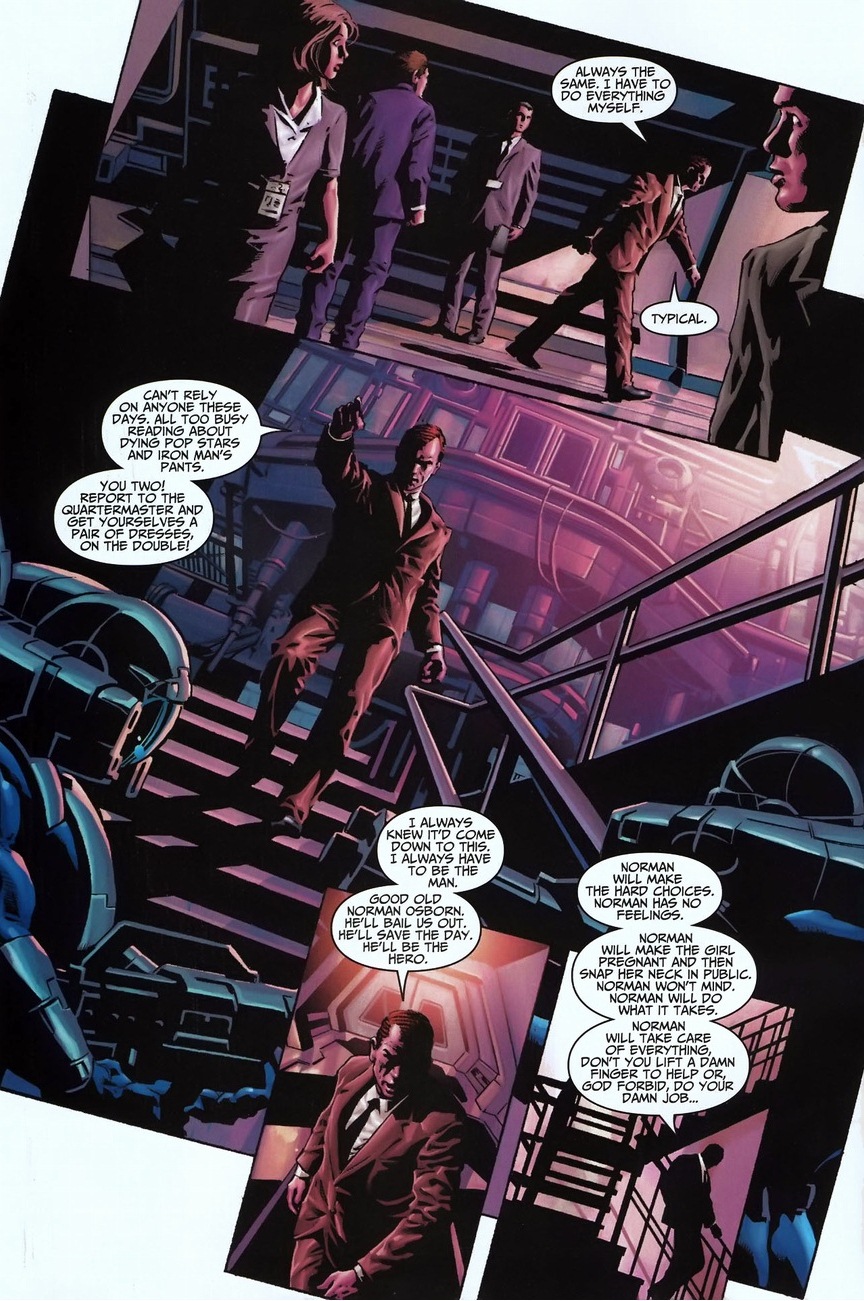


Once again, please click on the next image to view the full large version. It’s worth it.

I dunno if you figured it out yet, probably my complete lack of explanation not helping, but Osborn’s not supposed to be dressing up as his evildoer alter ego. Negates that whole redemption thing. Still, sometimes you have to pull out the big guns to take down a threat.
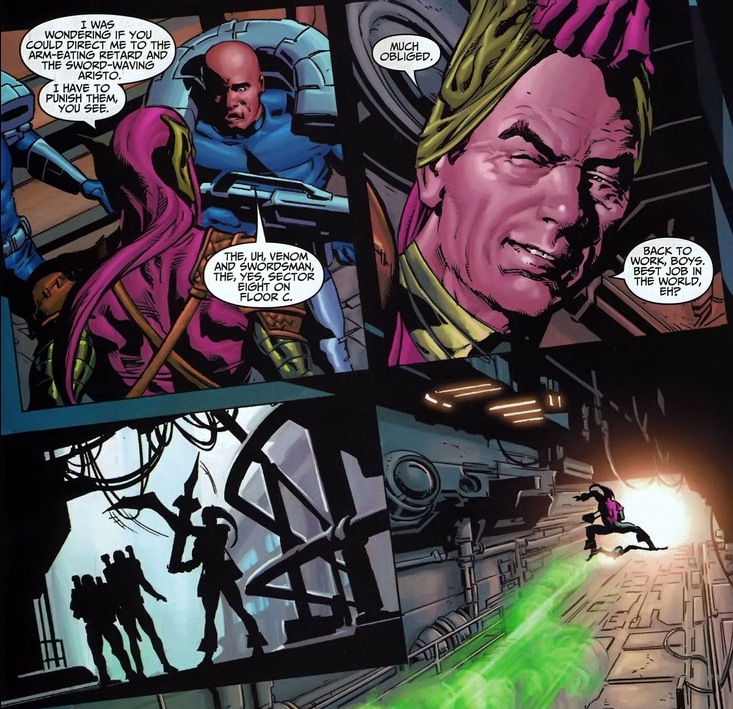
Round 3: Swordsman vs. Green Goblin
The title fight, ladies and gentlemen! Let’s not delay with weak jokes and unnecessary explanations!
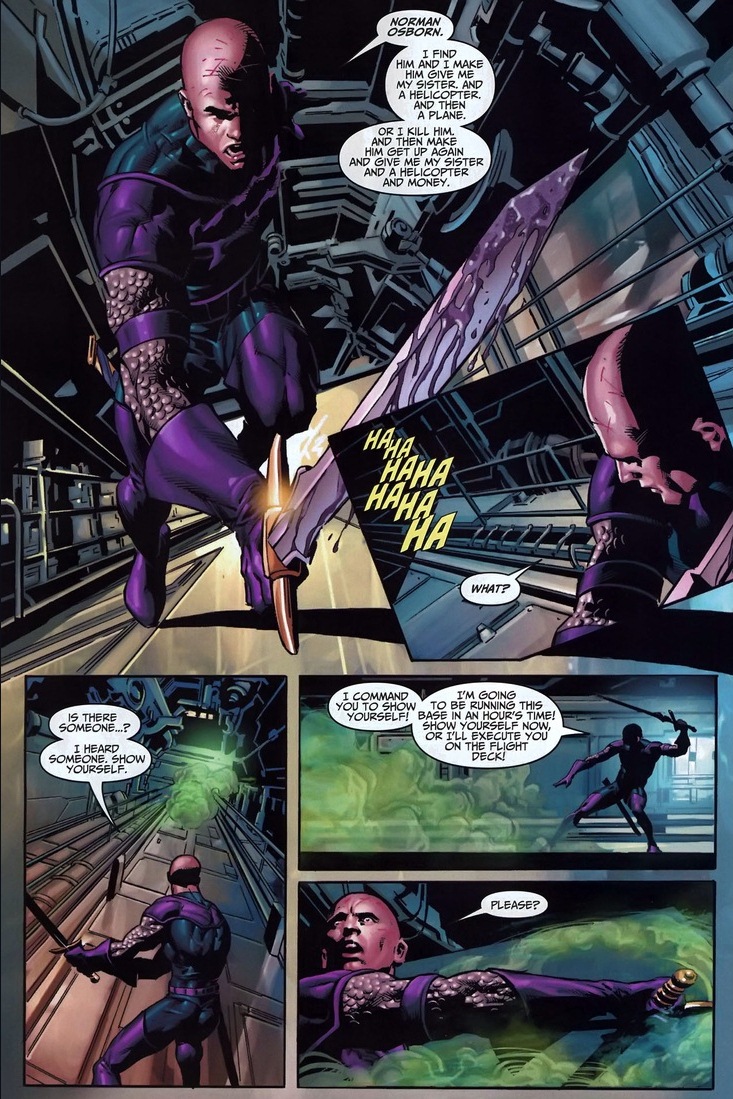
Want to see the face of crazy? Darn tootin’ you do.
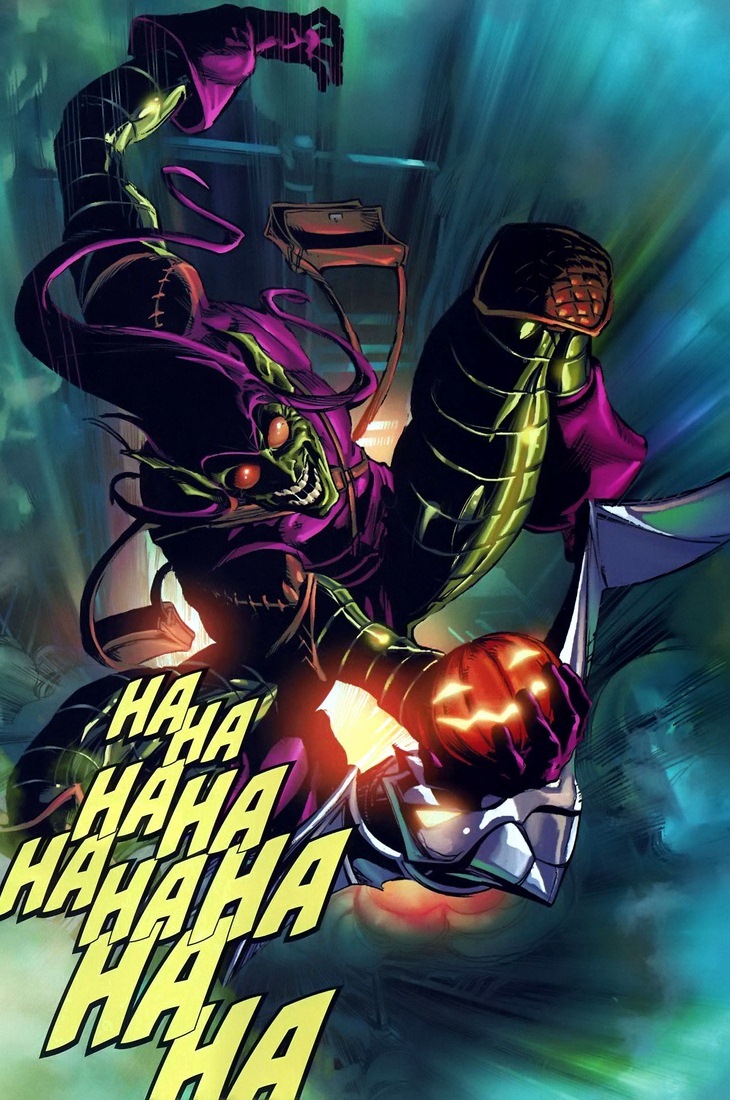
Swordsman, surprised by his quickly approaching foe, gives the appropriate response.

Pumpkin grenades! People forget that Osborn’s one of the smartest people in the world, most likely on level with Hank Pym and Tony Stark. His technology has advanced accordingly. Too bad he’s an insane psychopath.


Battle definitely over. Green Goblin wins the belt. Normally in this situation, most government agents would arrest Swordsman or have guards take him away. Not Osborn. Supervillains can be so petty and cruel sometimes.

And his punishment for betrayal?
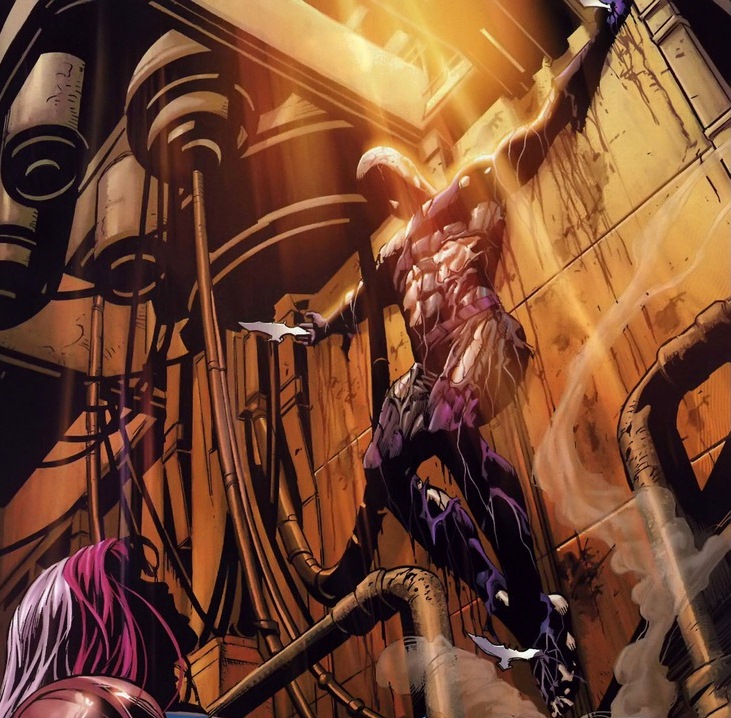
All I’m saying is Nick Fury wouldn’t crucify a teammate. Anyway, as Green Goblin continues to rampage throughout the helicarrier, Songbird has to face him alone to save everyone aboard. A super awesome fight, but you’ll have to read the book for that rumble. In summary, if you ever wonder how a mentally ill man in his mid-50s classifies as one of the top baddies in the Marvel universe, reference this arc.
The Thor and Jane melodrama
Posted: 09/03/2012 Filed under: Marvel, Relationships 1 CommentWell, not exactly Thor, but we’ll get to that. You guys all saw the movie, right? The handsome, selfish god falls in love with a beautiful, selfless astrophysicist Jane Foster. A delightful tale and perfect for the movie, but not terribly true in the comics. Mainly because Thor doesn’t love Jane, but the goddess Sif. Y’see, the connection between the thunder god and Jane relies on a single man: Dr. Donald Blake.
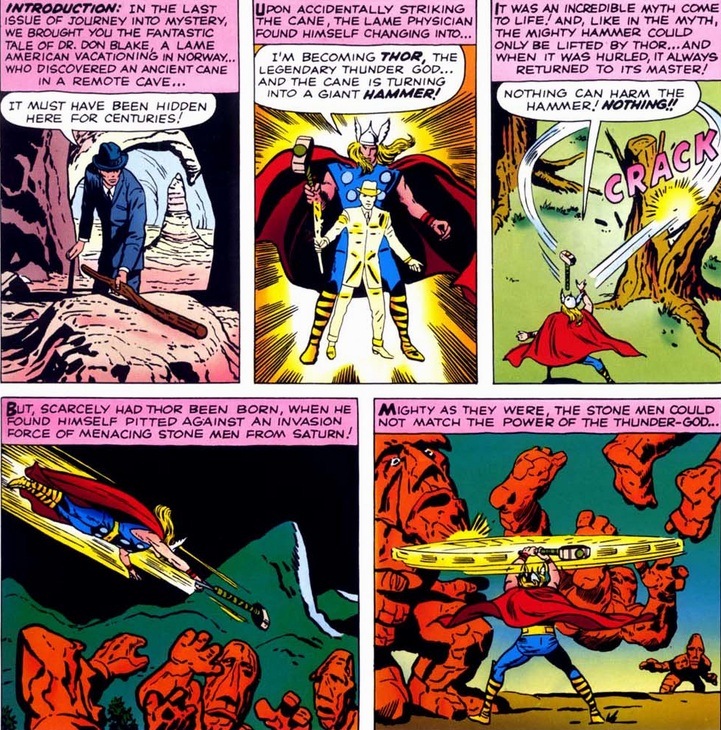
Here’s the real origin on Thor from Journey to Mystery #84 in 1952, written by Stan Lee and drawn by Jack Kirby. Thor premiered the issue before, but this is the first appearance of Jane:

Complete with all the secret identity stuff that made comics great back then:
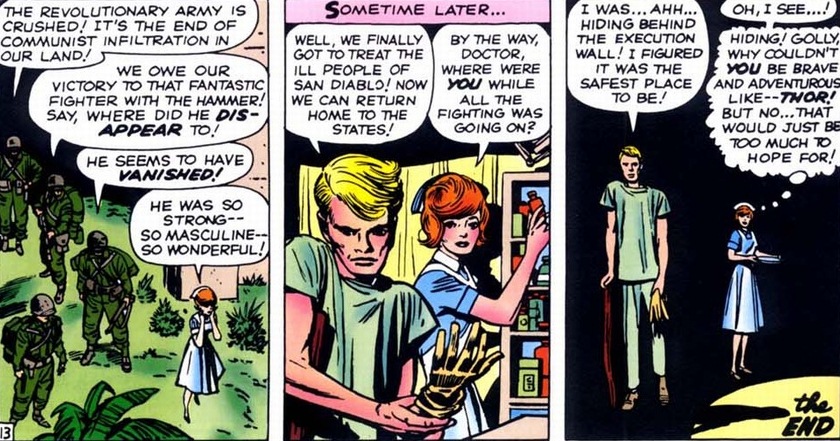
Most of you should have no idea who Don is, and that’s totally normal. As comics have progressed and stories evolved, Don’s presence has been diminished and subsequently done away with for long periods of time. But he can’t truly disappear, as Thor and Don share the same body. In Thor #1-12, 601-604, volume 3, written by J. Michael Straczynski and drawn by Olivier Coipel and Marko Djurdjevic, brought back Don Blake and continued his relationship with Jane.
I have to warn you, if you’re expecting romance and emotional turmoil, you won’t find it here. I want to provide you dear readers with an update of what Jane’s been up to and a friendship 60 years in the making, but soap opera-y lacking.
Our story picks up immediately after Ragnarok, the Norse apocalypse that killed Thor, Odin, and all those other gods you know and love. I’m serious:
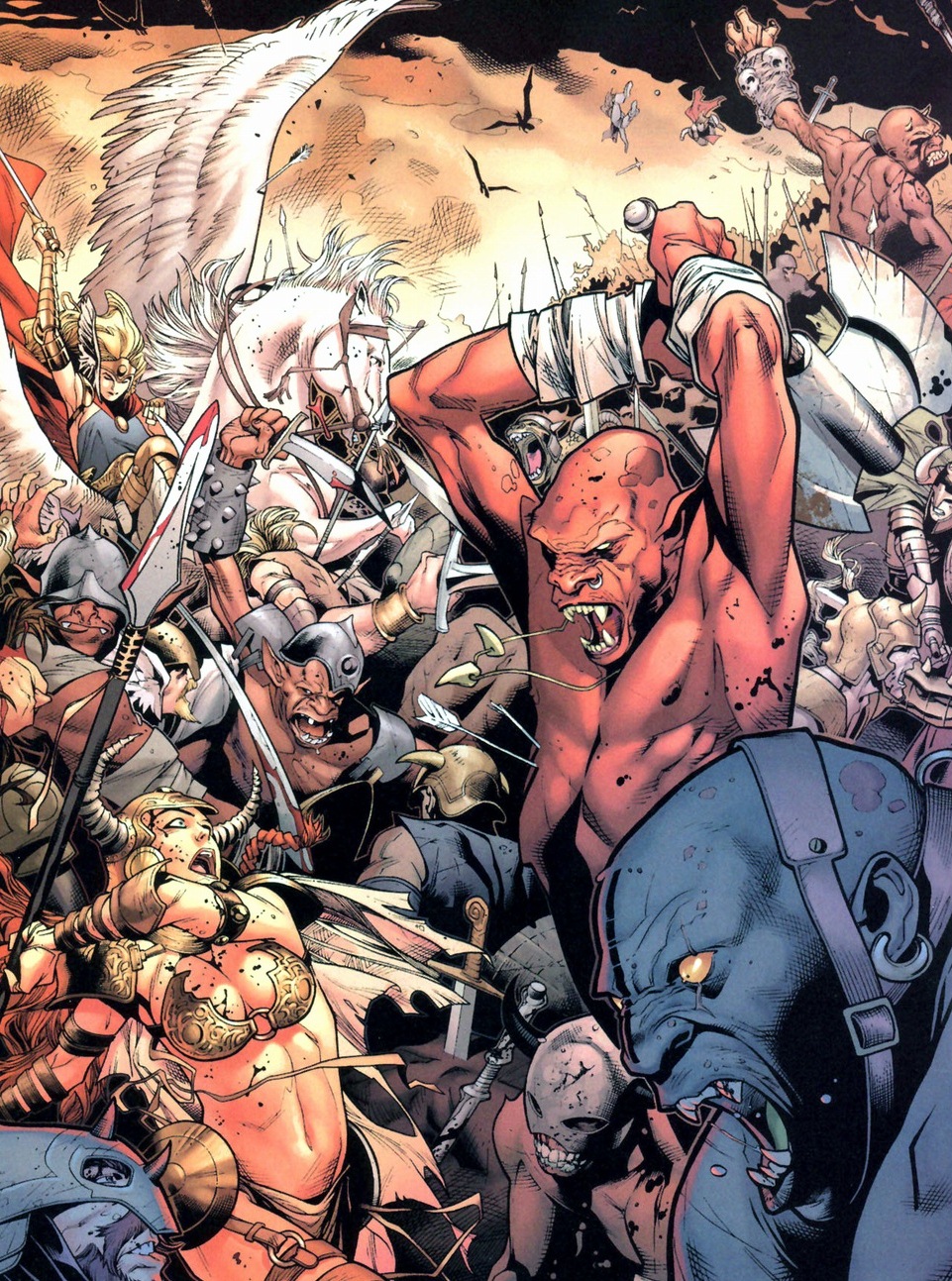
Luckily for us, Thor’s connection with the non-god world happens to be the dear doctor. Lucky Thor.

Don’t forget, Thor or Don can be around, but not both at the same time. So when the two converse, they have to do it in some weird spirit world, but you probably guessed that.
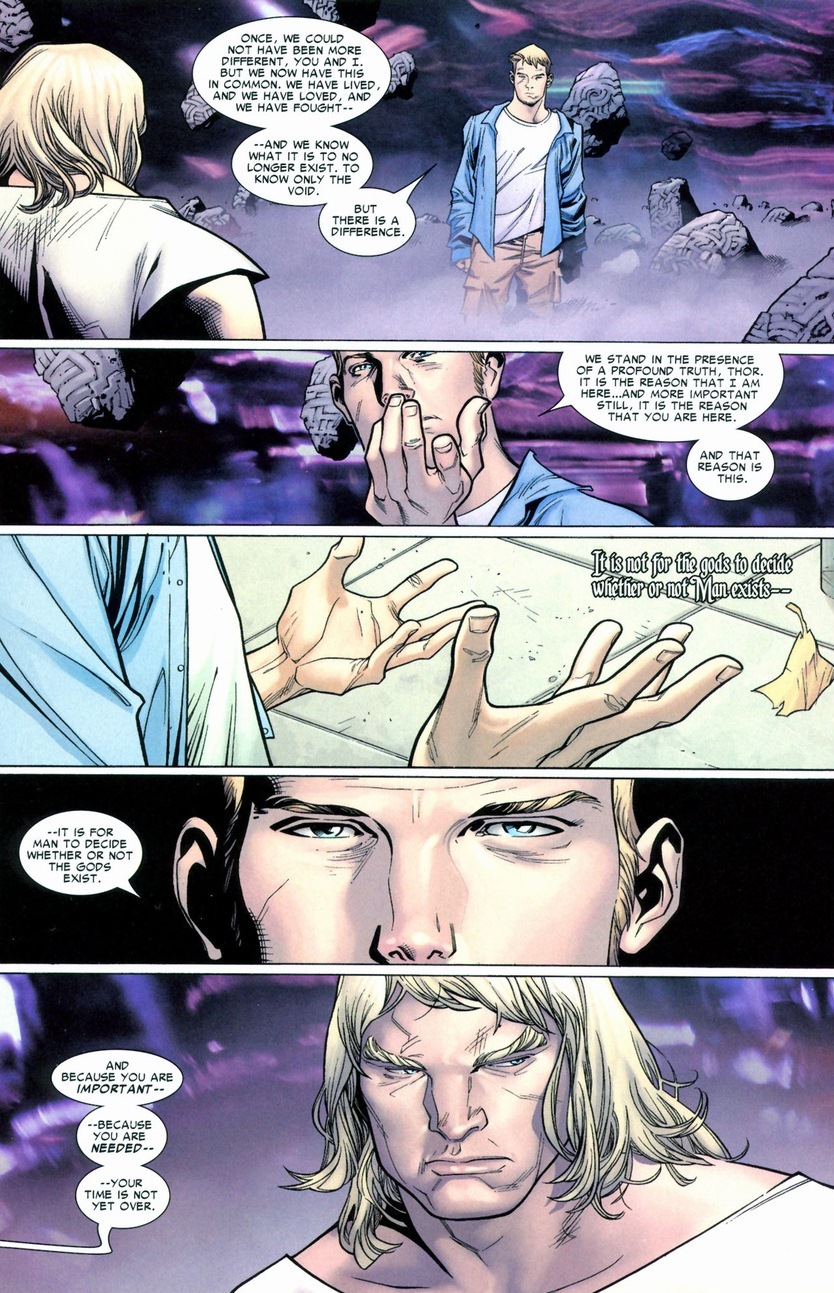
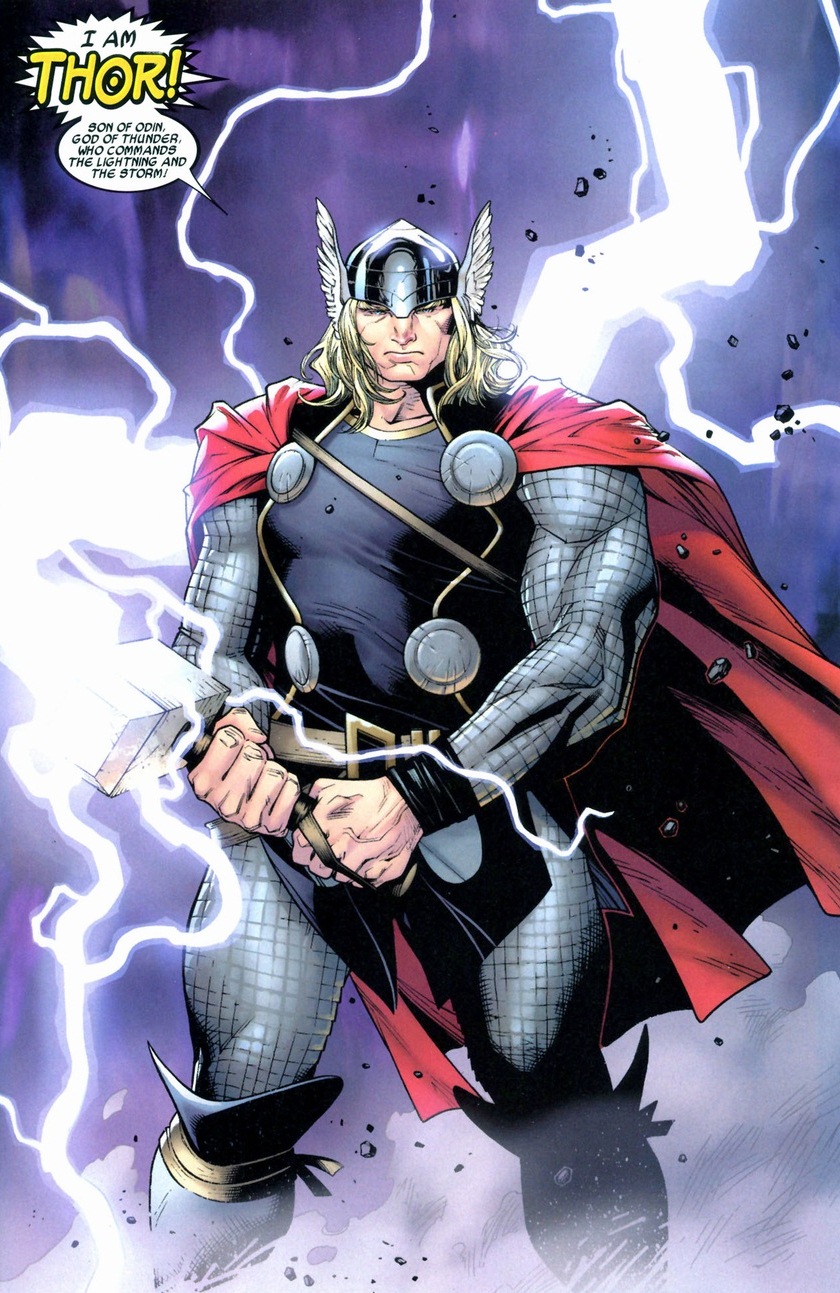
In a wonderful twist, Don/Thor travel to rural Oklahoma to bring back the destroyed Asgard. Oh and for reference’s sake, the two are able to switch identities instantly with a bump of Don’s staff or Thor’s hammer. Very convenient.


Now, I’m not a scientist, but apparently resurrecting all the dead gods and bringing a giant city back to its glory across dimension into the mortal world can be exhausting. Especially with all that cool Odin power Thor now possesses. You saw the movie, that nifty magic requires sleep to recharge, and finally Don gets a chance to shine.


Adventure with excitement and thrills? No way. He’s a doctor, and not the Indiana Jones types of doctor. Yup, Don’s got some catching up to do with his many years of being away from comics.

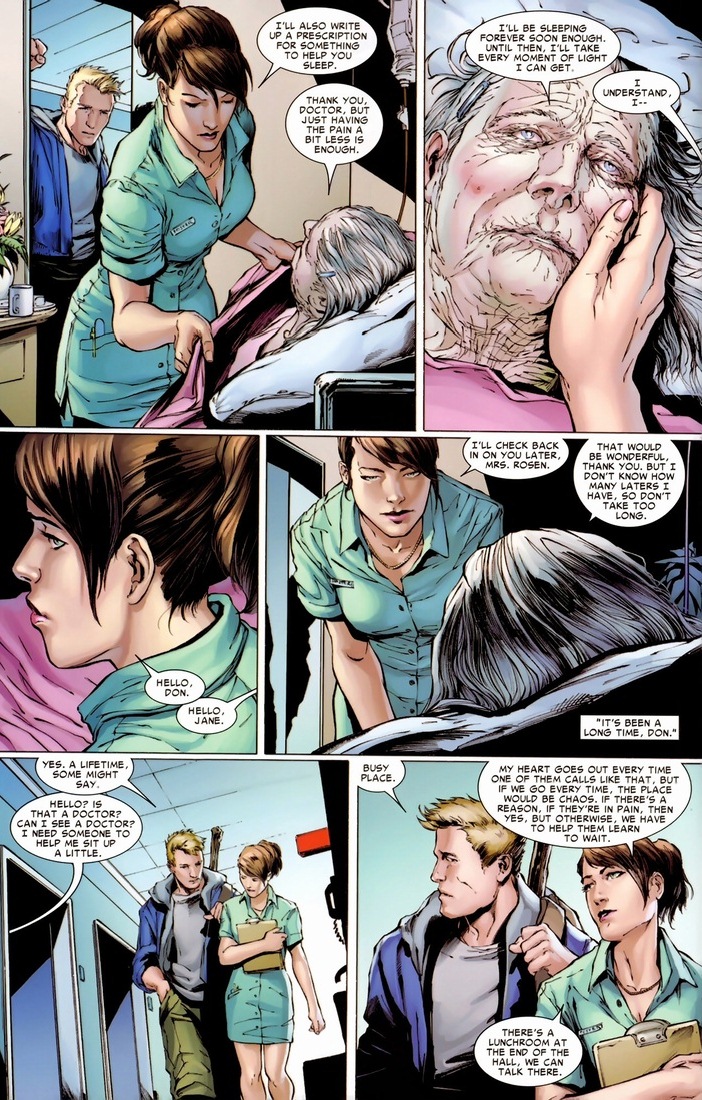
Jane’s lofty career goals have been a success! No longer that timid beautiful nurse, now a beautiful mid-30s official doctor. Who just so happens to be buddies with the most powerful of the Avengers. And speaking of which, what is Thor up to?
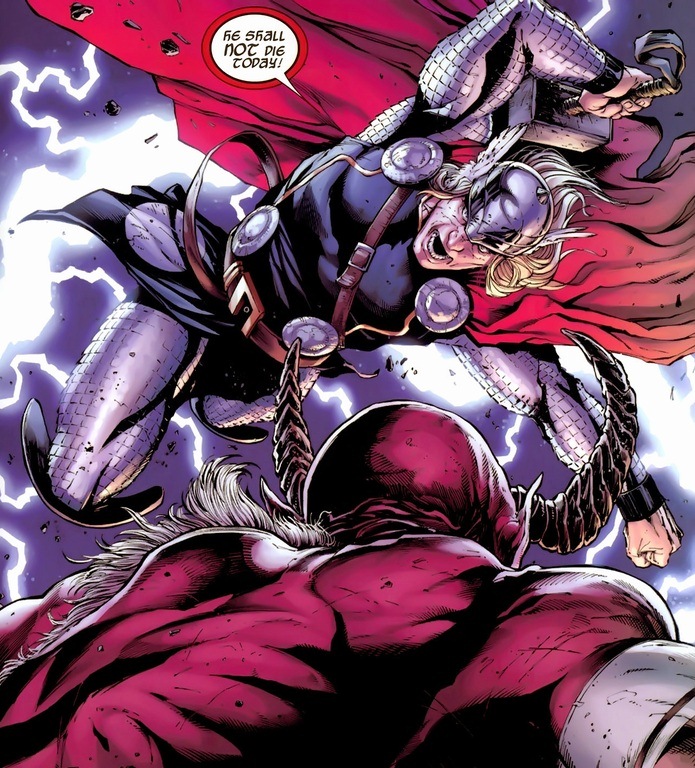
Oh, keeping busy. Let’s go back to the doctors.
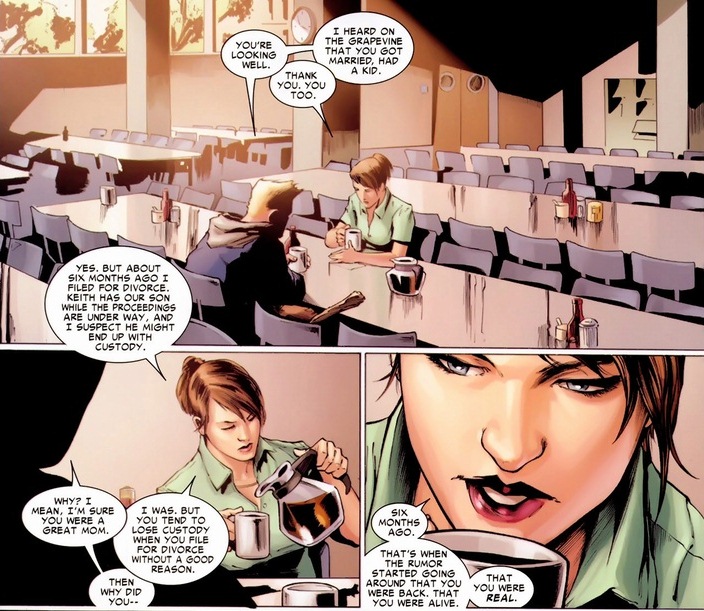
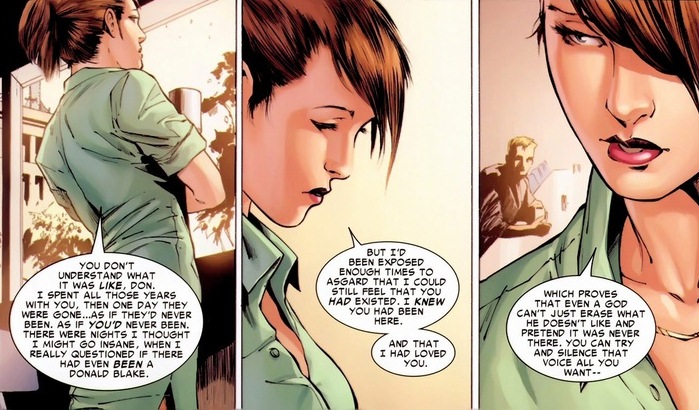

Drama! I’ve been lax in details, but I probably should have mentioned that while all the dead gods came back to life, dear Sif still remains missing. Thor can’t find the body she resides in (Loki’s fault) and Don figured he’d go investigate. Too bad his detective skills don’t take broken hearts into account.
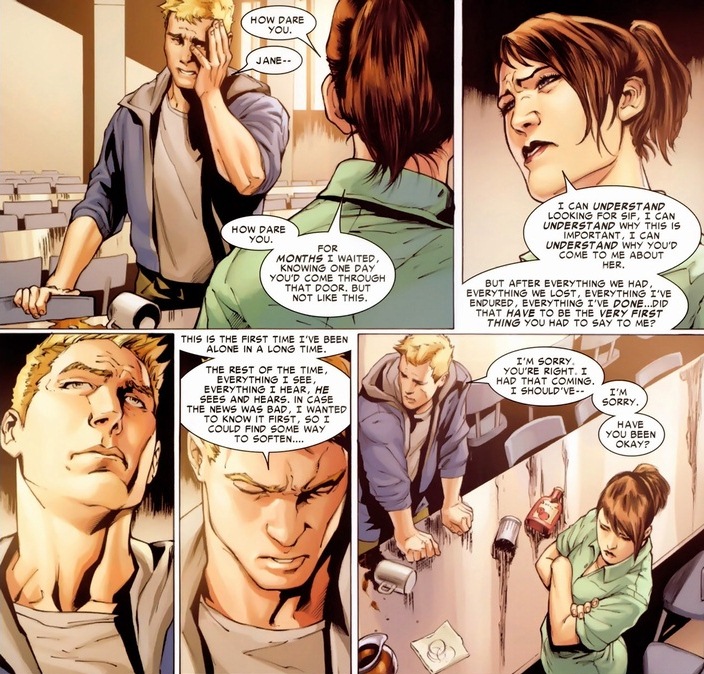
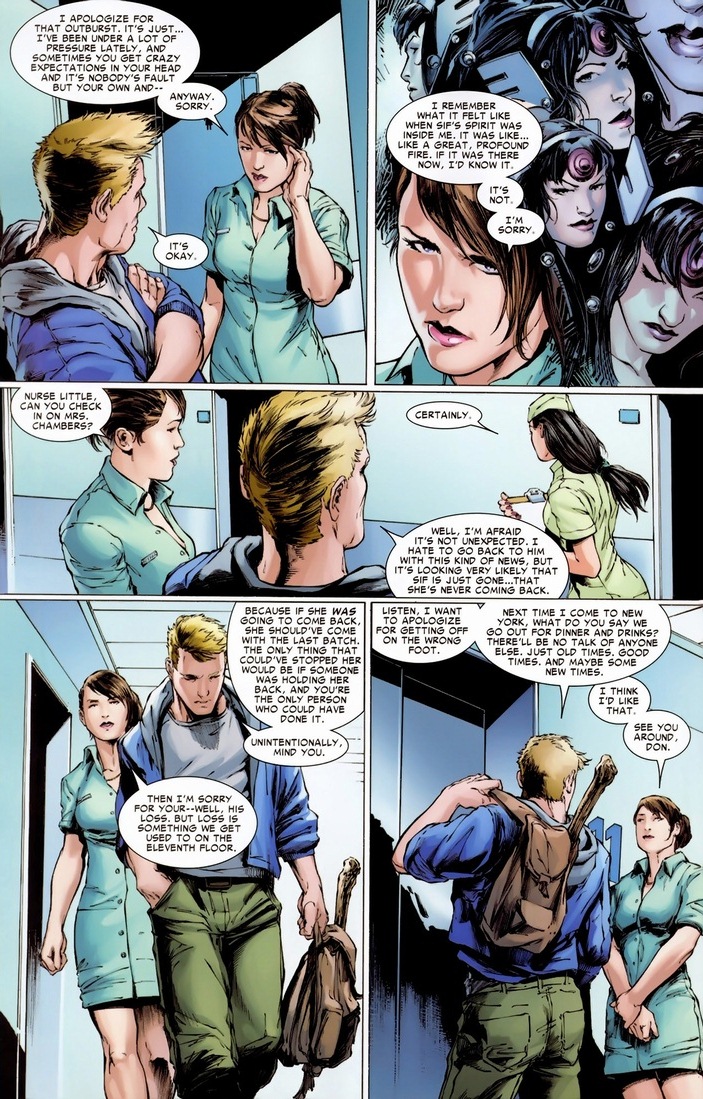
With emotional band aids firmly placed on open wounds, Don and Jane’s first reunion comes to a bittersweet end.
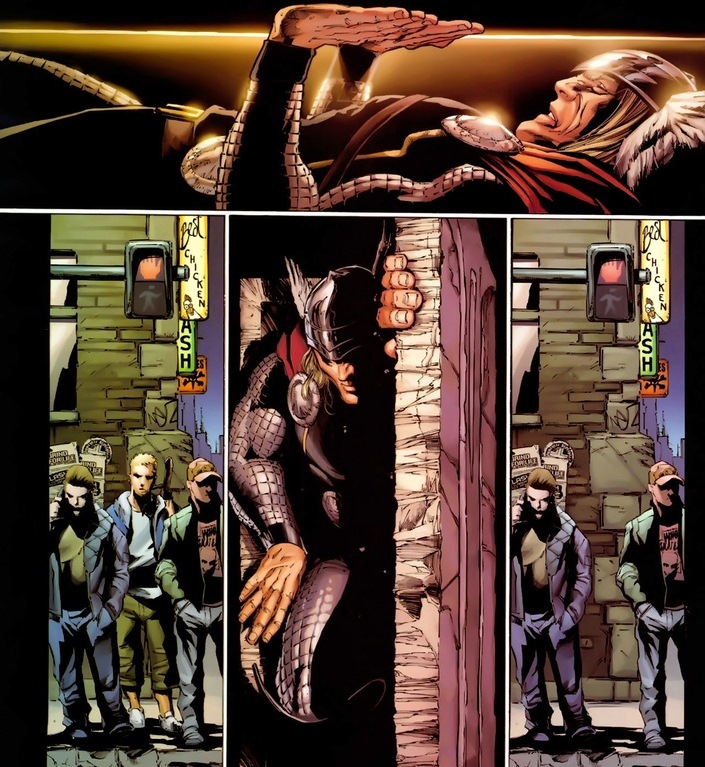
By the way, Straczynski’s run on Thor has some of my absolute favorite Loki manipulating, scheming, and plotting. An absolutely fantastic display of exactly why he’s Thor’s arch-nemesis. Also, Loki’s now a woman. Gods, right? We’ll skip ahead to that lovely dinner promised in previous pages.
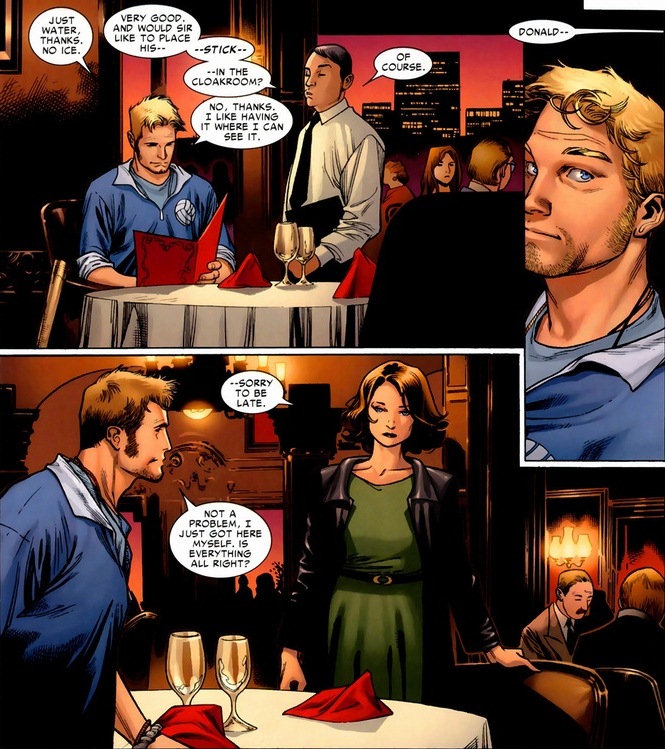

Look, Don and Jane can’t get back together. Thor has control around 75% of the time, and as Don’s stated before, the thunder god’s way more important in the whole protection of society than the human doctor. Our story isn’t over, but that last panel happens to be the end of Don and Jane’s love affair, now a deep, platonic friendship.
We have a few pages left to read, but it wouldn’t hurt to explore Thor and Don’s relationship a little.

And the return of Thor’s soul mate, Sif.

And finally, the actions that bring Jane Foster back to the forefront of Thor’s world:
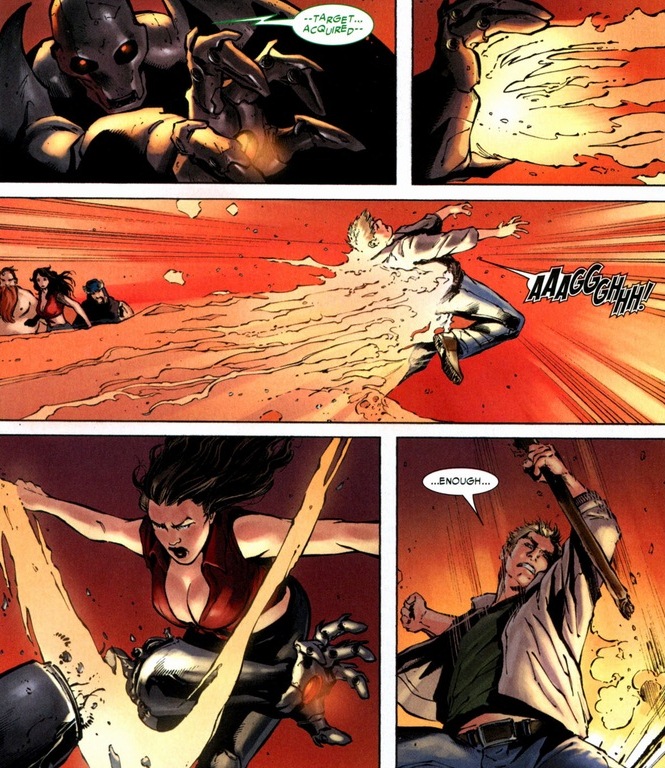
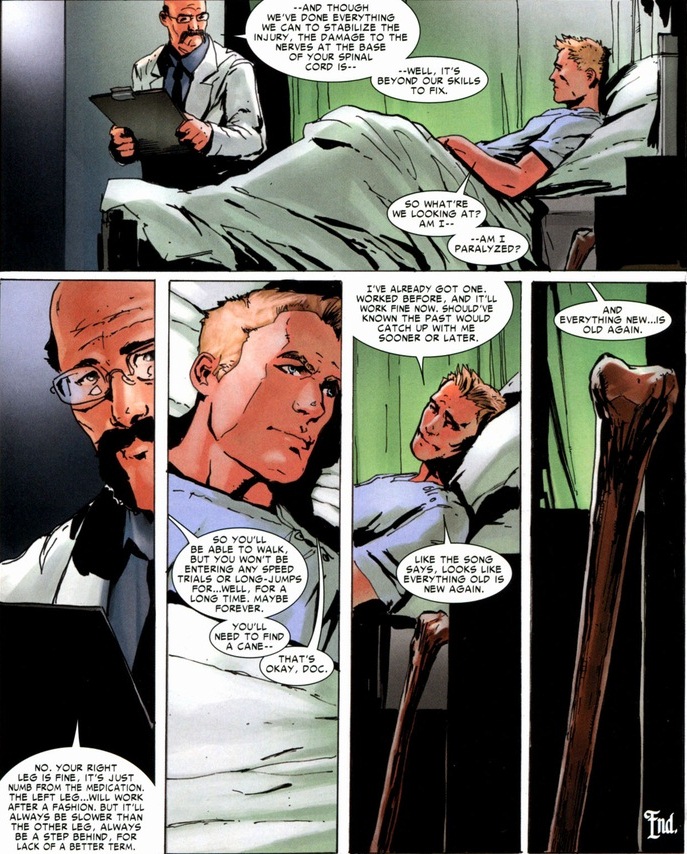
Note for those who want a quick timeline, this takes place before Siege, where Norman Osborn and his bad guys attack Asgard and everything escalates into a full-out war.

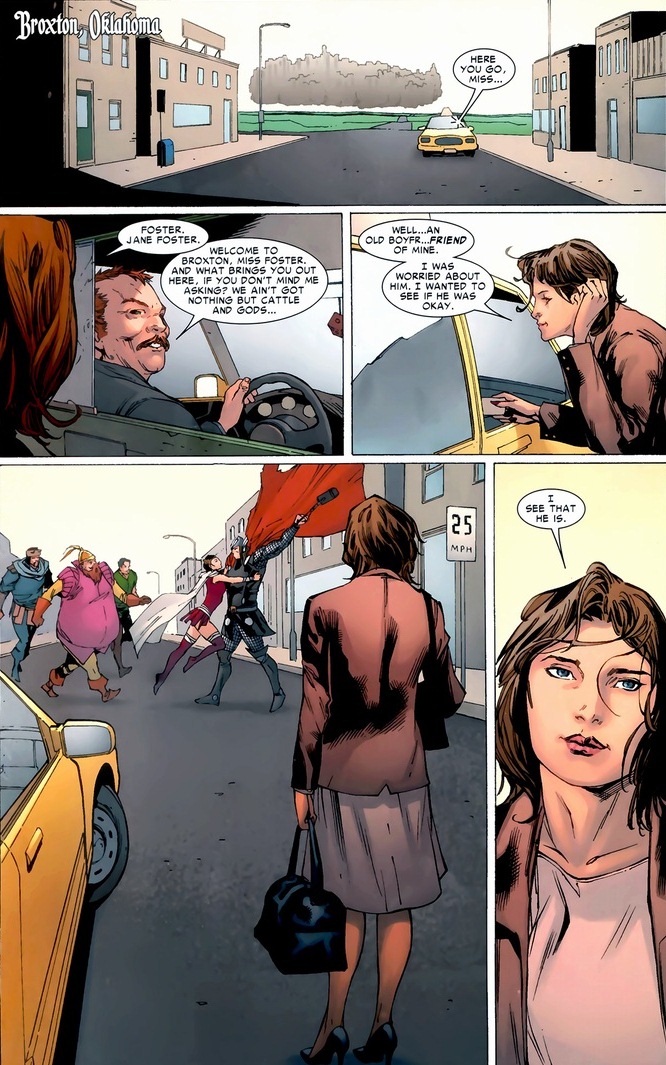
The end! Well, the happiest ending Thor, Don, and Jane can get. More like a content ending. But at least there’re smiles all around, and that’s my favorite comic book emotion.
The adventures of Mandrill
Posted: 09/02/2012 Filed under: Characters, Marvel 3 CommentsNo better way to start off the week than chronicling the appearances of a minor supervillain!

Despite his ape features, Mandrill’s a human mutant with the incredibly creepy superpowers to excrete pheromones that make every woman in the vicinity immediately attracted and enslaved to him. Yup, which means his only weakness is the other half of the population.
Actually, I’m quite proud of myself, because this is easily the largest collection of issues I’ve put together for one article. To avoid having to name each one I’m going through, here’s what we’ll be looking at select scenes from today (in order):
Shanna the She-Devil #4, written by Carole Seuling & Steve Gerber and drawn by Ross Andru
Daredevil #110-112, volume 1, written by Steve Gerber and drawn by Gene Colan
The Defenders #91, written by Ed Hannigan and drawn by Don Perlin & Pablo Marcos
Avengers West Coast #66, written by Roy and Dan Thomas and drawn by Paul Ryan
Punisher War Journal #15, volume 2, written by Matt Fraction and drawn by Scott Wegener
Thunderbolts Annual #1, written by Kurt Busiek and drawn by Bob McLeod
Spider-Man: Breakout #3, written by Tony Bedard and drawn by Manuel Garcia
New Avengers #61-64, written by Brian Michael Bendis and drawn by Stuart Immonen & Mike McKone
Spider-Man: Web of Romance one-shot, written by Tom Beland and drawn by Cory Walker
Okay, that was exhausting. Let’s get to the good stuff. Mandrill first appeared antagonizing Shanna the She-Devil, who’s like a female Tarzan.
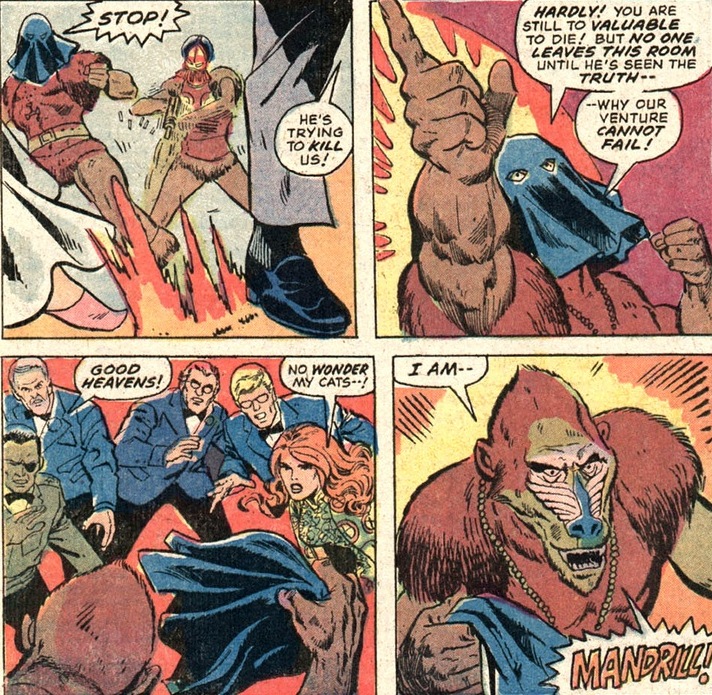
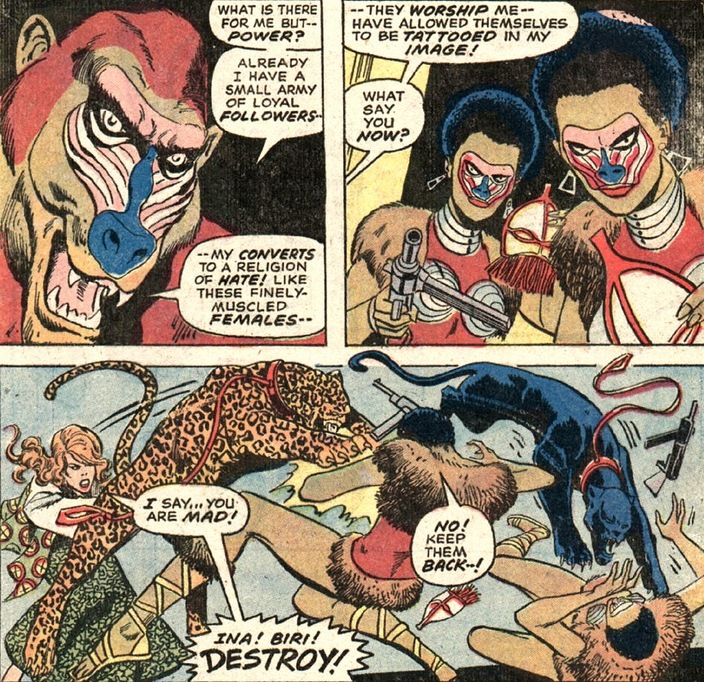
Can you guess our recurring theme? Mandrill, despite his sexy powers, loses badly. Every time. In increasingly humiliating ways. No matter how good looking of an ape you are, pet jaguars and panthers just can’t see that seductive twinkle in your eye.
But when he finally meets Daredevil, we get some insight into his tragic past and evil motivations.
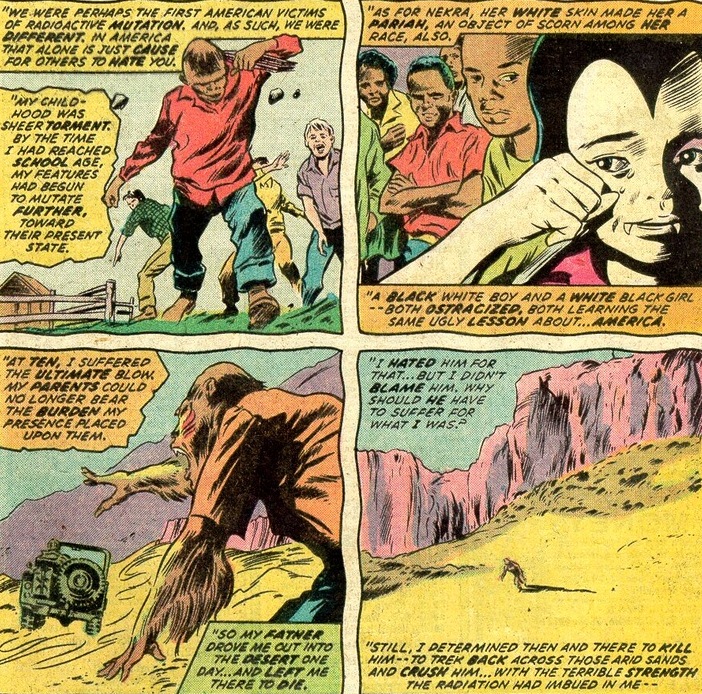
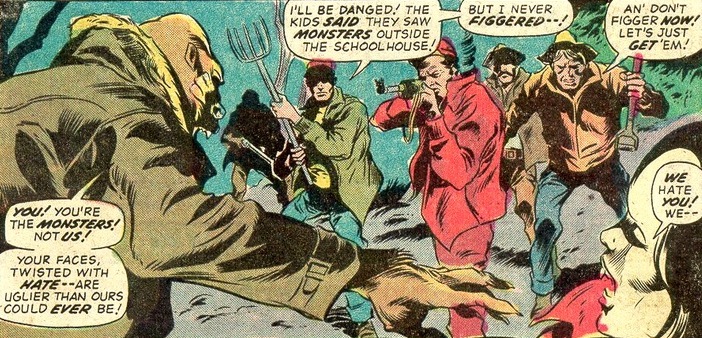
How sad. Anyway, in really the only major and ambitious threat he’s ever possessed, he tries to take over the White House. First Mandrill president and all that. Instead of campaigning like respectable politicians, he does the whole hostile takeover thing. The Mandrill presidency lasts less than a minute:

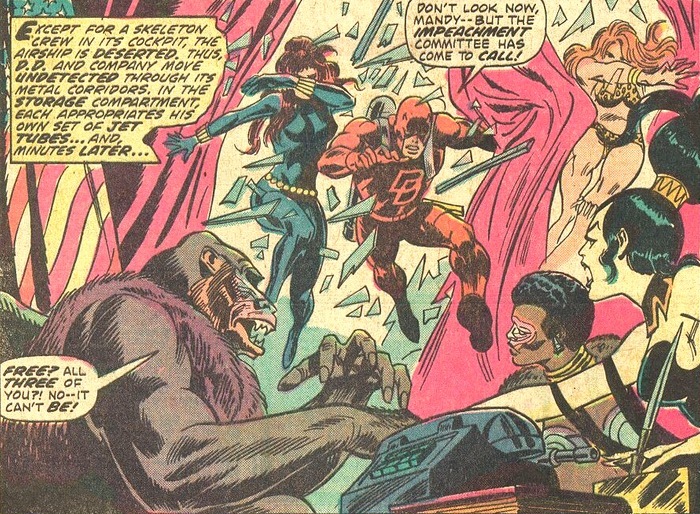
Later, in possibly the only real character development the character’s gotten, he totally meets his parents. Y’know, the ones who abandoned him and left him to fend for himself in the desert. Spoiler alert: he’s not happy about it. Oh, but first, how do the baddest of supervillains escape pursuit by angry superheroes? Giant cave worm? Nope, that’s Mole Man.
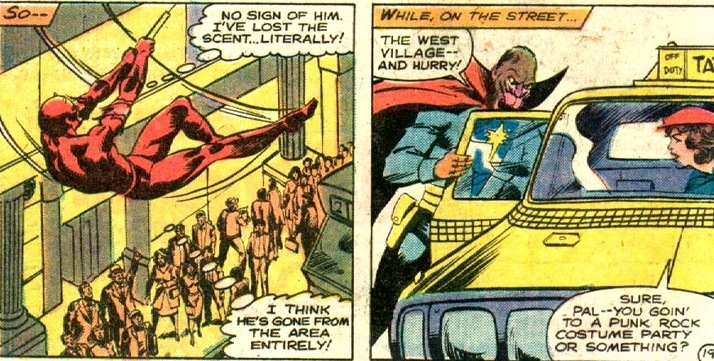
That outfit he now wears? Hasn’t changed in 20ish years. And I love it, because the only thing better than a mind-controlling monkey is a flamboyant mind-controlling monkey.

So, how does his mother feel about her son’s achievements?

Well, you see the results of poor parenting? Half the X-Men are uglier than Mandrill, but because their parents enrolled them in a school instead of throwing them out of a car in the middle of nowhere, they fight bad guys and use their powers to save innocent people. Mandrill, on the other hand, became a misogynistic, selfish jerk. Lesson learned.
Over the next few years as we slowly advance into the modern age, Mandrill briefly pops a few times to get his butt kicked, and then disappears again. Usually in the span of a single page.


Finally getting to the second half of the previous decade, he makes his living as a supervillain henchman. President Mandrill has certainly fallen from grace.


Though, I’d be a horrible journalist (kinda?) if I didn’t mention his only shining moment of the past decade. That time he enslaved Spider-Woman to beat up Spider-Man. Finally doing something useful with those pheromones. First page has nothing to do with Mandrill, but it made me laugh. Plus, my love-affair with Spider-Man and all that jazz.

Behold, Mandrill at his most menacing!


Of course she breaks his spell, most likely out of sheer willpower. My theory, and this is based on zero facts and entirely on conjecture, relies on Spider-Woman’s own pheromones. Y’see, she also emits sexy smells, but hers are far more subtle, plus she’s not a manipulative creep. Having experience with her own attraction pheromones raises her resistance to similar stuff a little, so the two spiders can deviously trick the monkey baddie.
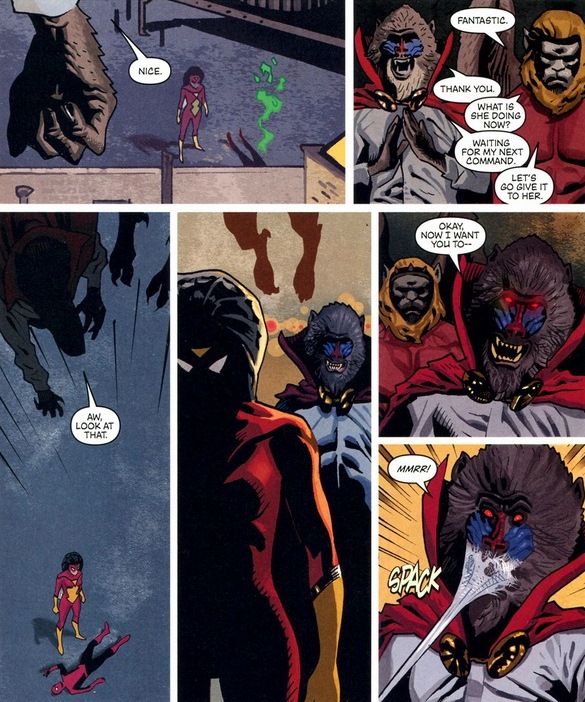
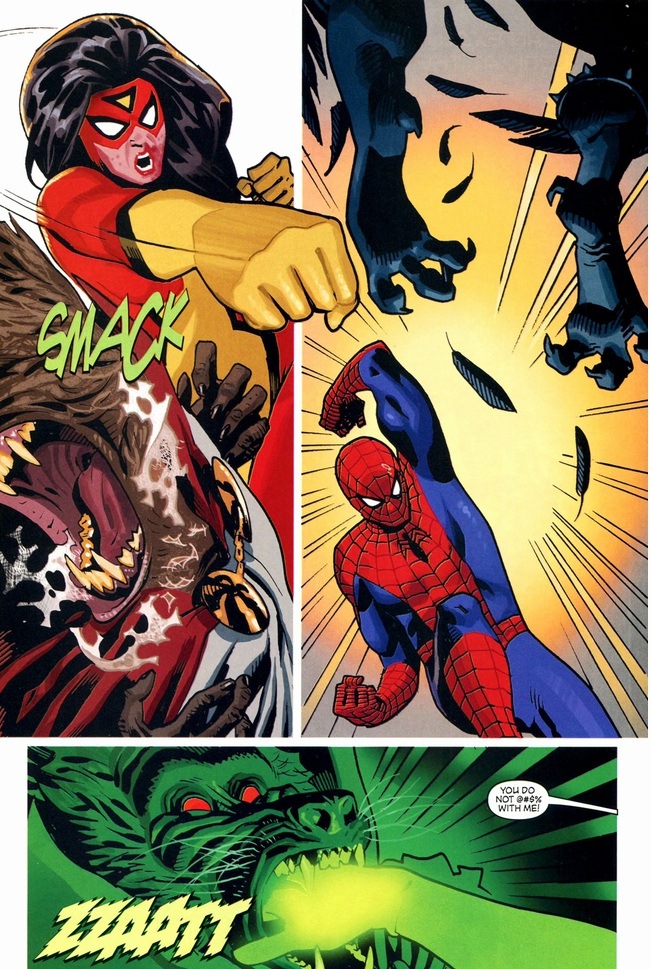
Humiliation achieved, theme intact, PTSD acquired. Poor Mandrill turns into a whiny little ape when his supervillain boss requests they all attack Asgard, where Thor and other dangerous gods live.


Super embarrassing to watch, right? Luckily, The Hood (the boss dude) gets even whinier like twenty pages later. Full evil karma circle. Right now, we can assume Mandrill’s locked up in prison with all the other supervillain henchmen. Will he show up in future comics? Absolutely.
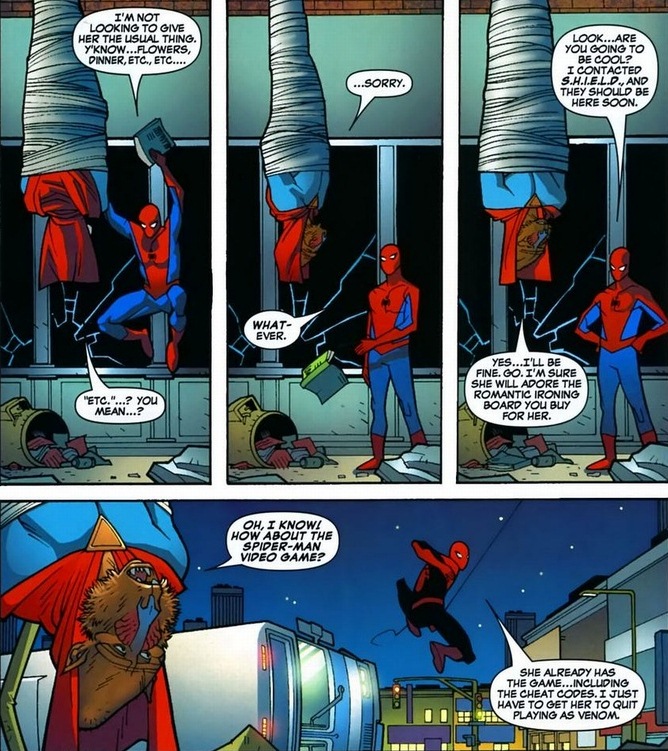
But to spend all this time chronicling our new buddy and end the article on that pathetic note? No way. How about a conversation with Spider-Man about Mary Jane’s birthday? We’ll go out with a bang! Though, still more of a whimper.


 Arousing Grammar