
The Thing’s fiancée, Pt. 1
Posted: 07/04/2013 Filed under: Marvel, Relationships 1 CommentWhen the Fantastic Four had their rocketship bathed in cosmic rays, the Thing lost everything. The others, for the most part, stayed themselves only with super cool new powers. But poor Ben Grimm, now a six foot, five hundred pound rock monster, had a lifetime of self-loathing ahead of him. But don’t feel too bad. With his appearance and strength, he did become filthy rich, a major celebrity, an Avenger, and has saved the world dozens of times. A worthy trade, I’m sure. And today, he finds love.
I’m going to be showing you scenes from a fifteen comic run. We’ll start at the relationship’s beginning and go all the way to the relationship’s conclusion because I’m way too good to you all. To save me trouble, I’m unloading all the issues used here:
Fantastic Four #554, written by Mark Millar & Bryan Hitch and drawn by Paul Neary
Fantastic Four #555, written by Millar & Hitch and drawn by Neary & Hitch
Fantastic Four #558, written by Millar and drawn by Hitch
Fantastic Four #559, written by Millar and drawn by Hitch
Fantastic Four #560, written by Millar and drawn by Hitch
Fantastic Four #562, written by Millar and drawn by Hitch
Fantastic Four #563, written by Millar and drawn by Hitch
Fantastic Four #564, written by Millar and drawn by Hitch
Fantastic Four #565, written by Millar and drawn by Hitch
Fantastic Four #566, written by Millar and drawn by Hitch
Fantastic Four #568, written by Millar & Joe Ahearne and drawn by Hitch & Neil Edwards
Fantastic Four #569, written by Millar & Joe Ahearne and drawn by Stuart Immonen
I know it’s a doozy. Please understand that I’m not going to cover any of the fights. Not one. And oh, the fights are amazing. Here’s a tease to lick those bloodthirsty lips of yours:

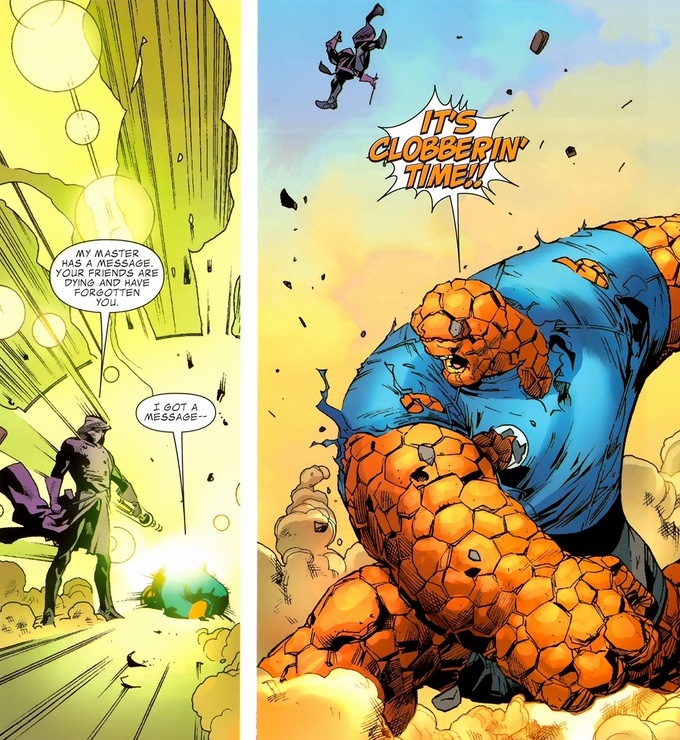
By the way, the final arc of Millar’s run contains one of the best Fantastic Four vs. Dr. Doom battles ever written. You should treat yourself. Anyway, our story begins innocently enough. When not saving the world, the Fantastic Four like to do some philanthropic work, and what student wouldn’t enjoy an appearance by respectable, lovable superheroes?

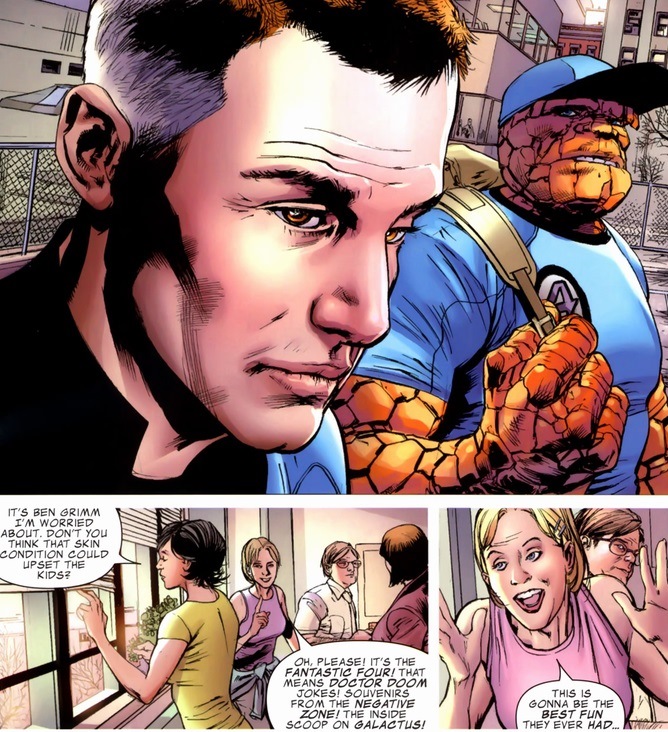
Mr. Fantastic’s marriage is fine. Sort of. Now, the Fantastic Four have a unique position in the superhero world. Think of the team as a business. They possess no secret identities and the Baxter Building (where they live) is well-known and prominent in the New York skyline. Reed supports the family through government contracts and patents while occasionally taking a break to defeat Galactus or whatever. None of them are public menaces. I’m just saying Spider-Man waltz into a school.
Oh, and want to see how the Thing flirts? Of course you do.


Don’t be surprised. For one, the Thing’s in good shape (for being covered in stones). Also, he’s a celebrity, and you know the kind of power that has over women. Regardless, Ben still has to win her over the hard way. Y’know, hard like a rock monster. By the way, if you’ve never read Fantastic Four comics, this is how Mr. Fantastic always talks:

From there, the romance blossoms. How could Deb not like the Thing? He can spout a decade of exciting stories, he has a delightfully confident personality, and he’s completely hairless. Plus, free rides in the Fantasticar.


After a whole bunch of Human Torch subplots, the two lovebirds part ways for the night. And what kind of love story would this be without an uncomfortable part of the past brought up? I’m not talking about the Wizard or Mole Man, I mean from Deb’s past.
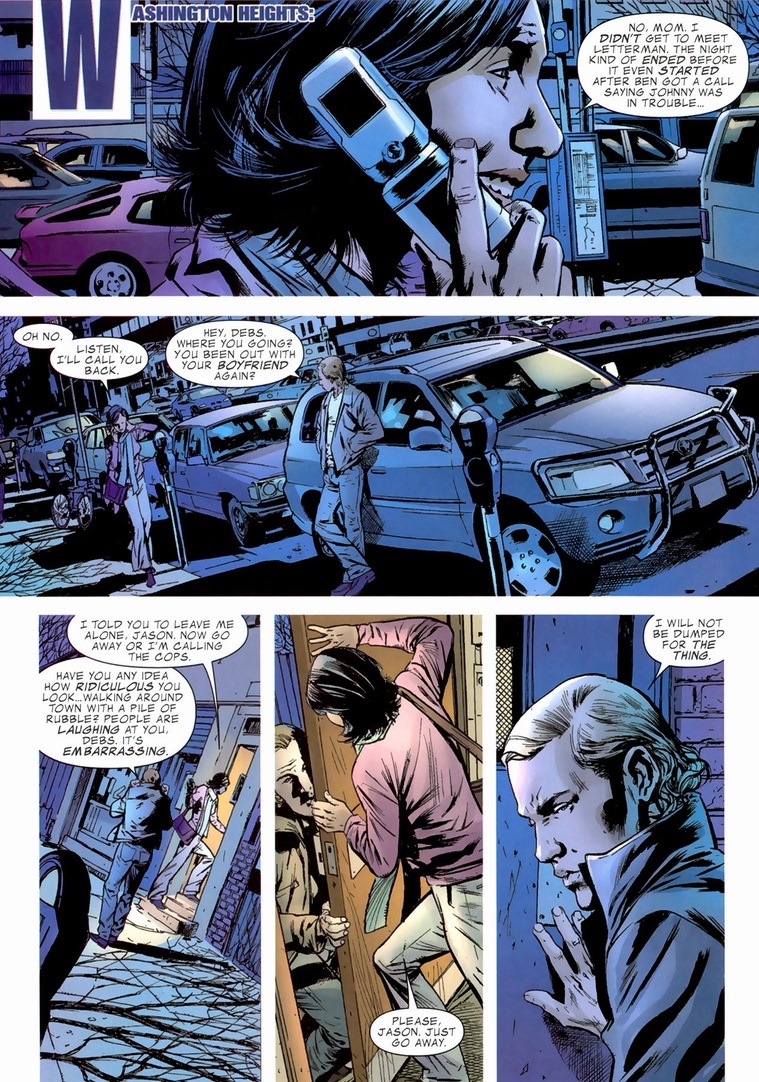
Though more on that Monday. Pesky ex-boyfriends always cause so much trouble, even from totally normal civilians like Deb. But if a spurned lover is all there is to dig up, thank goodness. If she had superpowers, her ex would almost certainly be half-alien and half-octopus or something.
As the two become closer and the arc progresses, the Thing poses an important question. A super important question. Though since you’ve read the title of the article, I figure you can make a pretty good guess.


Spoiler alert: she says yes.


The drama picks up later in the arc, and I promise it’s juicy. But this engagement does bring up an important issue: superheroes tend to live dangerous, brutal, and short lives. And the supporting cast? Far scarier than actually throwing the punches. Turns out supervillains lack that morality to not target the loved ones, friends, and families of their enemies. Even with the Baxter Building containing the most advanced security measures in the known world, the threat doesn’t go away.
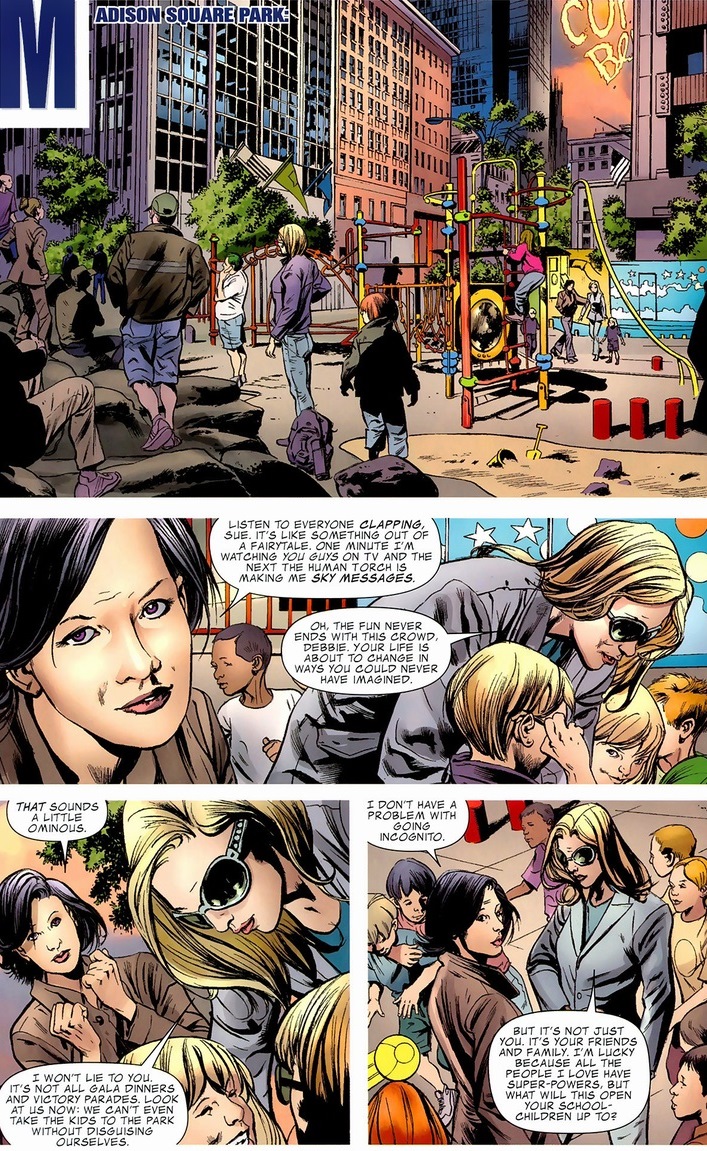

Is he? Well, you’ll find out Monday. Or go look up the issues yourself, I can’t control what you do.
Superheroes and Judaism, Pt. 3
Posted: 07/02/2013 Filed under: Characters, Marvel 12 CommentsWhen you take a look behind the curtain, Jewish writers and artists litter the comic book landscape. And my goodness, am I proud of my people. Stan Lee is Jewish. Jack Kirby was Jewish. Neil Gaiman is Jewish. Batman’s creators Bob Kane and Bill Finger were both Jewish. Superman’s creators Jerry Siegel and Joe Shuster were also both Jewish. I’m just saying it’s hard to be anti-Semitic and love superheroes at the same time.
We finish off today with Sabra, the Israeli superhero that’s drenched in Jewish paraphernalia, and Thing, that wonderful orange rock monster from the Fantastic Four.
Let’s talk about Sabra. No one’s arguing about her religious affiliation, right from her first appearance:
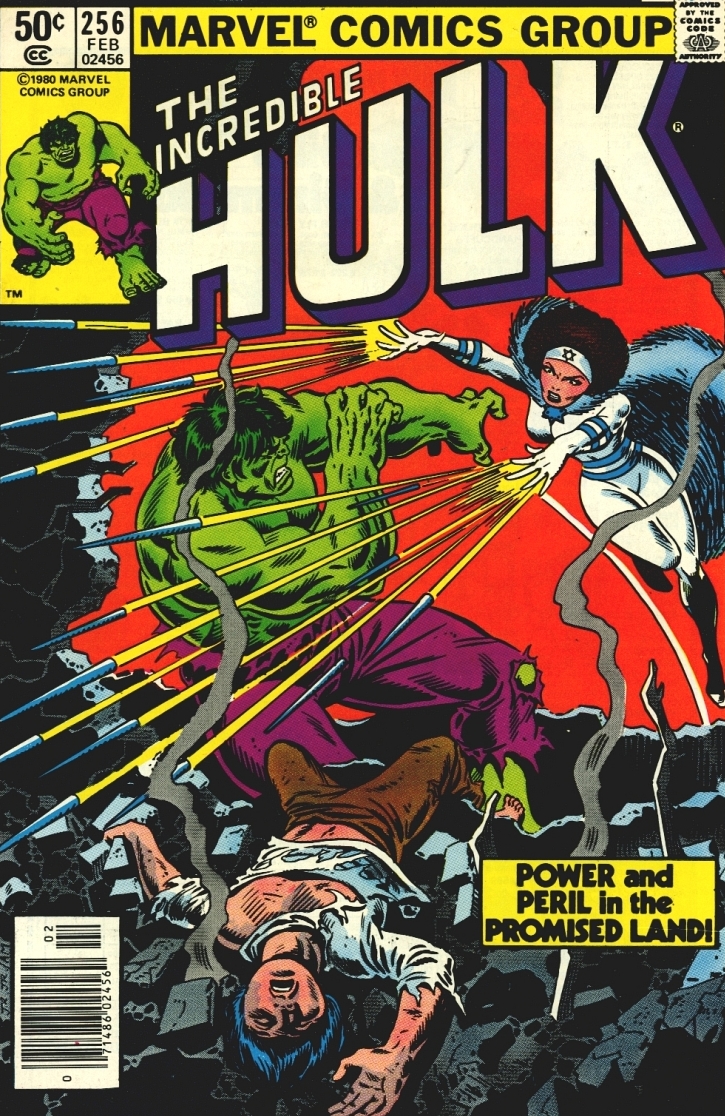
Real name Ruth Bat-Seraph, she developed mutant powers that gave her all those standard superhuman traits plus she can transfer life energy into another person or something. I guess like a temporary healing/enhancing power. And as you noticed from the issue cover above, she uses all that cool Israeli technology as well.
I want to explore a few scenes from New Warriors #58-59, written by Evan Skolnick and drawn by Patrick Zircher. An Arab superhero tries to assassinate the Israeli prime minister. You can imagine how that turns out.

What begins involves a whole Israel-Palestinian argument between the two enemies. The poor New Warriors just want to bash in bad guys, but now that have to deal with a problem never discussed in superhero training camp: politics. I believe the purpose of this story actually serves to further the character development of the telekinetic superhero Justice, who also happens to be Jewish. Sabra’s not in the New Warriors, after all.


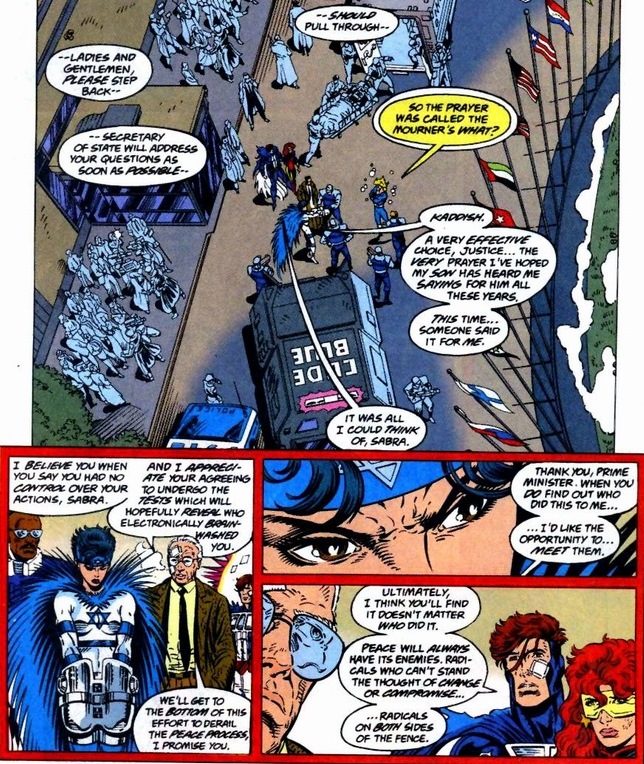
By the way, notice the answer Justice’s teacher gave? That’s the exact same answer Moon Knight’s rabbi father told him. And truthfully, the Jews tended to be a fairly passive people until the Israelis came along anyway. Now the Jews have a whole country full of Sabras. So as the peace conference between Israel and Palestine goes inevitably bad, Sabra gets brainwashed. Only Justice can snap her out of it, in what may be one of the most powerful moments for me in comics.
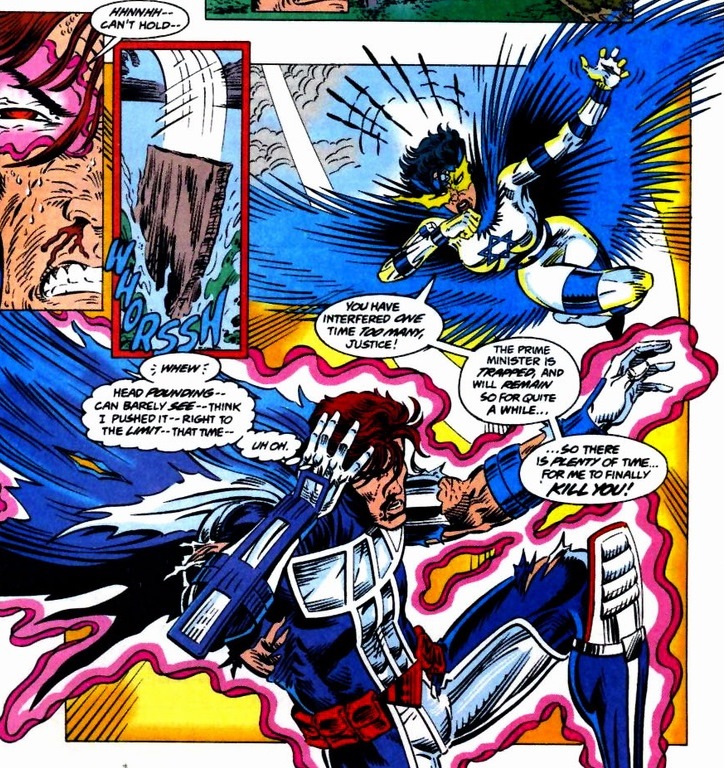


As a Jew, my heart melts.
Politics aside, Sabra still shows up whenever an Israeli superhero is needed. Recently (and in her modern costume), she served on Spider-Man’s ragtag team of superheroes to take down Doctor Octopus’ world-dominating plan. Yes, Peter Parker would have used the Avengers and his A-list friends, but brainwashing gets used as a writing tool far more often than you think. Here’s Sabra’s brief moment from the Amazing Spider-Man: Ends of the Earth one-shot, written by Rob Williams & Brian Clevinger and drawn by Thony Silas.

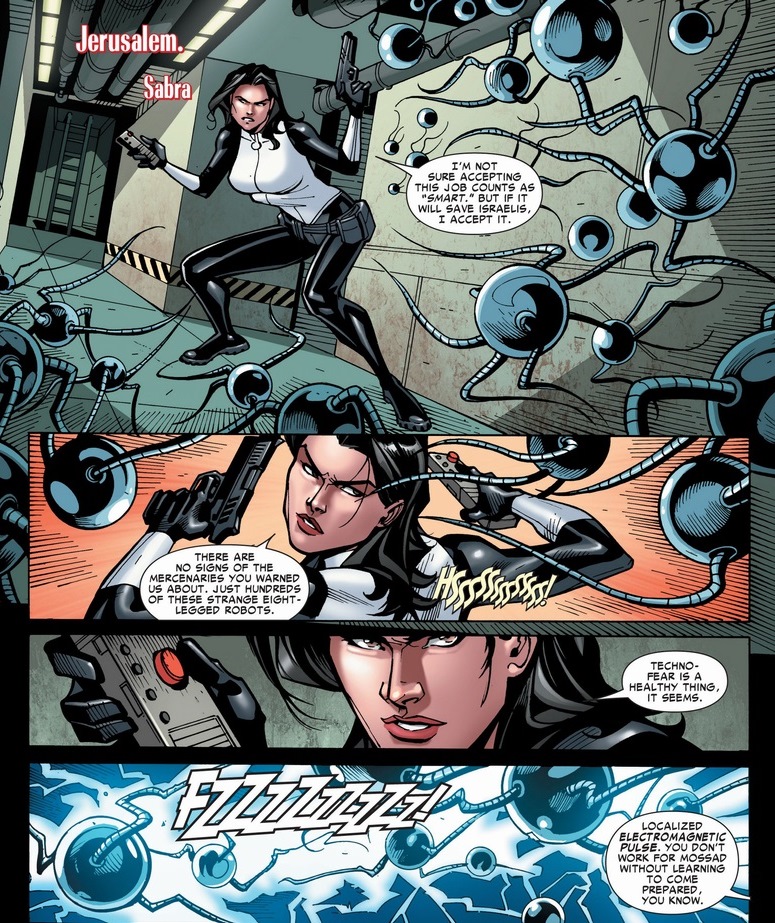
You know what makes a comic exciting? Not knowing if these minor superheroes will survive the issue or not, especially since Marvel teased that to help the sell the issue. And boy, heartbreak ensued. Kangaroo: massacred. Titanium Man: crushed. Sadly, poor Sabra also drew a bad hand.:

She’s not dead. I say again, she totally survived. How? I don’t know, but a few months later in X-Men #31, written by Brian Wood and drawn by David Lopez, she shows up unharmed and ready for action.

Still, even if Crossbones had splattered her brains all over the desert, the Hand or somebody would have brought her back to life a year or two later. No one stays dead forever, except Spider-Man’s dear Uncle Ben.
One more superhero to go, and the Thing‘s totally my favorite Jewish superhero. Even with the simplest superpower in the Fantastic Four, everything about him oozes a thin layer of tragedy. He’s a rock monster, for goodness sake. People treat him differently. He can’t assimilate in normal society. And even the ladies who see past his exterior are always in danger from his enemies. Yet he soldiers on, because that’s what superheroes do, gosh darn it.
In Fantastic Four #485, written by Karl Kessel and drawn by Stuart Immonen, his Jewish roots shape an entire story. Back in one of my earliest articles, I covered the Thing’s bar mitzvah, but that’s a much later issue. So in his youth, Ben Grimm became quite a street thug before going on that fateful space ship ride.

With some brief rest before jumping back into the microverse or hurtling across time, the Thing figures he should check up on his roots and make some amends.

As you know, any down time in the superhero world must be interrupted by a fistfight. The Thing has his a few pages in.


Maybe I’m just a sucker for superheroes reciting Jewish prayers, but I like to think that even with decades of ignoring his Jewish heritage, it’s always there for the moments he needs it. A religious security blanket. Plus, the Thing hears a sermon that’s desperately overdue:
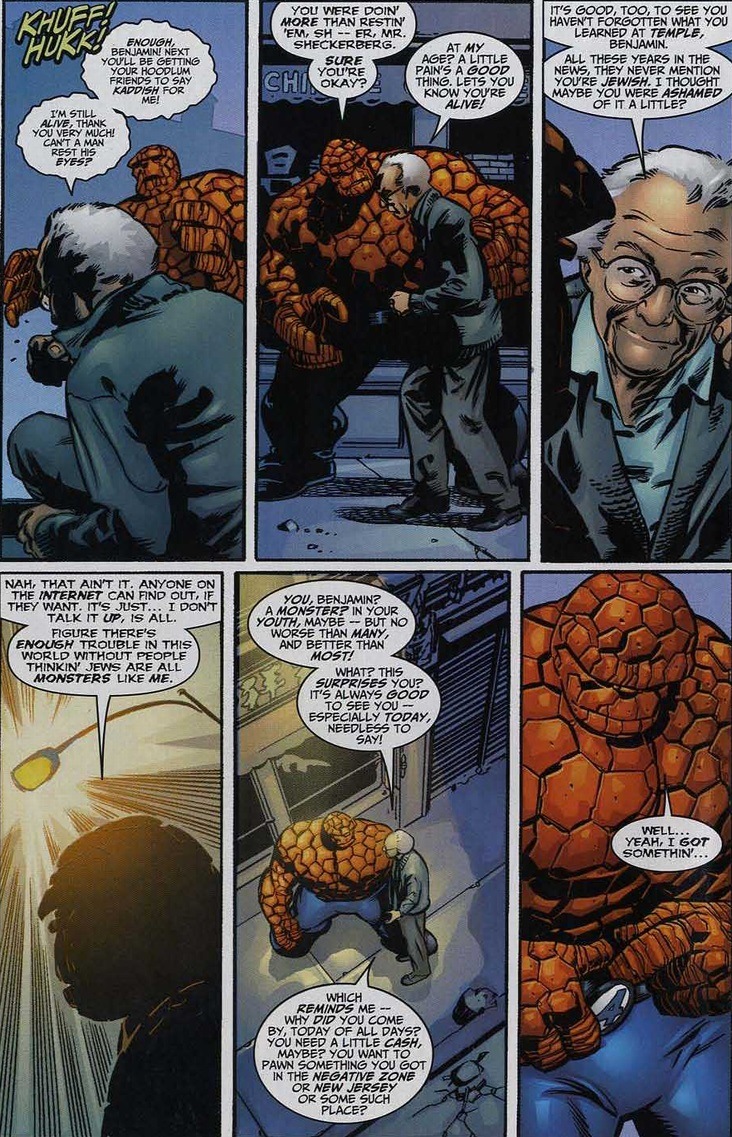
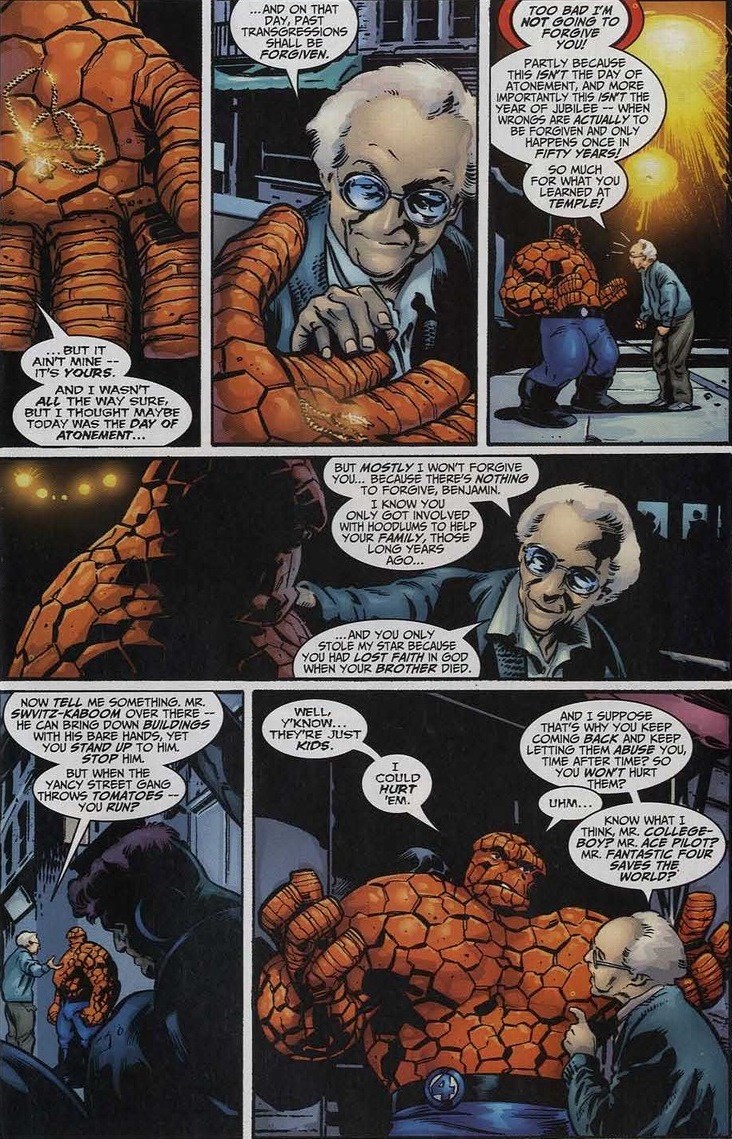

I adore the golem reference. The original Jewish monster, the golem (a hideous creature made from mud) protected the Jewish people from those who wished them harm. And Grimm, now with his rocky armor, gets to be the golem of Yancy Street. For a man stuffed with self-loathing, this revelation has to be a small salve in healing the Thing’s deeply ingrained frustration over his appearance. Or maybe I just like Jews who can lift small buildings.
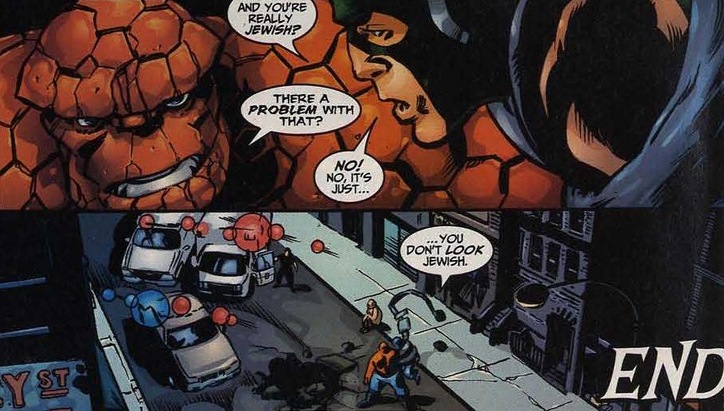
As we end with Marvel Holiday Magazine 2011 #4, written by Jamie S. Rich and drawn by Paco Diaz, the religion of these characters is not a hindering, but a significant part of both identity and character development. Who are your religious (or atheist) superheroes? Tell me you don’t like them just a little bit more because they share your beliefs. Don’t deny it. You can’t fool me.


Superheroes and Judaism, Pt. 2
Posted: 07/01/2013 Filed under: Characters, DC, Marvel 5 CommentsWhen you research Jewish superheroes, you find dozens and dozens. They come out the wazoo. Songbird’s Jewish. Sasquatch’s Jewish. Nite-Owl’s Jewish. Harley Quinn’s half-Jewish. Iceman’s half-Jewish. The Atom’s kinda Jewish. Hal Jordan might be Jewish. Truthfully, Jewish proof remains hard to come by beyond an off-hand remark or Menorah in the background. Luckily, a few superheroes have entire stories based around their Judaism and we’ll get to those.
But first, I want to give DC their due when they introduced Kate Kane, the second Batwoman. If you want comics to show those skeptical friends about the artistic value of superheroes, shove them some Batwoman comics, like this beautiful panel from Batwoman #2, written by J. H. Williams III & W. Haden Blackman and drawn by Williams III:

Now, Kane doesn’t get the recognition as much as a Jewish superhero because her sexual orientation trumps her religious affiliation. And honestly, comics probably need a positive lesbian role model more than another positive Jewish role model. Though fortunately for me, in 52 #33, written by Geoff Johns, Grant Morrison, Greg Rucka, & Mark Waid and drawn by Tom Derenik, Keith Giffen, & Joe Prado, I can showcase both her lesbianism and her Judaism at the same time.

You know Renee Montoya? Former Gotham City police officer and now the Question, the superhero that inspired the creation of Watchmen‘s Rorschach. Also, she totally has the hots for Batwoman.

Hanukkah’s a big theme from Jewish superheroes. I imagine the more important holidays like Passover or Yom Kippur don’t really bring in the readers like Hanukkah does. And that’s fine. I’m not going to nitpick because Marvel and DC doesn’t give Sukkot its fair due. Like Target giving Jews that one shelf for Hanukkah decoration among three rows of Christmas stuff, at least we have something. And that brings me to Doc Samson.
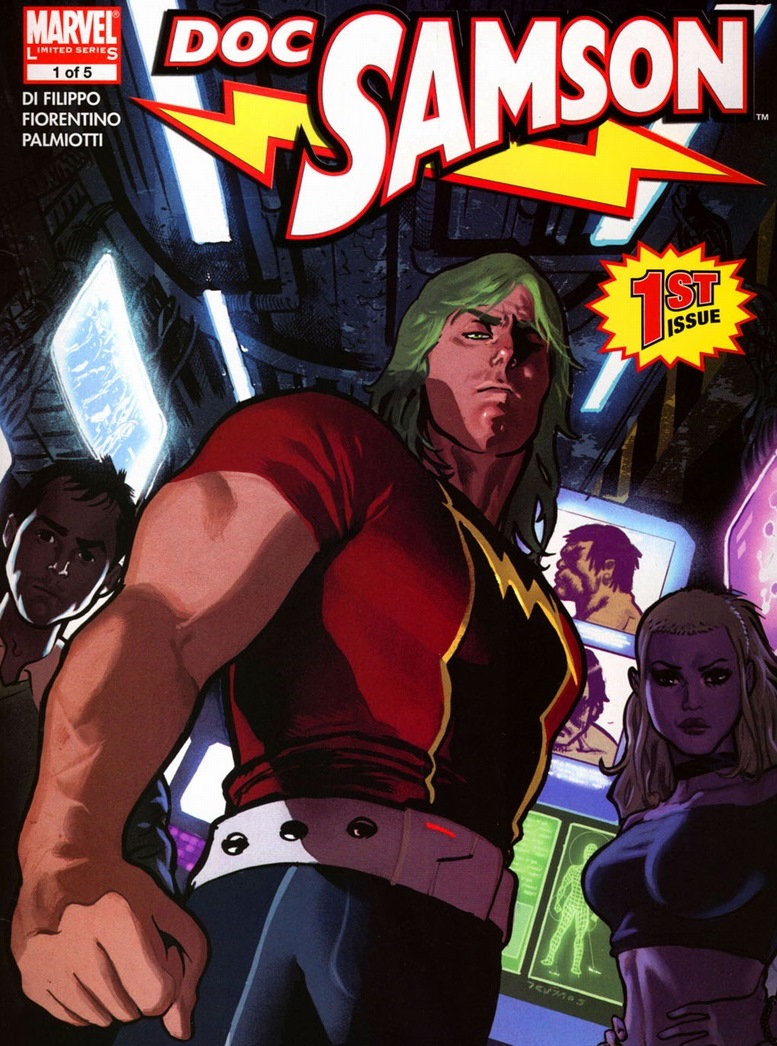
Samson’s the green-haired, gamma-enhanced, Hulk supporting character/psychiatrist to the superheroes. Popular enough that he even had his own miniseries a time or two:
And, of course, he’s Jewish, proven in this scene from Incredible Hulk #373, written by Peter David and drawn by Dale Keown:
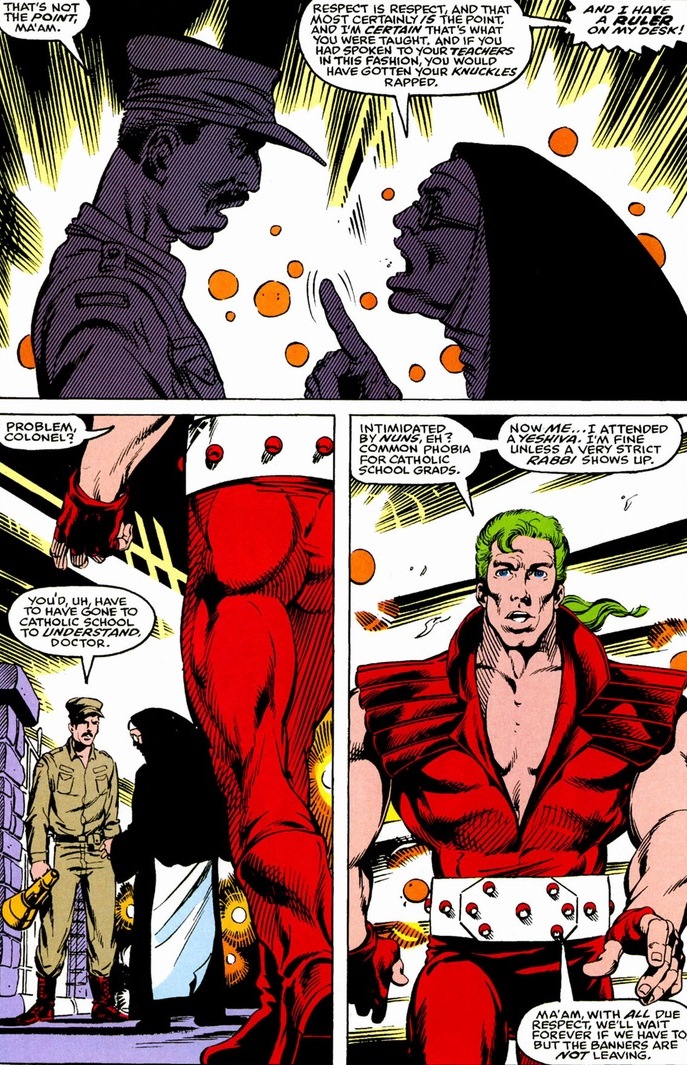
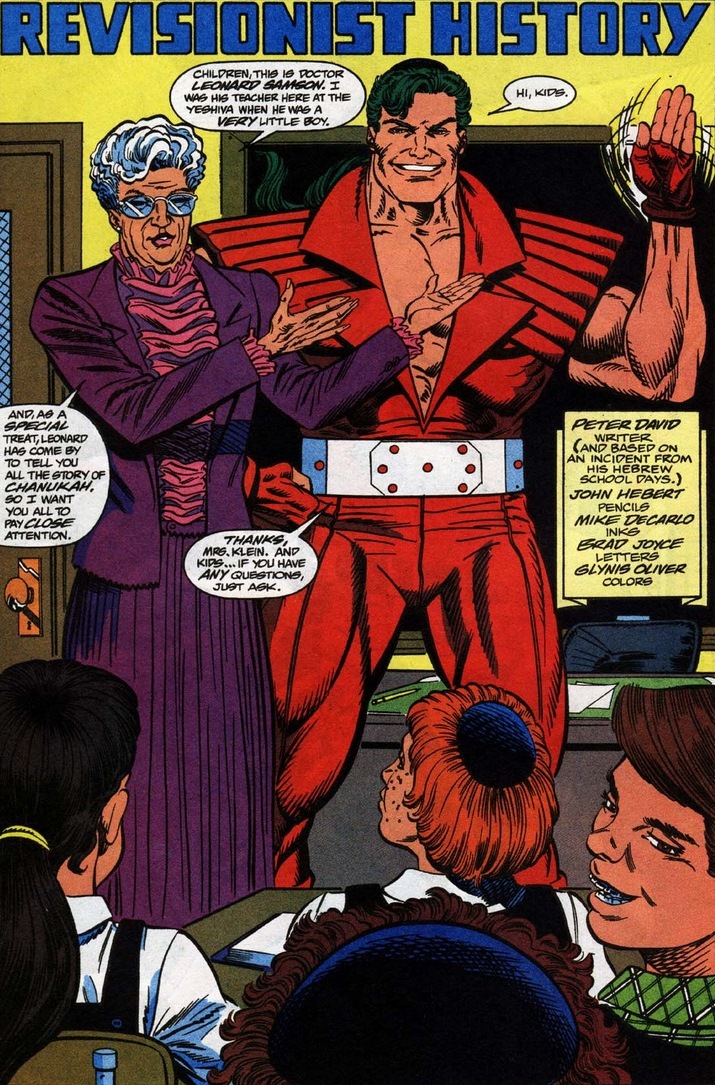
When David wants to write a Hanukkah story for Marvel in Marvel Holiday Special 1992, why not use Samson? I mean, he did write Incredible Hulk for twelve years. And like most progressive Jews, David used a loose interpretation of the story.

Regardless of that outfit, Doc Samson is (or was because he’s currently dead) an important part of the Marvel world. If just because of the multitude of mental trauma and disorders required to become a superhero, Doc Samson provides that psychiatric help one doesn’t receive from jump kicking the Green Goblin. Speedball’s redemption and self-forgiveness had instrumental assistance from Doc Samson. Yes, the man’s unorthodox, but so is wearing tights and punching bad guys. Here’s a brief scene from Thunderbolts #117, written by Warren Ellis and drawn by Mike Deodato, Jr.:

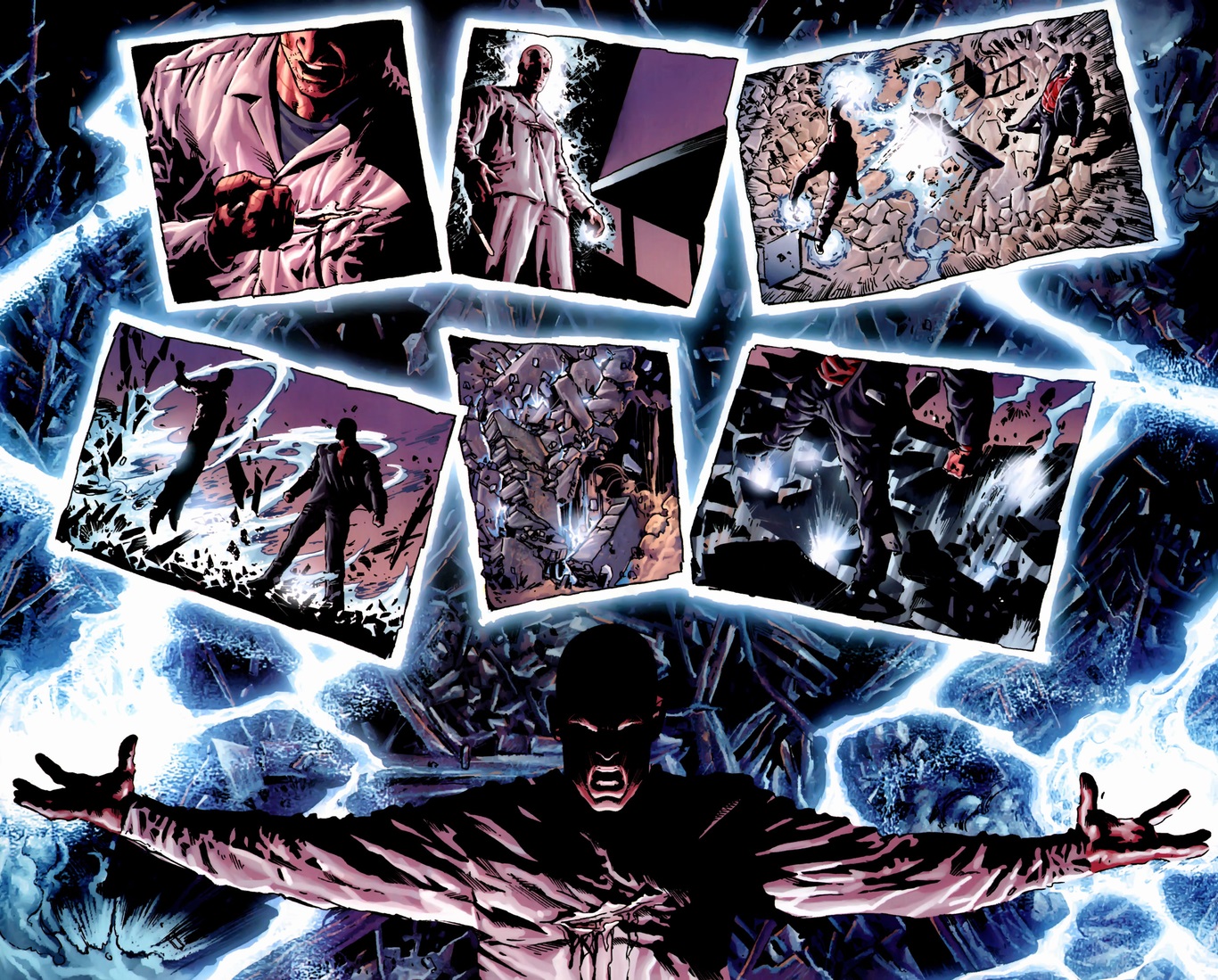

How could you not love this guy? I mean, besides his morally ambiguous relationship with the Hulk and arrogance bordering on narcissism. Still, I hope he returns soon and not just as a vengeful ghost messing with Red Hulk.
Without a good transition, we’ll finish today with Moon Knight, who I hold near and dear to my heart. With his origin I’m copying from a previous article of mine, soldier and martial artist Marc Spector stumbled upon the Egyptian moon god Khonshu who then gave him super powers. Though you don’t have to remember all that jazz, because nowadays he’s a non-powered rich guy in a gadget-filled costume. More importantly, he battles daily with his schizophrenia/multiple personality disorder. But trust me, this is a superhero you want to become familiar with. His most recent series covered his exploits struggling against organized crime in Los Angeles, and the volume before that dug deeply into Spector’s faith, spirituality, and personal demons. Also, he kicks a whole bunch of ass, like as in these scenes from Moon Knight #12 (volume seven, written by Brian Michael Bendis and drawn by Alex Maleev) and Moon Knight #30 (volume six, written by Mike Benson and drawn by Jefte Palo):

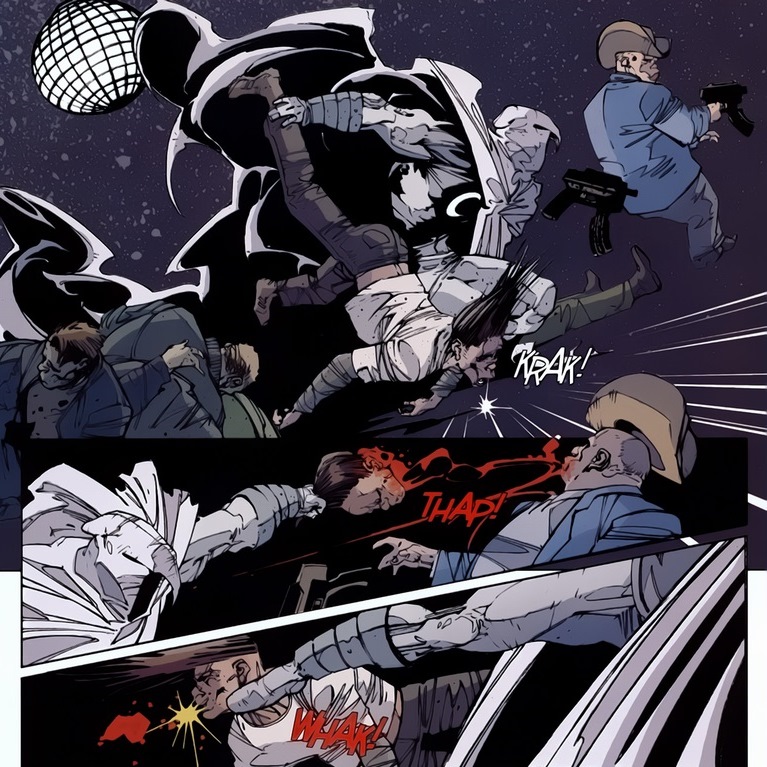

You see that second picture? He hit a guy with another guy’s head. Good stuff. More importantly, Moon Knight may have more proof than any other superhero as to the impact of Judaism on his own life. Y’know, living with his rabbi father. In Moon Knight #37, volume one, written by Alan Zelenetz and drawn by Bo Hampton, it turns out Judaism peppers every detail of his childhood.


Moon Knight then goes and does what Jews always dream about: take down a gang of Neo-Nazis. While Captain America bonks Nazis all the time in his adventures, the satisfaction that comes from Nazi blood on the end of a Jewish fist makes the victory much sweeter. The good captain represents the best of American idealism and patriotism, but there’s nothing Jewish about him. Let Moon Knight handle this, for his vengeance bathes in a slightly richer light.

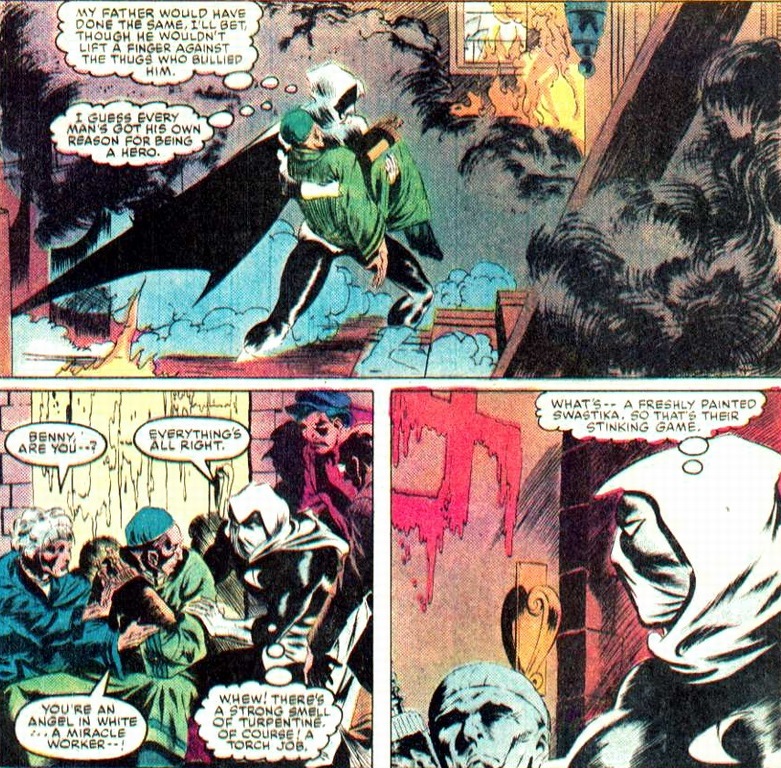
Let the beatdown commence:

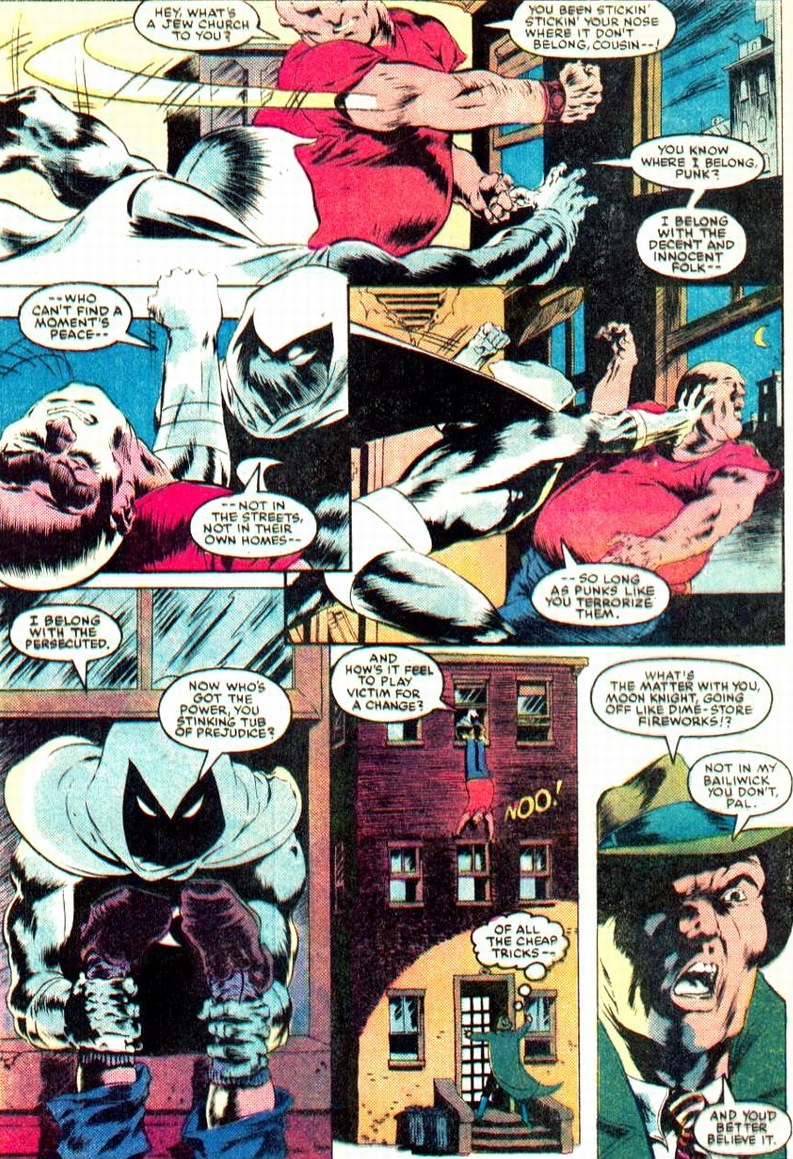
While Moon Knight’s been off the radar the past few years, only majorly gracing his presence in the Secret Avengers series, I hope he shows up again soon. Also, I’m a huge fan of that costume; he used to gain strength when the moon came out, yet he patrolled the streets at night wearing a bright, all-white outfit — that takes major cajones.
Tomorrow we’ll finish up this little series with Sabra and the Thing. Thank you for indulging me in this, you guys rock!
Superheroes and Judaism, Pt. 1
Posted: 06/30/2013 Filed under: Characters, Marvel 6 CommentsI was reading All-New X-Men #13, written by Brian Michael Bendis and drawn by Stuart Immonen, and they were commenting on Havok’s controversial speech from Uncanny Avengers #5 a few months back. Remember this speech?

When that happened, Anthony Jocko asked my opinion about it. I answered:
“I read the issue and I read the outcry, and if I’m right, basically people are mad that Havok rejects his identity as a minority? Fans are mad because the X-Men are supposed to represent the ‘minority’ — whether that’s by religion, race, sexual orientation, interest, etc. — and Havok states that we should assimilate instead of celebrate diversity? Y’know, I didn’t actually think about this until now, but I think the outrage’s overblown.
I get how comic book fans might be bullied or ridiculed, and the X-Men are that fantasy of staying true to the fans’ passions just with laser eyes or wings or whatever to defend themselves. I mean, I’m Jewish, and we have a whole history of being hated on as the minority scapegoat, but I’d rather see the X-Men defeat bad guys than rise up as a minority power. As in, aren’t they superheroes first and mutants second?
Especially after AvX, the X-Men are seen as villains. So, Havok merely stated that the mutant community should be seen as working with the other heroes instead of against them. Superheroes first, mutants second — and simply that by calling them mutants, their heroism and good intentions are being sidelined by a pre-judged ‘label.’ I agree with [writer Rick] Remender, but I also tend to be a suck up.”
And I stick with my argument. Until All-New X-Men #13 came out this week and I read these pages:

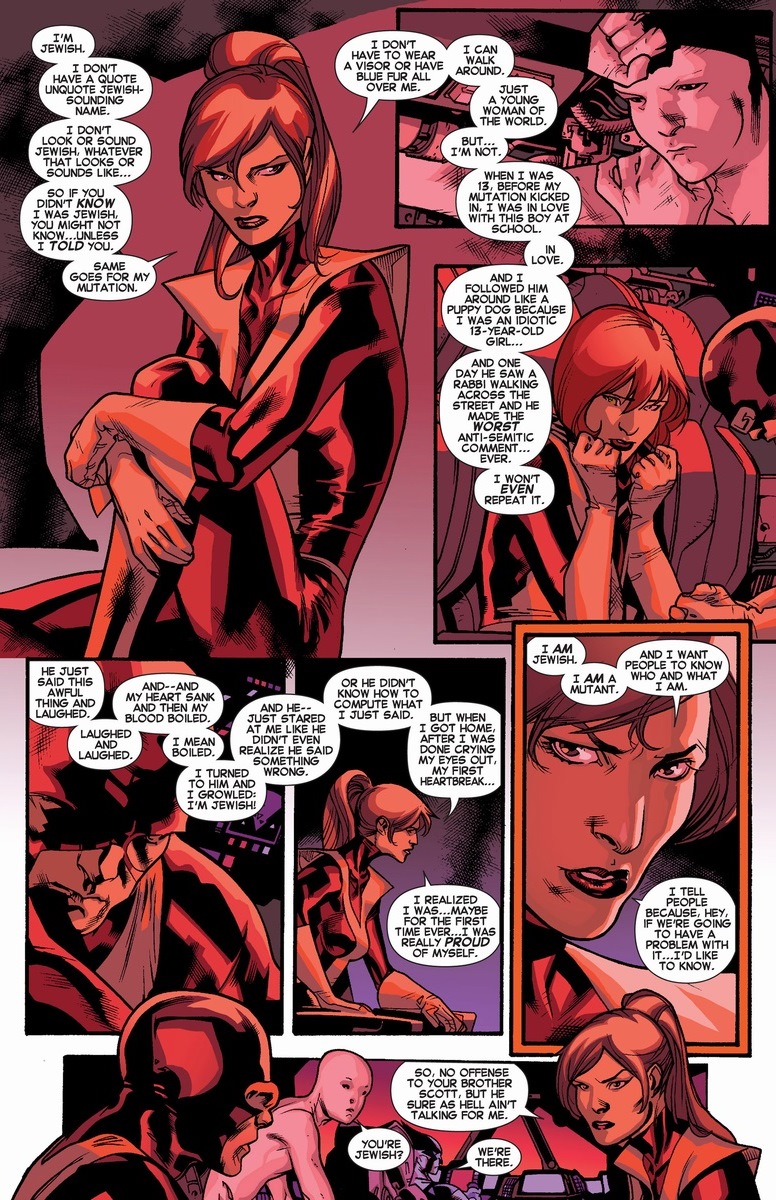
Kitty’s right. Bendis is right. Now, I did just spend two weeks in Israel, so understand where my bias lays right now. Havok should embrace both his title as a mutant and a superhero, because while we can’t choose our nationality or superpowers, we sure as hell can be proud of our special identity. That’s the basis for a community and a people. C’mon, “I am a mutant, and what are you going to do about it?”
So Kitty’s speech had me thinking — who are the other Jewish superheroes? And more importantly, I should celebrate them! Fictional sure, but they’re still part of Judaism’s culture and history. I’m going to share some of them with you over the next few days.
I highly encourage you to look into the superheroes and supervillains of your own religion, whether that be Catholic (Daredevil, Nightcrawler), Muslim (Janissary, Dust), Atheist (Hank Pym, Mr. Terrific), etc. But since I’m Jewish — well, that’s what my focus’ll be on.
We’ve already mentioned her, so let’s start with Kitty Pryde.
She premiered in 1980 as a child. Like the day after puberty kicked in. So with the shifting timeline of the Marvel Universe, she’s probably in her mid-20s right now, and one could argue that she may be the biggest success of Professor X’s school. And I’ve always admired her unabashedly shameless about her religion. Like as in Ultimate Spider-Man #106, written by Bendis and drawn by Mark Bagley:

Before you dismiss that giant Star of David necklace as a mere accessory, know that it saved her life on more than one occasion. Such as when she fought Dracula in Uncanny X-Men #159, written by Chris Claremont and drawn by Bill Sienkiewicz.

Let’s talk about Dracula for a second. Of course a fictional universe filled with kids who fly and shoot fire from their hands would also be populated by other wacky fictional monsters. Vampires, mummies, werewolves, etc. remain a big part of both DC and Marvel. Frankenstein even received his own solo series for a while. And why not? Frankly, that doesn’t take away from the religious impact of some of these superheroes simply because they live in a sometimes silly world filled with weirdos.
Yes, the comic book world has Aztec zombie resurrections. Occult magic spread throughout thousands of dimensions. Space aliens with armadas that span solar systems. Toxic waste that grants amazing superpowers. So why not religion too? If Dracula can pummel the X-Men, is Kitty being devoutly Jewish really that much more of a stretch? Do we really have to suspend our disbelief about Nightcrawler being a Catholic priest when he’s also blue, furry, and can teleport?
Though no superhero has been more defined by Judaism than Magneto (maybe Sabra, but more on that later). I’d like to be proud of him, but he does do a whole bunch of mass murdering. Sadly, it took fifteen years before Magneto admitted his Holocaust roots, which now make up a major aspect of his character and personality. In Uncanny X-Men #150, written by Claremont and drawn by Dave Cockrum, Josef Rubinstein, & Bob Wiacek, Magneto reveals the single most important detail of his youth:

And when he accidentally hurts Kitty a few pages later:

Kitty survives, of course, and the two become unlikely allies. Bonded by their Judaism commonality and Magneto’s tendency to switch his morality every fifty issues or so, Kitty and Magneto attend a Holocaust memorial in Uncanny X-Men #199, written by Claremont and drawn by John Romita Jr. & Dan Green. This remains one of the most significant comics regarding Magneto’s Jewish roots, and you can easily tell why:


Mystique attacks because superhero comics still require a punching quota, but it’s Magneto’s speech that does more for his character development than decades of battling the X-Men.

Magneto’s desire to see his own minority people (mutants) rule the world so they can no longer be persecuted or attacked makes a lot more sense when you realize he saw his own Jewish people massacred during his childhood. Though his methods have seemed a bit like the Nazis at times, that’s a very different argument.
Nowadays, Magneto’s a bonafide superhero and I catalogued his redemption (which also involved Kitty) here and here. Greg Pak wrote a spectacular miniseries titled X-Men: Magneto Testament which chronicles Magneto’s childhood in the Holocaust. I’d write an article about it, but it’s not really a superhero comic. Yes, Magneto’s the star, but not once does he wrap Nazis up in their own metal guns or lift Auschwitz off the earth and flip it over. Still, as far as Holocaust comics go, it’s on par with Maus.
While I have about forty pictures and five superheroes left, I’m already kicking about a thousand words today. Let’s do part two tomorrow and finish with part three on Wednesday. You’re totally worth it.
Batman Beyond vs. Justice League
Posted: 06/27/2013 Filed under: DC, Fights 3 CommentsIf we stick to our theme of superhero cartoons turning into comics, Batman Beyond has done well for itself. Sort of. Sixty-ish issues over fourteen years shouldn’t be given medals or pats on the back, but anything done to have a short-lived cartoon survive over a decade past its ending must be a small victory in itself.
For those not in the know, and I’ll make this fast, Batman Beyond jumps to the future of elderly Bruce Wayne. No longer able to serve as Batman himself, he hands the costume to a young man named Terry McGinnis. Now McGinnis battles evil while Wayne screams at him from the Batcomputer. Cool premise, the cartoon won tons of awards, and who doesn’t love Batman with jet boots?
Today, as a hostage situation goes bad in Gotham City, the Justice League shows up to defuse the problem. Batman fights them all at once in Batman Beyond #1-3, volume four, written by Adam Beechen and drawn by Ryan Benjamin.
So, let’s take a look at the future’s Justice League:

Warhawk, as you learned last article (and who’s missing a wing from earlier in the issue), is the son of John Stewart and Hawkgirl. Obviously he took more after his mother. Aquagirl controls water. Green Lantern still has the ring. Barda (somehow related to the New Gods’ Big Barda) takes over the Wonder Woman role. And Micron can control his size. All caught up.
A new supervillain who can control matter has threatened a mall. Normally, a standard overpowering should be enough to take on the baddie, but McGinnis’ mother and little brother happen to be in the mall. So Batman shoulders plenty of reason to delay the inevitable chaos and stop the Justice League. Also, Wayne really wants McGinnis to pound those kids.


I agree, there’s a surprising lack of capes in the future. We should discuss this new Batman. The suit grants McGinnis some minor super strength and agility, along with a small armory of gadgets and devices. McGinnis, while only seventeen, is shown to be a decent fighter and with above average intelligence. And most importantly, Wayne backs him up from the Batcomputer. He’s like Alfred, only far easier to disappoint and lacking any sort of warmth or encouragement.


Even with the cool Batman suit, the Justice League can totally overpower McGinnis without much effort. Luckily (and for the same reason Batman — the man without superpowers — is constantly referred to as the most dangerous superhero), tactics save the day. Especially when the tactics are coming from a man whose age equals all those on the battlefield combined.

That’s why you don’t fight crime in a bathing suit. I get the idea that female superheroes show skin because comics assumed decades ago that boys who read comics are exclusively perverts (and once an iconic costume gets locked in, changes tend to be hard to come by), but nothing practical comes from tackling bad guys with half your ass hanging out.


Martian Manhunter may be weak to fire, but he also can’t be taken out due to carelessness. Or maybe he can, I guess depending on the writer. While Batman’s improved in time, the Justice League certainly hasn’t. And I get that Batman’s utility belt has always been a deus ex machina, but we accept that if only because we like to think of humanity as wildly creative and cunning.
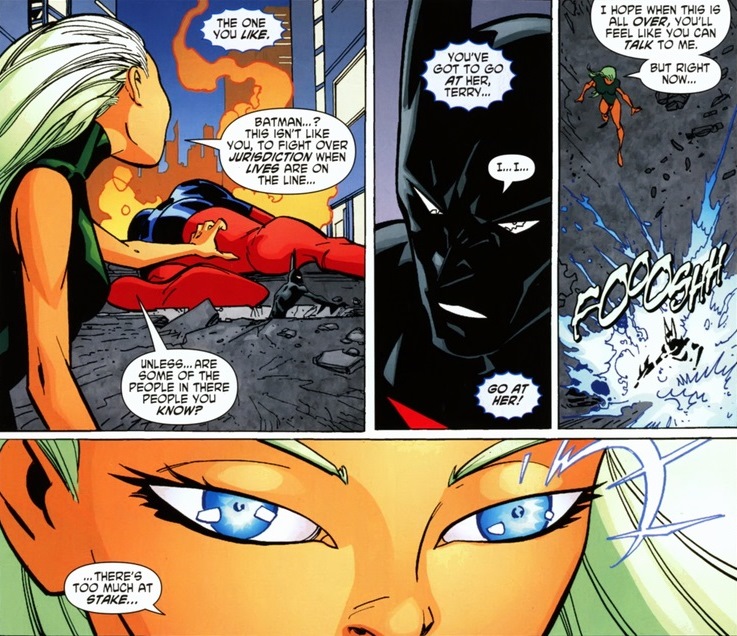

The fight ends here. Strangely, Wayne still sucks at teamwork, even with a dozen Bat-family members running around during the old man’s prime. When you consider that only Jason Todd turned wacky from his time with Batman (and that may have to do more with him being crowbar’d/exploded to death), the relative normalcy of the Bat-family should be applauded.

McGinnis remains quite well-liked among Batman fans. Anyone who takes over the Batman mantle has to compete with decades of childhood and adolescent memories from readers/viewers, but I like to think fans rewarded McGinnis’ competency and compassion. Also, being Wayne’s biological son definitely helps. Oh, I didn’t mention that yet, did I?
As the story wraps up, and you can read the book for the supervillain fight, the Justice League makes the only smart decision it has made all arc: inviting Batman to join.

Happy endings will always be the best endings.
What ever happened to Green Lantern and Hawkgirl?
Posted: 06/25/2013 Filed under: DC, Relationships 64 CommentsI remember the Justice League animated show of the mid-2000s fondly, if just because I was far too old to be watching children’s superhero cartoons. In the series, many young fans had their first interactions with the Green Lantern John Stewart, who besides being an ex-Marine and gifted architect, was a prominent and respectable African-American superhero. Diversity in comics is more important than you think — the original Justice League consisted of one women, one Martian, and five white dudes.
So when Warner Bros. came out with the TV show in 2001, they figured that John Stewart would be a welcome addition to their starting line up. Then he and Hawkgirl fell in love. Normally we’d all cheer and place our hands lovingly over our hearts, but as the series wrapped up, one giant plot twist stayed unsolved. In Justice League Beyond #7-8, written by Derek Fridolfs & Dustin Nguyen and drawn by Eric Nguyen, you can finally ease your worried mind and get your first good night of sleep in years.
The comic’ll explain the backstory better than I can. If you’ve seen the cartoon, this is familiar ground:


Okay, caught up? Basically, Green Lantern (born in Detroit) and Hawkgirl (an alien from the planet Thanagar) dated for a while until Hawkgirl’s people arrived on Earth and tried to destroy the planet. That totally kills the mood, y’know? So the two broke up and Stewart began a relationship with Vixen, but during one adventure when they traveled to the future, it turns out Green Lantern and Hawkgirl have a son together.
Now, I’m all for soap operas filling time when bad guys aren’t being punched, but as the series wrapped up, the status quo hadn’t changed. Stewart and Vixen still cuddled passionately aboard the Watch Tower as Hawkgirl awkwardly looked on from behind the cafeteria walls. Well, I’m here today to piece together those missing links. Lucky you.
By the way, notice how the comic formatting looks different than normal? Digital only, baby. This series gets downloaded straight to your computer and away from those prying eyes of the Magic: The Gathering players sitting in the darkest corner of your local comic book store. Don’t let their Cool Ranch Doritos fingers and Mountain Dew breath judge you, much like I’m judging Magic: The Gathering players. Or is it Yu-Gi-Oh that the kids play now?
Anyway, we pick up with Stewart and Vixen on a date. An important date.

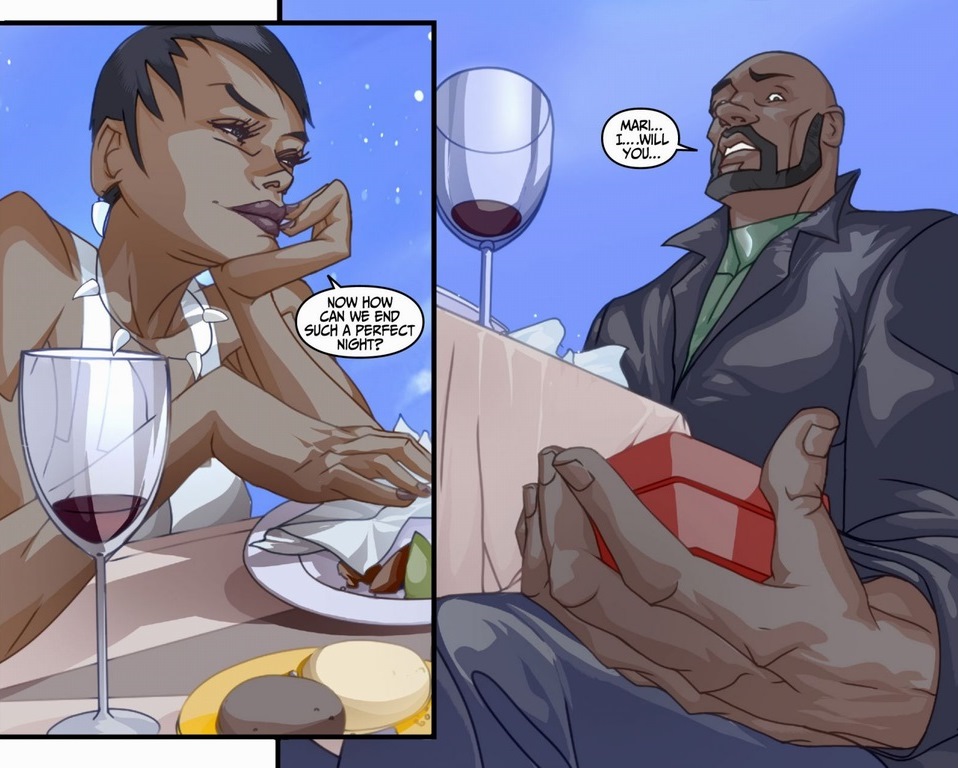
What’s the most important rule of superhero comics? Superheroes are meant to suffer. Happiness remains fleeting in the world of capes and magic. Unfortunately, Green Lantern learns this the hard way. The very hard way.

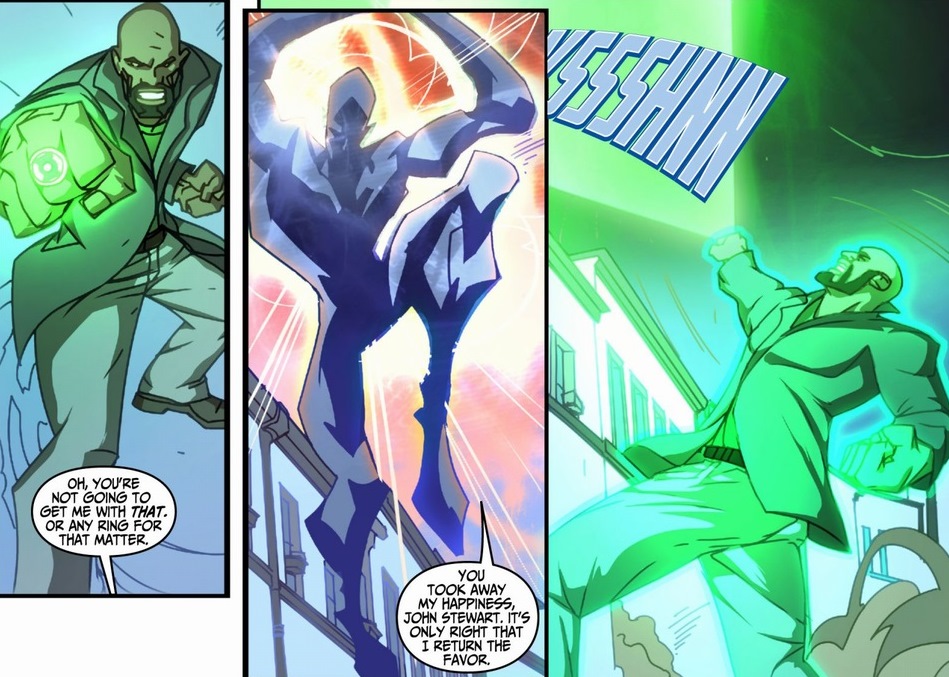

Far bloodier than on TV. Also, the TV show didn’t massacre supporting characters, but different artistic medium bring different rules, I guess. With Vixen’s death weighing heavily on poor Stewart, it’s time he puts those superpowers to good use. First, that weird shadow dude? It’s the evil spirit of Hawkman, who even in death remains angry that Hawkgirl chose Green Lantern over him. I’m serious:


As Green Lantern and Hawkgirl confront the Shadow Thief, the dark mood of the arc stays in full-blown effect. Did you know that Stewart served as a sniper during his time in the Marines? I thought you’d like to know.


In comics, no DC title contains more bloodshed and killing than the Green Lantern comics. But in the cartoon world, the Green Lanterns like to keep their hands murder-free. So when one of their own caps a baddie in the noggin, a moral spanking must be administered.


Look, it sucks having no Green Lantern, but Earth does have hundreds of other superheroes patrolling it. Like a half dozen Kryptonians and a small village of Bat-people. That’ll probably be enough. For our two protagonists (and after Vixen’s funeral), the story ends romantically and happily, which is by far my favorite type of ending.


If you’re under the age of fourteen and haven’t seen the Justice League and Justice League Unlimited cartoons yet, go do so. It’s well worth your time. If you’re over fourteen, go watch them anyway — just don’t tell anyone.
Nightwing, Batman’s son
Posted: 06/23/2013 Filed under: Characters, DC 3 CommentsFor a former teenage superhero, Dick Grayson turned out relatively normal. He retains his sense of humor, passion but not obsession, and can even manage a healthy romantic relationship (which Bruce certainly can’t). I don’t think it’d be far off to say that Dick has managed to become the most successful and popular former sidekick in comics today. But despite not being pantsless for over twenty years, a few loose ends needed to be tied up between the Boy Wonder and Dark Knight. Like legal status.
In official documents, Dick is Bruce’s ward, which remains something like a guardianship. Depending on the continuity and various writers, Dick’s only fifteen or so years younger than Bruce (though probably now around ten with the New 52). And since Batman’s job involves pummeling bad guys into unconsciousness, a smart man would have a back up plan set up in case of untimely (and likely) death. Unfortunately, in Batman: Gotham Knights #20-21, written by Devin Grayson and drawn by Roger Robinson, there’s one problem with this plan.


Dick’s roots go back to Romani Gypsies. That and carny folk. Circuses may excel at back flips and bearded women, but I imagine a clean past may not be one. Records tend to be hard read when written mostly on cotton candy.

Yes, that’s Batman generalizing a whole group of people. Nightwing gets mad at him, but Dick keeps forgetting Batman’s superpower of being wildly inconsiderate of other people’s feelings.

Let’s meet this so-called relative, who by the way, fits every stereotype down to his bushy mustache.


I get that legal mysteries may be less fun than Batman roundhouse kicking henchmen, but character development makes future roundhouse kicking worth it. Probably. With a harmless old man following Dick around, it’s time for Bruce to have a little chat about this final adoption obstacle.


Cliffhanger, right? Knowing that his grandson puts on a costume and clubs supervillains at night would certainly hold a major financial advantage, or at least blackmail. But truthfully, he really is just a harmless old man.

Being a comic book world, something sinister lurks behind this grandfatherly curtain. And fortunately, Bruce lacks the ability to trust anyone who isn’t Alfred, or Dick, or Tim Drake, or Barbara Gordon, or Commissioner Gordon, or Leslie Thompkins, or Lucius Fox, or Superman. Maybe a few others. Okay, so he trusts more than I thought, but definitely not this dude.


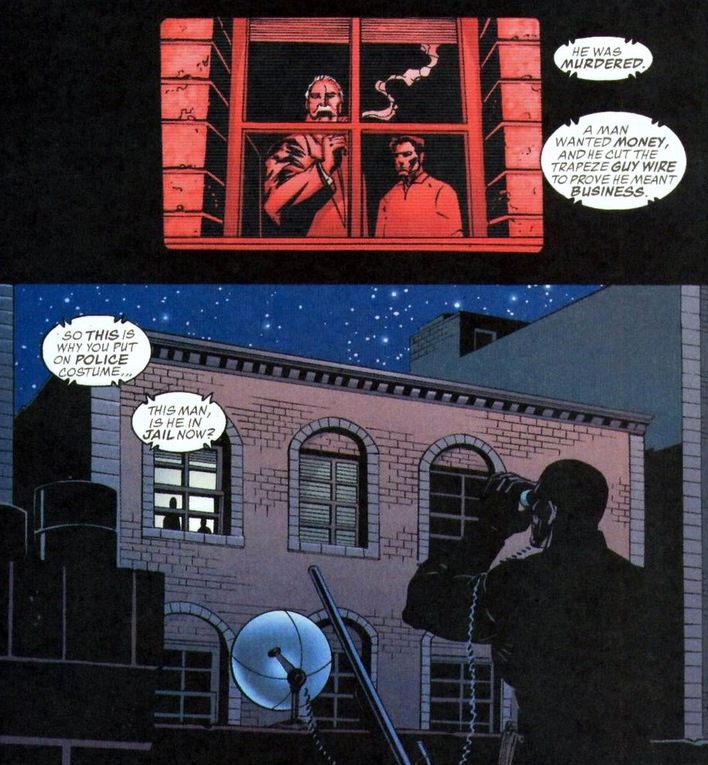
Yes, this is where things get bad. I wonder why anyone in Gotham would ever leave their window blinds open. The city has more snipers of roofs than pigeons. Still, plot demands the blinds stay up.
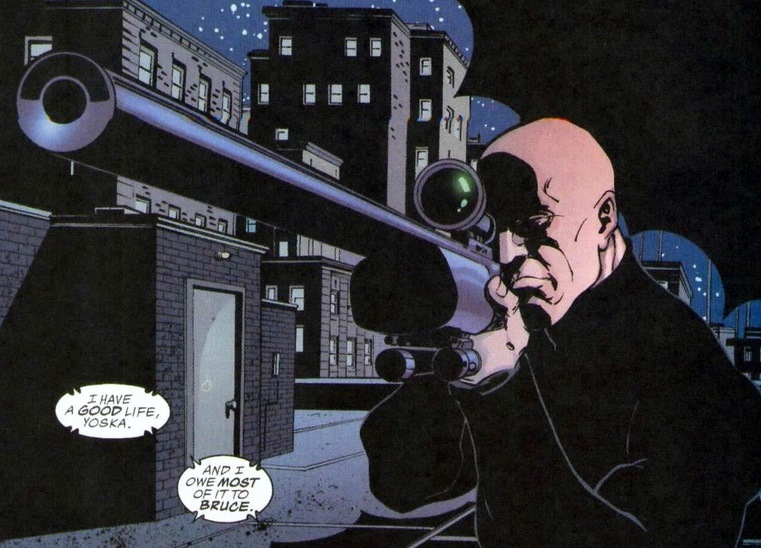


Did you read that last panel in the gravelly Batman voice? Of course you did. So who told Yoska about Dick? Think bad facial hair and petty grudges.
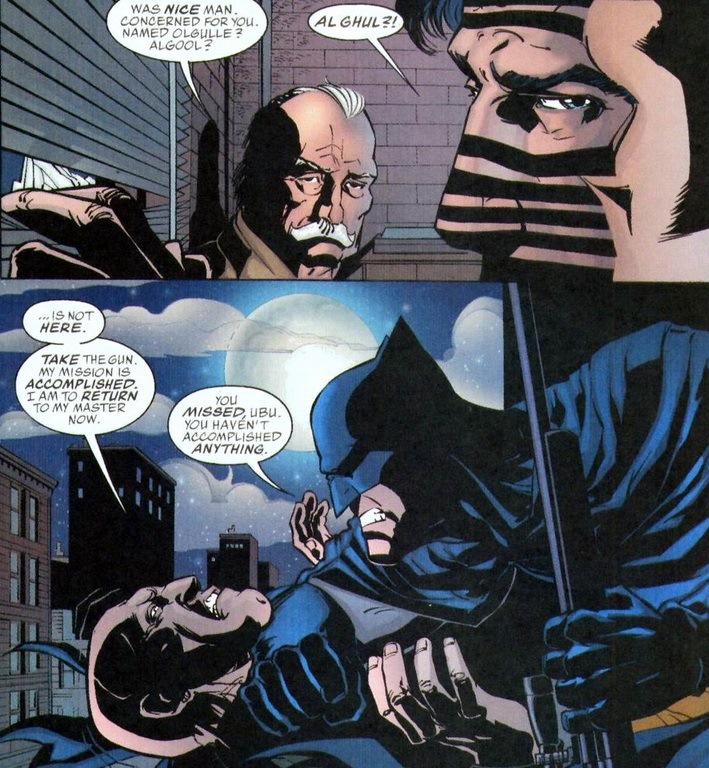

I know this is weird, though it’s not above Ra’s al Ghul to spend enormous amounts of money and time to set up a single emotional blow. Also, Ra’s is a dick.

Let’s get right into the solution of this mystery. It all involves Ra’s’ daughter Talia, who recently abandoned her father after nudging from Batman. With news of Bruce securing an heir, the whole heir business surely hit the supervillain’s sore spot. Also remember, Ra’s is a dick.
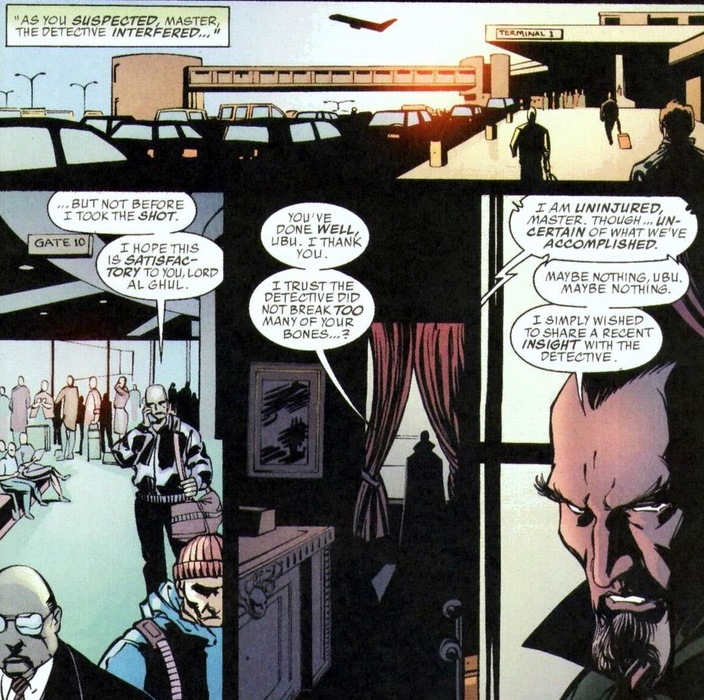
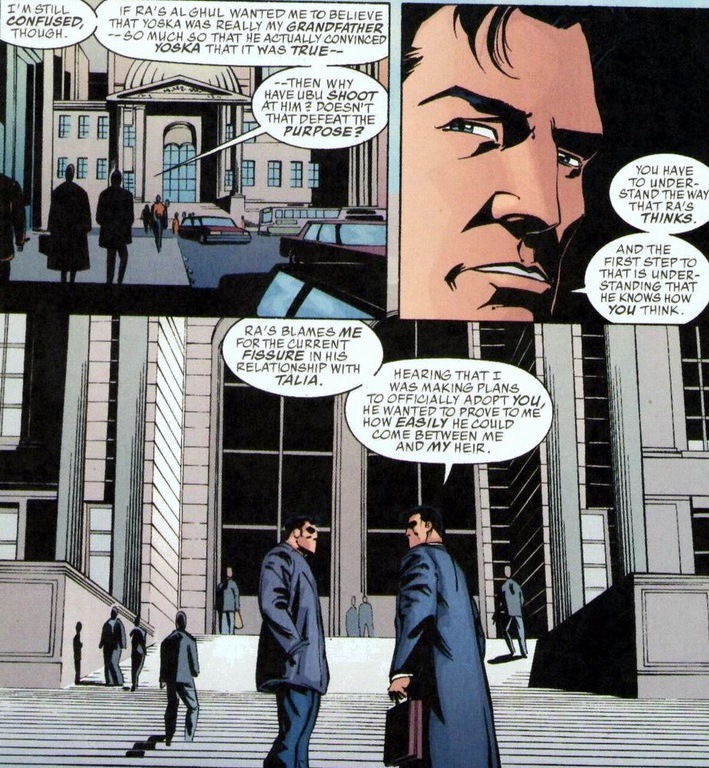
Know the biggest difference between Dick and Bruce? I believe Devin Grayson sums it up best here:
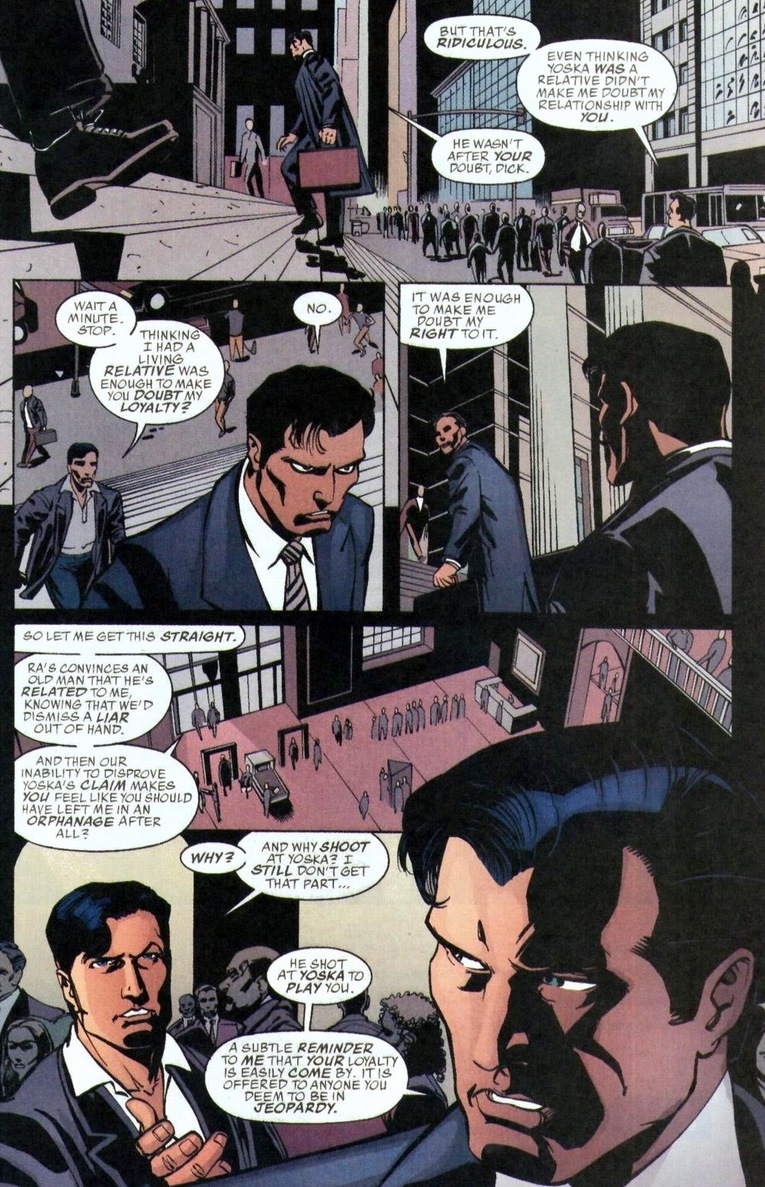

During the Hush arc and the fight between Batman and Superman, Bruce remarks, “I know how [Superman] thinks. Even more than the Kryptonite, he’s got one big weakness. Deep down, Clark’s essentially a good person … and deep down, I’m not.” That begs to be argued, but I can probably say that Batman fights less out of concern for his fellow man and more for the justice and vengeance against crime and corruption.
But Nightwing? Dick’s not a mini-Bruce. He’s far more like Superman in regards to his crime fighting ideals. Like Superman, Nightwing trusts too easily, loves too much, and holds back far more than he should. And truthfully, maybe Batman could learn something from that. Or not. That’s not really up to me. Brooding tends to be one of Batman’s more popular traits anyway.
Ms. Marvel’s magical catfight
Posted: 06/06/2013 Filed under: Characters, Marvel 2 Comments[Ed. Note: This will be the last article for two weeks while I go on my first vacation since this blog started. I love you all and thanks for the unrelenting support! See you soon!]
Ms. Marvel is totally Marvel’s equivalent of DC’s Power Girl. Both possess similar powers, blond hair, senses of humor, frustratingly B-list status, and to be fair to my more pervy readers — an above average bosom size. At least Ms. Marvel (real name Carol Danvers) doesn’t have that dreaded boob window, and in the past year or so since she received her promotion to Captain Marvel, she’s actually covering up a lot more than the costume we’ll see today.
In 2006, Ms. Marvel received a solo series. And it’s very good. Go read it. The first arc deals with a simple idea: Ms. Marvel’s an Avenger, SHIELD agent, space adventurer, and has an arsenal of superpowers that rivals Thor. So why does she sink into the depths of the unknown? She should be up there with Captain America, Iron Man, Spider-Man, and the other superheroes who get their own movies. Well, one step at a time. In Ms. Marvel #3-5, written by Brian Reed and drawn by Roberto De La Torre, Carol hires a publicist.
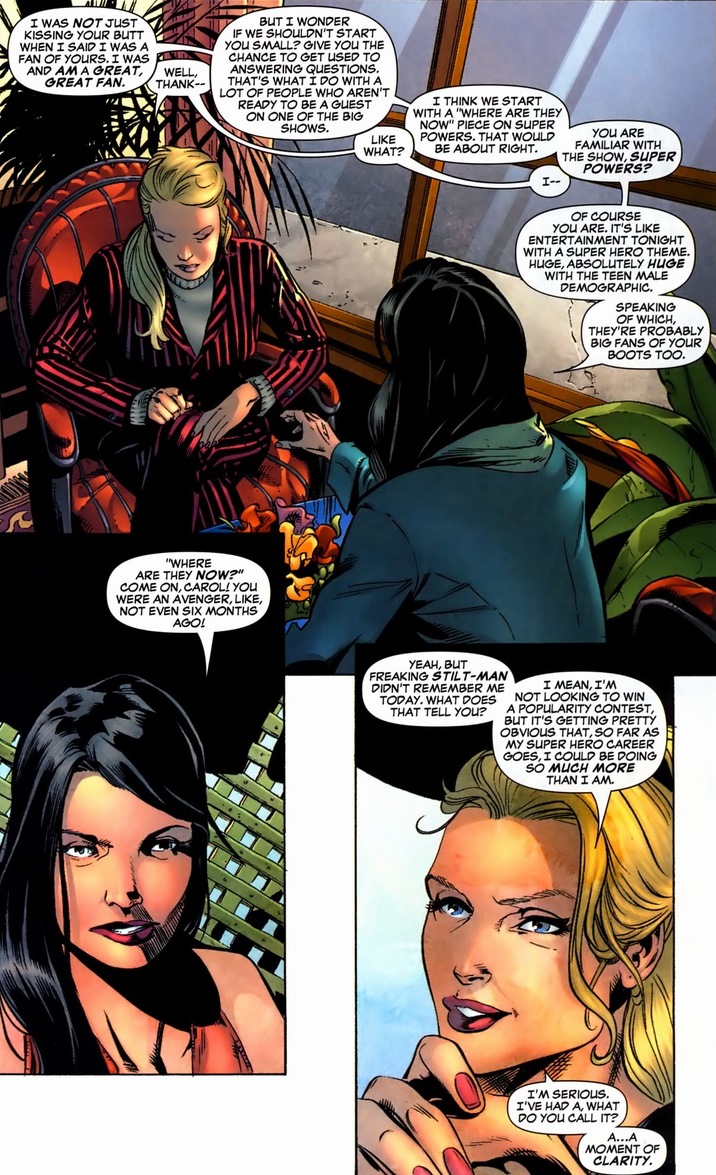
Unfortunately, before the television show airs, she intercepts an alien over Georgia. The fight lasts about two issues, all of which I’m skipping. But here’s the gist of it:
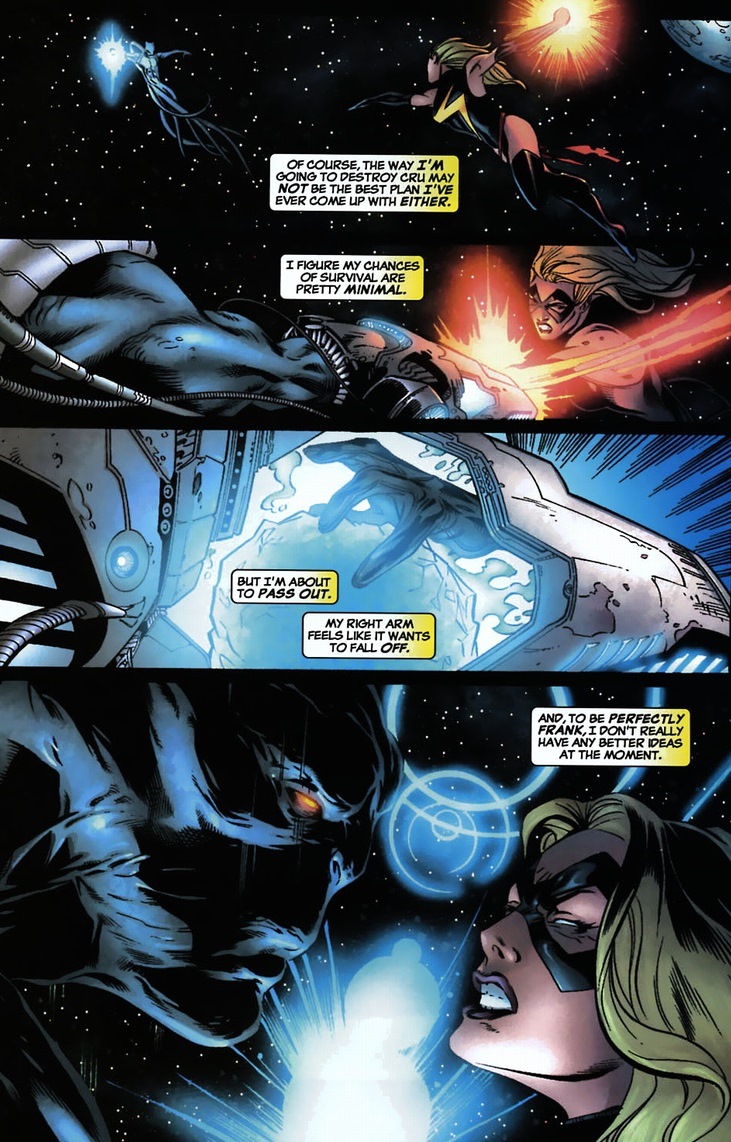
Cool, right? If you want to see our superheroine battle some sort of squid Mewtwo, pick up the first three issues of her series. Anyway, battered, bruised, and very tired, Ms. Marvel heads back to her apartment for some much needed recovery time. After all, saving the world takes a lot out of you (I would assume).
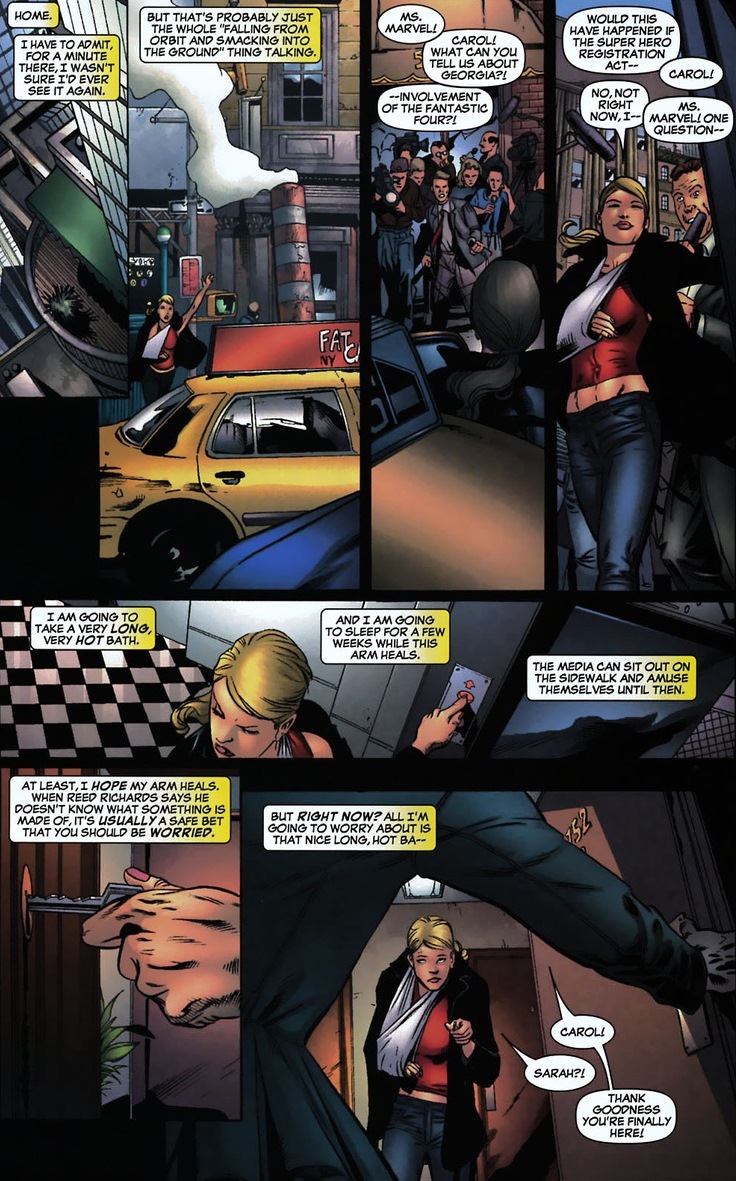
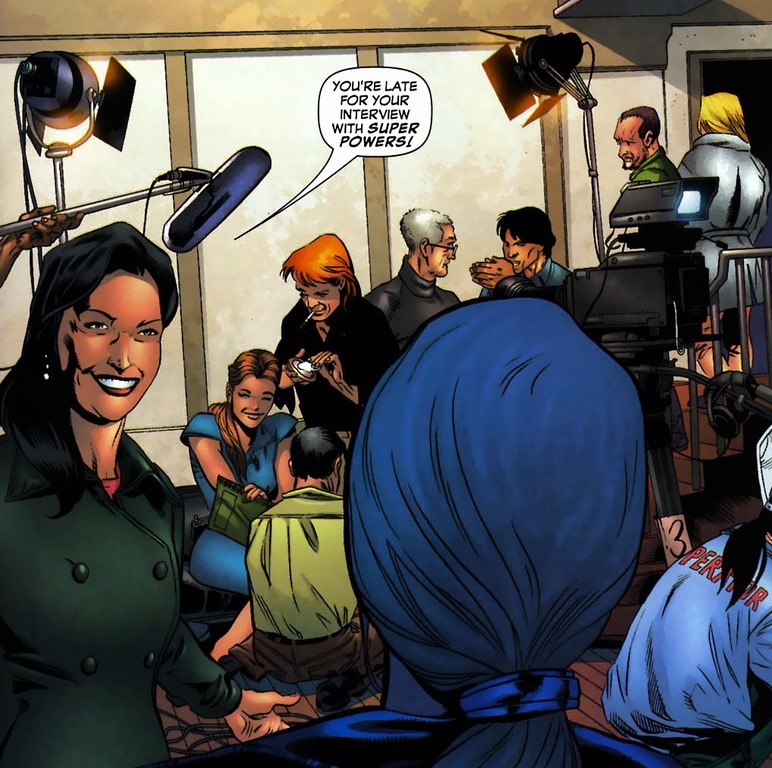
Of course superheroes would be treated as celebrities. They wear bright clothing, appear nonstop on television, and occasionally prevent the destruction of all humanity. Sadly, the “new” Ms. Marvel gets interrupted Harry Potter-style.

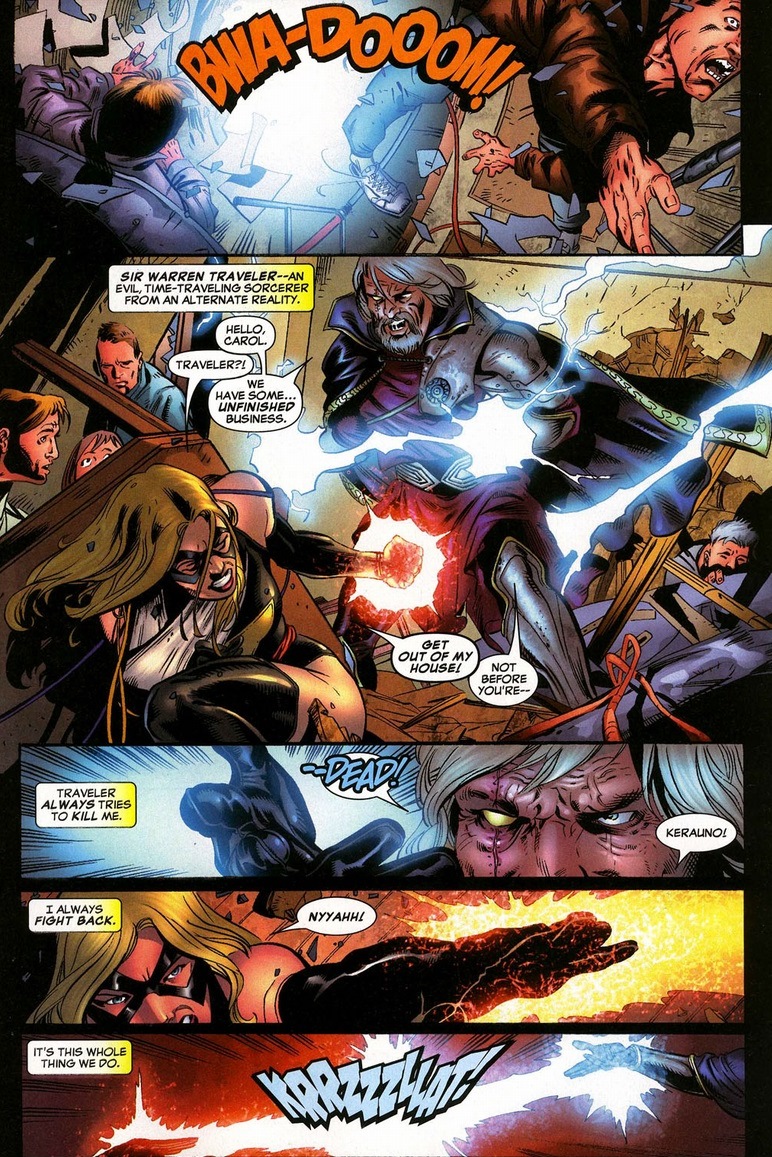
Understand that while some superheroes get their powers from magic (Captain Britain, Magik, Brother Voodoo, Scarlet Witch, etc.), Ms. Marvel’s power are rooted very heavily in science. Like DNA overwritten with a Kree wishing machine science. Still, magic can still be beaten with a good ol’ fashioned fistfight. Some of the time.


Notice anything odd in the dialogue? The whole Ms. Marvel using a cat as a weapon against a crazy powerful wizard? That totally happened. Let’s take a flashback to Giant-Size Ms. Marvel #1, written by Reed and drawn by De La Torre, to Ms. Marvel and Sir Warren Traveler’s first fight:


Reed’s writing sets up that Sir Warren Traveler has a long established history of battling Ms. Marvel, but that’s not true. He’s only appeared in that issue and the two I’m showing you now. The familiarity between the two comes from the Marvel event House of M fiasco that I’m a bit hazy on myself. But like all great writers, Reed knows a solo series has to establish the character’s own support team and rogue gallery. Plus, Ms. Marvel’s arch-nemesis Mystique totally cheats on her with, like, every superhero in the Marvel world.
Back to our story, she takes the unconscious sorcerer to Dr. Strange, who’s rocking facial hair that perfectly matches the flamboyancy of his outfit.
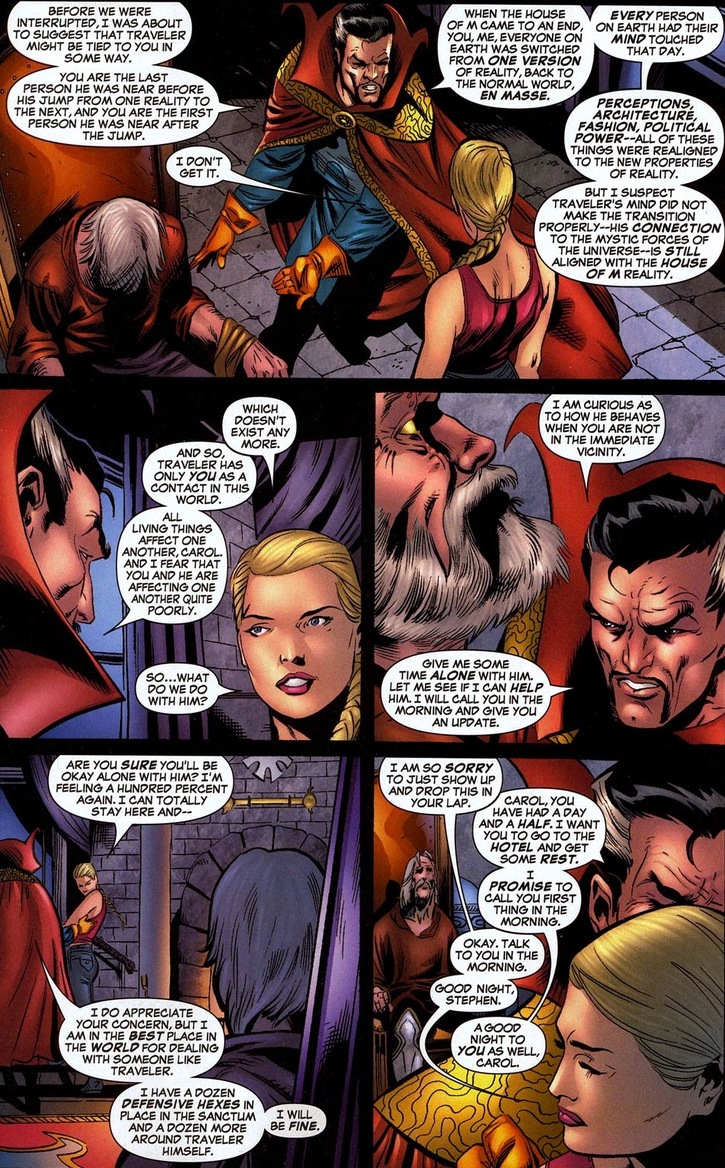
I agree, magic’s way more complicated than I thought too. Because comics work on a slippery spe of horrible events, everything goes badly as soon as Ms. Marvel shuts Dr. Strange’s door. Also, this magic goes far beyond pulling rabbits out of top hats.
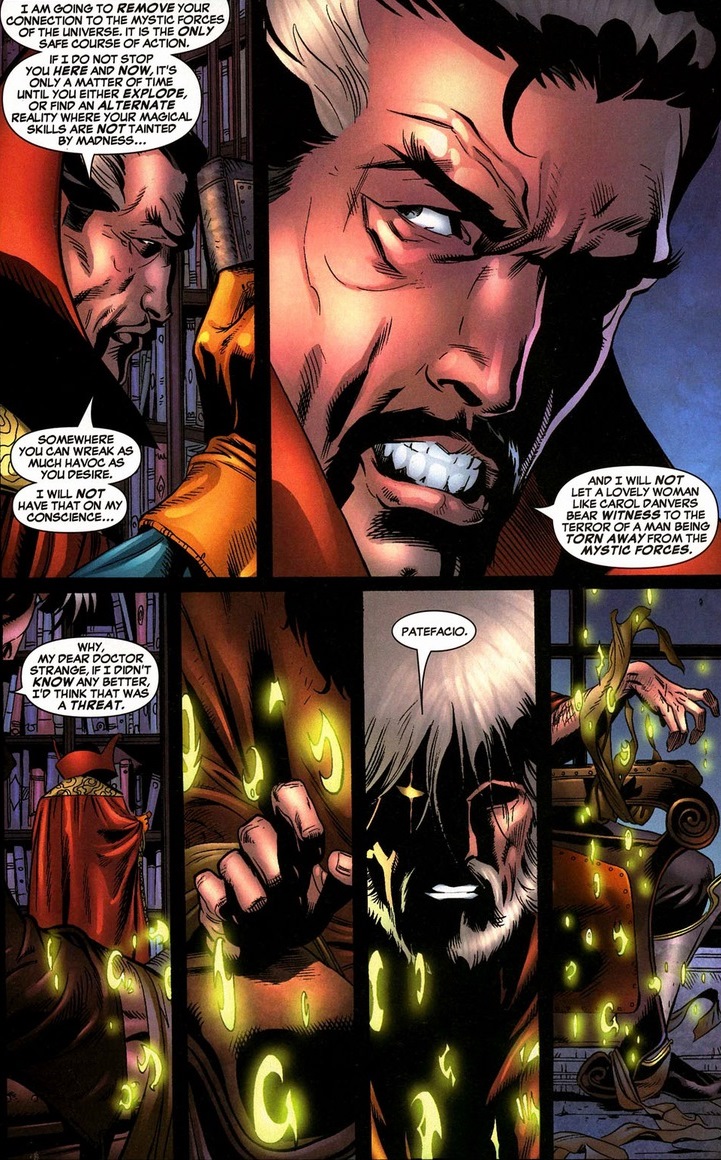


You enjoy alternative dimensions? You should, at least for the next four or five pages. Since Sir Warren Traveler’s magic plays the dimensional angle, our poor protagonist gets sucked into any number of weird possible realities. Like a post-apocalyptic one where alien insects ate everyone.
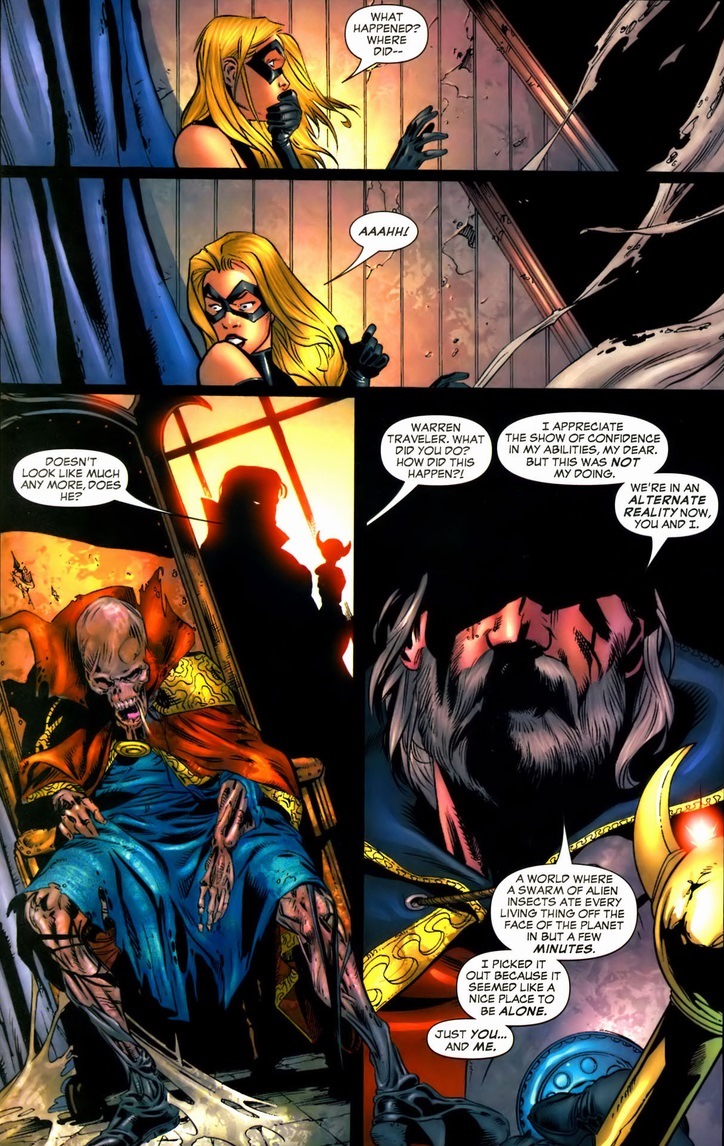

Skimpy costumes aside, I think non-comic book readers underestimate the amount of positive female role models in comics. If we ignore superpowers and just talk about superheroines who are independent, strong-minded, and possess a strong moral compass, we’d have dozens to pick from. Marvel’s Storm, Kitty Pryde, Invisible Woman, Black Widow, etc. DC’s Wonder Woman, Batgirl, Black Canary, Supergirl, etc. Though Supergirl did once date her horse. Back to our story, Sir Warren Traveler continues his mind games, which Ms. Marvel tends to respond to with violence.

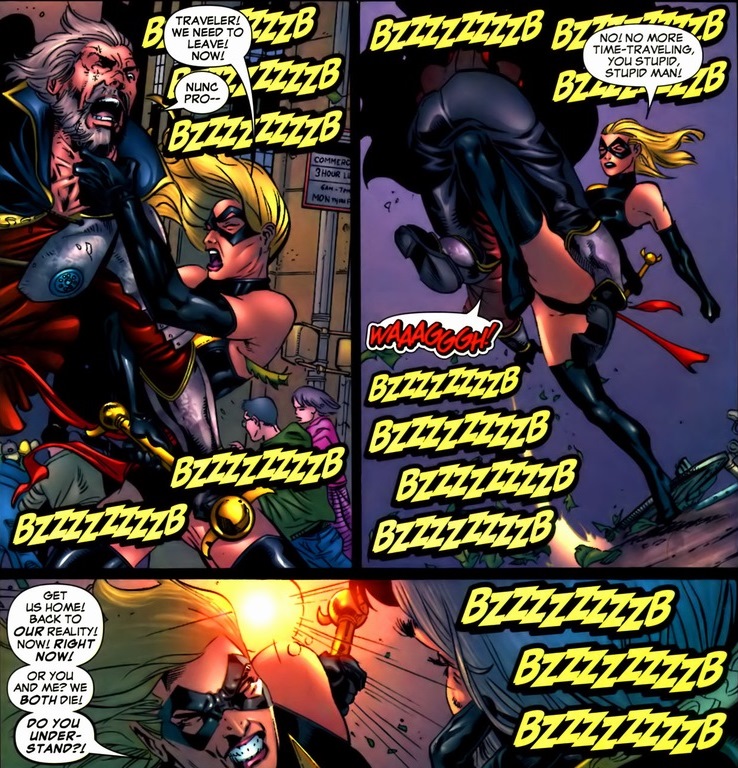

If Wednesday’s magic fight didn’t satiate your cravings, the big finale coming up certainly should. Dr. Strange and Ms. Marvel versus Sir Warren Traveler. It’s colorful, intense, and surprisingly intimate.
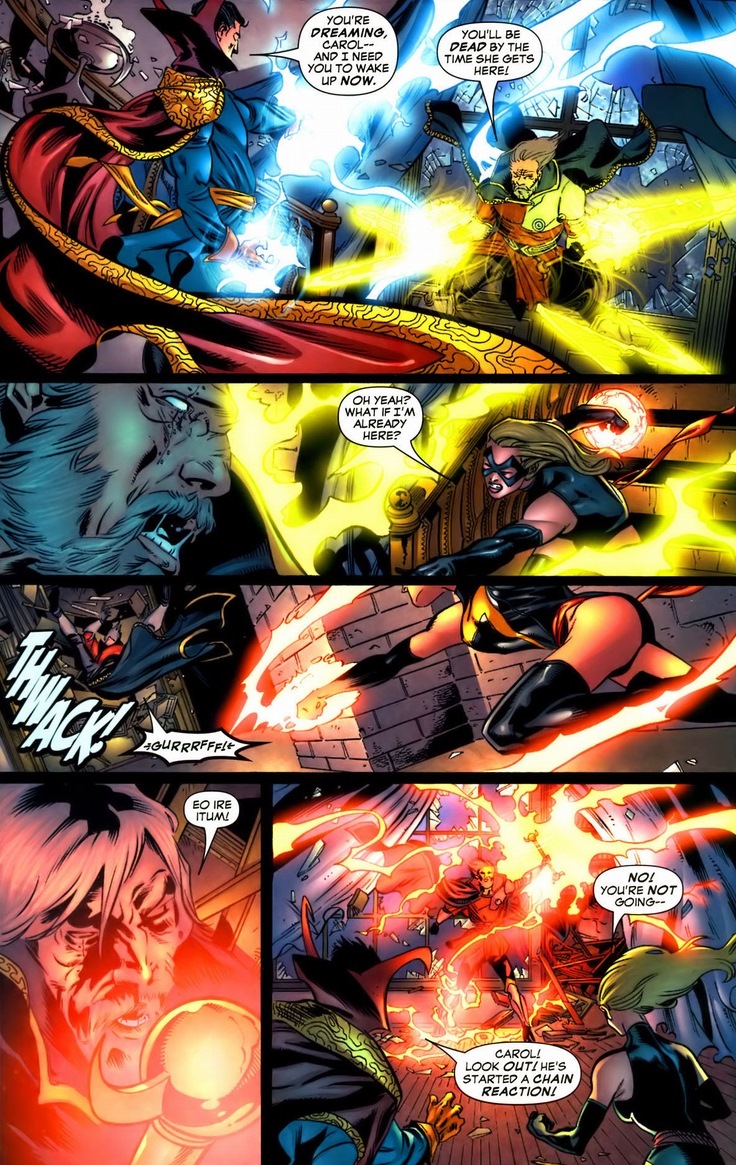
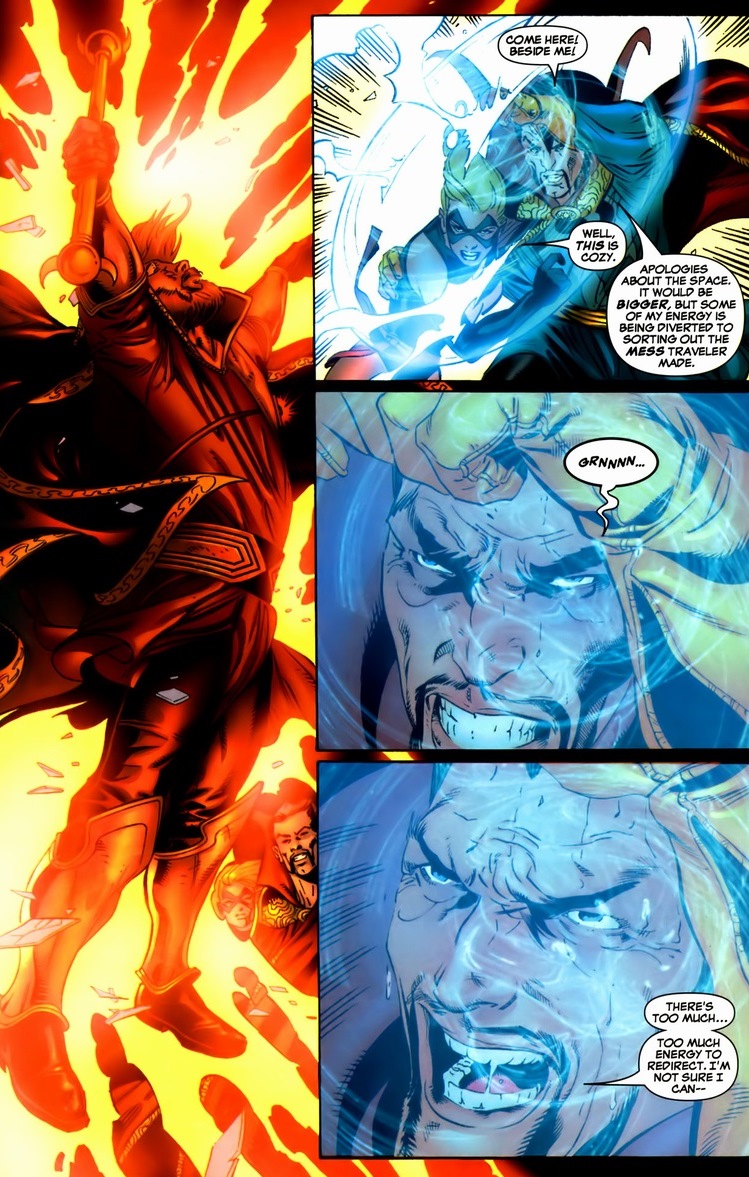
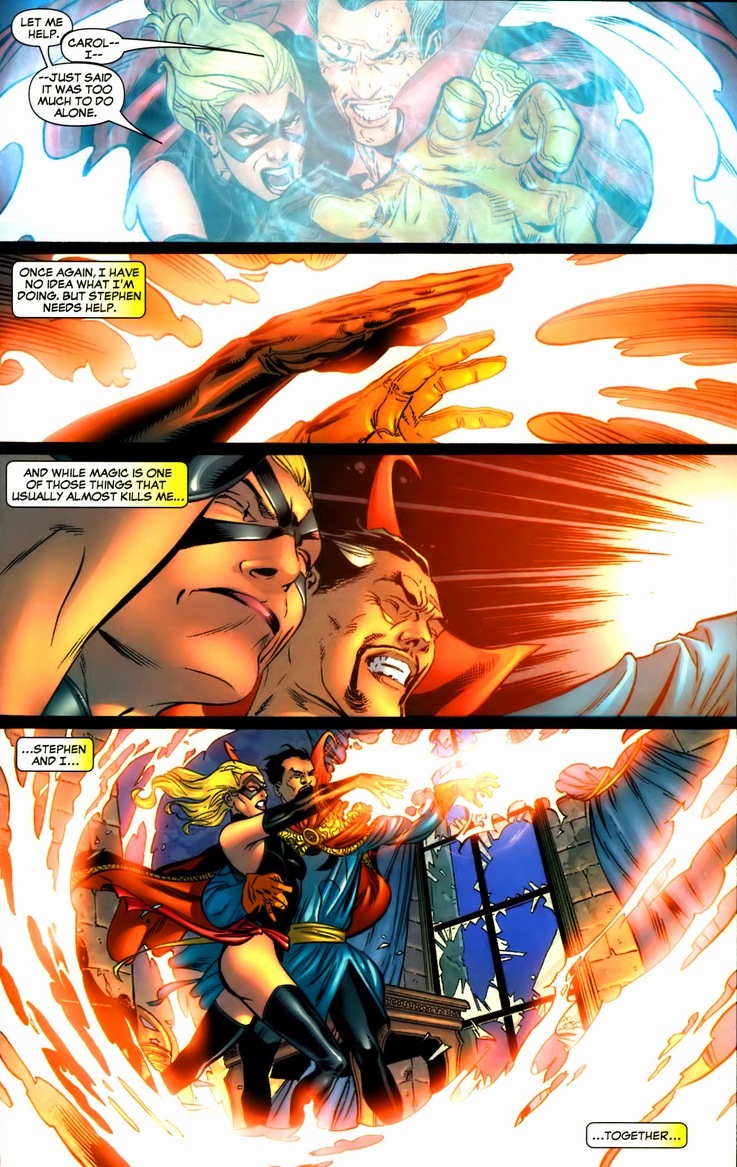

No matter how little PR she receives, Ms. Marvel at least has the respect of her peers. Who needs crowds of adoring fans when you have the love of fellow superheroes? I mean, besides Johnny Storm.
The exorcism of Red Hulk
Posted: 06/04/2013 Filed under: Characters, Marvel 2 CommentsMore Red Hulk! Could you ever get enough? Unfortunately for our protagonist today, this’ll be a fight he can’t punch his way out of, so watching General “Thunderbolt” Ross get out of a situation that makes his main superpower (super strength) totally useless. Plus, vampires!
I greatly enjoyed the Hulk series, if just because while Bruce Banner gets angry, Ross just gets cranky. That happens with a 60 plus year-old dude, though he is one of the few superheroes with a thick, gorgeous mustache. Today in Hulk #50-52, written by Jeff Parker and drawn by Carlo Pagulayan, Red Hulk has a serious ghost problem.

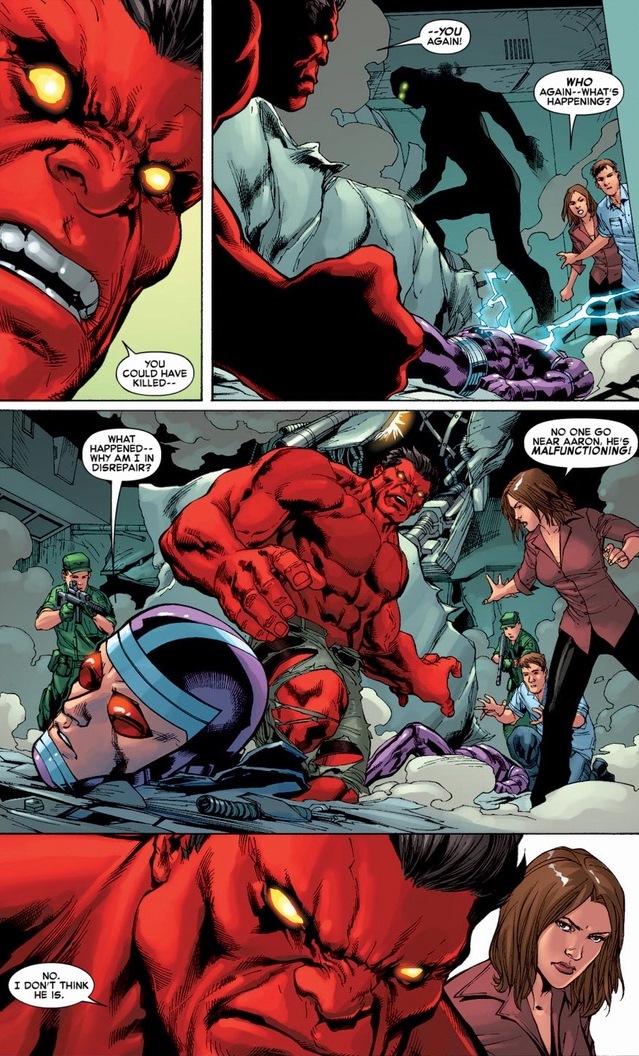
His sleeping bag companion? That’s his Life Model Decoy companion (basically a fancy robot) Annie. No romantic feelings arisen here, as she’s an AI and he’s an old Hulk. Later, as they tour their tech facilities or whatever, the group gets attacked:


Ever heard of the robot Machine Man? An established superhero in his own right, Machine Man’s been around since the 1970s. Now, he joined up with Red Hulk’s supporting cast. Red Hulk totally has his very own set of buddies and baddies. Three years of comics can build up quite a list of cool characters.
Ross realizing that he may be dealing with forces of a non-punch variety, he heads to the expert.

You figure fellow mustache-wearers could trust each other, but Strange ends up as a jerk here. Though you must admire Ross’ inability to distinguish between magic and bohemianism. So the memory Strange chooses?
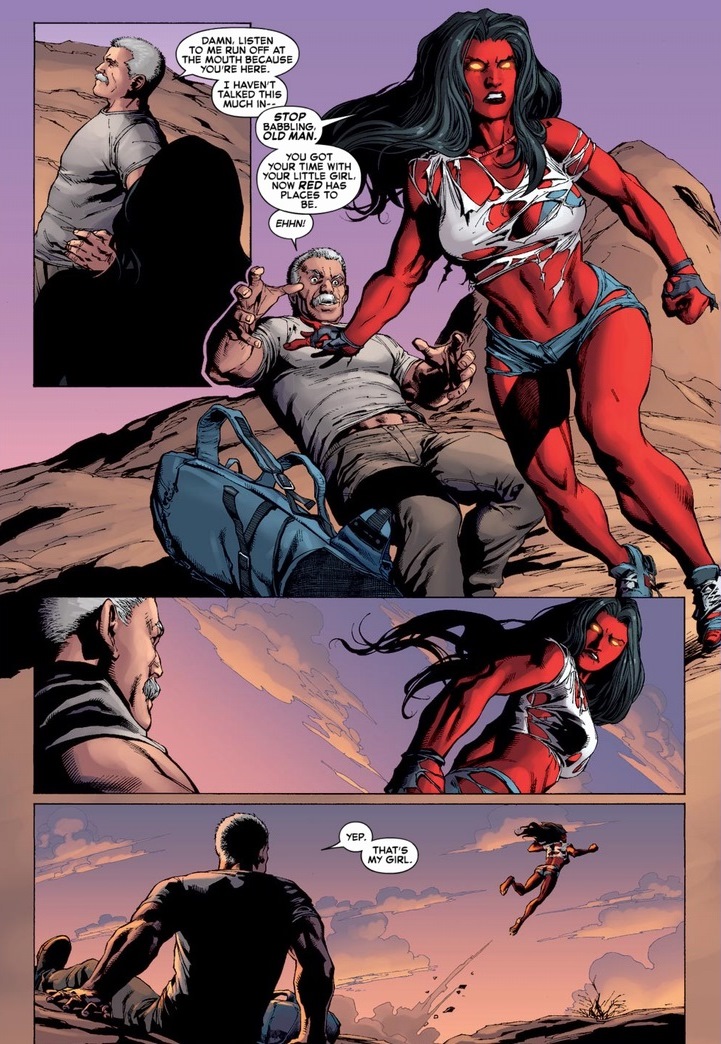

Strange deserves a broken skylight. Fortunately, when more visions/zombies/ghosts/whatever attack poor Red Hulk, Strange redeems himself — in a way only Dr. Strange can.

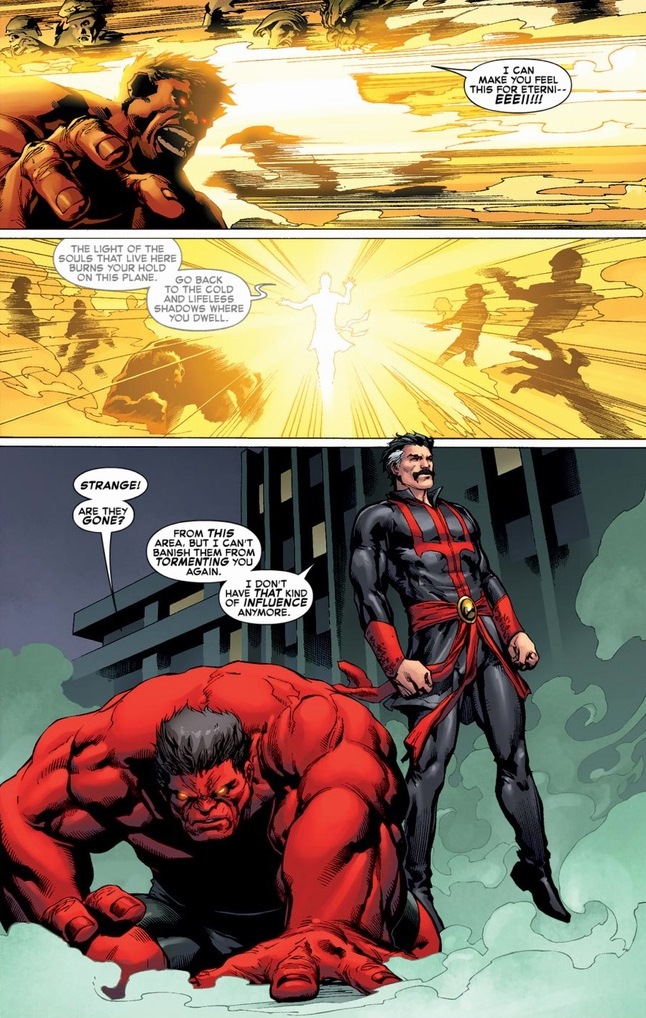
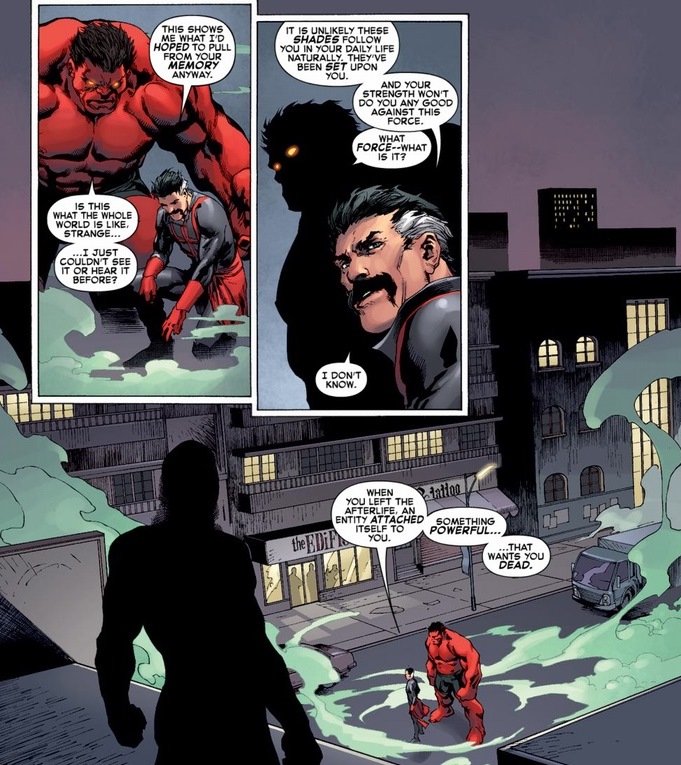
I’m not saying Dr. Strange is Marvel’s version of Jesus, but that is how Jesus would show up in a comic. With a vague idea of what’s affecting Red Hulk, that means adventure! Ross gets to travel the world complaining about magic lakes and artifacts! Along the way, he gets attacked by vampires, because that’s how comics work.
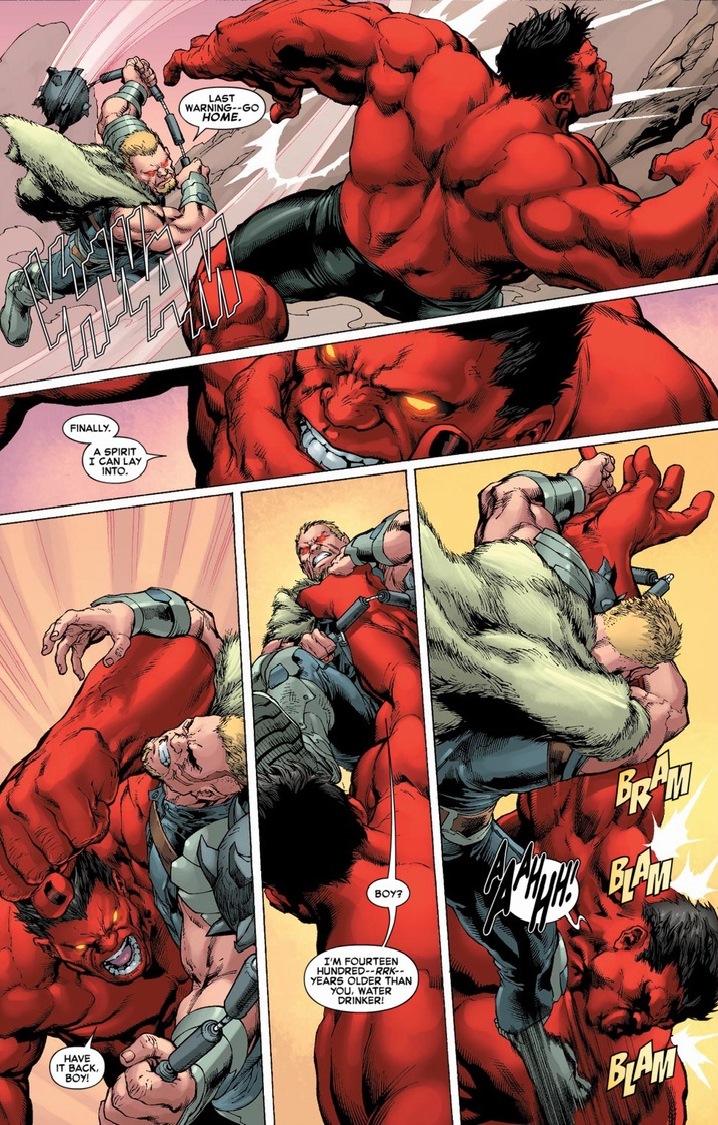

Eventually, the solution to the ghost problem presents itself. A group of people can exorcise this shadowy figure with relatively little trouble. Well, I mean I wouldn’t call them people.

In the Marvel universe, anything below ground guarantees a swift death. The Morlocks live down there, mutated creatures live down there, and probably the Lizard as well. Also, that’s where poop goes. Luckily, a small group called the Legion of Monsters, led by the Living Vampire Morbius, fight the good fight — like when Red Hulk gets attacked by thousands of their brethren.

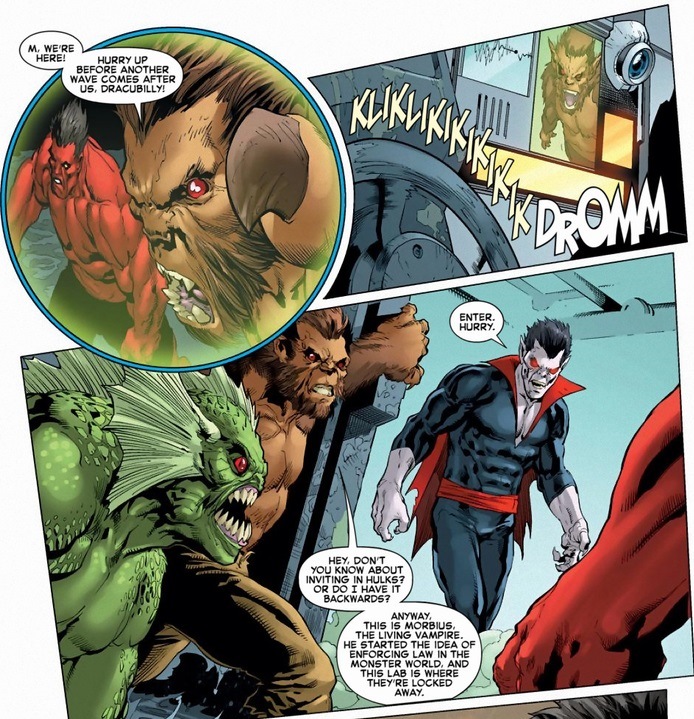
Of course, things immediately get worse. Building suspense and whatnot.
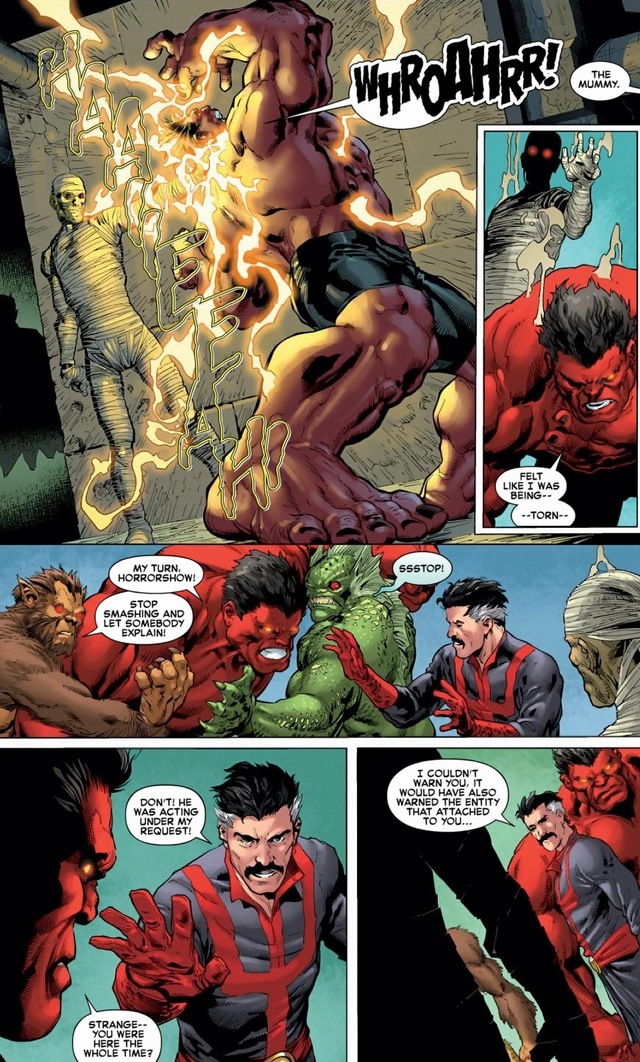
Apparently mummies can absorb ghost particles. Seems fine to me, but I’m not a scientist.

Time to wrap this riddle up. Gamma radiation means a Hulk-like being and only one gamma dude died in Hulk comics recently. Process of elimination leads to our exciting conclusion!


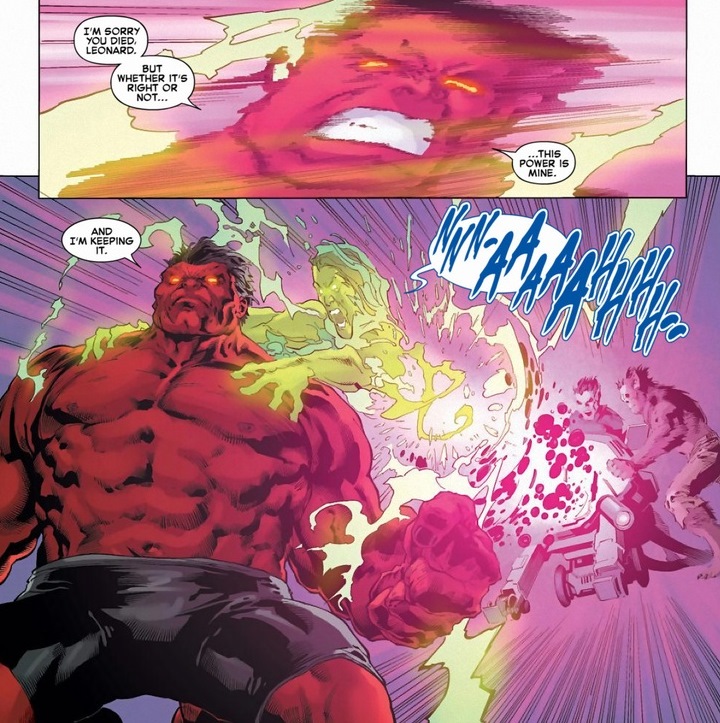
The Legion of Monsters possesses a Ghostbusters machine. Poor Doc Samson, the psychologist to the superheroes, hasn’t showed up since this moment a year or two ago. Even Chaos War didn’t fully bring him back to life. Oh well, at least his friends can still honor his memory, which I guess’ll be the best consolation prize a ripped apart evil spirit can hope for.


Note, Friday will be my last article for two weeks while I go on my first vacation since this blog started. While I won’t have my comics, Wolverine, Spider-Man, and the others will always be carried with me in my heart — something the airline doesn’t charge extra.
Red Hulk brawls, Pt. 3
Posted: 06/02/2013 Filed under: Fights, Marvel 1 CommentFor today’s finale, if Red Hulk isn’t punching someone who has the power to destroy small continents, I don’t want to read it. I mean, that goes with being a Hulk, right? Superman fights the intergalactic plague threats that Batman simply can’t handle. Hulk fights the giant possessed hammer monsters that Hawkeye won’t do much good against. Though to be fair to Hawkeye, he doesn’t have to fight giant possessed hammer monsters. So that’s a plus.
Today, we’re taking a look at two fights from Uncanny X-Men #11, written by Kieron Gillen and drawn by Greg Land, as well as Avengers #14, written by Brian Michael Bendis and drawn by John Romita Jr. First up, Red Hulk versus Juggernaut Colossus — like normal Juggernaut but now with unbreakable steel skin.

Oh yeah, and this fight takes place underwater. When I googled, “Can Hulk breathe underwater?” the answers returned unsatisfactory, so I assume Red Hulk grows Hulk gills when he touches a pond or something. As for Juggernaut Colossus, actual evil demon powers should be enough oxygen or whatever. My superhero science knowledge tends to be on par with my real life science knowledge.
Though to spice up the fight a bit, I bet you’ve never seen Juggernaut do this:


Green Hulk would charge into battle screaming something about himself in third person. That’s because green Hulk’s dumb (on occasion). But as Red Hulk, General “Thunderbolt” Ross keeps all the cognitive and tactical skills he possesses in his human form. And any good strategist would suggest getting the hell out of the water. Red Hulk barely stands a chance against normal Juggernaut Colossus, much less Evil Demon Juggernaut Colossus. But like any good Hulk, he does the usual Hulk strategy: punch harder.


I’ve mentioned this briefly before, but the two Hulks’ powers work differently. Green Hulk gets stronger the angrier he gets, growing to a theoretically limitless strength level. But Red Hulk doesn’t have that advantage — he starts the fight at maximum strength, which is about as strong as green Hulk at the start of his transformation. The difference (besides Red Hulk emitting heat) remains that Red Hulk’s simply a better fighter, which comes from soldiering for the past three or four decades. So knowing he can’t take Evil Demon Juggernaut Colossus in a boxing match, he goes to Plan B.

Utopia, where the X-Men lives, is an island held up by a single Atlantean pillar. Victory to Red Hulk, though Colossus kinda forfeits the fight on purpose.


Sadly, our next fight doesn’t contain the strategic genius that propelled Red Hulk into our awaiting hearts. Remember how people complained about Superman’s fight against Doomsday? The entire thing ended up being a fistfight until both killed each other in that famous simultaneous strike. And with all of Superman’s powers, ideas, and buddies, Superman settled on a simple punching contest? Now, disregarding dramatic storytelling reasons, I have a theory. If Mike Tyson hits you in the face, any other strategies and plans would go straight out the window — Superman gets punched with the hardest punch he’s felt in his life and suddenly the fight becomes more about not letting your opponent see you cry than manipulating the landscape and your arsenal of superpowers to inflict maximum damage. Or maybe fans are still mad that he came back from the dead.
During the Marvel event Fear Itself a few years back, magical hammers fell to the earth that turned whoever touched it into giant possessed hammer monsters. Unfortunately, one of those happened to be the Thing.

The Thing already has enough strength to give Red Hulk a run for his money, but now he also gets cool armor and a Thor hammer. Still, Hulks don’t do much worrying.


You detecting a theme here? Let Red Hulk fight his Doomsday, because a beast who benches 100 tons now swinging a hammer would be a total day ruiner. Not content to just smash Red Hulk to death, the Thing throws in some collateral damage as well.


A significant event in comics, because while the Avengers Tower or Mansion collapses once a year or so, the symbolism shouldn’t be mistaken. It’s just symbolism that repeats itself constantly. Also, Red Hulk just got crushed by a skyscraper. See why Hawkeye doesn’t fight certain bad guys?

The only one who out-badass’d Red Hulk during Fear Itself is Captain America. Does Red Hulk know he can’t win at this point? Probably. But when a behemoth wrecks downtown New York City, the fight has to continue nonetheless. And who knows an unwinnable fight better than the man who spent the past fifteen years hunting down the Hulk? Enjoy the rest of the brawl uninterrupted:


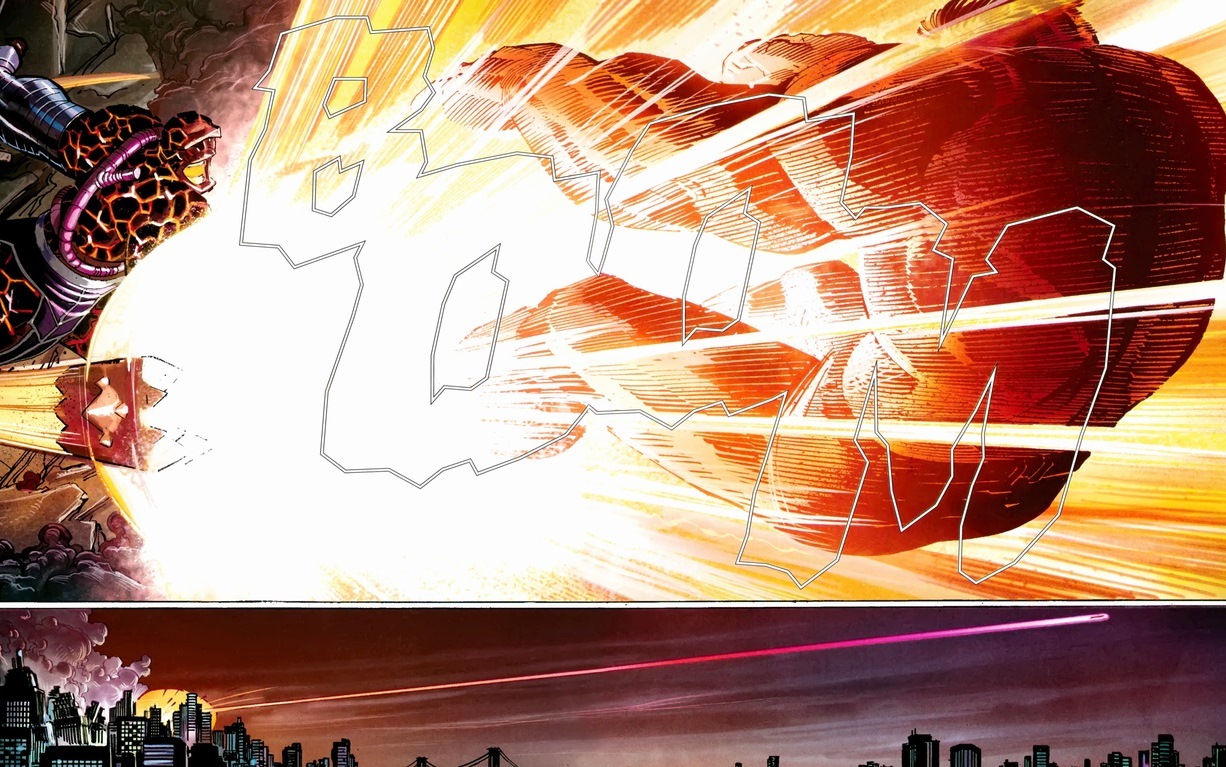
Brutal, delightful, and I wish comics had more scenes like that. Not where the bad guys win, but that visceral struggle against unstoppable forces. I admire the creative, tricky, and surprising victories (and those always show off the talent and skill of the writer), but something satisfying must be said for the primitive, issue-long smackfest. In Hulk #38, we pick up where Avengers #14 left off, and the final page sums up perfectly why I love my dear Red Hulk:

 Arousing Grammar