
Superheroes and Judaism, Pt. 1
Posted: 06/30/2013 Filed under: Characters, Marvel 6 CommentsI was reading All-New X-Men #13, written by Brian Michael Bendis and drawn by Stuart Immonen, and they were commenting on Havok’s controversial speech from Uncanny Avengers #5 a few months back. Remember this speech?

When that happened, Anthony Jocko asked my opinion about it. I answered:
“I read the issue and I read the outcry, and if I’m right, basically people are mad that Havok rejects his identity as a minority? Fans are mad because the X-Men are supposed to represent the ‘minority’ — whether that’s by religion, race, sexual orientation, interest, etc. — and Havok states that we should assimilate instead of celebrate diversity? Y’know, I didn’t actually think about this until now, but I think the outrage’s overblown.
I get how comic book fans might be bullied or ridiculed, and the X-Men are that fantasy of staying true to the fans’ passions just with laser eyes or wings or whatever to defend themselves. I mean, I’m Jewish, and we have a whole history of being hated on as the minority scapegoat, but I’d rather see the X-Men defeat bad guys than rise up as a minority power. As in, aren’t they superheroes first and mutants second?
Especially after AvX, the X-Men are seen as villains. So, Havok merely stated that the mutant community should be seen as working with the other heroes instead of against them. Superheroes first, mutants second — and simply that by calling them mutants, their heroism and good intentions are being sidelined by a pre-judged ‘label.’ I agree with [writer Rick] Remender, but I also tend to be a suck up.”
And I stick with my argument. Until All-New X-Men #13 came out this week and I read these pages:

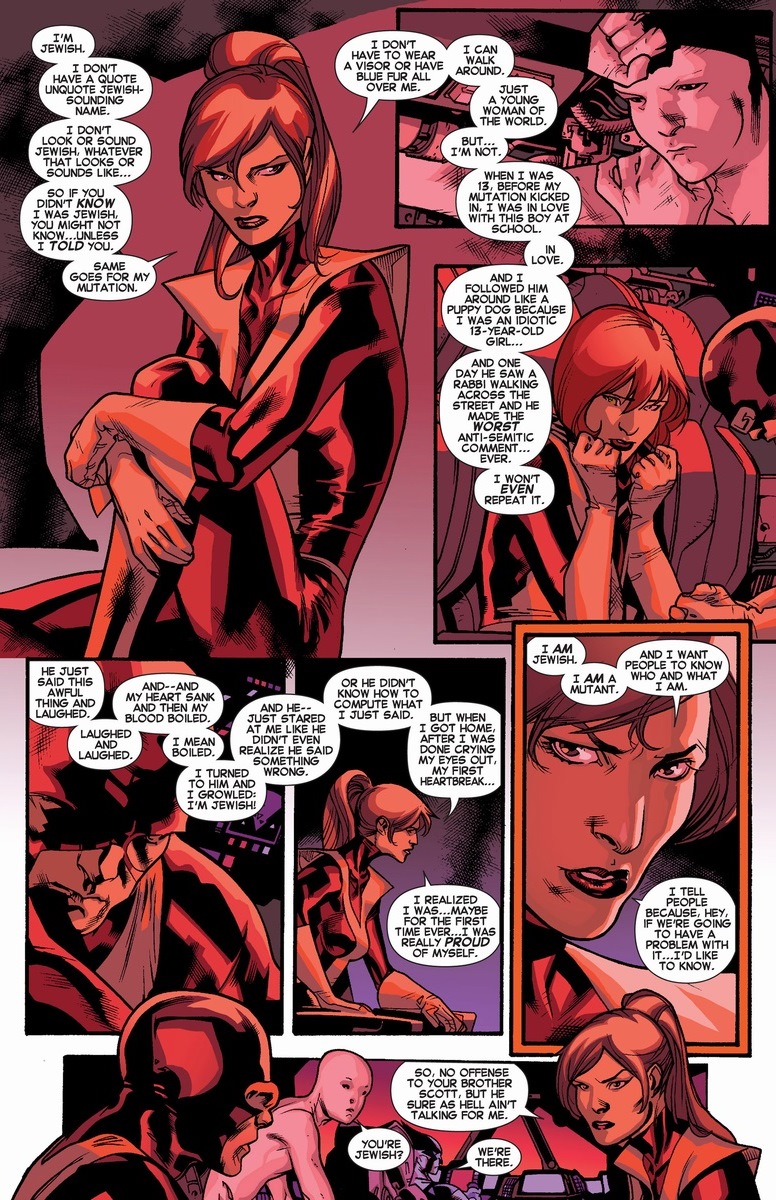
Kitty’s right. Bendis is right. Now, I did just spend two weeks in Israel, so understand where my bias lays right now. Havok should embrace both his title as a mutant and a superhero, because while we can’t choose our nationality or superpowers, we sure as hell can be proud of our special identity. That’s the basis for a community and a people. C’mon, “I am a mutant, and what are you going to do about it?”
So Kitty’s speech had me thinking — who are the other Jewish superheroes? And more importantly, I should celebrate them! Fictional sure, but they’re still part of Judaism’s culture and history. I’m going to share some of them with you over the next few days.
I highly encourage you to look into the superheroes and supervillains of your own religion, whether that be Catholic (Daredevil, Nightcrawler), Muslim (Janissary, Dust), Atheist (Hank Pym, Mr. Terrific), etc. But since I’m Jewish — well, that’s what my focus’ll be on.
We’ve already mentioned her, so let’s start with Kitty Pryde.
She premiered in 1980 as a child. Like the day after puberty kicked in. So with the shifting timeline of the Marvel Universe, she’s probably in her mid-20s right now, and one could argue that she may be the biggest success of Professor X’s school. And I’ve always admired her unabashedly shameless about her religion. Like as in Ultimate Spider-Man #106, written by Bendis and drawn by Mark Bagley:

Before you dismiss that giant Star of David necklace as a mere accessory, know that it saved her life on more than one occasion. Such as when she fought Dracula in Uncanny X-Men #159, written by Chris Claremont and drawn by Bill Sienkiewicz.

Let’s talk about Dracula for a second. Of course a fictional universe filled with kids who fly and shoot fire from their hands would also be populated by other wacky fictional monsters. Vampires, mummies, werewolves, etc. remain a big part of both DC and Marvel. Frankenstein even received his own solo series for a while. And why not? Frankly, that doesn’t take away from the religious impact of some of these superheroes simply because they live in a sometimes silly world filled with weirdos.
Yes, the comic book world has Aztec zombie resurrections. Occult magic spread throughout thousands of dimensions. Space aliens with armadas that span solar systems. Toxic waste that grants amazing superpowers. So why not religion too? If Dracula can pummel the X-Men, is Kitty being devoutly Jewish really that much more of a stretch? Do we really have to suspend our disbelief about Nightcrawler being a Catholic priest when he’s also blue, furry, and can teleport?
Though no superhero has been more defined by Judaism than Magneto (maybe Sabra, but more on that later). I’d like to be proud of him, but he does do a whole bunch of mass murdering. Sadly, it took fifteen years before Magneto admitted his Holocaust roots, which now make up a major aspect of his character and personality. In Uncanny X-Men #150, written by Claremont and drawn by Dave Cockrum, Josef Rubinstein, & Bob Wiacek, Magneto reveals the single most important detail of his youth:

And when he accidentally hurts Kitty a few pages later:

Kitty survives, of course, and the two become unlikely allies. Bonded by their Judaism commonality and Magneto’s tendency to switch his morality every fifty issues or so, Kitty and Magneto attend a Holocaust memorial in Uncanny X-Men #199, written by Claremont and drawn by John Romita Jr. & Dan Green. This remains one of the most significant comics regarding Magneto’s Jewish roots, and you can easily tell why:


Mystique attacks because superhero comics still require a punching quota, but it’s Magneto’s speech that does more for his character development than decades of battling the X-Men.

Magneto’s desire to see his own minority people (mutants) rule the world so they can no longer be persecuted or attacked makes a lot more sense when you realize he saw his own Jewish people massacred during his childhood. Though his methods have seemed a bit like the Nazis at times, that’s a very different argument.
Nowadays, Magneto’s a bonafide superhero and I catalogued his redemption (which also involved Kitty) here and here. Greg Pak wrote a spectacular miniseries titled X-Men: Magneto Testament which chronicles Magneto’s childhood in the Holocaust. I’d write an article about it, but it’s not really a superhero comic. Yes, Magneto’s the star, but not once does he wrap Nazis up in their own metal guns or lift Auschwitz off the earth and flip it over. Still, as far as Holocaust comics go, it’s on par with Maus.
While I have about forty pictures and five superheroes left, I’m already kicking about a thousand words today. Let’s do part two tomorrow and finish with part three on Wednesday. You’re totally worth it.
Nightwing, Batman’s son
Posted: 06/23/2013 Filed under: Characters, DC 3 CommentsFor a former teenage superhero, Dick Grayson turned out relatively normal. He retains his sense of humor, passion but not obsession, and can even manage a healthy romantic relationship (which Bruce certainly can’t). I don’t think it’d be far off to say that Dick has managed to become the most successful and popular former sidekick in comics today. But despite not being pantsless for over twenty years, a few loose ends needed to be tied up between the Boy Wonder and Dark Knight. Like legal status.
In official documents, Dick is Bruce’s ward, which remains something like a guardianship. Depending on the continuity and various writers, Dick’s only fifteen or so years younger than Bruce (though probably now around ten with the New 52). And since Batman’s job involves pummeling bad guys into unconsciousness, a smart man would have a back up plan set up in case of untimely (and likely) death. Unfortunately, in Batman: Gotham Knights #20-21, written by Devin Grayson and drawn by Roger Robinson, there’s one problem with this plan.


Dick’s roots go back to Romani Gypsies. That and carny folk. Circuses may excel at back flips and bearded women, but I imagine a clean past may not be one. Records tend to be hard read when written mostly on cotton candy.

Yes, that’s Batman generalizing a whole group of people. Nightwing gets mad at him, but Dick keeps forgetting Batman’s superpower of being wildly inconsiderate of other people’s feelings.

Let’s meet this so-called relative, who by the way, fits every stereotype down to his bushy mustache.


I get that legal mysteries may be less fun than Batman roundhouse kicking henchmen, but character development makes future roundhouse kicking worth it. Probably. With a harmless old man following Dick around, it’s time for Bruce to have a little chat about this final adoption obstacle.


Cliffhanger, right? Knowing that his grandson puts on a costume and clubs supervillains at night would certainly hold a major financial advantage, or at least blackmail. But truthfully, he really is just a harmless old man.

Being a comic book world, something sinister lurks behind this grandfatherly curtain. And fortunately, Bruce lacks the ability to trust anyone who isn’t Alfred, or Dick, or Tim Drake, or Barbara Gordon, or Commissioner Gordon, or Leslie Thompkins, or Lucius Fox, or Superman. Maybe a few others. Okay, so he trusts more than I thought, but definitely not this dude.


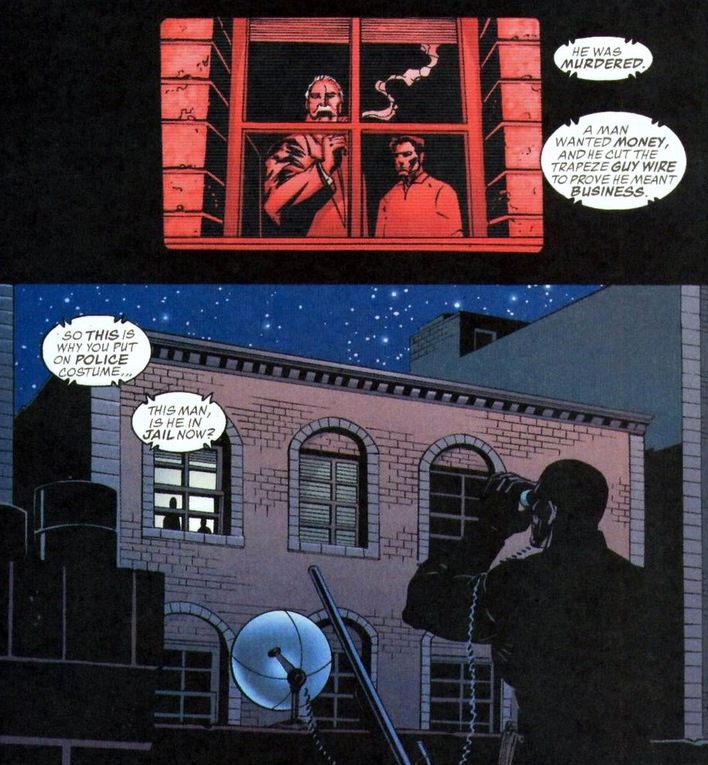
Yes, this is where things get bad. I wonder why anyone in Gotham would ever leave their window blinds open. The city has more snipers of roofs than pigeons. Still, plot demands the blinds stay up.
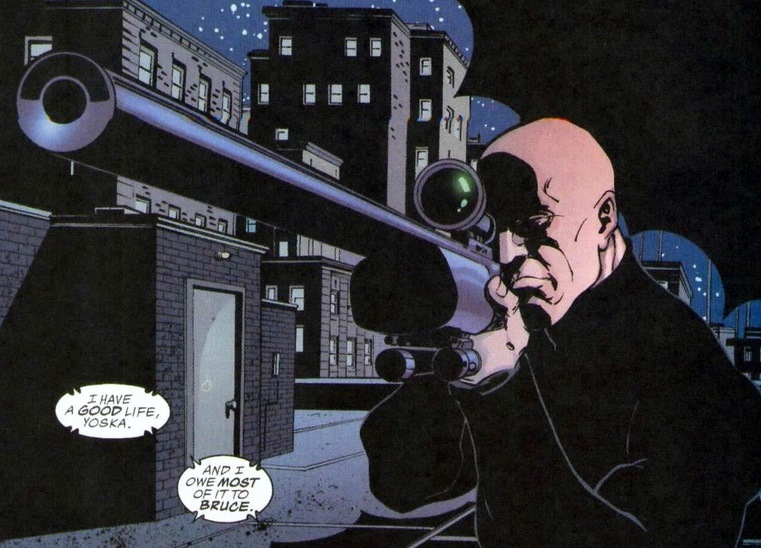


Did you read that last panel in the gravelly Batman voice? Of course you did. So who told Yoska about Dick? Think bad facial hair and petty grudges.
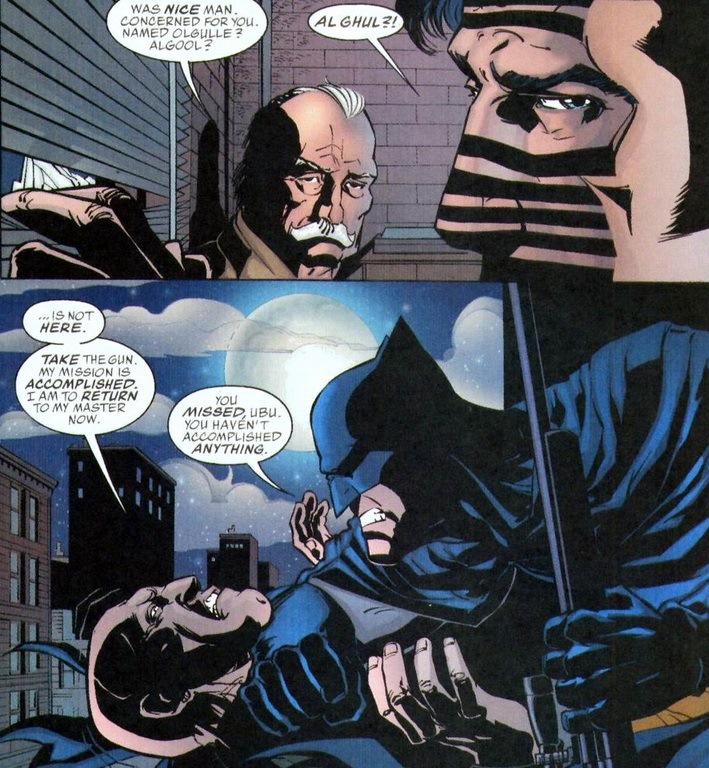

I know this is weird, though it’s not above Ra’s al Ghul to spend enormous amounts of money and time to set up a single emotional blow. Also, Ra’s is a dick.

Let’s get right into the solution of this mystery. It all involves Ra’s’ daughter Talia, who recently abandoned her father after nudging from Batman. With news of Bruce securing an heir, the whole heir business surely hit the supervillain’s sore spot. Also remember, Ra’s is a dick.
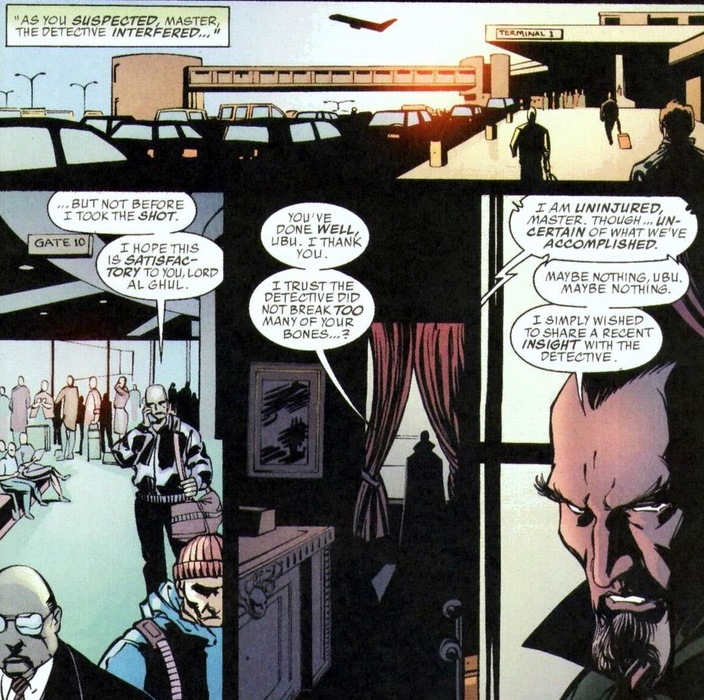
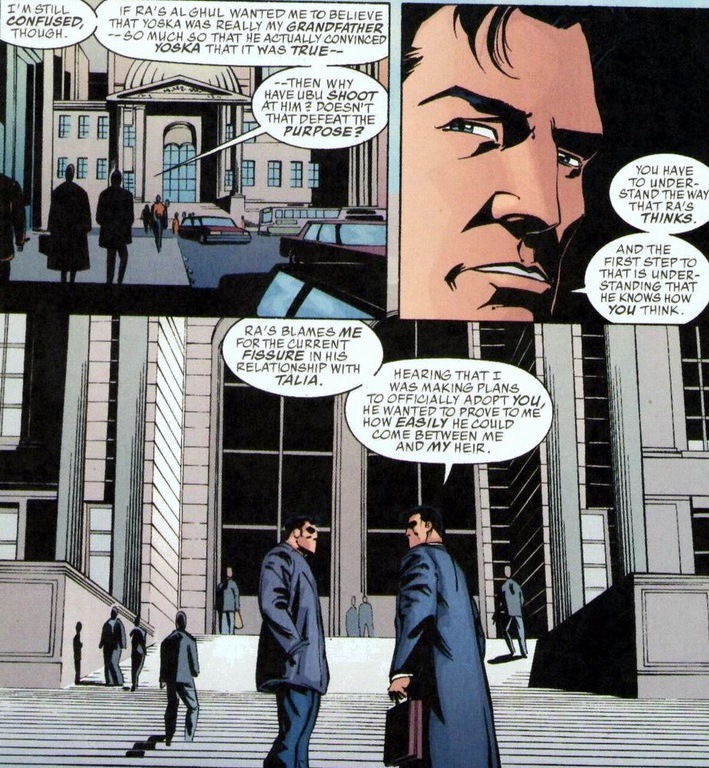
Know the biggest difference between Dick and Bruce? I believe Devin Grayson sums it up best here:
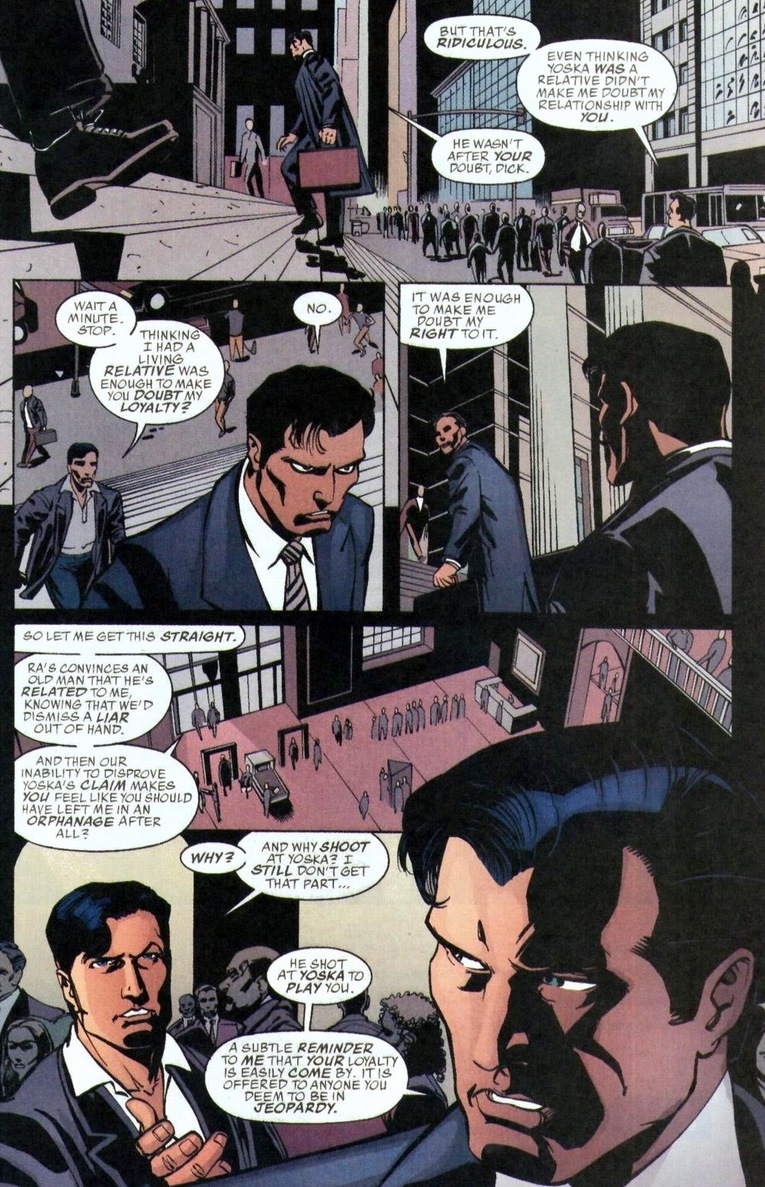

During the Hush arc and the fight between Batman and Superman, Bruce remarks, “I know how [Superman] thinks. Even more than the Kryptonite, he’s got one big weakness. Deep down, Clark’s essentially a good person … and deep down, I’m not.” That begs to be argued, but I can probably say that Batman fights less out of concern for his fellow man and more for the justice and vengeance against crime and corruption.
But Nightwing? Dick’s not a mini-Bruce. He’s far more like Superman in regards to his crime fighting ideals. Like Superman, Nightwing trusts too easily, loves too much, and holds back far more than he should. And truthfully, maybe Batman could learn something from that. Or not. That’s not really up to me. Brooding tends to be one of Batman’s more popular traits anyway.
Ms. Marvel’s magical catfight
Posted: 06/06/2013 Filed under: Characters, Marvel 2 Comments[Ed. Note: This will be the last article for two weeks while I go on my first vacation since this blog started. I love you all and thanks for the unrelenting support! See you soon!]
Ms. Marvel is totally Marvel’s equivalent of DC’s Power Girl. Both possess similar powers, blond hair, senses of humor, frustratingly B-list status, and to be fair to my more pervy readers — an above average bosom size. At least Ms. Marvel (real name Carol Danvers) doesn’t have that dreaded boob window, and in the past year or so since she received her promotion to Captain Marvel, she’s actually covering up a lot more than the costume we’ll see today.
In 2006, Ms. Marvel received a solo series. And it’s very good. Go read it. The first arc deals with a simple idea: Ms. Marvel’s an Avenger, SHIELD agent, space adventurer, and has an arsenal of superpowers that rivals Thor. So why does she sink into the depths of the unknown? She should be up there with Captain America, Iron Man, Spider-Man, and the other superheroes who get their own movies. Well, one step at a time. In Ms. Marvel #3-5, written by Brian Reed and drawn by Roberto De La Torre, Carol hires a publicist.
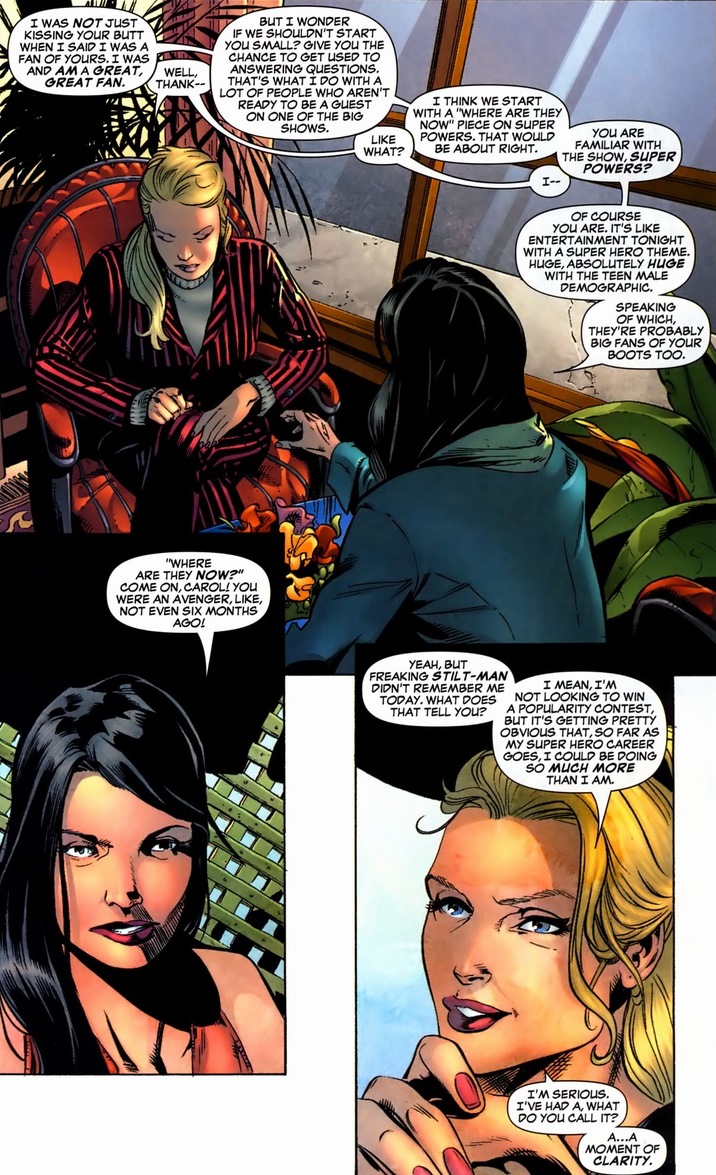
Unfortunately, before the television show airs, she intercepts an alien over Georgia. The fight lasts about two issues, all of which I’m skipping. But here’s the gist of it:
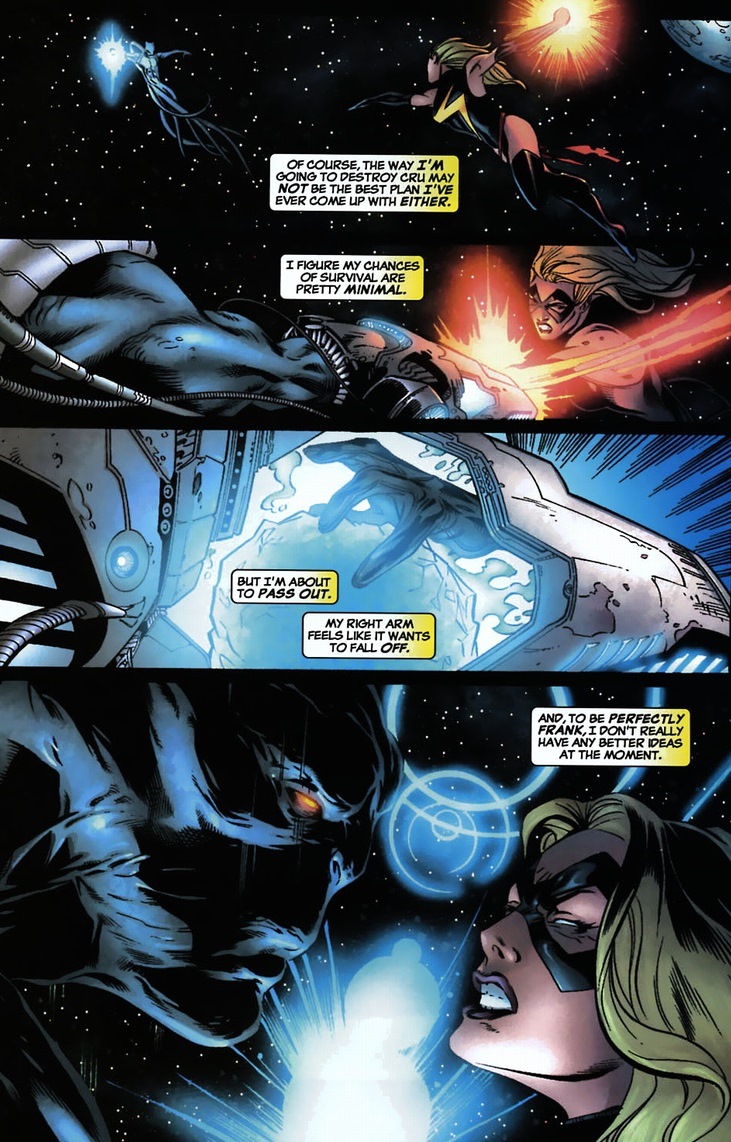
Cool, right? If you want to see our superheroine battle some sort of squid Mewtwo, pick up the first three issues of her series. Anyway, battered, bruised, and very tired, Ms. Marvel heads back to her apartment for some much needed recovery time. After all, saving the world takes a lot out of you (I would assume).
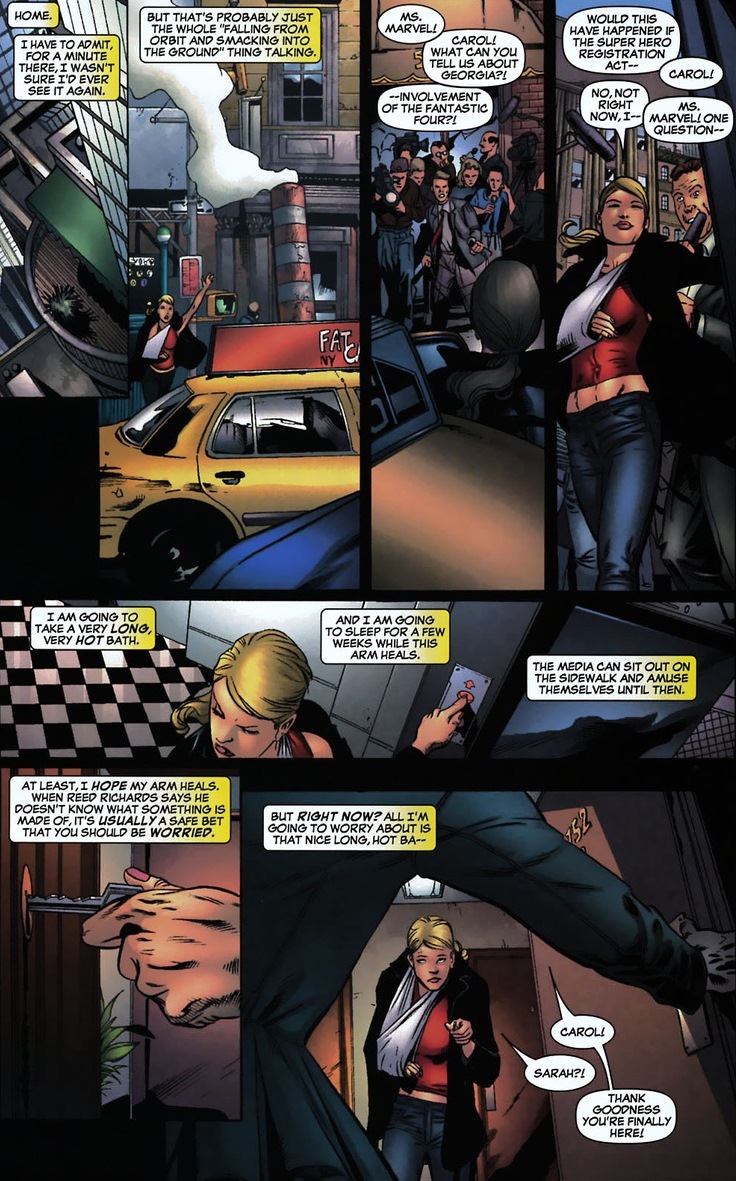
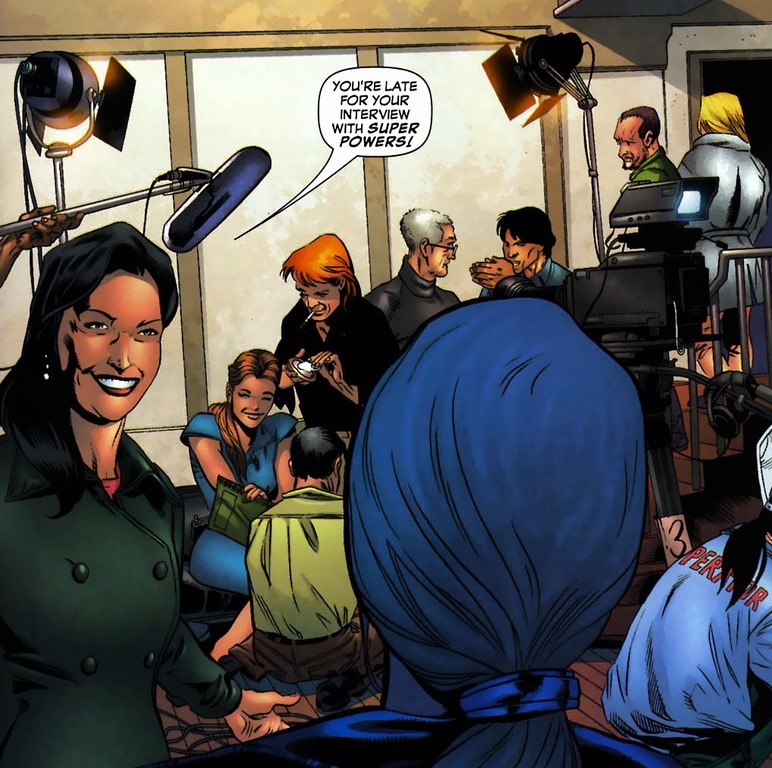
Of course superheroes would be treated as celebrities. They wear bright clothing, appear nonstop on television, and occasionally prevent the destruction of all humanity. Sadly, the “new” Ms. Marvel gets interrupted Harry Potter-style.

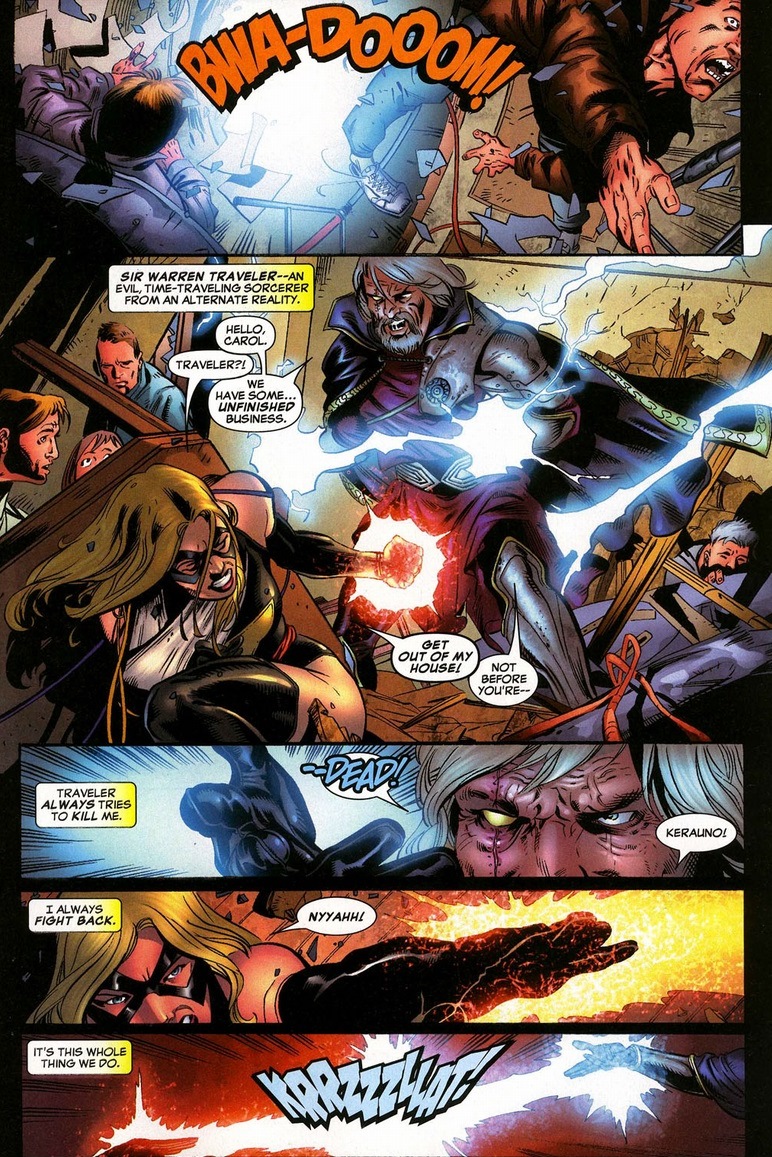
Understand that while some superheroes get their powers from magic (Captain Britain, Magik, Brother Voodoo, Scarlet Witch, etc.), Ms. Marvel’s power are rooted very heavily in science. Like DNA overwritten with a Kree wishing machine science. Still, magic can still be beaten with a good ol’ fashioned fistfight. Some of the time.


Notice anything odd in the dialogue? The whole Ms. Marvel using a cat as a weapon against a crazy powerful wizard? That totally happened. Let’s take a flashback to Giant-Size Ms. Marvel #1, written by Reed and drawn by De La Torre, to Ms. Marvel and Sir Warren Traveler’s first fight:


Reed’s writing sets up that Sir Warren Traveler has a long established history of battling Ms. Marvel, but that’s not true. He’s only appeared in that issue and the two I’m showing you now. The familiarity between the two comes from the Marvel event House of M fiasco that I’m a bit hazy on myself. But like all great writers, Reed knows a solo series has to establish the character’s own support team and rogue gallery. Plus, Ms. Marvel’s arch-nemesis Mystique totally cheats on her with, like, every superhero in the Marvel world.
Back to our story, she takes the unconscious sorcerer to Dr. Strange, who’s rocking facial hair that perfectly matches the flamboyancy of his outfit.
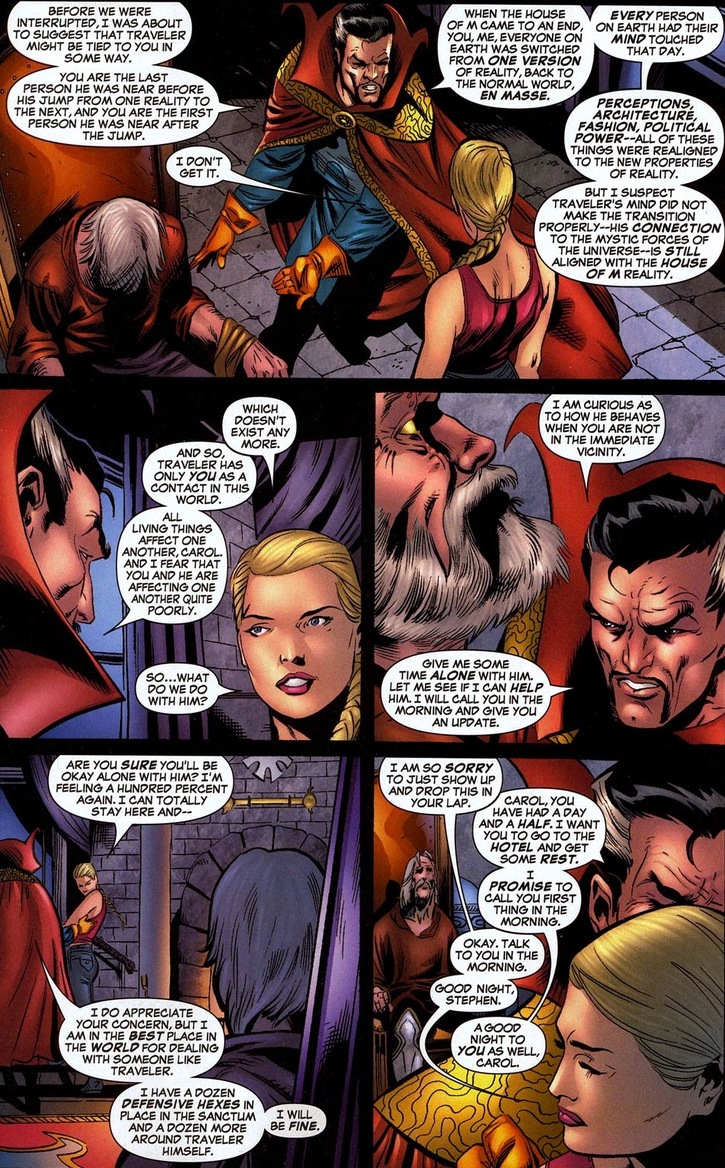
I agree, magic’s way more complicated than I thought too. Because comics work on a slippery spe of horrible events, everything goes badly as soon as Ms. Marvel shuts Dr. Strange’s door. Also, this magic goes far beyond pulling rabbits out of top hats.
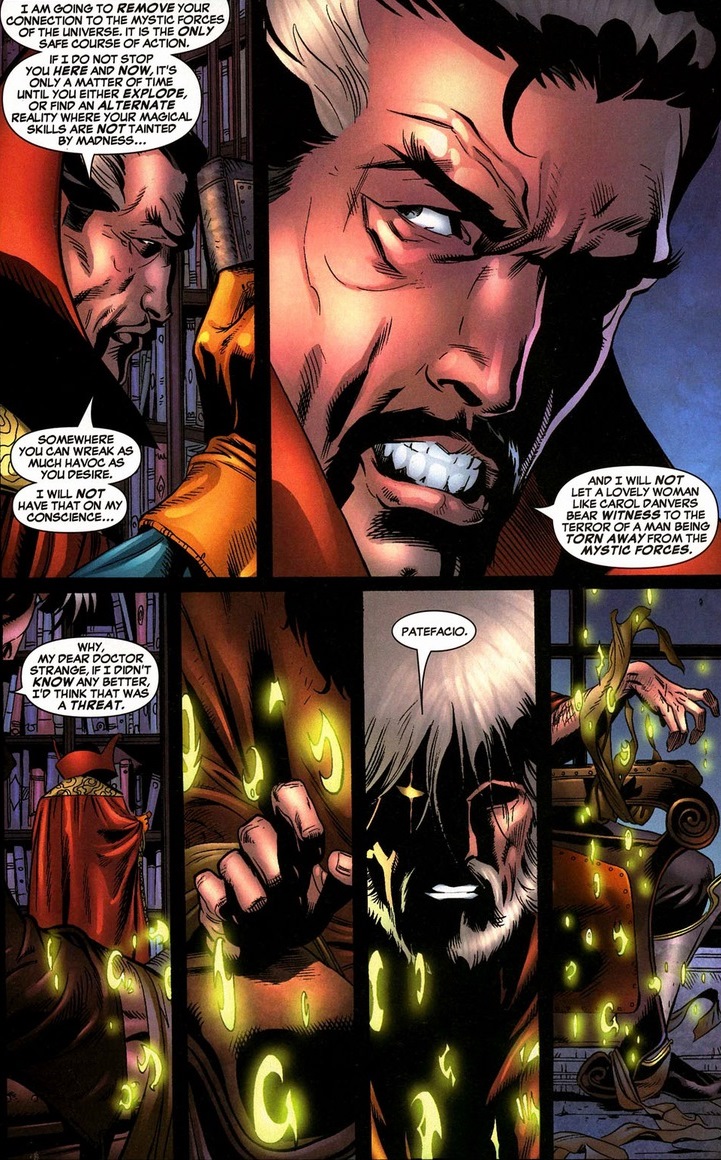


You enjoy alternative dimensions? You should, at least for the next four or five pages. Since Sir Warren Traveler’s magic plays the dimensional angle, our poor protagonist gets sucked into any number of weird possible realities. Like a post-apocalyptic one where alien insects ate everyone.
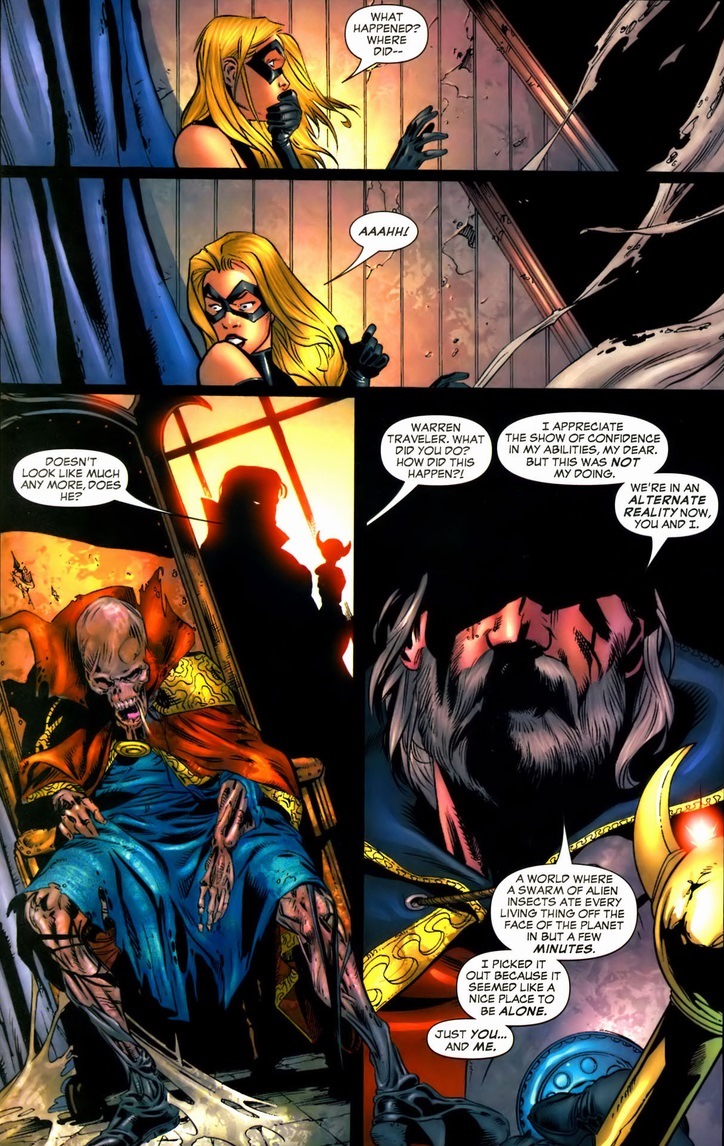

Skimpy costumes aside, I think non-comic book readers underestimate the amount of positive female role models in comics. If we ignore superpowers and just talk about superheroines who are independent, strong-minded, and possess a strong moral compass, we’d have dozens to pick from. Marvel’s Storm, Kitty Pryde, Invisible Woman, Black Widow, etc. DC’s Wonder Woman, Batgirl, Black Canary, Supergirl, etc. Though Supergirl did once date her horse. Back to our story, Sir Warren Traveler continues his mind games, which Ms. Marvel tends to respond to with violence.

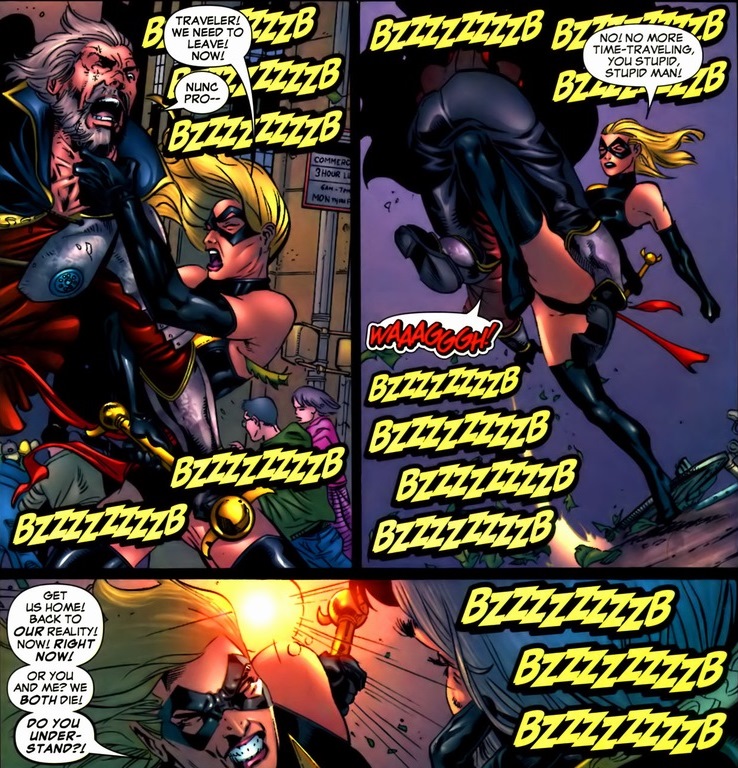

If Wednesday’s magic fight didn’t satiate your cravings, the big finale coming up certainly should. Dr. Strange and Ms. Marvel versus Sir Warren Traveler. It’s colorful, intense, and surprisingly intimate.
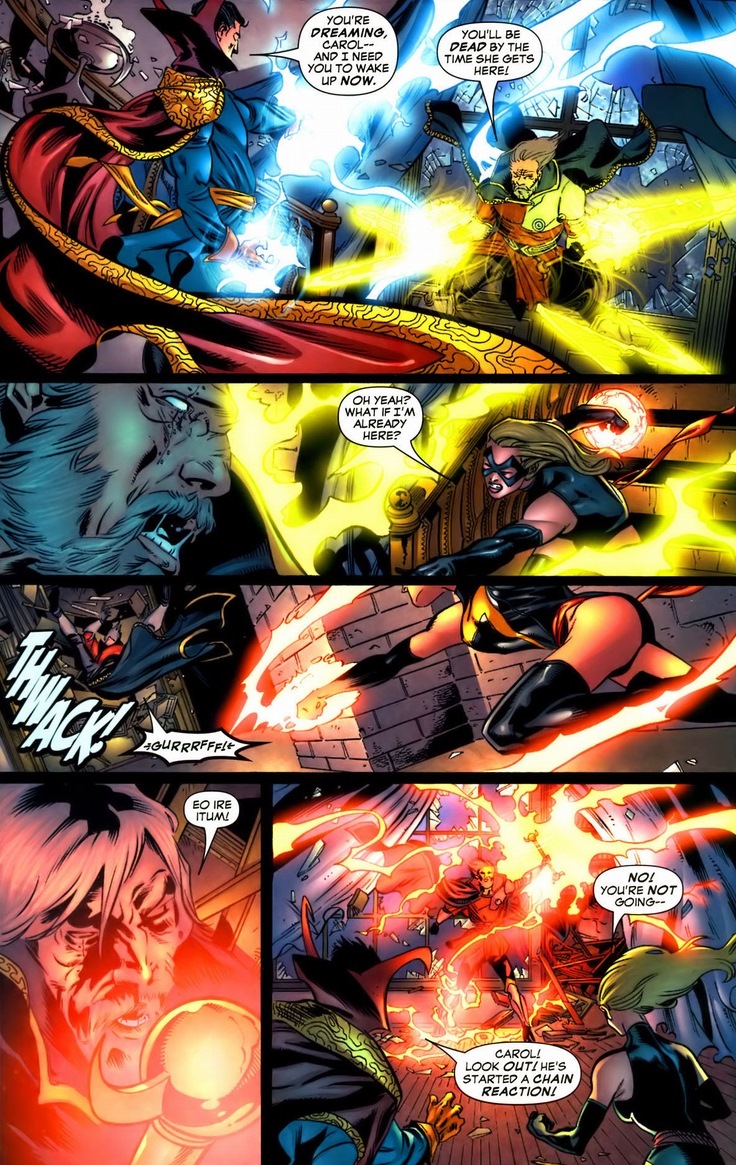
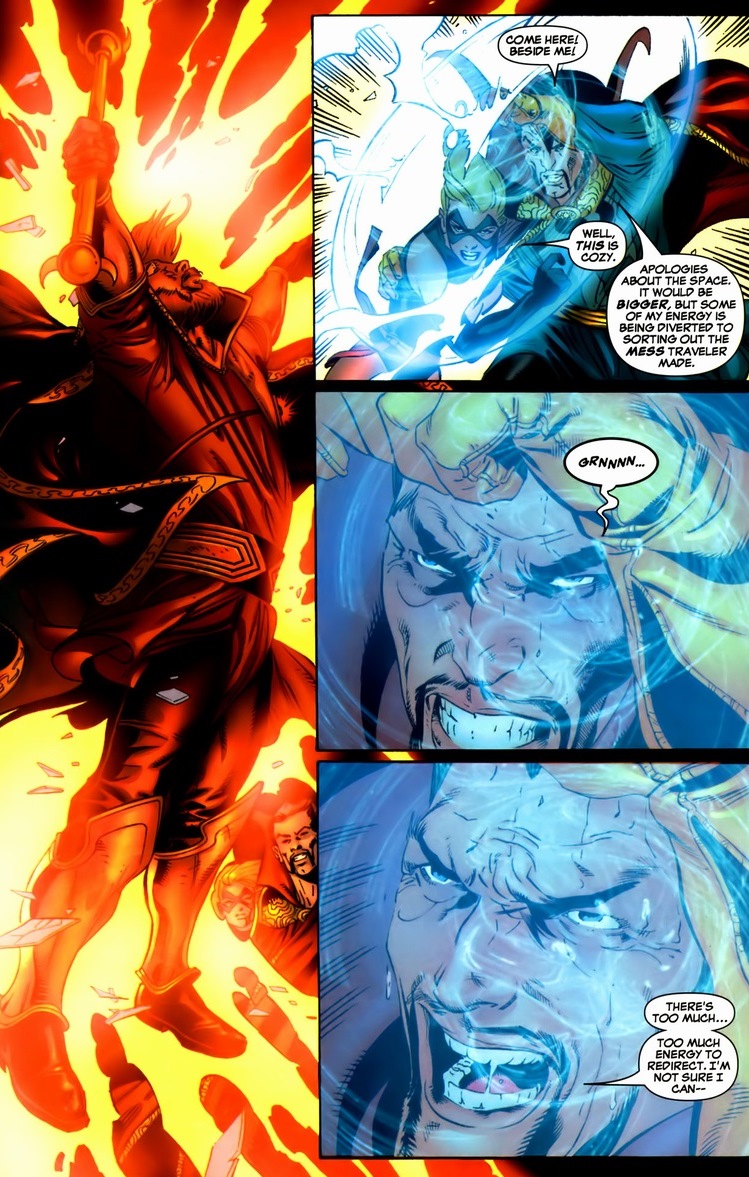
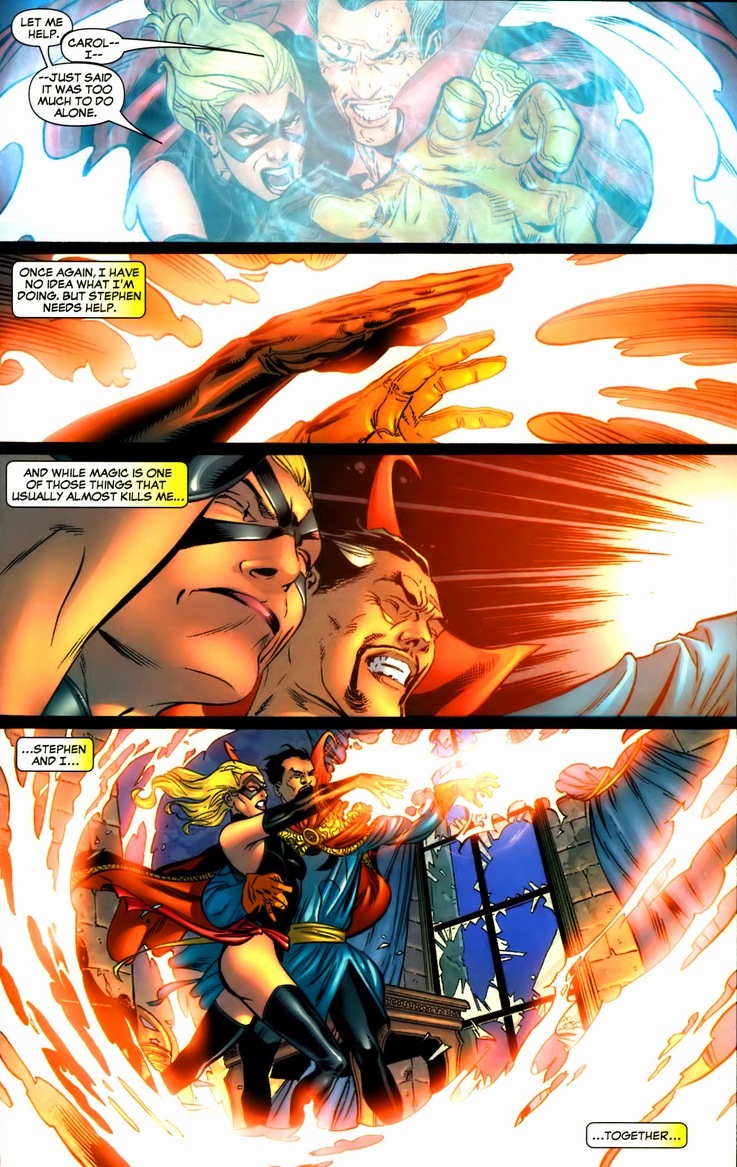

No matter how little PR she receives, Ms. Marvel at least has the respect of her peers. Who needs crowds of adoring fans when you have the love of fellow superheroes? I mean, besides Johnny Storm.
The exorcism of Red Hulk
Posted: 06/04/2013 Filed under: Characters, Marvel 2 CommentsMore Red Hulk! Could you ever get enough? Unfortunately for our protagonist today, this’ll be a fight he can’t punch his way out of, so watching General “Thunderbolt” Ross get out of a situation that makes his main superpower (super strength) totally useless. Plus, vampires!
I greatly enjoyed the Hulk series, if just because while Bruce Banner gets angry, Ross just gets cranky. That happens with a 60 plus year-old dude, though he is one of the few superheroes with a thick, gorgeous mustache. Today in Hulk #50-52, written by Jeff Parker and drawn by Carlo Pagulayan, Red Hulk has a serious ghost problem.

His sleeping bag companion? That’s his Life Model Decoy companion (basically a fancy robot) Annie. No romantic feelings arisen here, as she’s an AI and he’s an old Hulk. Later, as they tour their tech facilities or whatever, the group gets attacked:


Ever heard of the robot Machine Man? An established superhero in his own right, Machine Man’s been around since the 1970s. Now, he joined up with Red Hulk’s supporting cast. Red Hulk totally has his very own set of buddies and baddies. Three years of comics can build up quite a list of cool characters.
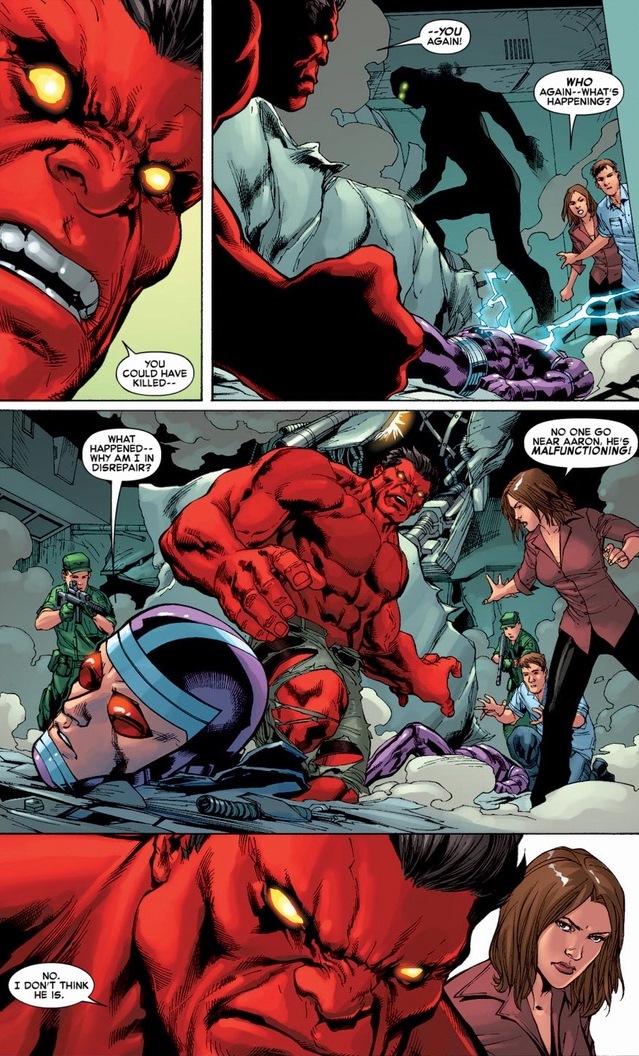
Ross realizing that he may be dealing with forces of a non-punch variety, he heads to the expert.

You figure fellow mustache-wearers could trust each other, but Strange ends up as a jerk here. Though you must admire Ross’ inability to distinguish between magic and bohemianism. So the memory Strange chooses?
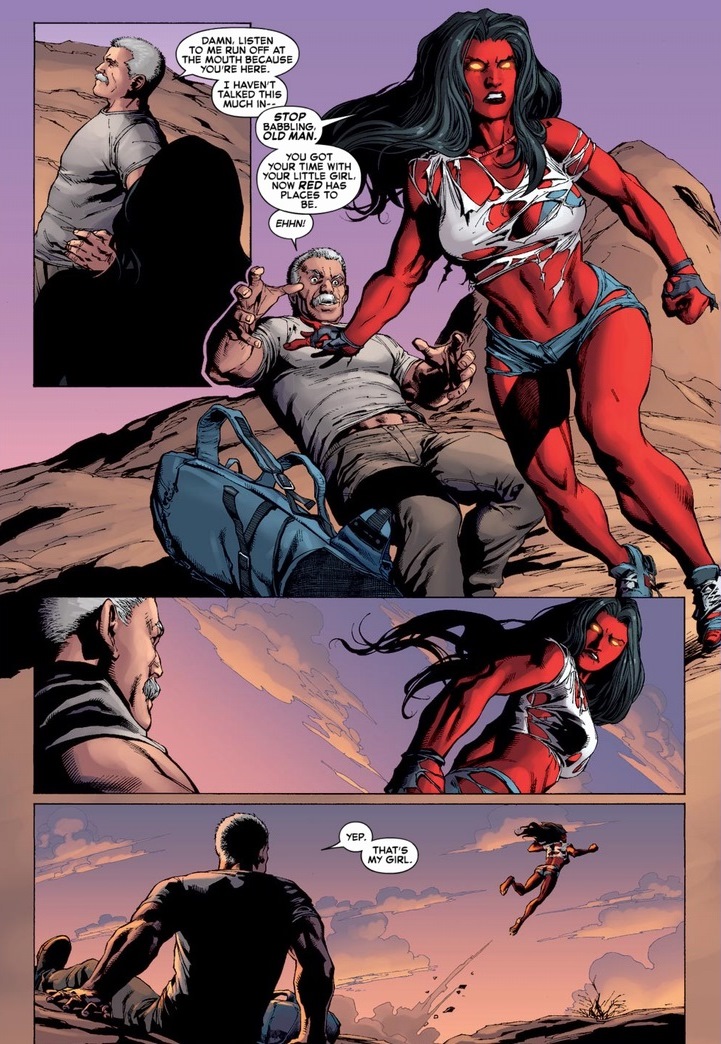

Strange deserves a broken skylight. Fortunately, when more visions/zombies/ghosts/whatever attack poor Red Hulk, Strange redeems himself — in a way only Dr. Strange can.

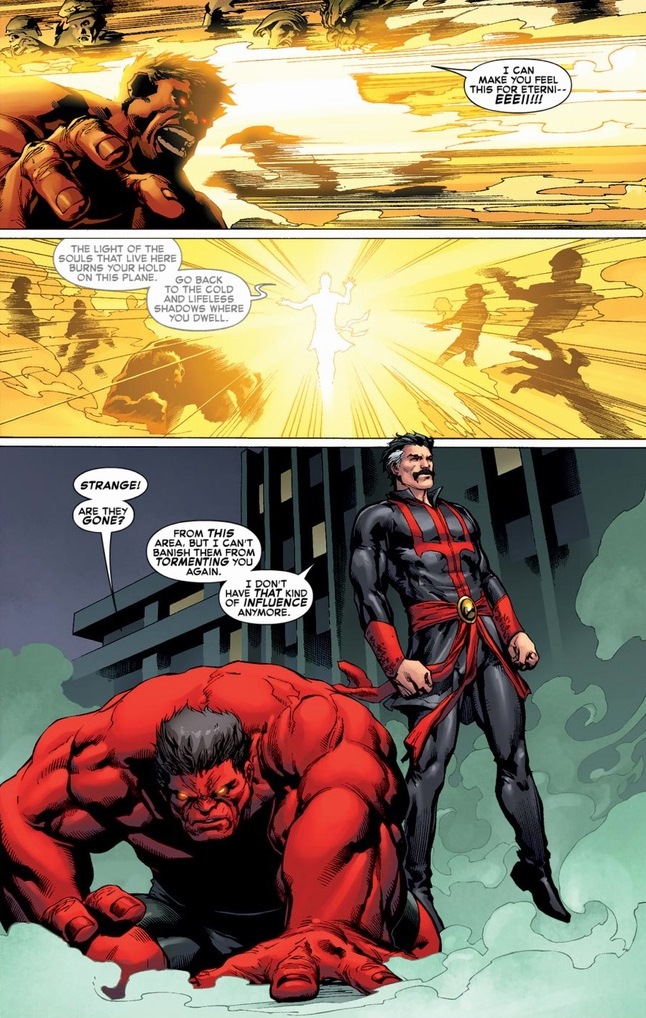
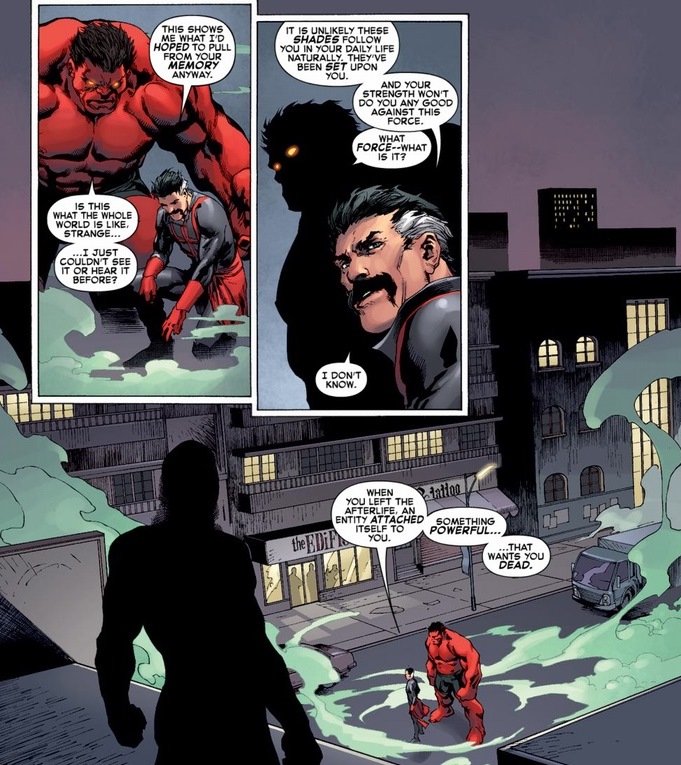
I’m not saying Dr. Strange is Marvel’s version of Jesus, but that is how Jesus would show up in a comic. With a vague idea of what’s affecting Red Hulk, that means adventure! Ross gets to travel the world complaining about magic lakes and artifacts! Along the way, he gets attacked by vampires, because that’s how comics work.
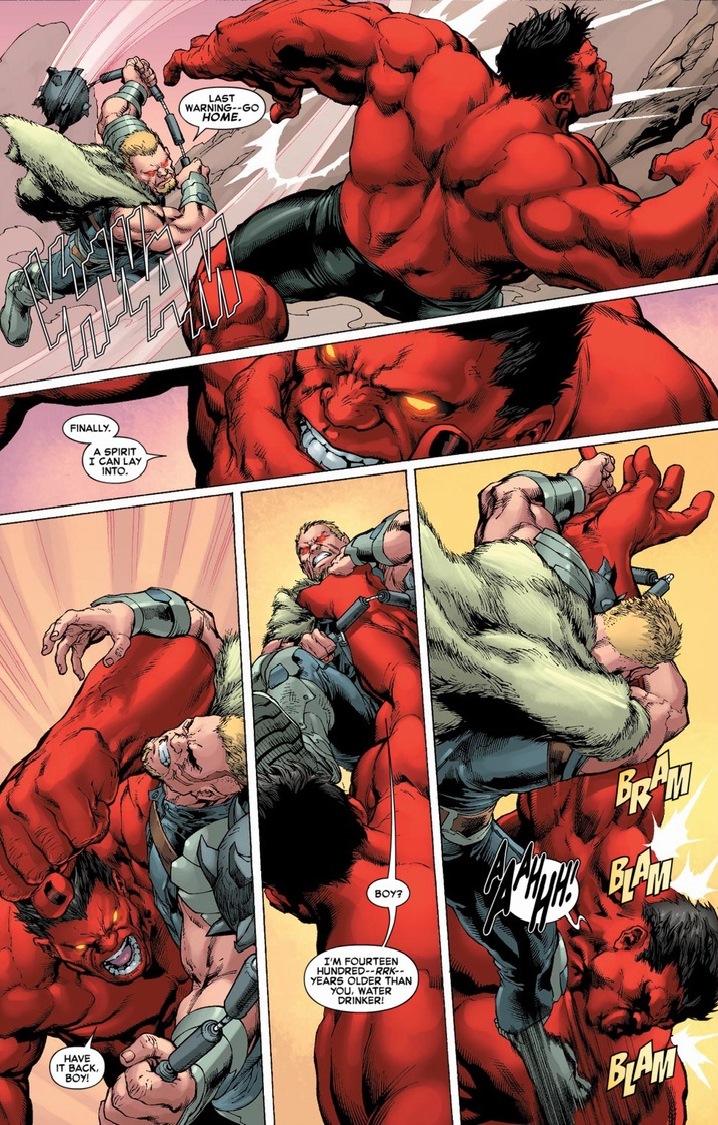

Eventually, the solution to the ghost problem presents itself. A group of people can exorcise this shadowy figure with relatively little trouble. Well, I mean I wouldn’t call them people.

In the Marvel universe, anything below ground guarantees a swift death. The Morlocks live down there, mutated creatures live down there, and probably the Lizard as well. Also, that’s where poop goes. Luckily, a small group called the Legion of Monsters, led by the Living Vampire Morbius, fight the good fight — like when Red Hulk gets attacked by thousands of their brethren.

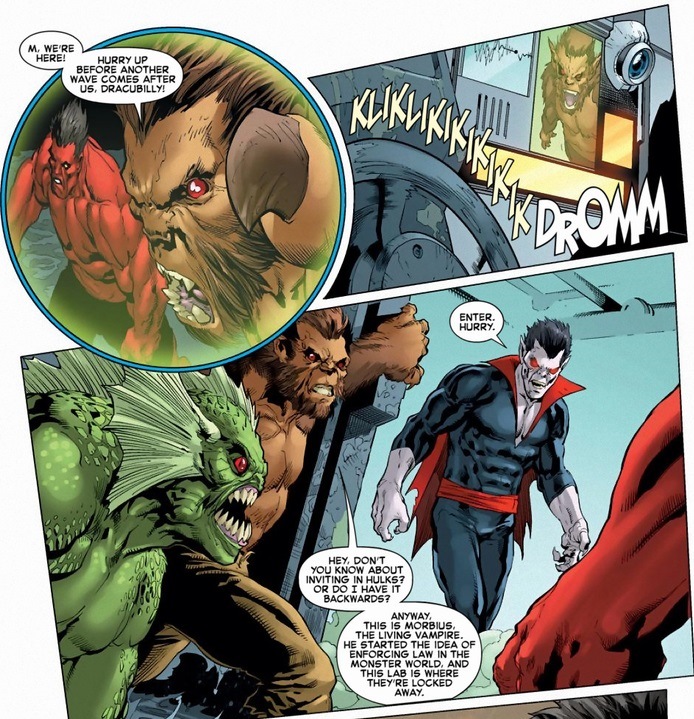
Of course, things immediately get worse. Building suspense and whatnot.
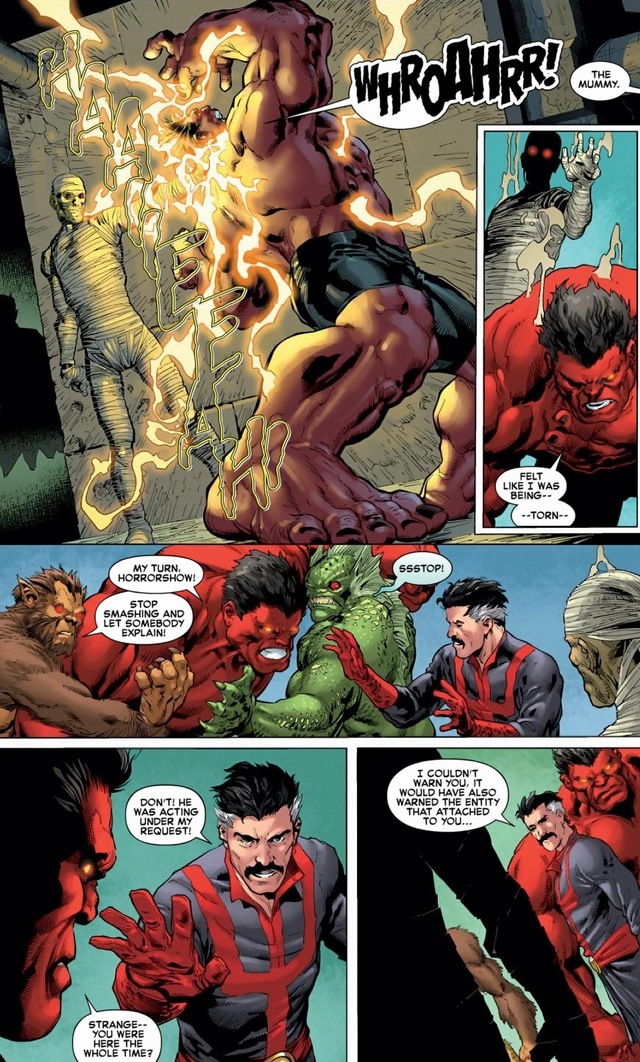
Apparently mummies can absorb ghost particles. Seems fine to me, but I’m not a scientist.

Time to wrap this riddle up. Gamma radiation means a Hulk-like being and only one gamma dude died in Hulk comics recently. Process of elimination leads to our exciting conclusion!


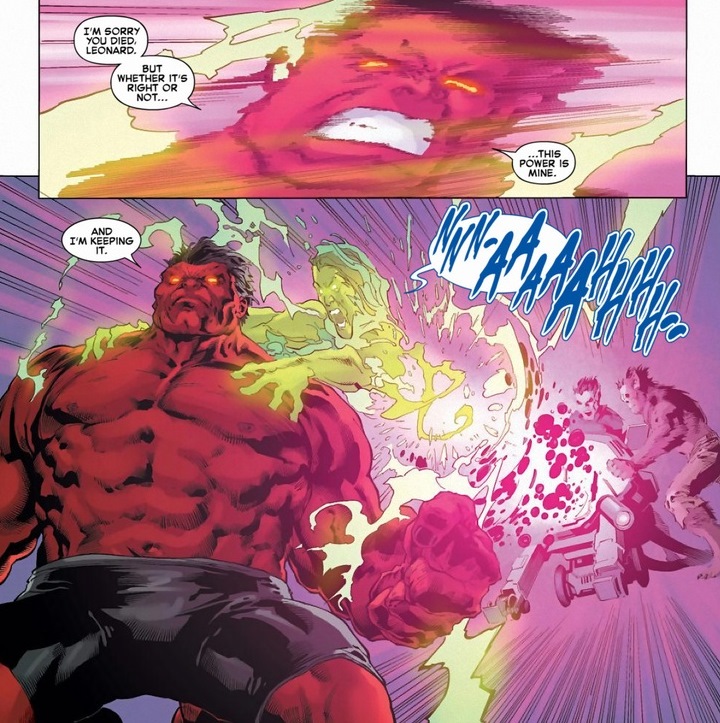
The Legion of Monsters possesses a Ghostbusters machine. Poor Doc Samson, the psychologist to the superheroes, hasn’t showed up since this moment a year or two ago. Even Chaos War didn’t fully bring him back to life. Oh well, at least his friends can still honor his memory, which I guess’ll be the best consolation prize a ripped apart evil spirit can hope for.


Note, Friday will be my last article for two weeks while I go on my first vacation since this blog started. While I won’t have my comics, Wolverine, Spider-Man, and the others will always be carried with me in my heart — something the airline doesn’t charge extra.
Wolverine hunts down that jerk Nitro, Pt. 2
Posted: 05/23/2013 Filed under: Characters, Marvel Leave a commentIn the comic book world, nothing must be scarier than a rampaging Wolverine. The guy heals in seconds, has unbreakable bones, knows hundreds of ways to disembowel his opponents, and almost certainly smells terrible. Still, the Marvel universe has a surprisingly nonchalant attitude towards the furry mutant. Like Namor, the king of the Atlantis and married lady fetishist. As we pick up in the second half of Wolverine #42-45, written by written by Marc Guggenheim and drawn by Humberto Ramos, we’ll recap where we left off:
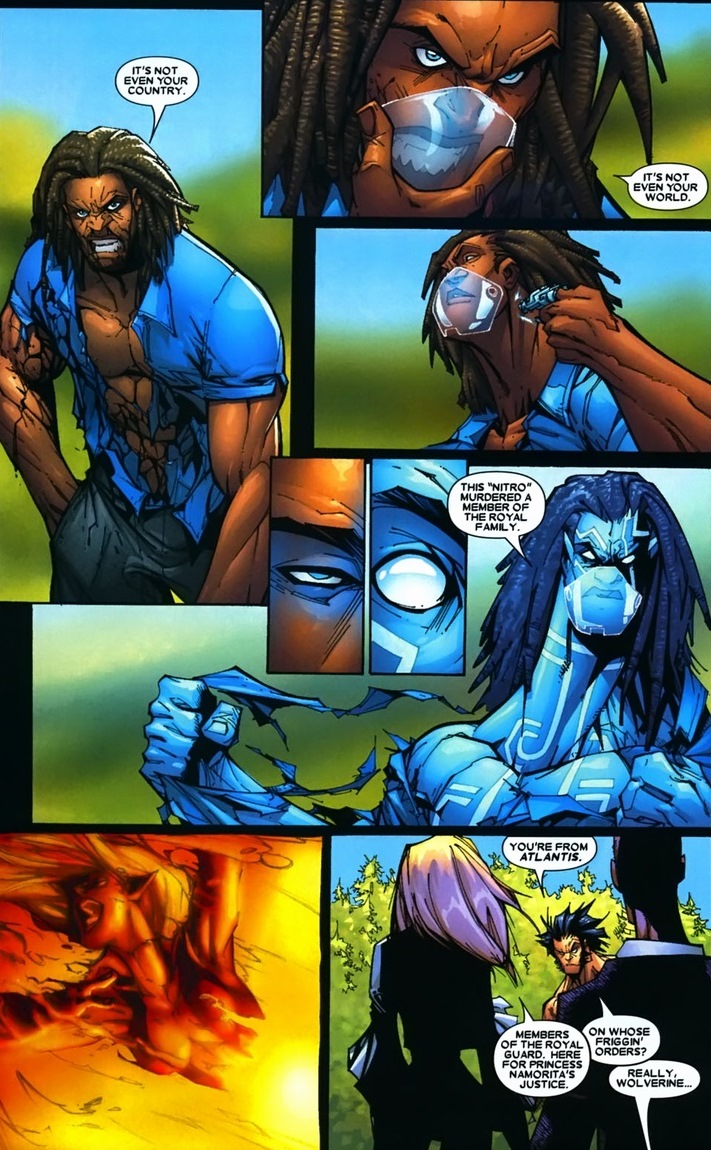

I love Namor, but mainly because I have fantastic taste in anti-heroes. The king of Atlantis reeks of sea water and a vague hint of fish, but he has the strength of the Thing, the self-esteem of Dr. Doom, and can even fly for some reason. Now he’s going to pound on Wolverine.


A benefit of fighting the Atlantean king is he’s totally willing to banter. And thank goodness Wolverine found some clothes. There’s no pride in taking down a naked opponent. Though remember Namor’s original costume of just a speedo and bracelets? I’m just saying it’s hard to be taken seriously as royalty when you look like a grumpy European tourist. While Namor can shrug off the mightiest punches, the same can’t be said for adamantium claws.

As the fight ends, Namor brings up a good point:

I don’t think people know the limitations of Wolverine’s abilities. He’s really not that strong. Or fast. Or durable. Or likable. Spider-Man, for instance, can lift a good five times what Logan can, and would easily take him down in a one-on-one basketball game — if that’s how you settle superhero disputes, I guess. But a hundred years of being shot, stabbed, punched, incinerated, etc. have given Wolverine a persistence unmatched by any other Marvel character. Plus, he’s not that busy right now. Unfortunately, Nitro currently resides in Atlantis, where Wolverine’s swimming skills would be sorely put to the test.
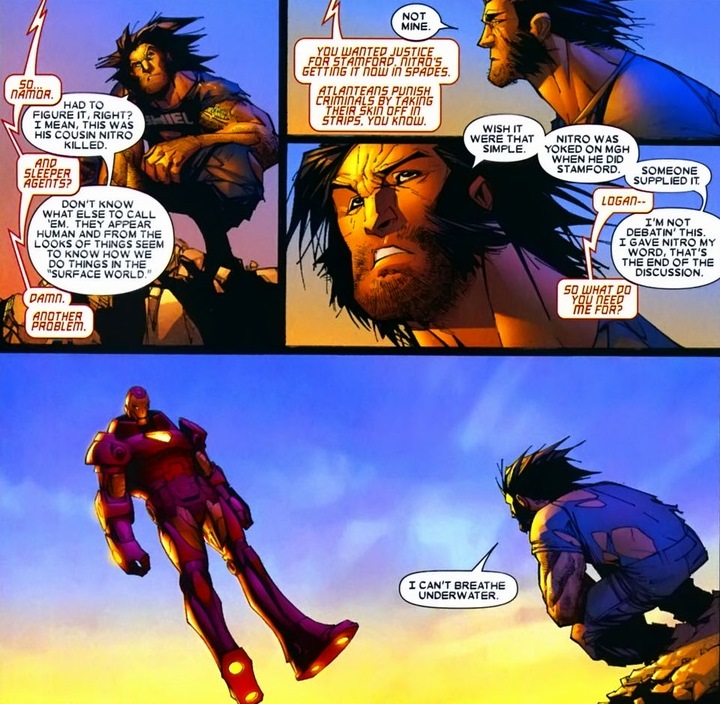
Oh, this arc goes far deeper than a Nitro chase. You get hidden drug dealers, a corporate scandal, and lots more clawing that we’re not going to get to. But we’ll cover the Nitro chase at least. Time to negotiate with the ocean’s most frustrating ruler.
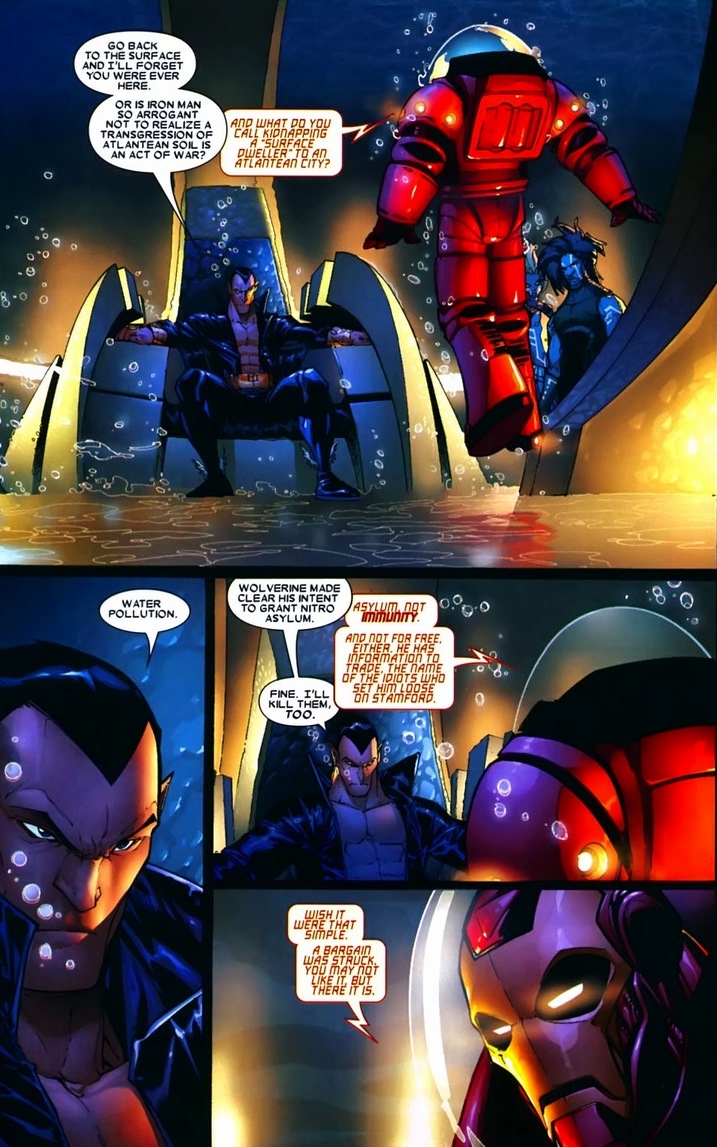
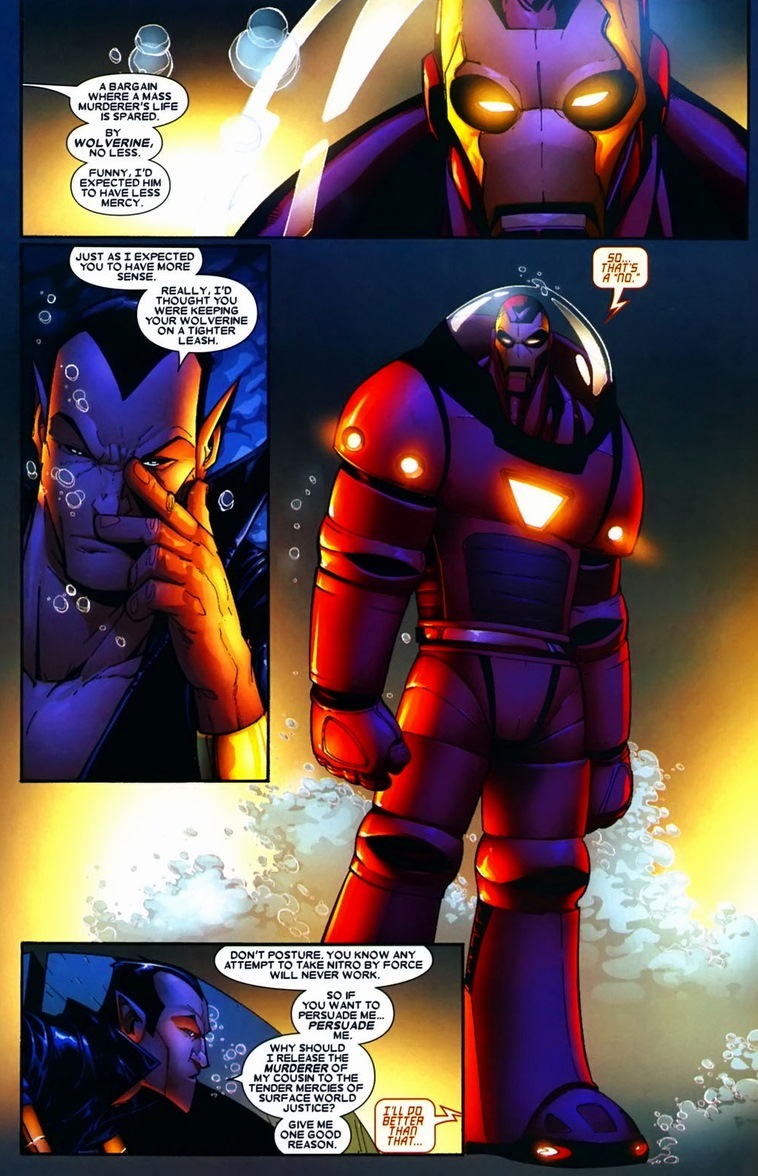
Spoiler alert: that’s not Iron Man. But it does set up for a charming one-liner.
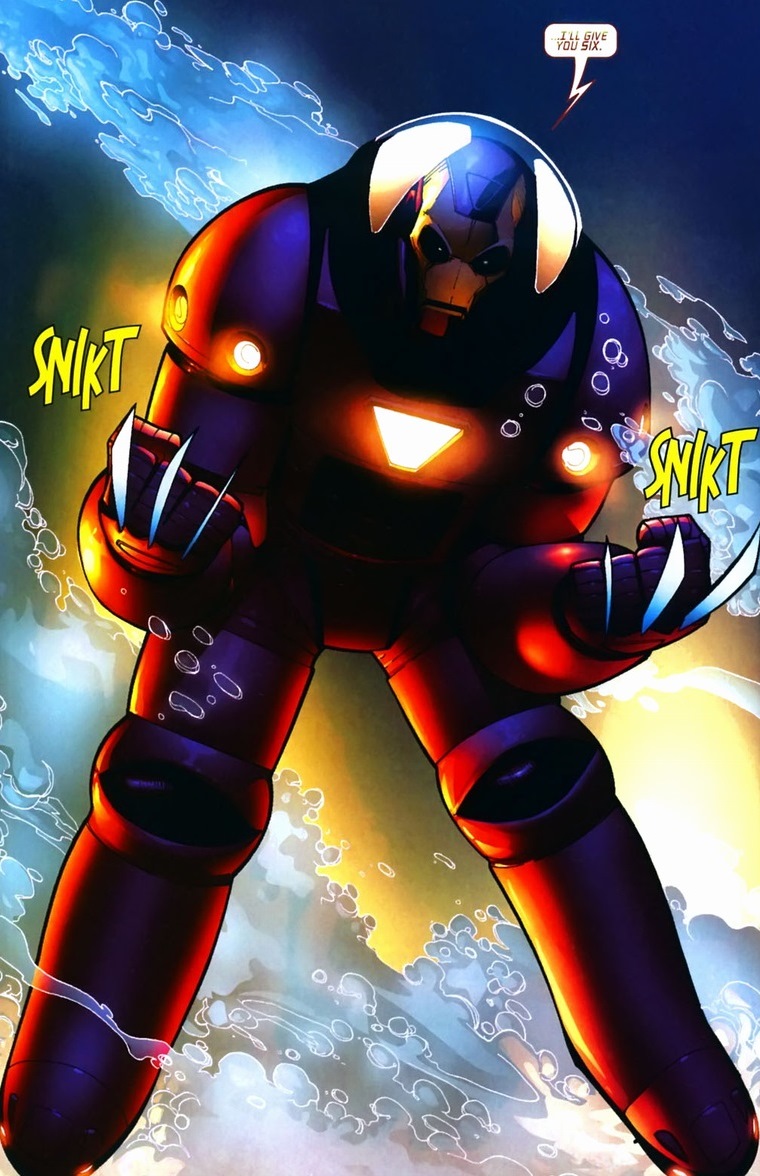
Round two goes as you think. Wolverine’s fighting Namor in the king’s natural habitat while Wolverine wields a slow, cumbersome suit of armor. Luckily, the fight gets interrupted — the Stamford killer causes a ruckus.
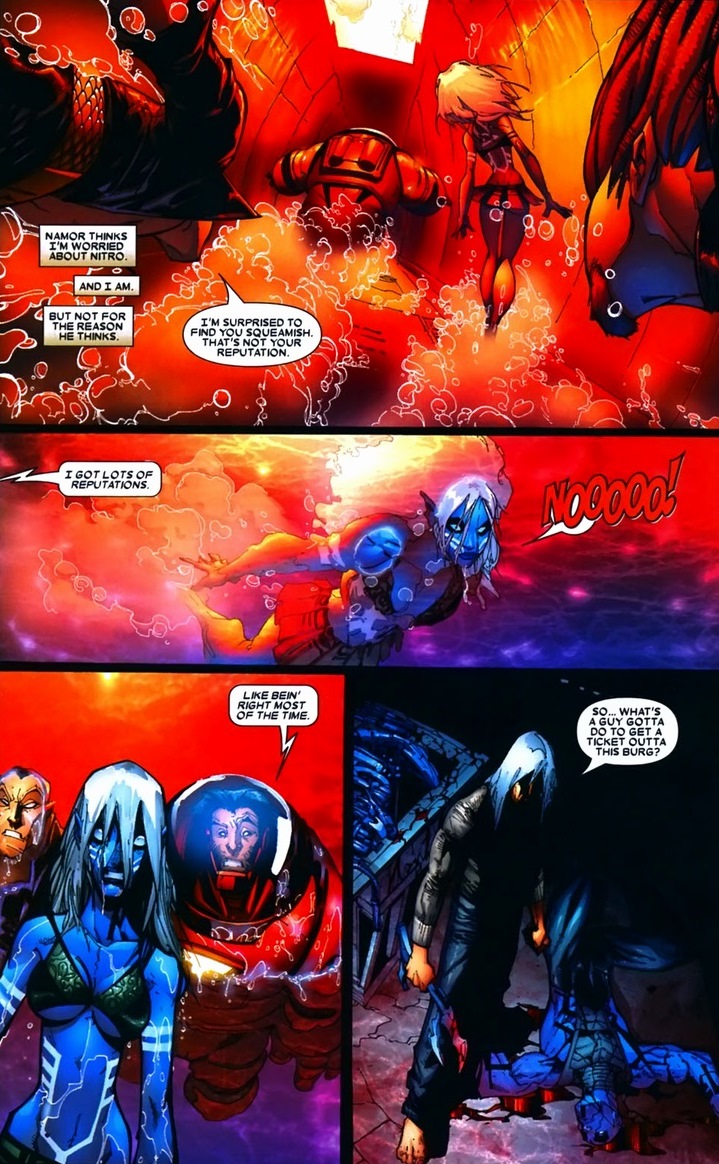
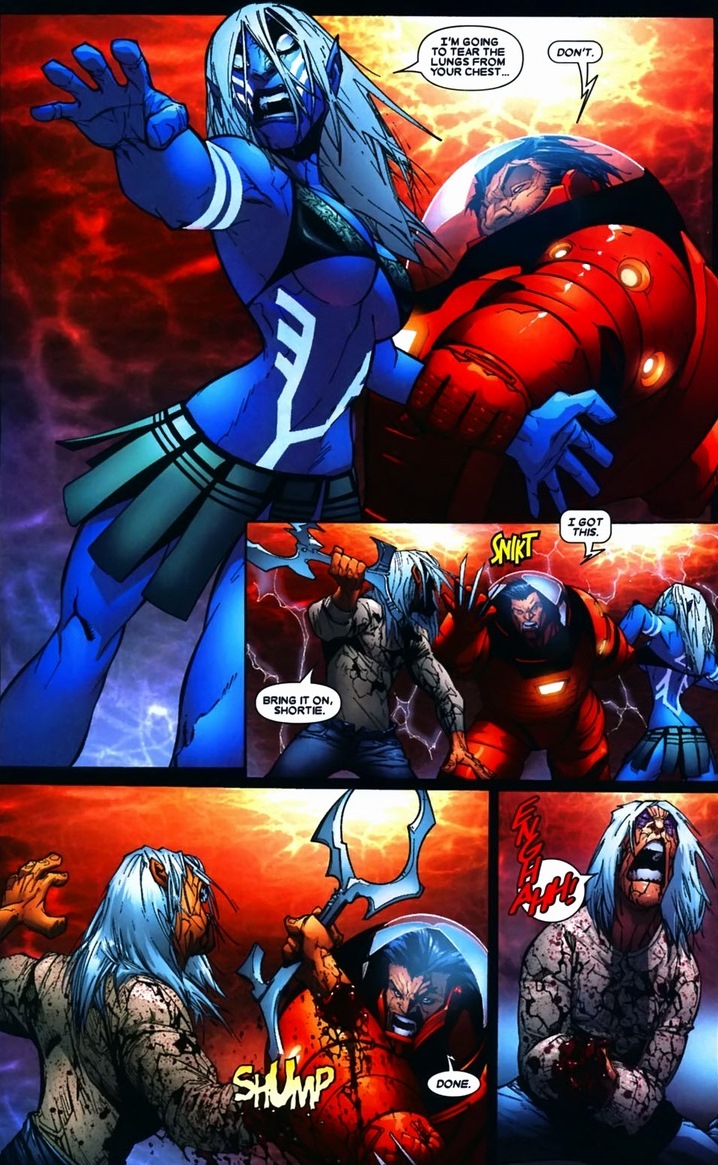
Awesome, right? Spider-Man would have webbed his hand shut or something, but slicing it off sends a much more powerful message. Like, maybe mass murder isn’t as lucrative a career choice as previously thought.

No, Wolverine’s not maturing. It’s just that after all the horror that happened the past few days, Wolverine realizes that he doesn’t really have a dog in this fight. Sure, Nitro has to pay for massacring 600 people and most of the New Warriors, but Namor and gang? Their vendetta stretches far greater than Wolverine’s ideals. Plus, and this may be the most important detail — no one tortures like the Atlanteans. Mephisto himself shudders in the deepest corridors of Atlantean prisons.

The story reaches its halfway point here. Wolverine hunts down Nitro’s supplier next. But as we end today, I include one final page, and just so you can never say I didn’t do anything nice for you, here’s Namor in a turtleneck:

Worth it.
Wolverine hunts down that jerk Nitro, Pt. 1
Posted: 05/21/2013 Filed under: Characters, Marvel 1 Comment(Ed. Note: This Friday will be my 200th article, and since it’s a bit strange to get sentimental halfway through an article, I figure I could say a few quick words now. I began this blog one year ago as a persistent way to improve my writing. Luckily for me, my passions and interests involve fictional men and women putting on brightly colored spandex and pummeling each other. I can hardly complain.
Though before we begin our article today, and because I’ve never mentioned this before, it takes me about three hours to go from nothing to a completed post (searching my collection, gathering pictures, writing the first draft, heavy editing, etc.). Doing the math, I’ve spent just about twenty five days worth of time this past year working on my blog. So many days I just stare at my blank computer screen, furiously searching my memory or pounding down twenty or thirty issues of a series I haven’t read hoping despondently that inspiration strikes. But I regret nothing — your continued support has made every moment of frustration and desperation worth it. Thank you to my dear readers, fellow bloggers, adoring commentators, friends and family, and anyone who ever linked to my website. Here’s to the next 200 articles! I love you all!)
In the comic book world of morally sound, 6’2″, young, clean cut superheroes, Wolverine’s popularity remains surprisingly unrelenting. He’s short, hairy, surly, ideologically skewed, and not even American — so why do fans eat up his eight or nine constantly ongoing series? Maybe we all have a claw fetish, or maybe it’s Wolverine’s constant feud with Cyclops, the sporty captain of the football team dating the head cheerleader wearing super cool sunglasses that nerds aspire to be and simultaneously loathe. Hopefully we’ll figure out the answer today (and Friday) in Wolverine #42-45, written by Marc Guggenheim and drawn by Humberto Ramos. Or we won’t, but either way, it’ll be fun.
Like most Wolverine stories, this one begins in a bar.
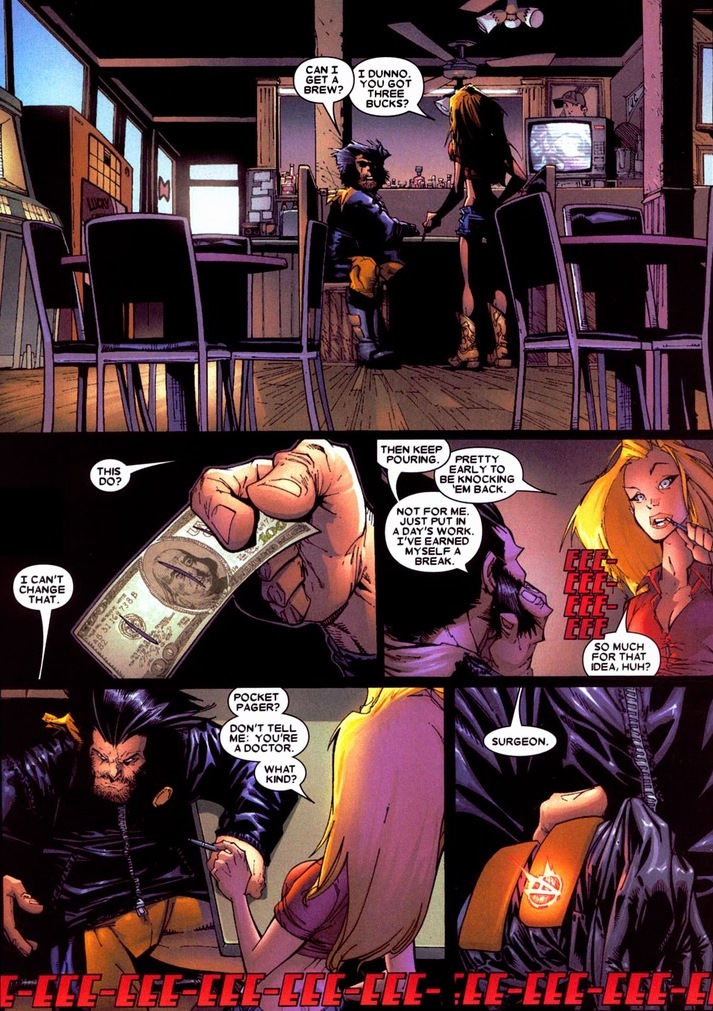
Smile at the surgeon joke. It’s morbid, but so is everything else about Wolverine.
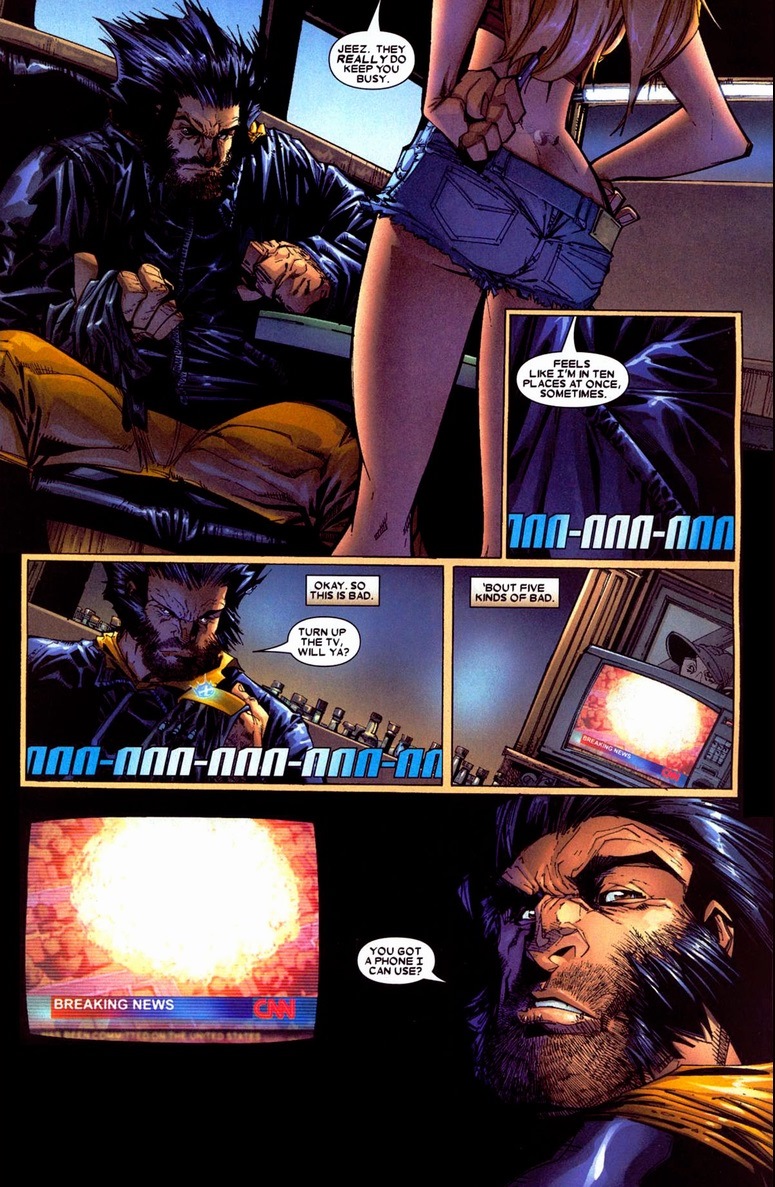
Recognize that explosion? You might — it set off a chain of events that lasted the entire second half of the previous decade. In Stamford, Connecticut, the New Warriors badly apprehended the supervillain Nitro (who can explode himself due to his genetic mutation). Six hundred people died, including scores of young children. The Marvel Civil War event spurned from this, as well as the eventual Dark Reign and Siege events. While Wolverine can certainly contribute by lifting heavy blocks or slicing up melted apartment buildings or whatever, he has a slightly different idea of how he can help. Namely, Nitro’s still on the run.
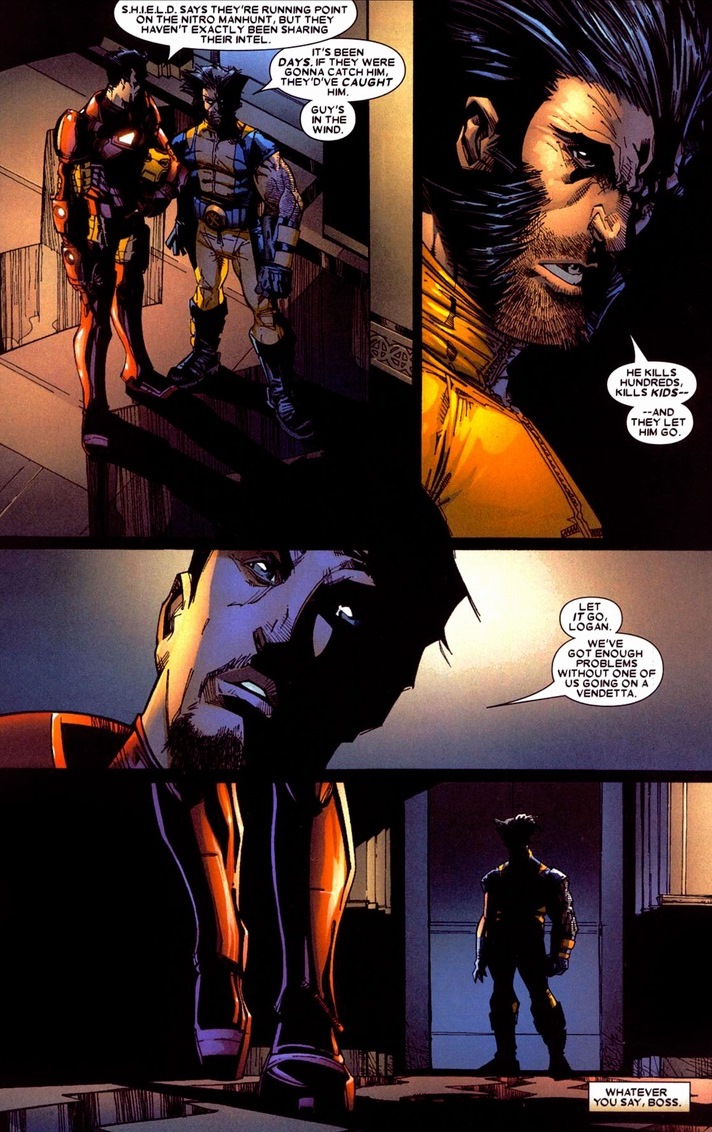
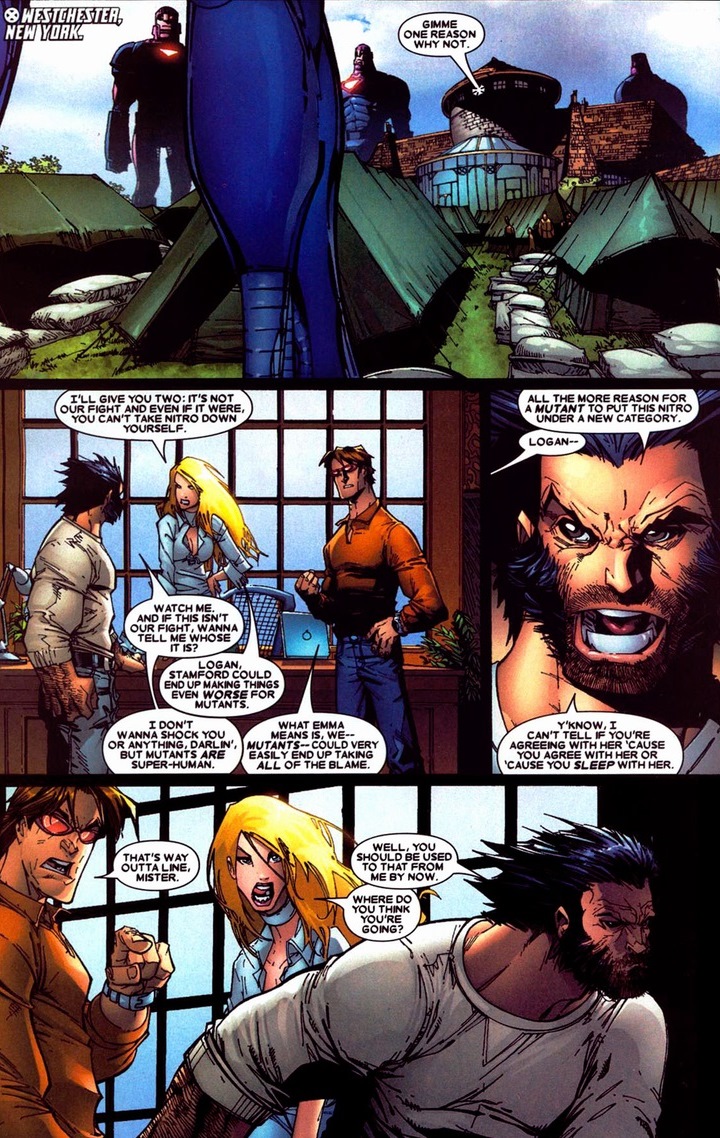
For an organization filled to the brim with disobedient teenagers, none of them hold a candle to the tantrums of their hairiest member. But diplomacy and bureaucratic interference won’t stop a man who has literally fought in every war since World War I. If Nitro killed all those people, he needs to pay. Wolverine works very black and white.
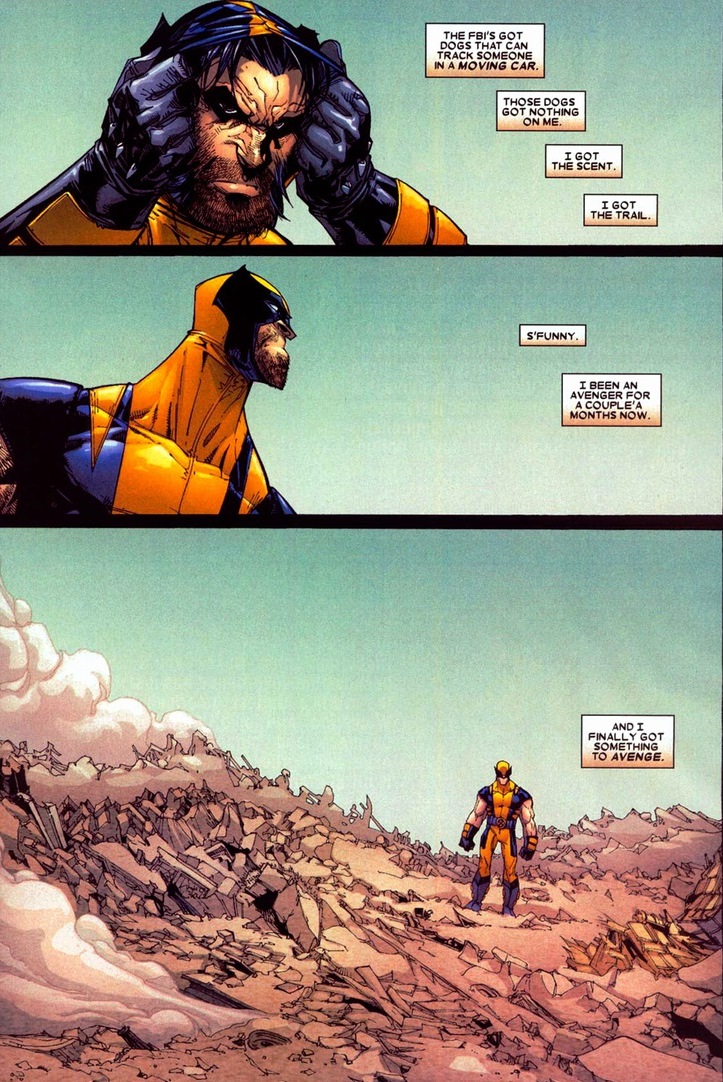
First, Wolverine has to find the supervillain.
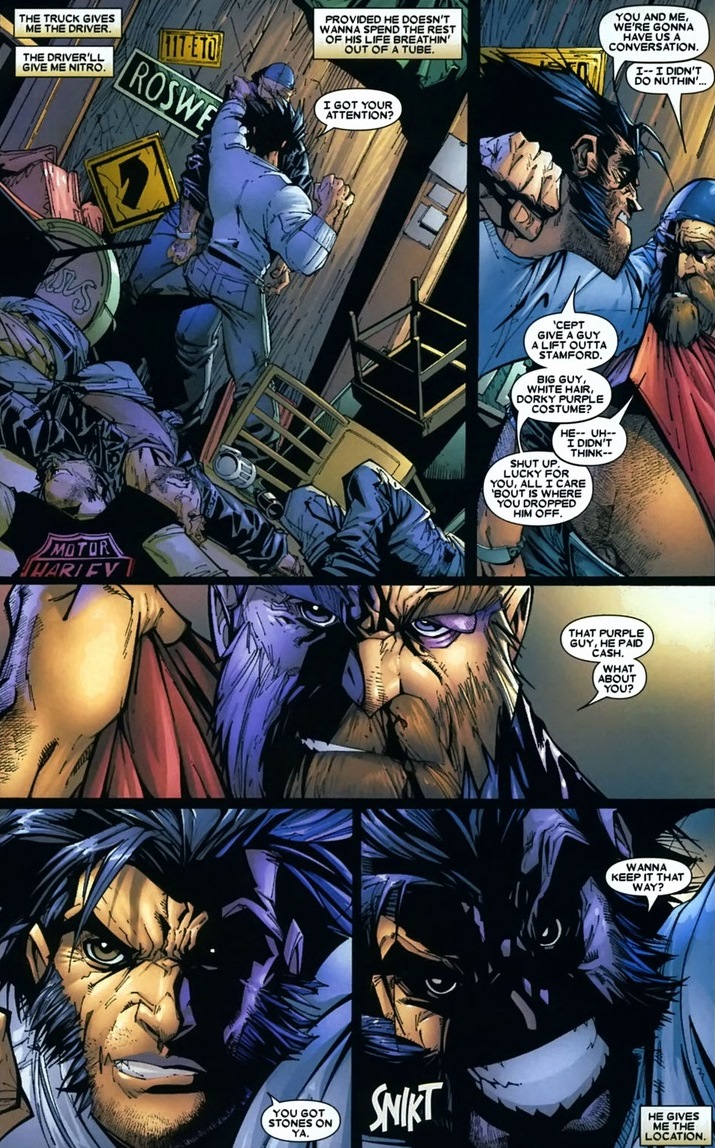
I’ve stated before how much I love Ramos’ art. His style’s distinctive and a bit cartoonish, but for characters like Wolverine, exaggerated art works perfectly. I’m not saying Wolverine’s a caricature or anything, but the whole feral side of his personality lends itself well to Ramos — that wicked smile in the last panel should be all the proof you need.
Nitro versus Wolverine round one. Well, Nitro versus Wolverine and a squad of SHIELD officers round one. Claws and grit alone can’t do much against a man who explodes himself for a living.
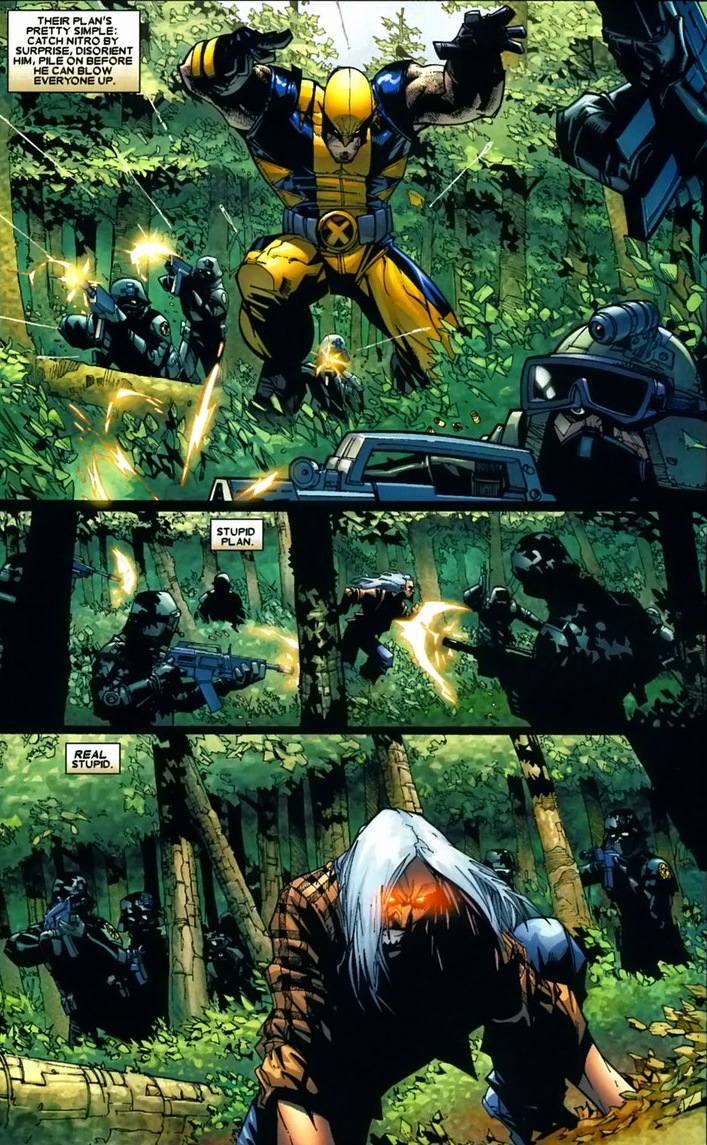
It goes badly. Real badly.

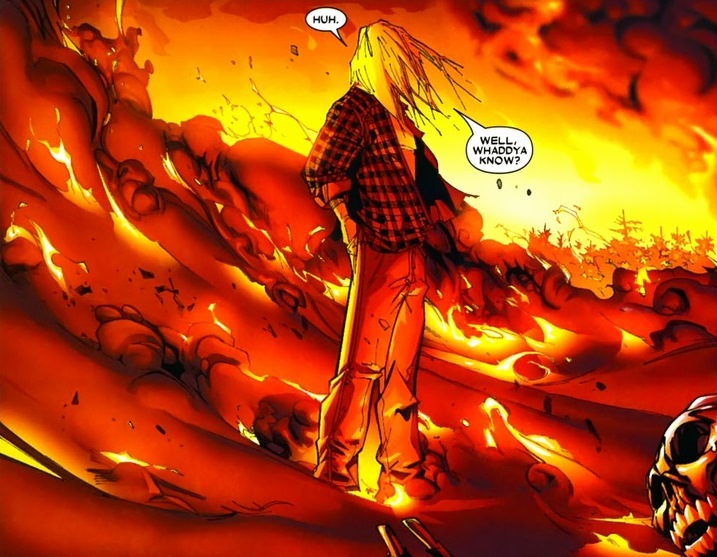
A main point of argument revolves around Wolverine’s healing factor, and truthfully, it’s usefulness gets determined by the current writer. Some have had him regenerate from a single cell, while others figure when Wolverine’s just a skeleton then tough luck for poor Logan. Guggenheim doesn’t have that problem. And thank goodness, because Nitro needs to be taught a lesson not learned in any classroom.


I totally skipped the context for Wolverine’s one-liner in the second page. Sorry. Something important to note: while Wolverine’s body and hair heals nicely, his clothes do not. Nitro certainly deserves this upcoming beating, but it’s far more impactful when you realize that Wolverine’s stark nude while doing so. A roundhouse kick hurts far more than physically when Nitro also gets a penetrating look at Wolverine’s little Logans.
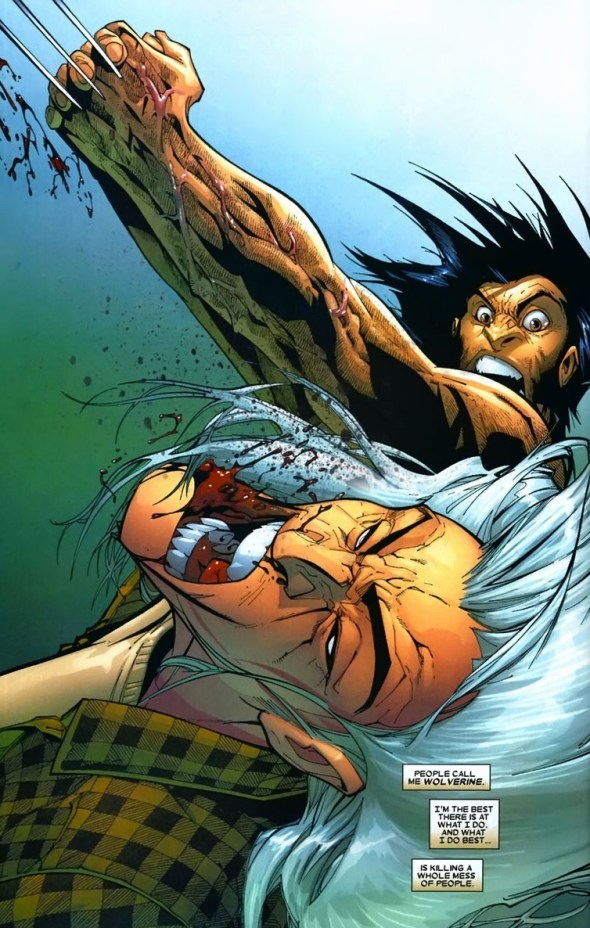

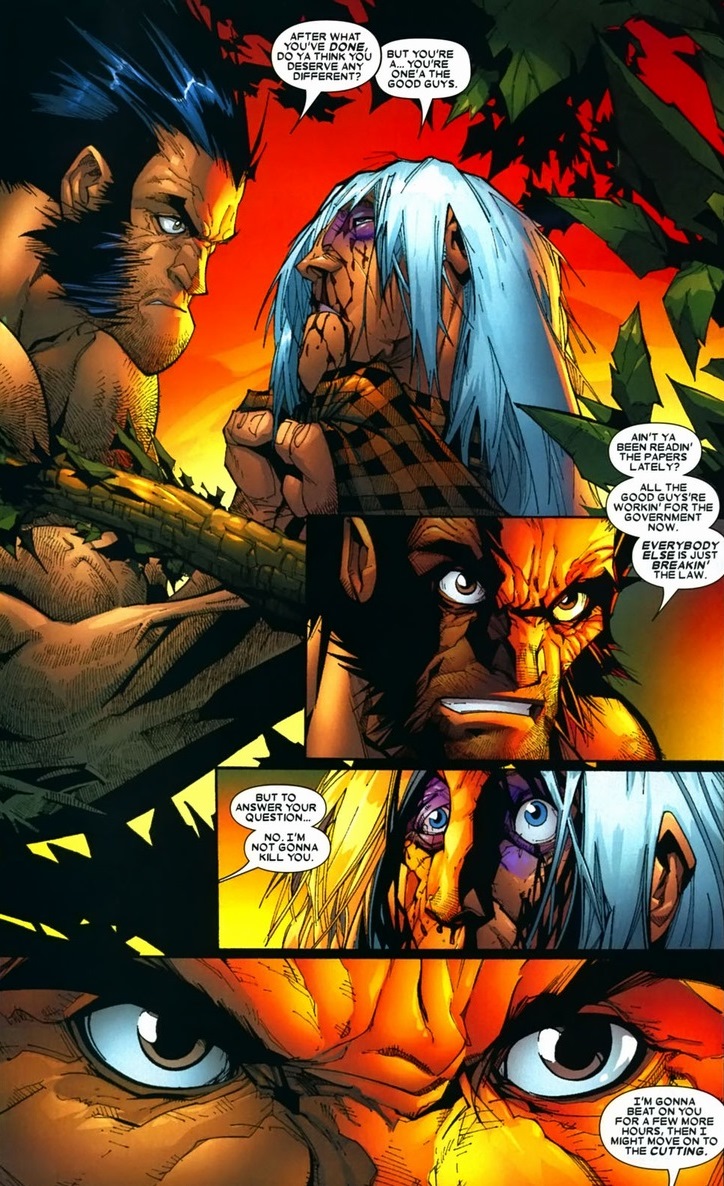
I wouldn’t object to the next few issues of the arc just being Wolverine talking trash and ruining Nitro’s life, but good stories provide unforeseen plot twists. Like this one:

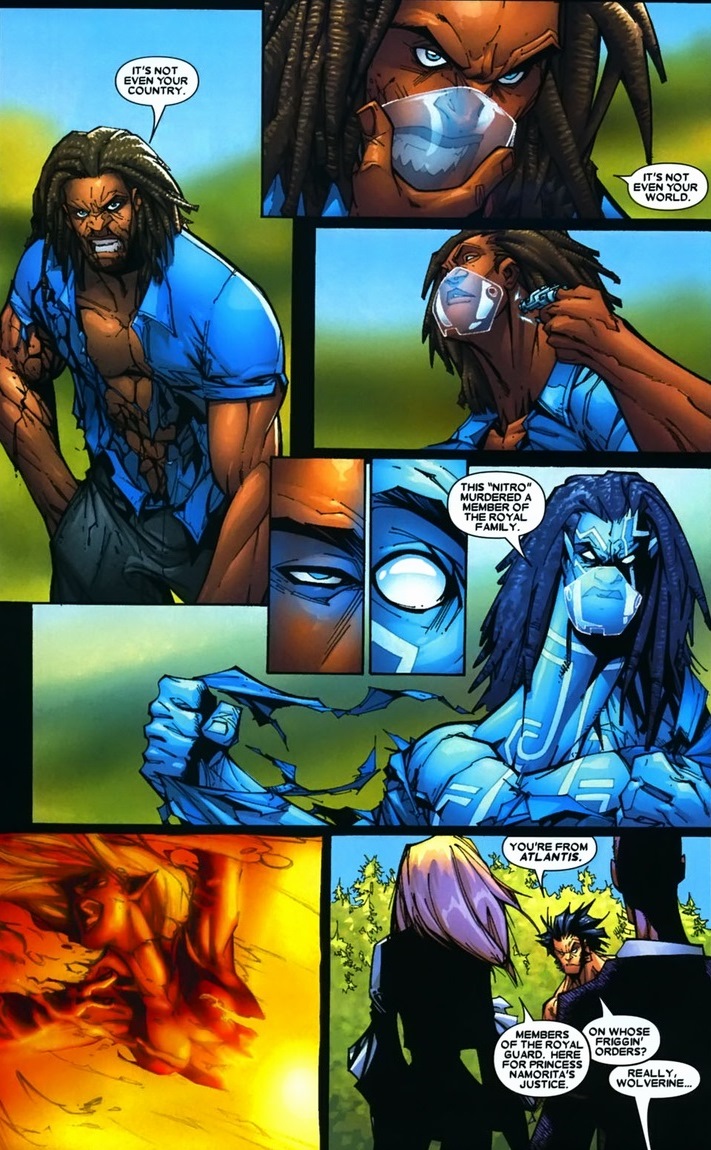
Of all the New Warriors caught in Nitro’s Stamford explosion, only Speedball survived. So when the superhero Namorita died at Nitro’s hand, he just triggered a backlash far beyond any pain and suffering he could possibly imagine. Y’know, because Namorita’s related to this man:

Next time, Wolverine vs. Namor vs. Nitro! What else could you possibly want in an article?
Amadeus Cho’s genius battle
Posted: 05/16/2013 Filed under: Characters, Marvel Leave a commentI’ve shouted from the (Olympian) heavens more than once that the Incredible Hercules series remains in my top five favorite comics ever. The hard-drinking, hard-loving, super strong demi-god Hercules teams up with the teenage super genius Amadeus Cho, going on all the adventures you expect and adore. And while the series mainly focused on its namesake, writers Greg Pak and Fred Van Lente transformed the sidekick into a character worthy of our love and respect — that and he’s the perfect foil to Hercules’ stumblin’ strong man act.
Today, in Incredible Hercules #133, 135, and 137, written by Pak & Van Lente and drawn by Rodney Buchemi, we’re not even going to touch upon Hercules. These issues star Amadeus as he explores the mystery behind his parents’ death. No punches thrown today kids. Enjoy good ol’ fashioned brain teaser.
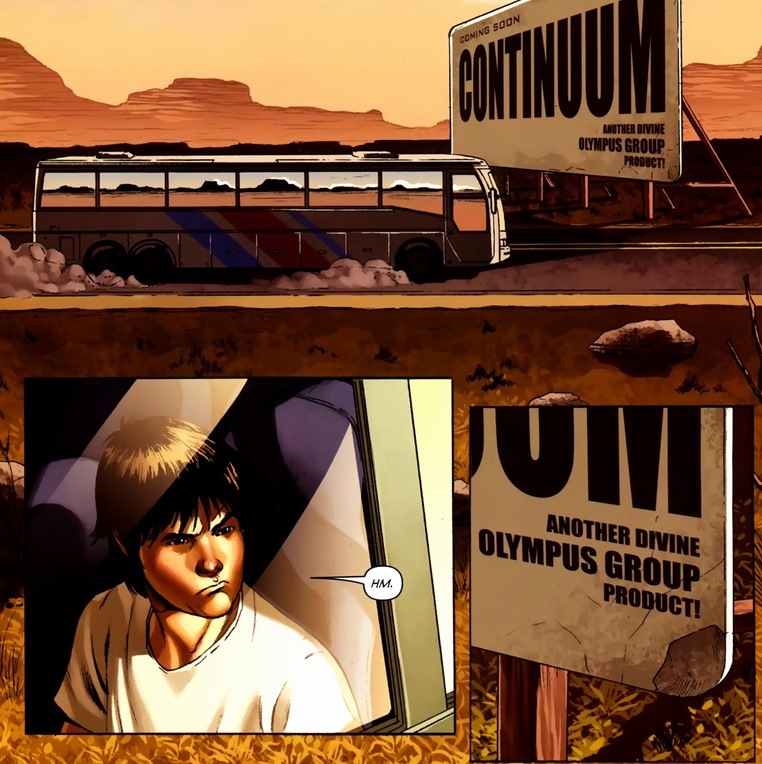

Perfect setting, right? Abandoned desert towns always make for sinister backdrops.
At this point, I should probably explain Amadeus’ back story. Unlike, say, Tony Stark who we just assume to a be one of the ten smartest people in the world, for Amadeus we have proof.
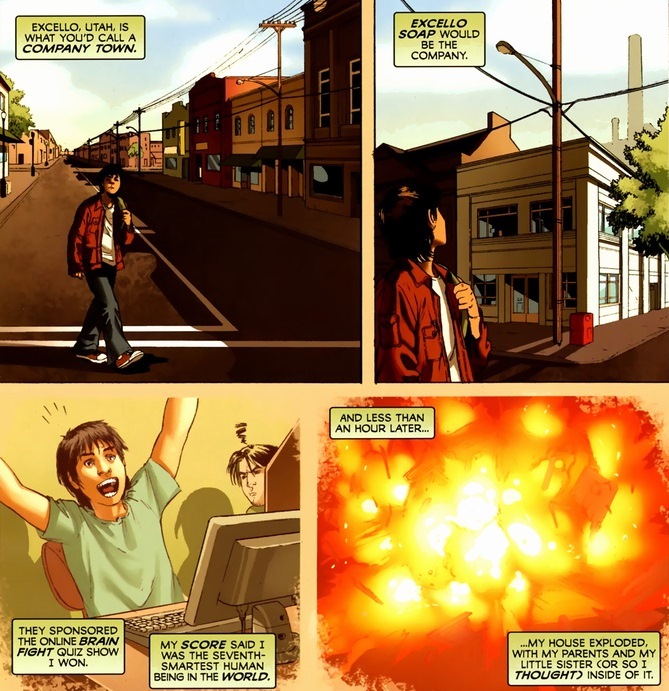
And how did that explosion miss its intended target?


I’m just saying that if Amadeus were a female, he would have been blown to bits. Luckily, teenage hormones don’t cease in the comic book world. Also if you haven’t noticed from his kimchi reference, despite his sidekick status, Amadeus receives critical acclaim for being a positive example of a Korean superhero. Anyway, the abandoned desert town gets weird. Fast. Also, it’s not abandoned.


See the conspiracy? Geniuses get killed off for being geniuses — I assume some kind of jock master plan. Fortunately, we get to see Amadeus in action, if you’ve ever wanted to see how the seventh smartest person in the world fights.
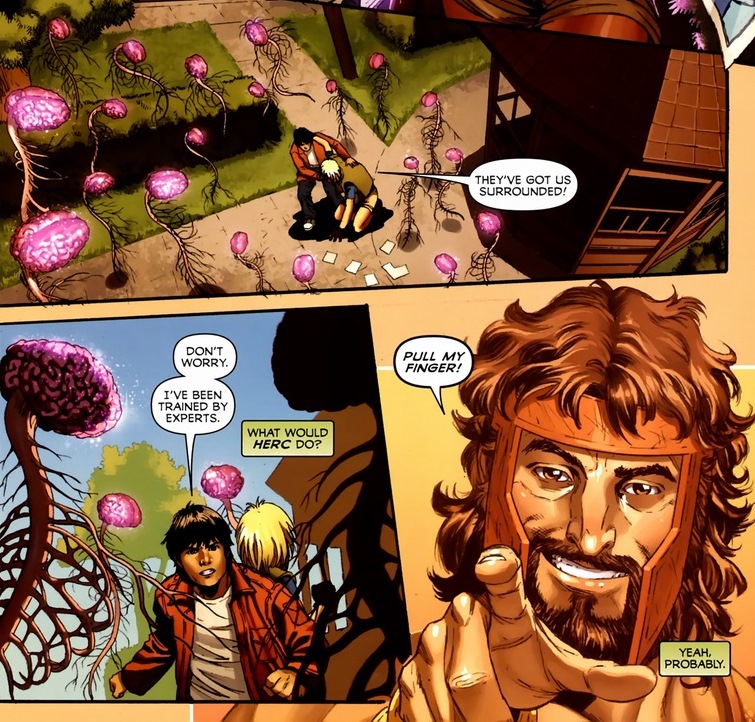
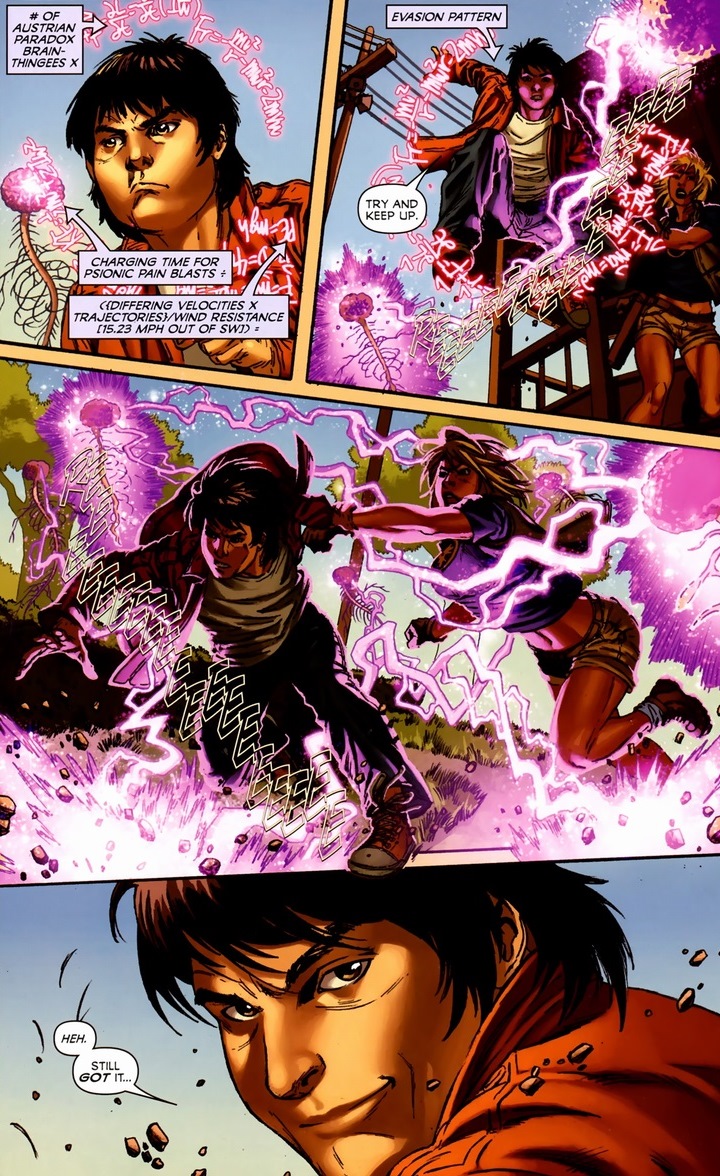
I love this concept. Amadeus’ intelligence ranks so high that he sees the world as math equations, compared to Hercules who almost certainly believes the word “equation” to be a sort of Mediterranean dish. Though you know who can throw a smart guy for a loop? A smarter guy, of course.
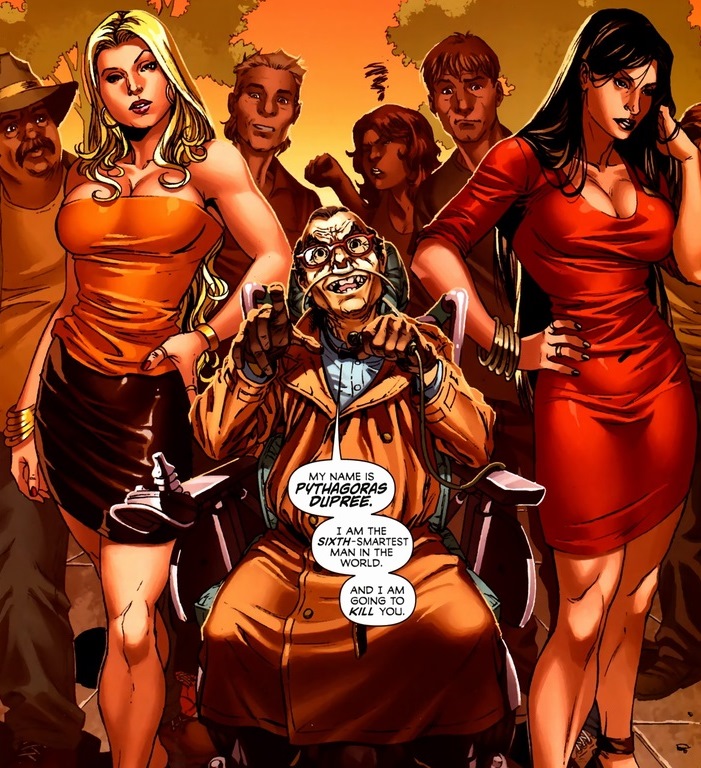
I’m going to skip a ton. The entire second issue of the arc revolves around a complicated D&D style game for control of Amadeus’ mind and the superior intellect of Pythagoras. It rocks and you should devote some time to finding the issue and reading it. But the final genius-off struggle between the two was what made me excited about this arc. Let’s get into it, but first, cue character development:
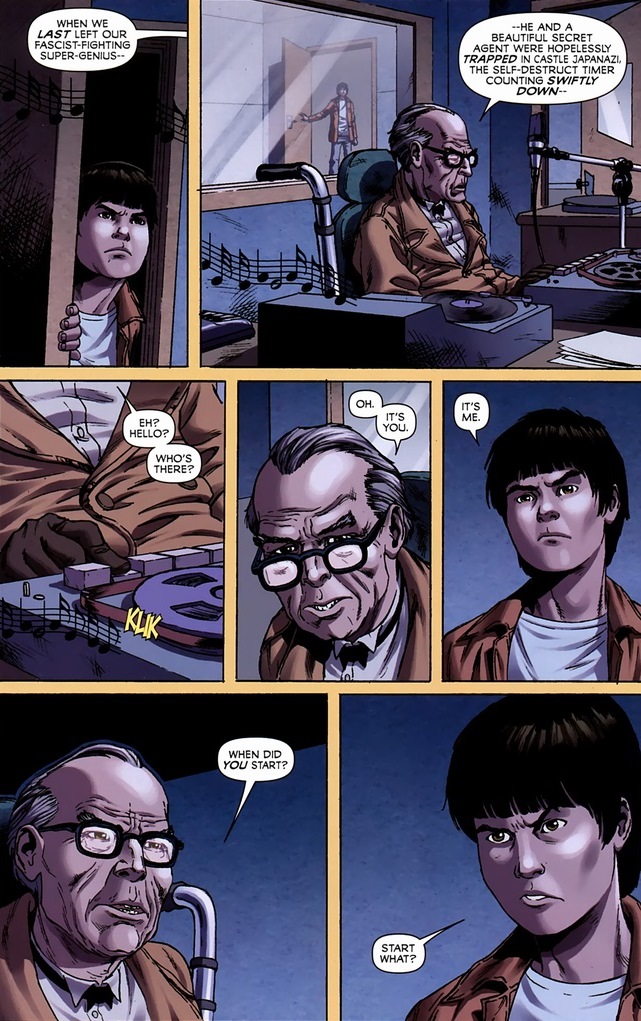
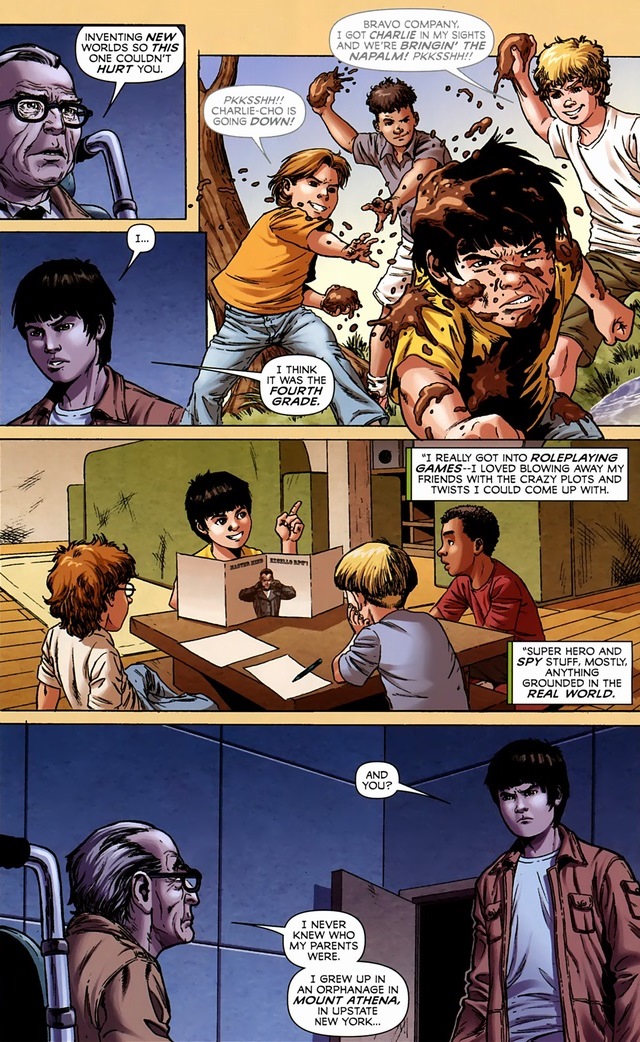
The next three or four pages include Pythagoras’ complicated back story, evil origins, and reasons for blowing up Amadeus’ parents. You can read that stuff for yourself, but Amadeus only sought out this monster for one reason only: his sister.
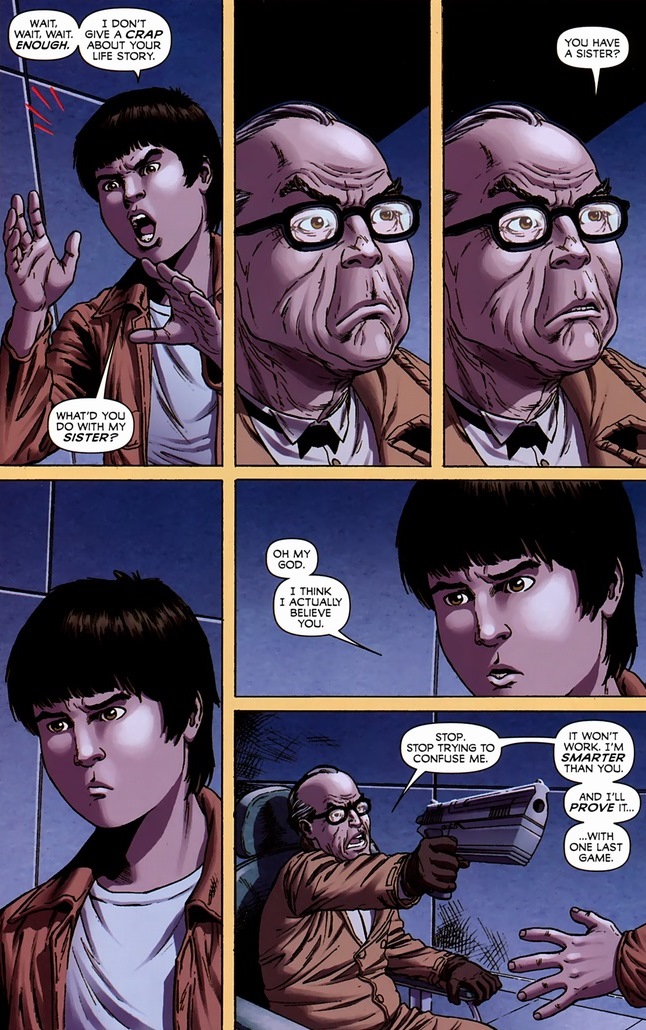
Okay, so that search ends up a bust. Mysteries don’t always conclude with the bad guy’s rubber mask pulled off, though I really wish they all did if just for a booming rubber industry. To find out who’s the smarter genius, the two have to play the coolest smart person game ever written in comics:


Has math ever been this exciting? More importantly, how does our hero win this no-win situation?
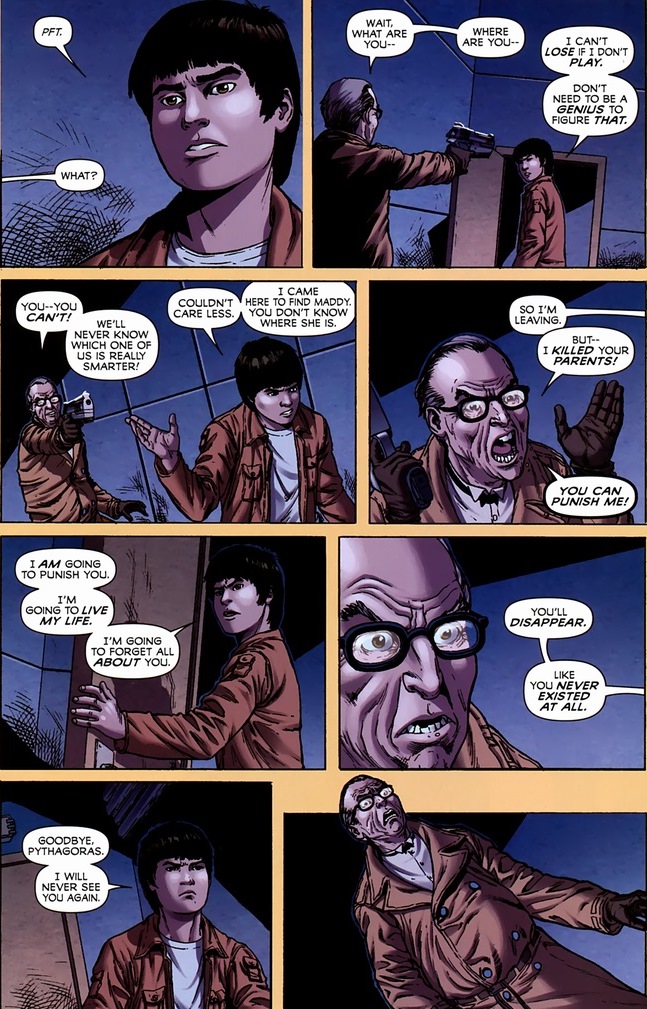
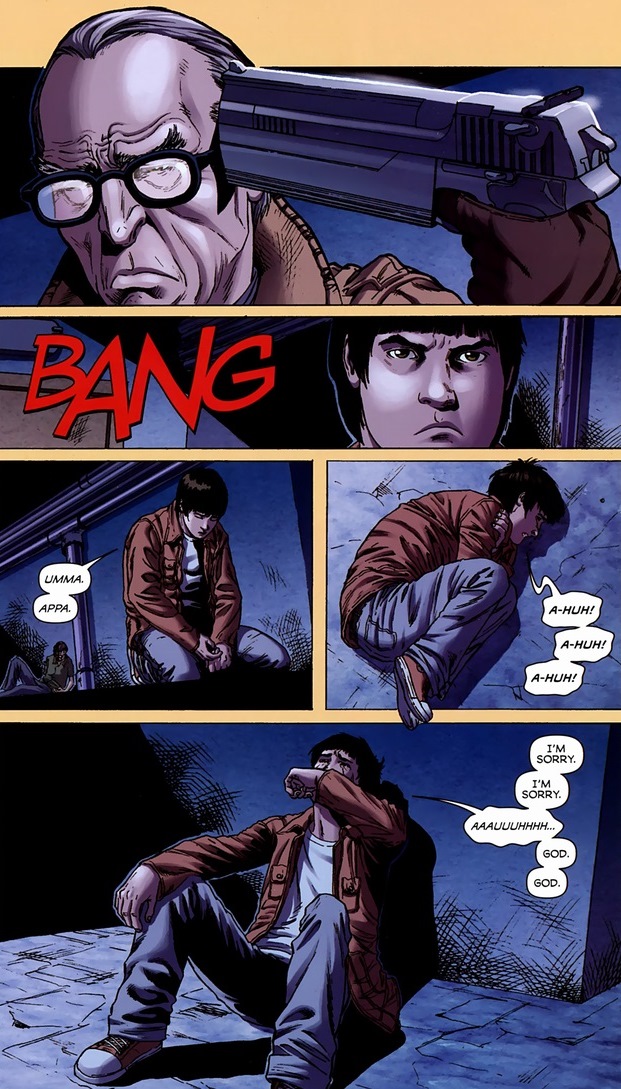
I think Amadeus knew what Pythagoras would do if Amadeus refused to play, essentially ensuring the man’s death. Amadeus, a superhero, doesn’t murder (gosh darn it) and he kinda did murder Pythogoras — even if he got sucked into a game without his consent. Oh well, so’s the tragic life of the hero. Still, if we count that, Amadeus is still thousands of murders behind Hercules. Seriously, I can’t figure out if Hercules has more kills or body hair.
Athena, Hercules’ sister, witnesses the whole thing. Want a final plot twist?
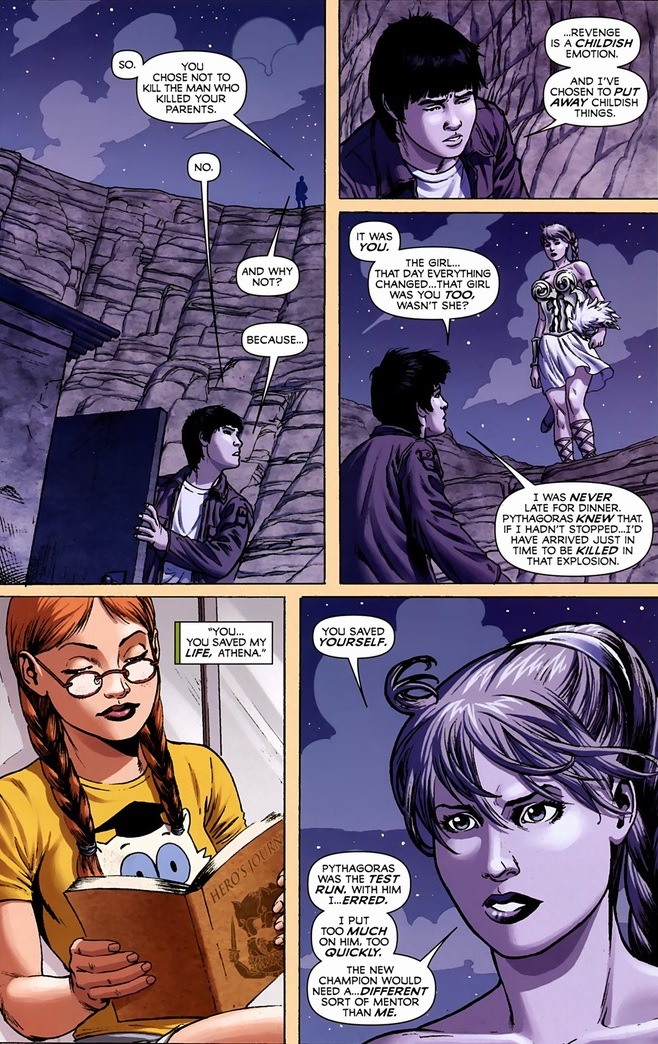
And a new champion he becomes. No, seriously — Amadeus totally rocks nowadays. Here’s him a few issues later, in the double spread glory he deserves:
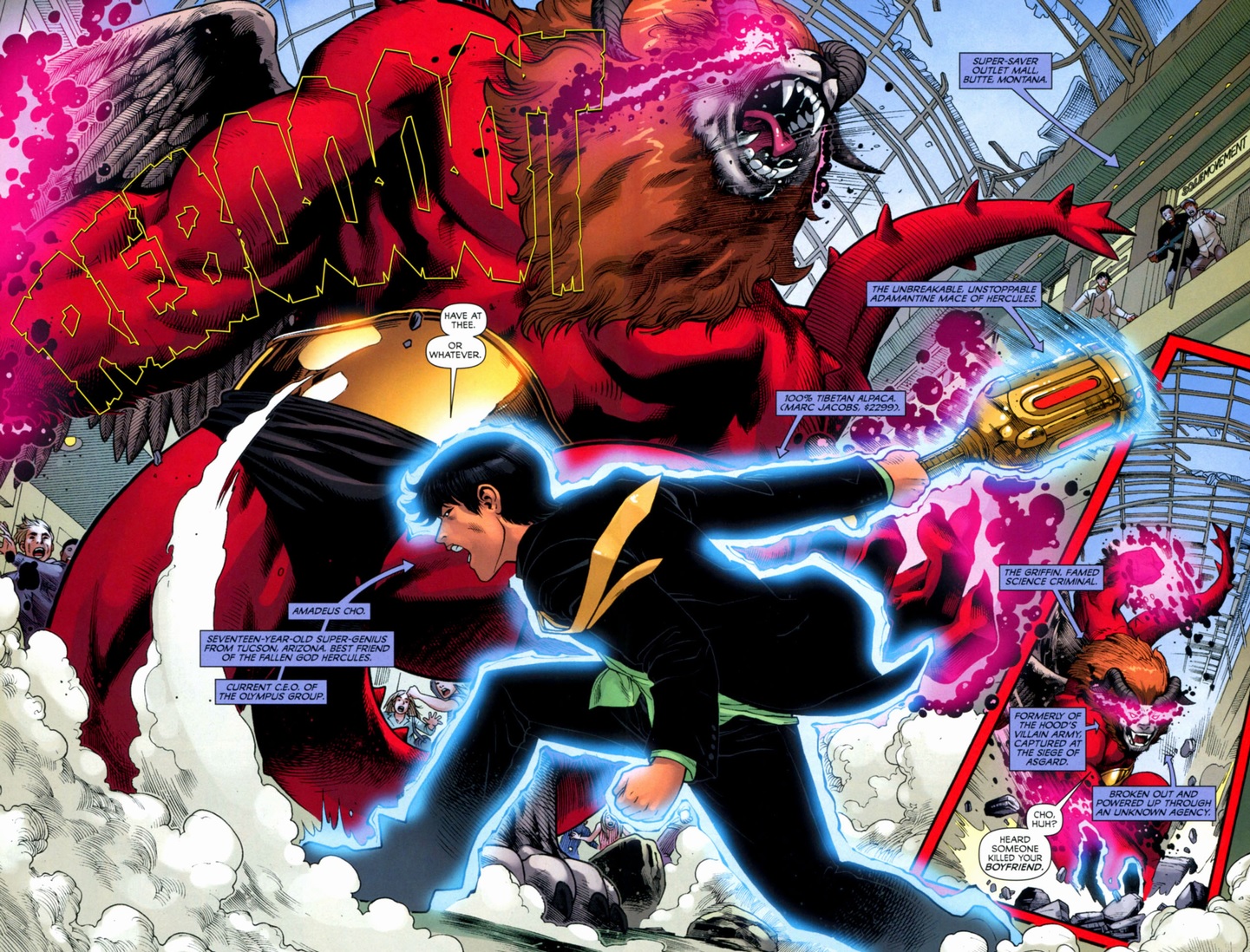
Click for a larger version, if just for the only superhero to fight crime in a designer suit and jacket.
Robin and Zsasz in the child arena
Posted: 05/14/2013 Filed under: Characters, DC Leave a commentBatman’s supervillains constantly have to find new ways to entertain themselves. When every evildoer in the city just so happens to be a big ball of crazy, all the normal amoral activities have been done and then done again as a maze or inside a giant cake or something. Luckily for Victor Zsasz, he has no problem recycling the classics:
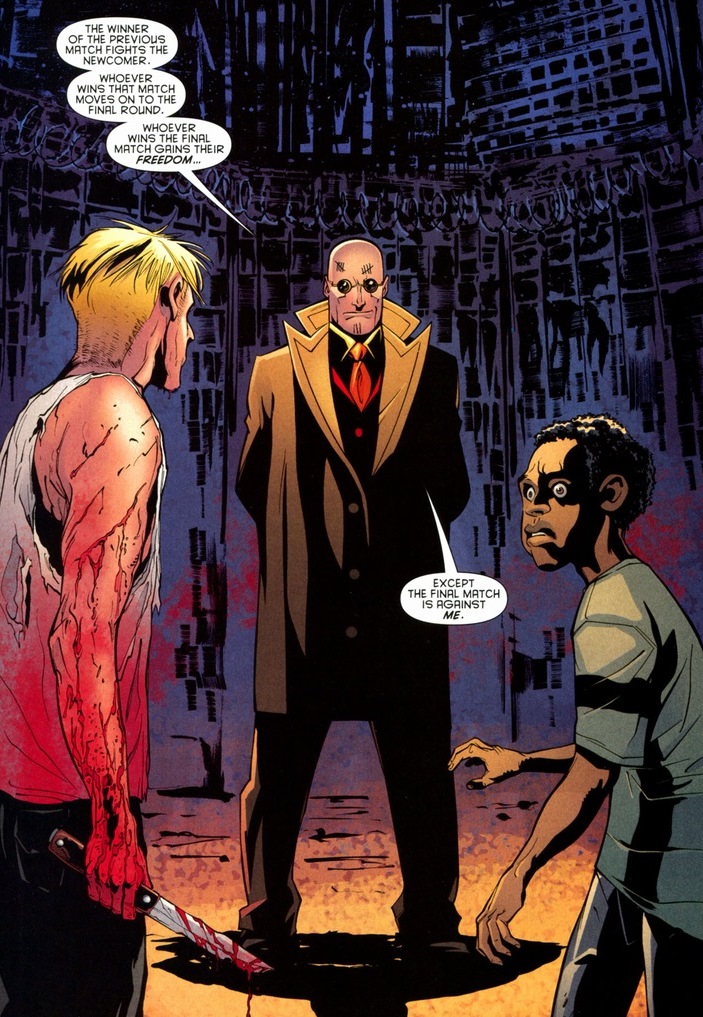
Child gladiators it is, then. Three or four children fight each other, then get massacred by a grown man. A man pops the collar on his trench coat. Today, as we explore Batman: Streets of Gotham #10-11, written by Paul Dini and drawn by Dustin Nguyen, I give you the one thing you’ve never asked for and never will — a team up with two ten year-old boys.
Specifically, these ten year-old boys:
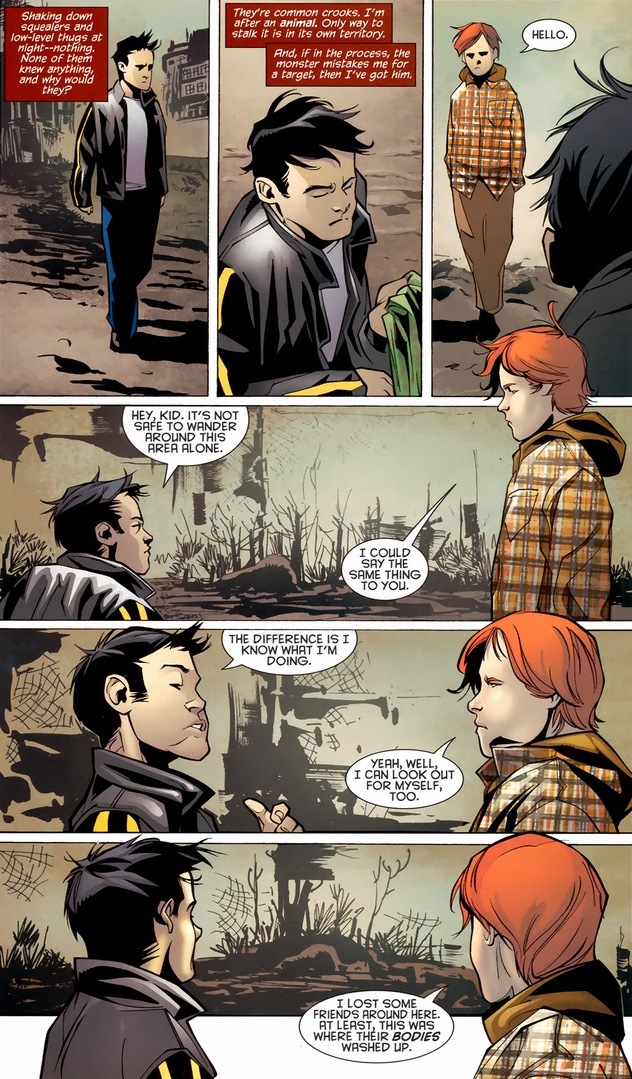
To keep Zsasz’s coffers full of tiny warriors, runaways and latch-key kids are getting constantly kidnapped by his henchmen. Damian Wayne (Robin) and Colin Wilkes bump into each other investigating the same thing. Never heard of Colin? He’s only showed up in seven or eight issues ever but let’s give you some flashbacks anyway from Detective Comics #847-848, also written by Dini and drawn by Nguyen. Apparently, child kidnapping occurs far more often than comfortable in Gotham City, because this time the Scarecrow’s gathering up a crop of orphans.
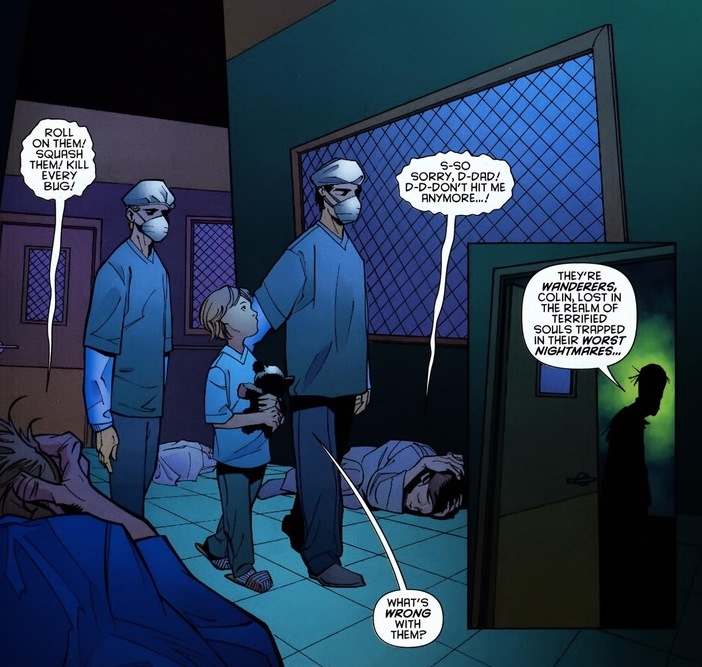
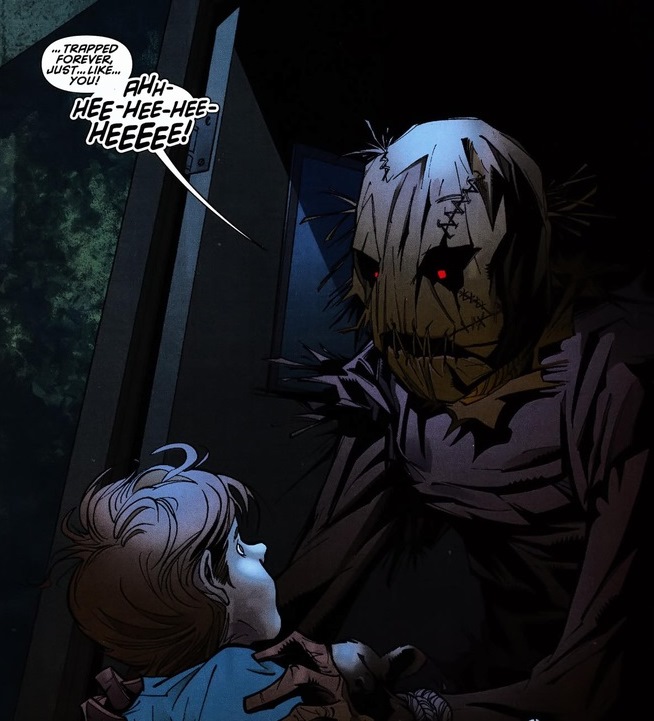
In a reasonable plot twist, the poor kid has to battle the Dark Knight.


I mean, Scarecrow gave him superpowers. I don’t know how many unarmed, scared fifth graders Batman could take on at once, but I imagine the number has a buttload of zeroes. Eventually, Batman takes out Colin the same way he takes out Bane.
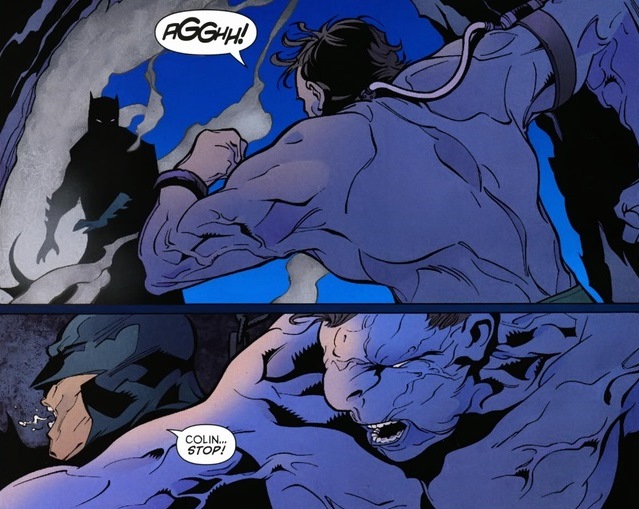

Now, despite an obvious record of child endangerment, Batman’s not about to leave the poor kid soaked in venom. Unfortunately, even the Dark Knight’s not perfect, though so very close.

Neat, right? Like if Captain Marvel merged with Sin City. As we get back to our story, Zsasz’s gang arrives to snatch up our protagonists, and they don’t even provide luxuries like candy or PS3.

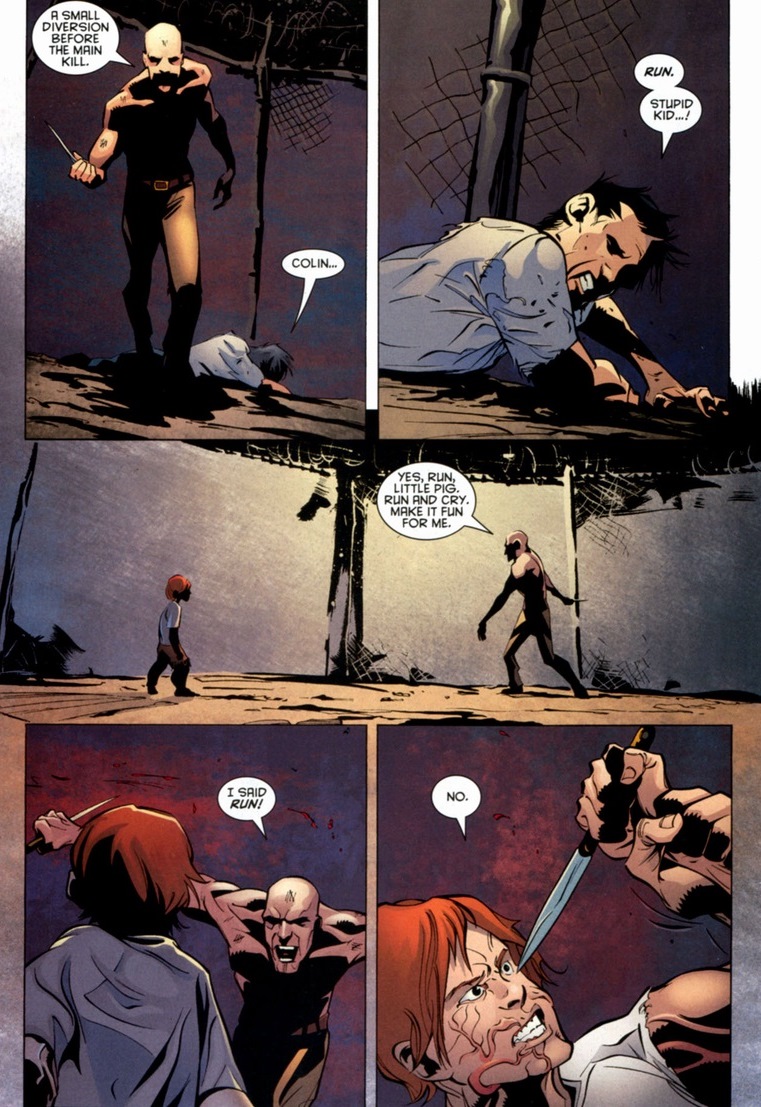
Usually this would be a slam dunk for Zsasz’s henchmen. Definitely a raise, or at least not getting their throat slit when they get back to the arena. Sadly for them, they tried to kidnap Robin. A very angry. Robin.

Leaving behind his new buddy, Damian rushes to battle the supervillain alone. And normally, this wouldn’t be anything to fret about. Zsasz has no superpowers, and Robin (having been trained since birth by the League of Assassins) has far beyond the needed ability to defeat Zsasz in combat. Normally.
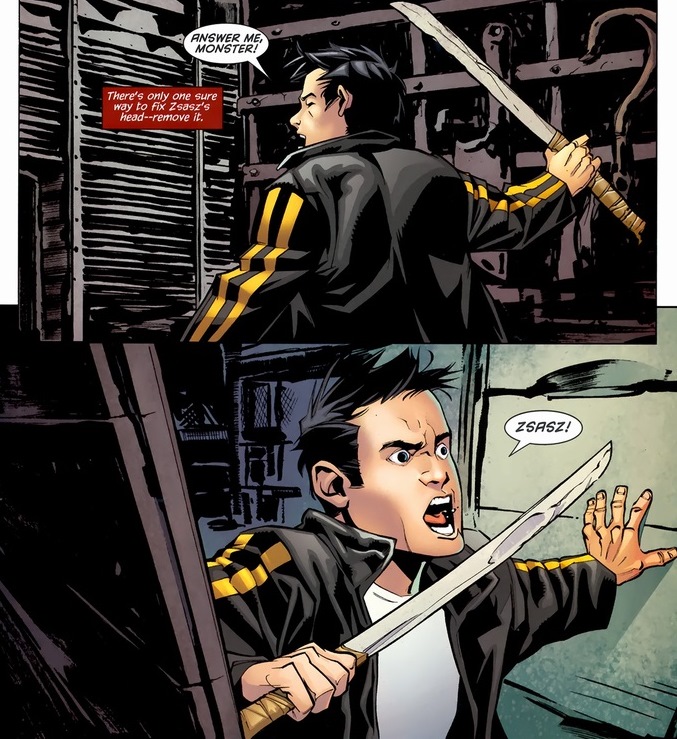

While the audience certainly doesn’t help, something’s weird about our supervillain.
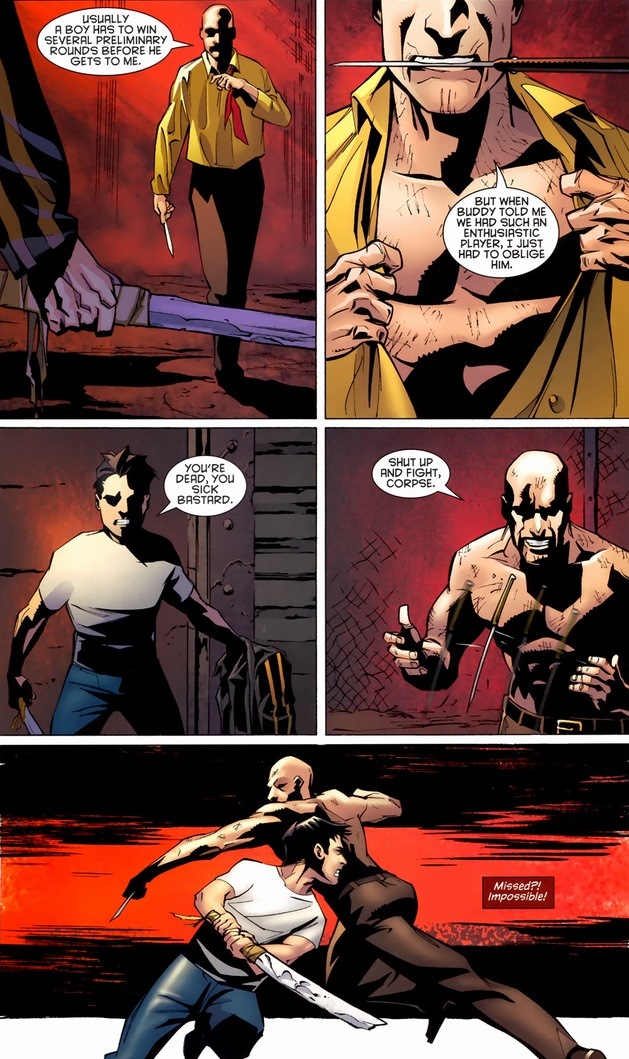

No reason ever gets provided for how Zsasz can slice up Damian without actually hitting him. Or maybe he does, I don’t know. With Robin thrown for a loop, only one man can save him now. And by man, I mean child.

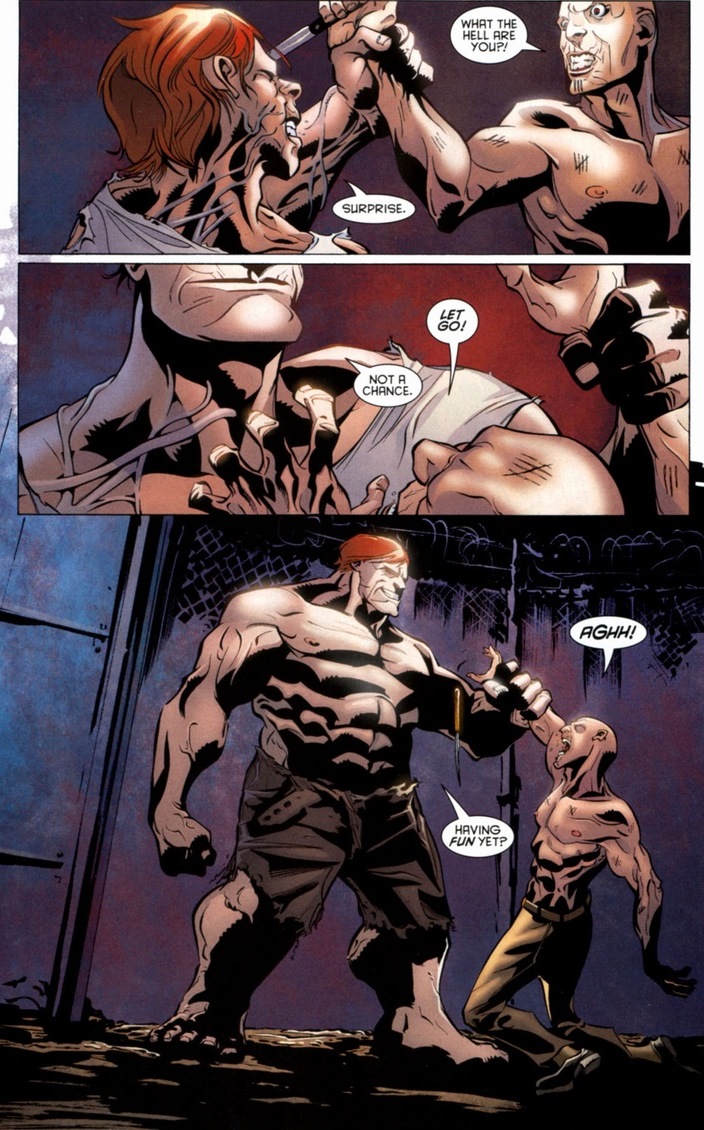
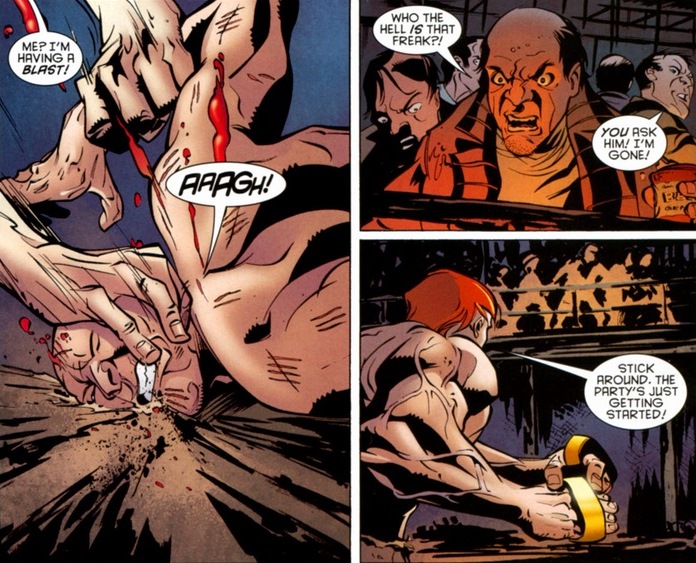
When I mention that Colin (superhero name Abuse) saves Damian’s life, some readers may shrug apathetically, if just because he died a horrific (impalement) death a month or two ago. Look, Damian’s obnoxious, arrogant, and wildly young — but over the three or so years he served as Robin, I think fans came around. And not just because he’s Batman’s biological son. The amount of growth and character development that ten year-old accomplished in such a short time truly is a phenomenal effort on the part of the writers, specifically Grant Morrison (who created him, made him Robin, and then killed him off). Still, this arc’ll just have to serve as a flowery memorial on the gravesite of Damian Wayne adventures.
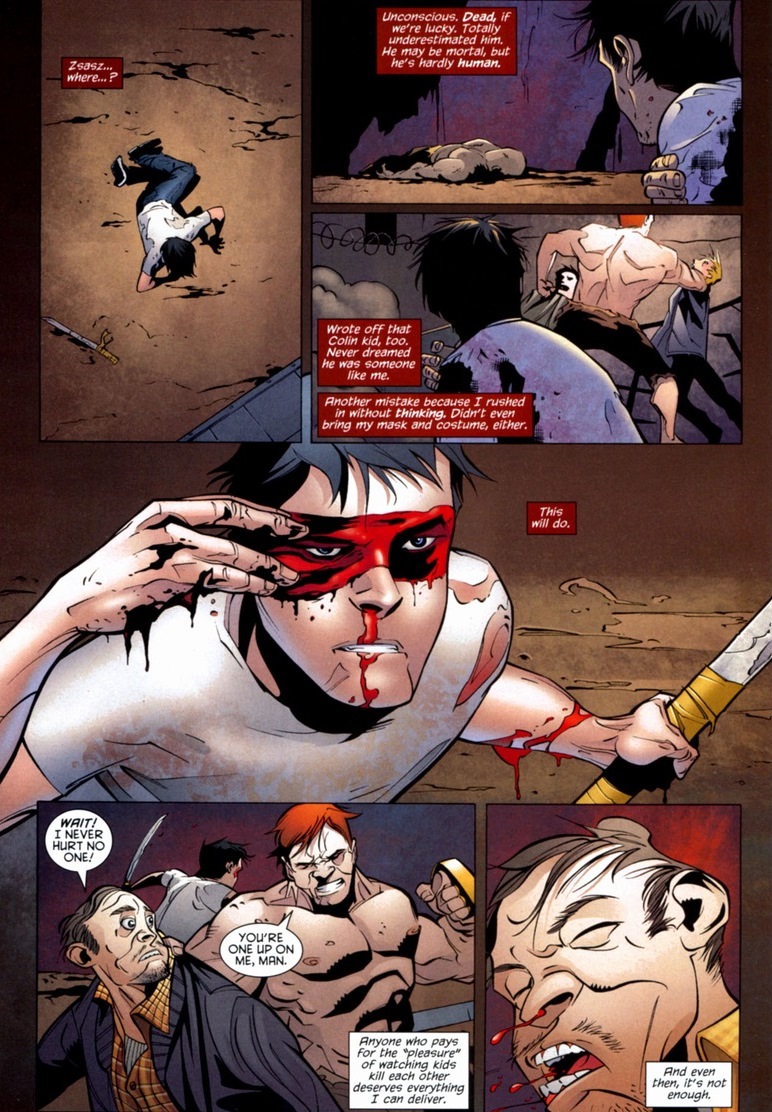

This story wouldn’t have a proper ending if we didn’t get Zsasz round two. Superheroes always get a second chance of victory after being humiliated by their respective supervillains. That’s comic book writing 101. Luckily for us, it’s awesome.
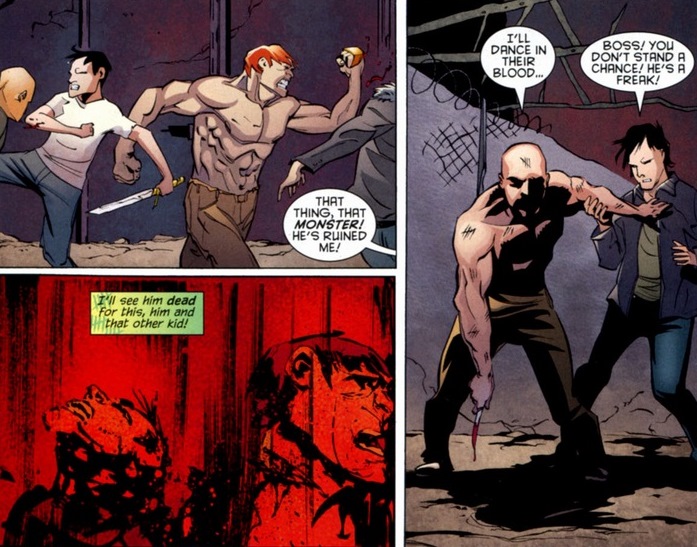


Y’see, when superheroes get their rematch, they usually win with a fancy trick or surprise device, but Damian wins the combat by simply being the better fighter. That’s what a decade of ninja-ing does, especially when one wields his first pair of nunchucks at the same time as being potty trained. We end today with a melodramatic rant, because while Batman supervillains may not be super strong or super durable, they do possess a super flair for drama.

Zsasz lives, of course, and Damian goes on to learn that maybe disemboweling his enemies might not be how Batman wants crime fighting done. Colin doesn’t show up anymore, but have no fear, Gotham City will always have plenty of baddies for a monster child to punch — just off panel now.
Spider-Man and the never-ending guilt trip
Posted: 05/12/2013 Filed under: Characters, Marvel 1 CommentIt’s been a while since our last Spider-Man article, and I’m here to fill that void in your heart. Y’see, if you’ve been following Superior Spider-Man, last issue Peter Parker met his defeat at the hand of guilt revelation. I know that doesn’t make a lot of sense if you’re not caught up, but as fans cried out (as they do every single time the status quo gets changed), writer Dan Slott made a solid point: Spider-Man simply never forgives himself for any mistake or decision he makes. Ever. Rinse and repeat for fifty years. And to be fair, that level of morality is impossible — we as people make selfish choices all the time, regardless of how small or unimportant. Unfortunately, Spider-Man goes down a spiral of self-loathing the moment his mind is made up.
Well, get ready for a sadness punch in your tear ducts. Today in Spectacular Spider-Man #22, written by Paul Jenkins and drawn by Talent Caldwell, Spider-Man receives some permanent emotional damage. And speaking of emotional damage, let me quickly tell you about Mindworm. You almost certainly haven’t heard of him.
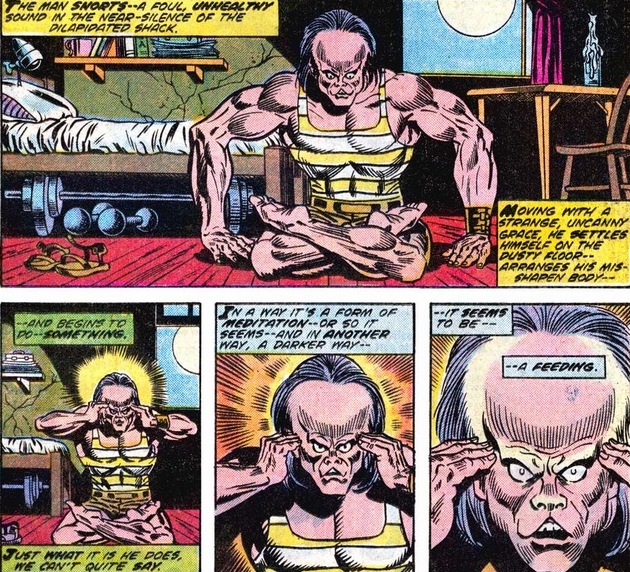
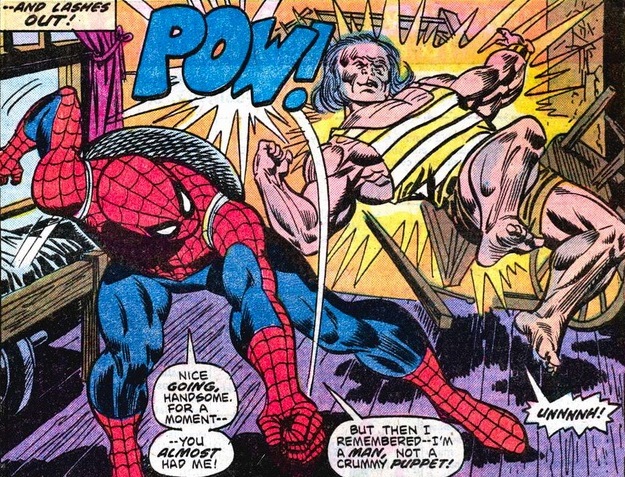
He first appeared in Amazing Spider-Man #138, written by Gerry Conway and drawn by Ross Andru. Mindworm’s a mutant with the power to influence the emotions of others, even able to project illusions and other vague stuff. Also, wearing a striped tanktop as your supervillain costume pretty much guarantees insignificance. Here’s Spider-Man taking him down in their first encounter:
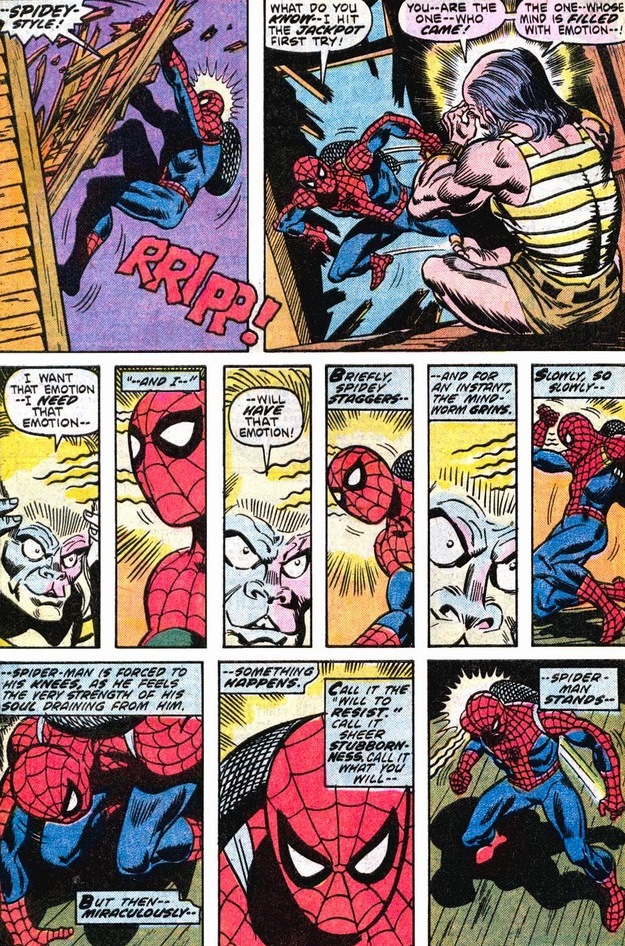
As we fast forward 30ish years of comics, Parker notices a weird section of town where everyone seems influenced by a heavy mood of hostility. You know where this is going?

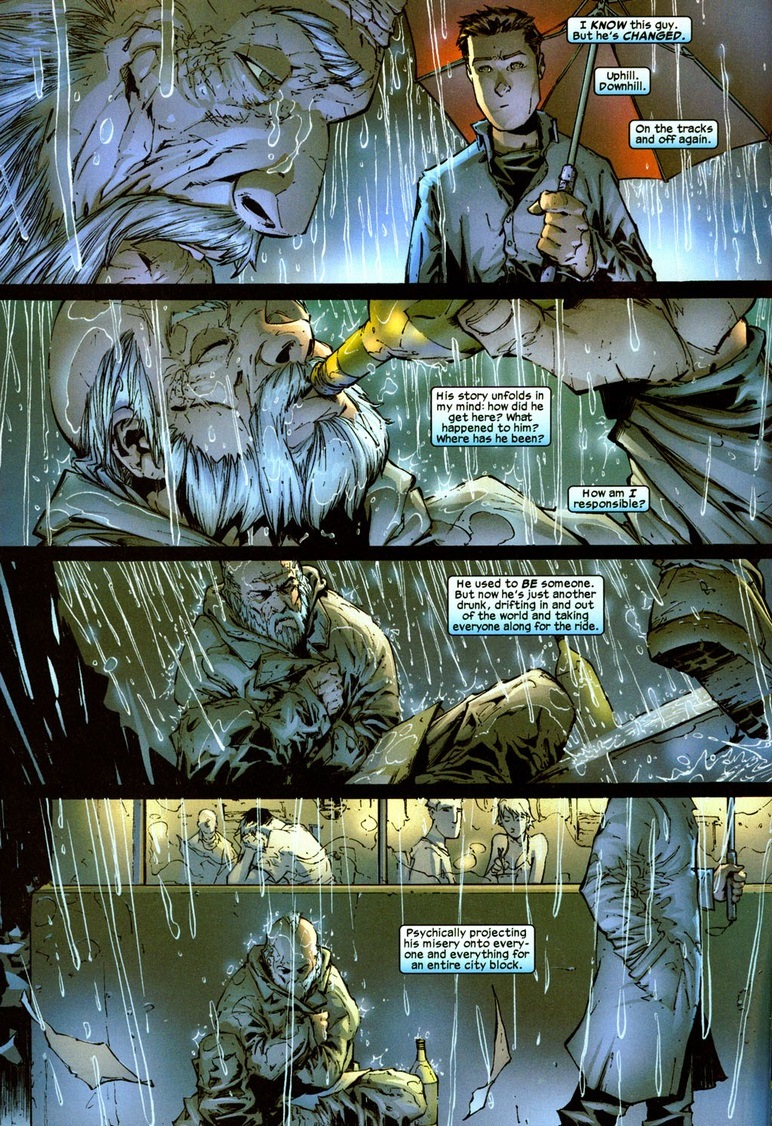

The years haven’t been kind to Mindworm. When we get deeper into the supervillain’s psyche, it’s a blast of mental illness and terrible life choices. Unlike Moon Knight, Mindworm’s mental illness doesn’t have Wolverine yelling at him, instead just a projected wave of depression. As Spider-Man recognizes this once proud man, he makes the most valid point against superheroism today:

Let’s be fair. Captain America inspires and reassures the Marvel universe, but at the end of the day, he does punch his way to victory. And when the problem doesn’t involve megalomaniacs threatening cities with giant bombs, punching usually solves very little. What’s Spider-Man to do that won’t turn this issue into an after school special? Well, lots of guilt for one.
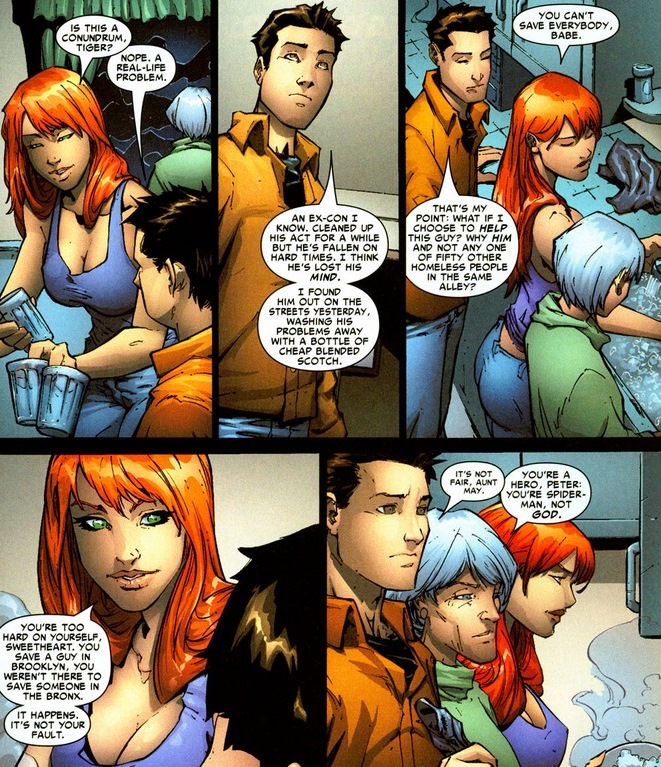

Both Aunt May and Spider-Man make solid arguments. I mean, Spider-Man is a man with the proportionate strength of a spider, not Zeus. No matter how fast he swings, he can’t save everyone — and the sooner Parker accepts that, the sooner he can actually find some contentment in his life. On the other hand, Spider-Man has a duty to help those who can’t help themselves. When you receive awesome superpowers, you then have to devote your life to protecting those without. That’s kind of how the deal works. Unfortunately, things get worse.


Much worse.

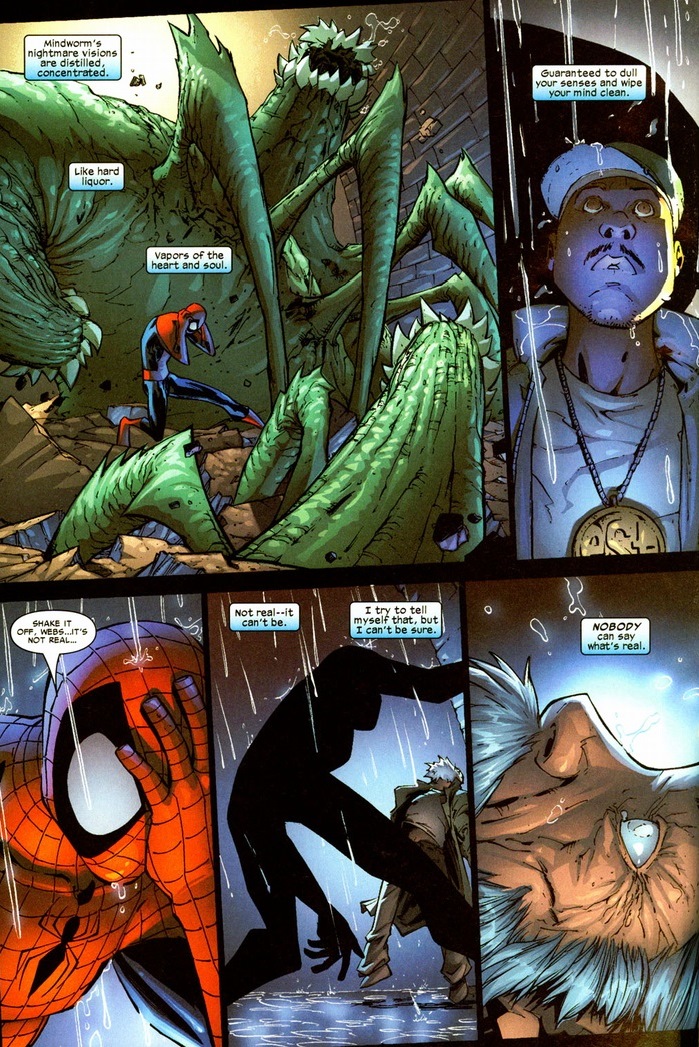
Look, I love Spider-Man with all my heart, but he is a man in pajamas webbing around a city that’s 300 square miles. The fact he could even arrive at the scene of a crime even remotely on time speaks volumes in itself. Now, stuck in a situation far beyond any punching could solve, all he can do is react accordingly.
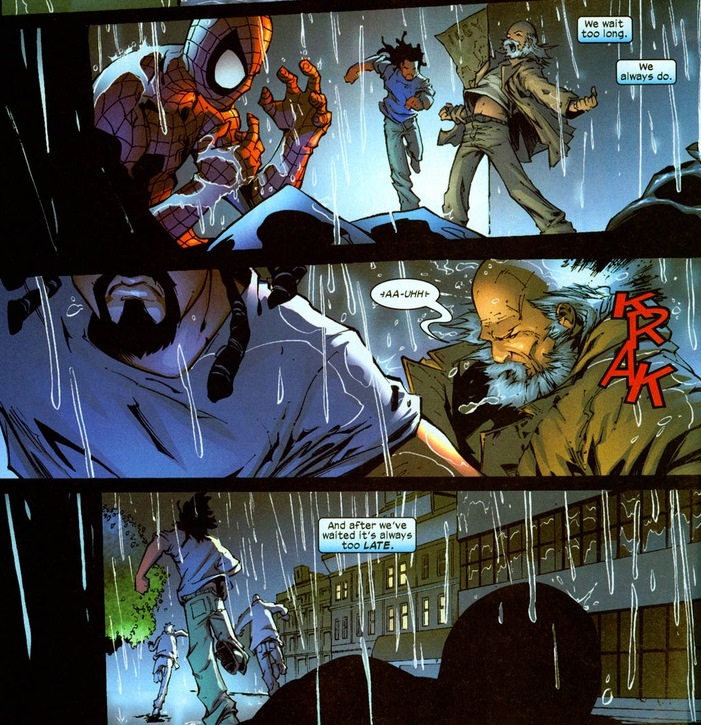
I hate to mention this, but Spider-Man loses fights far more than you think. Sometimes he falls with a roundhouse kick to the face, but other times, the baddie claimed victory before Spider-Man even steps in the ring. Does Mindworm deserve this ending? God, no. Does Spider-Man deserve to have this freak accident on his conscience? Absolutely not. But he will, and it breaks our hearts.


You know why Spider-Man remains the most popular Marvel character year after year? He’s portrayed as a normal guy like us, but truthfully, he’s our better: physically, mentally, and emotionally — a literary role model for us to emulate. Or maybe it’s the quips. One of those two reasons.
Cool Aquaman moments
Posted: 05/07/2013 Filed under: Characters, DC 5 CommentsAquaman has a fairly wussy reputation. DC knows this. The writers know this. You certainly know this, no matter how small your comic knowledge. Well, the New 52 (the DC reboot about a year and a half ago) decided to do something about it.
Okay, I know that Aquaman has always done super manly stuff in his solo series for the 50ish years he’s been swimming around. It’s not as if he snuggles with dolphins or makes rainbow collages out of starfish — the guy’s a powerful, respected ruler of anything wet and moist. Unfortunately, one picture of Aquaman riding a seahorse and we forget quickly about him trident-stabbing hordes of mermen.
With the reboot, besides characters reminding the reader every other issue that they can’t believe Aquaman (real name Arthur Curry) saved them from certain death, Aquaman struggles with the whole being from two worlds and neither one terribly accepting thing. It’s a classic literary plot, and it still holds up today. But I don’t care about that. Today, we’re just going to take a look at some awesome Aquaman moments from the past year or so. I’m using the following:
Justice League #3-4, written by Geoff Johns and drawn by Jim Lee
Justice League #14-17, written by Johns and drawn by Tony S. Daniel, Ivan Reis, & Paul Pelletier
Aquaman #15-17, written by Johns and drawn by Pelletier
As you’ve realized, Johns remained instrumental in making Aquaman relevant in modern DC comics, but he’s been a genius for years. First up, Aquaman’s premiere moment with the Justice League:

Cool, right? Sexy stubble, giant weapon, and unapologetic confidence. And that doesn’t even include embarrassing Green Lantern:
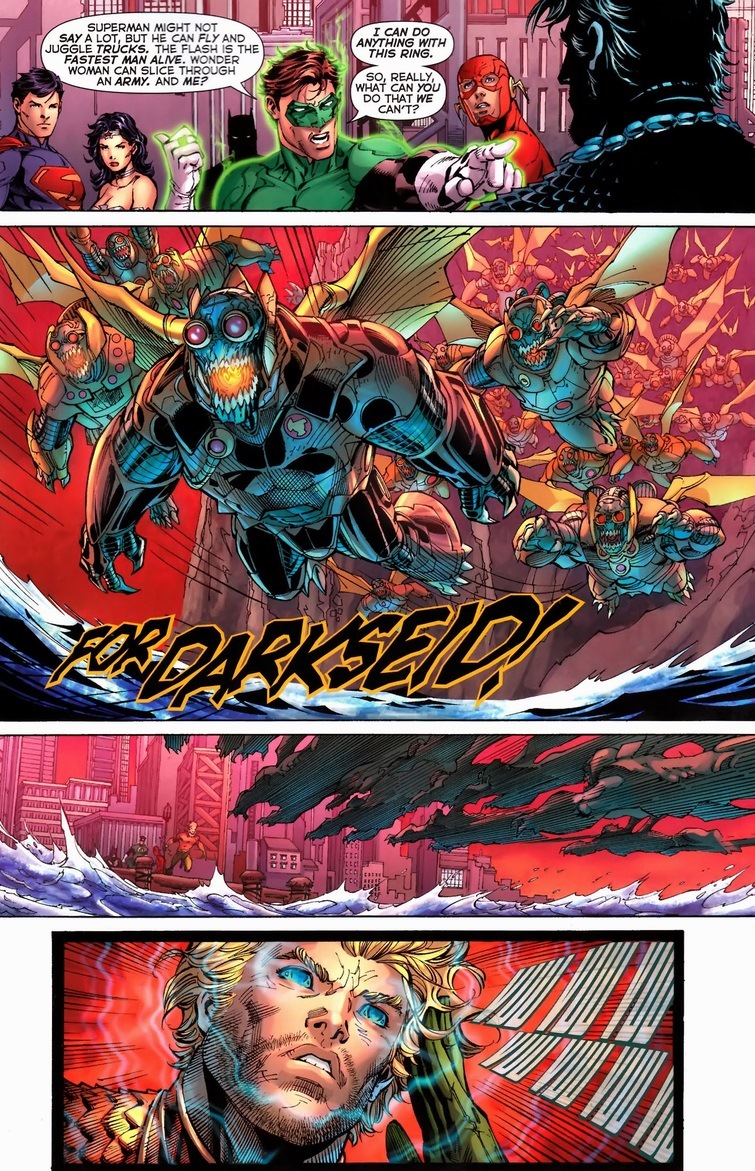

I didn’t even know sharks came that big. By the way, next time someone gushes about Darkseid, remind him that we have literary proof of his minions being eaten by large fish. But what I really want to talk about is the first Justice League crossover (which is DC’s flagship title). Luckily, it was Aquaman-centric, called appropriately Throne of Atlantis. Arthur’s brother attacks the surface world. He looks neat too, but I’m a sucker for fish-themed armor.
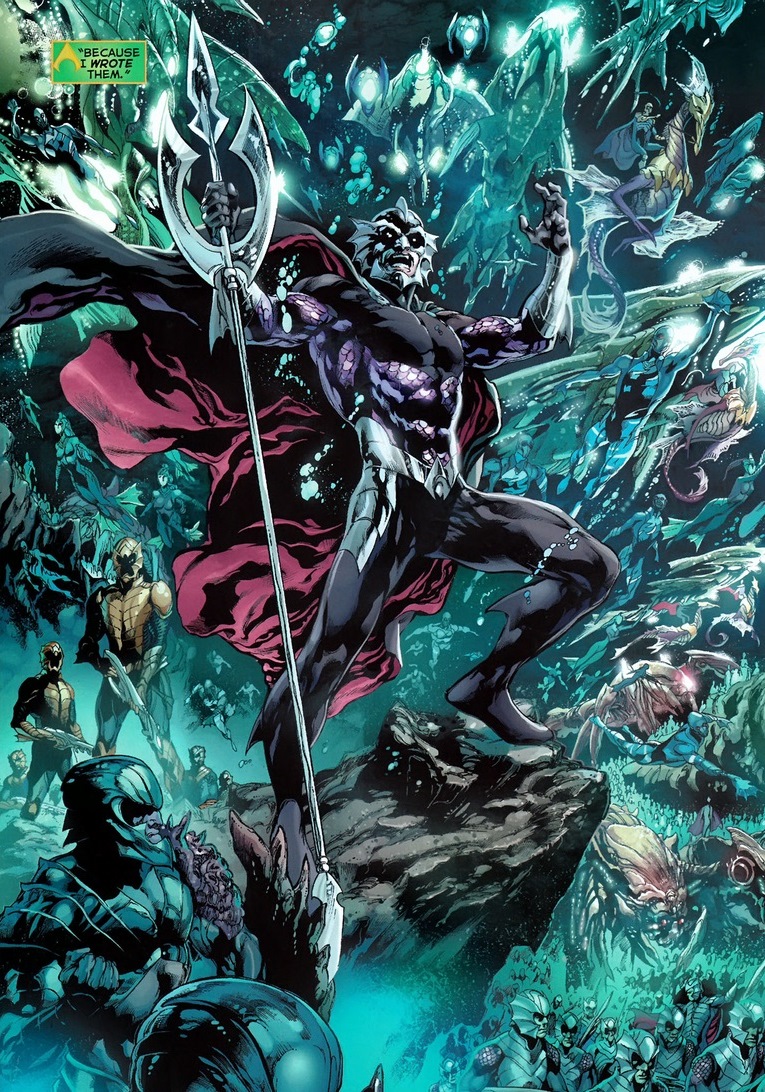
For reference, Aquaman abdicated his throne years ago, giving him the same political pull in Atlantis that say, Batman has. Still, part of Aquaman’s coolness stems from his unabashed commands and orders. Even to family.


A tricky political situation, certainly. Since comics can’t have a group of seven people come together without some internal bashing, Aquaman fights the entire Justice League. Context isn’t as important as pages like this:

I think some readers underestimate Aquaman’s strength. The man can shrug off most bullets, swim crazy fast, and can easily punch as hard as Wonder Woman. Though to be fair, Arthur certainly can’t do stuff like this:

And thus, the war begins.

Now, a lot happens between this page above and the one I’m about to show you. Like two or three full fights worth, but you really just want to see Aquaman battle his brother, right? Readers love the emotional struggle added to the whole physical mess. Especially if the physical mess involves tridents.

Arthur’s next point takes a few reads to understand. At least it did for me.


Beautiful full page punch. Okay, from what I figure Aquaman meant, leaders lead a life of loneliness — whether that be from the heavy burden of constant major decisions or the inability to have others relate to one’s situation. Aquaman figured he’d rather have friends than the oceans. Too bad Orm ruined that. Stupid obligations, right?


Darn tootin’. You promise to make fun of Aquaman a little less now? Like one fewer joke per week? Also, maybe you should read his ongoing series, which features all sorts of aquatic-based adventures and trident attacks. And threatening whalers, because some things never change.

 Arousing Grammar