
Batman and the Alfred gamble
Posted: 01/24/2013 Filed under: Characters, DC 4 CommentsPeople downplay Batman’s intelligence, but the dude’s a super genius. The world’s greatest detective title can’t be bought at an auction or space bazaar or anything. While mysteries have been a staple of Batman’s adventures since his introduction, victory for the Dark Knight is always just one crossword puzzle or laser death trap away. Until 1992, when Victor Zsasz was introduced. A serial killer who carves a tally onto his body for every victims, he has no rhyme or reason to his attacks. Complete and utter unpredictability. What a pain.
In Detective Comics #815-816, written by Shane McCarthy and drawn by Cliff Chiang, the killer gets loose again. Revolving door of Arkham, etc. You’ve heard it all before.
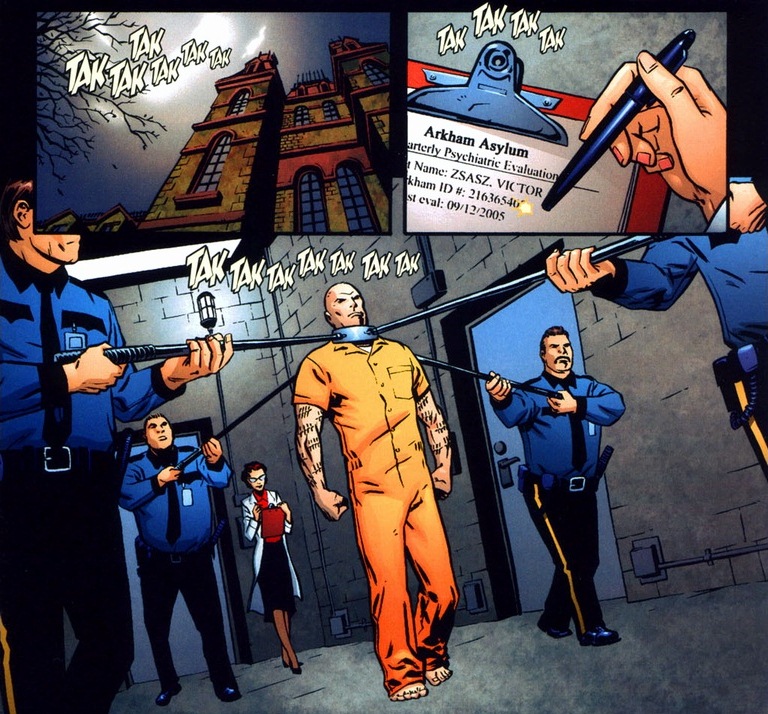
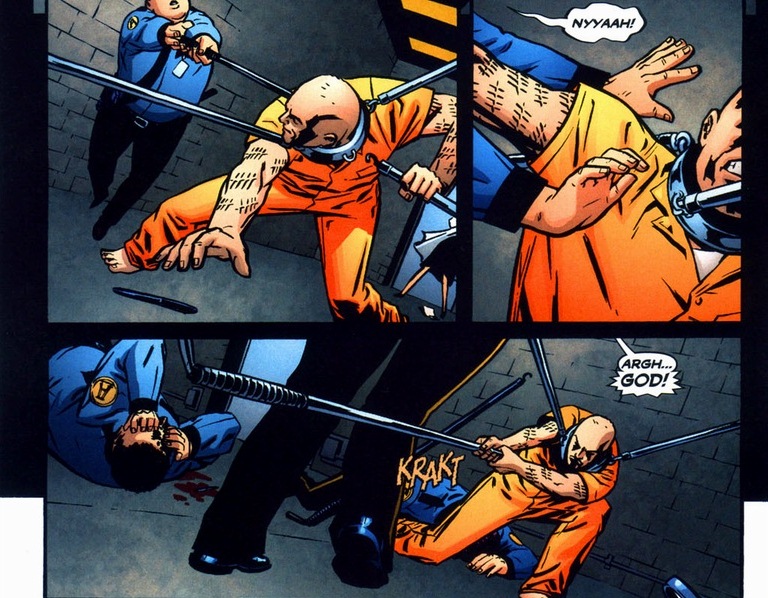
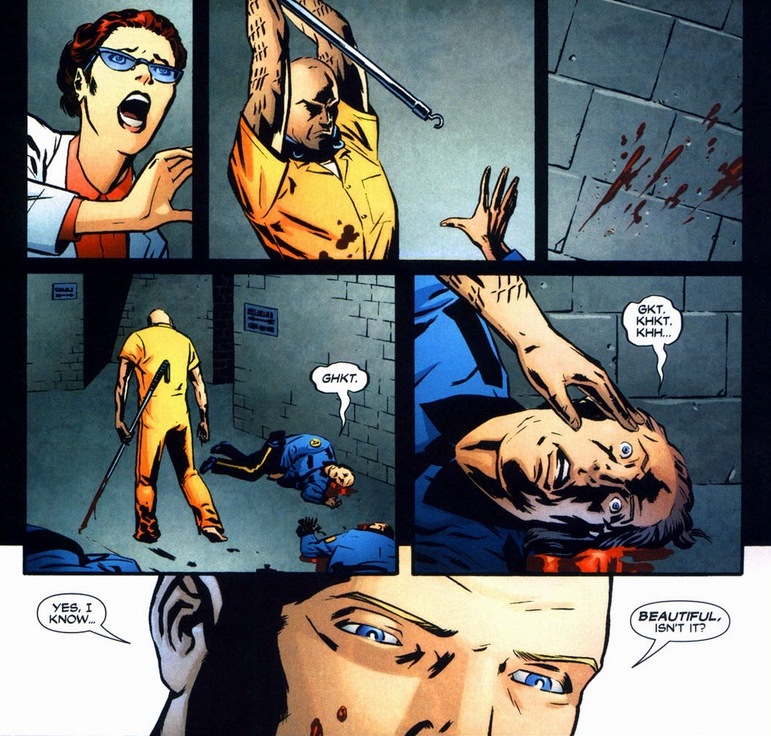
And like every time Zsasz gets loose, Batman can’t find him.
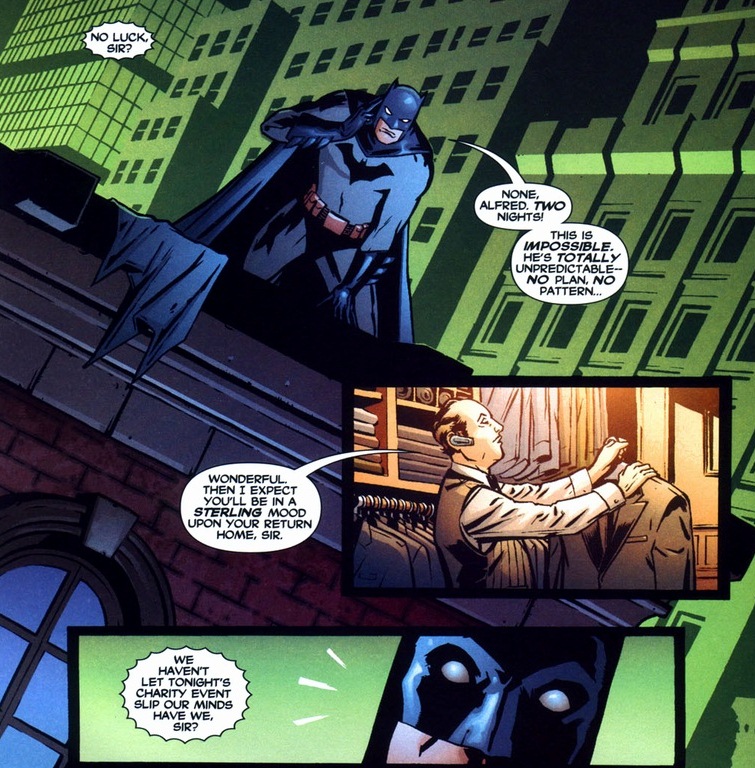
I love that Alfred has a blue tooth.
One of the best parts of reading Batman is the constant reminders of just how much Batman hates being Bruce Wayne. If he didn’t have billions of dollars to spend and a company to run, he’d never take off that costume.

Hey, remember that whole thing about Zsasz not being able to be found? Oh, he’s around.

Poor Alfred. The guy already spends his twilight years mopping bat guano off the ceiling.
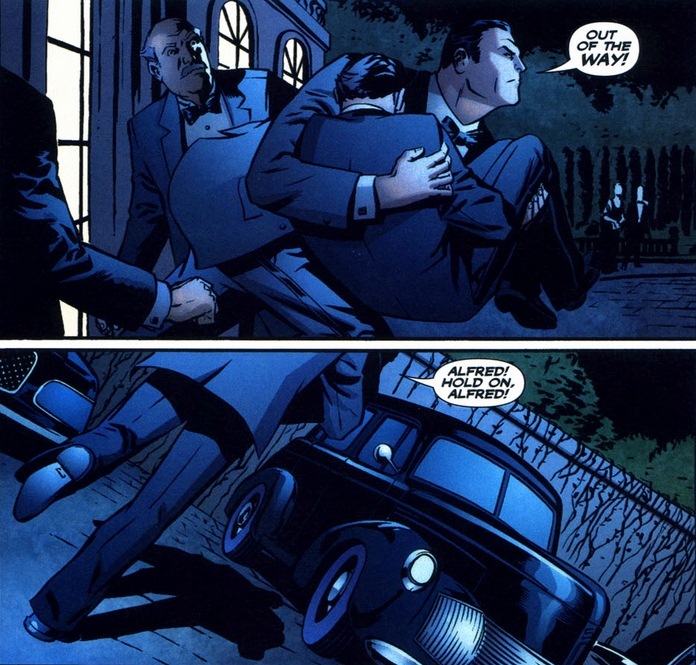
Alfred survives, of course, but now Batman has to make a choice. Y’see, there is one way to know where Zsasz will show up. The supervillain doesn’t do unfinished business — Zsasz has murderer OCD.

Obviously, Zsasz is coming for Alfred. All Batman has to do is get to Zsasz first, which wouldn’t be so hard if the stakes weren’t majorly high. Plus, he didn’t exactly get Alfred’s consent either. Luckily, it’s a long walk to the hospital, leaving plenty of delays along the way to murder people. Patience and dark corners does Batman good.


Batman’s a terrible conversationalist. I always wonder why supervillains get so obsessed with him when he spends most of his time grunting rather than bonding and swapping stories. Now Nightwing, that guy will monologue you to submission. But from a tactical standpoint, the Dark Knight’s certainly not above taunting.


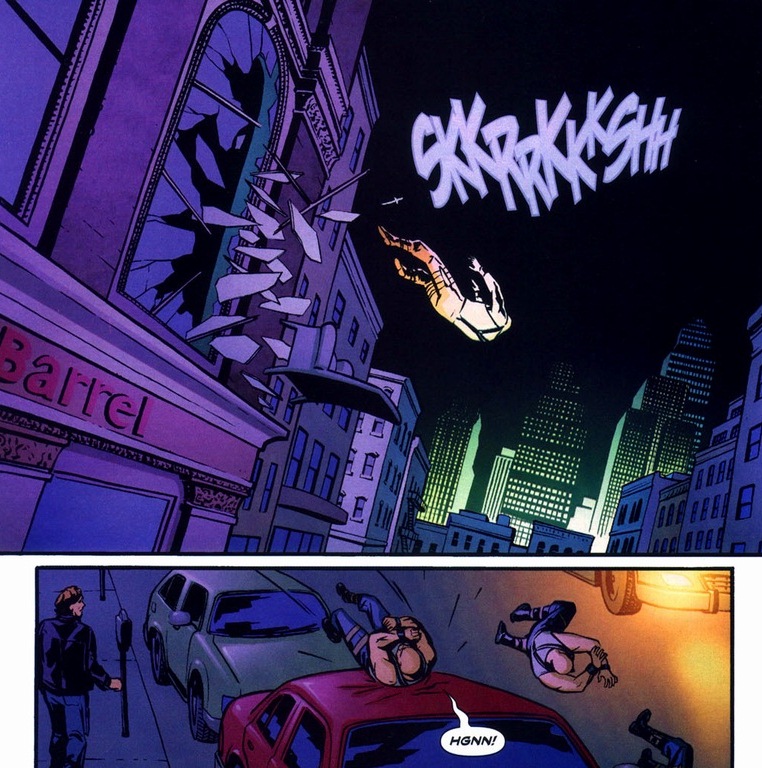
Round two of their fight involves a cool car chase. Buy the book for the whole thing, though here’s two pages of Batman jumping into the moving Batmobile.
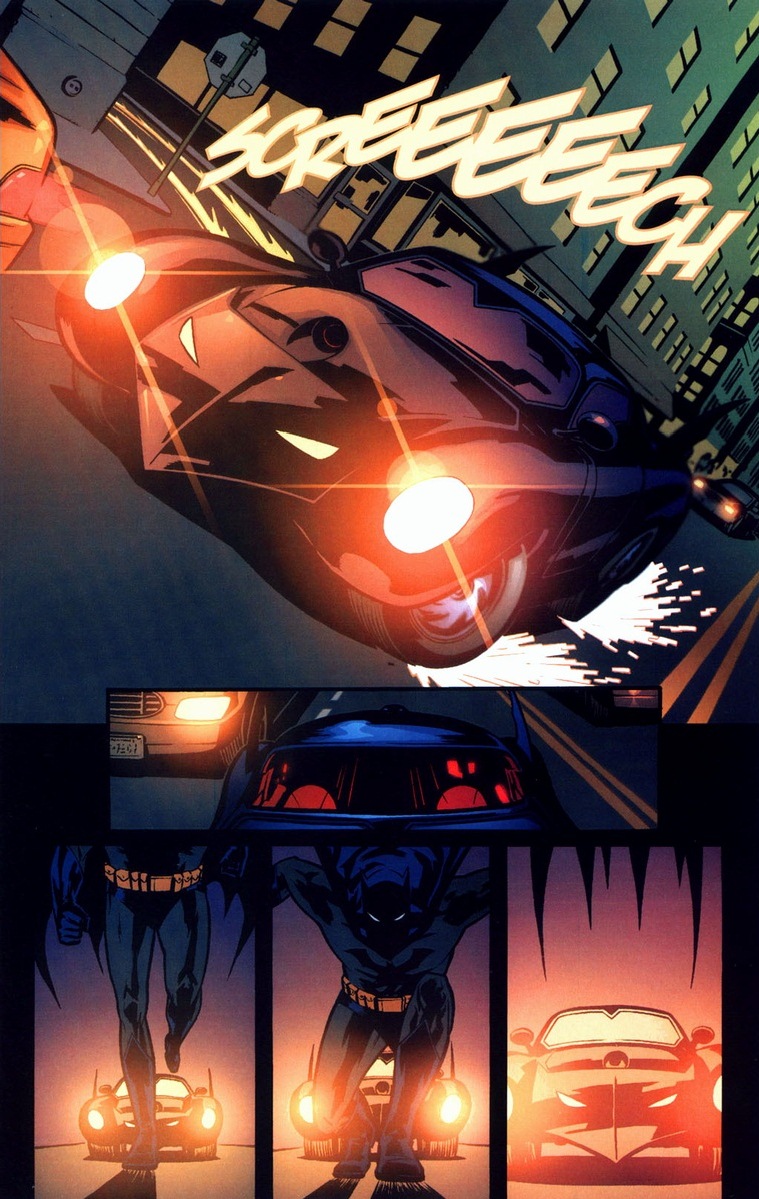
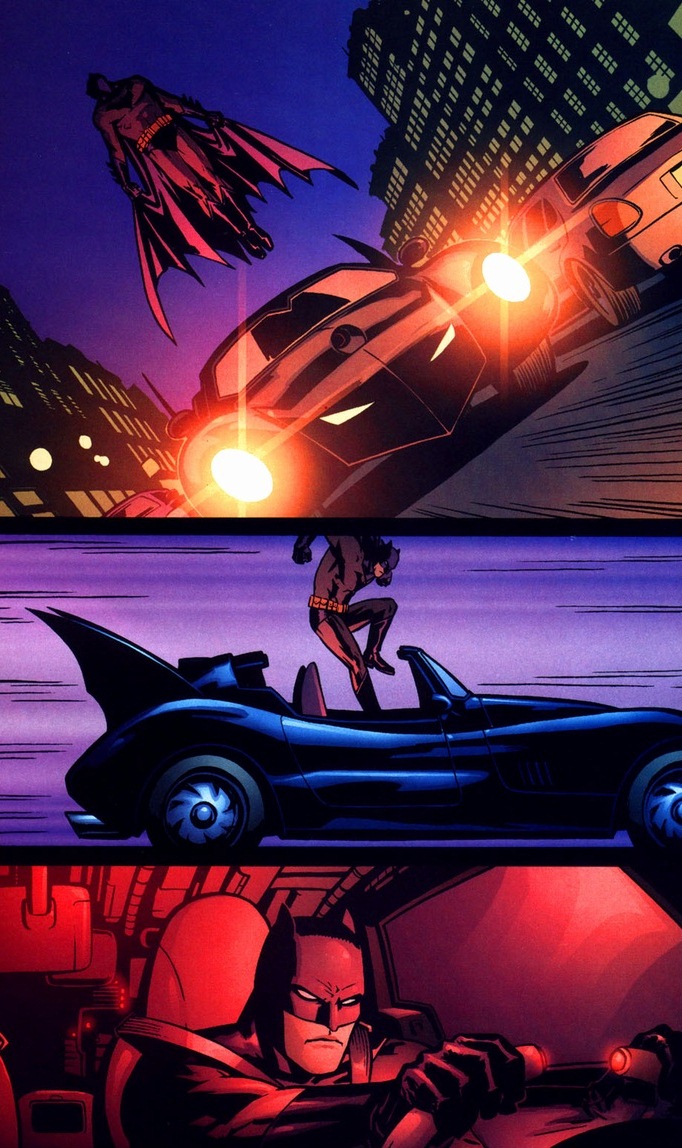
How many times do you think he practiced that in the Batcave? Whole months must have gone by with Alfred cleaning up Batman pieces off the windshield. Finally, Batman and Zsasz get cornered by the police, who — shockingly — aren’t terribly fond of Batman vigilante-ing up their city.
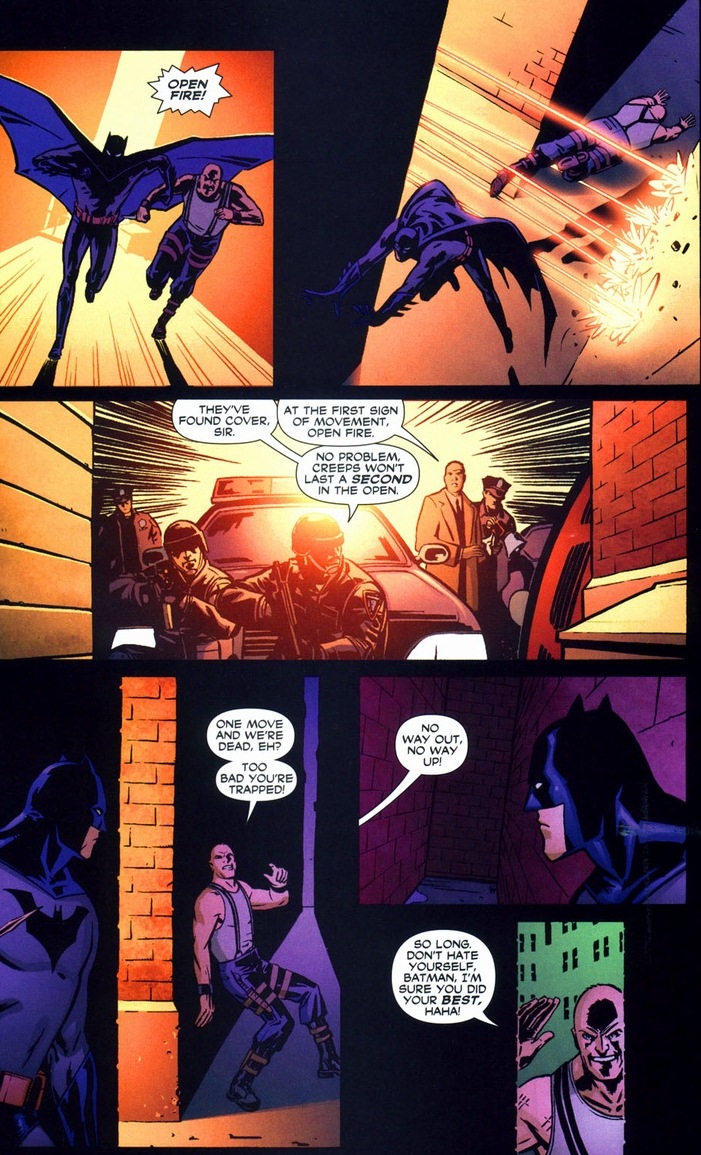

One of the main reasons I picked this arc for an article is for the next scene alone. I firmly believe that McCarthy started his script with Batman’s final line and worked backwards. I’m talking middle-of-the-night-wake-from-a-dead-sleep pun.


That’s the closest Batman’ll get to a joke. Enjoy the moment.
Superman being awesome
Posted: 01/15/2013 Filed under: Characters, DC Leave a commentWe all get it. Superman has a bijillion powers and is stronger, faster, and tougher than any superhero alive. So what? Embrace it! While I love a hard-boiled detective noir with clues and struggles as much as the next literary connoisseur, many times I just want to read a big strong guy who punches bad guys really hard. Today, we’re getting just that. Slip into your Aquaman boxers and Green Lantern Snuggie, because we’re getting see Superman being Superman. Zero apologies.
Moment #1
Check out Superman #217, written by Mark Verheiden and drawn by Ed Benes. As required by DC law, Jimmy Olsen and Lois Lane have been kidnapped.

Interesting to note: the next few pages start from when the bullet’s fired.
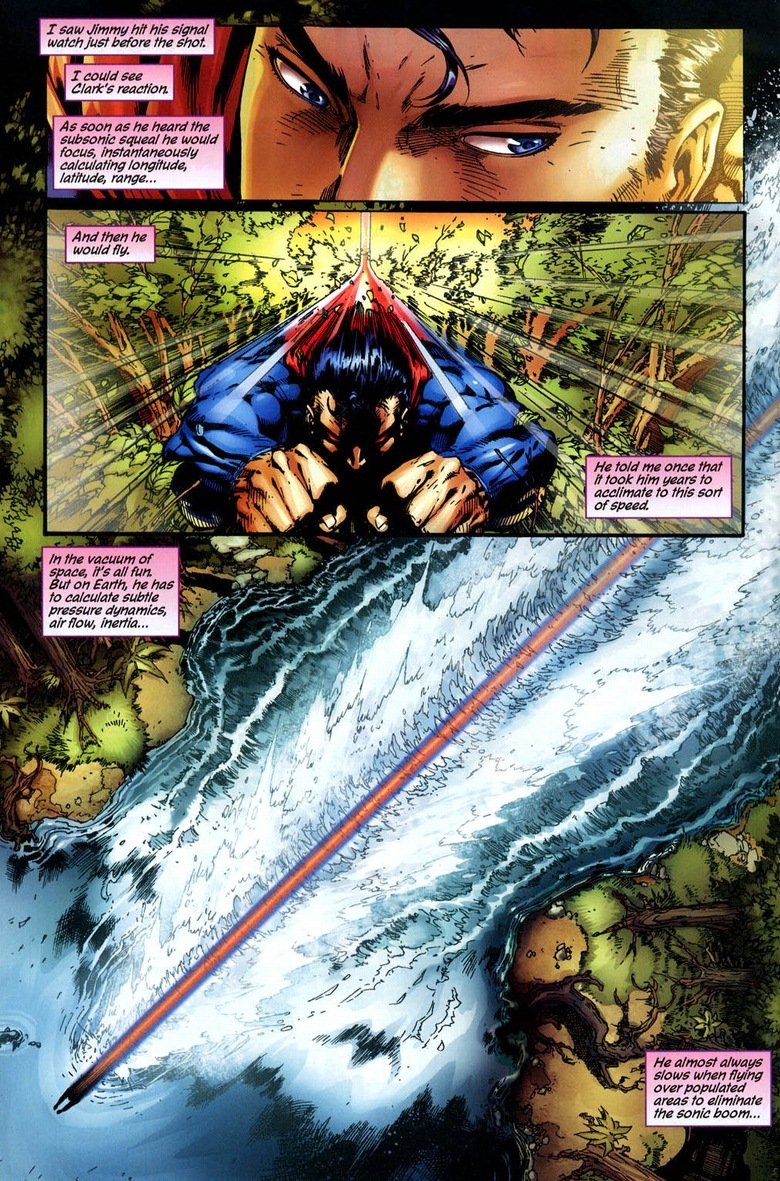
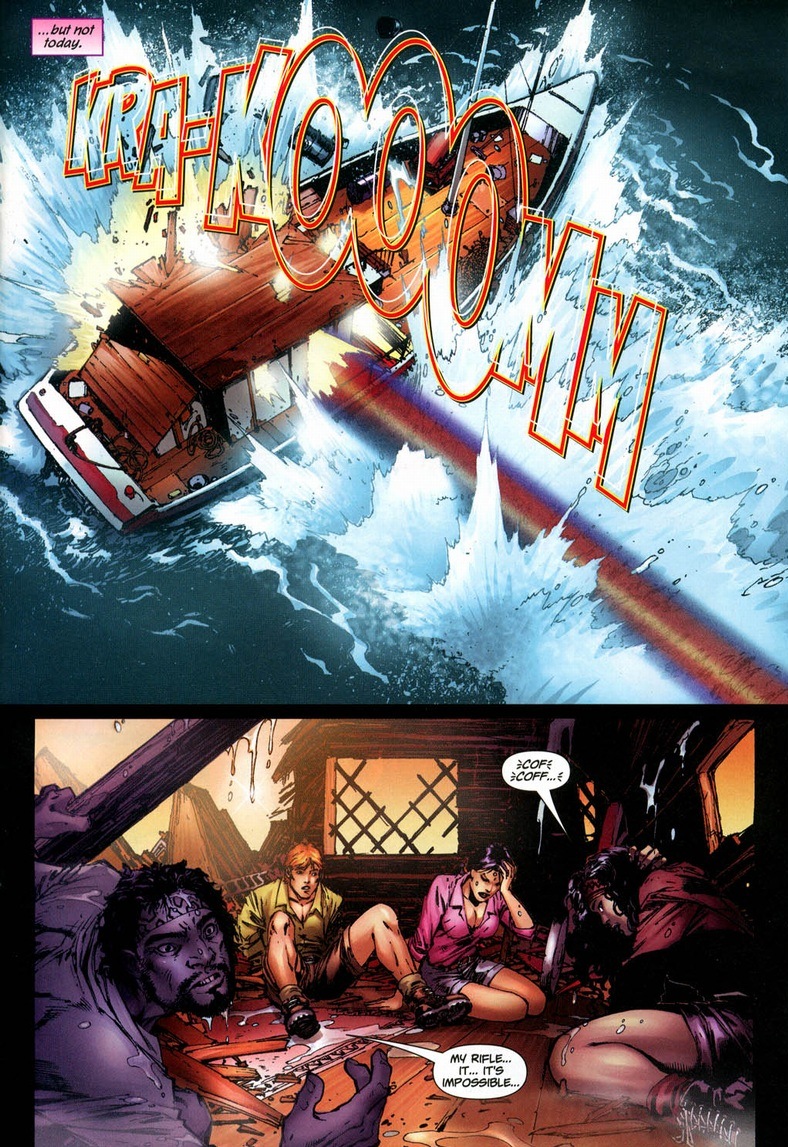
You remember the signal watch from the old days? Jimmy Olsen got into so much trouble that Superman gave him a little tool that instantly alerted the Man of Steel when something went wrong. Like once an issue. Now I don’t want to cry foul, but most journalists got their Pulitzer without the help of the most powerful being on the planet.

Enough goodie-goodie stuff. Want to see an insane Superman?
Moment #2
In Superman #185, written by Chuck Austen and drawn by Tom Derenick, poor Clark Kent has had a tough few weeks. The prologue will tell you:

In the Silver Age of comics, Superman was well-known for being a jerk. Whole websites are devoted to that. Every once in a while when PTSD sets in, the Man of Steel reverts for a few precious hours.

Don’t feel bad for Barrage. The guy’s a joke and he knew better, especially when Superman knows who you are. He has some armor that gives him some protection, and truthfully, he’s the type of supervillain that Batman would just Robin after instead of wasting valuable time pursuing himself. The pantsless Robin.

By the way, that’s the end of the fight. No plans to lock Barrage in prison or catch him just as he wet his pants. Nope, Superman chucked the guy a few miles and now he’ll go about his day.

The end. Of course the real plot involves Superman visiting sick children in the hospital. I’m serious. He can bench press the moon and he’s a better person than you.
Moment #3
I don’t want to say that Superman’s a teacher, but sometimes school has to be in session. Like in Superman #185, written by Geoff Johns and drawn by Brent Anderson.
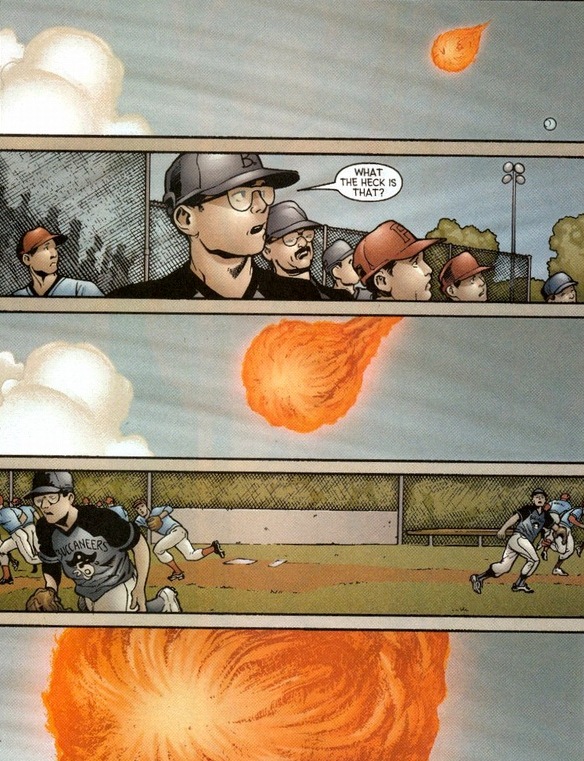
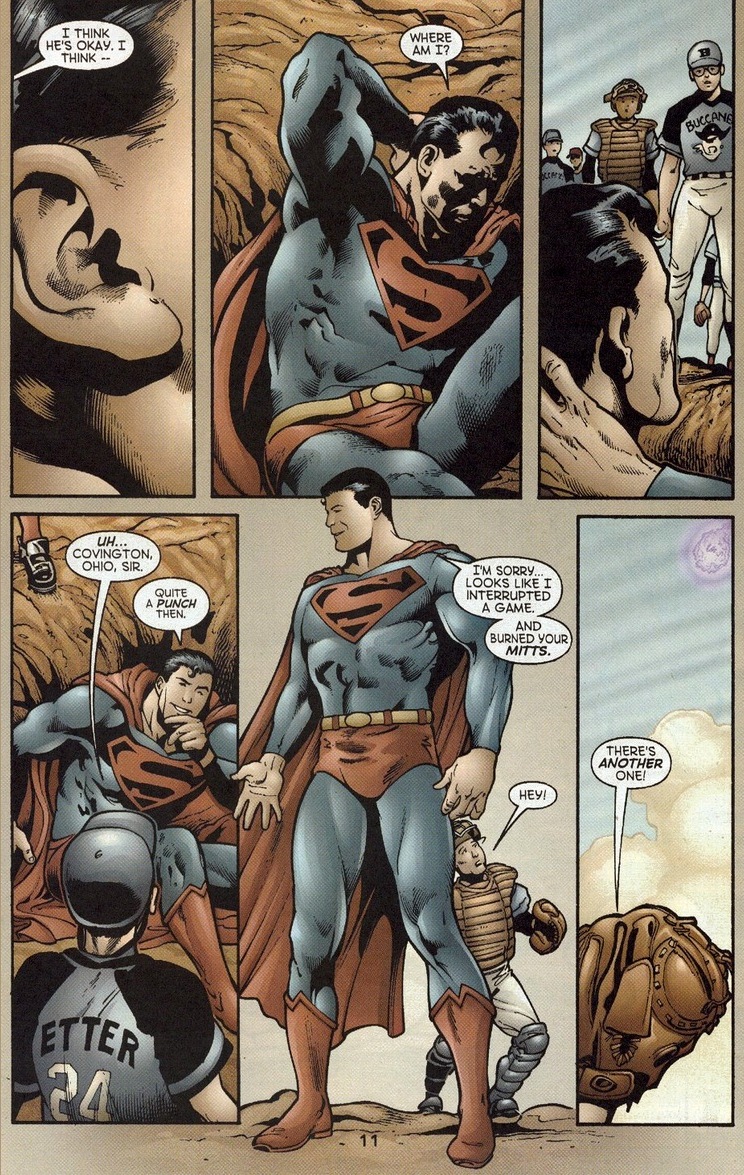
The man’s a gentleman, can’t deny that. The kids would be lucky to get so much as a growl from Batman, though a hit like that would most likely just cover the team in Batman goo and batarangs from the once-Dark Knight.
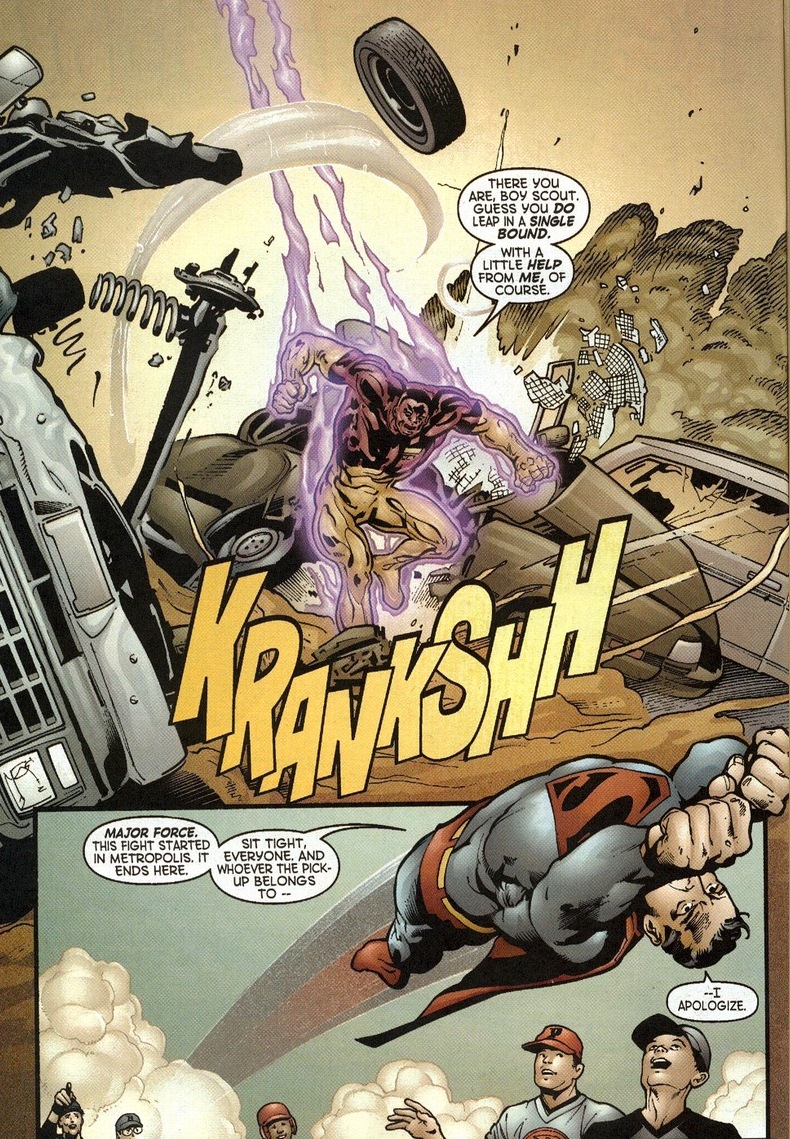

Next, Major Force makes a major mistake. Well, that and starting a fight with Superman. Y’see, like most supervillains, Major Force believes that he can take advantage of Superman’s kindness and unwavering morality. I mean, Superman won’t kill him, but understand this: maybe some skepticism would do a supervillain good.


If you don’t love Superman, you’re wrong. Absolutely wrong.
Doctor Octopus bullies Iron Man
Posted: 01/10/2013 Filed under: Characters, Marvel 2 CommentsIn comic books, geniuses live like kings. Cool powers (both super and authoritative), good-looking significant others, and the respect of billions. While society can argue otherwise, comic books are sort of a soap opera for nerds, so why not glamorize the culture that supports the industry? And in the comic book world, I think Tony Stark’s intelligence gets a little downplayed nowadays in favor of his pew-pew armor, and that’s unfortunate. He’s almost certainly in the top ten smartest people in the world and can easily go scientifically toe-to-toe with genius heavyweights like Mr. Fantastic, Hank Pym, Black Panther, and Beast. Oh, and Doctor Octopus.
In Invincible Iron Man #501-503, written by Matt Fraction and drawn by Salvador Larroca, we see the two scientists at their peak with dangerously high stakes — like most science competitions I imagine. Doc Ock gets Stark’s attention the only way a supervillain should.


We get the crippled, dying doctor this time. As you can imagine, he has a proposition. An evil proposition. By the way, if you’re a supervillain who spends most of his time living in caves and underground sewer lairs, it’s hard to get word out about the whole sickness thing. Spider-Man certainly won’t be able to find an appropriate time to insert this info during Avengers dinner, and Doc Ock can’t make a big announcement holding Oprah’s hand or anything.


You enjoy ego? You’re going to get 20 images of it. Despite discovering he’s nowhere near as invincible as his series suggests, Iron Man still possesses the self-esteem of a high school star quarterback and Octavius has mastered the art of gloating years ago. To recap, either Stark fixes Doctor Octopus or admits he can’t do it. That’s it. And oh, how he’ll try — ego’s at stake after all — but not before a verbal beatdown. I mean, the doctor did shoot a rocket through Stark’s penthouse.


You must be wondering why doesn’t Stark just laser blast him into space and go about his day texting models. Well, two reasons. First, and I didn’t show you this, the slightest repulsor blast will cause the nuke to go off. More importantly, his friends are being held hostage by Electro and Sandman. You can make many criticisms of Doc Ock, but the man’s called the Master Planner for a reason.
By the way, if you’d like incentive to buy this book, have you ever wanted to see Pepper Potts battle two of the Sinister Six? Of course you do. Here’s a taste:


Girl’s been upgraded in the past few years. Far away, the battle of wits commences in the secret Octo-dungeon. And the diagnosis?
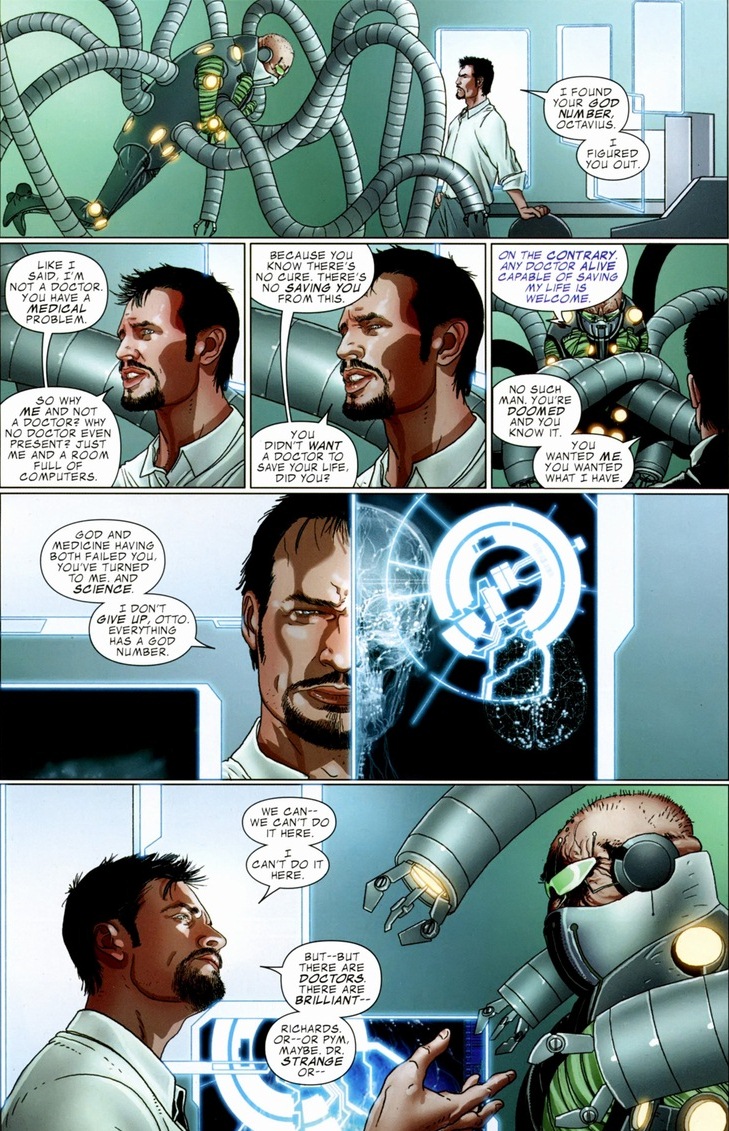
In the next few pages, Stark makes one of the most compassionate and honest speeches I’ve read in comics. Y’know, the problem with being a good guy is taking time to make sure even the bad guys don’t die unnecessarily. It’s a tough break.


Look, as the violence starts, just remember that Iron Man tried. He really did. While Stark has matured as a character the past few decades, the same can’t really be said about Octavius.
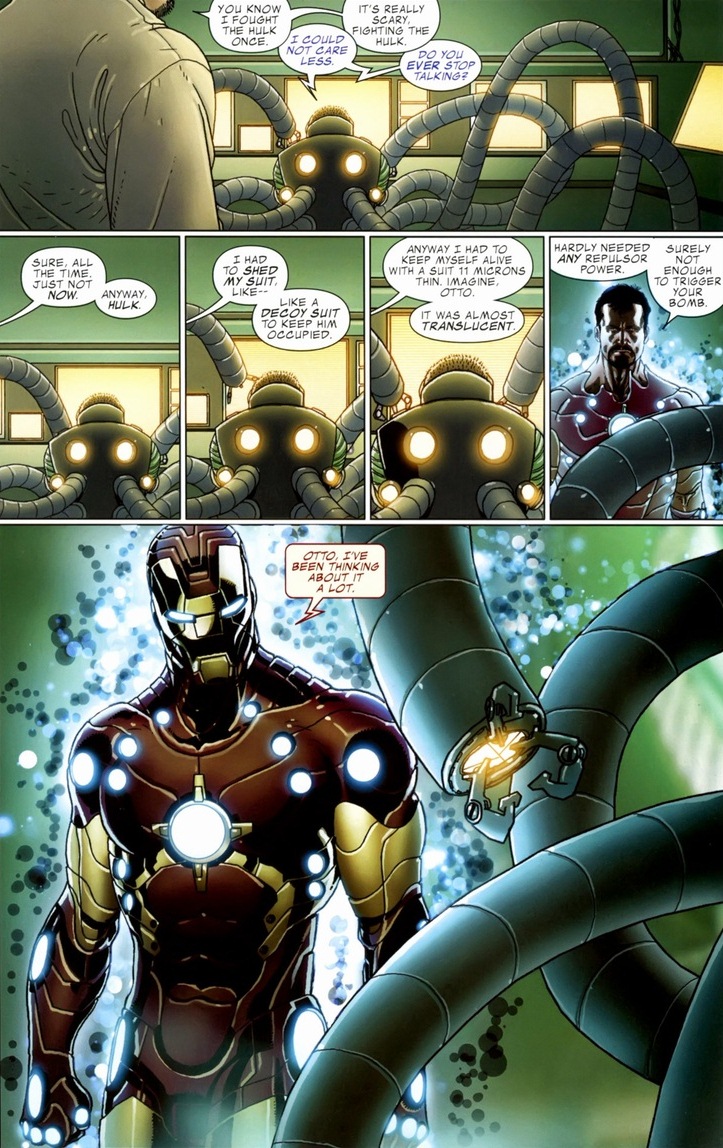

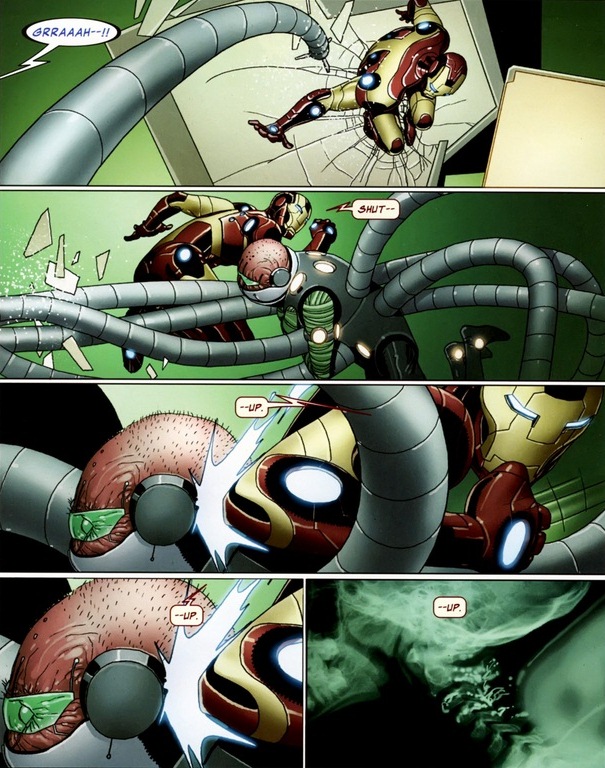
Would Iron Man win this brawl if it continues? Definitely, but I mentioned it before — Doc Ock prepares for everything. He’s an evil, fatter version of Batman.
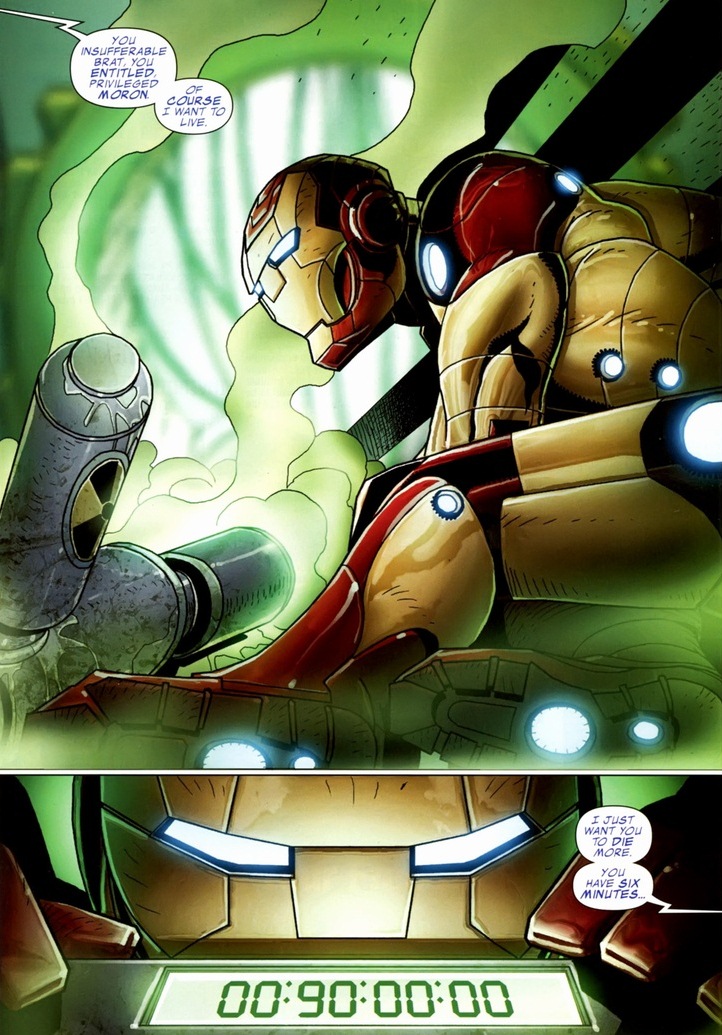
Unpredictability and back up plans for back up plans have made Doc Ock one of the most dangerous Spider-Man villains, with his metallic arms usually the least powerful of his weapons. And when Stark faces the situation at hand, he realizes the truth: he just lost to Doctor Octopus. So now, how’s he going to get the bomb disarmed? Remember that other option Stark had back in the beginning of the story?

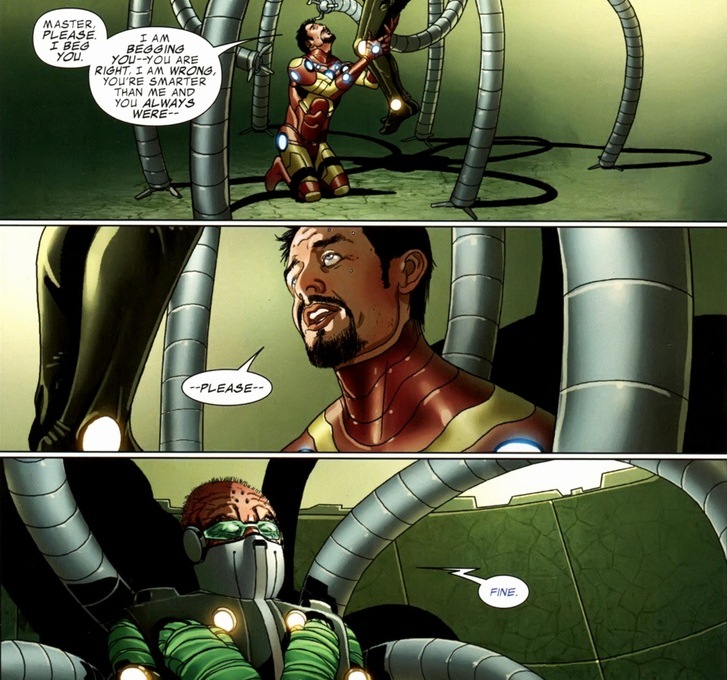
You should be uncomfortable. This is an embarrassing moment for all of us. But as a character known for incredible narcissism, having Stark so quickly and easily shed his dignity shows Iron Man as the admirable and respected man we expect from our superheroes. Not the crying and begging part, but the sacrifice of Stark’s self to protect the helpless. That’s literature as it should be.

By the way, if you check earlier, Doc Ock totally does call it a bomb. City saved, but a tough day for Iron Man. At least Stark has the consolation of Octavius’ impending doom a few months from then. Well, I mean he did until last month.

We’re done with Doctor Octopus for a while, I promise. Go check out Superior Spider-Man #1 that went on sale this week — mainly to support Dan Slott and his endeavor in trying to tell new, interesting stories for characters that have been around for fifty years. Seriously, I’ve watched some of the YouTube rants that rail against the body switch and there’re wrong. Every one of them. Our culture thrives through innovation and crazy ideas, so why not let Spider-Man get in on that?
A Green Goblin intermission
Posted: 01/06/2013 Filed under: Characters, Marvel 3 CommentsWe have two more days of Doctor Octopus after this, but every once in a while in my “research,” I come across something that makes me do a literary double-take. Yesterday, I read Peter Parker: Spider-Man #44-47, written by Paul Jenkins and drawn by Humberto Ramos. A visceral excitement overwhelmed me. While not perfect, the story amazes and the art’s so emotionally done that I have to interrupt our Doc Ock stories so I can share this with you. Immediately.
Let’s briefly get into a little publication history of Green Goblin. He premiered in Amazing Spider-Man #14 and quickly became Spider-Man’s arch-nemesis. Until Amazing Spider-Man #121 in 1973. I can’t overstate the importance of that issue not just for the characters but for comics in general. At the end of the issue, this happened:

The Green Goblin threw Gwen Stacy off the George Washington Bridge and when Spider-Man tried to save her, the immediate stop from his webs broke her neck and killed her. Brutal, sure, and the first moment in comics that truly shocked readers — before that, the death of a major character was unthinkable. Amazing Spider-Man #121 ended the Silver Age of comics single handedly and brought forth the edgier Bronze and later Modern Age of comics. Nowadays, comics kill off major characters like a throw at a superhero dartboard, but this was a way different time for the literary medium.
Norman Osborn, the Green Goblin, accidentally caused his own death in the next issue. And he stayed dead for 23 years. For newer readers and those who caught onto comics in the past decade or two will always see Green Goblin as the web-slinger’s most dangerous and influential foe. How can we argue that a man who was absent for half of Spider-Man’s entire history could possibly be his number one baddie? Today I hope to prove it.
As we start our story, Parker’s had some tough days. He’s still estranged from his wife, for one.


And as thus commanded of a superhero’s life, things get worse. Much worse.
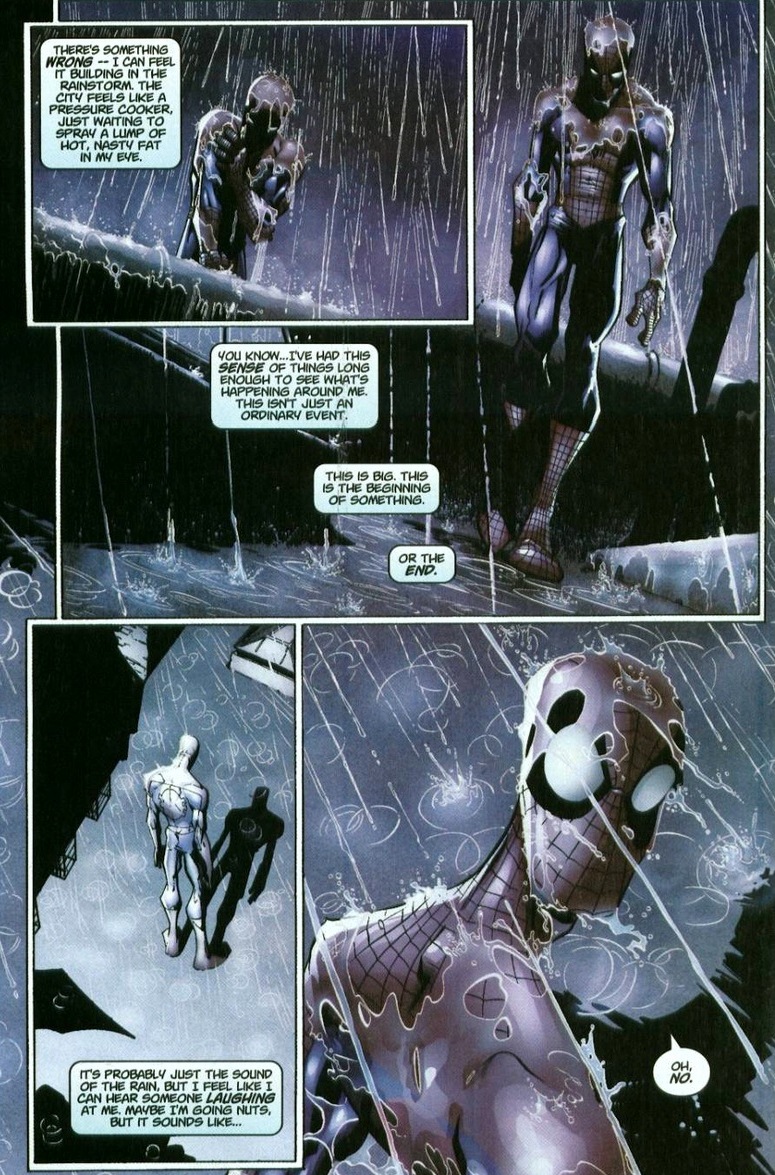
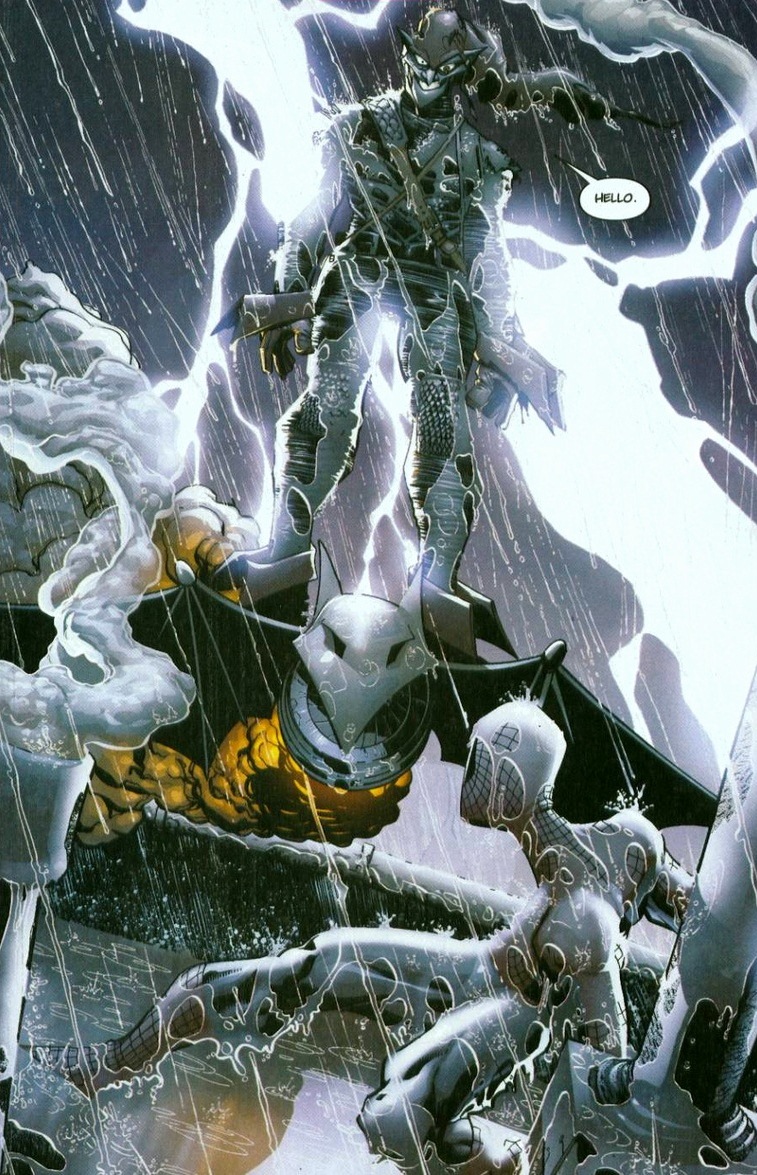
Green Goblin didn’t ambush our hero just to lob a few pumpkin bomb and have his jollies. I mean, he’ll do that, but with his son Harry (currently) dead, Osborn needs a successor to the Green Goblin throne. Comes with a Fortune 500 company and a supervillain arsenal that rivals small countries. Spider-Man’s always been the worthiest contender in Osborn’s mind — all Osborn has to do is rip out that sense of morality and instill a bloodthirsty hatred and vengeance. Sounds easy enough.
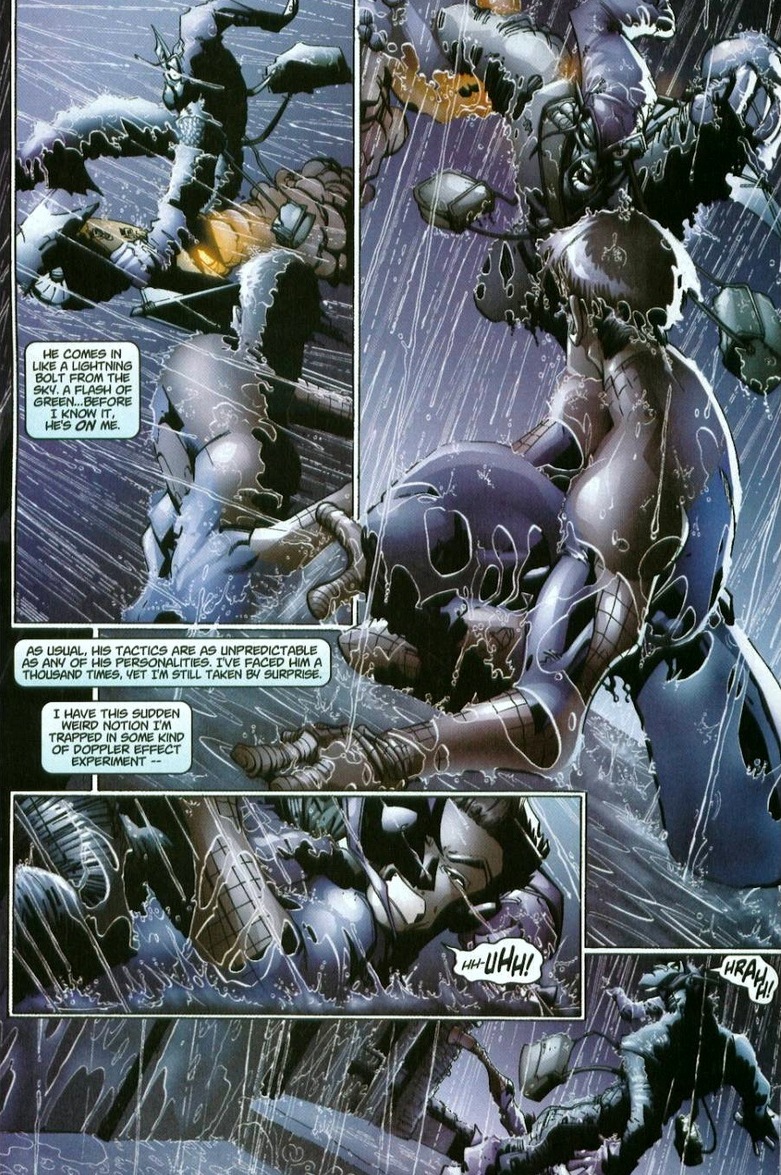

Green Goblin’s plan involves a lot of heartbreak and emotional devastation. That’s what makes him the arch-nemesis. Y’see, he knows Spider-Man’s secret identity as Peter Parker since the 1960s, and unfortunately, part of his “convincing” involves forcing Parker to accept and embrace his anger and hate. Very Jedi/Sith stuff. Look, Spider-Man doesn’t have the emotional fortitude of killers like Wolverine (though even Wolverine gets overcome with guilt and runs naked in the forest every five or six years). Parker killing a man will set him on a path that he won’t recover from. A supervillain slippery slope. Green Goblin totally know this.
First on the innocent victim checklist:
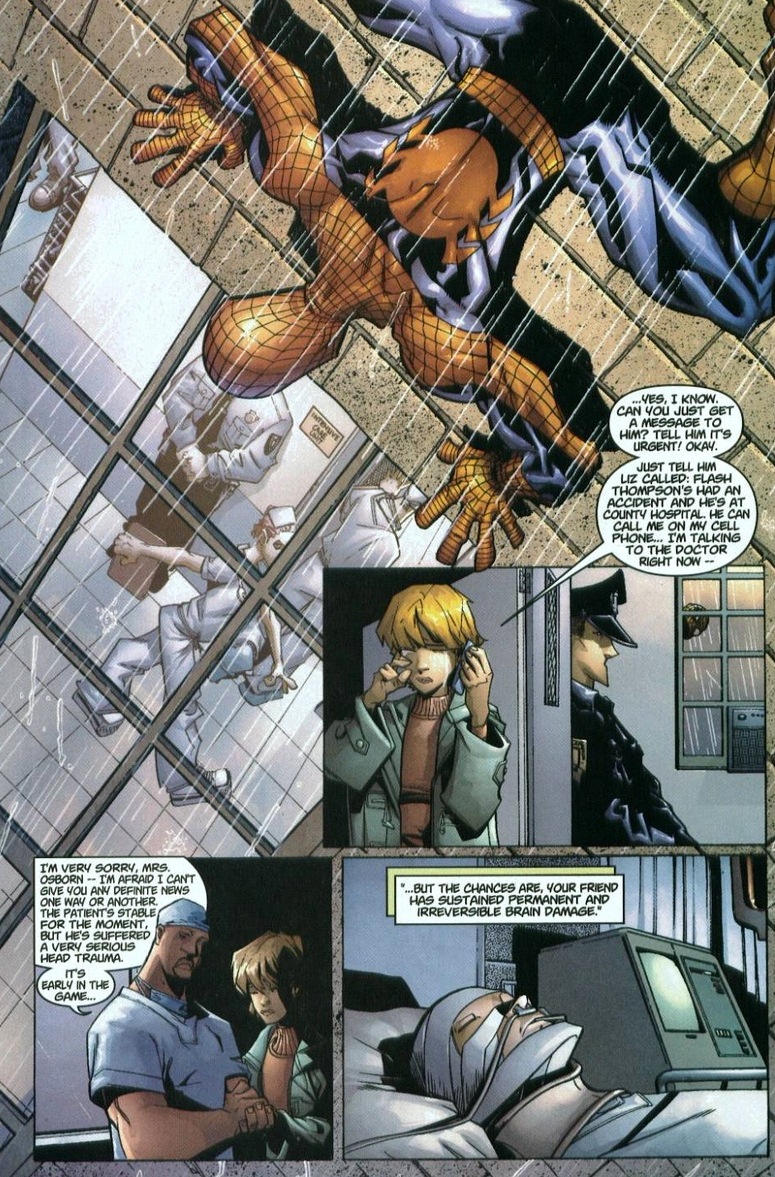
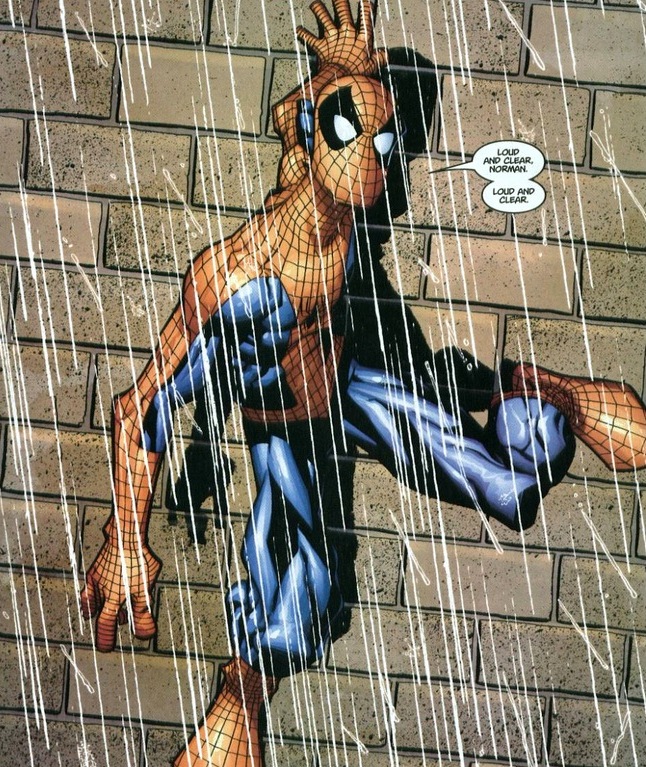
Obviously, Spider-Man isn’t about to let anymore of his friends or loved ones get hurt. Time to end this insane, rambling charade. Just a heads up, I cut out large portions of the upcoming issue-and-a-half brawl, but I promise all the important stuff’s still in there.


Did you know Harry Osborn and Liz Allan (another childhood friend) got married and had a son? The kid’s named Normie and probably about three or four years old. There’s some trivia you’ll never need.

And with that, the Green Goblin’s won this round:

Phenomenal page by Ramos. C’mon, the green goop dripping down, the tears in his eyes, that death stare, the purposely tiny text — this page is a masterpiece. I’d print it out and frame it, but I think the picture’ll bring up too many questions without context.
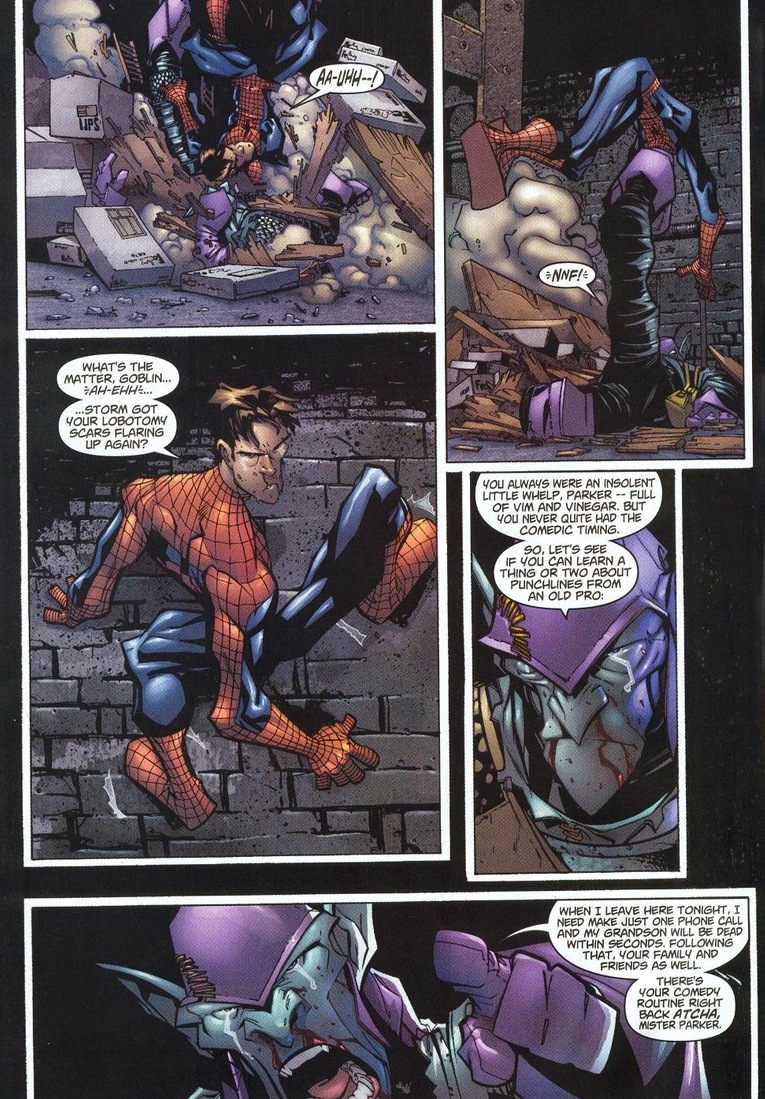
Oh, the beauty of Green Goblin tears. Yeah, that’s probably from the spicy green goop, but can’t a case be made for the frustration and emotional intensity both of them are experiencing? Osborn’s entire legacy hinges on this fight.


Both foes are roughly the same durability and strength, but Parker could absolutely crush Osborn’s skull into goblin paste in a heartbeat. And with that threat the Green Goblin just made?

Of course Spider-Man can’t kill anybody, no matter the stakes or the leverage. That’s what makes him a superhero in the first place. I want you to pay close attention to this next part. Parker and Osborn have a heart-to-heart they’ve badly needed for decades.
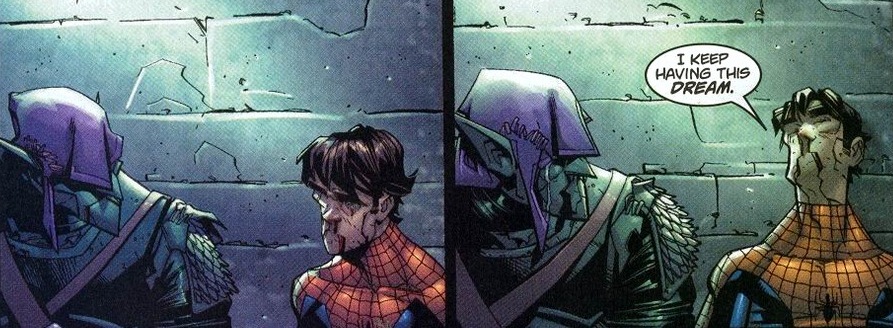

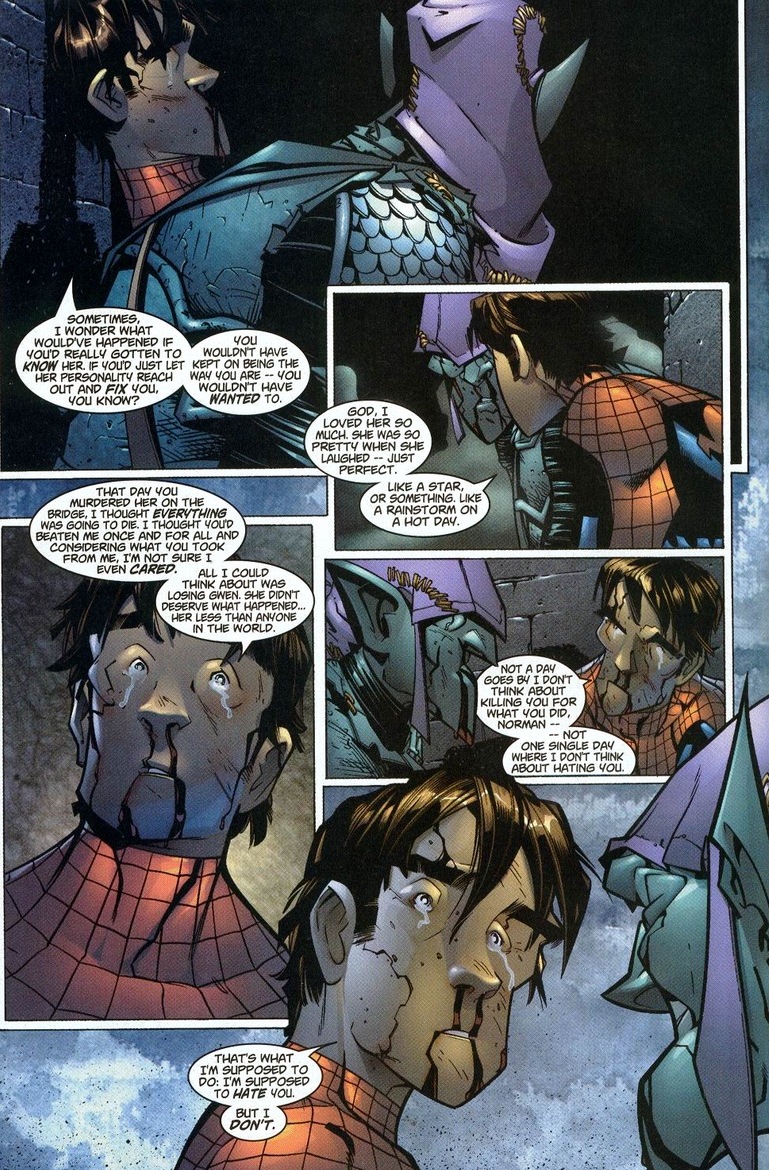

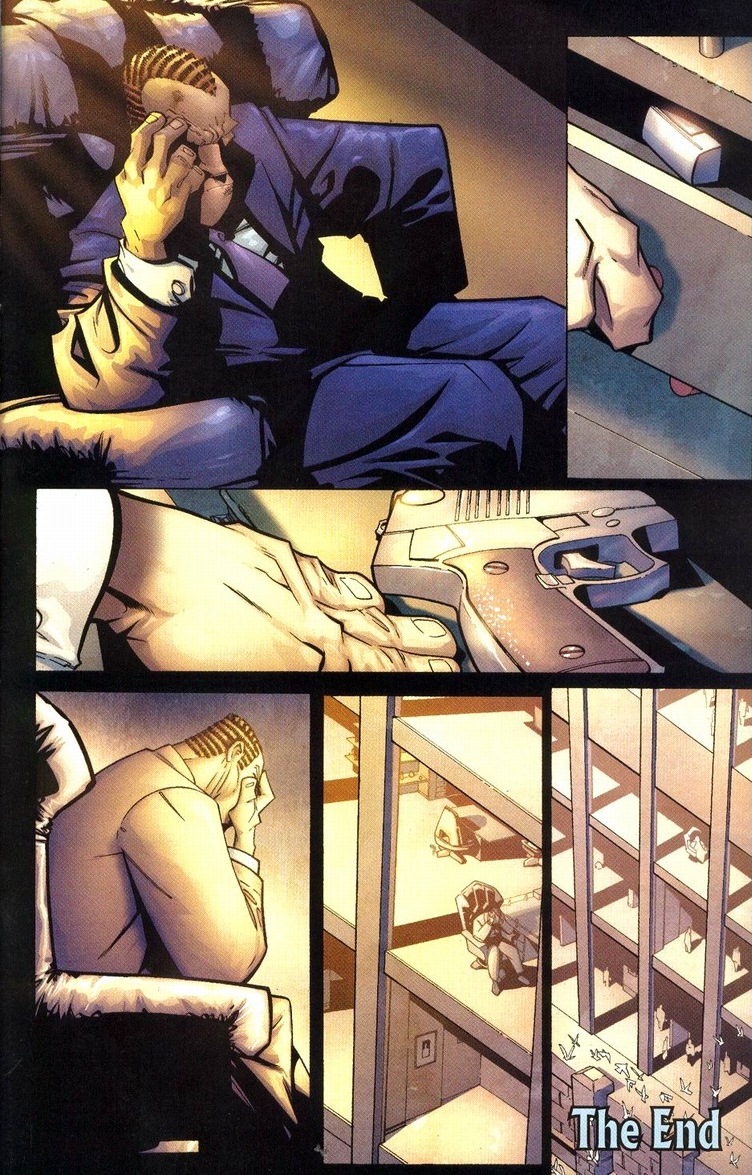
The worst part of that verbal exchange? The words hit harder and truer than any punch could. Parker’s shown his unbreakable morality — the reason we love and value him so much as a character. Spider-Man won, Green Goblin lost. As it always will be.

I explain the events that led up to Superior Spider-Man
Posted: 12/30/2012 Filed under: Characters, Marvel 15 CommentsBy now you must know that Marvel’s current longest running series Amazing Spider-Man ended on Wednesday with Peter Parker’s death and Doctor Octopus taking over the Spider-Man role. I can already hear the groans from millions of comments on Yahoo! News. And yes, without knowing anything (and an attitude smeared in bile and rage), it’s a strange and frustrating idea. I’m here to reassure you that nope, this will be fantastic — quite possibly one of the best things to happen to Spider-Man in a long time. The Amazing Spider-Man writer Dan Slott has only written genius, and as I explain it all to you from the beginning, I hope your fears will be abated as well.
The very first seeds of this switch were planted way back in Amazing Spider-Man #600, written by Slott and drawn by John Romita, Jr. Y’see, turns out that Doc Ock’s supervillainy career hasn’t been all moneybags and maniacal laughs.
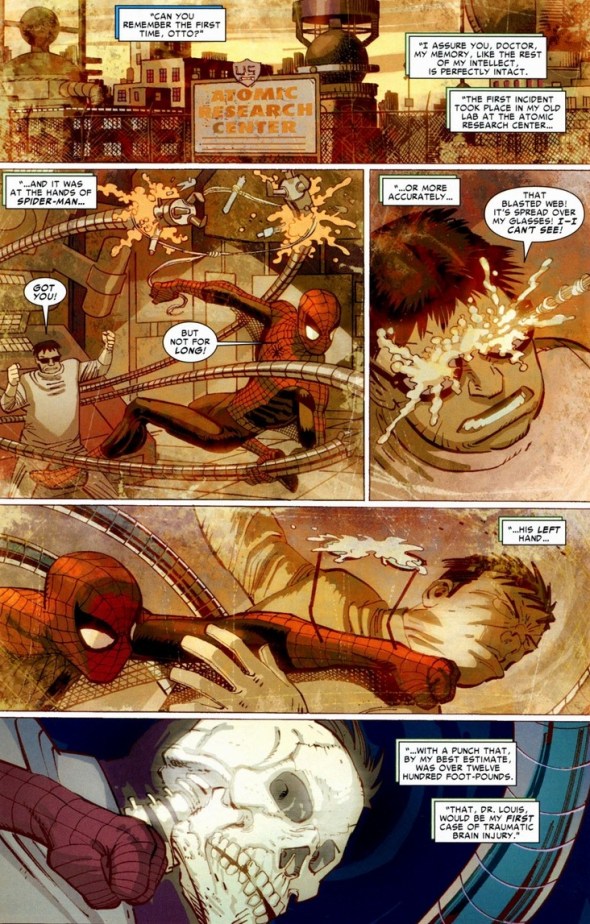
As you figured, Otto Octavius has been pummeled quite a bit in his 50 year history. Click on the next picture for a larger version:

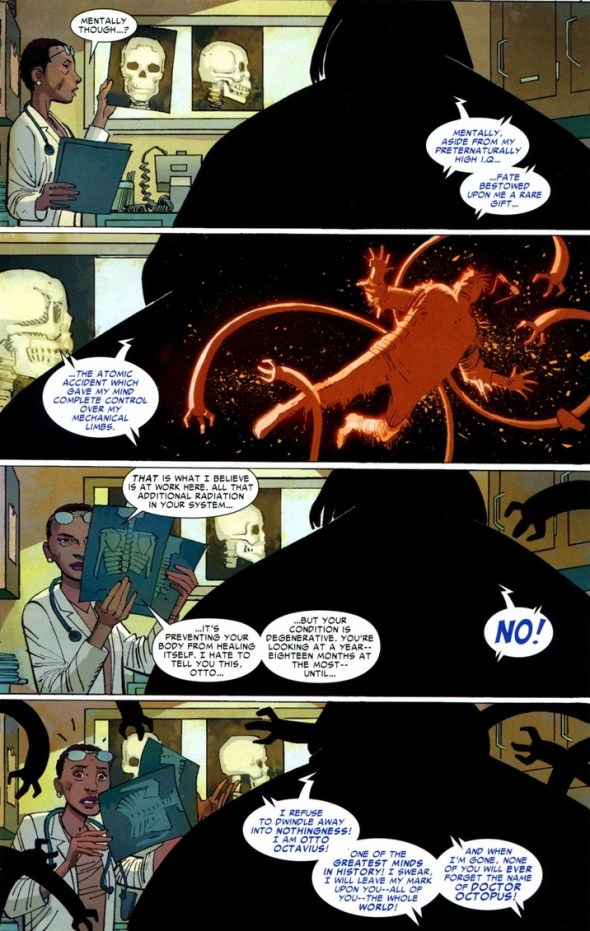
Doctor Octopus is dying. Nothing can be done about it. But unfortunately, a man of that ego won’t go peacefully. Nope, time to skip robbing banks and put forth more ambitious plans.
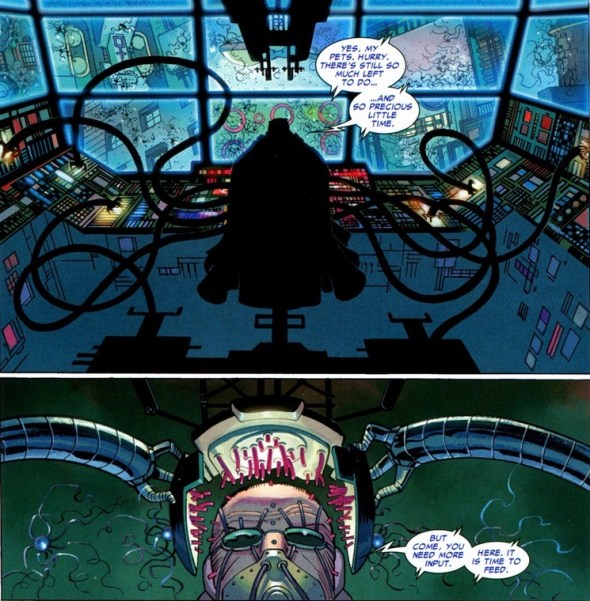
Now, why is this important to Superior Spider-Man? It’s what happens next:
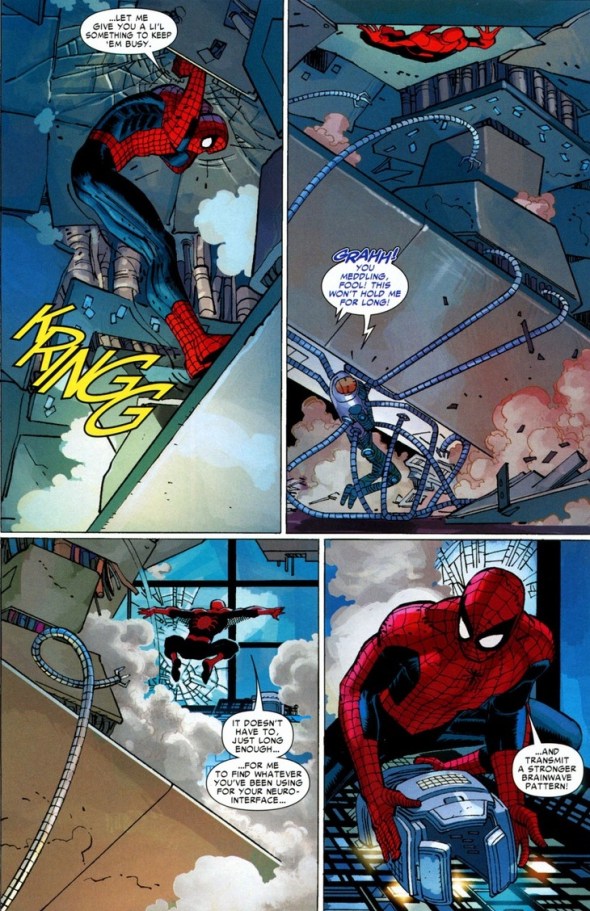
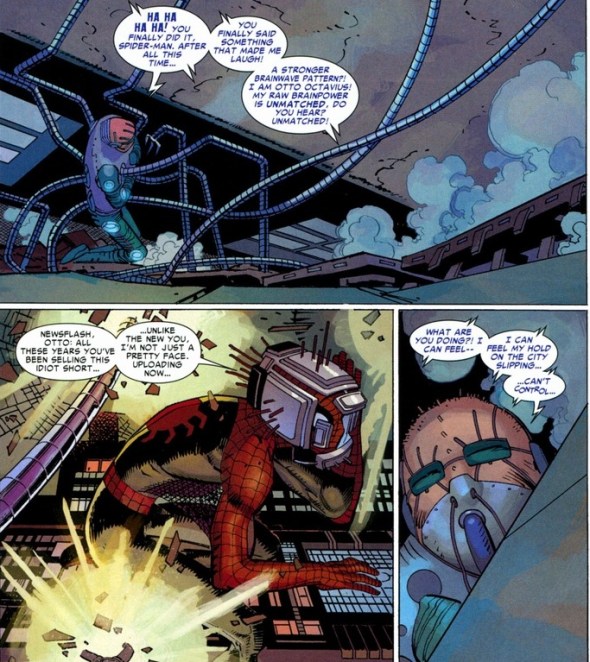
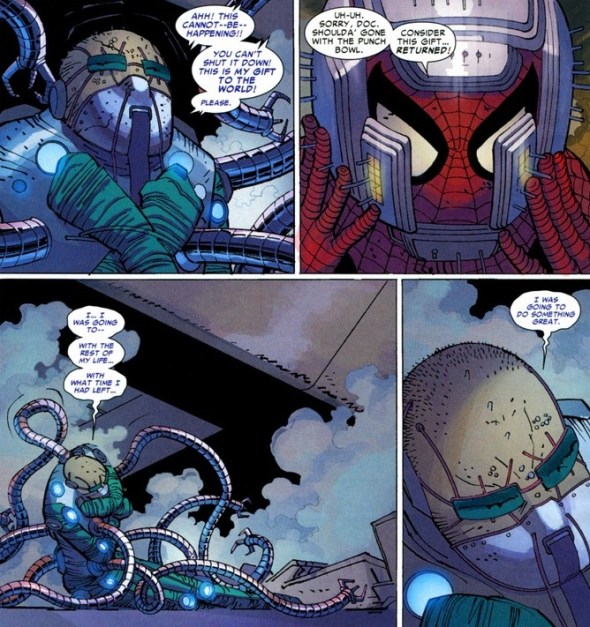
Notice what happened? Using Doc Ock’s own device, Spider-Man used his brain waves to overtake and control the Octobots.
In Amazing Spider-Man #672, written by Slott and drawn by Humberto Ramos, he uses it again in the conclusion of Spider-Island:
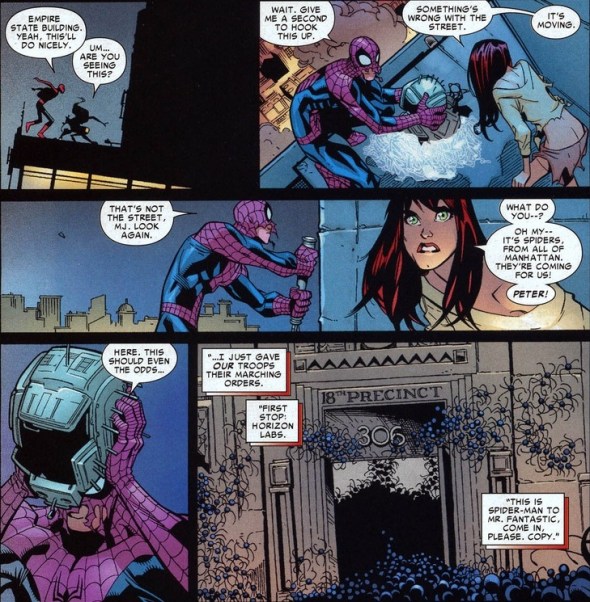
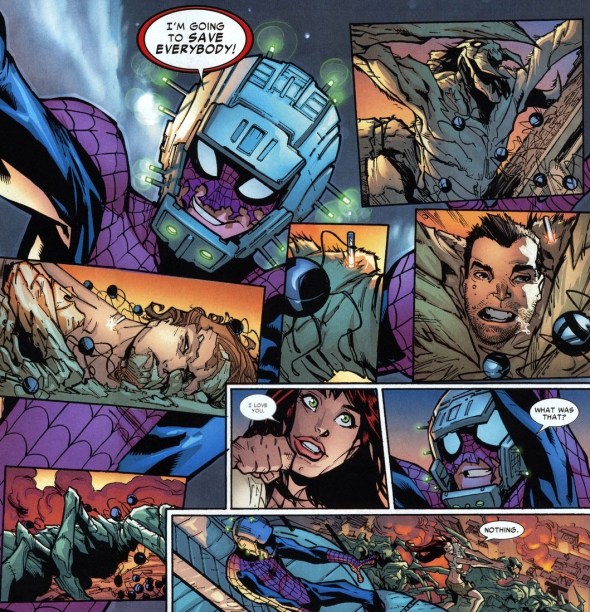
A few issues later, Octavius makes one final destroy-the-world scheme. Luckily, Spider-Man planned ahead complete with a new Doctor Octopus-proof suit as shown here in Amazing Spider-Man #687, written by Slott and drawn by Stefano Caselli:
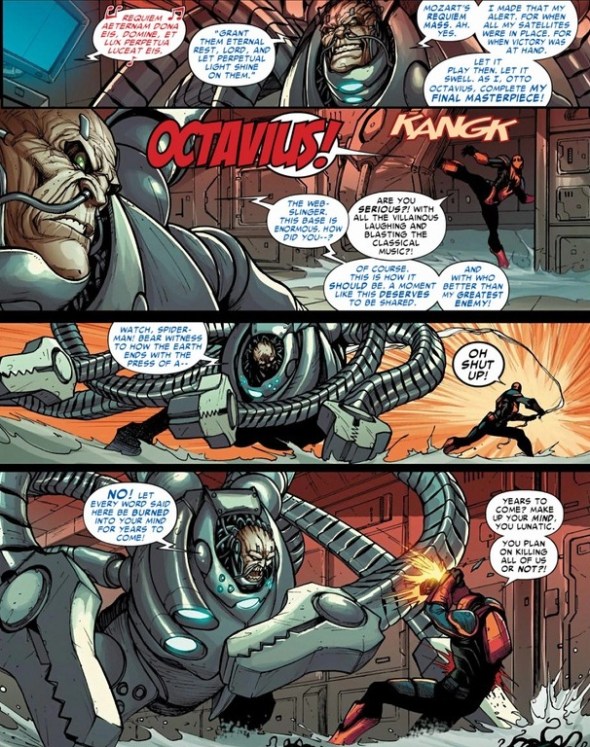
As you might expect, Spider-Man saves the world because Marvel comics have still been produced since this issue.
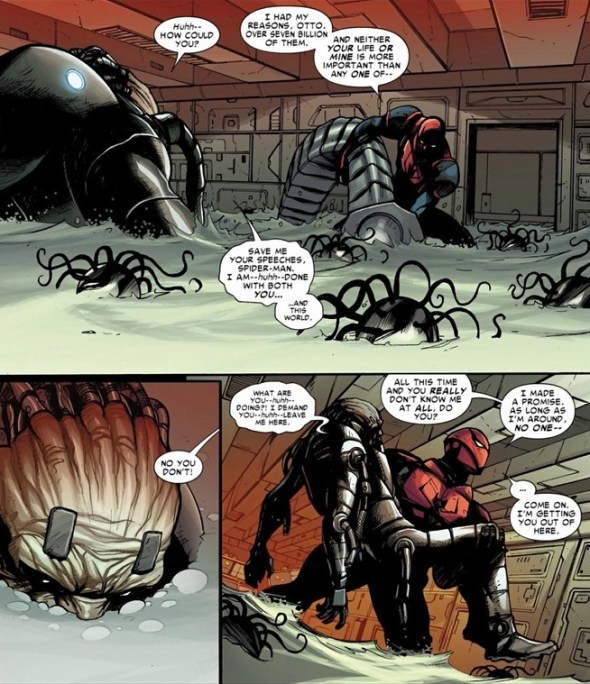
That cool Spider-Man outfit? One neat little addition was a device that tapped into Doc Ock’s brain waves, similar to the helmet Spider-Man has already used twice. Normally, that’s just one more reason why Spider-Man’s so resourceful and intelligent. Except for one simple fact: Doctor Octopus is smart too. Like a super genius.
Cut to Amazing Spider-Man #697, written by Slott & Christos Gage and drawn by Giuseppe Camuncoli. The main story’s about two Hobgoblins running around, but that’s not important. Notice anything special on this next page?
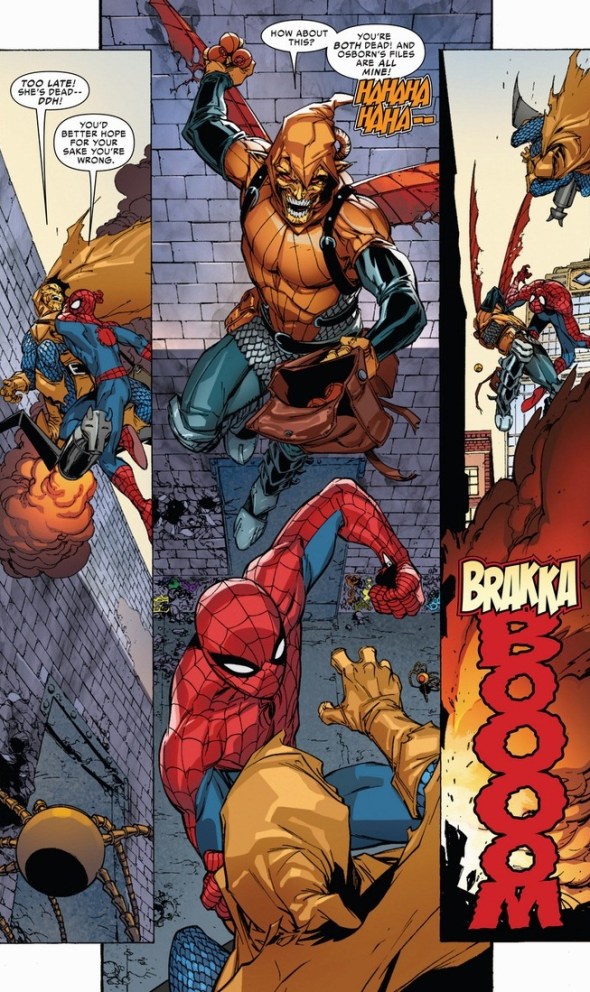
See that golden Octobot? It’s shown on many of the pages, but never actually focused on. A delightful part of the background. I, like most readers, brushed it off until the next issue written by Slott and drawn by Richard Elson.
It’s been 98 issues since Doctor Octopus was told he had a year (at most) to live. Time’s up.
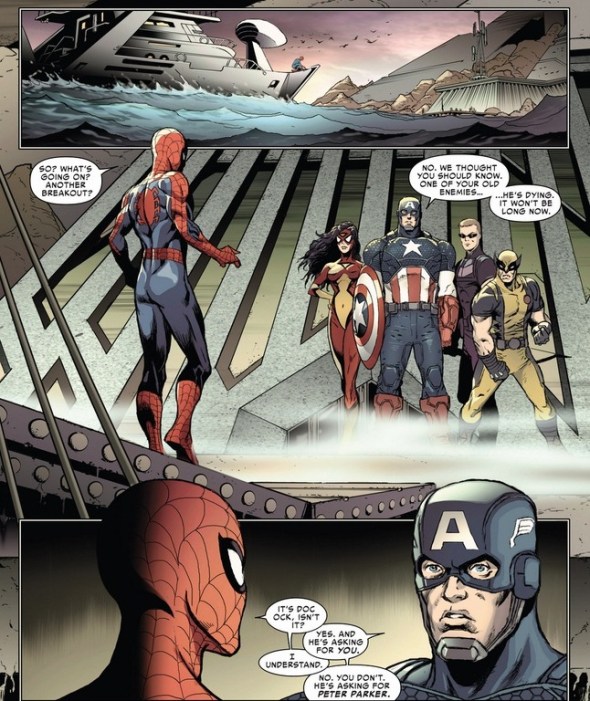
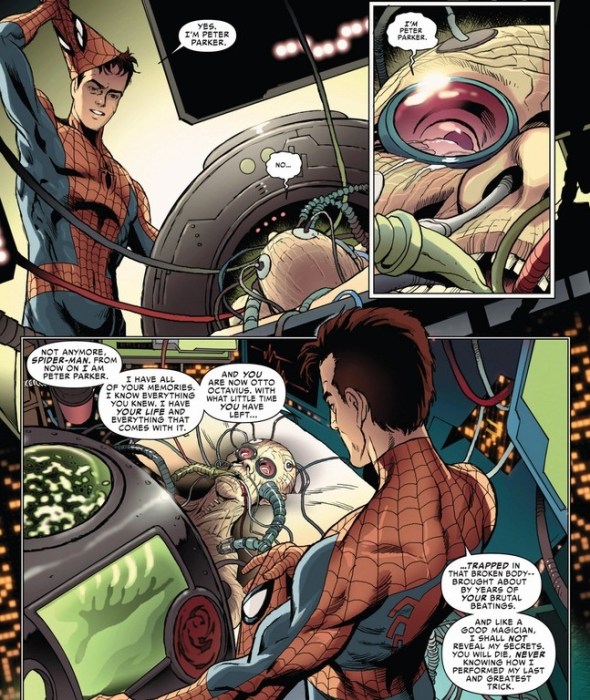
Honestly, I don’t think anyone saw that coming. And they’re lying if they say they did. Octavius’ final plan was to switch bodies with Spider-Man, taking with him all his memories and talents. How? Well, that’s what all this previous stuff has been about. Click the picture below for a larger version:
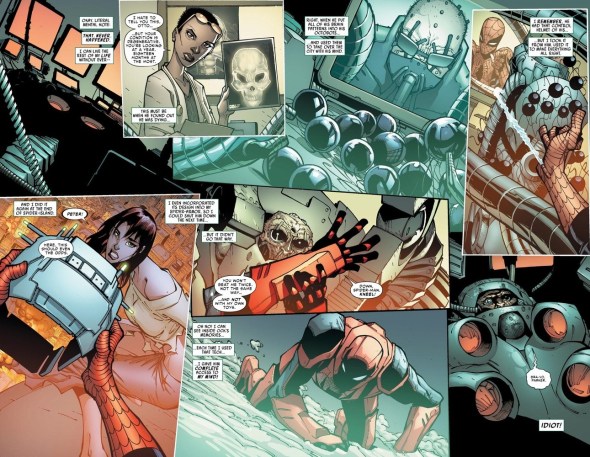
Don’t you see the amazing part? Spider-Man’s own genius backfired on him. His scientific knowledge and ability allowed him 50 years of defeating opponents tougher, stronger, and more numerous — and now, it’s that same skill Doctor Octopus exploited to open up and switch with Peter Parker’s mind. Beautiful!
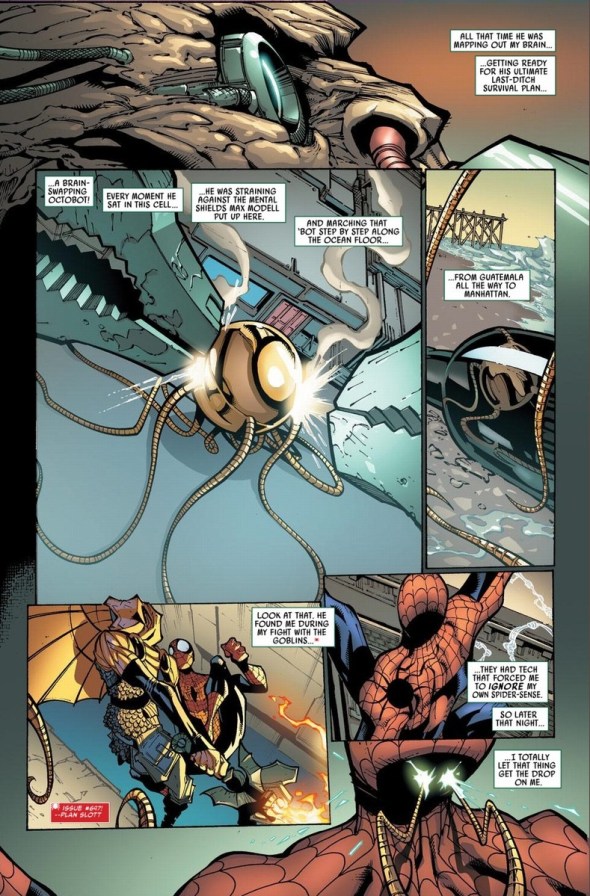
Now we cut to Amazing Spider-Man #700, written by Slott and Ramos. Parker as Doctor Octopus has broken out of jail to get his own body back. Unfortunately, he has minutes before he dies. And despite all his best efforts and plans, he loses. Doc Ock wins.
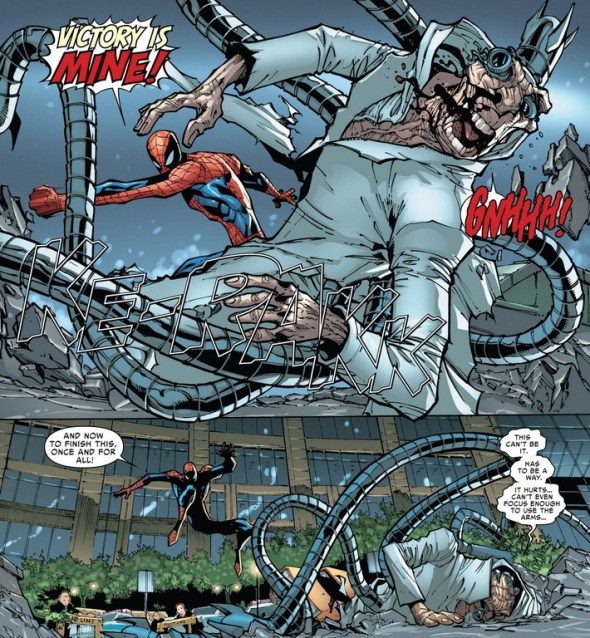
Octavius’ body has given out and Spider-Man’s in prime condition. No metal arm waving or last minute bursts of strength. So, in Parker’s final act, he uses the memories the two of them share to force Octavius to relive Parker’s most important memories. Why? To teach Doc Ock the one thing he’s been lacking all these years: empathy.
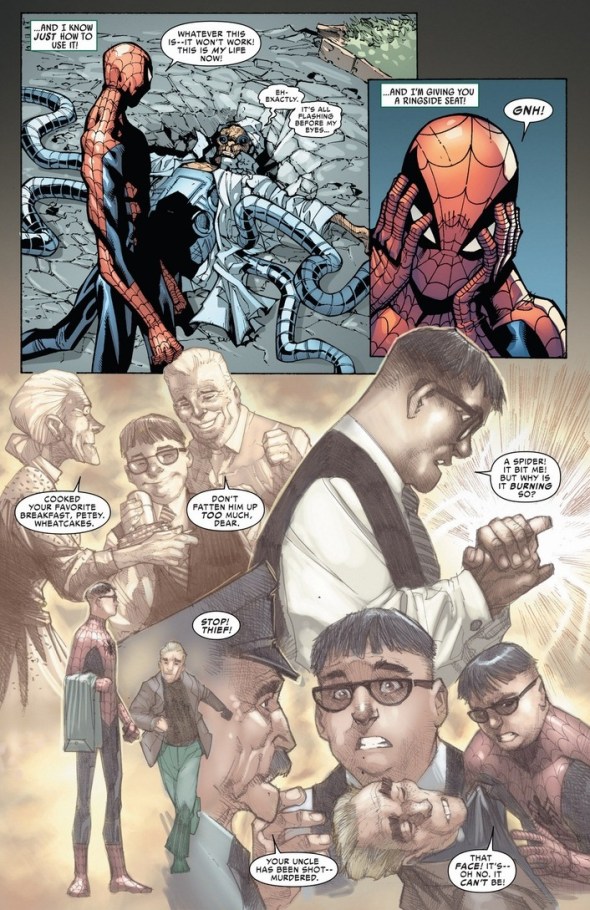
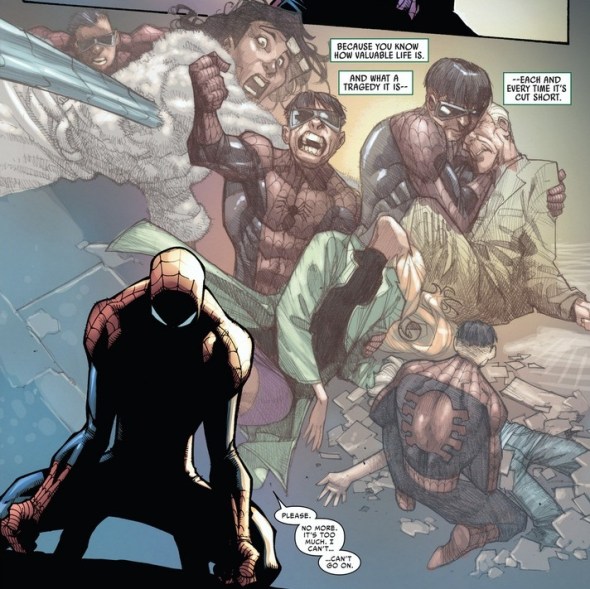
And more. Look, Octavius will live on as Peter Parker — that’s already been decided. All Parker can do is make sure his legacy as Spider-Man and Spider-Man’s role in the world lives on in the right way.
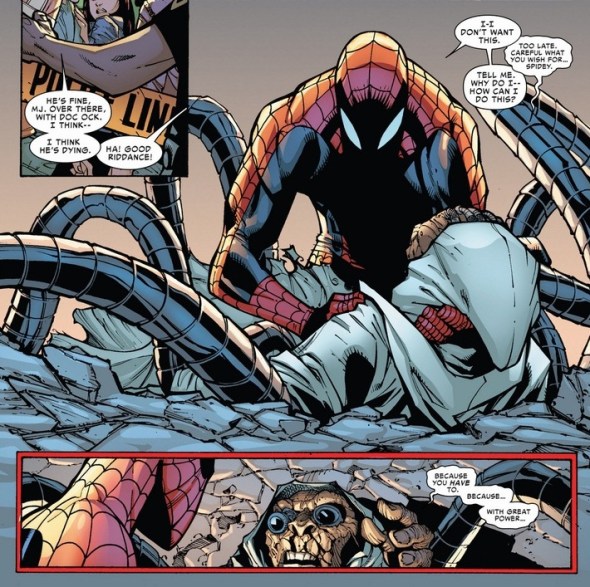
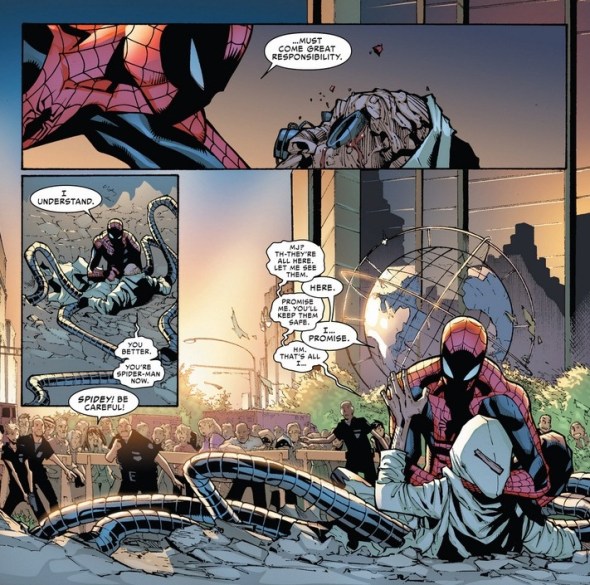
Please understand this isn’t some cheap ploy or gimmick. Superior Spider-Man will be around for a few years at least judging from the interviews with Slott. We get to see Doctor Octopus with a second chance on life, and more importantly, as a superhero. A better superhero.
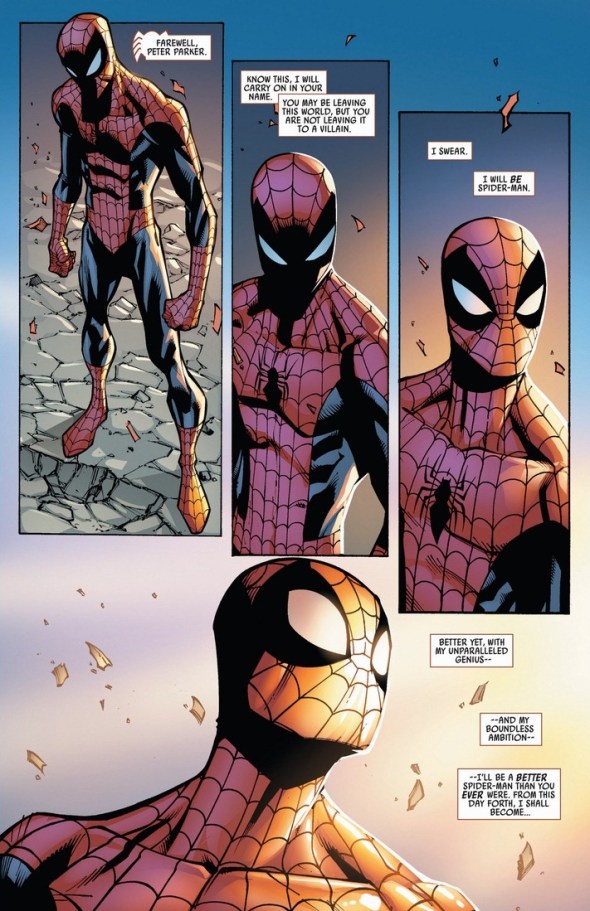
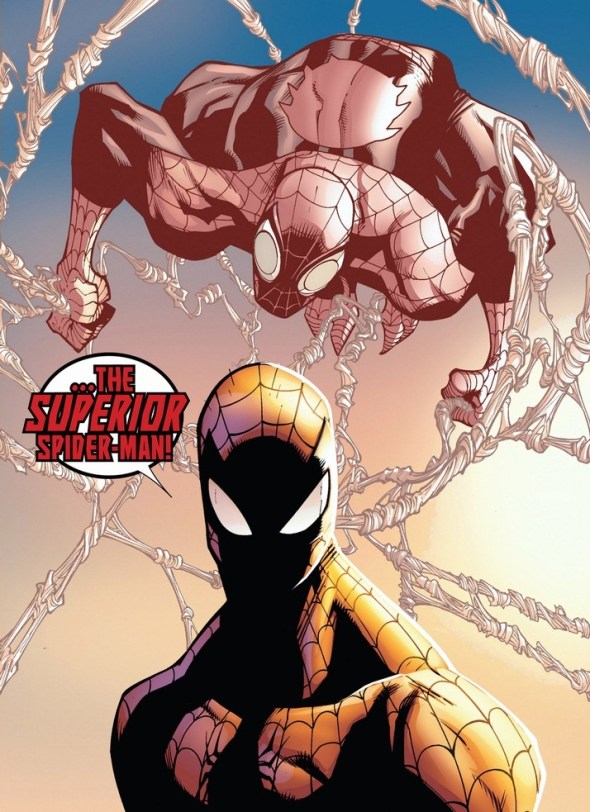
Trust me, Spider-Man is my number one favorite, and now we’re getting Spider-Man stories that have certainly never been told before in Marvel history. How can you not be excited? If you want more, check out Avenging Spider-Man #15.1 for the first issue starring the Doc Ock Spider-Man, and Superior Spider-Man #1 goes on sale in January. And finally, get your panties out of a bunch.
Nothing funny about Joker and the GCPD
Posted: 12/27/2012 Filed under: Characters, DC 3 CommentsWho’s the scariest of the Gotham supervillains? Sure, a bunch of them have horrific and catastrophic powers, but it’d be difficult to find someone to argue against the Joker. Maybe it’s his unpredictability and psychosis. Maybe it’s his massive body count and lack of motive. But when word gets out that the Joker’s running free, the city pees its metaphorical pants.
In 2003, DC had the genius idea to publish a series focusing on the Gotham police instead of Batman. If you enjoy crime procedurals and normal folks mixing it up with Batman’s rogue gallery, you’d love this series. Today, we’re going to focus on the police’s interactions with Joker in Gotham Central #12-15, written by Ed Brubaker & Greg Rucka and drawn by Michael Lark.
So a sniper has been assassinating important people all over Gotham. The mystery simmers for a while, but you can probably already figure out who’s behind the murders from today’s title.
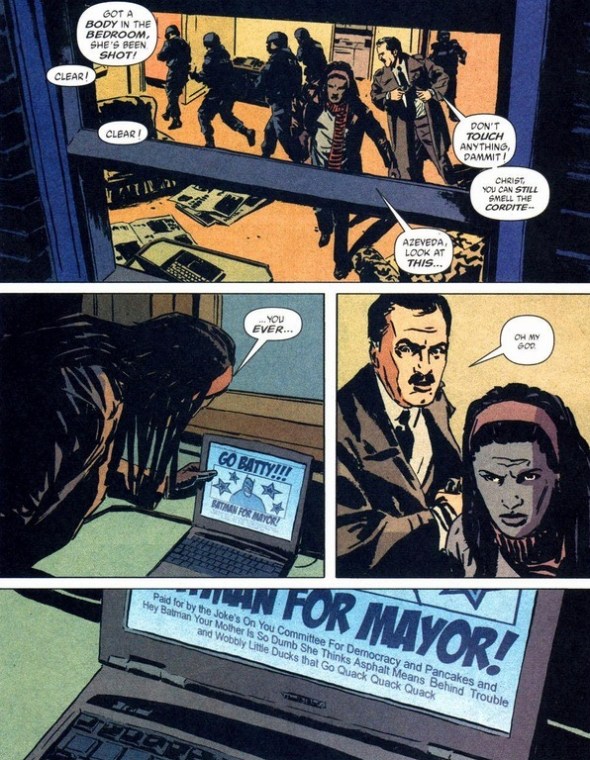
Time to tell the boss the bad news.

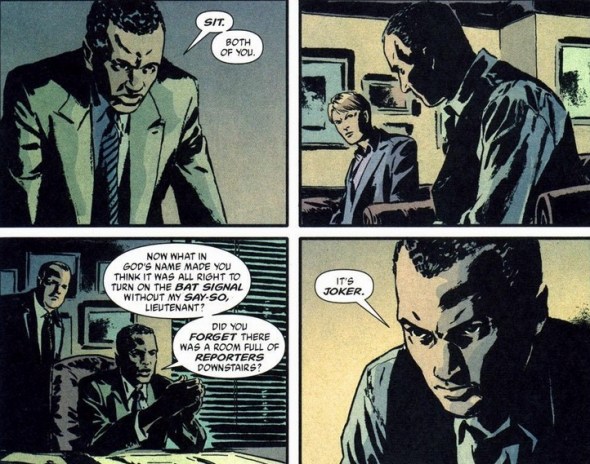
Gotham’s savior confirms it:

Remember, while a few of these upcoming scenes may resemble The Dark Knight (though this series came out five years before the movie), Joker has been causing mayhem in the DC universe for probably two decades of comic book years. This is before the reboot, meaning Batman — and subsequently the Joker — are most likely about 40 years old. So when the cops realize the Joker’s behind the string of killings, they know full well what he’s capable of. And rightfully fearful.
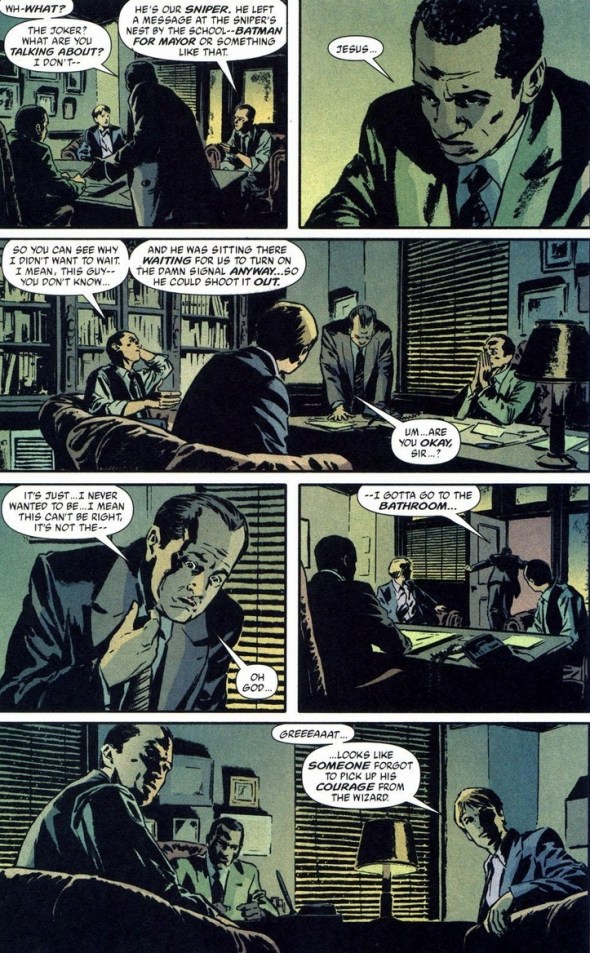
Okay, if you buy and read the book, you’ll know a bigger plot about a bomb about to go off in the city, a timer counting down, targets being kidnapped and hidden. It’s extremely well done, but today I want to concentrate only on one single part:


The famous interrogation room scene! All good police dramas have to have them, and for good reason. How’s the Joker’s interrogation go? Would you guess not well?
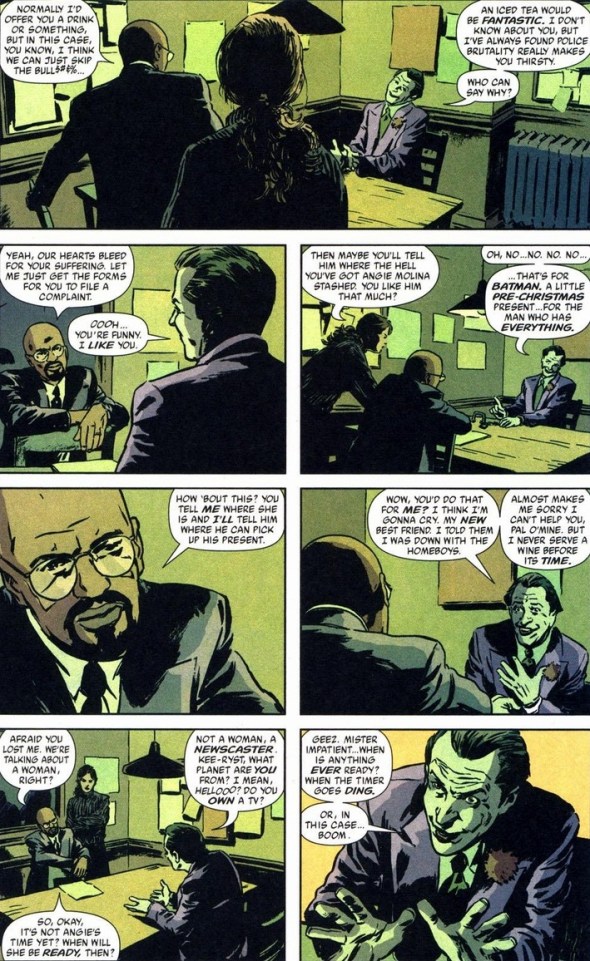
Now go back and read that scene in your favorite Joker voice. Mark Hamill, Heath Ledger, etc. By the way, that female cop in the page above? That’s Renee Montoya, who was outed as a lesbian the arc before this and later becomes the superhero the Question. She becomes a very positive Hispanic and gay role model in comics and her impact shouldn’t be understated. Back to our story, taking into consideration what they’ve learned, the police do the responsible police thing.
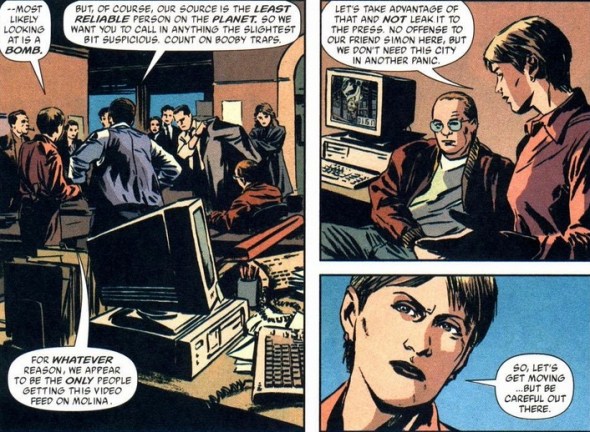
A general rule of thumb is to never underestimate the Joker. I believe he once got to the point where he had harvested so much poison and bacteria under his fingernails that the tiniest scratch could kill a victim. Trust me, and Scott Snyder’s current run proves it, whatever’s campy about the Joker has been long gone for many, many years. Dude’s a terror, and a few policemen make a grave error in forgetting that.


You know what scares the Joker? Damn right, nothing.

Know about Sarah-Essen Gordon? She’s Commissioner Gordon’s second wife who the Joker shot while she protected a group of infants. Oh, and now the cop lets his guard down.
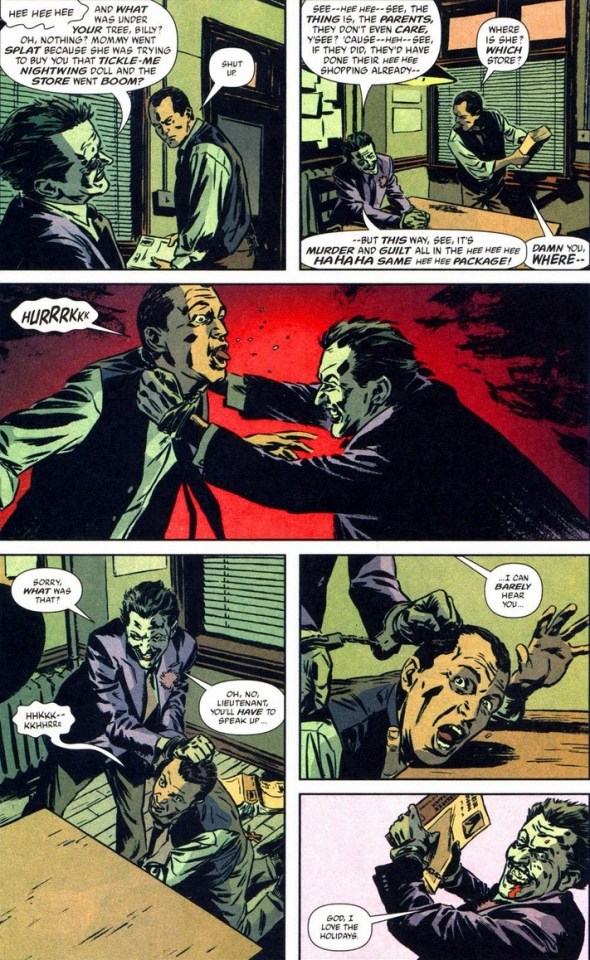

Poor intern. Luckily, like all good suspense, the girl gets saved just in time.

Of course the Joker survives. The reason why isn’t as important as the fact that he does. His reign of terror paused momentarily. As you no doubt realized, it’s not easy to be a Gotham city police officer.
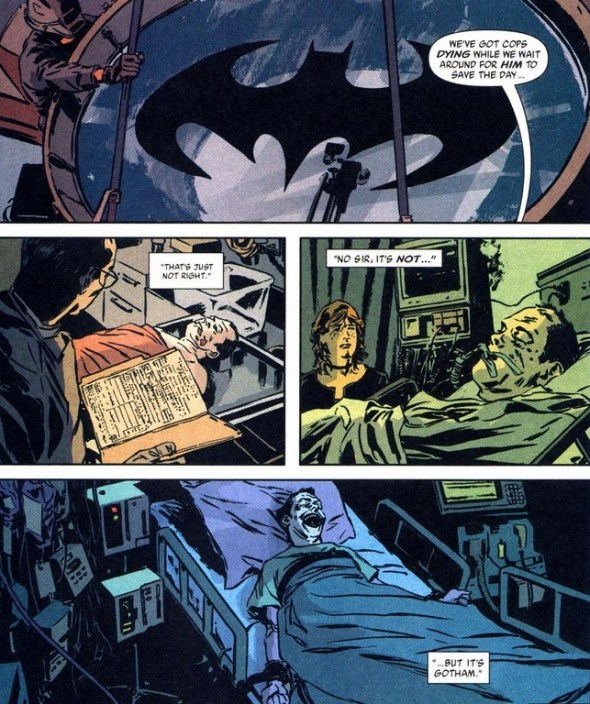
Metropolis cops are wussies.
The tragic tale of Speedball and Penance, Pt. 3
Posted: 12/25/2012 Filed under: Characters, Marvel 8 CommentsAs we come to the conclusion of Speedball’s transf0rmation into Penance, the people killed in Stamford due to Speedball’s reckless actions against Nitro still weighs heavily on our hero’s mind. On his path to making amends, he’s currently working for Norman Osborn’s government-sanctioned Thunderbolts. But when he receives word that Nitro’s being held in Latveria, he attacks the country and mercilessly tortures the supervillain. Now, Osborn’s no stranger to skirting the law, but after Penance almost sparked war between two nuclear powers, it’s time to ship the emotionally disturbed teenager off to greener pastures.
The next step in Robbie Baldwin’s redemption begins in Avengers: The Initiative #25-30, written by Christos N. Gage and drawn by Humberto Ramos & Jorge Molinas.

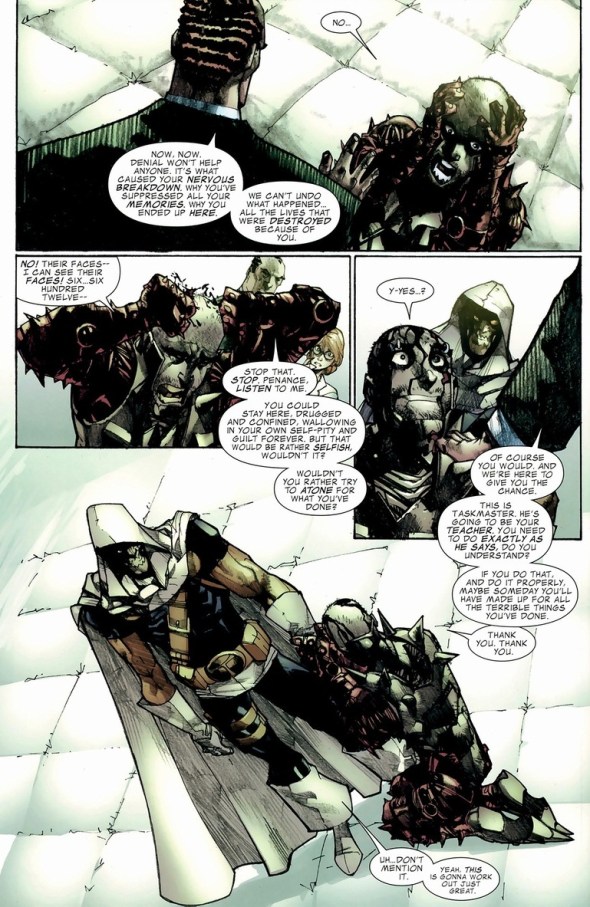
Okay, so maybe Osborn’s more interested in having Penance blow up bad guys than healing a broken, ruined kid. But for the first (substantial) time since the Stamford incident, Penance gets something he badly needs: therapy.


And like all good comic book epiphanies, Penance has his during a battle against his former friends. No one knows Penance’s secret identity as Speedball except the Green Goblin and his lackies.

Understand that his breakthrough comes after a good year of suffering and scars. But unlike real life, comic book characters tend to forgive pretty easily. Wolverine has killed God knows how many innocent people while brainwashed and he’s now running the most respected X-Men school in the country. Scarlet Witch wiped out 99.9% of the mutant population with three words, and she’s now a card-carrying Avenger. Redemption not only makes for a great story, but it’s almost certainly a mandatory part of a superhero’s life story by this point. It’s about time Baldwin realized the truth:
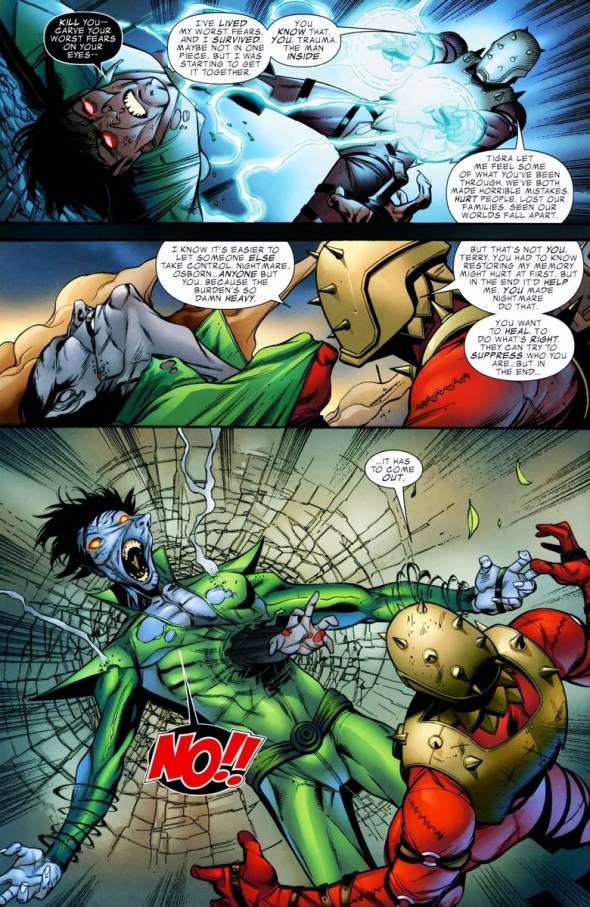
To truly rid himself of his guilt and pain, he only has two items left to cross off. First up:
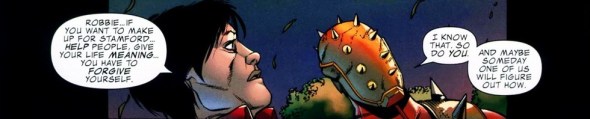
Speedball forgives himself
At this point, Penance has accepted enough that he can actually go back to being Speedball. By no means is he okay, but he doesn’t need 600 spikes tearing at his flesh every time he throws a punch. To help out the Avengers, Baldwin accepts a job teaching at the newly formed Avengers Academy. We’ll be seeing a few select scenes from Avengers Academy #10, written by Christos Gage and drawn by Sean Chen.
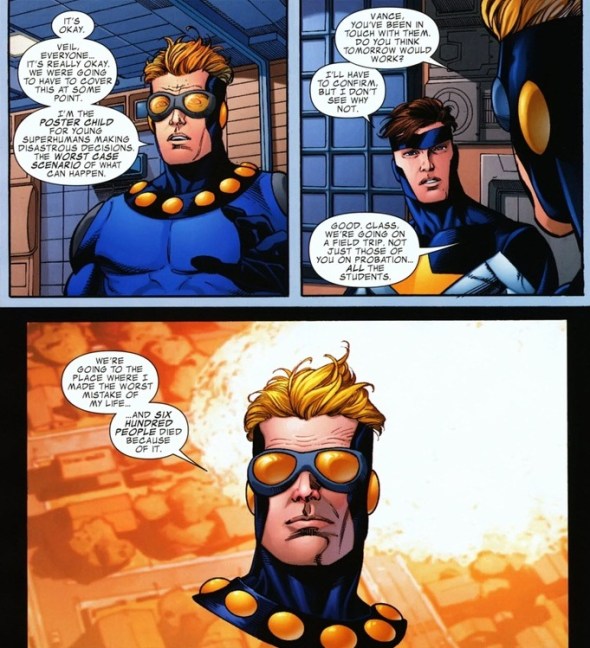
Though remember what I said about Speedball not being totally cured?

At this exact moment, like many important moments in a superhero’s life, bad guys attack. If you ever wonder why that happens, think about it from a math perspective. A more popular hero, like Spider-Man or Iron Man, probably has a good twenty supervillains in their main rogue gallery. That’s not counting the hundreds of minor villains they’ve fought. Counting crossover baddies, let’s say fifteen supervillains for every superhero. If I had to guess the amount of superheroes operating in just New England alone, it’s probably at least a hundred or so. That’s 1500 baddies running around at one time, minus those in prison or alternative dimensions or whatever. I’m just saying there’s a reason why when superheroes go on patrol, they usually find some trouble. Like at the Stamford Memorial.

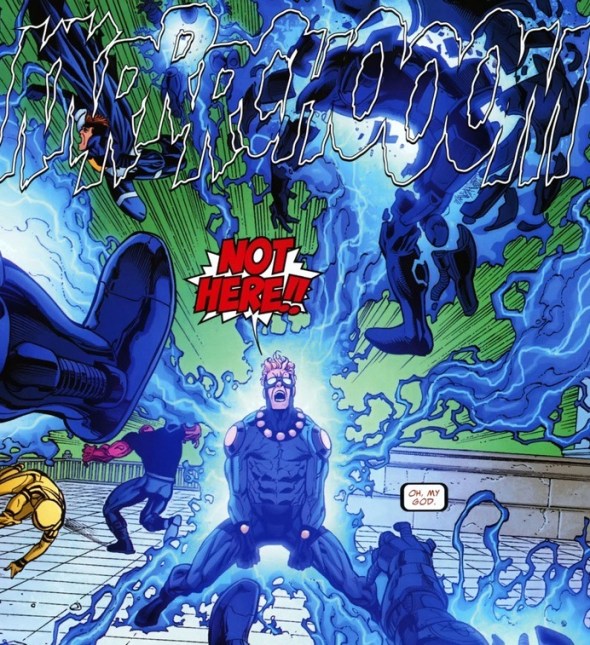
Oh, and Speedball still has all his Penance powers. More importantly, Baldwin finally gets told the truth: while he did inadvertently cause the death of 600 innocent people, he’s prevented far more than that in his career as a superhero. It takes time, but at some point the good’ll outweigh the bad.

Speedball will move on and be okay. But now comes the most influential part of his redemption.
Stamford forgives Speedball
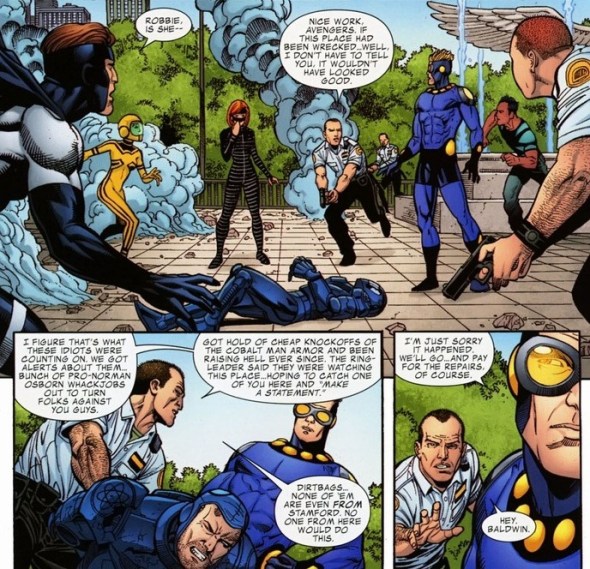
During the Marvel event Fear Itself, horrible stuff terrorizes the entire world. Lots of people dying and catastrophes hitting the planet. Baldwin heads to Stamford to help protect the city under attack. I don’t think you’d be surprised to hear that his heroic return isn’t really well-received. If you want the whole story, check out Fear Itself: The Home Front #1-7, written by Christos Gage and drawn by Mike Mayhew. Anyway, despite citizen protests, he saves the town:

You know the saying of forgive, not forget? Stamford decides to take that approach.
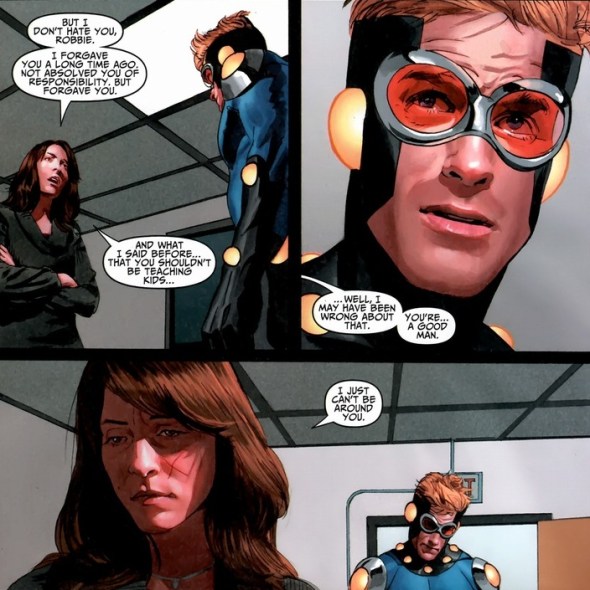
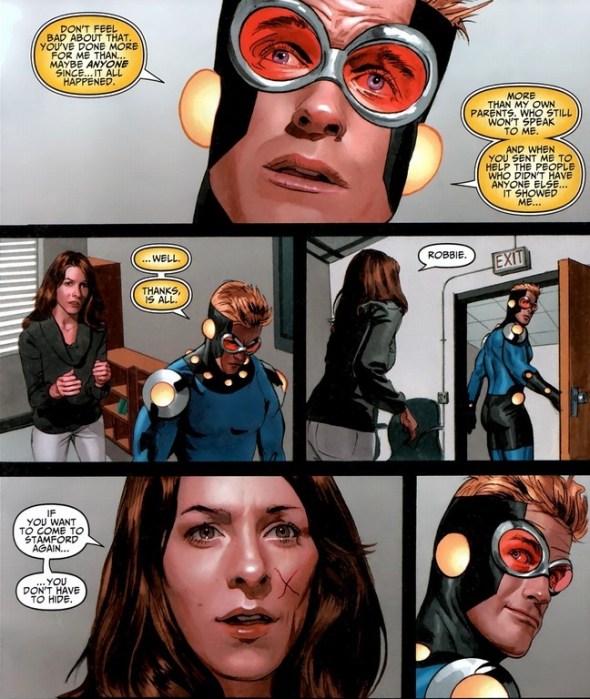

Feels good, right? Finally over his tragic mistake, what’s next for Speedball? I don’t know his current whereabouts, but I can show you this from Avengers Academy #20, written by Christos Gage and drawn by Tom Raney:


Wherever he is now, the man’s doing some good. Like a superhero should.
The tragic tale of Speedball and Penance, Pt. 2
Posted: 12/23/2012 Filed under: Characters, Marvel 6 CommentsIn part one, Robbie Baldwin’s (aka Speedball’s) recklessness caused the supervillain Nitro to explode in a crowded city, killing over 600 people. This set into motion the Marvel Civil War, but more importantly, Speedball’s intensive guilt and suffering changed both his powers and his costume. Now, he’s attempting to make amends as Penance, serving on Norman Osborn’s government-sanctioned Thunderbolts team. Y’see, the Penance costume contains hundreds of spikes inside the costume, as the only way to activate his powers now is through pain. And not just physical pain:
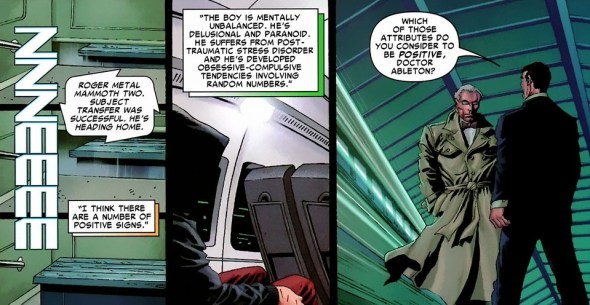
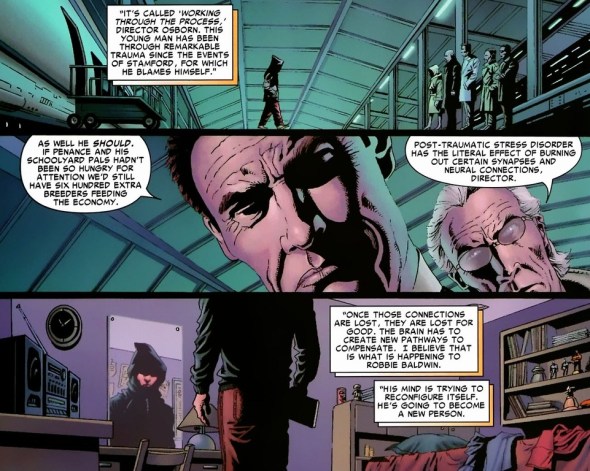
And by “working through the process,” his handlers fail to realize one extremely important loose end. Look, Baldwin’s still a teenager, who by the way have a terrible grasp of emotional control even without hundreds of murders on their hands. Understand that Penance doesn’t just blame himself for the Stamford incident — oh sure, most of it — but Penance didn’t himself explode. Nitro did. Time to make that psychopath pay.
We’re taking a look at the miniseries Penance: Relentless #1-5, written by Paul Jenkins and drawn by Paul Gulacy. Heads up, it gets dark. I’m talking stuff that would make the comics from the 1990s look like puppies and rainbows by comparison. So you know ahead of time, I’m skipping tons of stuff. You like conspiracies, master plans, betrayals, and fights with Wolverine? Well, buy the book.
Eventually, Penance figures out that Nitro’s being held prisoner by Dr. Doom in the country of Latveria. No time like the present, right?

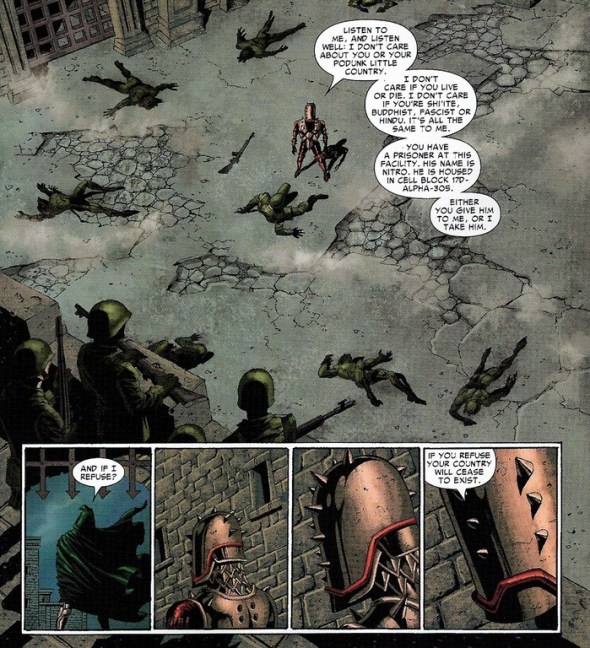
Want to see the Penance vs. Dr. Doom fight? Sorry, still scared of fair use laws, but here’s a taste:

Now we get to the meat of the story.

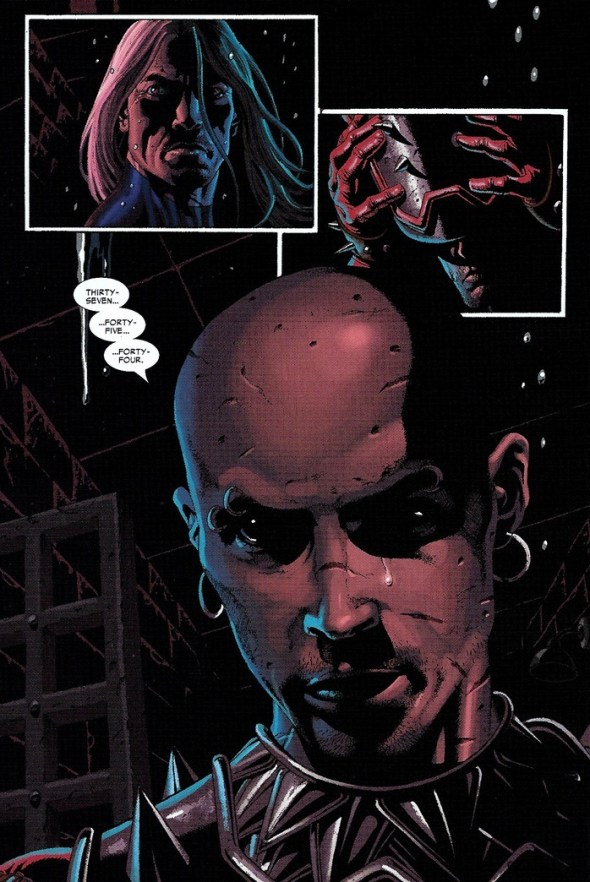
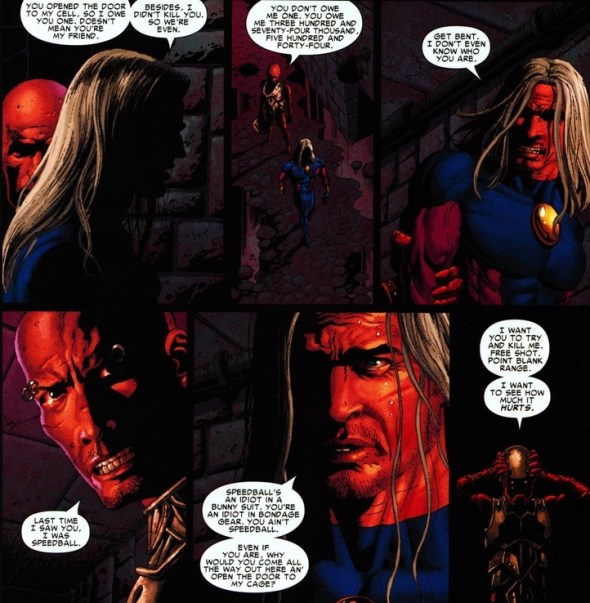
Yes, Baldwin’s rash decisions caused his current state, but Nitro’s still the one who had no problem igniting next to a school in the middle of the suburbs. And as Nitro will soon find out, Penance is way stronger than Speedball.
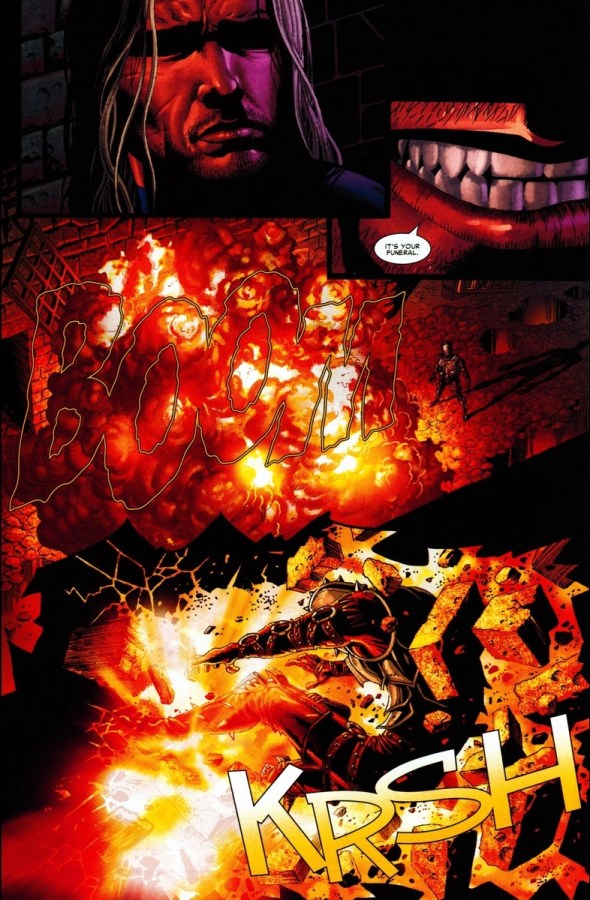
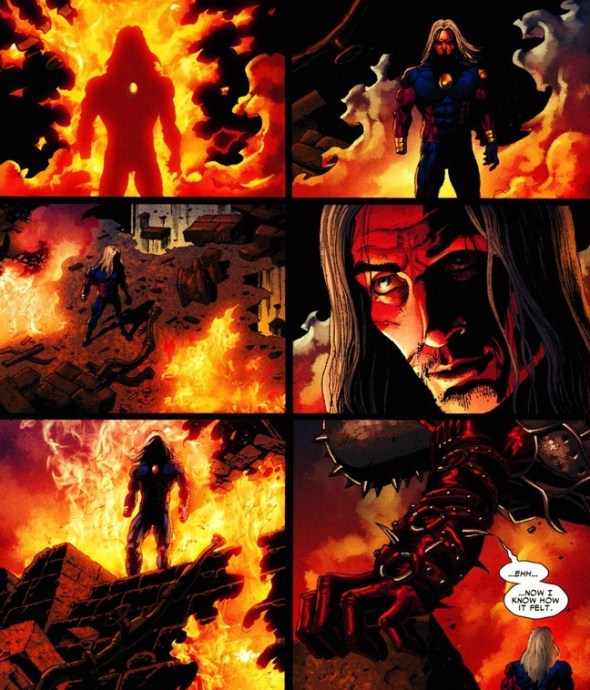
Okay, I’ll admit it, I only included this part because I love explosions.


You figured out by now that Nitro doesn’t stand a chance. The baddie’s tough, certainly, but he was also once taken out by Daredevil, who Penance could incinerate into paste before Daredevil even got his first kick in. If you’re wondering, Wolverine cut off Nitro’s hand a few months before this.
Listen, the next part of the fight involves Penance beating the monstrous crap out of Nitro while reciting the names of those he killed. Since we’re still kind of in the aftermath of our own similar real life situation, let’s skip that part and go to the end of the fight.

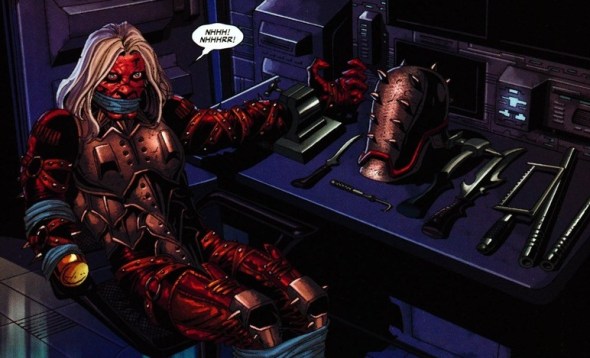
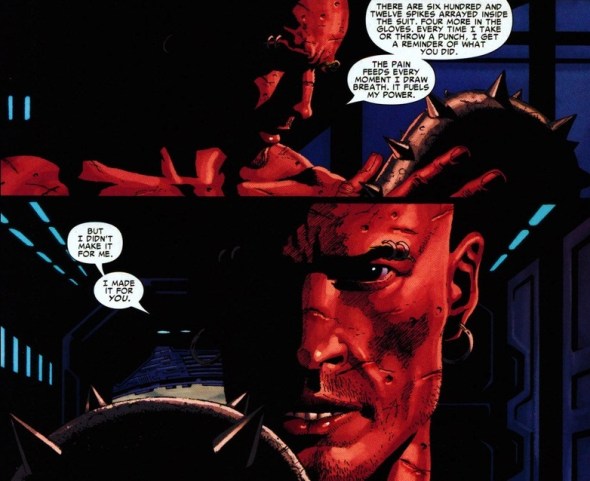
I would like to think this is Penance’s anger stage of grief. Because if not, the poster boy for happy-go-lucky teenage superheroes just took a drastic turn into supervillain territory. Like stuff that makes even Magneto wince.
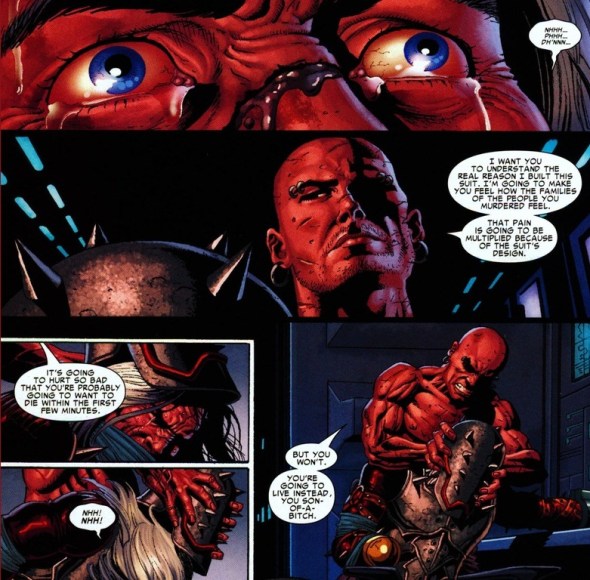

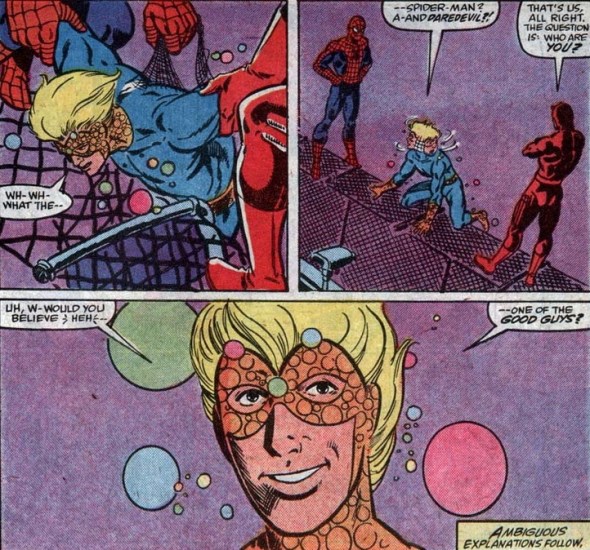
Fair to say Baldwin’s come a far way from his origin twenty years ago:
I know comic books rile up controversy every time anything gets too “dark,” as if it’s pandering for edginess or whatever. But from a literary standpoint, the readers need to know how deep down the cliff their character has fallen to know just how wonderful the climb up will be. Now, Nitro’s torture is certainly excessive and horrifying, especially for Penance, who a year ago fought crime with colorful bubbles.
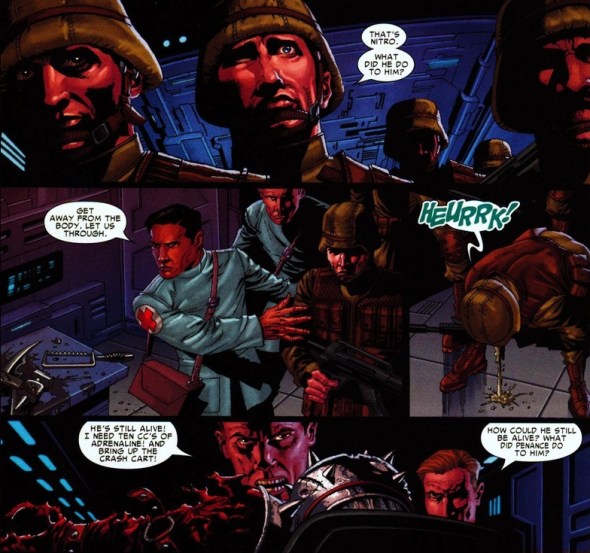
Regardless of whether you approve of Penance’s revenge, do you see the purpose of this? He’s finally reached the bottom of the ravine. All the next steps from this point on go upwards.

Well, baby steps. In part three, we’ll get to see the end of Penance and his transformation back to Speedball. Thank god. Oh, I have no idea how he sees out of his helmet either.
The tragic tale of Speedball and Penance, Pt. 1
Posted: 12/20/2012 Filed under: Characters, Marvel 9 Comments(I hope enough time has past that this article isn’t in bad taste. I apologize if I’m wrong.)
Robbie Baldwin is a young boy’s dream situation. As a teenager and like most superhero origins, he gets into a freak scientific accident. A strange dimensional energy slams into him, giving him the ability to generate adorable energy balls as well as bounce around like a pinball machine. Here’s his premiere in Amazing Spider-Man Annual #22 back in 1988.


As a good-looking, surprisingly capable superhero, he became involved with the New Warriors team and gained fame considerable to our real world child stars. Trust me, I’m surprised as you are considering his superpower involves colorful bubbles.
Speedball’s life progressed with all the glory and bliss that we all secretly covet. Well, until 2006. If you’re not up to date with Marvel history in the 2000s, that year began the widely talked about Civil War. Y’see, a few superheroes attacked bad guys in a civilian zone, and in a disastrous underestimation of their opponents, they let the supervillain Nitro explode. He killed 612 people, including children. Oh yeah, you figured it out. Baldwin and his New Warriors set off the events that would shape the Marvel universe for the rest of the decade. Witness it for yourself in Civil War #1, written by Mark Millar and drawn by Steve McNiven.
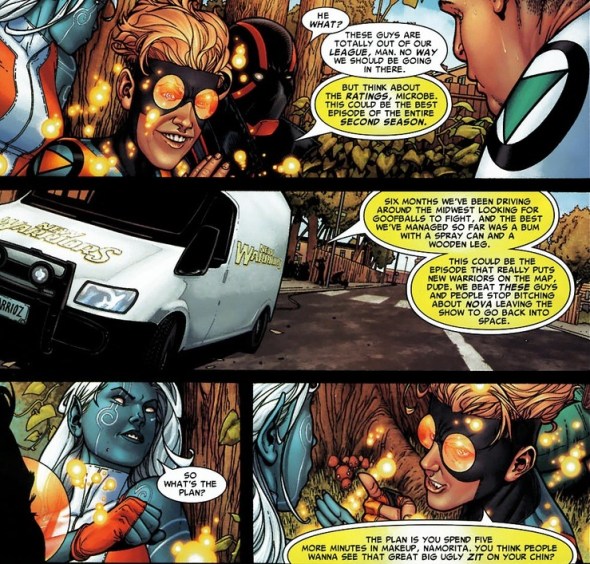
In a genius PR move, the New Warriors film a reality show of their battles. Now, why is Speedball acting like such an egotistical jerk? Duh, because that’s what makes redemption so much better. Enjoy Baldwin’s last fight as Speedball for the next few years:
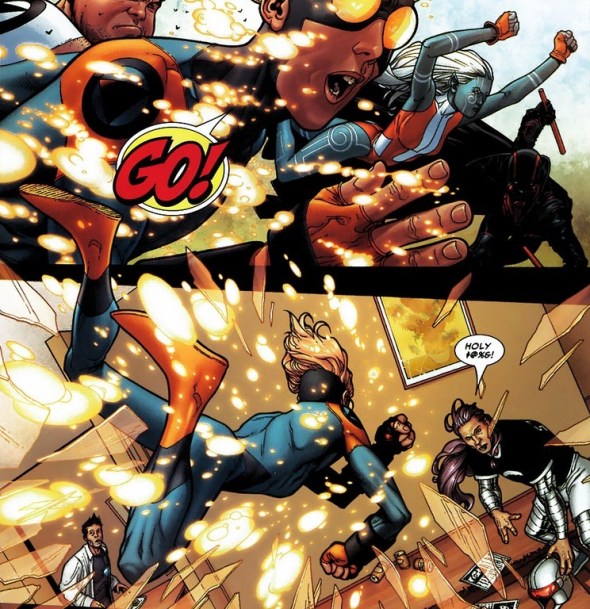

Look, teenage superheroes are extremely important to the mythos of comics. Spider-Man and the X-Men started their crimefighting careers as teenagers among others. Every few years, a new team of young kiddos pops up to be trained as the next generation of Avengers or whatever. Seriously, there must be at least twenty superpowered children starring in Marvel titles at any given time. But some supervillains simply can’t be taken down by a group of kids. Like Nitro, who can do this:


The resulting blast kills all of the New Warriors. Poor Namorita and her relatable skin problems. A few hours or so after the explosion, the police find a single survivor. Turns out a bunch of bubbles can also absorb the impact of more than an uppercut. In Civil War: Frontline #1-10, written by Paul Jenkins and drawn by Steve Lieber, we see Speedball’s life-altering aftermath.
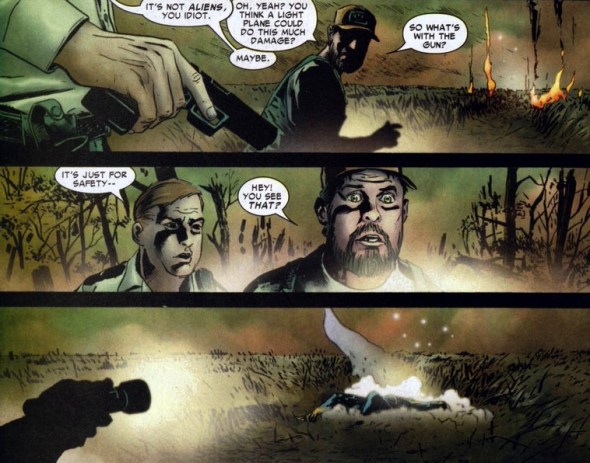

Understand that Speedball’s the only survivor of his team, and that it was his own recklessness that killed them despite loud objections beforehand. Couple that onto his emotional stability from being smack in the middle of puberty, and the guilt totally destroys poor Baldwin.


Y’see, his powers disappeared from the PTSD. He quickly discovered that he could gain back his energy blasts, but only when suffering from extreme pain. Perfectly suited to his guilt, Baldwin creates a suit that would make even the kinkiest fetishists jealous. Lots of spikes, needles, and other things that make him bleed installed throughout new costume.
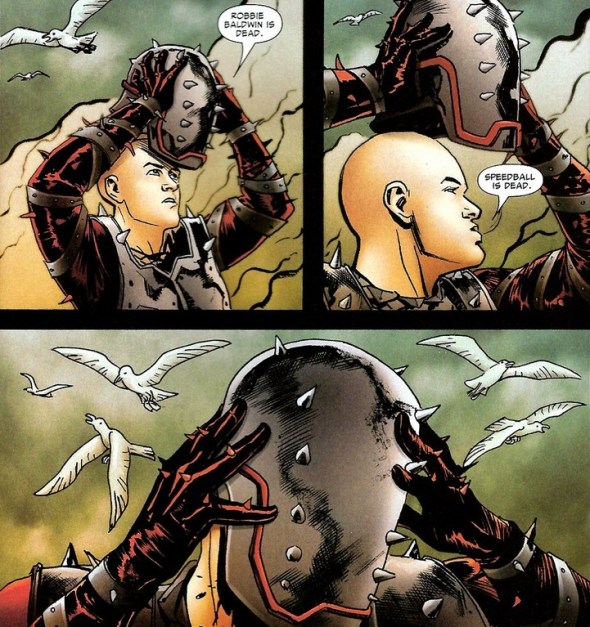
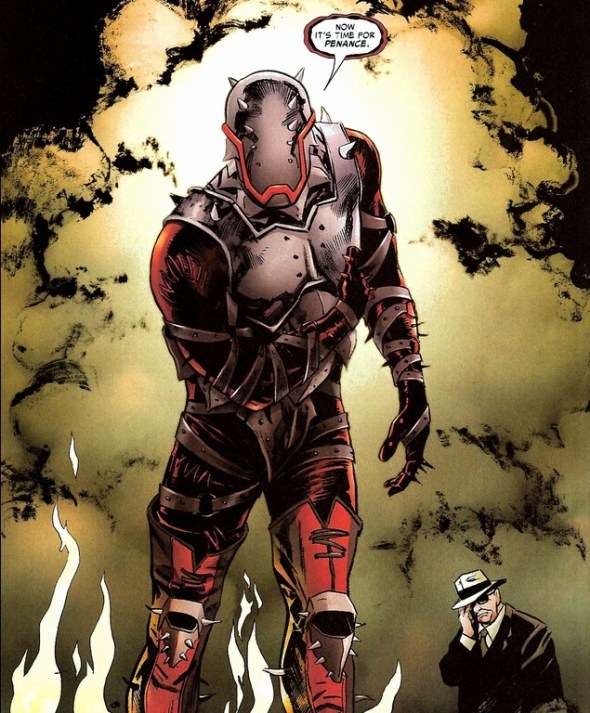
If you noticed in the pictures above, his powers changed too. From potential alone, Penance may quite possibly be one of the most powerful superheroes in the Marvel universe. I’m serious. Part of his redemption included joining Norman Osborn’s Thunderbolts, the team of former supervillains working for the government. In Thunderbolts #116, written by Warren Ellis and Mike Deodato Jr., we get to see just how incredibly powerful he’s gotten since his transformation:
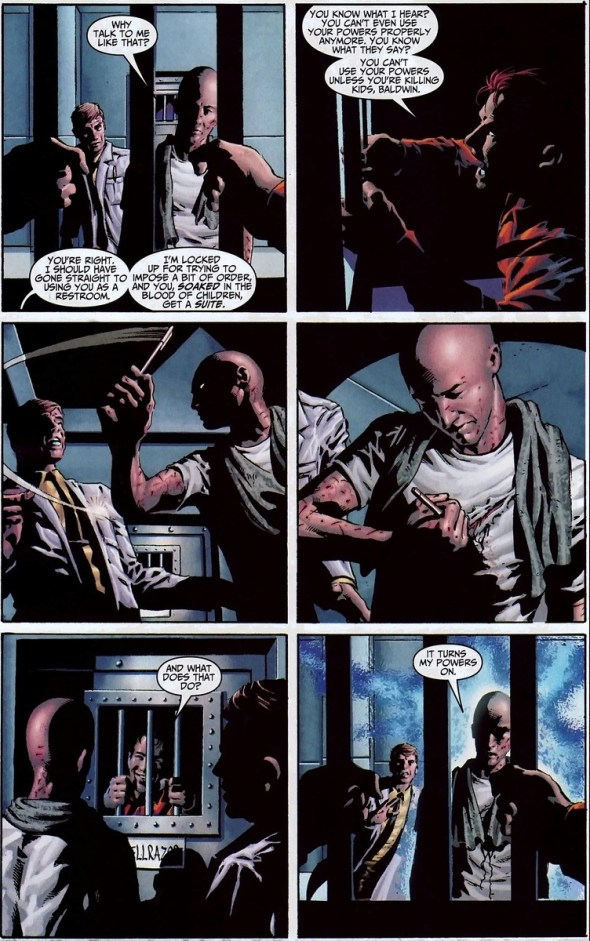
I promise you, Penance’s one of the good guys. I’m just making sure you remember that.


No longer able to create whimsical bubbles, Penance uses a more brute forth type of attacks. Think of it like a flesh-ripping forces of energy instead of a Chuck E. Cheese ball pit.


Luckily for everyone else, Baldwin still has all his old weaknesses. Like massive head trauma.

Our story has just begun. Part two on Monday will cover Penance’s rematch with Nitro (and it’s dark). We’ll finish up on Wednesday with Penance’s transformation back to Speedball and the final acts of his redemption in the city where this all started.
Professor X vs. Cyclops & Emma Frost
Posted: 12/18/2012 Filed under: Characters, Marvel 1 CommentRemember X-Men: Deadly Genesis? That’s where the X-Men found out that Professor X’s been abusing his mind powers with manipulation and memory adjusting. The jigs up and the old man gets kicked out of his own group. I covered it in more detail in a previous article. Well, despite his horribly broken relationship with Cyclops, the good professor still needs a few questions answered. Whether Cyclops wants to or not.
We’re picking up today in X-Men Legacy #215-216, written by Mike Carey and drawn by Scot Eaton. Since Xavier’s no longer allowed near his mutant tribe, he has to resort to sneakier methods.
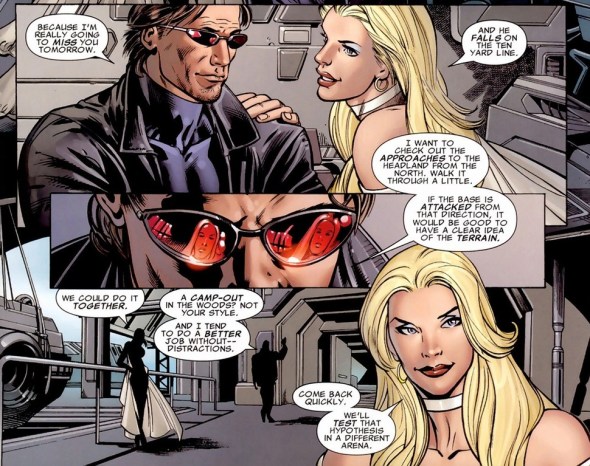
Do you know about Emma Frost? She’s terribly confident, extremely powerful, and generally unpleasant to be around. Also, she’s Cyclops’ girlfriend. We’ll cover her history and powers in a later article, but understand that she’s a psychic very close to matching Professor X’s abilities. Anyway, how’s the camp-out go?
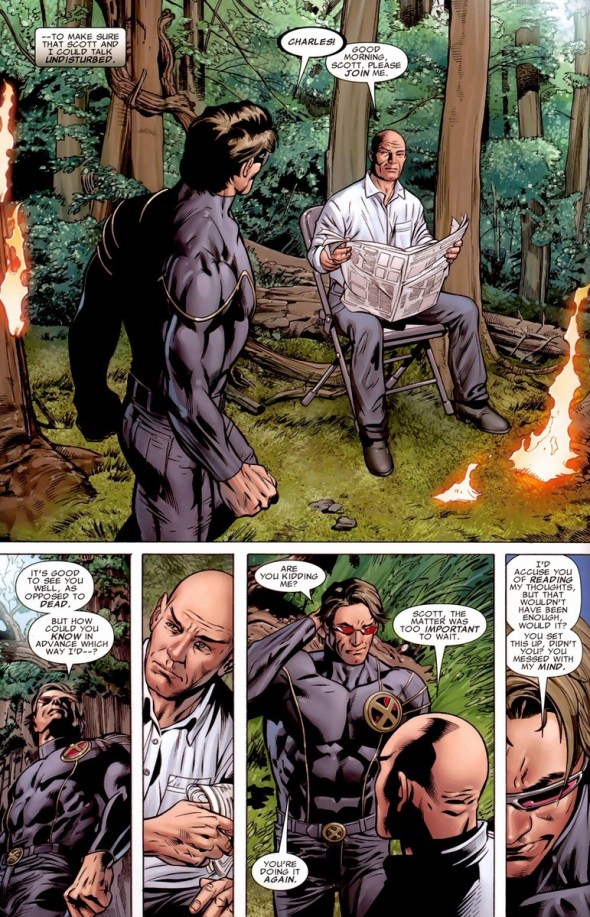

Y’know, for one of the world’s most intelligent and introspective people, Professor X does some really dumb things. He knew that Cyclops wouldn’t voluntarily meet him, or at least not in a private setting. Using his telepathy, Xavier subtly influenced Scott’s mind to meet him at this exact spot. While certainly a jerk move, this type of behavior is the exact reason Cyclops kicked him out of the X-Men in the first place. The man’s essentially learned nothing.
Scott, being the bigger man, decides to walk away before he does something he might regret. People forget Cyclops has a temper, like say, Professor X.
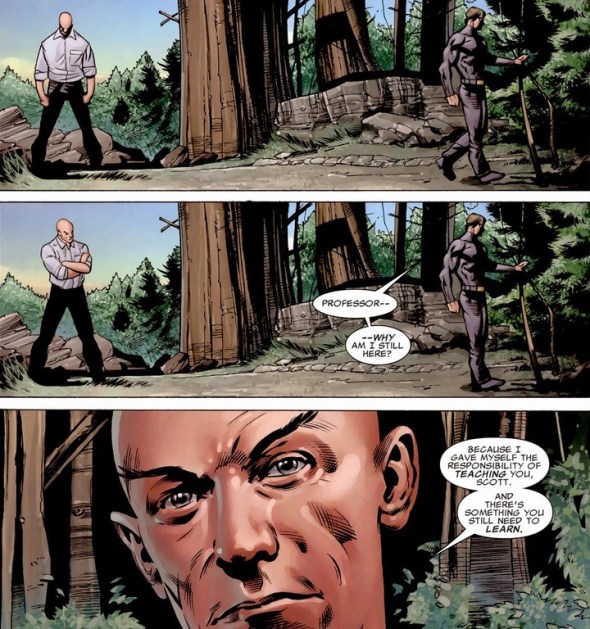
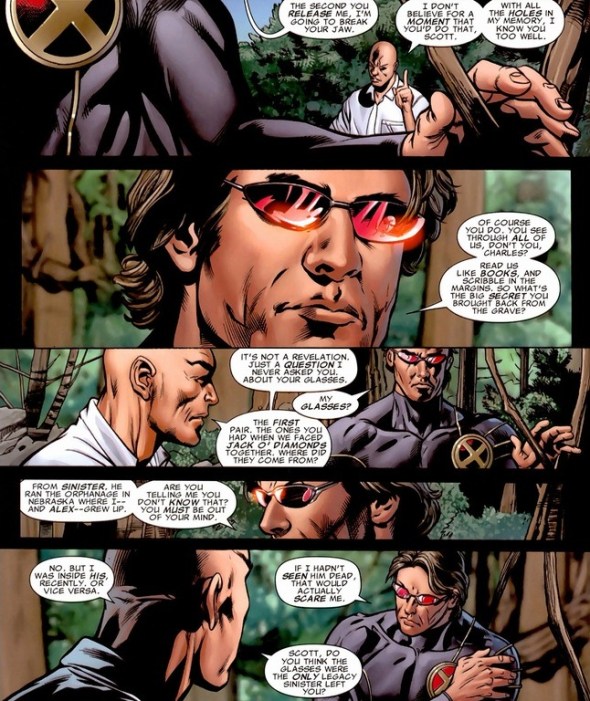
Let’s be fair to the professor — his reasons for having to meet Cyclops are valid. Mr. Sinister, probably the X-Men’s greatest foe now that Magneto switched sides, has the powers of the most powerful psychics and a horrifyingly genius intelligence. The supervillain can also mind control dudes, and if Cyclops has any Sinister timebombs waiting in his brain, that could singlehandedly bring down the X-Men.
But we’re talking Professor X here, and he doesn’t really have permission nowadays to go through the brains of the people he lied to and manipulated.


Heads up, this article has a ton of philosophy and ethics discussions. Not so much fighting, but that’s mainly because Professor X can stop lasers with his mind. First, Scott brings up an important question. How does Professor X justify his actions and still unrelentingly claim to be a hero?

It’s a lost cause. Realizing he won’t be able to convince his star pupil, the professor gives up. Surely he can find a dumber mutant to Mission Impossible-style pry out memories and leftover psychic residue.
Just one problem.


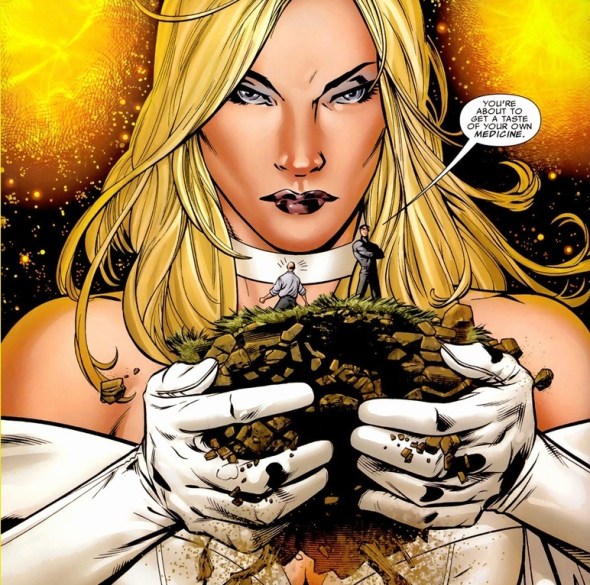
Welcome to part two, where two unlikable psychics battle for supremacy within Professor X’s brain. Unfortunately, telepathic battles involve less mind-chucking cars at the enemy and more like a race to relive traumatic emotional experiences until one of them breaks down into tears. Except Emma Frost cheated and she won the race before Xavier knew they were competing.
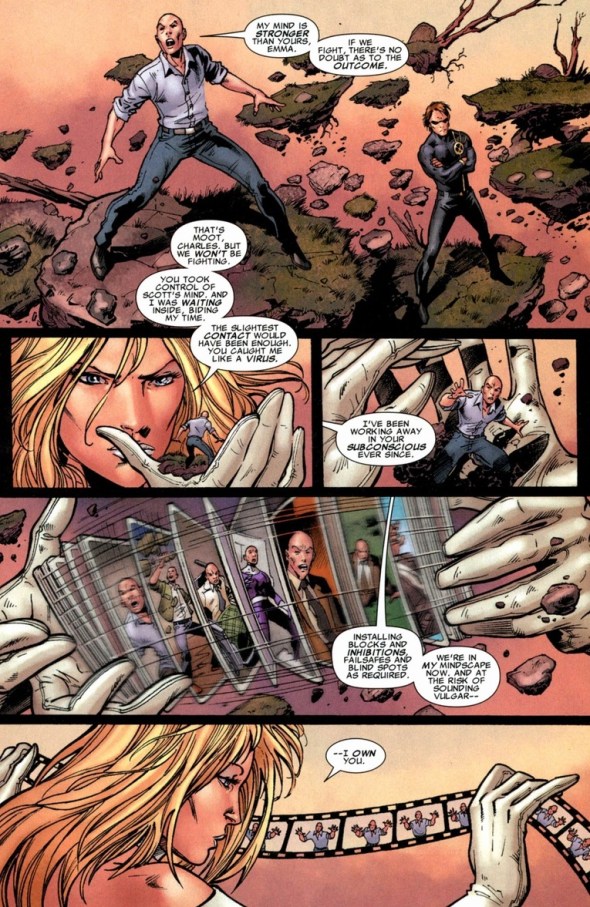
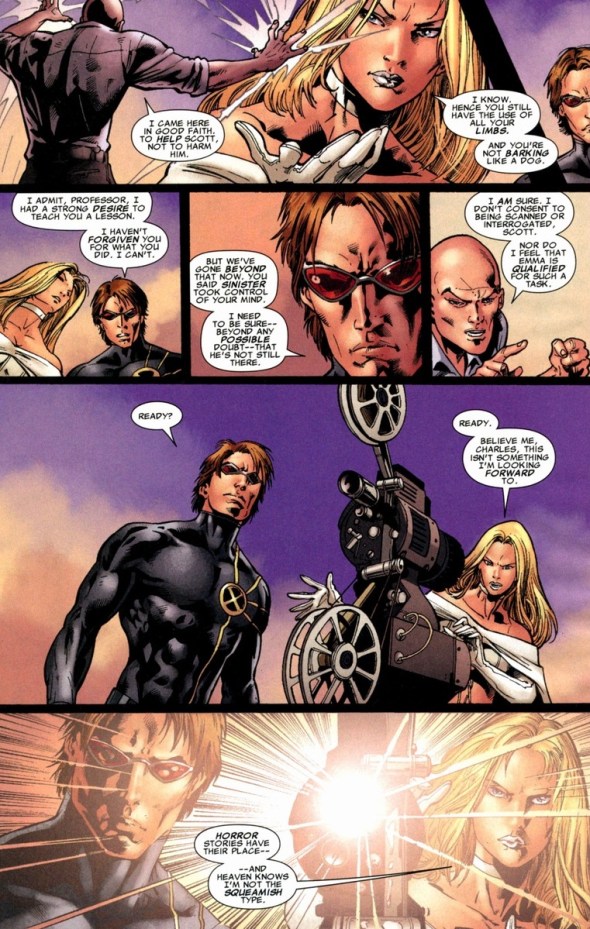
Oh, how the tables have turned. Not only does Professor X not get to look inside Cyclops’ mind, but now he gets to be strapped down with the Sexy Ghost of Christmas Past instead. I’m not really going into many of Xavier’s most frustrating memories, and you can read the book for the whole story, but both Emma Frost and the professor make a few great points I want to discuss.

Professor X takes this round. Emma could simply put on a psychic rubber glove and feel around for a bit, but the whole deal of taking Xavier through his worst moments most certainly borders on torture. Professor X got in trouble for erasing traumatic memories, not leafing through them like a pop-up book.

Emma scores a point here. Y’see, when Spider-Man fails to save a civilian or something, that’s because his web gave out or the bad guy had him distracted. He’ll mope about it for weeks before finally moving on as a better, stronger person. Spider-Man, for all his power, can’t permanently remove that memory and horror from his mind instead of the normal growing and understanding the purpose and cause of his errors. But the professor can and does. The amount of sin for abusing power is determined quite simply by the amount of power being abused. We’re talking about a merchant who refuses to give his employees benefits versus a king who slaughters entire groups of people that he views as threats. Both are abusing power, but one’s way worse than the other.

Emma’s final point? Suck it up and stop with the self-pity. Trust me, Emma’s done far worse things than the professor with her powers and she sleeps happily and snugly every night. Professor X’s more distraught because he views himself as the moral center for the entire mutant race, when truthfully, he’s skirts the ethical line like every superhero ever. And it’s about time he accepts that about himself. I mean, do you know how much unwarranted assault and building damages go unpunished and unpaid in the superhero community?
So how do we know the battle’s over? Well, I told you how these things end:
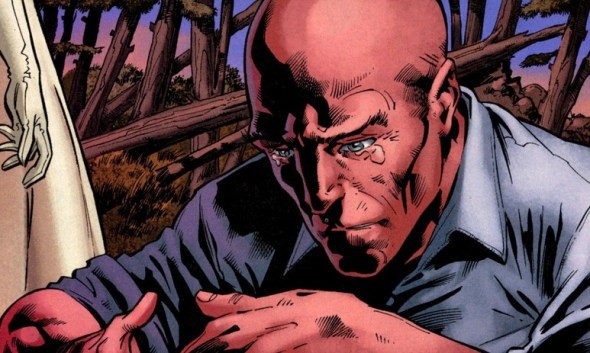
More importantly, Cyclops and Professor X’s relationship changes once again:

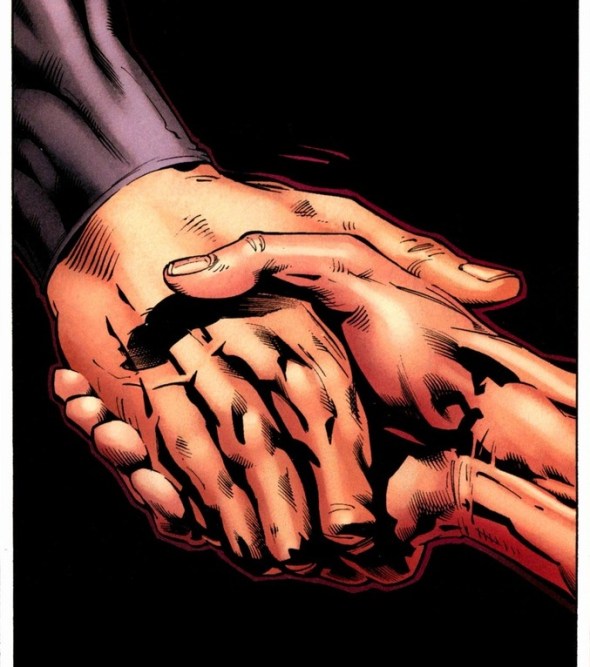
While Professor X doesn’t rejoin the X-Men, at least he has regained the respect and love of his protégé and successor. That’s as good a start as any.
 Arousing Grammar