
The friendship of X-23 & Jubilee
Posted: 07/15/2014 Filed under: Characters, Marvel 8 CommentsX-23 spends most of her solo series slashing and moping. That girl may be many things, but happy isn’t one of them. It sorta comes with the territory of being a Wolverine clone. Well, that and the test tube birth and being raised since birth to be a merciless killer child. So now that she’s free of all that evil lab experiment Winter Soldier-esque stuff, dear X-23 (real name Laura Kinney — kind of) has the task of forgiving herself, picking up all those shattered self-esteem pieces, and figuring out her new path in life. And shaving her back — she’s a Wolverine clone after all. Gambit accompanies her on her find-herself journey and today in X-23 #10-12, written by Majorie Liu and drawn by Sana Takeda, our cajun role model figures maybe she could use a pep talk.


See Laura’s slash-first-ask-questions-later policy? What better proof do you need that she’s Wolverine’s clone? He claws dudes for ordering light beers at bars, much less possible vampire attacks. But Wolverine showed up not just to force Jubilee on her — possible friend her age and whatnot — but for that brief moment of sage advice a fellow Wolverine can bring.

The point Wolverine attempts to make to girl Wolverine lies in our two protagonists teaching each other. Jubilee needs to learn how to calm her newly spawned killer instincts and X-23 must learn how to not be a sad sack every moment of her life. By the way, because there’s no other place to put this — the two will meet again in the penultimate issue of X-23 and they go dancing at a club. Jubilee still has her famous yellow raincoat on amid all the rave lights and attractive people grinding, so my only conclusion is that’s part of her skin now.
Oh, and now X-23 does some questionable.


Aside from X-23’s recent attempted suicides (healing factor can’t really kill her, so it’s more of an emo teenage girl cutting scenario), her sacrifice serves a greater purpose. For one, she can’t turn into a vampire due to her being a Rule 63 Wolverine. But because the Marvel universe can bend the rules on the limitations of mythical monsters, every vampire bloodsucker also absorbs the memories and thoughts, like a creepier version of Rogue. Or maybe just her. I’m not an expert on this.


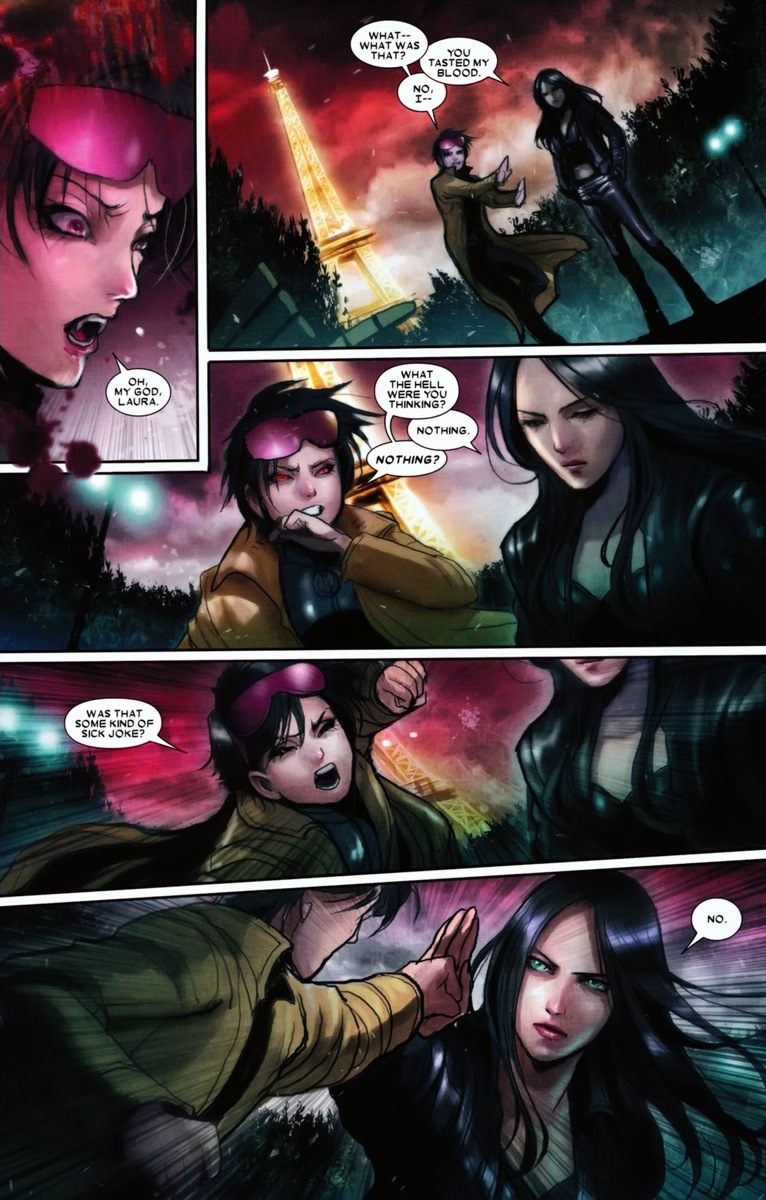


While X-23 has the the PTSD childhood that would make the sternest therapist cry, she makes a good point to Jubilee while simultaneously knocking off any possible responsibility for the lesson. X-23 totally understands the desire to kill everyone, that’s pretty much her whole gimmick. It’s good for both of them to have someone relatable to hang out with. Wolverine spent decades perfecting his zen — accepting and forgiving his past mistakes — something teenage girls can’t do with a wrong number text much less a former murder spree. But since we’re reading a superhero comic, we’ll soon get to an incident that requires superhero intervention. Though first, dress shopping:


And now the superheroics:


Let’s talk about trigger scent for a minute. You know how Wolverine goes into his “berserker mode” anytime someone hits him with a bazooka or smokes his last cigar? That primal attack-everyone-aiming-for-squishy-parts with his loved ones screaming for him to stop? The scientists who created X-23 developed a gas that causes the same reaction to her, and as you can suspect from the massive foreshadowing above, our protagonist inhales a whole crapload of that stuff. Here’s Feral X-23 vs. Vampire Jubilee:


Jubilee can’t beat X-23. Sure, the vampire blood makes her faster, stronger, and more undead than Laura, but X-23 has adamantium claws and a lifetime of combat training. Luckily, the adults won’t let children slice open other children, much like myself when I taught middle school.


Happy ending for all except Wolverine’s kidney. Jubilee feels a fraction of a bit better for her predicament and X-23’s about to receive her own marginally improved emotional stability from our dear mall rat. The irony in Jubilee being undead is that no one enjoys living more than her. A zest for life that can only be brought from (formerly) shooting fireworks from your hands.


Jubilee turns into a vampire, Pt. 2
Posted: 07/14/2014 Filed under: Characters, Marvel 1 CommentAs we left off on Friday, Vampire Jubilee and Vampire Wolverine put a hamper into the X-Men’s plan to defeat this undead enemy — and also have none of them turn into vampires. Sadly, that solitary neck chomp also brings it with an evil personality devoid of all the good stuff that sunshine, puppies, and such provide. Well, Cyclops won’t stand for it. Remember his new ideology of the X-Men being less of a school and more of a highly-trained heavily fortified army?

Bad guys don’t listen to the threats of Ol’ Laser Eyes (whose eye lasers are not compressed energy but instead portals to a universe that doesn’t follow the laws of physics — or something like that). Plus, Cyclops hasn’t smiled all arc. Masterminding the potentially greatest slaughter of vampires ever known can be quite stressful. But Xarus, being a traditional supervillain who doesn’t realize that the superheroes always emerge victorious, attacks the X-Men base Utopia with the full vampire force because he has to learn his lesson the hard way.


Vampire Wolverine has the benefit of being unfiltered and evil as opposed to his normal unfiltered and curmudgeony. Nowadays, the X-Men preside as the Batman of the Marvel universe, in that they have plans for every single possible scenario — poor planning prevents the extinction of the few hundred remaining mutants against almost ten thousand bloodsucking monsters and Vampire Wolverine. Anyway, they win. Go buy the book for all that. Most important to today’s topic:

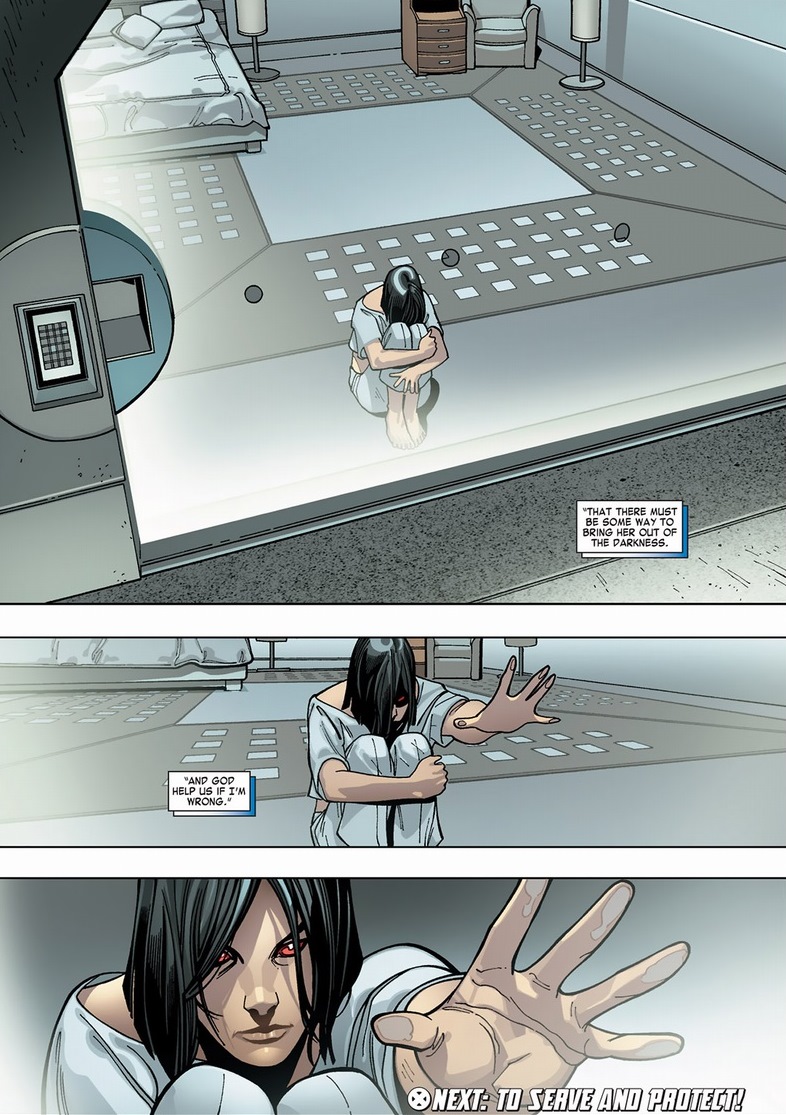
Yes, now instead of a being a powerless nobody, Jubilee now gets to walk the streets as a hungry, bloodthirsty night demon. It might have been better for her emotional health if she stayed useless. Unfortunately, like I mentioned earlier, there’s no going back — vampirism doesn’t cure if someone doesn’t possess a healing factor or the writer no longer wants her to be a vampire.
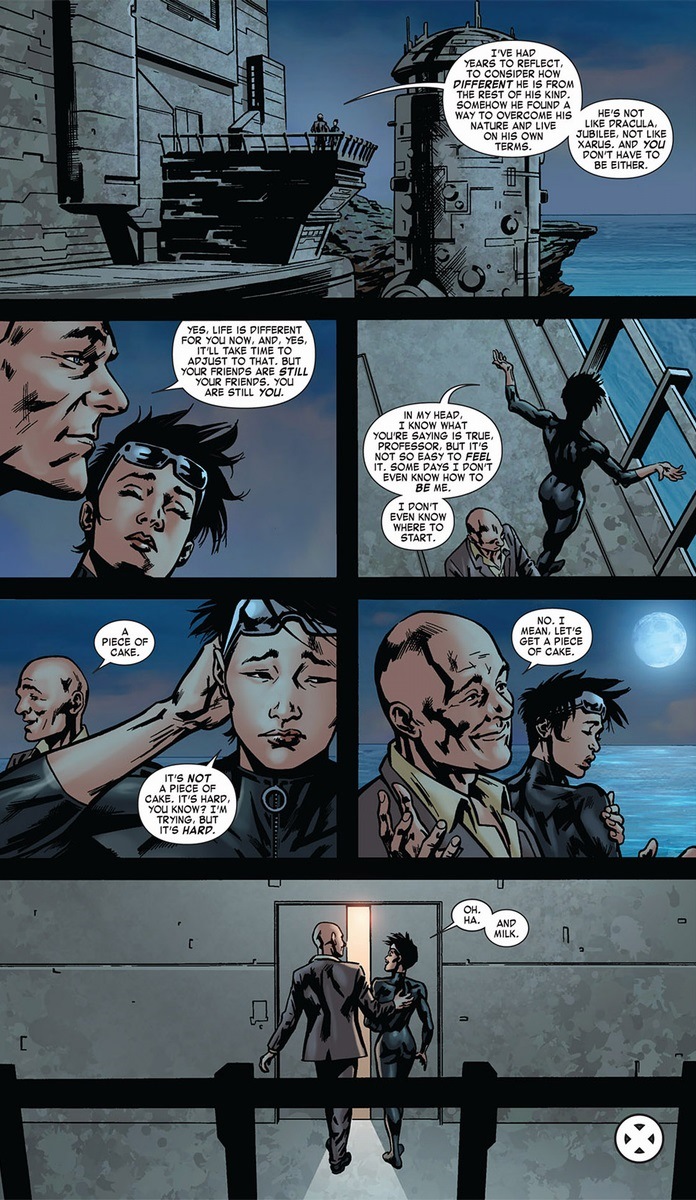
We jump five issues to a simpler time, where Professor X still had that shred of kindness and teacher-ness deep inside him before all that uncovered psychic manipulation tainted his reputation. We start with an angry Jubilee, as most people who are turned into vampires against their will tend to be:


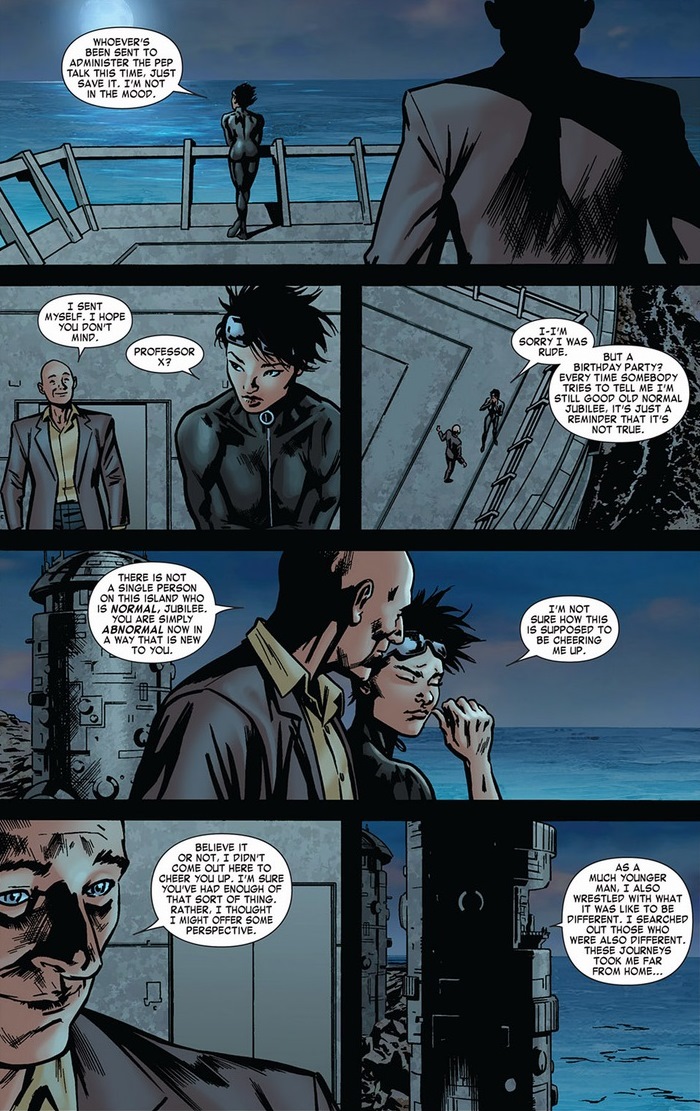
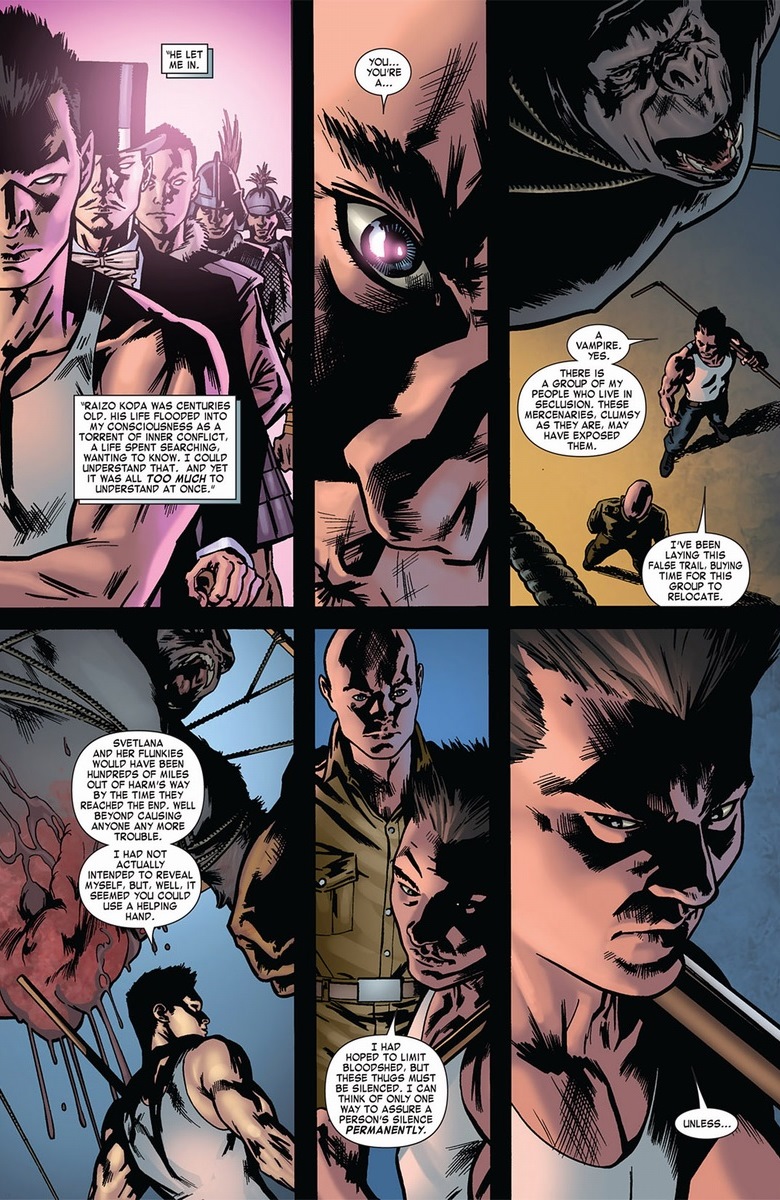
In this issue, he tells a long story from his pre-Magneto past where he tracks hunters in Africa. The story itself doesn’t become relevant until the final scenes, when he meets a special man. Or used to be man.
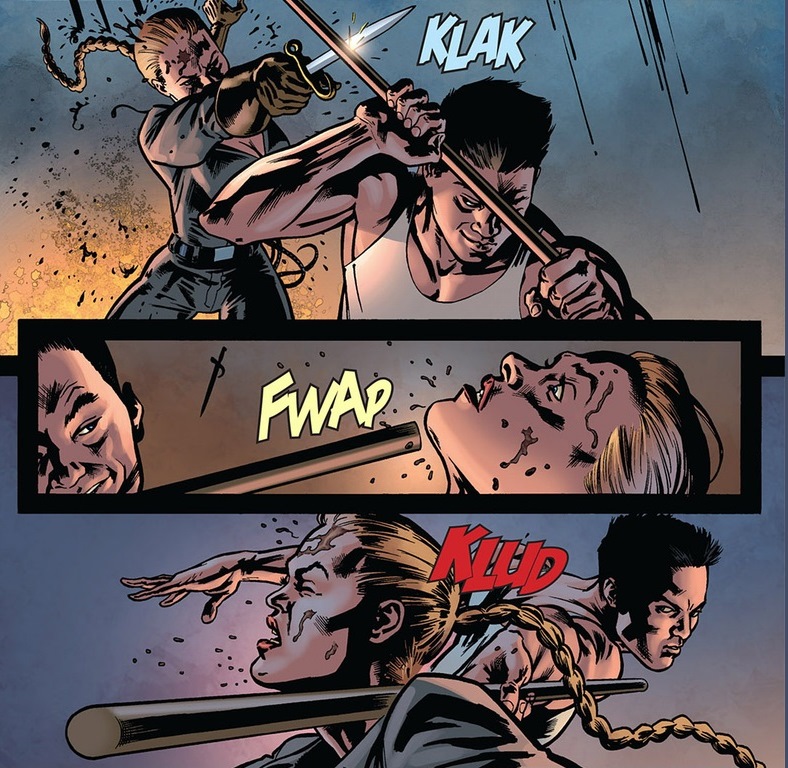

You can probably guess his secret. Hint: it starts with a “v” and ends in “–ampire.” Like all mythical monsters, you get the good and the bad populating a universe with billions of other fictional people. Take DC’s sword-wielding Frankenstein. DC’s ghost Deadman. Half of Blade. So when Professor X assures Jubilee that her actions from this point have no influence from the vampire baddies of the past, he has proof. That and the only vampire to ever wear a tank top.

On Wednesday, we’ll read more Vampire Jubilee stuff, because I’m never afraid to beat a dead horse well beyond the point of embarrassment.
Jubilee turns into a vampire, Pt. 1
Posted: 07/11/2014 Filed under: Characters, Marvel 1 CommentI mentioned briefly that Jubilee currently prowls around the Marvel universe as a vampire and mother. The latter is a story for another day, but in a fictional universe with mutants and space gods and mole people, why not throw in the classic monsters as well? Jubilee joins the ranks of vampire-hood (the scary kind) in X-Men #1-6, written by Victor Gischler and drawn by Paco Medina, as well as X-Men #11, written by Gischler and drawn by Al Barrionuevo.
Before we begin, it’s important to know that all that’s about to happen spawned from the Marvel event House of M. At its conclusion, Scarlet Witch wipes out the genetic mutation of all but 198 mutants (mainly those Professor X protected). Jubilee unfortunately misses out on the professor’s gift, rendering her among the millions now powerless. No more fireworks for our dear mall rat.


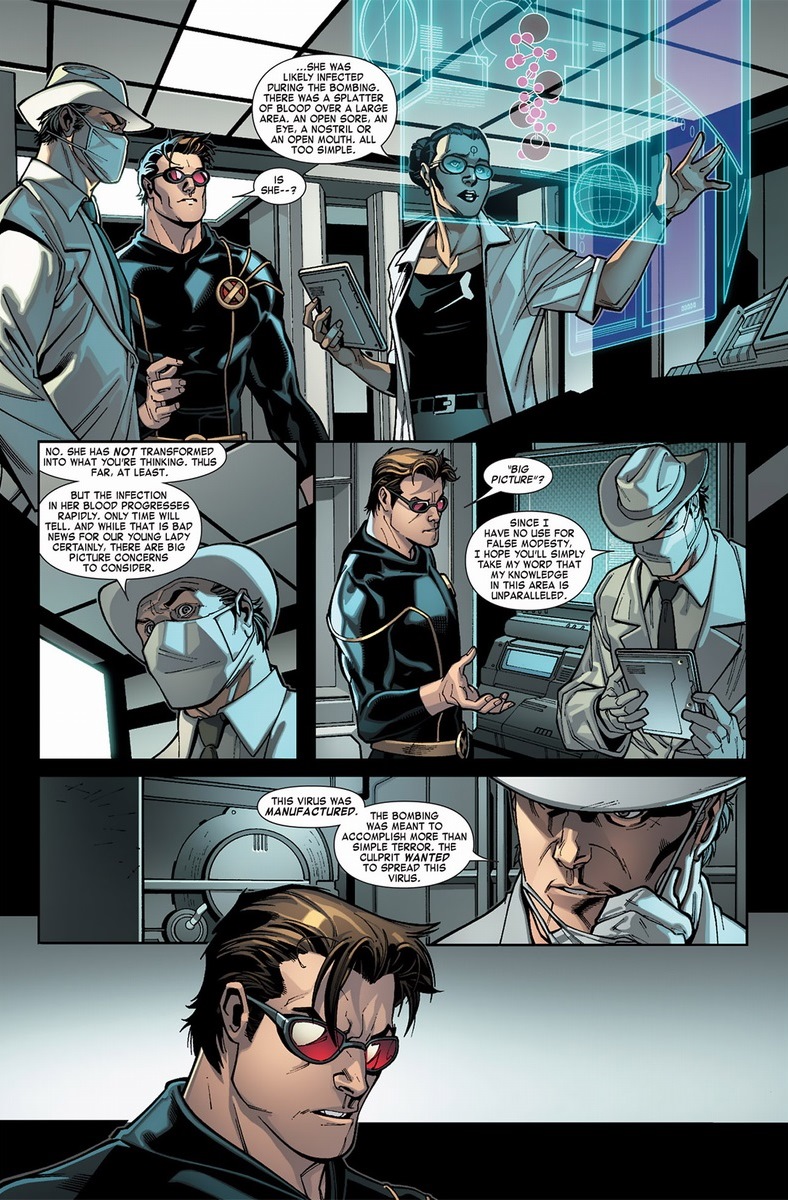
You see, we expect vampires to remain as old fashioned and Victorian as their myth dictates. But of course they adjust to new technology and skills. In today’s modern world, couldn’t something (or someone) be created to mimic the effects of a bite without all that hassle of the romanticization and allure of a neck puncture? Vampires use Facebook just like the rest of us, or in this case, manufacture biological weapons that accomplish their goals under the guise of a terrorist attack.

No going back now. Our girl’s on her way to vampire-dom. Want to talk about vampires in Marvel comics? I guess if not you could always skip this paragraph. The mythical creatures first appeared in the Marvel universe in the early ’70s, as Marvel comics’ version of Dracula received his own comic book. Morbius the Living Vampire technically premiered before him, but Morbius is also technically not a vampire. The Comics Code Authority finally allowed comic books to return to their horror roots, and they jumped on that with a fury you’d expect from an easy way to make bijillions of dollars. Thus the series The Tomb of Dracula ran for over seven years and seventy issues. The superhero Blade premiered in that series as well. He’s a major character in this arc we’re reading now, but I’m skipping him in favor of Jubilee. Note: it’s worth buying the book just for Blade’s Hulk Hogan mustache.
So the vampires’ plan? Hint: it involves delusions of grandeur.

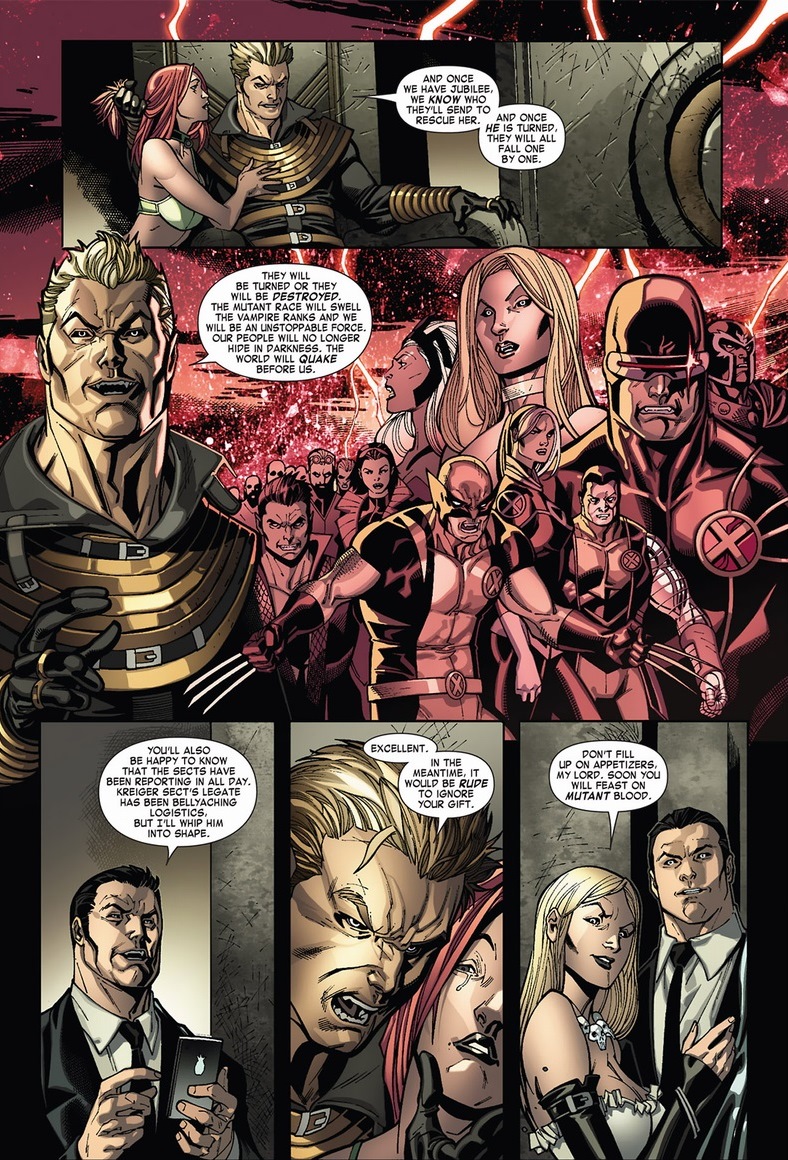


She can officially stamp her vampire card. Definitely no going back from that. I’m not happy about the weird pseudo-seduction of the young Jubilee by an ancient creepy vampire (Dracula’s son Xarus), but I guess it wouldn’t be a good vampire story if we weren’t all weirded out.
Up next you’ll witness a beautiful exercise in a slow burn. Not like an insult, but the overextending of a scene to heighten the effect of the ending. And of course Xarus is right: the X-Men’ll totally rush to save their precious former X-Men. No one more than Wolverine, who collects teenage girl protégés faster than matted back hair.
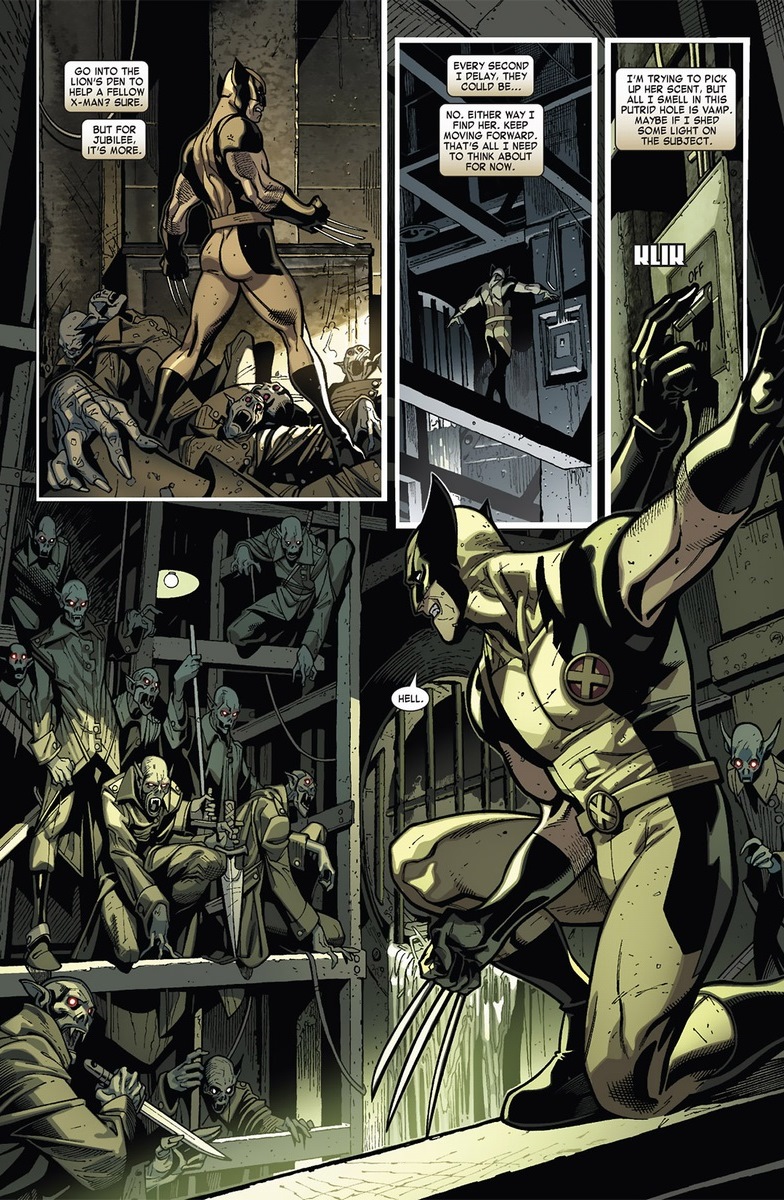

For all of Wolverine’s unpleasantness, his father figure-ness towards the younger X-Men almost compensates for his many, many, many faults. Sure, he may smell like meat, drinks too much, needs anger management, and murders every other person he talks to — but you see how much he cares about the kids? He’s tortured, not evil. Kitty Pryde, Jubilee, Armor, and the rest are objectively better people for knowing him. Now remember this for our slow burn.


What a jerk. Can Vampire Jubilee redeem herself? Maybe, but at least she’ll have her buddy Vampire Wolverine. Now when he goes to the bar, it’ll bring a whole new meaning when he orders a Bloody Mary. Right? Sorry, I promise I won’t do that again.
The Impulse and Batman team-up
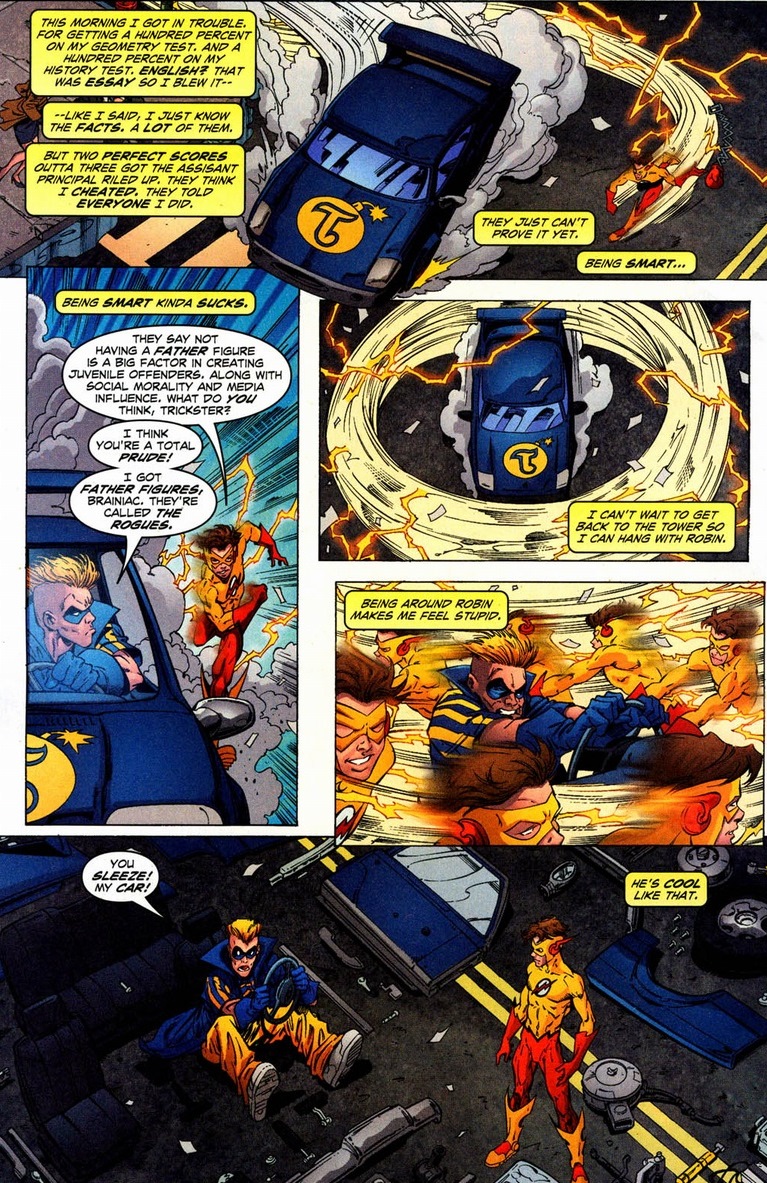
Posted: 07/07/2014 Filed under: Characters, DC 4 CommentsNo two superheroes have less in common than Impulse and Batman, except maybe a mutual respect for Batman. The child speedster arrives in Gotham to play a prank on Robin — that’s his entire motivation for coming to the city and almost a perfect summary of the character himself. And you know Batman already, the scariest man in the DC universe. Today, they team-up against the Joker and it’s absolutely delightful. Let’s read together Impulse #50, written by Todd Dezago and drawn by Ethan Van Sciver.


Note the brilliant difference in art styles. Impulse is drawn like a living cartoon with a larger noggin and softer features while Batman has his standard gritty lines and indulgence in shading. Unfortunately, despite Impulse’s superpowers and Batman’s over-reliance on solo work, there’s one more solid reason for Impulse to run on home. Y’know, it’s in his superhero name. Also, you can really see the clear gorgeous difference in the art on these pages:
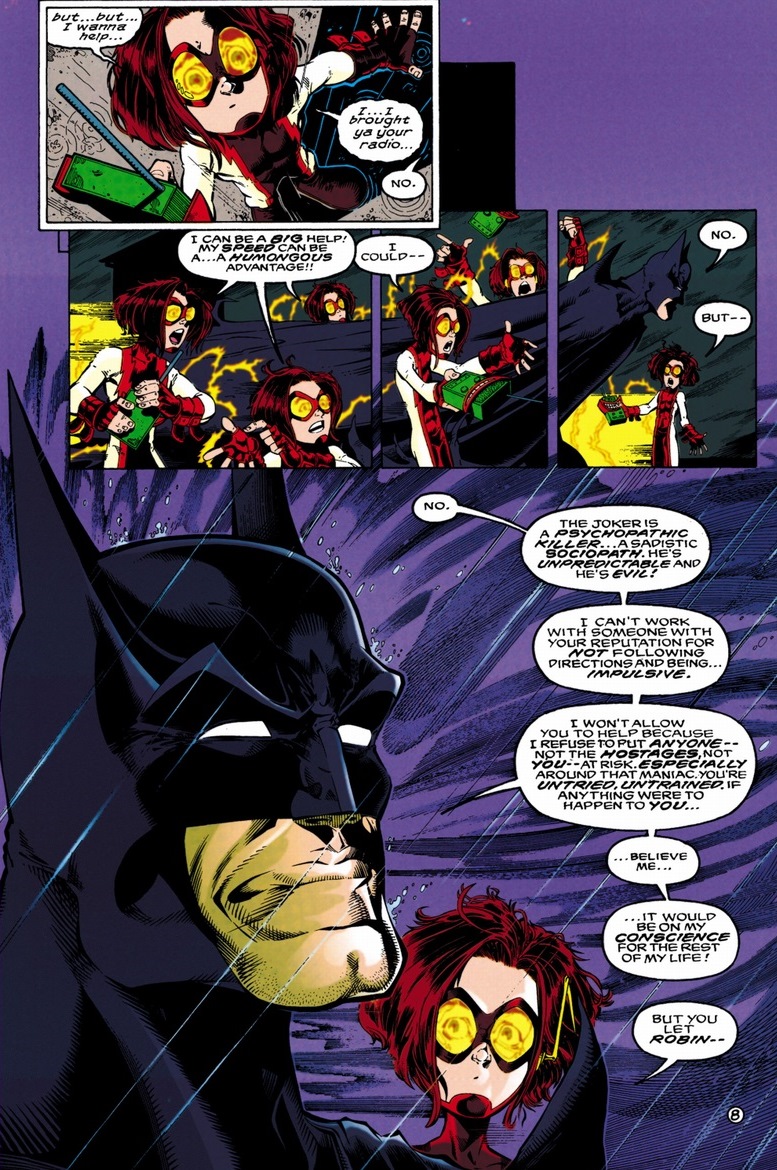
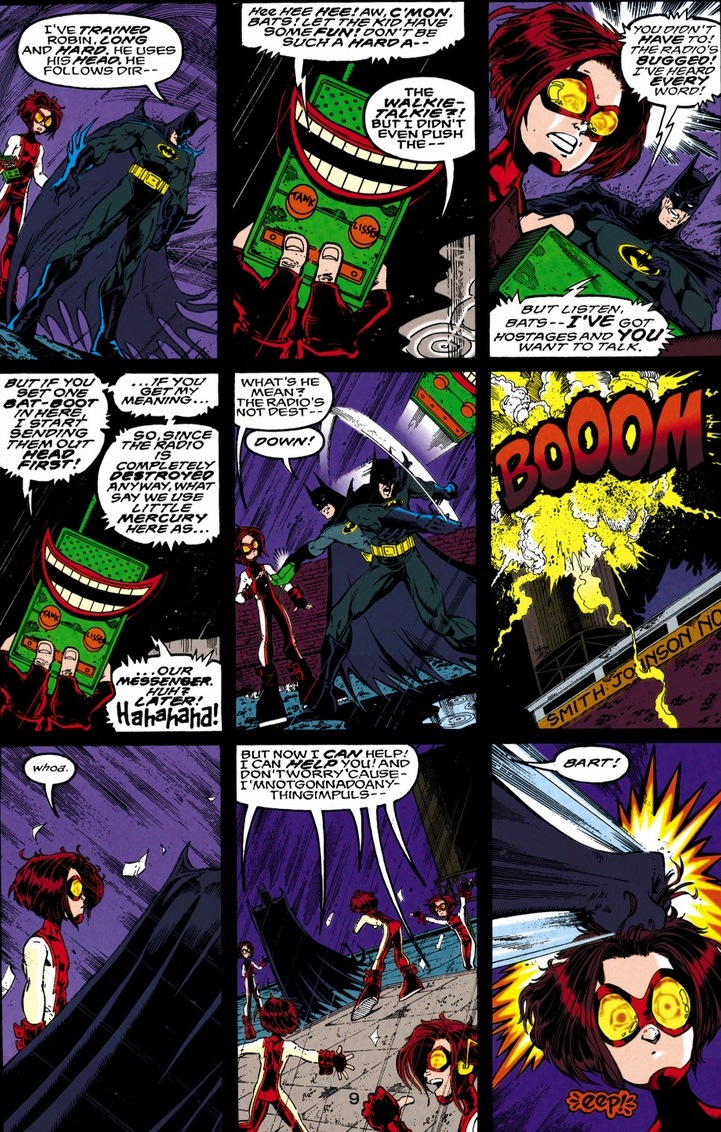
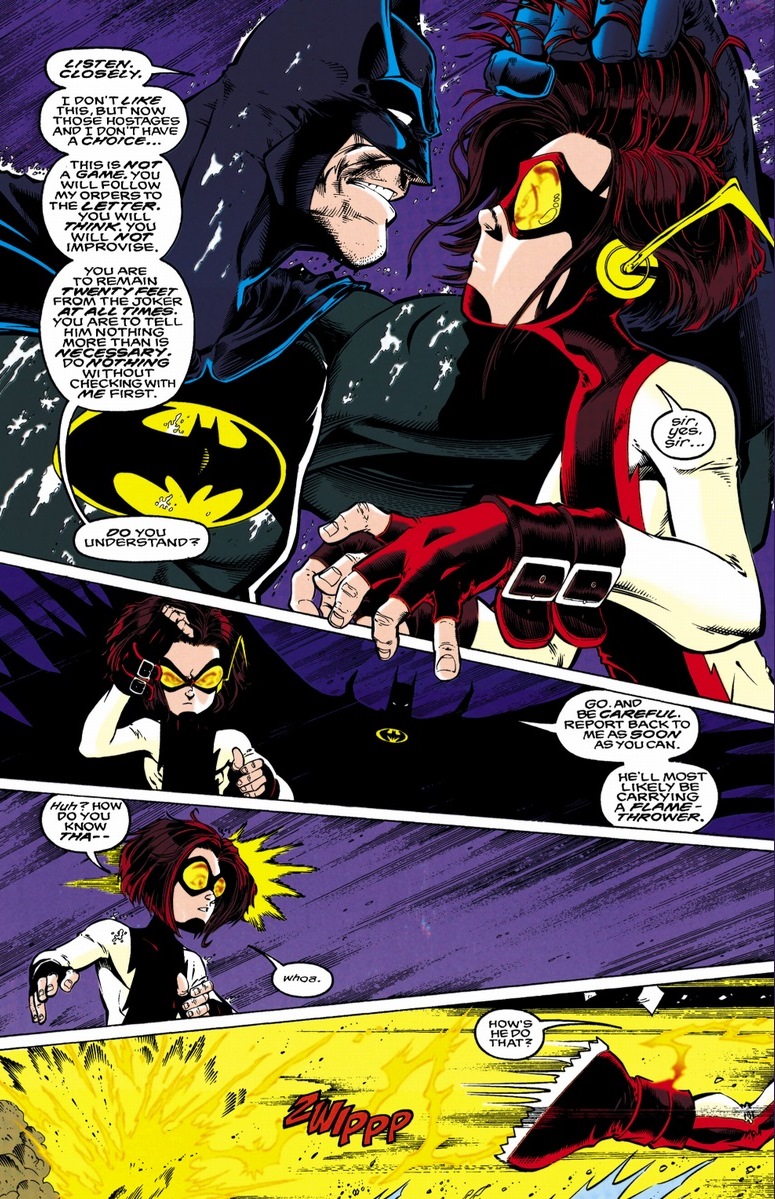
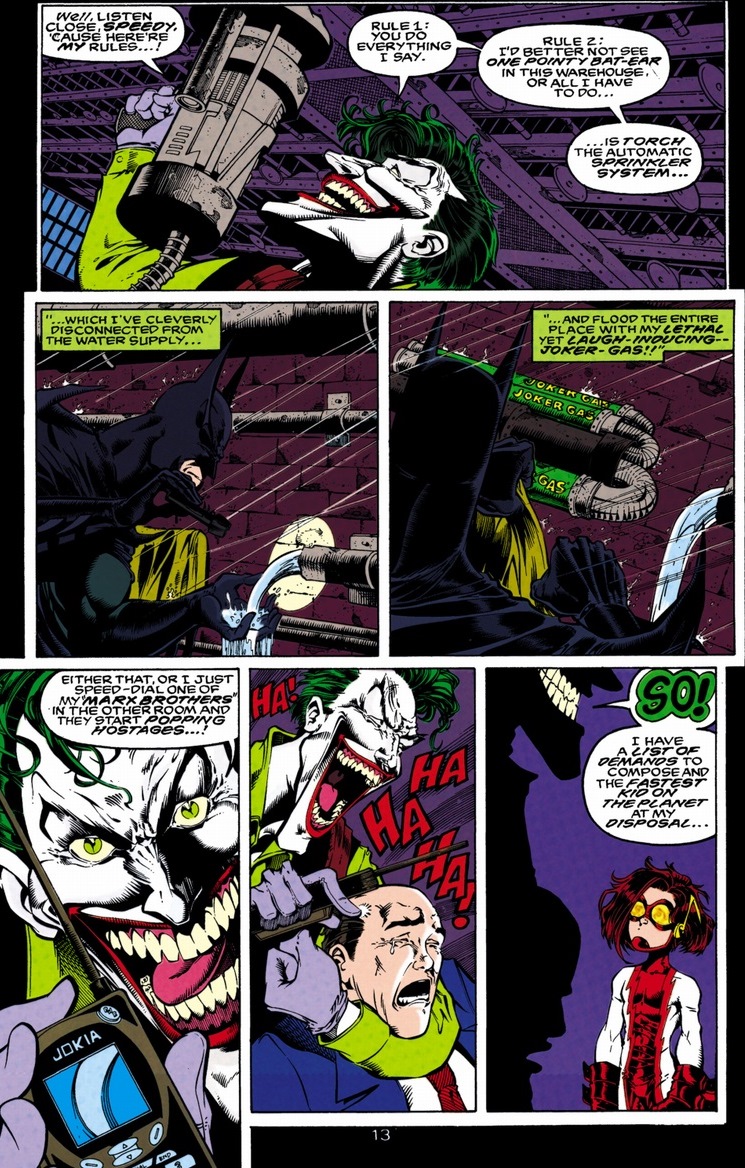
Witness Impulse’s first conversation with the Joker. The poor kid has to keep Joker busy long enough for Batman to disable all the traps. Luckily for all the Joker’s unpredictability, at least he’s always terribly verbose.


Joker’s bad grammar aside — it’s almost impressive for the Joker to bring about that level of fear in those he’s around. The guy has no superpowers, no real alliances, an above average but not genius intelligence, and fairly middle-of-the-road martial arts skills. Though I guess anyone would pick up a few fighting tricks getting bashed in the head monthly by Batman for the past decade or two. So what would any good supervillain do with a speedster at his disposal?
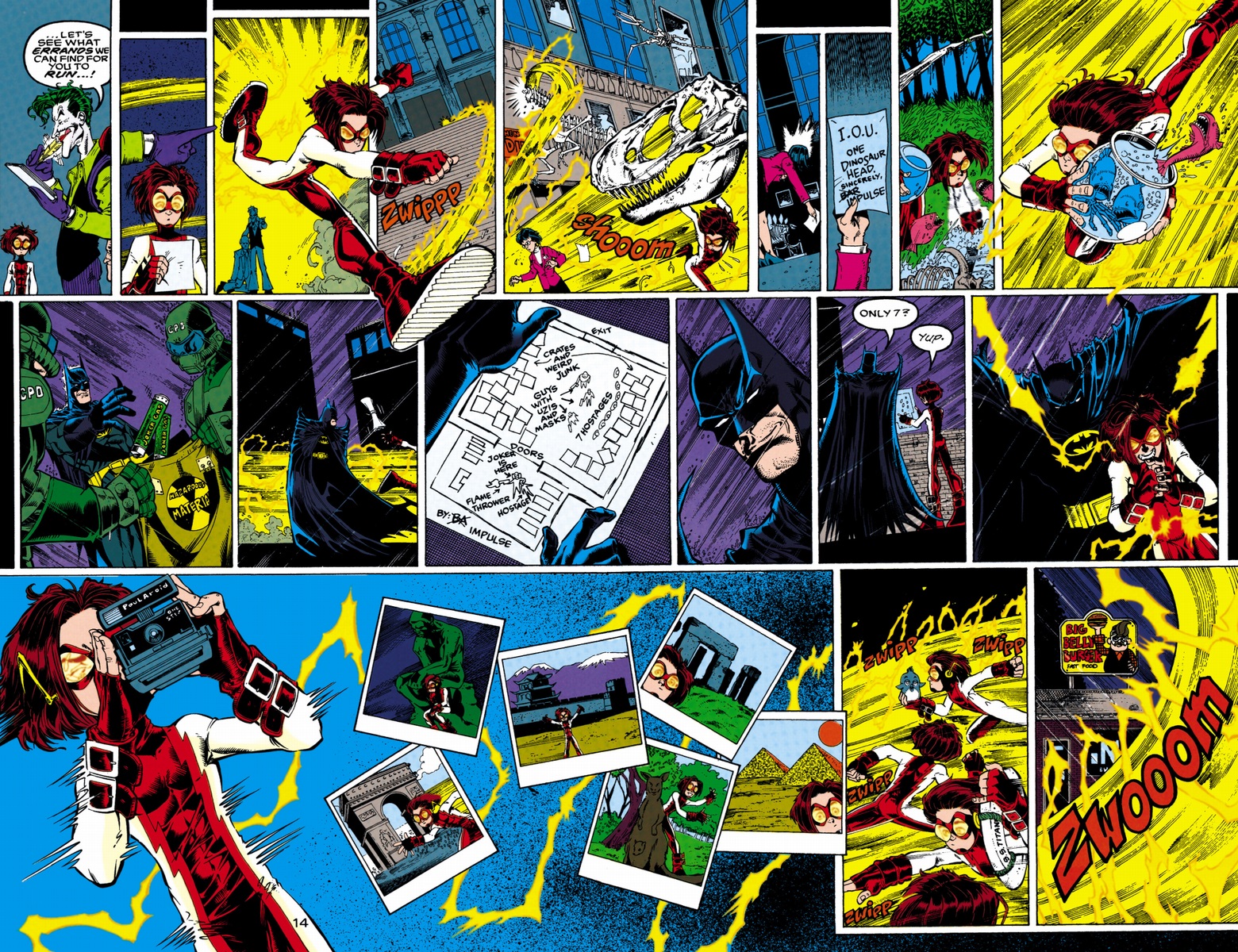
You can click the picture for a larger version of the montage. And you should, because it’s fantastic. Note all the jokes: the two notes he starts to write his real name before crossing it out, that gleeful panel of Batman and Impulse cackling like mad scientists, Impulse’s poses as he takes pictures for Joker, etc. For all the darkness and extreme-ness of comics in the ’90s, we can’t forget that glimmer of silliness and fun hidden beneath numerous pouches and leather jackets.
Also, three great jokes on the next few pages.
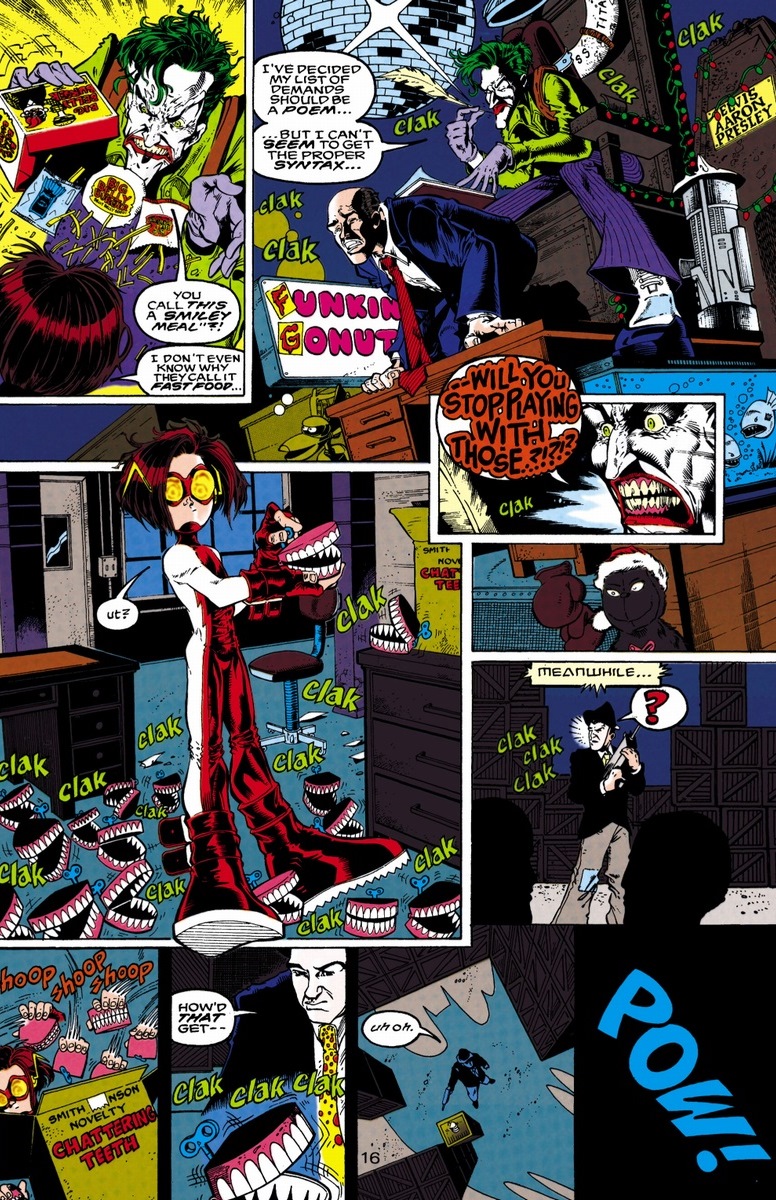
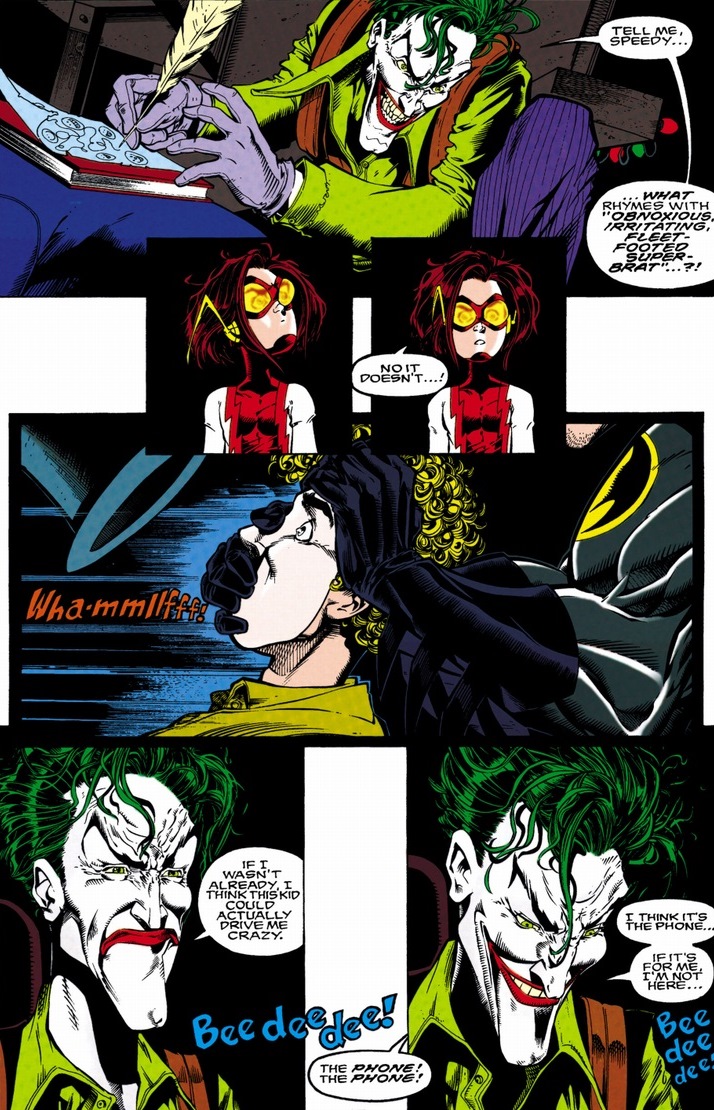

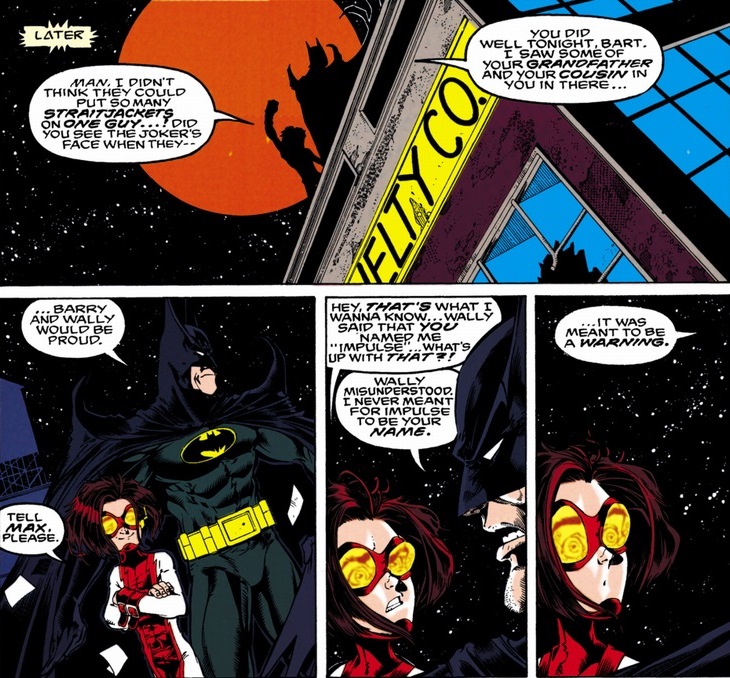
There’s a three page fight scene after this, but you can buy the issue for that. The important life lesson comes at the story’s conclusion, where all young superheroes experience growth through the tribulations of working with their elders. Most importantly, Batman does something that’s his own perfect character summation. He manages to give a compliment and an insult at the same time, thus bringing Impulse’s feel-good status back down to neutral. You wouldn’t want the kid to get a big head, right? I mean, a bigger head than he already has.
We’re back to Robin on Wednesday because Tim Drake holds a special place in my heart. He makes out with Jubilee. How’s that for a tease?
Impulse and the library
Posted: 07/04/2014 Filed under: Characters, DC 2 CommentsEvery weekend from 2003 till the reboot, the DC superheroes would ship their child sidekicks off to San Francisco to bond or whatever. Maybe Batman just needs a break. Maybe he wants some time without have to worrying about being a good role model or wearing pants in Wayne Manor. In Teen Titans #1-7, written by Geoff Johns and drawn by Mike McKone & Tom Grummett, we get to see the teenagers’ days off from fighting crime. Which they use to fight crime anyway. But the idea of Teen Titans? Fantastic idea, and good for personal growth or at least two days a week that Flash doesn’t have to deal with the DC universe’s annoying kid brother.


Let’s talk about Bart Allen for a moment. It’s weird and complicated, so I’ll try to explain the best I can. Bart comes from a thousand years in the future, but unfortunately all that speed juice or genetic abnormality started to age him prematurely. Like that Robin Williams movie Jack. His family raised him in a video game-esque environment to keep his metabolism in check (hence Flash stating that Impulse treats everything like a video game with continues, extra lives, etc.), but it didn’t work. Taking the next logical step, his mother sends him back in time to our day where medicine doesn’t have the ability to fix a future disease. The Flash (Wally West) races Bart Allen around the world and the crazy speed fixes his metabolism. Look, I’m not a scientist, but that’s comic books for you.
Now he’s the superhero Impulse, saving a yacht from a mysterious bad guy.
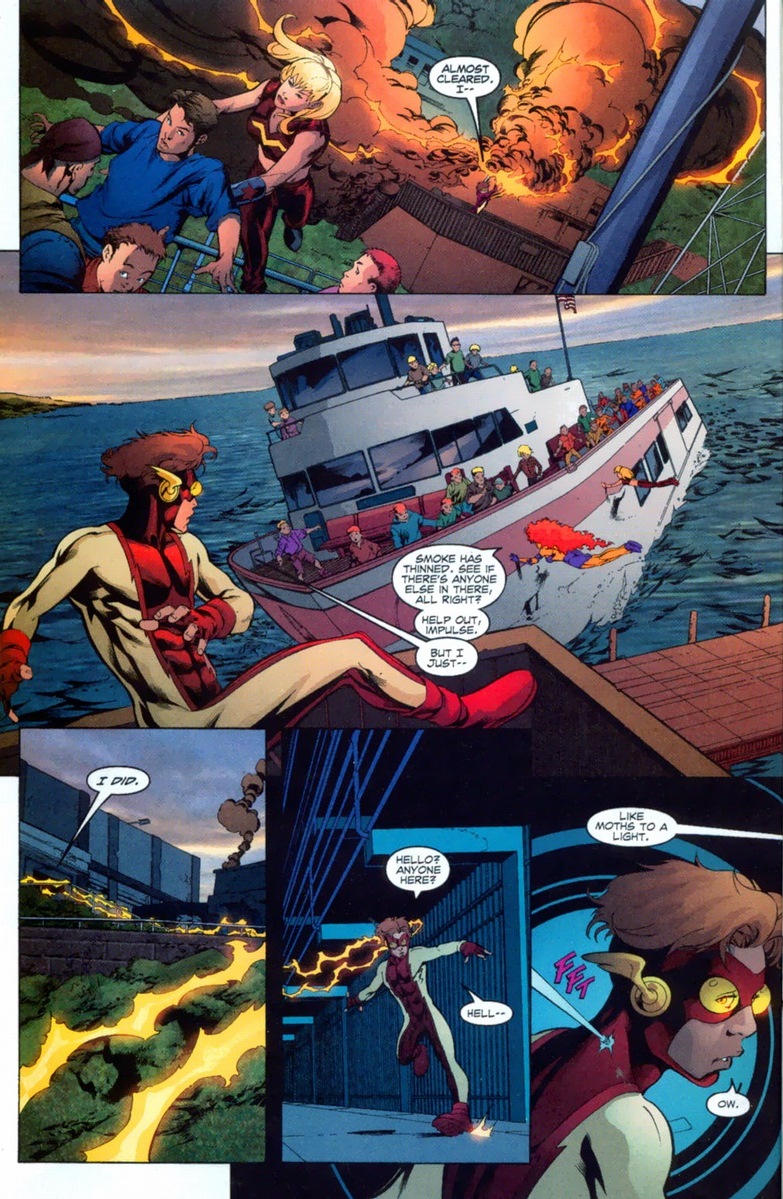
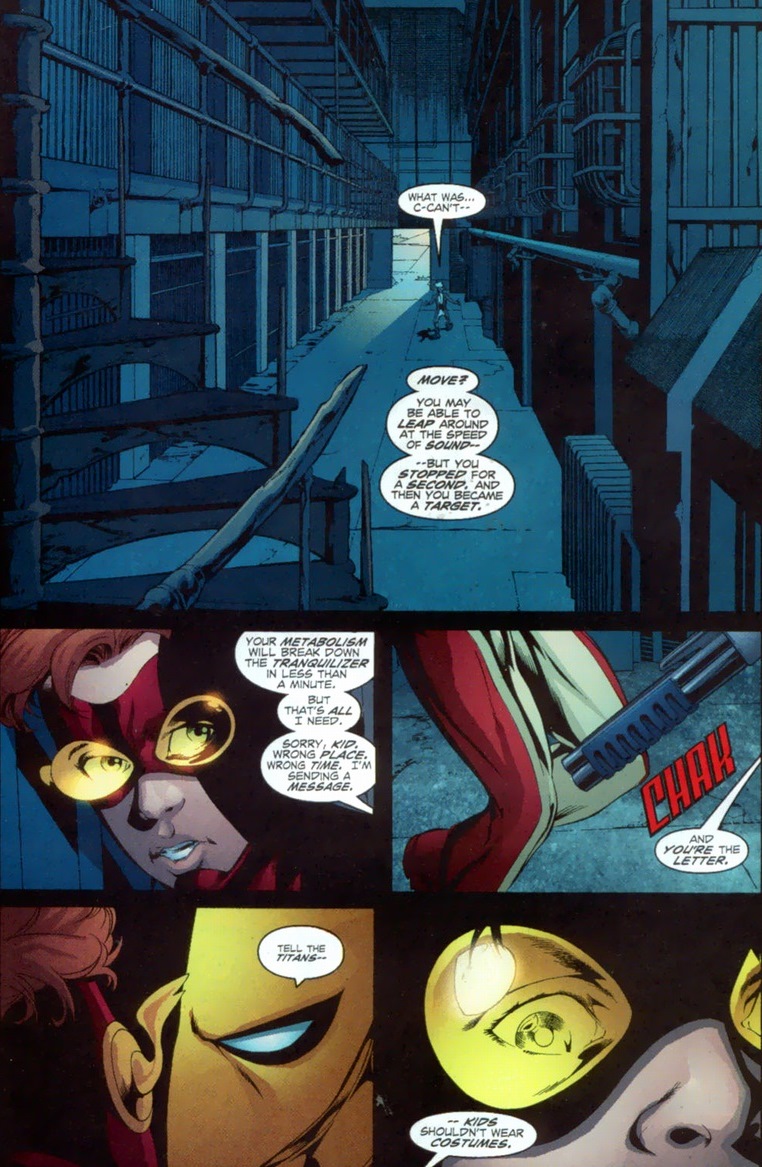
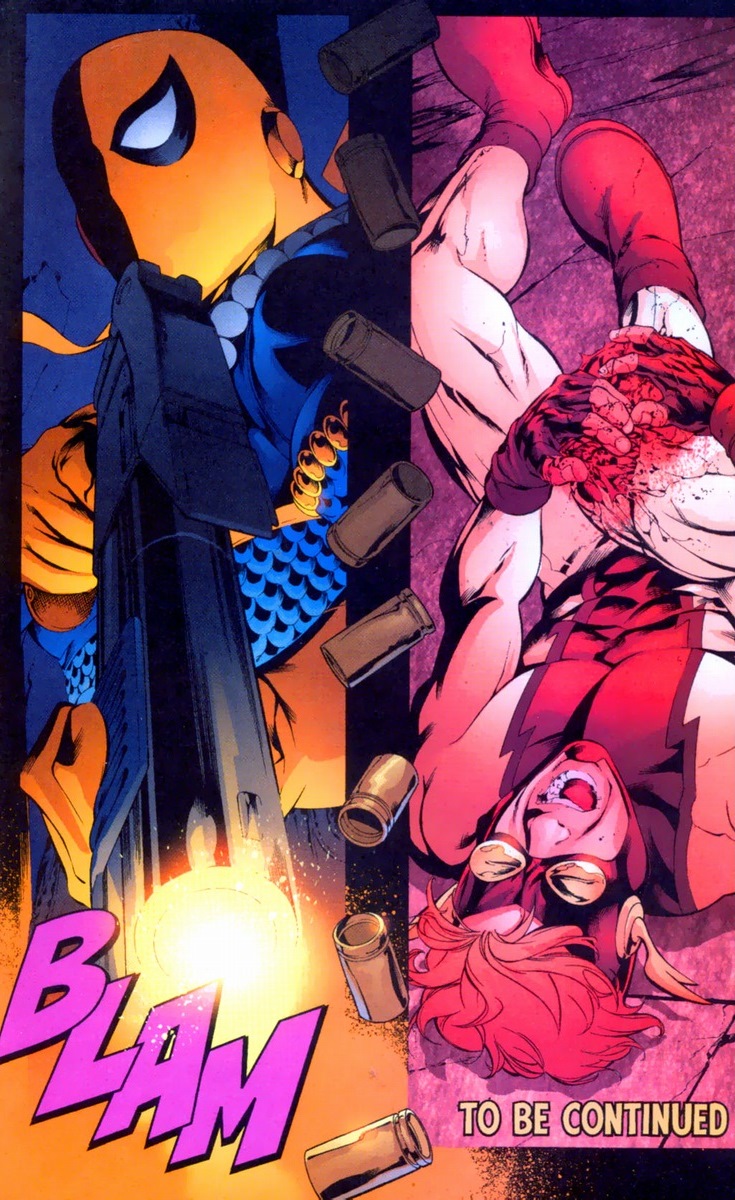
The Teen Titans’ arch-nemesis Deathstroke is an old man. His hair is white and he rocks full facial hair. Yet he spends his time battling teenagers, like the ultimate elderly dude yelling at kids about stepping on his lawn. Sure, he occasionally blows off kneecaps and slices people open with swords, but we can’t forget that he loses constantly to superheroes with a median age of 15.
Now here’s the thing about super speed — it also means super recovery. Impulse can heal fully within minutes, but like in the real world and not in the world where running fast cures metabolism issues, if the knee heals in the wrong place then Impulse can kiss walking goodbye. Plus, all the surgeons retrying after the healing ruins their surgery gives Impulse a long time to painfully think about his own life mistakes. Remember when his mentor said that he doesn’t believe in him?


Impulse is the only Flash-like character with perfect memory. Flash or Max Mercury or Johnny Quick can learn how to repair a skyscraper in the time it takes for the first brick to fall, but weeks later the skill’ll be removed with football stats or however superheroes spend their weekends without their kids. Time for poor Impulse to grow up.


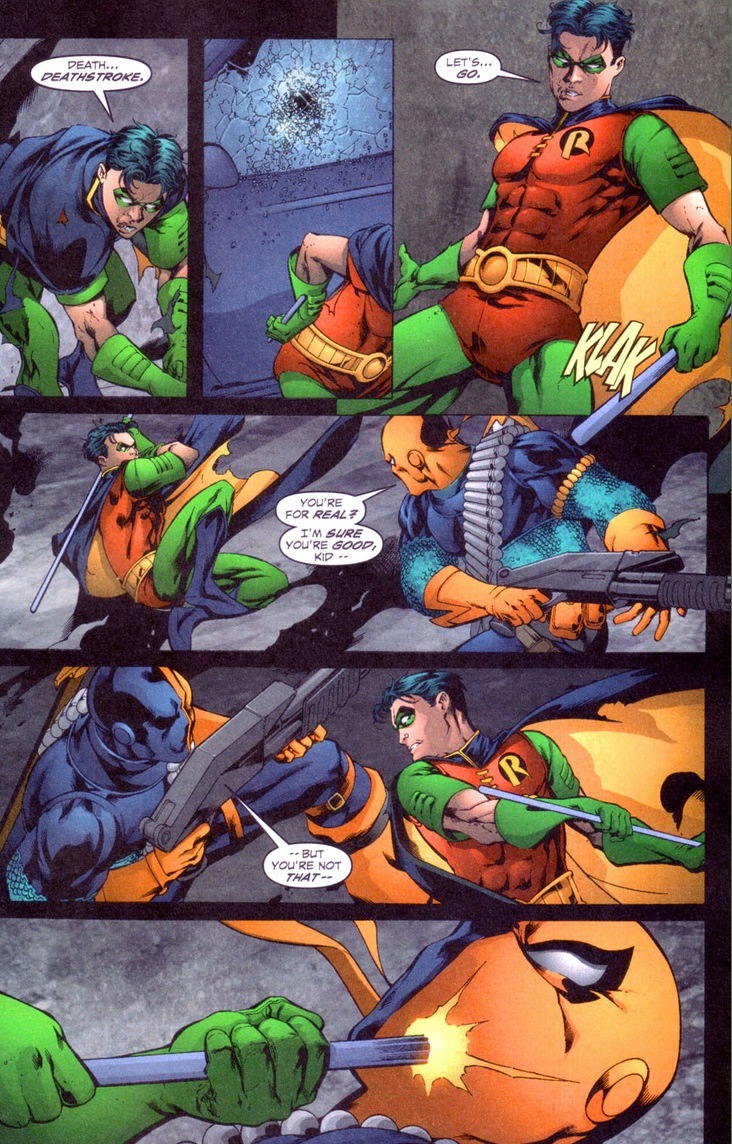
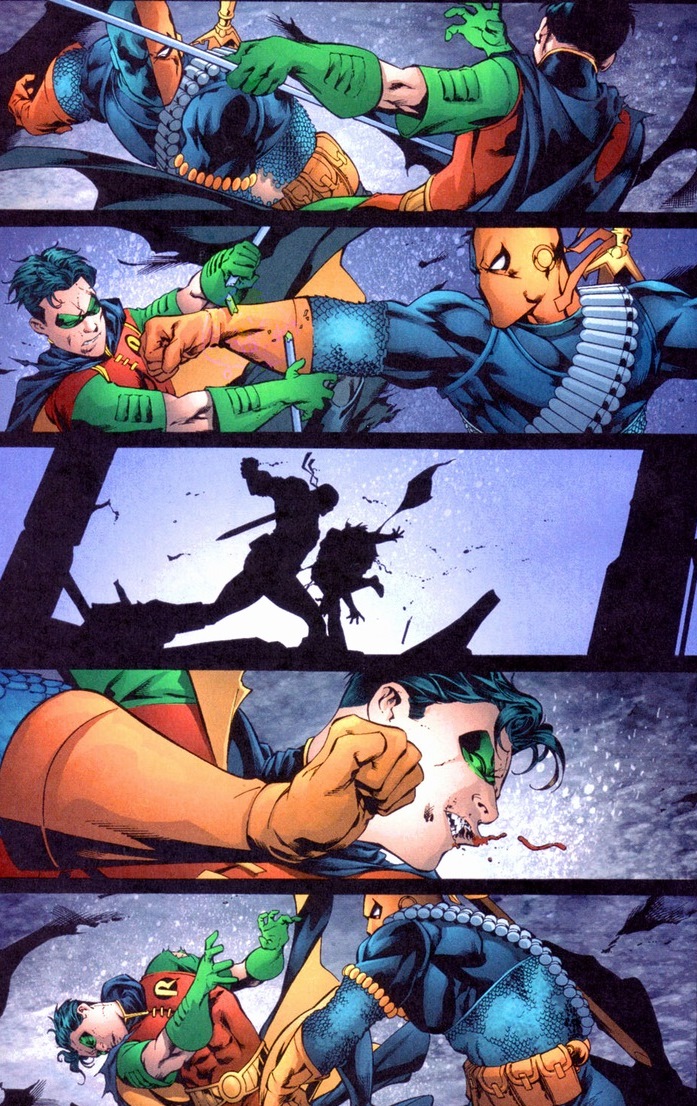
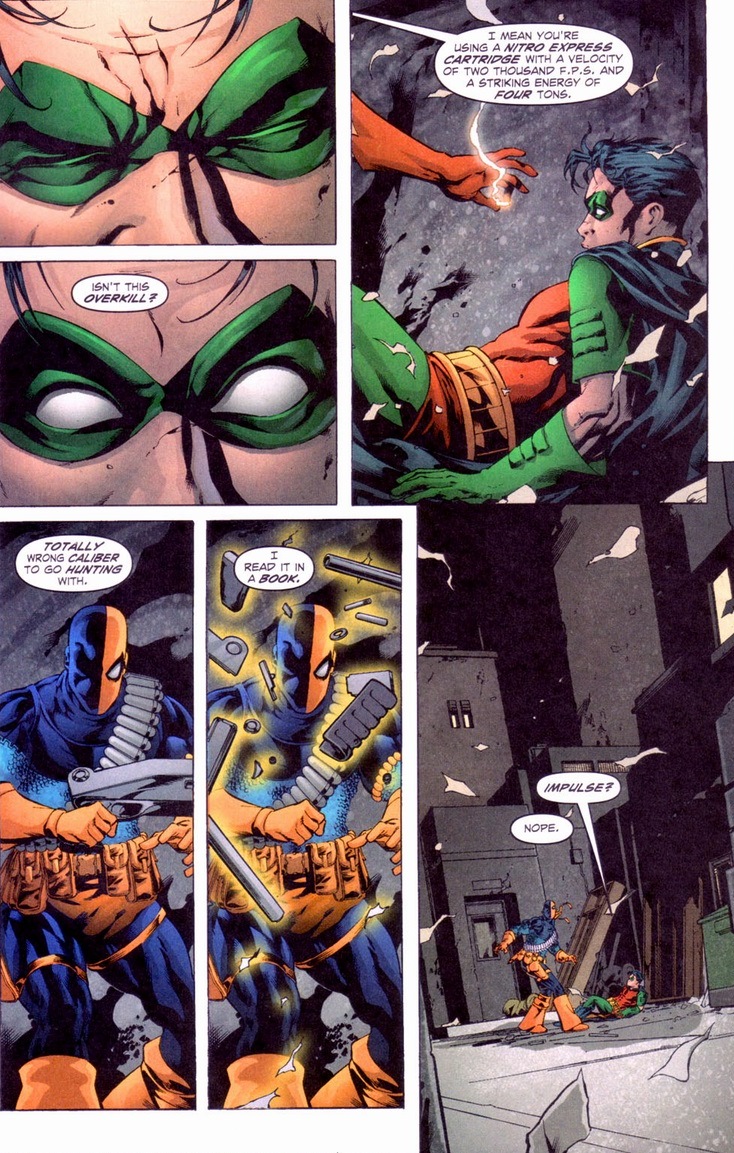
Robin solos Deathstroke next. And as I’m a former English teacher, I’d be remiss not to mention that for all of Robin’s skills — martial arts, detective logic, weapon training, years of on-the-job experience, and a costume full of Deus Ex Machina gadgets — his life today gets saved because of books. Beautiful, glorious, spectacular books.
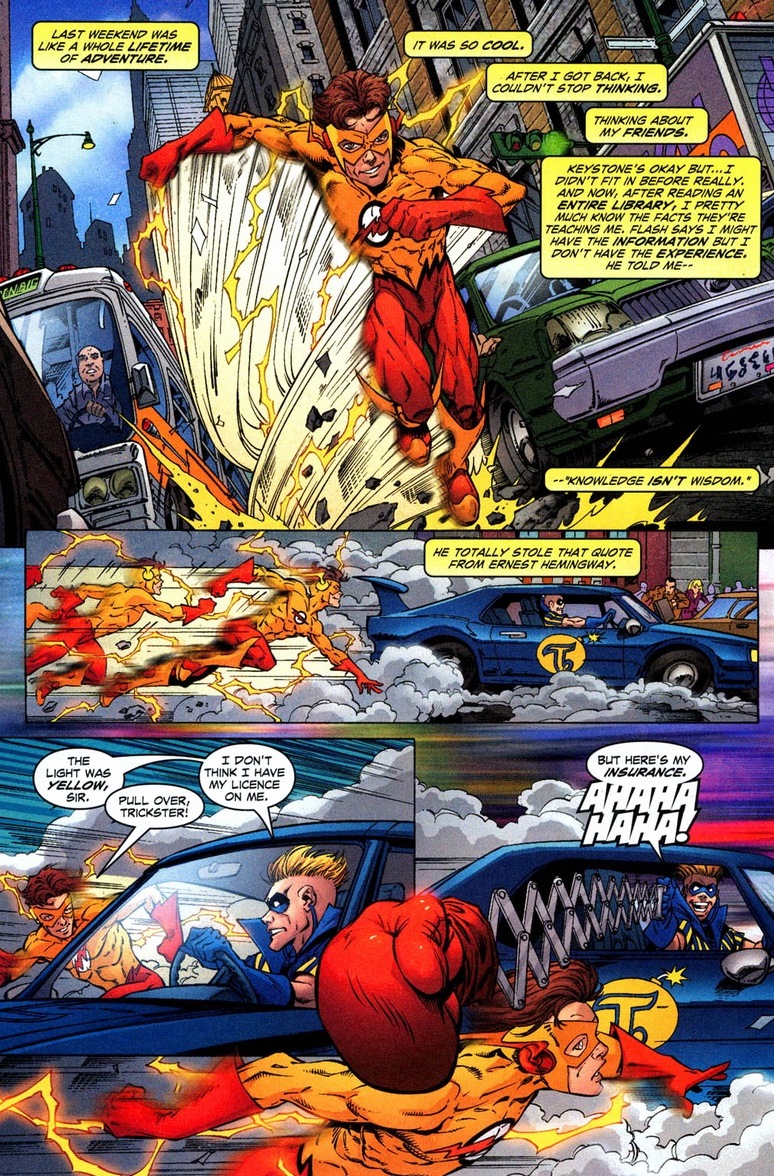
If knowledge is power, than Impulse now has the power of the entire San Francisco Library.



You can click the image above for a larger version where you can actually read all the text. Like many Pokemon evolutions, the Flash title takes two promotions to obtain. He starts as the immature and annoying Impulse. After he proves himself (with knowledge), he graduates to the second level Kid Flash. That’s the same title Wally West used before he became the real deal. In a few years, Bart’s Kid Flash finally gets his precious Flash moniker (for thirteen issues before he dies, but that’s a whole other story).


Oh yeah, the kids battle their superhero mentors, but you can buy the book for all that. As we end today, I want to mention one more time how delightful and refreshing real superhero growth is. I totally get that superheroes almost always must go through temporary change or personal growth with no future impact on the story — comics are a business and sales must remain steady. Though I guess the New 52 is out to prove me wrong. We should root with all our heart that this reboot succeeds because there’s no going back. Readers’ delusions of an “oops” and shift back to 2010 isn’t healthy. Buckle up for the long haul and enjoy the ride.
Robin’s school shooting, Pt. 2
Posted: 07/02/2014 Filed under: Characters, DC 4 CommentsBeing a superhero, Robin has an advantage that normal people don’t — namely superhuman detective skills and kung fu-ing faces. With his classmate dead, it’s time the teenage murderer pays for his crimes. Through kung fu-ing him in the face, mainly. Robin and his buddy Spoiler have all the information they need, and all that’s left is the bruising and the arresting.


I’m not totally an expert on teenage behavior, but two colorful vigilantes bursting through a gang’s door invokes less fear and more apathy. We forget that Batman’s the scary one. Robin’s the lighter side of crime fighting. Since children can’t be as frightening as Batman hopes, Robin’s bright colors allow the bad guys to underestimate him. He wins the fight through psychology. Or because Robin’s color scheme has been around for over 70 years and it’s too late to make any considerable changes to the costume. Giving Robin pants were a nice touch though.


You know Robin doesn’t belong in that area when he counters the thug’s threat with Gatsby’s catchphrase. Some hidden benefits of being a gang leader is your own theme song, like a half dozen highly armed men pounding a drum line for foreshadowed walks down the hallway. You know how Batman always wins because of his incredible level of preparation? Robin and Spoiler spend the next pages dodging a nonstop stream of bullets and other situations they’re not ready for. The chase eventually leads outside:


Daddy has a lecture planned. I know in the movies, they always show Batman’s eyeballs, but the white slits make for a wildly more intimidating Batman. Time for Robin’s life lesson this arc.
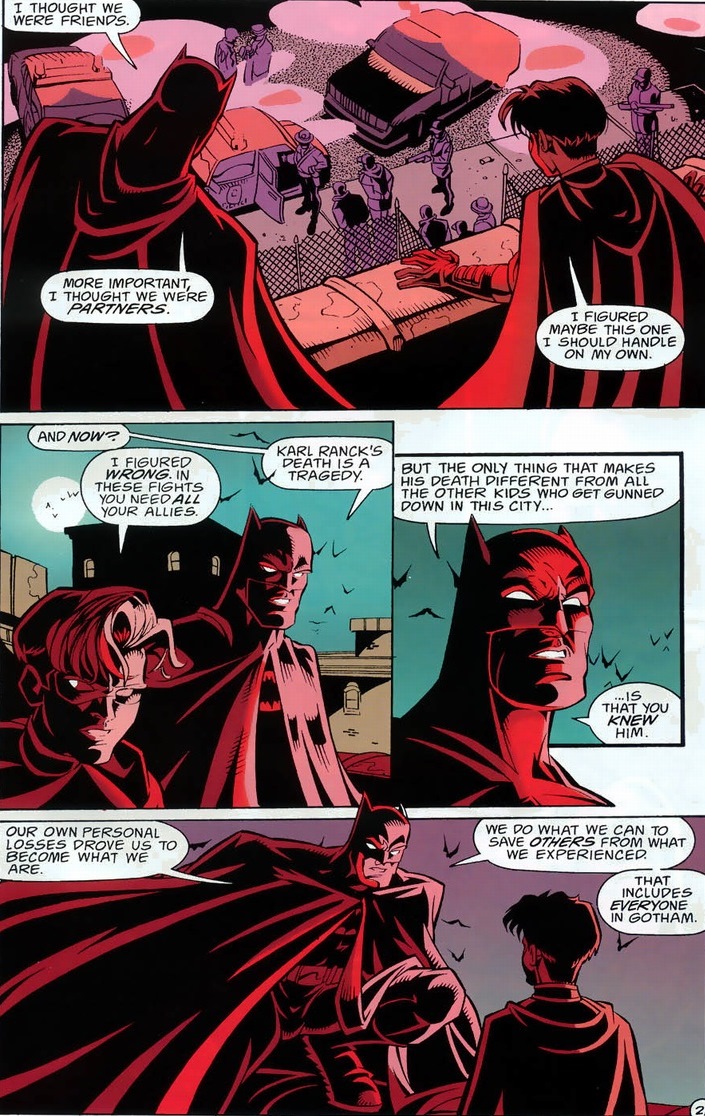
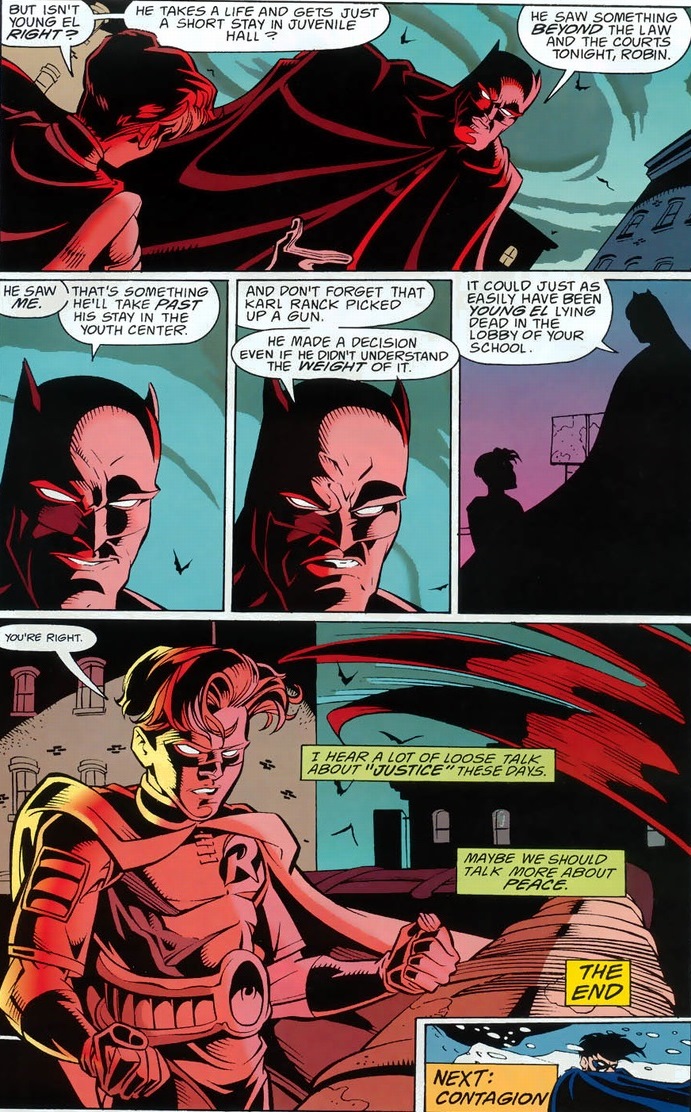
Batman’s right, of course, except for one tiny detail — the whole fear of Batman prevents crime thing. Maybe in a real life society, a giant man in a bat costume dropping from the sky to punch all your friends would give you some hesitation before committing the next illegal act. But Batman lives in a world where he needs stories to fill four or five monthly books — Gotham isn’t lacking in repeat offenders.
We pick up twenty issues later. Bad guys continue to rob banks and steal and kill and poison the water supply and tear people in life while wearing luchador masks. But today, we get the conclusion to Robin and Young El’s tale. One of them didn’t learn the first time.


See? What a great dilemma! Young El will need Robin’s help to survive his mistake, but Robin will be assisting a known murderer — and a personal tragedy in Tim Drake’s life — only to have Young El break the law later down the road again. While people rave about characters who “put down” their villains, of course Robin’s going to attempt to save Young El. He’s better than us. Batman’s better than us. Superheroes have to be morally superior, as it goes with the cape-and-underpants territory.


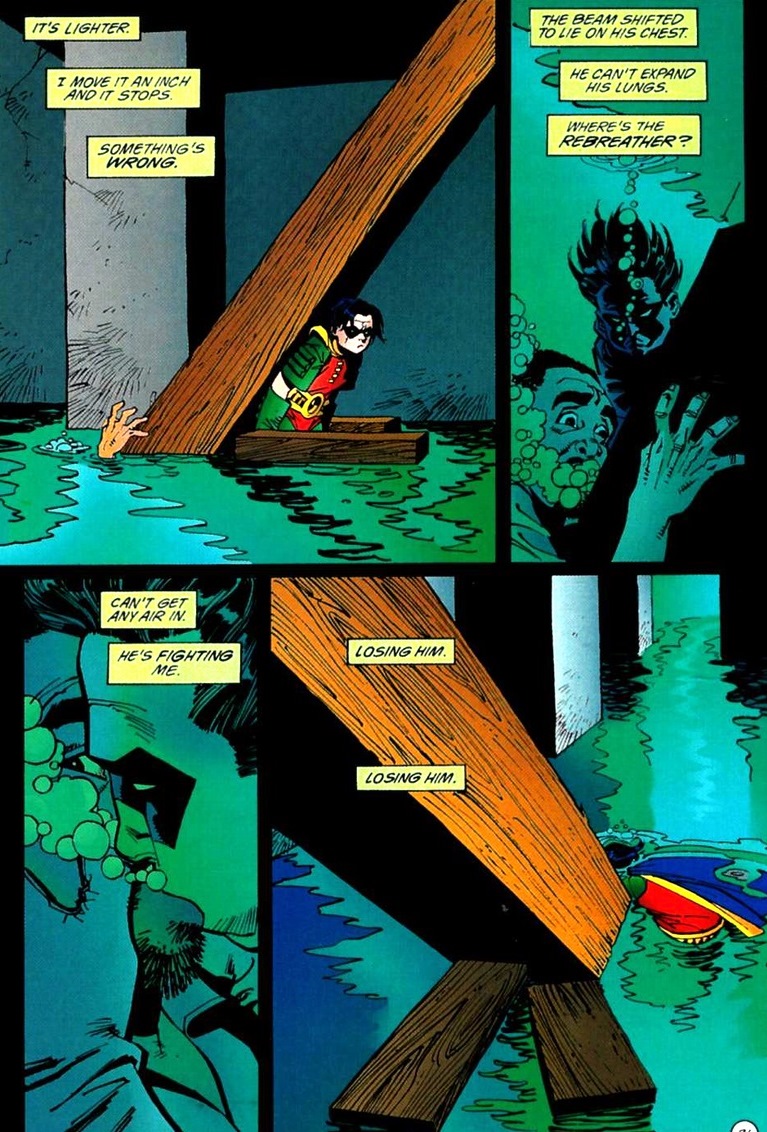
We end our Robin stories today, and like the other two articles, this one also ends unhappily. That child gets wrung through the emotional ringer. Thank goodness poor Tim has the composure to suppress or deal with trauma (and it certainly helps that he’s a fictional character) or else his father wouldn’t need to find the costume to discover Robin’s secret identity — he’d just have to listen to the daily night terrors and massive therapy bill.
In summary, Tim Drake’s the best Robin. I think that’s the message I’ve tried to convey this week.
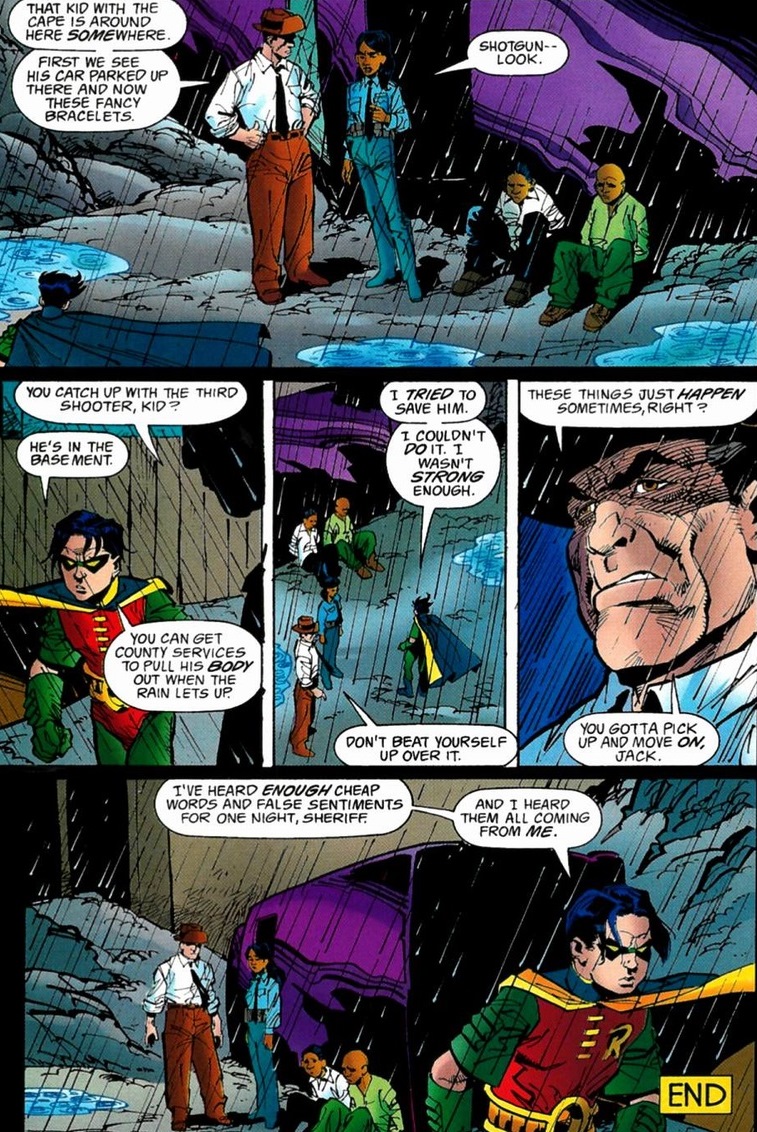
Don’t worry, Robin’ll smile on Monday as we cover an Impulse moment from Teen Titans.
Robin’s school shooting, Pt. 1
Posted: 06/29/2014 Filed under: Characters, DC 2 CommentsAs a teenager, Robin’s going to come across the normal teenage dramas as well as occasionally batarang-ing Two Face or Penguin or whoever. Even Tim’s mentor can’t help with high school issues as unfortunately, Batman spent his own youth training as a ninja in the Himalayans. Vengeance takes decades of prep, y’know. So poor Robin has to get thrown into the inferno of improvised problem solving today in Robin #25-26, written by Chuck Dixon and drawn by Mike Wieringo, and Robin #46, written by Dixon and drawn by Cully Hammer.
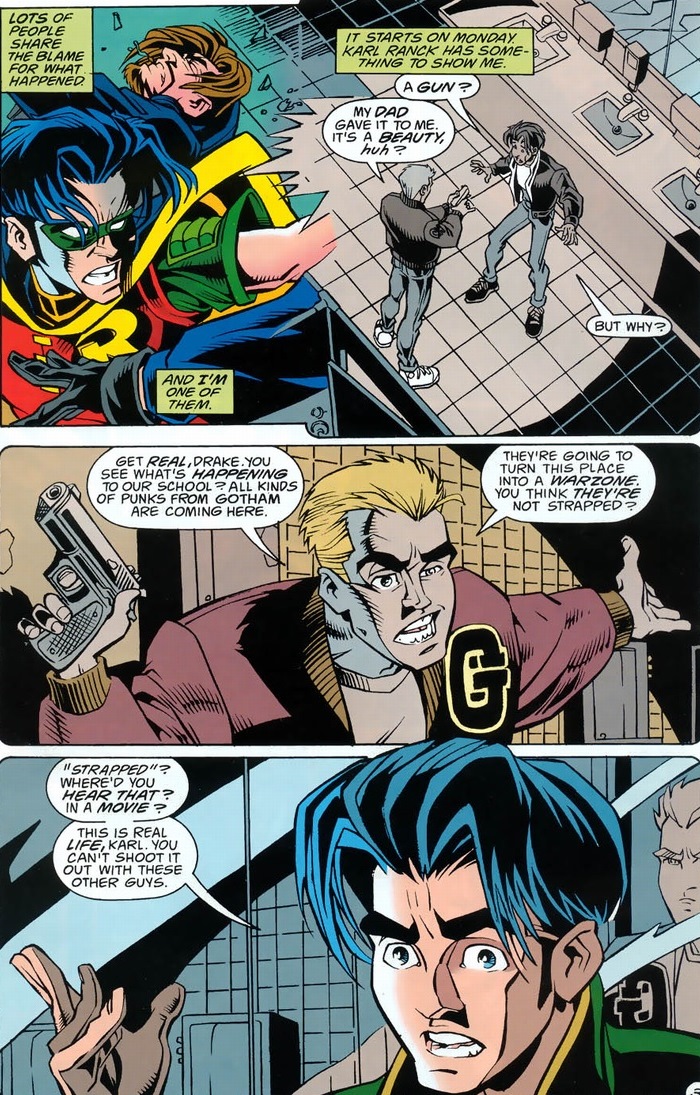

Get ready for another after-school special with bo staff beatings, because hopefully nerdy ’90s teenagers would pay attention to stuff Robin does. Though it seems a bit patronizing in 2014, I’m okay with this type of story. While kids can’t totally relate to school shootings (well, maybe now but not so much in 1996), they do understand impossible choices and it’s nice to have their fictional hero attempt to tackle that type of problem. I might just be overly simplistic, but I think we can all agree that in summary, being a teenager totally sucks.
Tim enlists his dad to go talk to Karl’s dad. The conversation goes exactly as you expect.
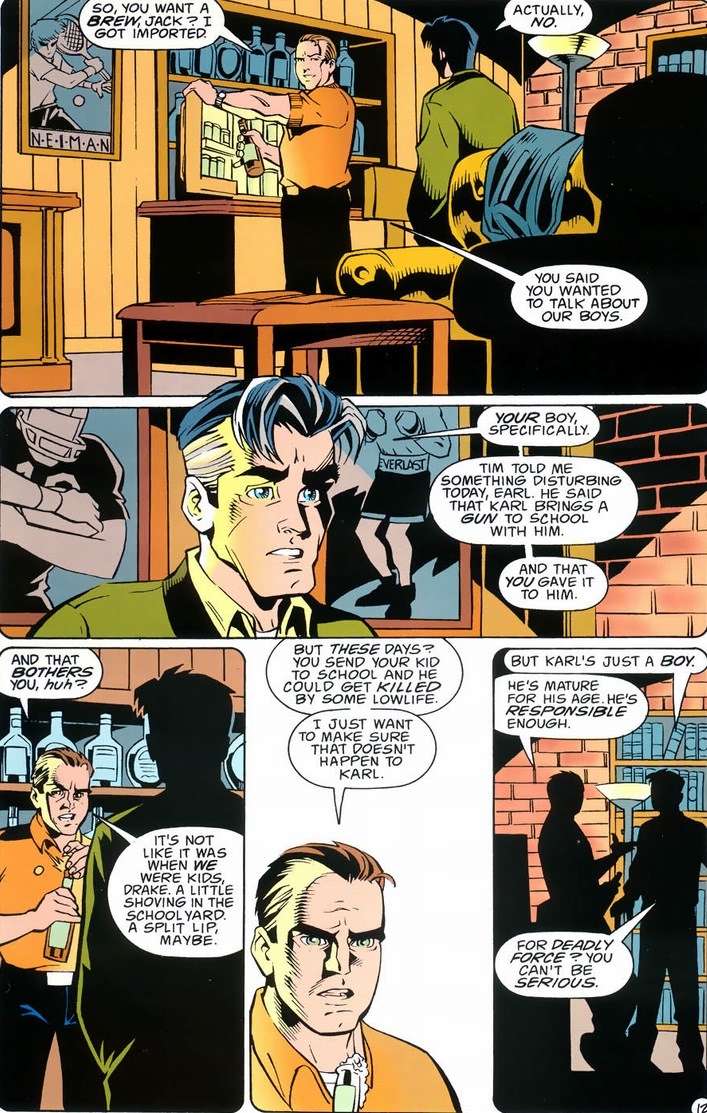

Have you noticed how perfectly comic book characters’ hair grays? It only reaches the temple and never expands into the precious moneymaker at the top (see Hal Jordan, Mr. Fantastic, Alan Scott, etc.). Just a touch of distinguish-ness to show old age and a full, beautiful heap of hair above. Do comic book characters only ever have a thick, gorgeous head of hair or none at all? What about the balding superheroes and villains?
Oh yeah, and Karl’s rebuttal to Tim the next day also goes exactly as you expect.

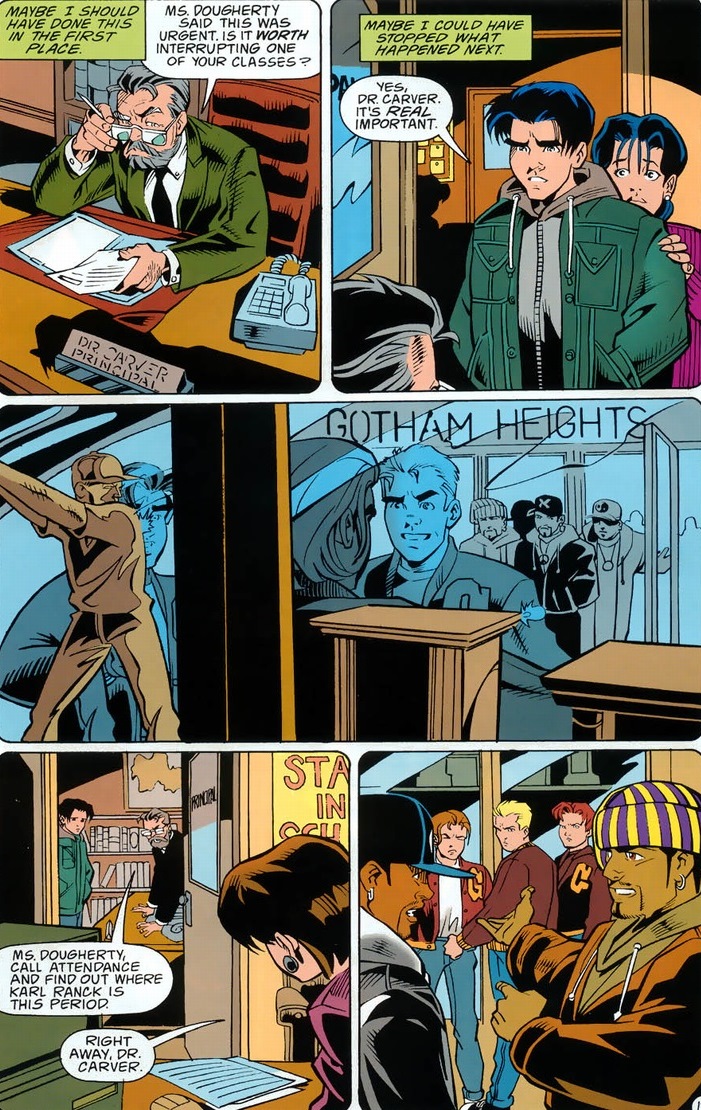
You don’t have to be Martian Manhunter to figure out what’s coming next. That and the title of today’s article gives it away. Robin has no problem snitching on his classmate — it’s to save his life, after all. Did Karl really think Tim wasn’t going to say anything? The dude spends his nights handing over tied up bad guys to the police by the dozens. He has battled every psychopath, monster, and criminal mastermind that Gotham City can throw at him — and won every time. Robin ain’t scared of bullies. Though like all dramatic and sad superhero moments, our hero’s just a moment too late.
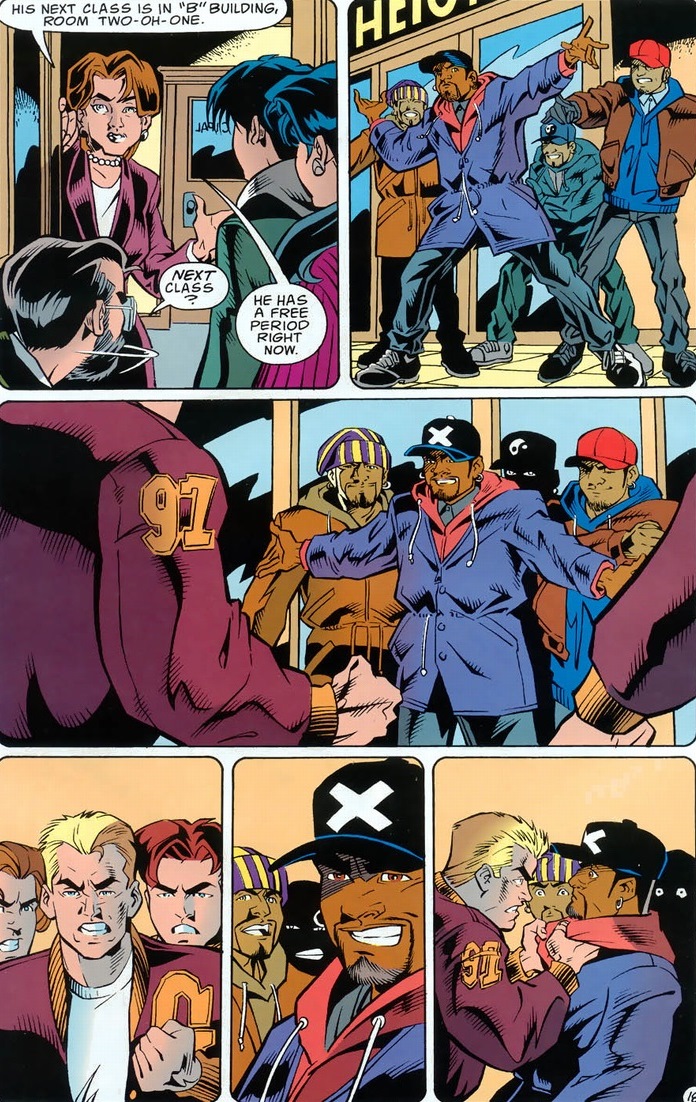
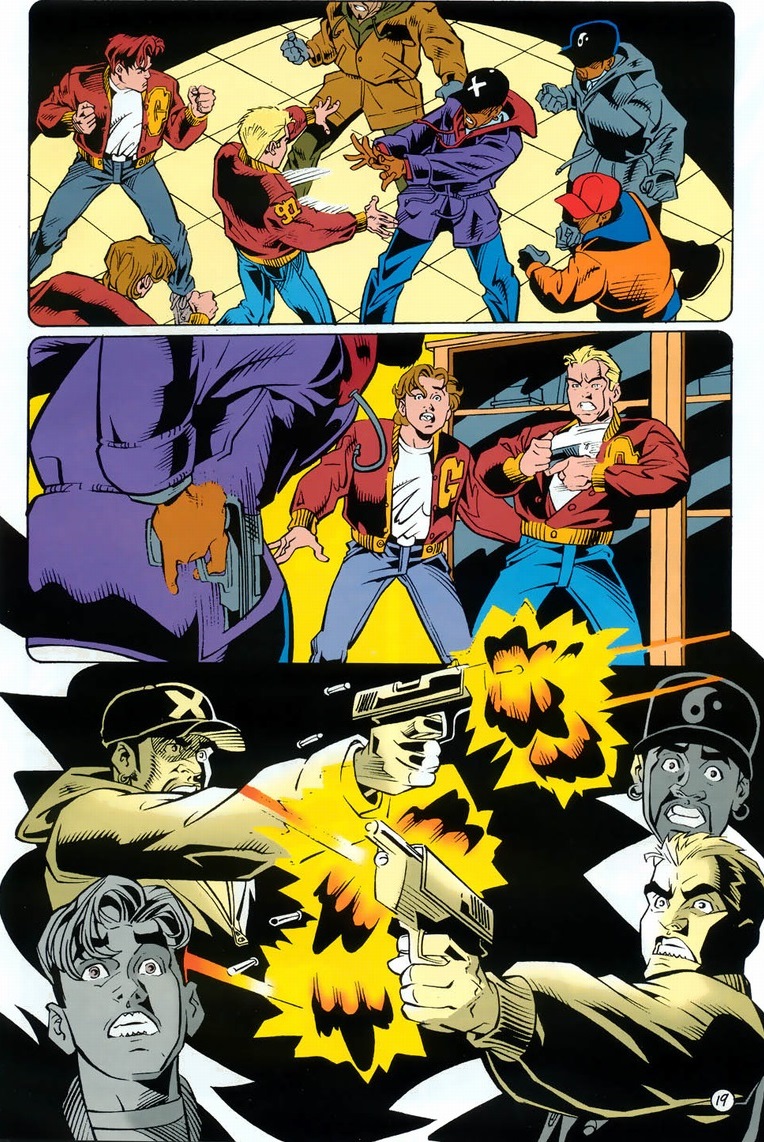

Why is this moment so upsetting compared to the rest of Robin’s career? Batman’s partner has seen hordes of dudes gunned down, women and children horribly killed, and the absolute core of Gotham’s evil. So why one dumb bully from his school? Simple:

Robin and Tim Drake are separate entities, and they have to be for a teenage boy to handle the stress and sights of being a vigilante crime fighter. Kids worry themselves sick over algebra tests, much less dodging machine gun fire. Robin keeps all that potential PTSD locked away behind that mask — something Batman doesn’t do. For a superhero who we all claim as a non-powered human, there’s very few human characteristics about Batman. Now Nightwing, he’s more of the perfect balance. I know it’s a little brief today but it’s a good stopping point for the second half on Wednesday (mainly because 30 images in one article gets draining) and Robin’s attempted revenge. Spoiler alert: it’s sad.

Robin’s blown secret identity
Posted: 06/25/2014 Filed under: Characters, DC 2 CommentsIt’s a normal day at Gotham County High School. No supervillains unleashed deadly chemicals into the water fountains. No bad guys let loose dangerous wild animals throughout the halls. No evildoers stashed explosives in the lunch meat. But Tim Drake wishes any of those would have happened instead of what actually occurred. Y’see, being Batman’s partner takes not just incredible skills and intelligence, but the ability to lie your balls off to anyone you care about. And today in Robin #124-125, written by Bill Willingham and drawn by Francisco Rodriguez De La Fuente, poor Robin receives a massive blow that won’t heal with a few bandages and some pills.
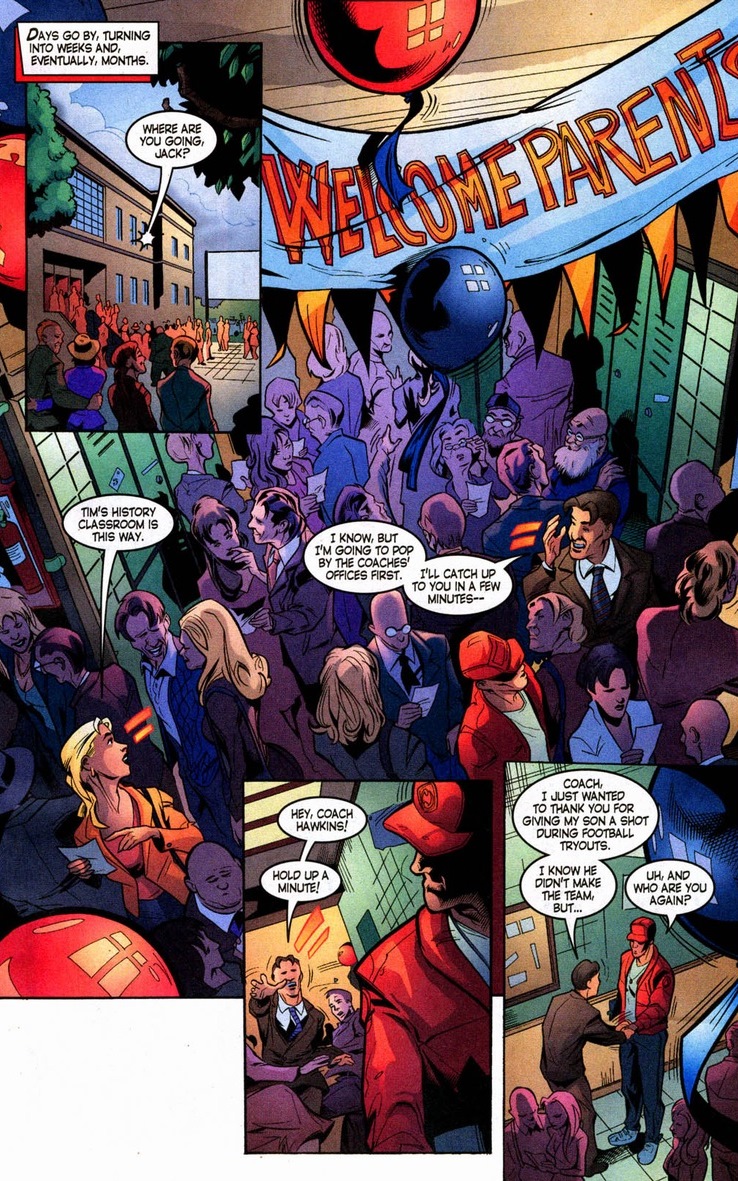
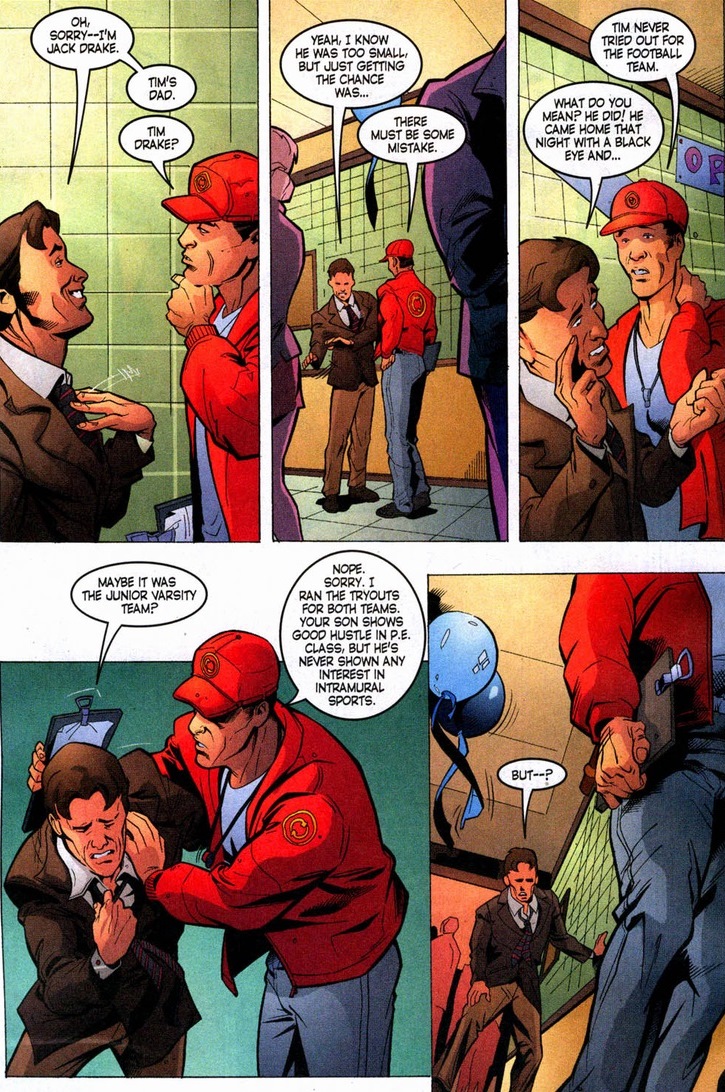
So when Robin’s job involves leaping on rooftops and karate chopping criminals, he’s bound to receive a few scratches and bruises along the way. But having to explain to his father that a football smacked him in the eye as opposed to being clawed open by Killer Croc makes for far less questions later down the road. Unfortunately, his lies have caught up with him. Jack Drake knows Tim’s harboring a secret and it’s his fatherly duty to figure it out. What if Tim fell in with a bad crowd? What if he smokes cigarettes? What if he sneaks out of his house every night helping out a man dressed as bat to jump kick armed thugs inside abandoned warehouses? Spoiler alert: it’s the third one.


Oh come on, you say, this is a comic book: surely Tim’ll just describe this as a secret Halloween costume and his father’ll apologize for all the frenzy. Except notice those journals at the bottom — the ones he writes details about all his missions, his fellow crimefighters, and any other important information needed for a later date. Even Batman keeps a written journal — Batcomputers tend to go down or short circuit or explode during major events. But with all this new knowledge in devastated Jack’s hands, he has only one job now: keep his only child from becoming sidewalk goo.


We accept without a second’s hesitation that glasses make Superman unrecognizable. But if Clark Kent takes off those glasses, then whoever witnesses the transformation triggers some sort of magic kick in the brain that connects the two identities. Seriously, Robin wears a “mask” that barely covers his eyes, but unless hard evidence is provided, no one can magically make the connection. It’s a suspension of disbelief we accept as comic book readers. Now that Tim’s dad holds hard proof in his hand, the gig is up. No mask or glasses or colorful lies’ll stop this train from coming.
Like all good after school specials, the thrill climbs to its highest point before the inevitable crash back down to misery. Break into an abandoned amusement park? Wait till the police arrive just before commercial break. Kiss the girl of your dreams? Your girlfriend walks in your front door mid-embrace as the studio audience gasps. Put on a flamboyant costume and solve mysteries to protect a corrupt and broken city? Dad’ll be waiting back at the Batcave when you return.


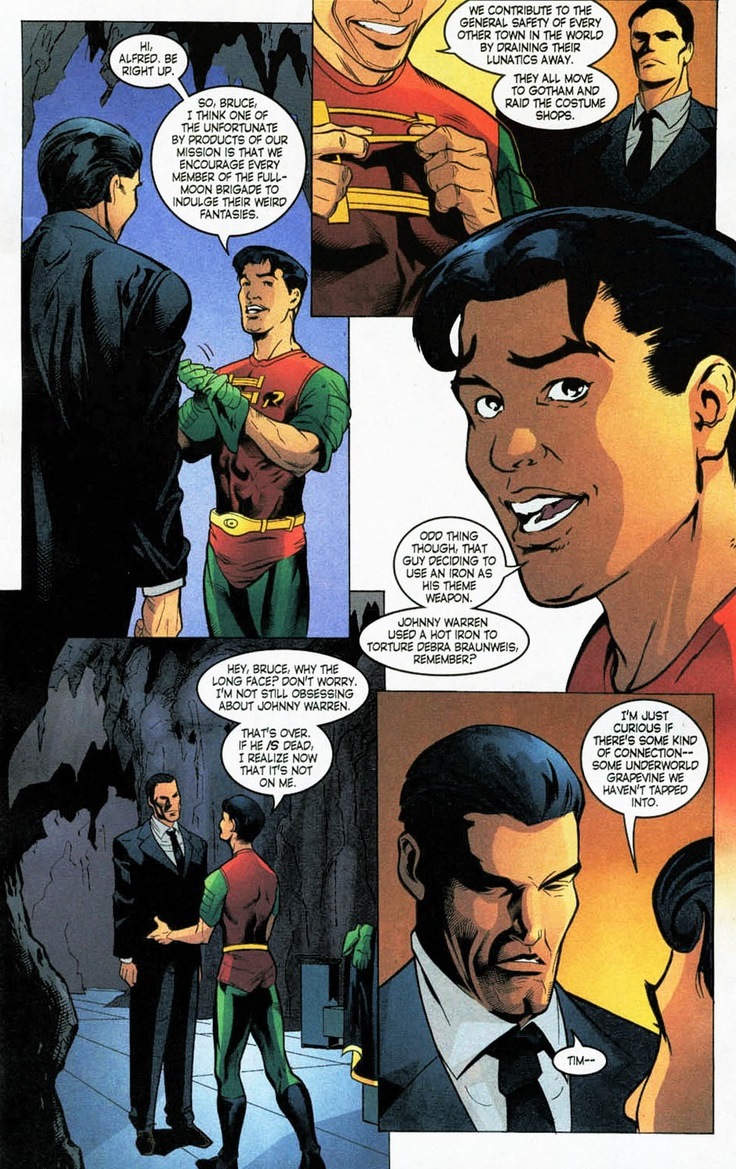

The Joker has nothing compared to the wishes of Robin’s father. Legally, Batman is completely at Jack’s mercy. He carries Tim’s journals. He knows all the secrets. Batman holds no legal right to keep Tim and without complete agreement to whatever Jack demands, the whole Batman game ends with the newspapers shouting from the mountaintops. Plus, to be fair, Batman is using a fifteen year-old without hesitation to fight the most dangerous people in the most dangerous city.
Unfortunately, Tim’s a teenager, so he reacts appropriately. Also, he somehow becomes Asian.


Remember back when Jack and Tim’s stepmom were searching Tim’s room? Stephanie Brown was mentioned, the girl who had a child out of wedlock. Y’know, the superhero Spoiler, eventually Batgirl, and Tim’s on-and-off again girlfriend. More importantly, in the next issue, she premieres as Robin. You can imagine then what the outcome of our story today is. Meet the new Tim Drake, definitely not swinging across construction sites to bash in bad guy’s skulls.
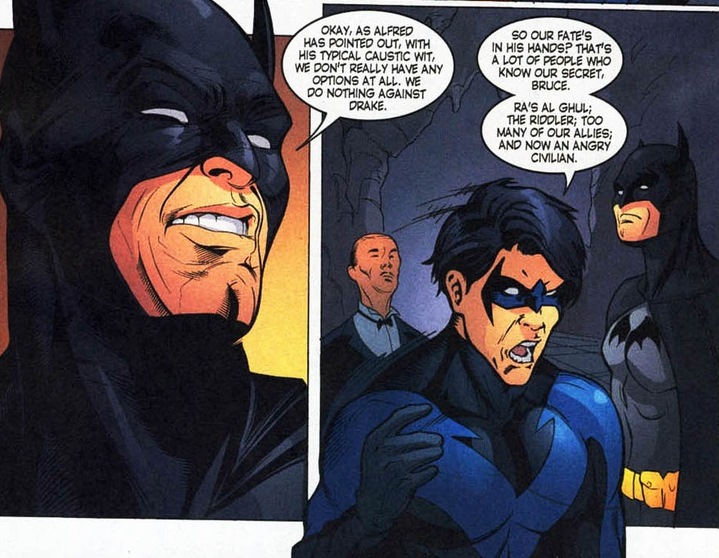


Notice Bruce Wayne mentioned as an expendable identity. Batman’s the real deal and Bruce Wayne’s the mask, but that’s a topic discussed many, many times by people with actual psychology PhDs or by cosplayers during lunch time at Comic Con. Tim Drake returns in his Robin costume four issues later, but his dad can’t un-forget this whole Batman’s partner thing. Y’know, until Identity Crisis — but we don’t have to discuss that.
Flash’s airplane free fall
Posted: 06/22/2014 Filed under: Characters, DC 4 CommentsWhile the Flash can run around Earth in about the same time it takes you to read this sentence, he lacks a vital superhero power that so many of his super friends possess: poor Flash can’t fly. Earthquake in China? The Flash’ll be there to help in seconds. Explosion in Antartica? The Flash can investigate before the smoke clears. A spaceship broke apart up in the stratosphere? Oh, well, better hope Superman’s around. So in Flash #54, written by William Messner-Loebs and drawn by Greg LaRocque, finds himself miles above the planet’s surface. No parachute, no buddies, no jet packs. This’ll be one story we hope ends in a whimper and not a bang.
We begin as the Flash (real name Wally West, who’ll always be my Flash) boards an airplane to help out the FBI. Unfortunately, for reasons to protect his identity or live like the common people or not have to eat six thousand calories after running across the country, our protagonist decides to take a several hour excruciating plane ride. Government business and whatnot.


You can imagine what happens next. A superhero can’t go anywhere without running into terrorists or evildoers or someone attempting to cause some damage. Maybe comics only cover the exciting moments of a superhero’s life, leaving off the page all the boring stuff like reading the morning newspaper or standing in line at the post office. But let’s not forget another comic book rule: the more character development someone gets, the higher risk that something bad will happen to him or her. Such as that poor flight attendant — the moment we learned about her hopes and dreams was the moment she doomed herself. See in the next panel as she gets sucked out the plane:


Once again, poor Flash. Acting heroically means making some really dumb choices to retain the proper levels of impossible morality. Julie Meyers is falling to her death and only the Flash can save her. The Flash, who can’t fly or sprint on air or run so fast that the Earth spins in the opposite direction and reverses time. But he has to do something. Sometimes it really sucks to be a superhero. Like really, really sucks:
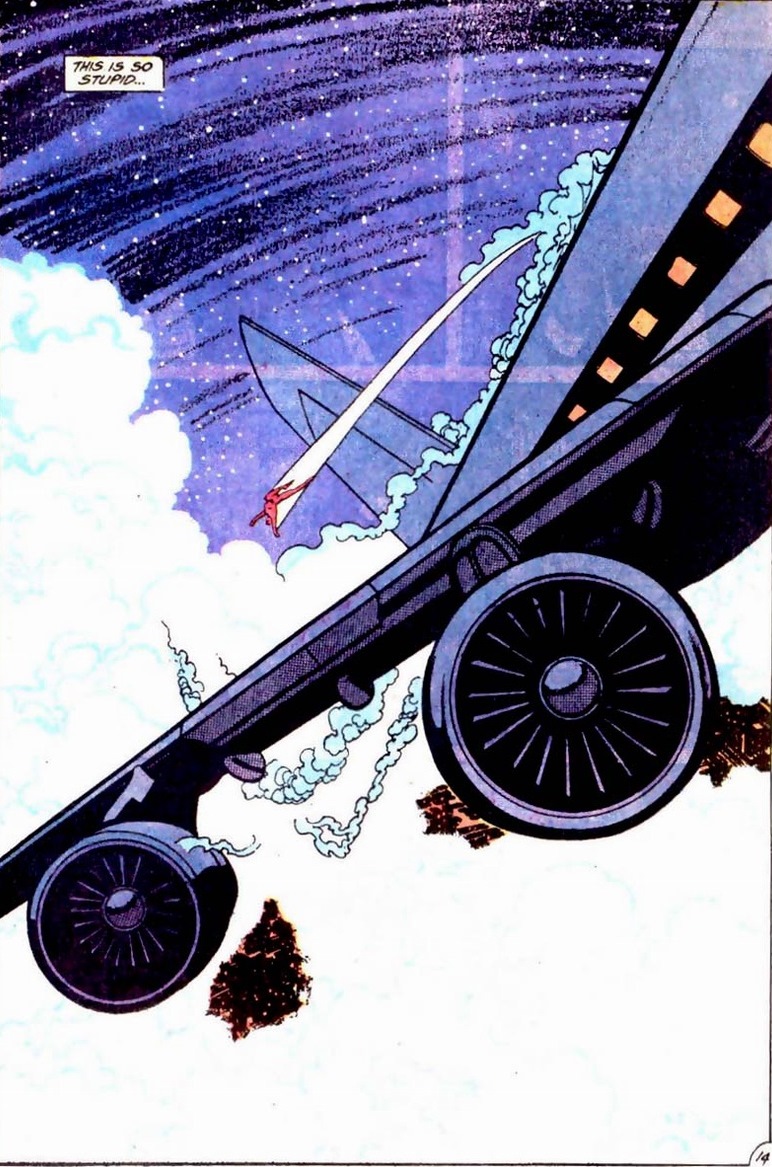

The Flash can totally catch her, but what then? They can both splatter into goo together, I guess. Sadly, improvised plans deal with one problem at a time. First step: catch the woman. Second step: not explode into a liquid when they hit the ground.
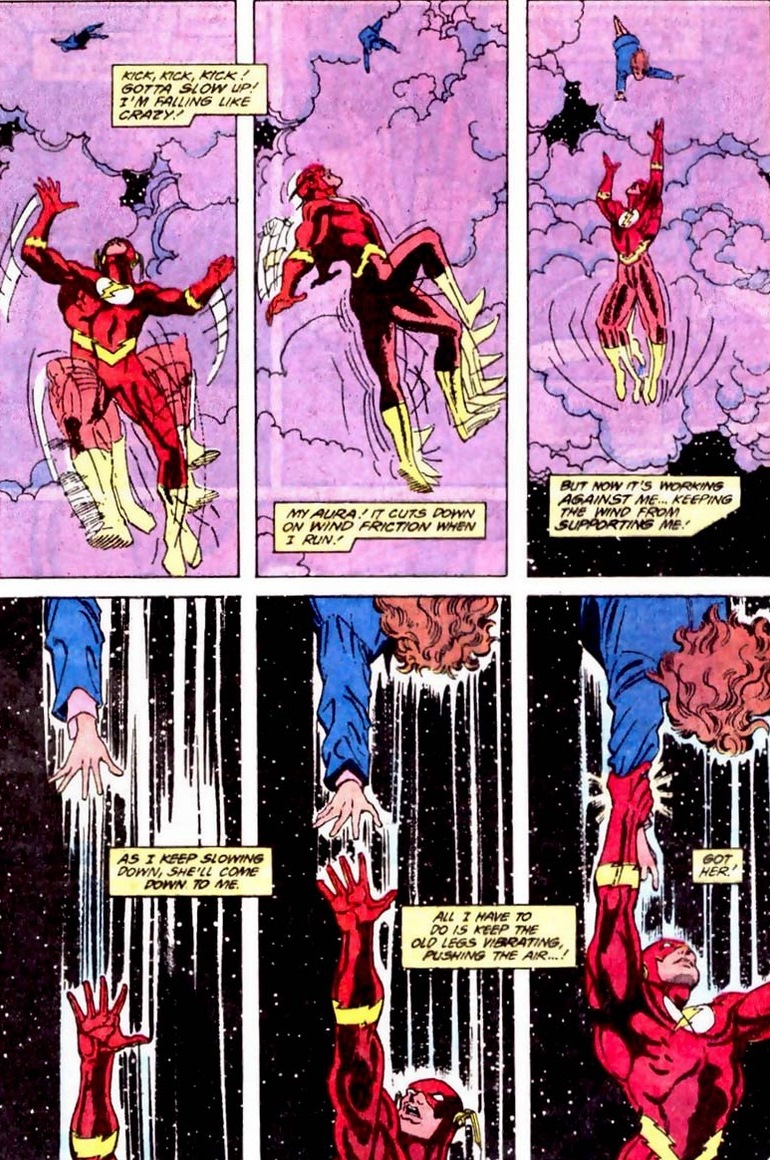
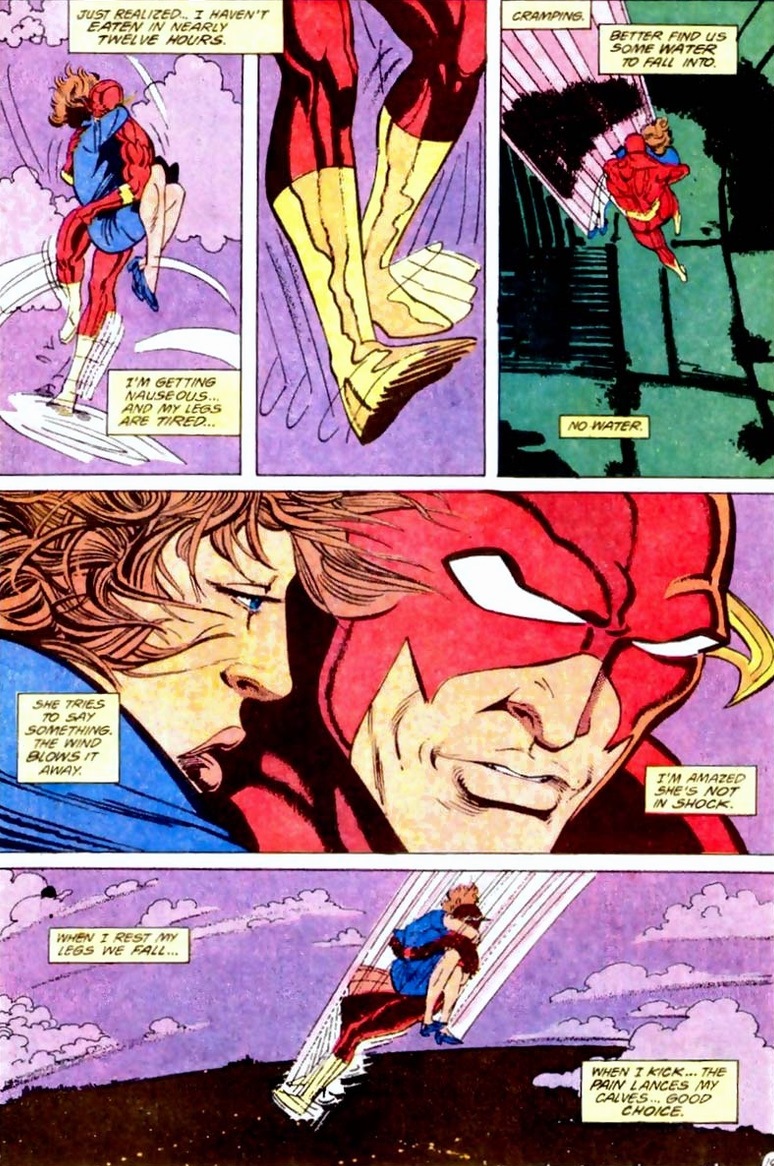
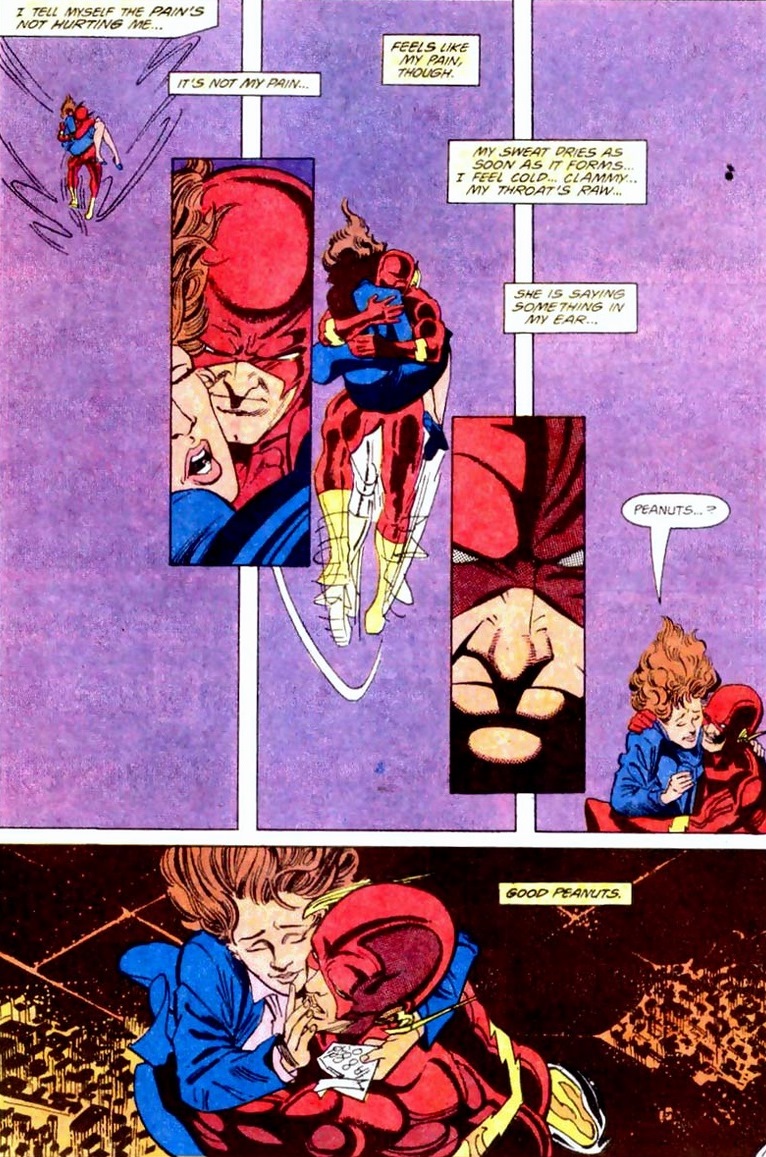
I do admire her gesture. It’s sorta insignificant, as Flash needs Michael Phelps-levels of food intake to function properly, but maybe the placebo effect’ll keep his mind off of his pain. Or maybe this is all an elaborate fetish to have a woman feed him peanuts while in free fall. If people like feet or horses, why not that?
I know I’m making fun of this whole situation, but despite being fictional, this is some hardcore heroism we’re witnessing here. The reason I chose this issue to highlight is just how out of his element the Flash is here, yet he shows no hesitation or fear. Freeze guns and boomerangs? Those he can handle no problem. But knowing that he would be falling full force towards the Earth with nothing to protect him or slow him down but violently kicking his legs — he does it. No hesitation. No fear. Remember, superheroes are better than us in every way.


A happy ending is the best ending. Plus, now Flash knows he can jump out of planes and survive. Two birds with one stone.
The inner thoughts of Killer Croc
Posted: 06/12/2014 Filed under: Characters, DC 5 Comments[Ed. Note: Like last year at this time, I’m on vacation next week, but I have some great stuff planned for when I return. New articles begin June 23rd — check out some of my previous stuff in the meantime! Thank you for your continued and incredible support of my website. I love you all!]
You know what makes the Punisher comics so great? Truckloads of blood. But after that, inner monologues. I love them — the idea that we as readers get access to the inner thoughts of our favorite characters. We’re all psychics in the Marvel and DC universes! Today, I found a delightful issue narrated by Killer Croc, a Batman villain who’s usually described as somewhere in between sewer-dwelling moron and ridiculous manimal. But let your heart open (slightly) because in Batwoman #21, written by J.H. Williams III & W. Haden Blackman and drawn by Francesco Francavilla, we get another side of the story — and while not sympathetic or redeeming in the least — it’ll be a chance for Batman’s B-list rogue to talk about a day in his sewer-dwelling manimal life.

Aw, DC’s only two crocodile people found each other! And they aren’t eating each other either — unless manners demand they make out a little before disemboweling. Still, like Killer Croc knows all too well, any happiness comes with a price, and usually in blood because it’s not as if Killer Croc can stop by an ATM or anything. But instead of Killer Croc: frightened sewer embarrassment, how about Killer Croc: brave sewer king?

Batwoman (real name Kate Kane), fights crime much like the normal Bat-family way: kung fu and grit. Unfortunately, all the roundhouse kicks in the world won’t penetrate Killer Croc’s superhuman durability or block his super strength. Though as we learned in the last two panels, his heart remains ever soft and mushy. It’s the supervillain curse that so many of them have to prove their love by slaughtering vigilantes.
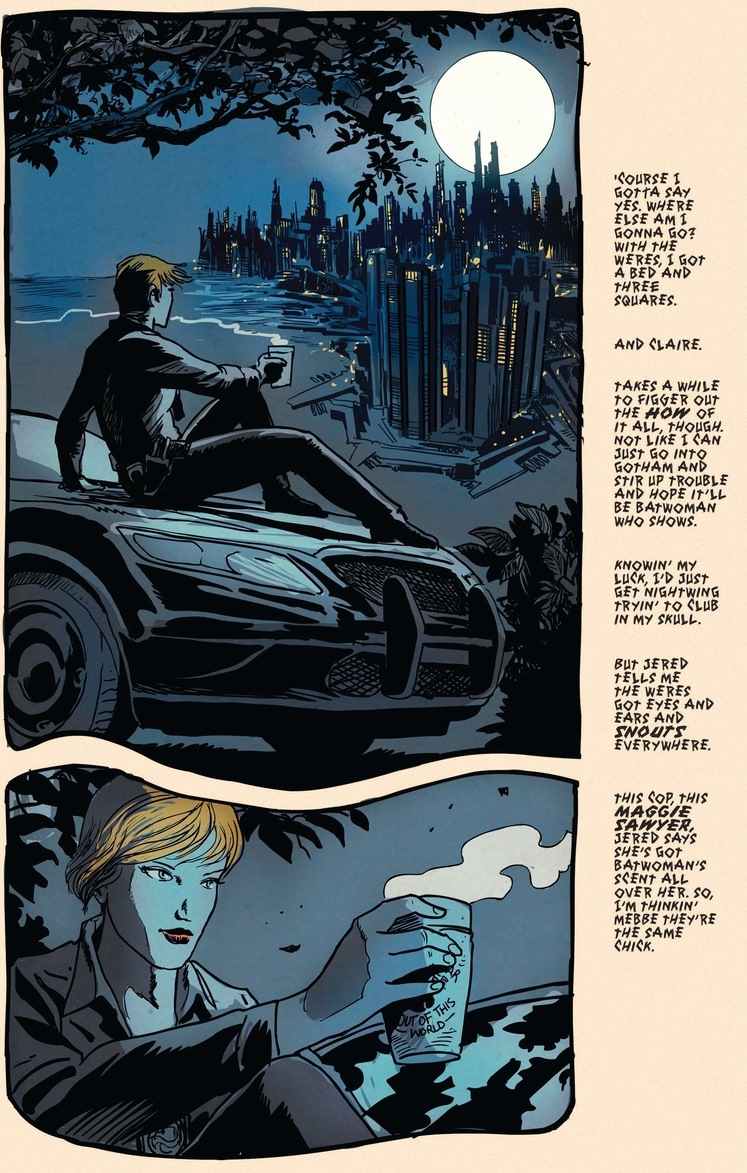
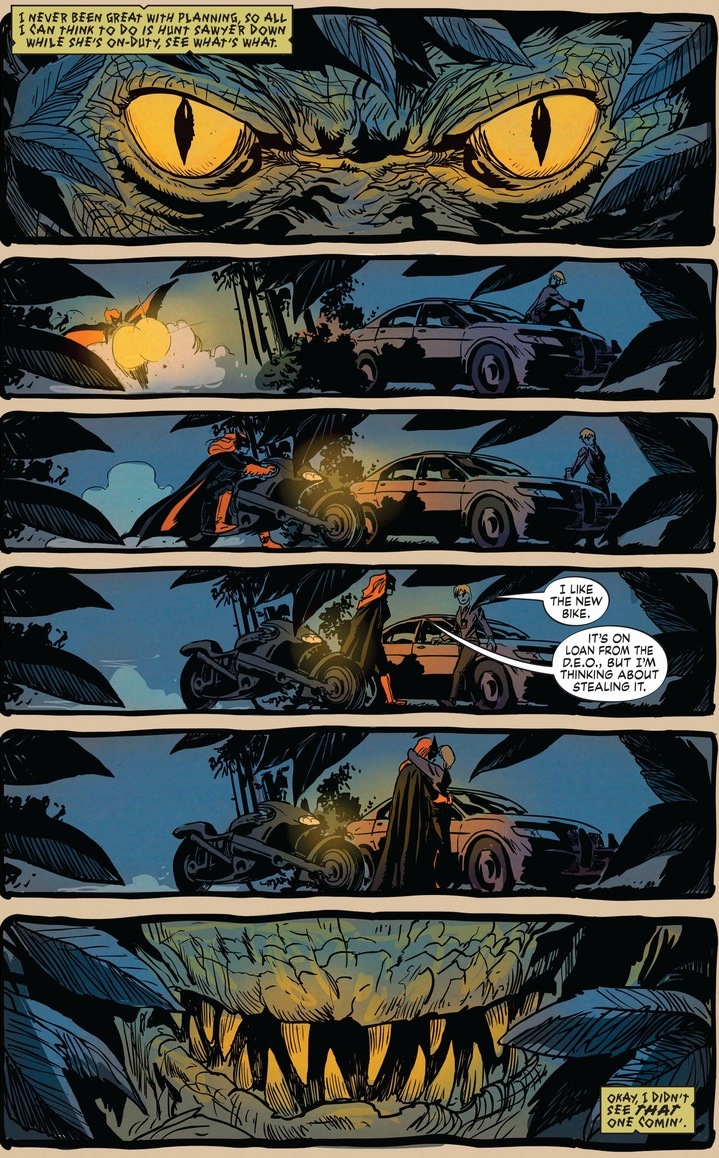
See that smile on Killer Croc’s face? He may have a hideous physical condition, but he’s still a dude deep down. And even though that may have been one of the least romantic kisses in recent comics, Batman’s supervillains make up for their deviousness with their pervertedness. Now because comics demands that every tender moment be shattered by impromptu violence, Killer Croc attacks.
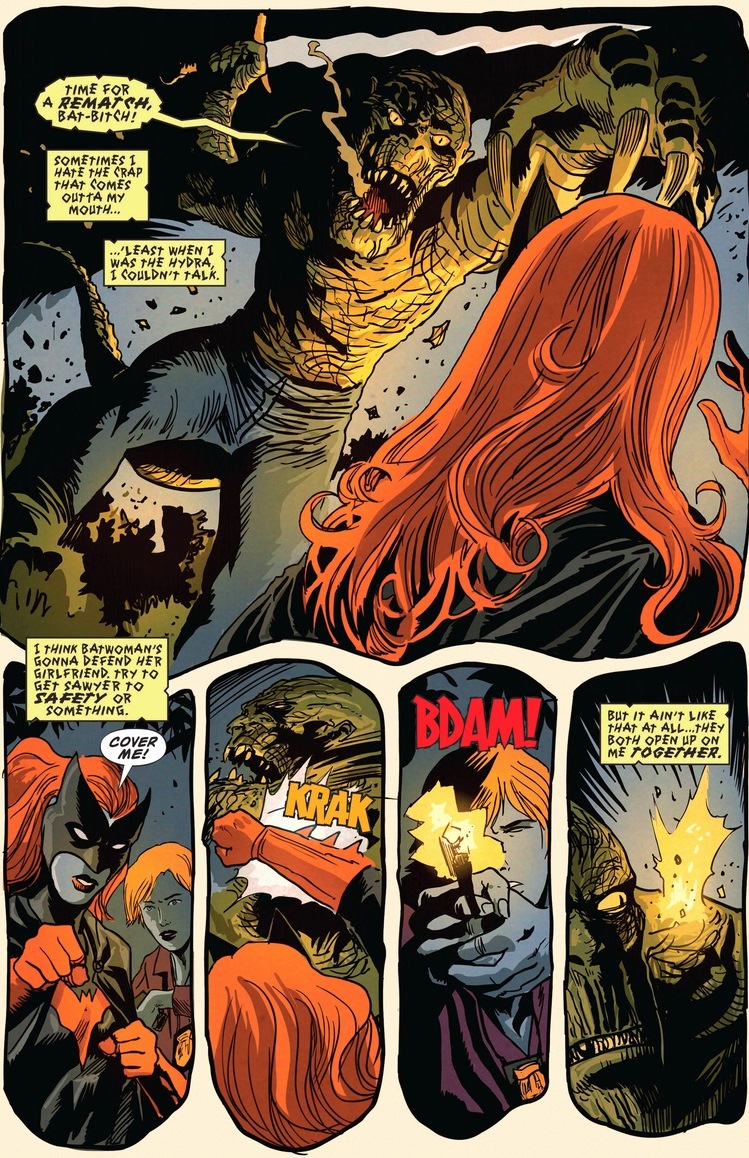


Okay, we have to talk about this amazing scene. Of course Killer Croc lives with massive self-loathing being a sewer reptile man and whatnot. Relentless teasing, bullying, and other therapy-inducing acts brought upon in his youth don’t go away — especially after decades of cannibalism and Arkham Asylum stays. Even though he looks like a reptile and possesses reptile traits, he’s still a human with human feelings. He lived as Waylon Jones for longer than he’s lived as Killer Croc.
Isn’t it great Maggie Sawyer acts as a partner as opposed to a damsel in distress? Batwoman can fight to her full extent knowing that she doesn’t have to protect her fiancée. It’s just a nice change of pace from when Superman always has to rescue his lover Jimmy Olsen Lois Lane. In the New 52 at least, Wonder Woman can survive nuclear explosions, so Superman’s new girlfriend happens to be a bit tougher than his previous love interests. This is off topic, but can we drop the Superman vs. Batman nonsense? The Dark Knight’ll die from a lucky bullet through the chin while Superman would brush off Hiroshima like an inconvenient tan. Batman’s awesome, but he’s also wildly mortal, and that’s the way we like him.
Back to our story, I love that we get the truth behind Killer Croc’s physical pain as well. Batman’s rogue gallery does feature some baddies with superhuman characteristics (like Bane, Poison Ivy, Clayface, Man-Bat, and Harley Quinn to a lesser degree), but they aren’t on the same league as Superman’s or Wonder Woman’s group of evildoers. Batman has to be able to take on his villains with some ingenuity and exploding batarangs, something Doomsday or Ares would laugh off before punching Batman into space. So yes, Killer Croc can take a full pistol clip without slowing him down, but it’s still going to hurt like hell. I like that he admits it, and we’ll remember this fact the next time Batman throws a batarang in his eye.
Finally, a third Batwoman buddy shows up.
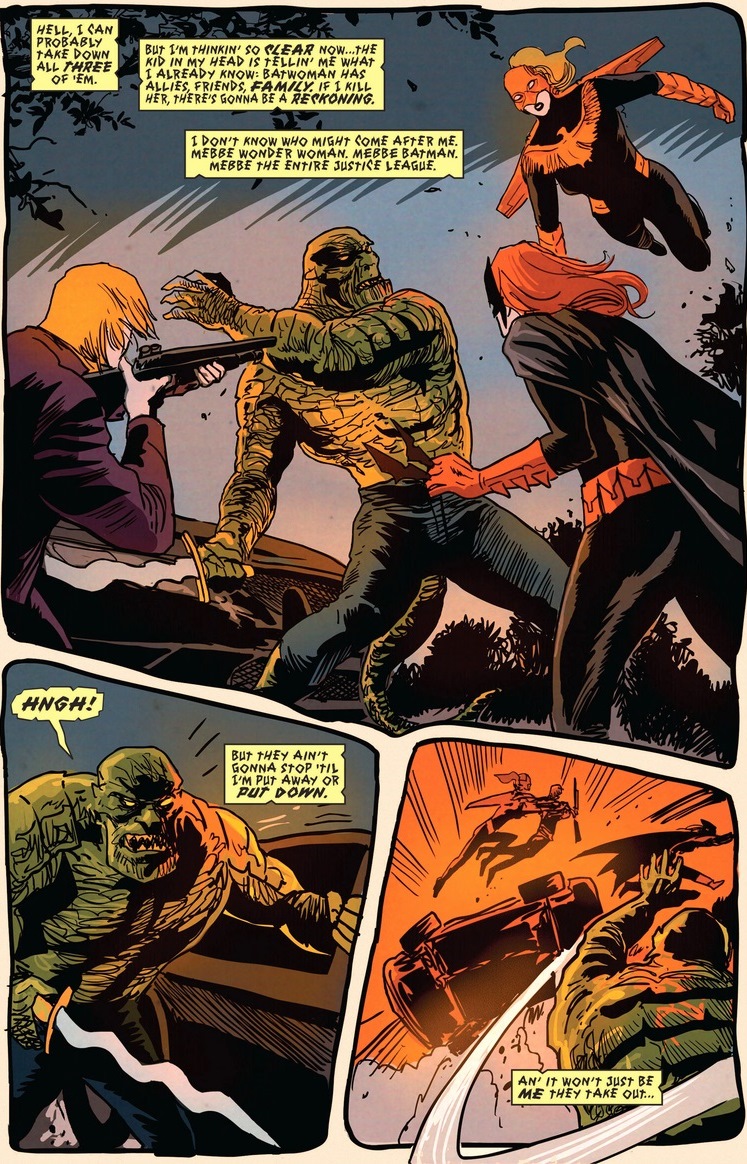
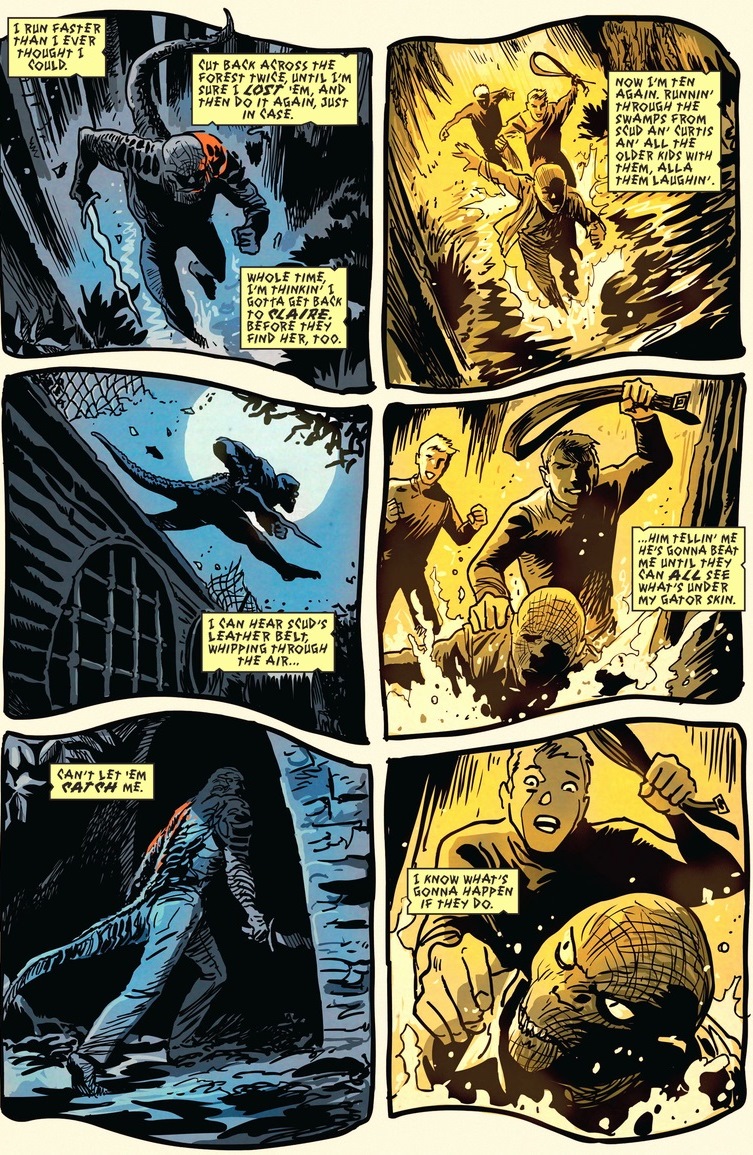

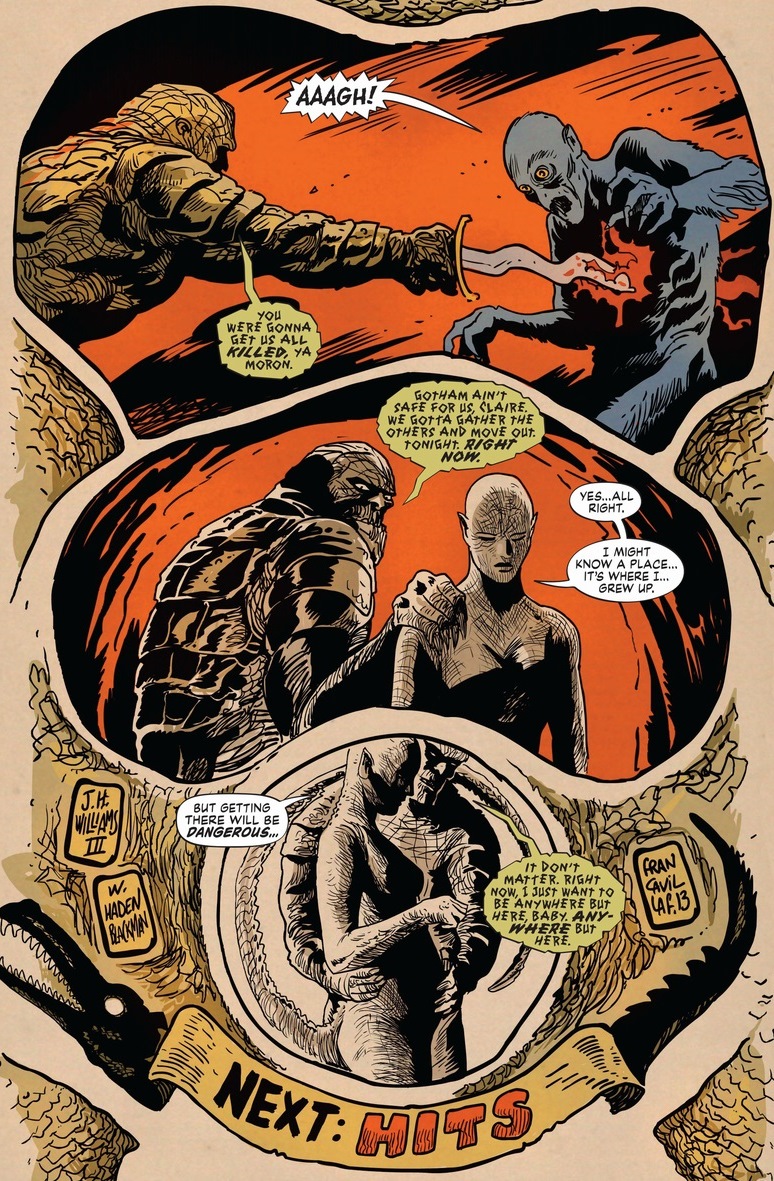
Writers Williams III and Blackman left Batwoman after issue #24. Editorial differences wouldn’t let them marry Batwoman and Sawyer, but relevant to this story, DC forced them to scrap plans to expand upon Killer Croc’s origin and role. It’s quite unfortunate, because as you read the ending today, this marks a phenomenal new start for one of Batman’s most forgotten bad guys. For now, just imagine what would have happened. Our imaginations must be pretty good by now, right?
In our next issue on June 23rd, Flash falls out of an airplane!
 Arousing Grammar