
Quicksilver: equally amazing and dysfunctional
Posted: 02/28/2013 Filed under: Characters, Marvel 4 CommentsI’ll admit a secret: I rooted for the Avengers during the Marvel event Avengers vs. X-Men. In the past, my appreciation for the X-Men tends to be far less reliable and deep than my adoration for Captain America and his gang of misfits. But with this website, I’ve had to read hundreds of issues of series, characters, and teams I never experienced before. It’s awesome, you should try it. Through my “research,” I’m now totally on board with America’s favorite mutants. The depth, complexity, and long-lasting cultural impact of the X-Men and their stories have been sorely missing in my life. A hole in my heart repaired itself as I delved into the enormous backlog of X-Men adventures. But enough about me. Let’s talk about Quicksilver.
Debuting in X-Men #4 back in 1964, written by Stan Lee and drawn by Jack Kirby, Pietro Maximoff (Quicksilver) and his sister Wanda (Scarlet Witch) briefly fought the X-Men as Magneto’s lackies:

Soon after this, they became Avengers. It took twenty years for the truth to be revealed that they’re actually Magneto’s biological children. As you can imagine, Magneto’s parenting skills rank slightly lower than complete neglect and slightly higher than bathtub murder. The master of magnetism spent most of his time being evil and stuff, and thus he totally messed up his kids. Way worse than Toddlers and Tiaras.
Today, we’re going to start with a scene from House of M #7, written by the amazing team of Brian Michael Bendis and drawn by Olivier Coipel. While Quicksilver’s basically a rip-off of DC’s Flash, his sister can control and change reality through chaos magic and manipulation. Like a genie or something, I guess. In House of M, Scarlet Witch’s powers became overwhelming, forcing the Avengers and gang to decide how to best solve this problem. Wolverine volunteered stabbing. To protect herself, Magneto suggested Scarlet Witch create an alternative reality where everyone sings songs on the street and dances to show tunes. But you know how alternative realities are, and things turned bad. Oh, and the whole Magneto suggesting thing? That’s not exactly true either:

To be fair to Magneto, empathy has never been one of his strongest traits. Luckily, Quicksilver knows a way to save dear Wanda from a Wolverine stabbing.


As the House of M event unraveled into brawling and disorder, the anger directed at Magneto slowly revealed itself as misplaced. Magneto’s little empire fell apart through Quicksilver’s meddling and lies. While I’m not a parent myself, Quicksilver probably needs a spanking. A Magneto spanking:
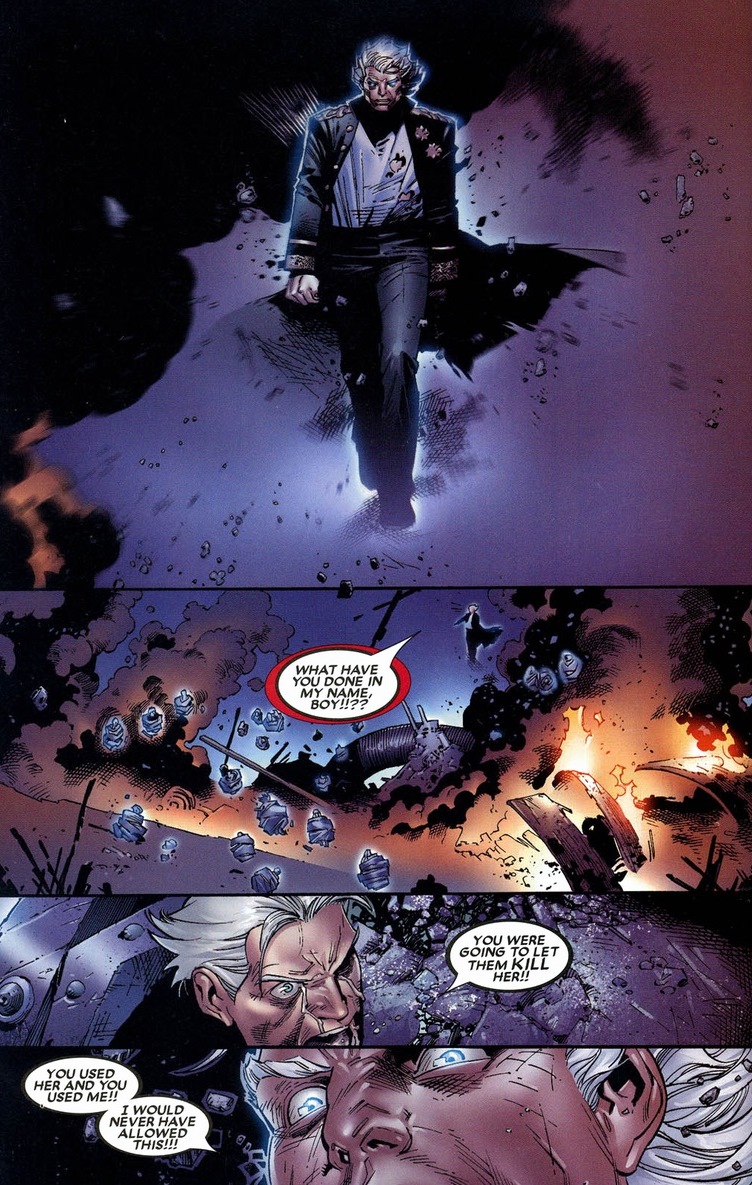

The consequences? Magneto smushing his son with a giant piece of steel spawned the three most infamous words in recent Marvel history. You know them:


Because Scarlet Witch can basically reshape reality to her specifications, that whole “No more mutants” phrase took a mutant population of millions and turned it into hundreds. Jubilee had to become a vampire. All blame and finger pointing should be directed at Quicksilver.
A year or so later, Quicksilver sits in a local prison, now pretty much mentally unstable. In the X-Factor: The Quick and the Dead one-shot, written by Peter David and Pablo Raimondi, poor Pietro talks to a half dozen or so hallucinations. The guy needs serious therapy. Here’s the one with the imaginary Magneto:

While Quicksilver made some questionable decisions in the past decade or so, the man’s still defined as a superhero — not a villain. Once he finally grasps the whole mistakes/move on thing, he can get back to his true loves: heroism and his sister (but not in the Ultimate universe way — eww).


That smile shines through, even on his severely battered face. I totally understand the idea that darker, sadder stories tend to sell more copies than happy, lighthearted stories. But when as we readers devote years to following the tales of our favorite heroes, we certainly hope they achieve at least some success and joy in their fictional lives. Hell, Marvel practically sent out a press release when Mark Waid announced he planned to actually let Daredevil win once in a while after the previous hundred and thirty-ish issues of non-stop gloom and doom.

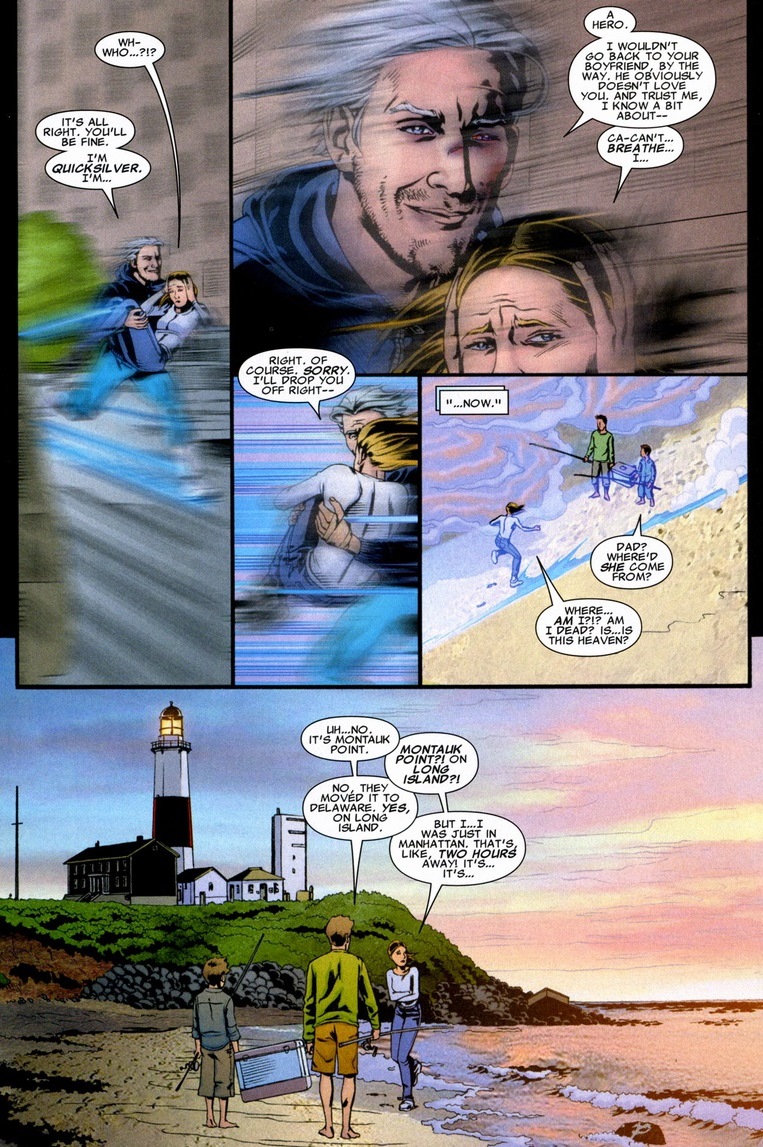
Iron Man would have chartered a jet home for the girl, but let Pietro take baby steps. Saving lives instead of horrendously ruining them takes practice. And just to further enforce my point of Quicksilver’s cool(-itude?), enjoy this scene from Thunderbolts #143, written by Jeff Parker and Miguel Sepulveda.

Summary of the events so far: supervillain stole a super spear.

Mr. X, the psychopath with minor telepathy who knows what his opponents will do before they do it, stands moments away from slaughtering the Mighty Avengers and Amadeus Cho, Hercules’ BFF. I mean, until our dear Pietro shows up. Though Mr. X remains a minor character, his ego and arrogance soar far above his more popular opponents. That’s what makes this upcoming beating so satisfying.
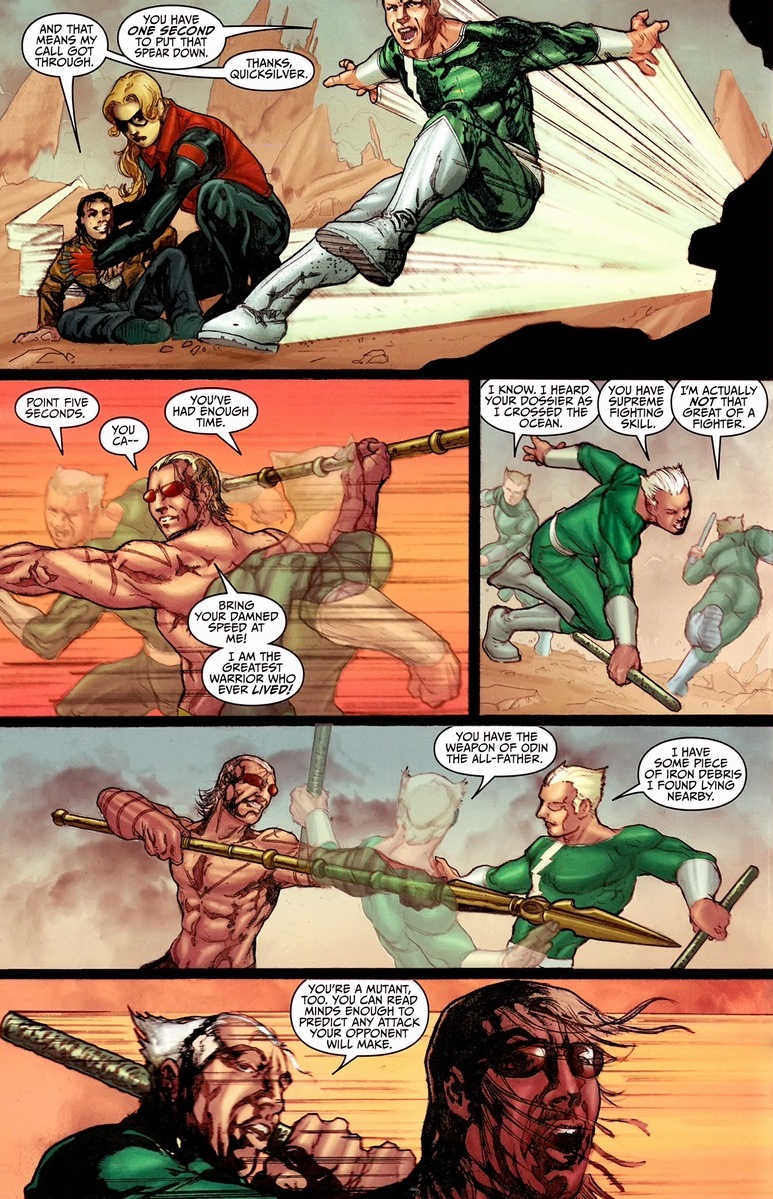


Delightful, right? If you want more of the guy, he becomes a teacher in the Avengers Academy series that premieres soon after this issue. And check out issue #22. That one’s a Quicksilver/Magneto doozy.
Deadpool, Apocalypse’s hero
Posted: 02/26/2013 Filed under: Characters, Marvel 3 CommentsYou know Apocalypse, right? One of the biggest X-Men baddies, super crazy powerful, rules a tyrannical hopeless alternative future, shows up to beat down entire groups of X-Men singlehandedly? There’s a kid version of him, and this one’s definitely not as scary.
Long story short: Apocalypse gets cloned as a child with happy memories as a social experiment/guilt trip to see if the supervillain’s fated to be evil and bloodthirsty. In Uncanny X-Force #32-35, written by Rick Remender and drawn by Phil Noto, with the experiment still in progress, poor Kid Apocalypse gets snatched by Wolverine’s son Daken with a van full of candy and Playstations. It’s time for the more amoral X-Men to get the kid back. And massacre all the bad guys. But mainly the first one.
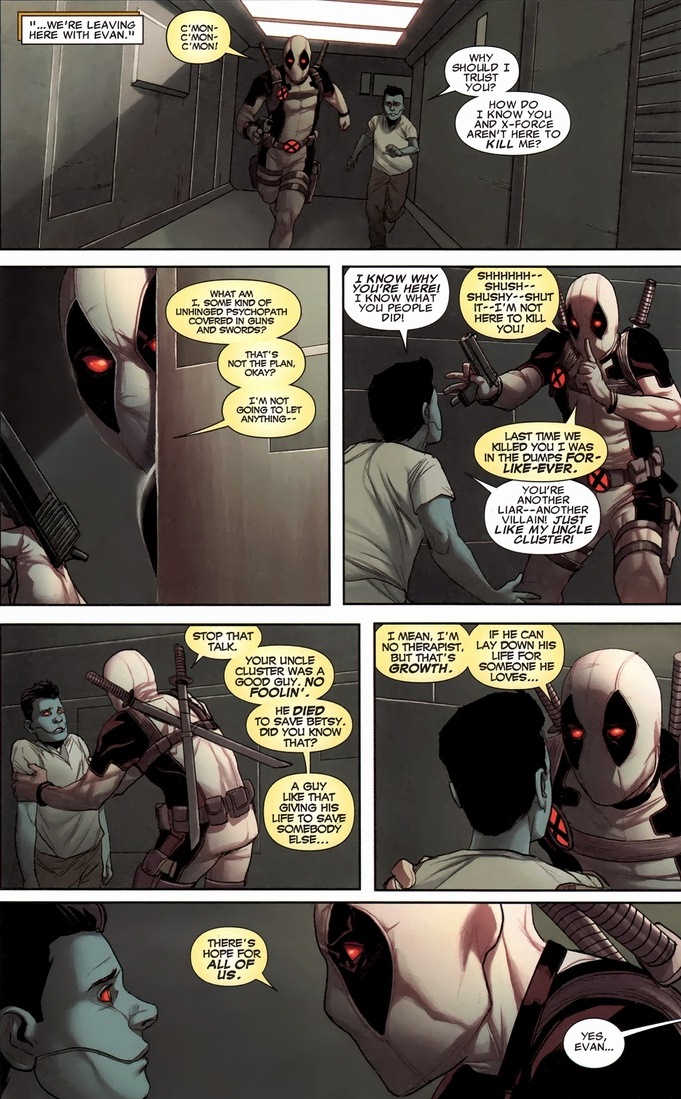
One of the few times to see Deadpool being inspirational, and more importantly, correctly influencing the life of a child. Also, the white costume’s pretty cool, right? At this time, Deadpool lost his healing factor, making him doubly brave/stupid.
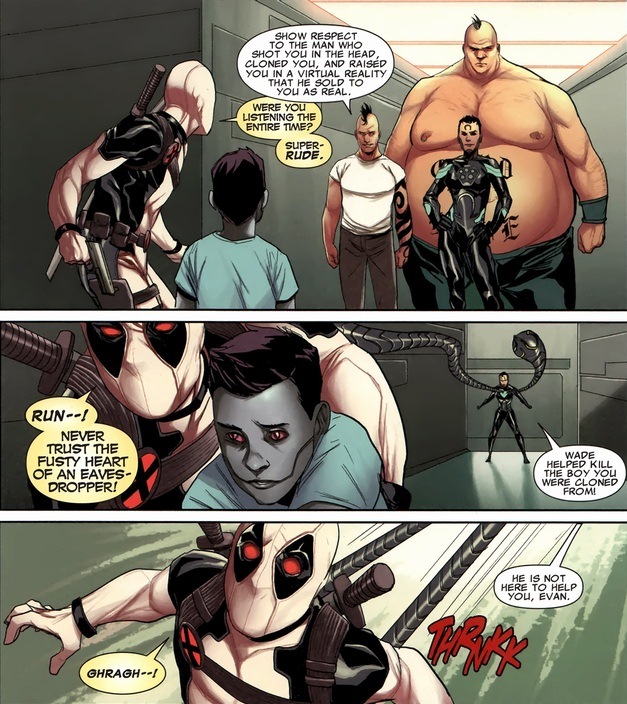
I’m not going to show you the full fight, as it’s irrelevant to the story and I want you to buy the book, but Deadpool takes on three top-class supervillains by himself. It’s awesome.
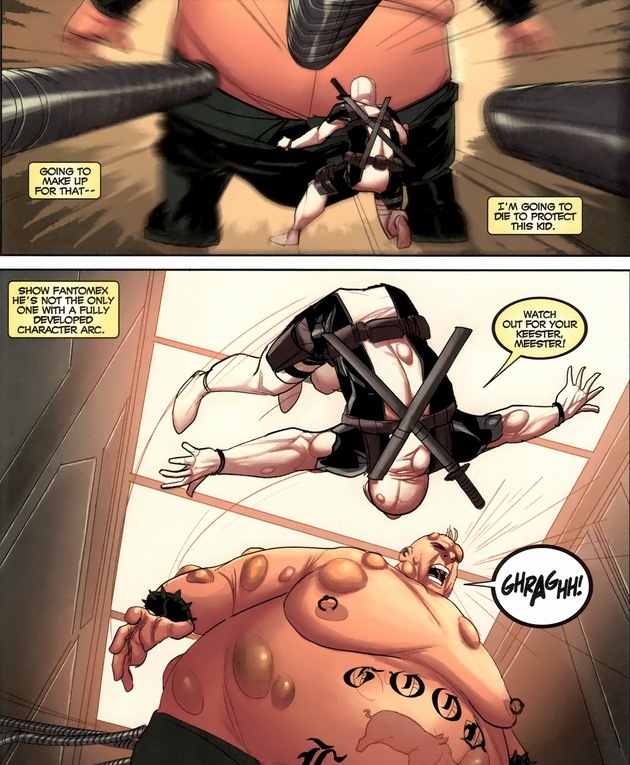
Y’see, this whole ordeal is about the supervillains attempting to make Kid Apocalypse voluntarily wear his original’s armor. If the clone dons the Apocalypse armor (aptly named), even the preteen can fight on a galactic-ly powerful scale and at the same time almost certainly ensure the young child follows his fated path to super evil. Tough choice.

Poor Deadpool lies in a bloody mess on the floor until Apocalypse is returned to the room — same as before just with a lot more stab wounds.


Deadpool’s rhetoric ability aside, there was really not much the half-dead mercenary could do to stop this whole mess. Fate, hormones, anger — all that jazz. But understand this, at Apocalypse’s lowest emotional point, Deadpool never gave up on him. For what the counts.
We skip ahead to the epilogue, though go read the book for all the cool Apocalypse action.
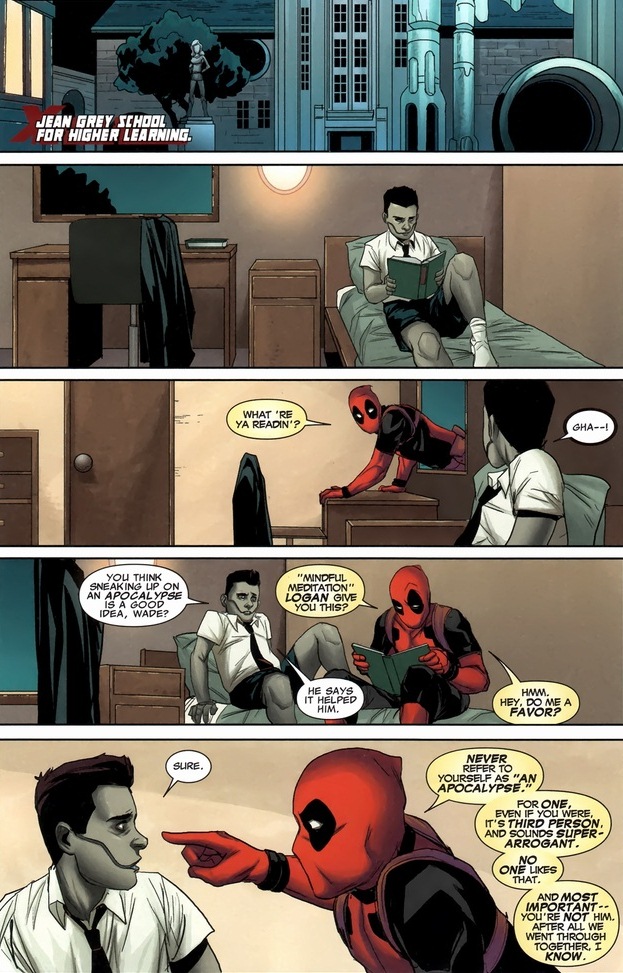
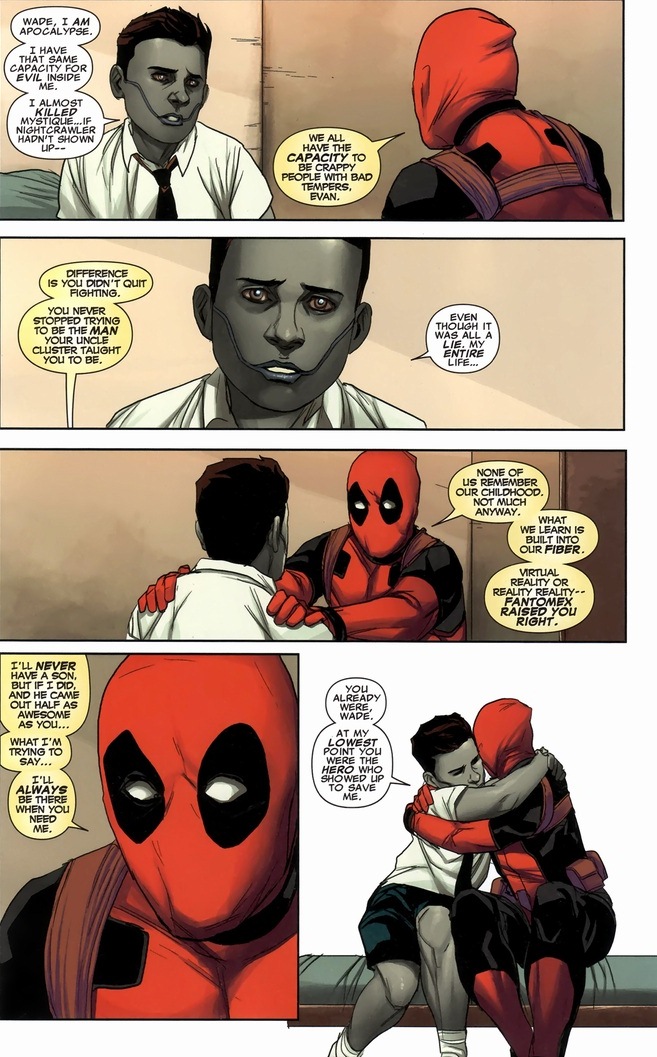
Deadpool’s most basic desire to be respected and loved by the Marvel universe remains one of the most common themes in his series. None of the superheroes really find the guy entertaining. Plus, he’s too unpredictable, morally bankrupt, unpleasant to look at, etc. But with Kid Apocalypse? You just saw a genuine moment — a moment in Deadpool’s life that isn’t insincere, but heartfelt love and respect. All the man has ever wanted given to him by the most powerful child in the Marvel universe.
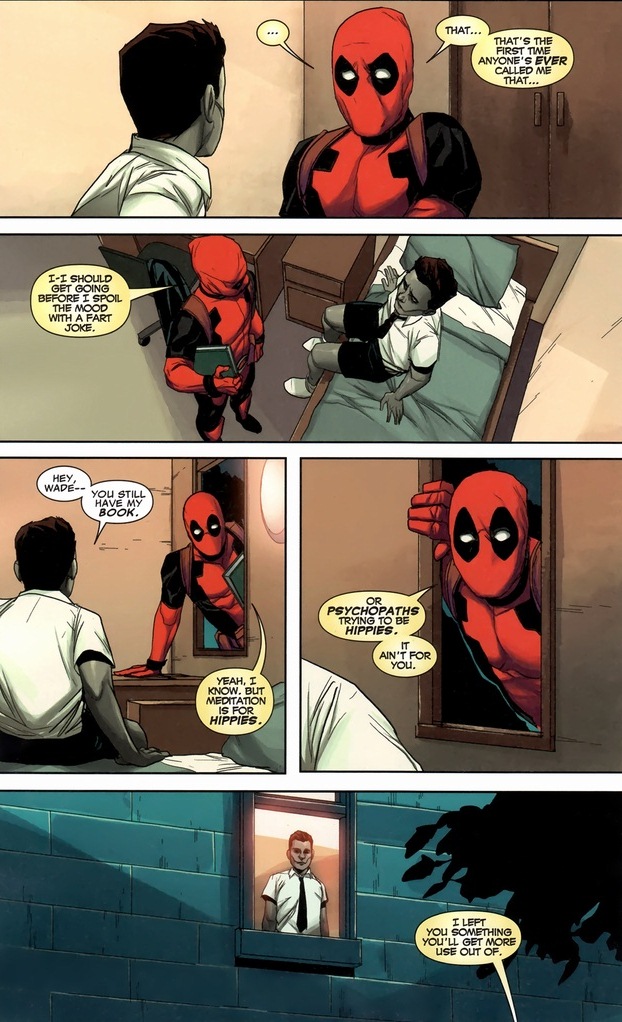
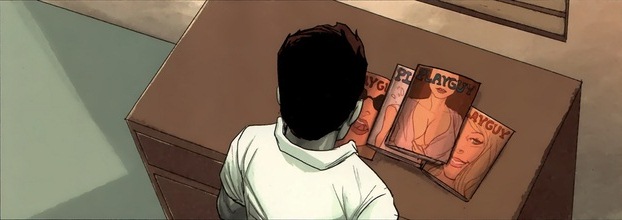
Well, that and Deadpool picks out great gifts.
Black Widow vs. the Avengers
Posted: 02/24/2013 Filed under: Fights, Marvel 1 CommentNot that one. The other Black Widow. As the Russians probably weren’t too fond of their greatest super spy defecting to their great super enemy, they captured a new group of young femme fatales to repeat the process. Then they took the best candidate, gave her the coveted title, and have her beat the old Black Widow to death. Nice and easy.
Except not, because Natalia Romanova tends to be incredibly difficult to kill.


They team-up for the first time in the miniseries Black Widow #1-3, volume one, written by Devin Grayson and drawn by J.G. Jones, and Yelena moves on from her grudge. Better woman and whatnot. While never a major character, Yelena did get her own miniseries called Black Widow: Pale Little Spider and showed up a few times in other minor roles. Until New Avengers #6, written by Brian Michael Bendis and drawn by David Finch:
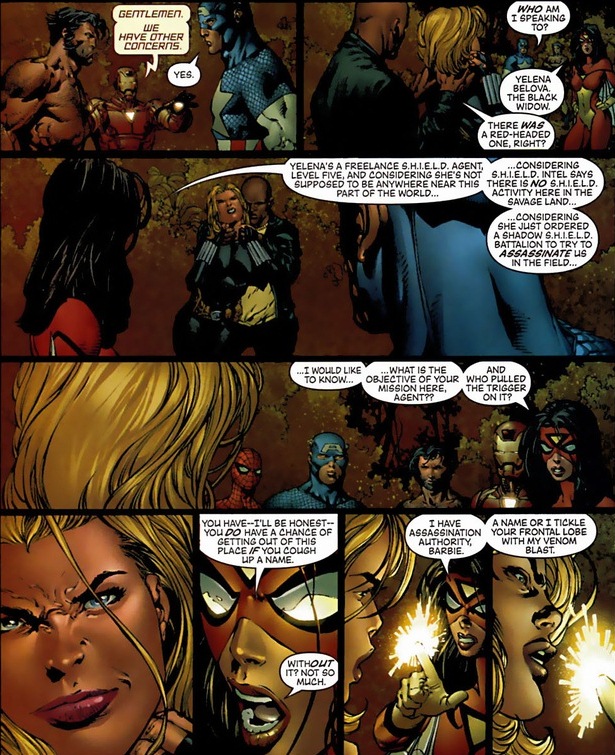
And then something worse happens than a frontal lobe venom blast.
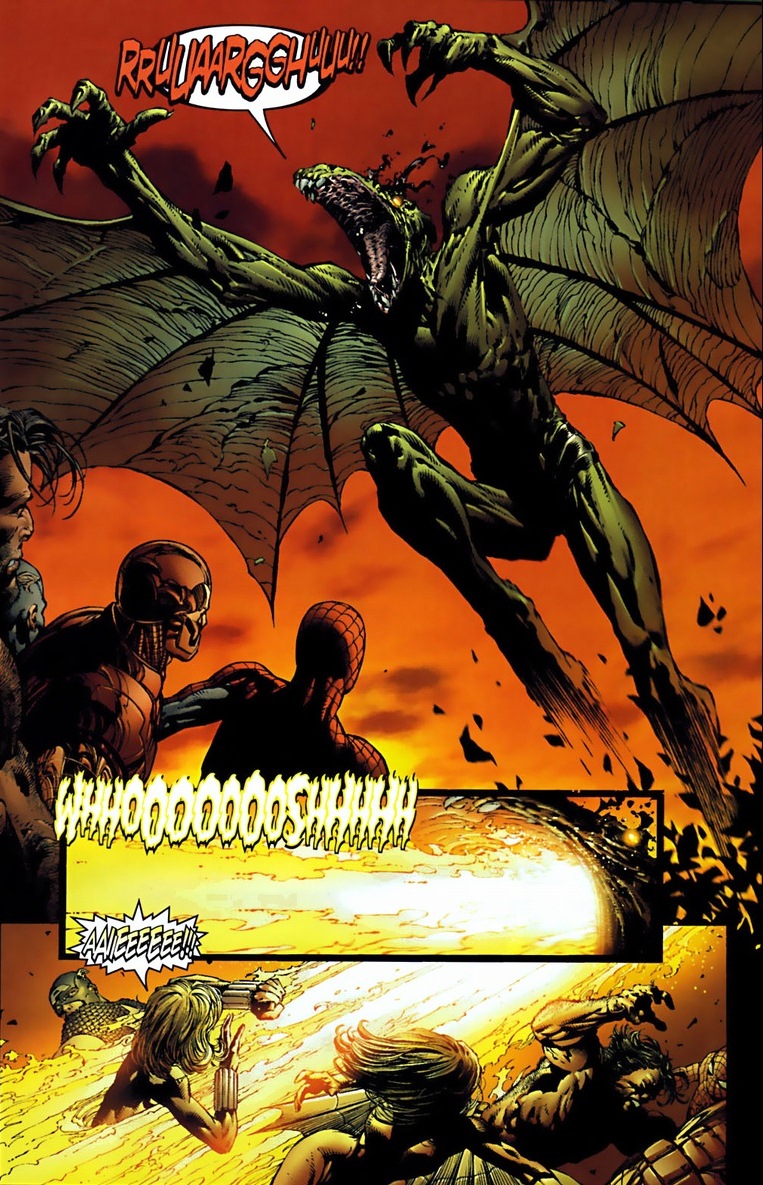
To be fair, the superheroes knew better than to traverse the Savage Land, which is a way scarier Jurassic Park. Sometimes writers just want their characters to fight dinosaurs, and the Marvel universe provides a place for them to do so.
Poor Yelena has no superpowers, and so she takes the fire blast like many people would — badly and bitterly. Still, one plus side of this whole ordeal:

We jump forward to New Avengers Annual #1, written by Bendis and drawn by Olivier Coipel.

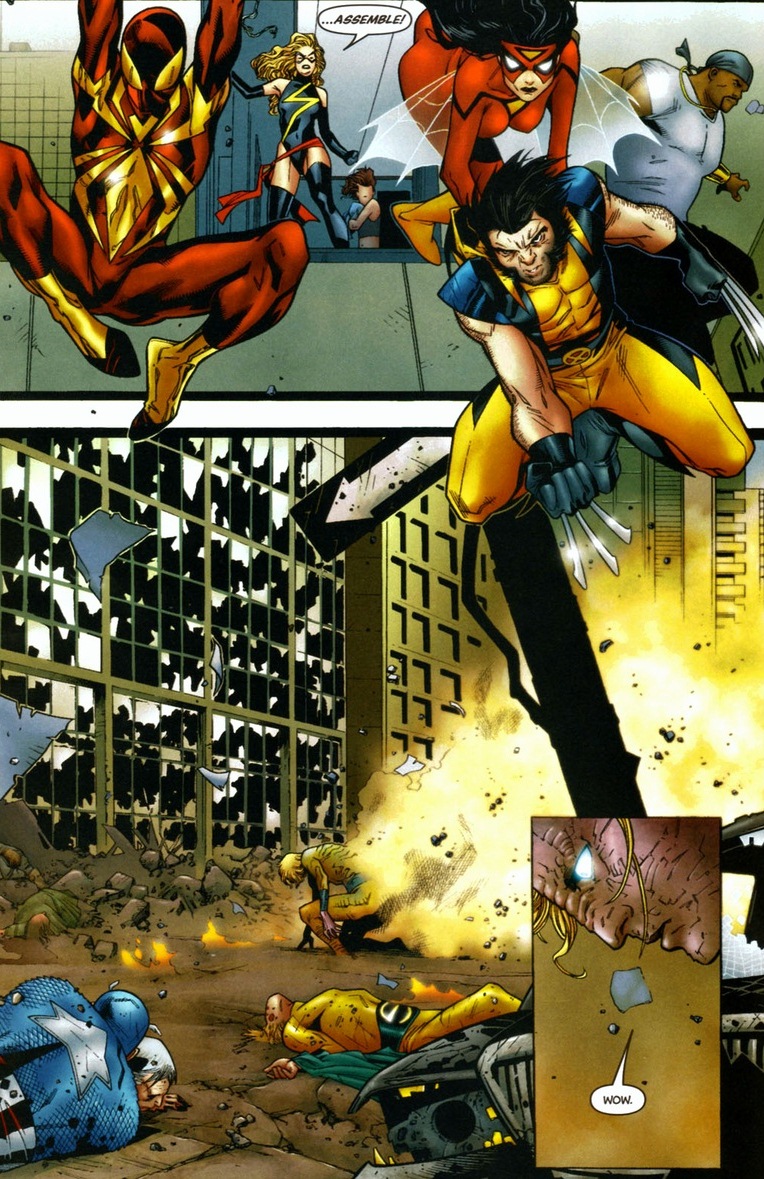
Turns out the former Black Widow has had some upgrades. Meet Yelena Belova, Super-Adaptoid.
Basically a rip-off of DC’s Amazo, the Super-Adaptoid is a cyborg with the ability to instantly mimic any superhero powers of those it touches. And it just touched the Sentry, Marvel’s schizophrenic Superman. Bad news for our heroes.

What follows next is a testament to the relentless spirit of Marvel’s greatest superhero team (equal to the X-Men, Fantastic Four, Alpha Flight, Captain Britain Corps, etc. — this is no time to be making fanboy enemies). Watch some highlights from the brawl:
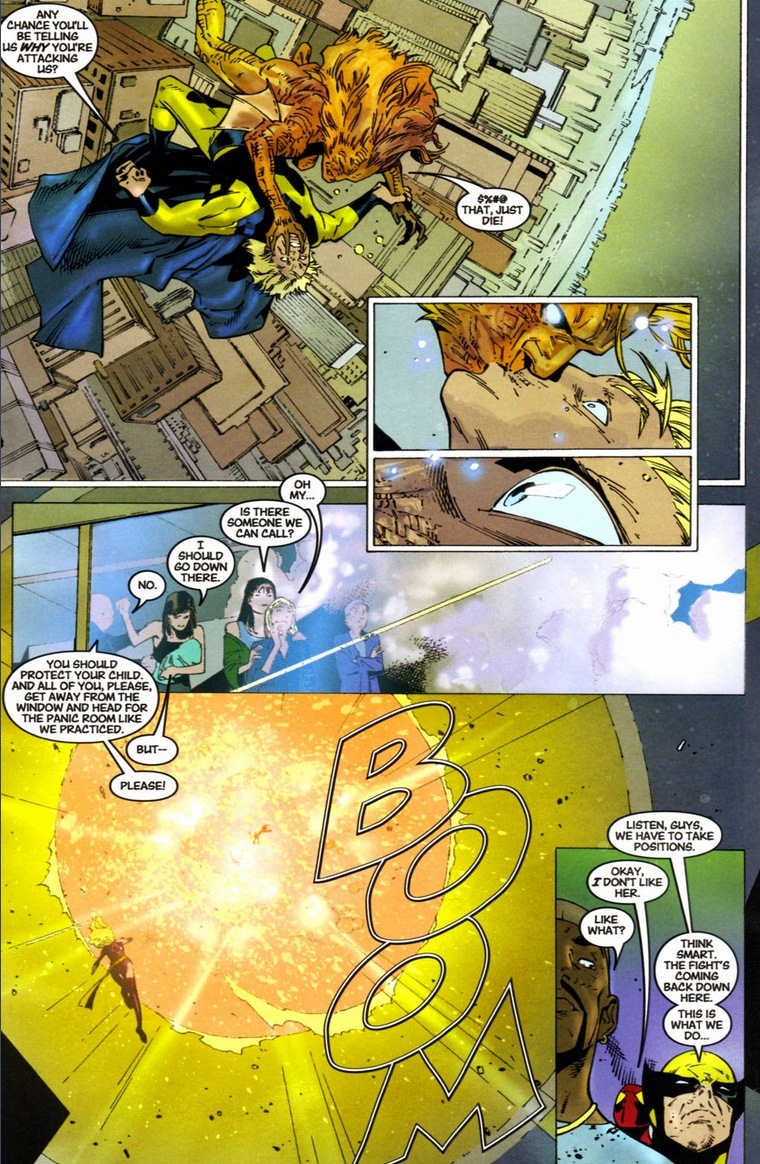
Watch as Yelena’s banter hits deeper and sharper than any weapon can:
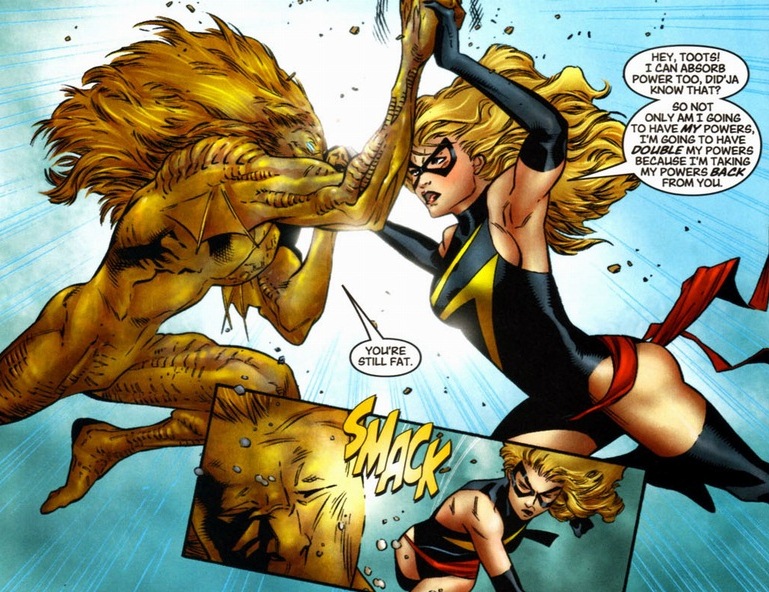
And witness my man-crush Spider-Man. Oh, how I swoon.

Finally, follow that up with some actual teamwork:
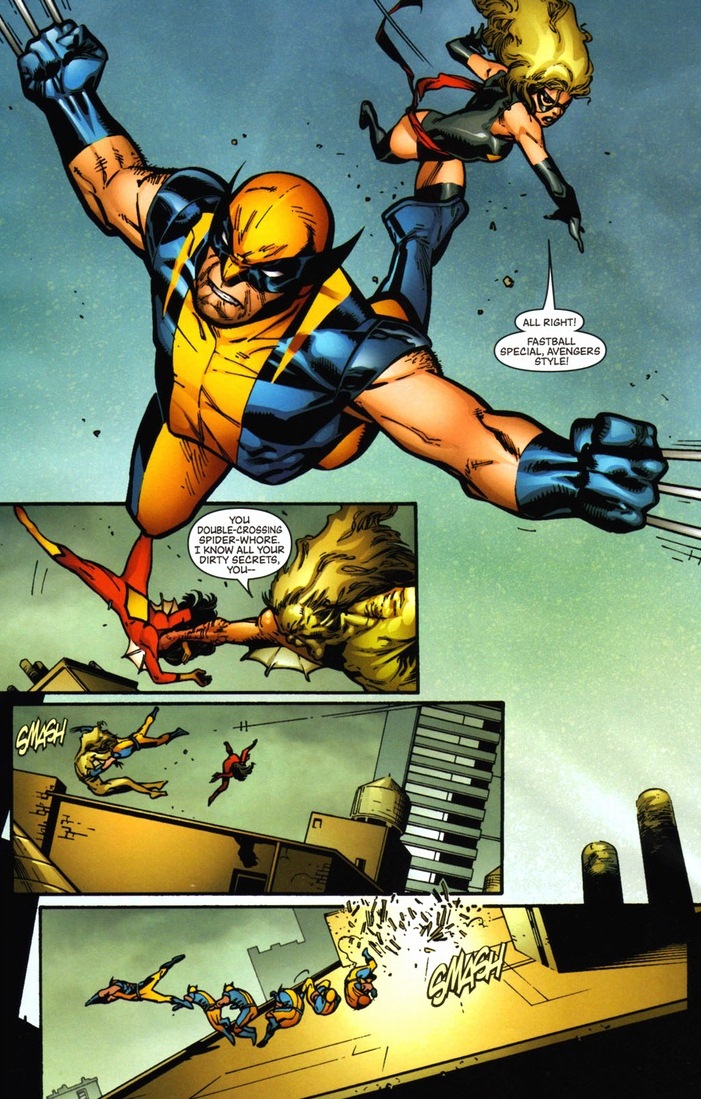
Eventually, since Super-Adaptoid has every Avenger power, Yelena remains relatively unharmed. So Iron Man uses his brain and figures if one Iron Man won’t be enough to take her down, how about forty?
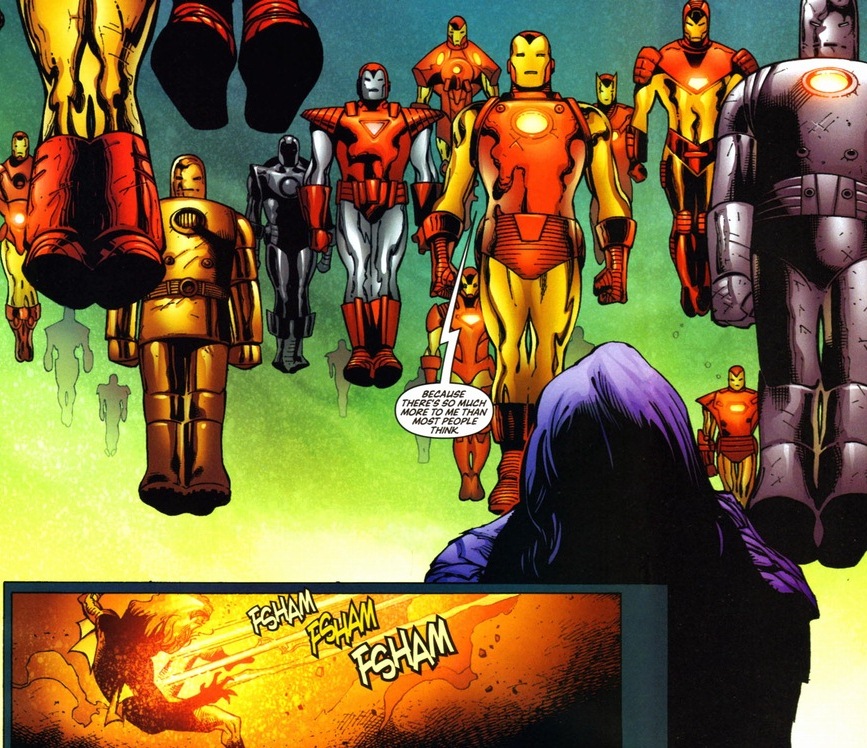
It’s not enough. It’s never enough. The fight eventually comes down to the Sentry, because every big battle always comes down to the Superman — that’s the point of having a man who can bench press continents on the team in the first place.

Y’see, while the Sentry has similar powers to Superman, he is not Superman. Not even close. While the Man of Steel’s powers come with a sense of morality and responsibility, the Sentry come with the Void. Superman gets a way better deal.

The Void can’t be easily explained. Think of it as a demonic-ish dark side of Sentry’s persona, only with the power of all-consuming madness and insane evil power. If even the Sentry eventually loses control (see Siege), Yelena doesn’t stand a chance. Hydra cuts its losses.


The end. Luckily, since it’s a comic book universe, we haven’t seen the last of Yelena. No explanation is given, but we’ll just assume some mad scientist put her goo back together or something. More importantly, Yelena receives a second chance to prove herself an equal Black Widow to the red-headed one we know and love — as a super spy, not a lizard cyborg monster. In an ideal world anyway.
Here she appears a year or so later in Marvel Comics Presents #5, written by Marc Guggenheim and drawn by Dave Wilkins:

What’s she up to nowadays? Well, she hasn’t actually been in comics since 2009, last appearing as Norman Osborn’s secret tube capture:

Oh well. One day she’ll be back in the comic spotlight. Hopefully. Is it because she’s blonde?
Batman & Wonder Woman’s villain switcheroo
Posted: 02/21/2013 Filed under: DC, Fights 2 CommentsWith Wednesday’s article involving thoughtful, provoking, meaningful questions, today should just be a big ol’ fist fight. That’s why we really read comics, right? Right? No? In Batman/Superman/Wonder Woman: Trinity, both written and drawn by Matt Wagner, we get a (I presume) non-canonical look at the three DC powerhouses’ first meeting, complete with nuclear threats and giant pigeons attacking helicopters. Near the end of the book, it’s time to take out the two main antagonists — Ra’s al Ghul and Bizarro.

Let’s pause here. Bizarro, the disfigured clone of Superman, has all of the Man of Steel’s power but with the mentality of a toddler. Actually, a terrific combo for a supervillain. Also, as you know from Batman comics before, the Dark Knight prefers to handle his own rogue gallery and tends not to pawn them off. Finally, Wonder Woman can certainly match Bizarro’s speed and strength, so why send the fragile Batman instead of the hearty (is that offensive?) Amazon.
Before you immediately dismiss an insane Batman, you should buy the book, because Wonder Woman already had her savage fight with Bizarro:
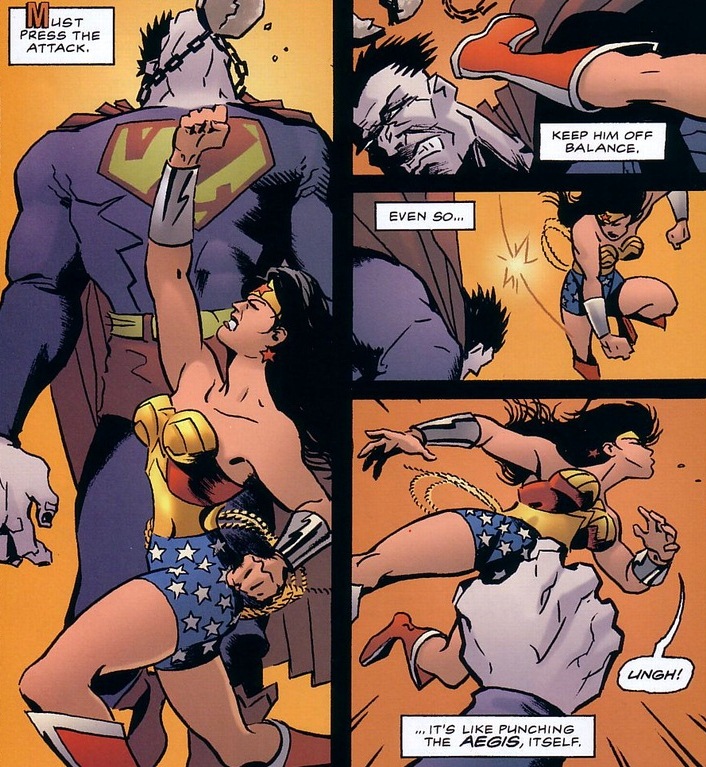
And it didn’t really go well. It’s okay, Batman has a plan. He always has a plan. But first up:
Wonder Woman vs. Ra’s al Ghul
I like this characterization of Ra’s. He retains the horrible haircut and megalomania, but now he has an added layer of pervert that makes him way easier to hate.

From a superpower perspective alone, Wonder Woman shouldn’t have a terribly hard time dealing with Ra’s. The man has 600 years of combat experience, but he’s still non-powered. And unfortunately, Wonder Woman doesn’t have that convenient kryptonite weakness. So for the sake of story, we’ll assume Ra’s centuries of training make him an even match for the daughter of Zeus, which is fairly feasible for comics. Bring on the continuity anger — I’m totally going with her New 52 origin.

The best part of fighting a misogynist? The inevitable verbal/physical smackdown using all those womanly strengths.
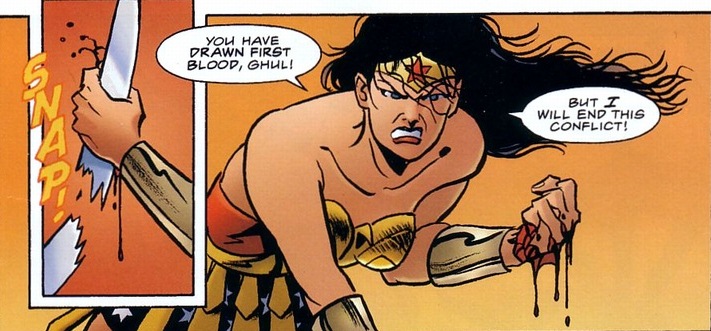
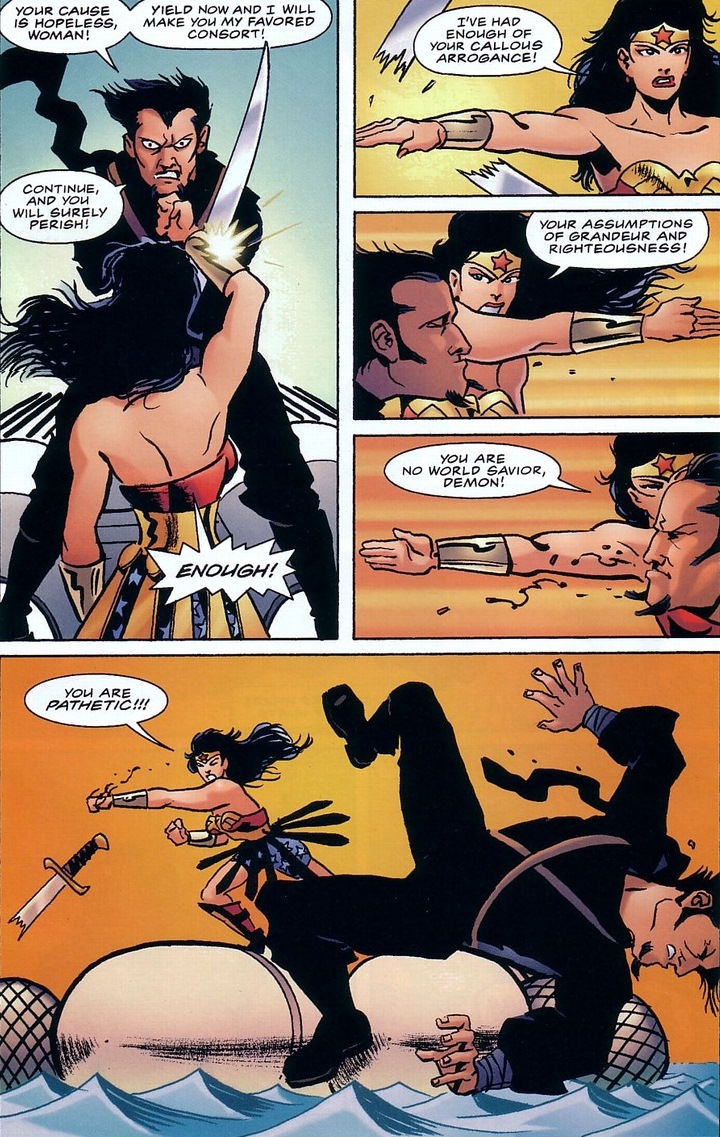
Victory Wonder Woman. Poor Batman won’t have so easy a time.
Batman vs. Bizarro
With no blue kryptonite handy to incapacitate the reject clone, Batman’s going to have to hit hard and hit fast — his favorite kind of hitting.
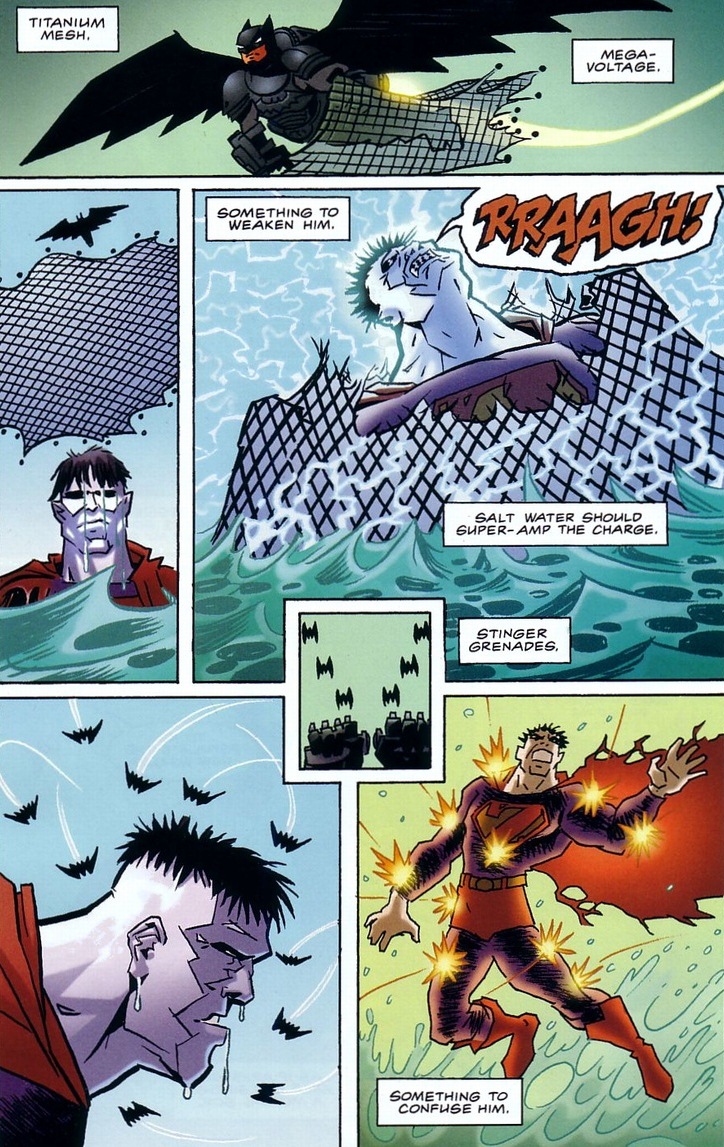

I would like to say that Bruce Wayne musters up the last remaining strength and succeeds despite all odds against him, but to be fair, he is going up against a monster who can push moons.
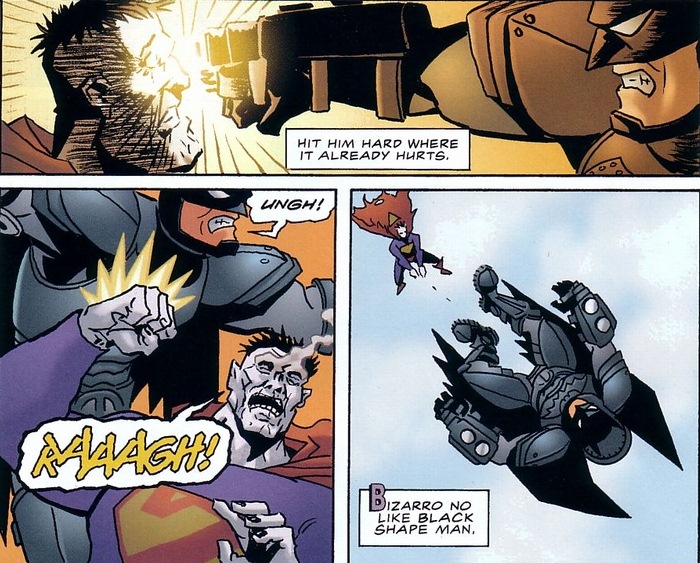

Valiant effort by Batman. It’s really the thought that counts when it comes to battles. When your opponent has you pinned on top of nuclear bombs, maybe it’s time to tag in your partner. Y’know, like a man who has a bit more experience dealing with crazy clones of himself.


Mission complete, and no better panel to end the weekend on. Superman rocks.
Life questions with Thor
Posted: 02/19/2013 Filed under: Characters, Marvel 12 CommentsThere’s no punching today. Instead, we’re going to discuss a single inquiry asked of our god of thunder. Enjoy a beautifully done, well-crafted moment, and understand any answers I attempt to give will in no way be properly articulated. But that shouldn’t stop us from trying. In the mini-series Thor: Heaven & Earth, wonderfully written by Paul Jenkins and drawn by Pascual Alixe, Thor and gang go on little missions filled with just as much violence as intellectualism. In issue #3, we’re faced with this heartbreaking situation:


Before you get suspicious, that’s not exactly Thor’s buddy from World War II or whatever conflict he hammered bad guys in the past. When you’re thousands of years old and live in a magical dimension, it’s easy to teleport down to any big deal from history. Nope, this old man did the impossible: he stumped a god.
Everything starts after a big brawl in New York.

Thor walks triumphantly back to his flamboyant bridge home.


What a fantastic concept! Superheroes are from all sorts of insane origins, but we accept that they live in a world very much like ours. It shouldn’t surprise us that the there’s organized religion or that Christianity still plays a major role in the lives of many New York citizens. Yet they all just witnessed this very non-Catholic deity smash monsters with a hammer. How could a priest explain this to his congregation while still holding steadfast in his own religious beliefs?
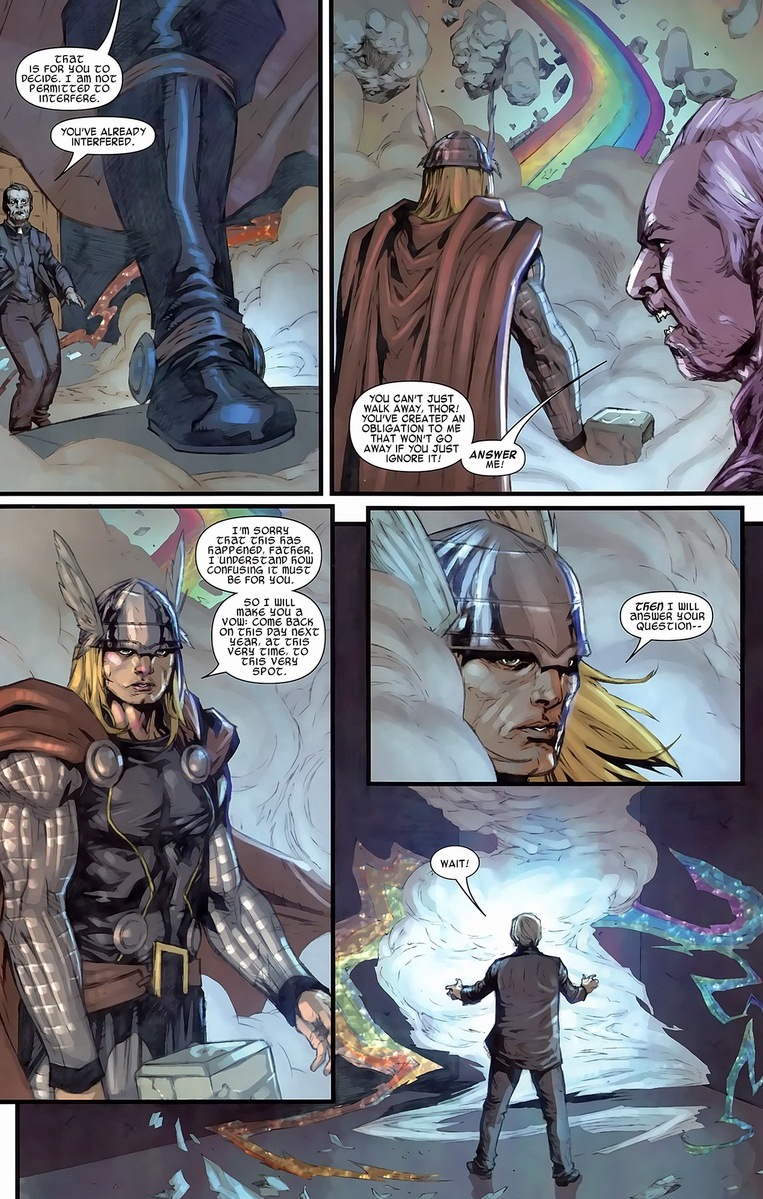
Look, no one’s claiming Thor’s a genius. The guy’s gallant, heroic, and chivalrous — but no spelling bee championships will be coming his way. And thus, his thought process remains honest and simple at its core:


But a shrug and tough-luck pat on the shoulder won’t work. As this priest lies on his deathbed four years after this initial meeting, Thor can only come to one conclusion.
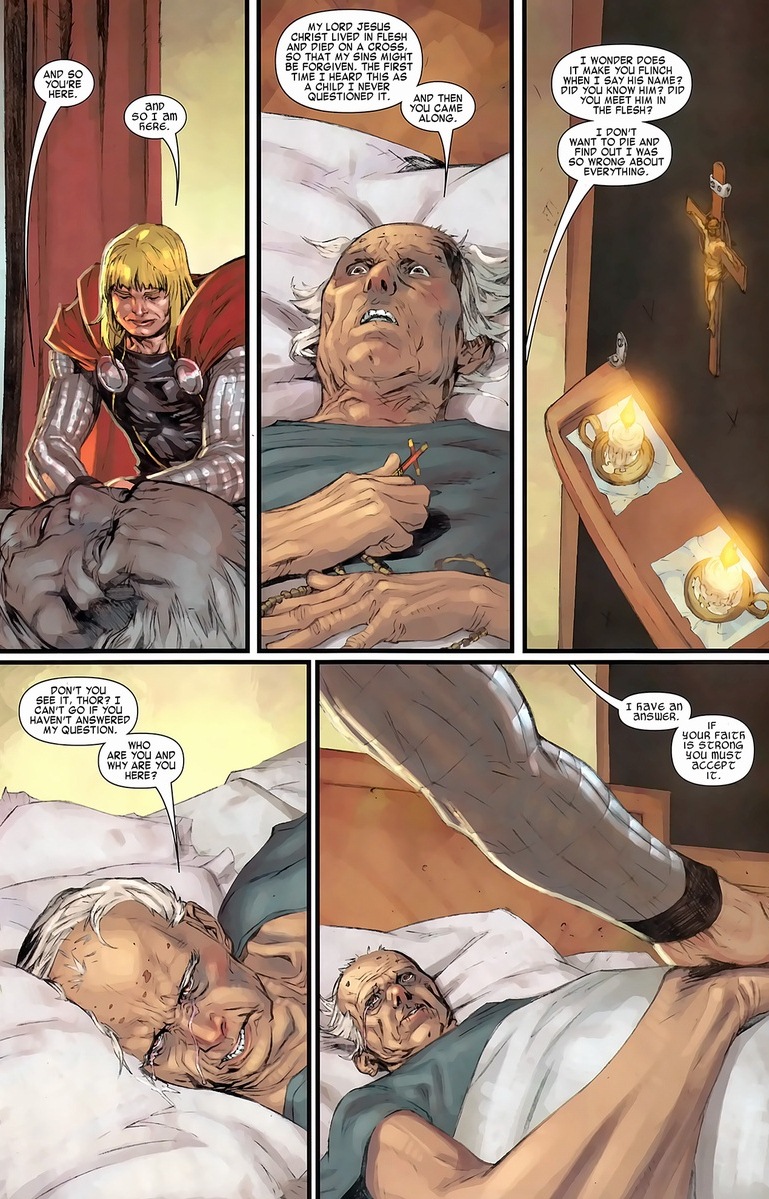
Sometimes it’s hard for readers to sympathize or relate to Thor. The guy’s practically invincible and if he does die, he’ll be resurrected almost immediately. Plus, he has Hulk-level strength without the moral responsibility that makes other characters like Superman so beloved. So while I can’t possibly explain in the detail or manner I wish, I do believe Thor’s answer explains better than anything else about why this god of thunder truly defines a superhero.
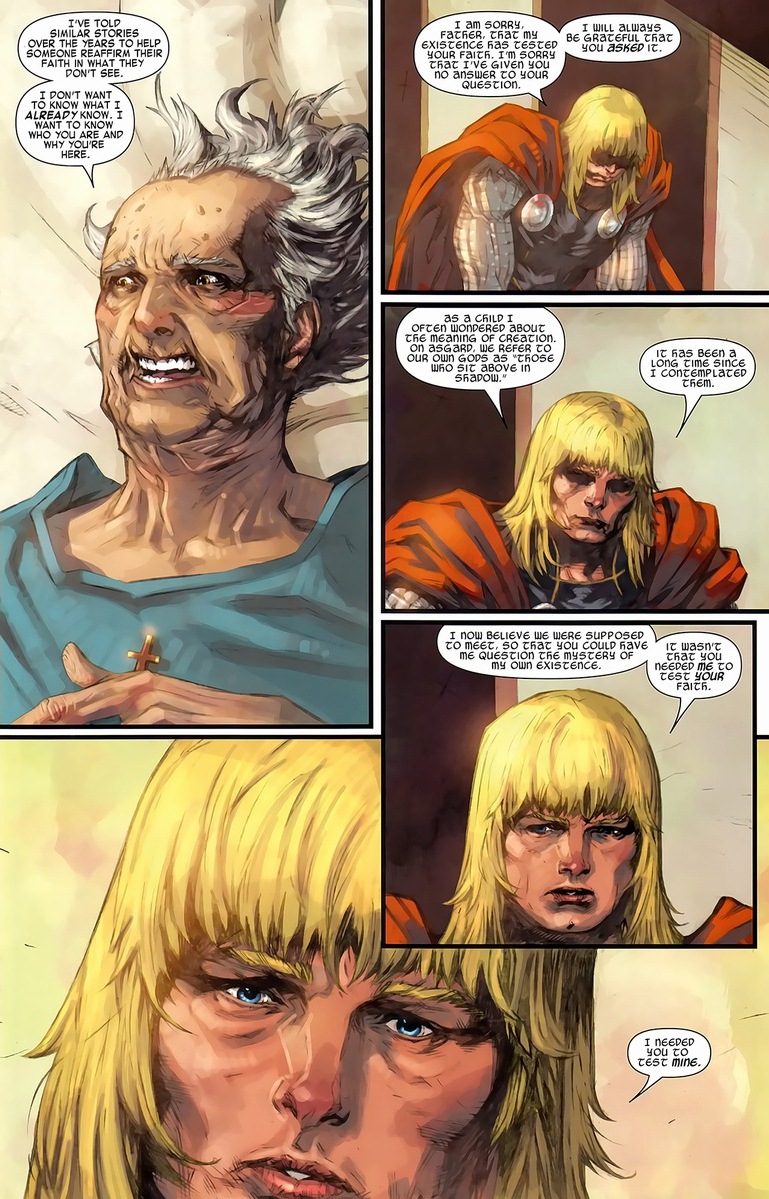

As cliched as it sounds, it’s the flaws that define our heroes, not the triumphs. In this single moment, Thor has shown his humanity that we may not have seen much of in the past. The personal struggles are what creates three-dimensional characters we can root for and grow alongside with. Remember Iron Man’s alcoholism? Captain America’s man out of time? Hulk’s lack of control? When we add Thor’s questions of identity and purpose, he is objectively a better character.
And I do mean objectively. Plus, he has that cool hammer.
Batgirl & Superboy’s whirlwind romance
Posted: 02/17/2013 Filed under: DC, Relationships 3 CommentsEven not-really-sorta sidekicks need love. Only problem with being a superhero, besides the constant fear and danger, is the almost always tragic and traumatic origin stories. Makes for some interesting stories, great personalities, and horrible ability at long-lasting relationships. Cassandra Cain (Batgirl) didn’t learn to speak until her teens, trained by her adopted father to read body language as the world’s greatest assassin. Connor Kent (Superboy) is the genetically-engineered hybrid clone of Superman and Lex Luthor. Perfect romantic match.
In Batgirl #39-41, written by Dylan Horrocks and drawn by Adrian Sibar, the two make the best out of disturbed teenage love. We’ll start from the beginning. Barbara Gordon (the paralyzed Oracle) decides she and Cassandra need a vacation on Batman’s dime.


As it happens in the it’s-a-small-world of superhero comics, Superboy’s vacationing on the same cruise. Maybe they have discounts for the heroic types.
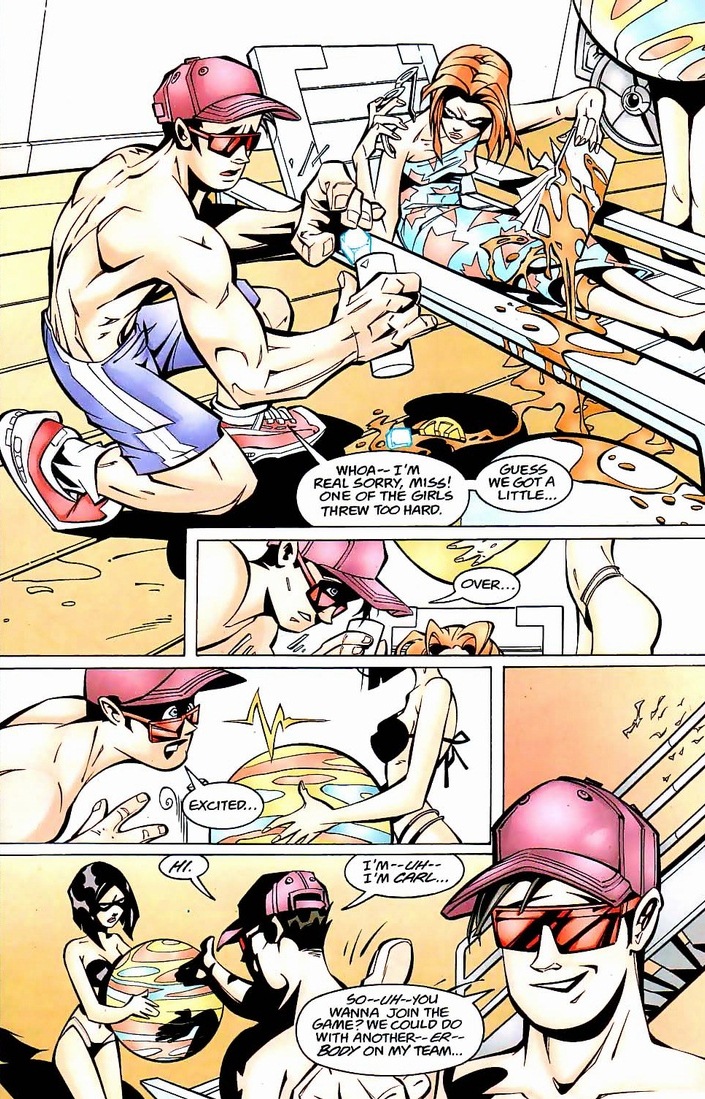
And the girl talk begins:
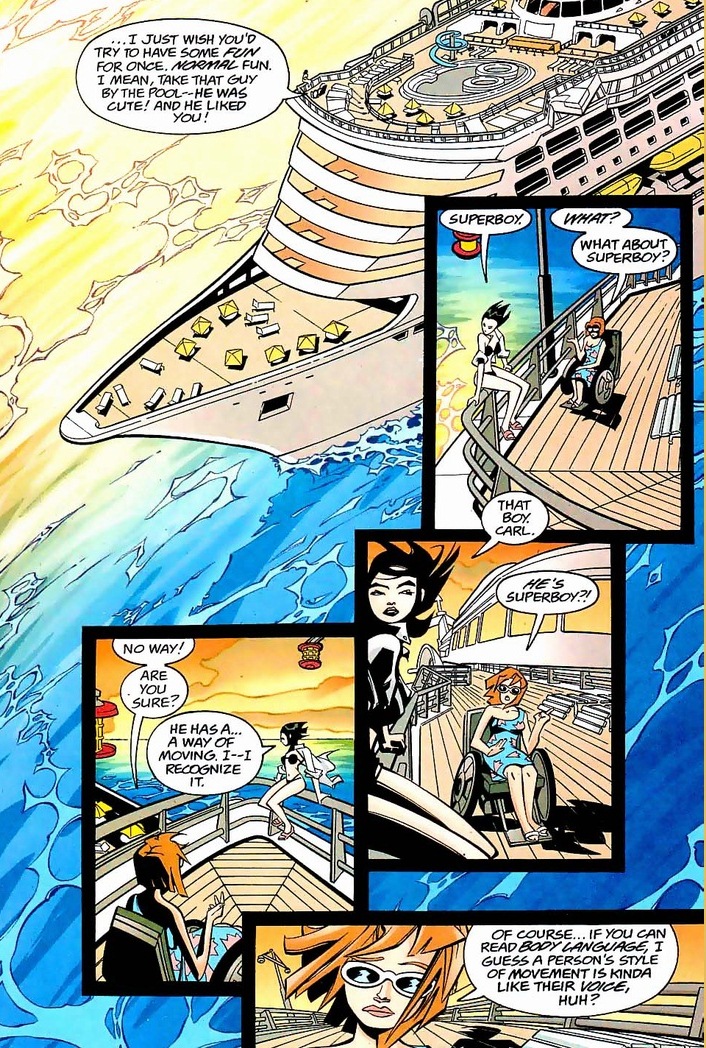

Okay, I’m not exactly sure what girl talk sounds like. Probably not that. Maybe most of the time Batgirl’s running around Gotham, the bad guys are too busy frantically running and getting jaws broken to sexualize Batgirl. But c’mon, she’s been around Tim Drake (Robin) for a few years now, and that kid’s a total perv.
As you can imagine, trouble brews.
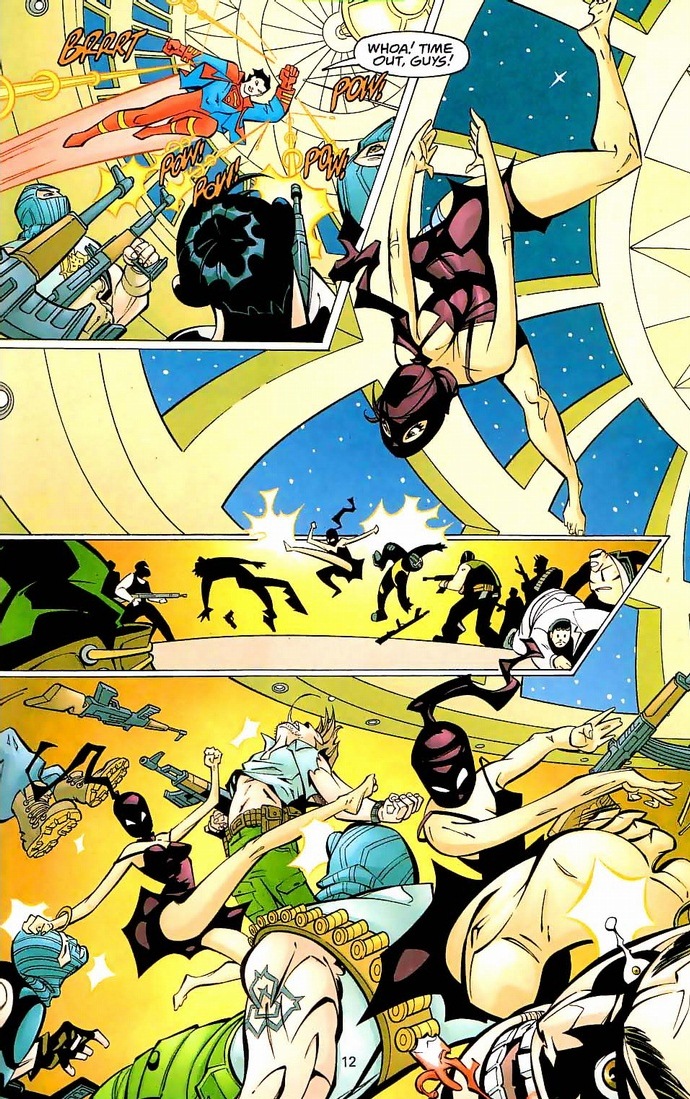
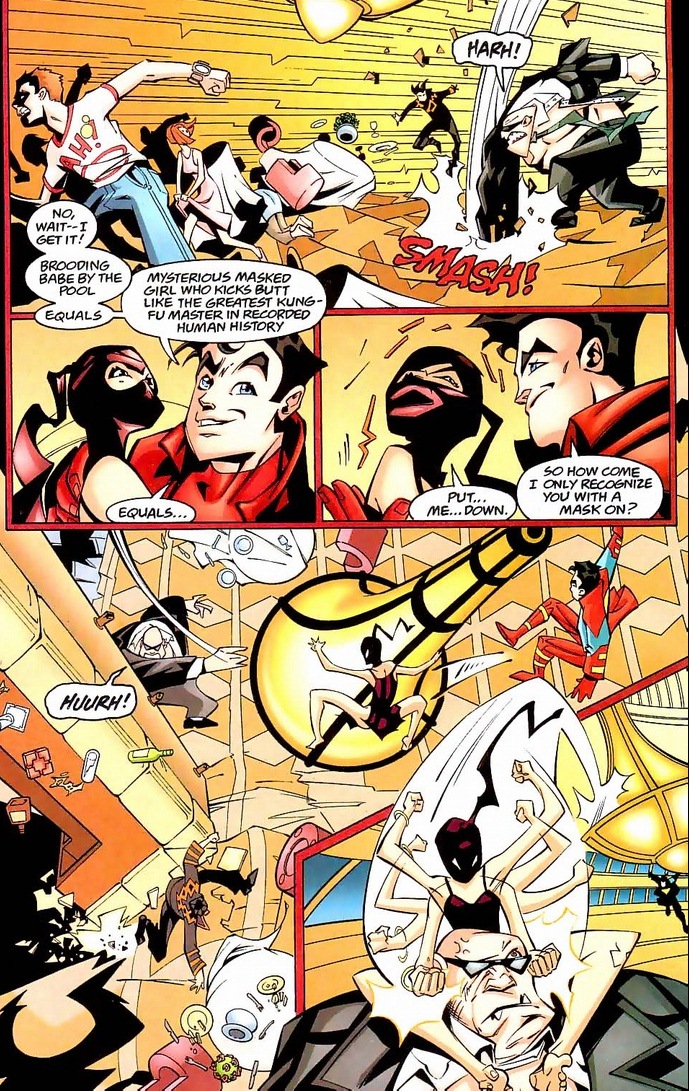
Maybe it’s the adrenaline. Maybe it’s the raging hormones. But when two budding superheroes team-up, sparks fly:
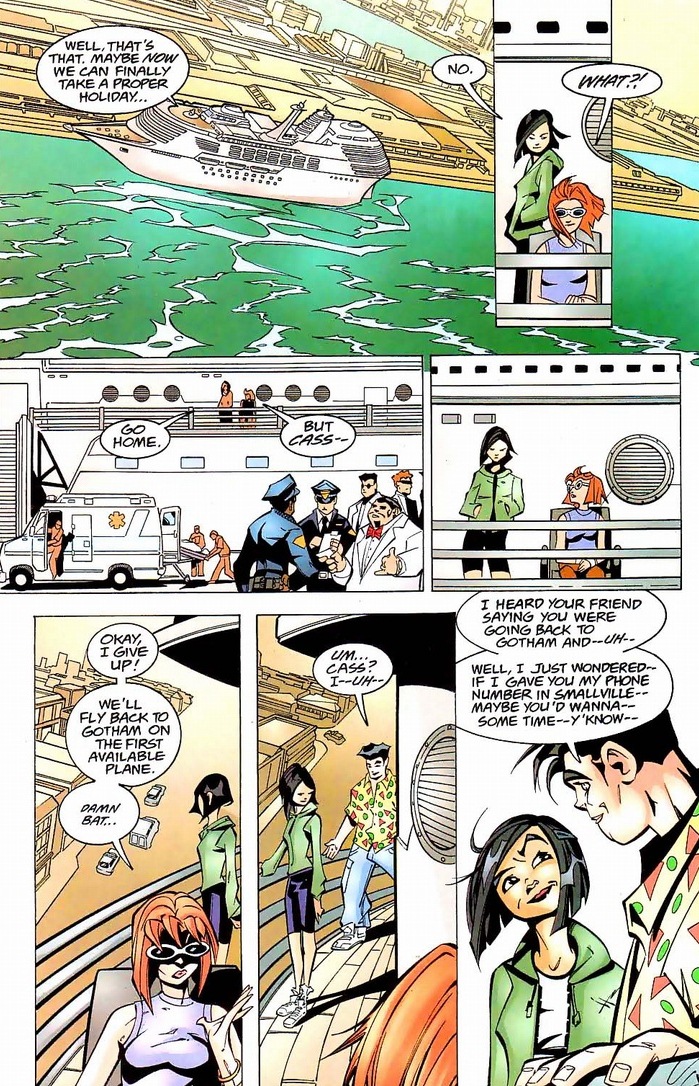
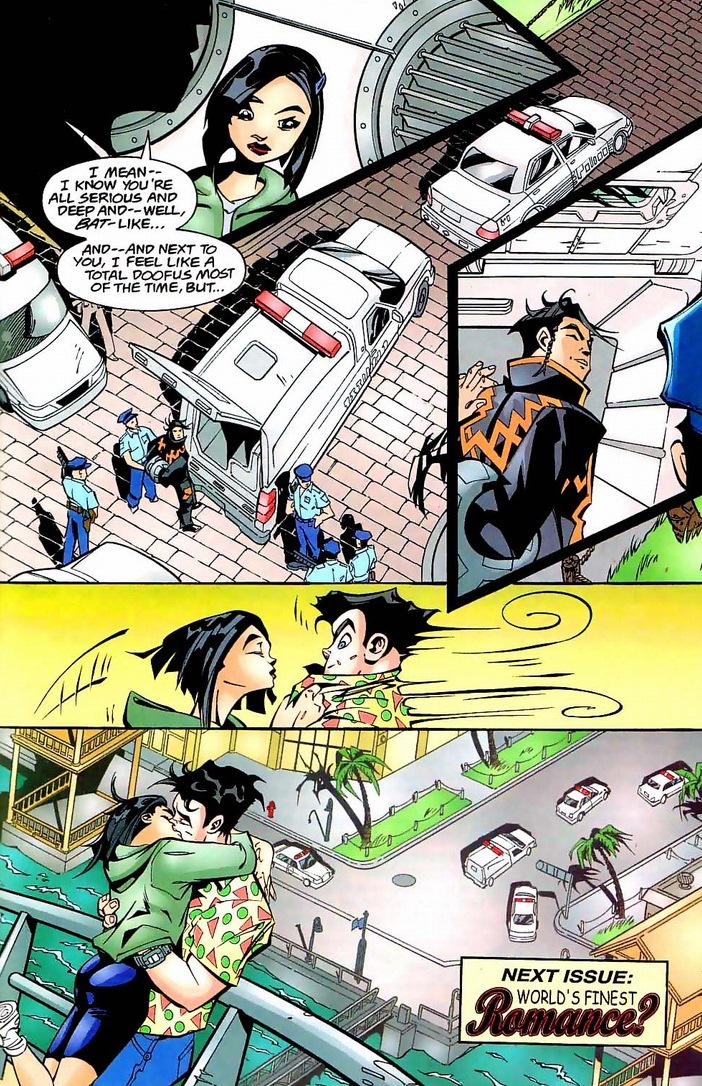
Okay, real quick. Yes, there’s not much basis for this passionate kiss, but I have theories. Most likely scenario stems from Oracle begging Batgirl to let loose, have some fun, and enjoy something besides crushing the ribs of henchmen. While the two don’t have much in common, Cassandra can do much worse than Superboy’s lighthearted charisma and boyish good-looks to break in that whole romance thing.
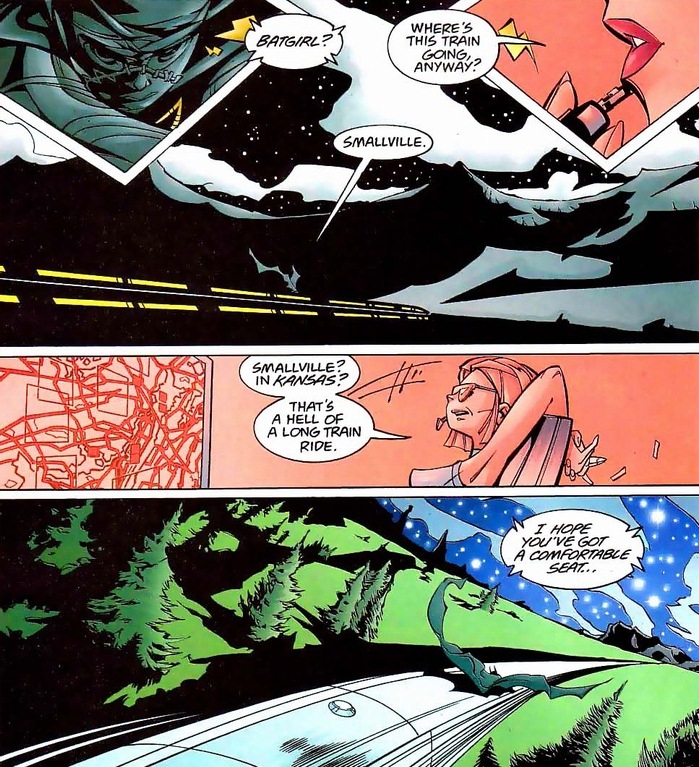


By the way, Superboy’s secret identity? He doesn’t wear a mask, doesn’t wear glasses, and his civilian clothes have the Superman logo plastered all over them. Batgirl may be a talented detective, but this isn’t exactly a Sherlock Holmes-type mystery. With Cassandra taking Connor up on his visitation offer, time for him to sweep his date off her feet.

You just saw the last romantic page in this issue. What follows are ten pages of lovely attempts gone horribly distracted. Here’s a few highlights:
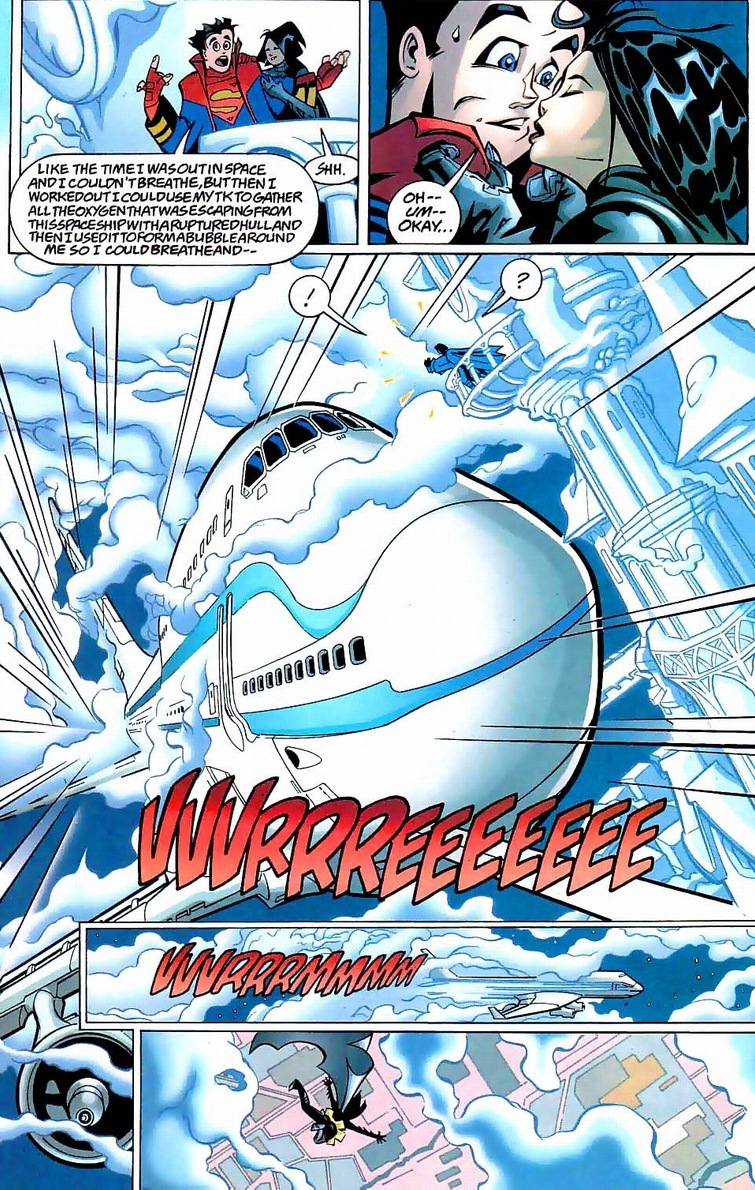
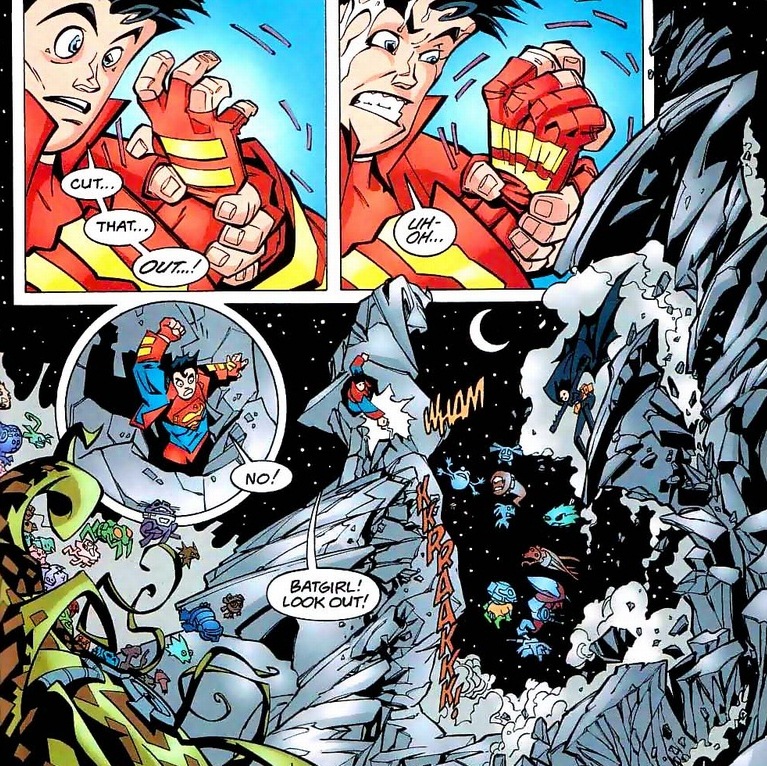
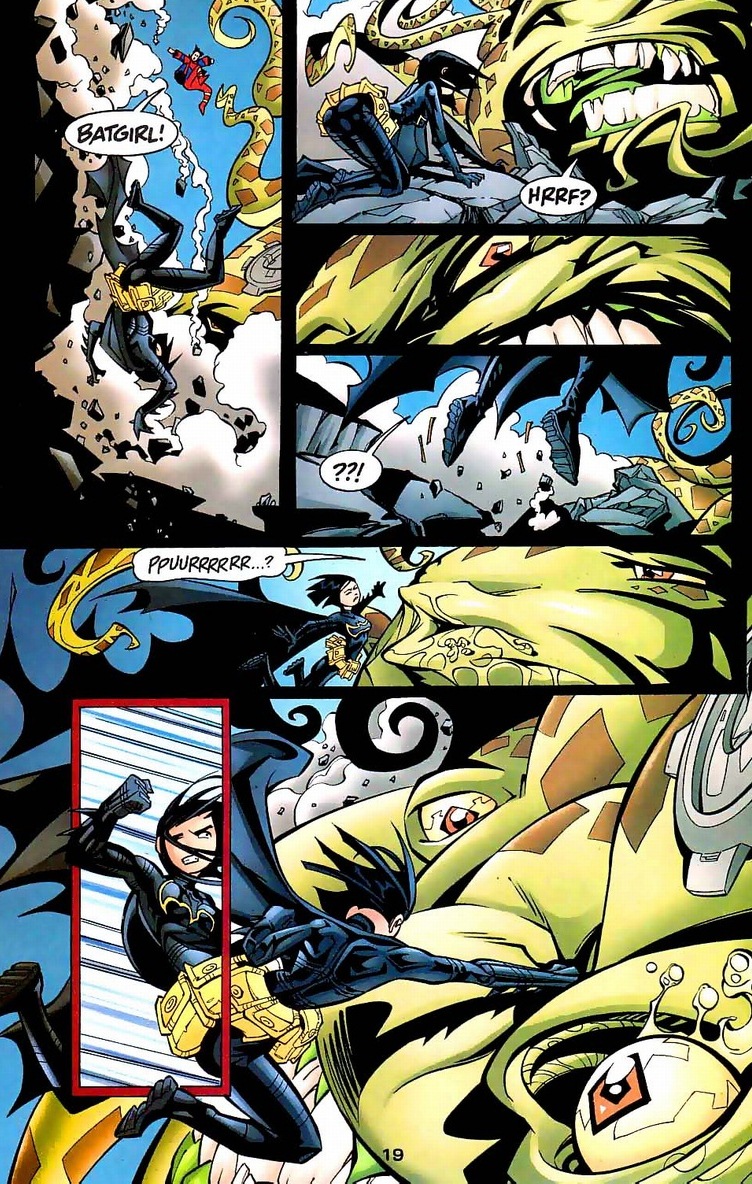
Punching giant space slugs can ruin an evening. As hard as Superboy tries, the superhero curse of inevitable interrupting trouble takes down any chance of sweet moments. It’s like Aladdin and Jasmine during A Whole New World if the two had to stop the song every thirty seconds to sword fight monsters or douse flying carpet fires.


And the relationship ends after one issue. Soon after this, Superboy starts dating Wonder Girl, who’s also named Cassandra. Can’t beat a good thing, I guess.
Inner monologues of the X-Men
Posted: 02/14/2013 Filed under: Characters, Marvel 2 CommentsWho doesn’t love the idea of X-Men? Society loves underdog stories, especially those involving The Man and discrimination. Y’know, only with dudes who can chuck fireballs out of their palms. Unfortunately, all that irrational hatred by the townfolk brings up major unresolved issues among our brave heroes. Bad enough they have to fight Magneto every other month, but the X-Men aren’t even patted on the back when they save our world for the umpteenth time. I’m not a scientist, but maybe the X-Men have retained readers’ popularity because they all desperately need therapy. Or fireball hands. One of the two.
In X-Men: Manifest Destiny #1-5, the main story written by Mike Carey and drawn by Michael Ryan, the mutants had just resettled in San Francisco after a horrible series of tragedies. You can Wikipedia it for more details. But while their lives have started anew, their insecurities and trauma haven’t faded in the slightest. The main story involves the aftermath of Iceman and Mystique’s relationship/battle:
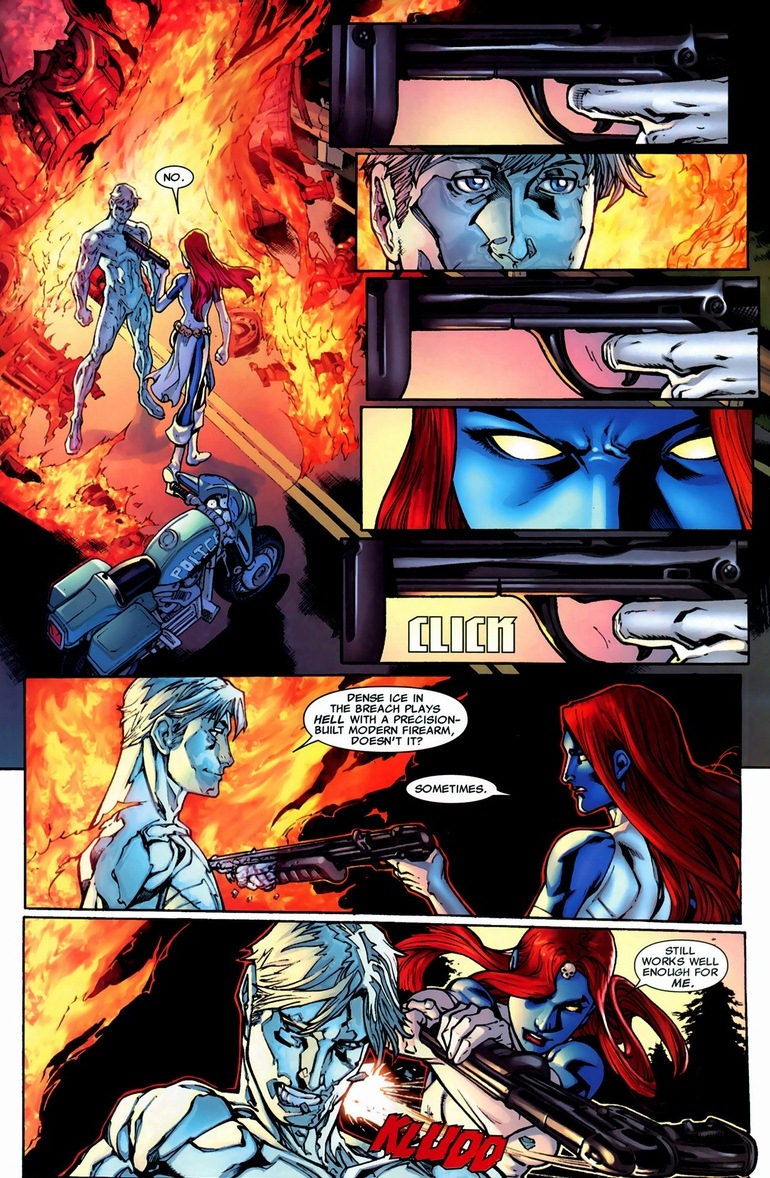
We’re going to skip that story. Go buy the book. But at the end of each issue, two short stories present themselves, each focused on a different X-Men. Today, we’re going to look at “Flaw,” written by Chris Yost and drawn by Paco Diaz, and “Work It Out,” written by James Asmus and drawn by Takeshi Miyazawa.
First up, Emma Frost.

Okay, two things to understand before we proceed. First, you’re witnessing a vulnerable moment for dear Emma. Second, that never ever happens. The woman’s made a career on unwavering ego and insanely powerful psychic abilities. Starting out as a scantily clad supervillain, she’s earned her place as the scantily clad co-leader of the X-Men. Trust me, that’s quite a jump.
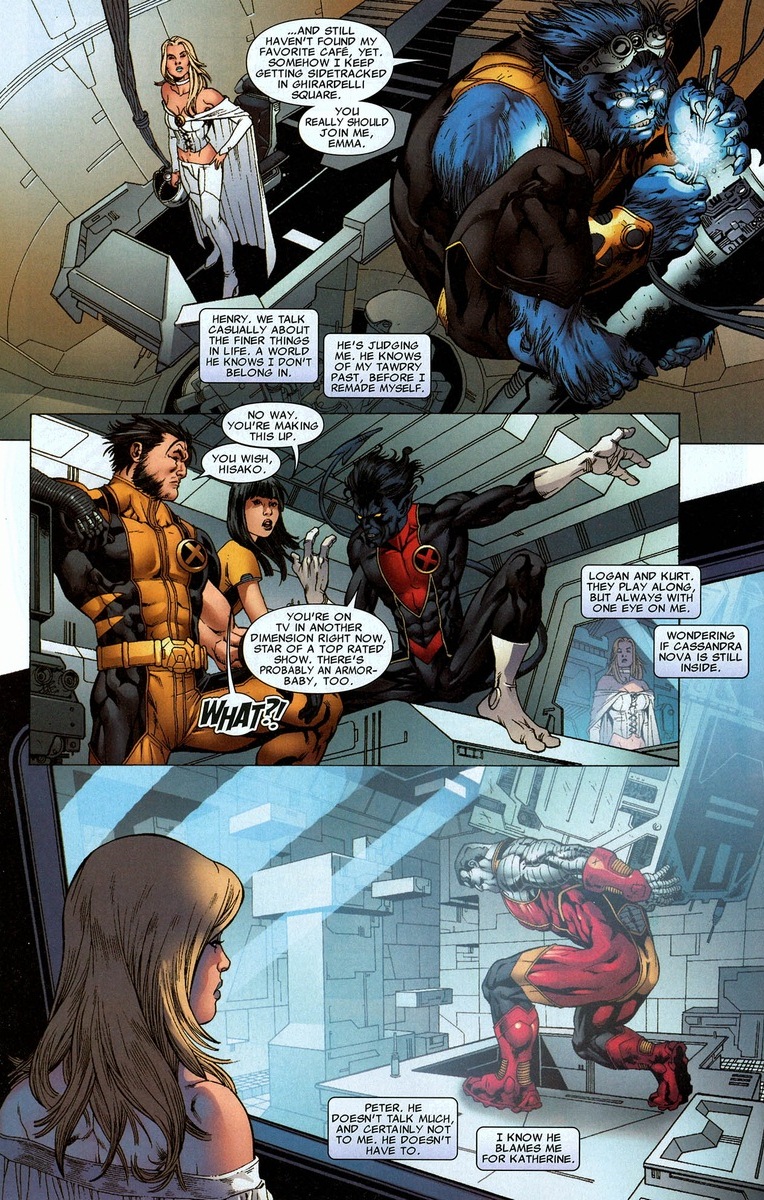
By the way, Kitty (Katherine) Pryde’s assumed dead after she sacrificed herself by making an Earth-sized bullet intangible. Long story. More importantly, Emma’s fears aren’t terribly far off base. She’s wildly unlikable, intensely arrogant, and has a terrible track record. Also, Cyclops cheated on Jean Grey with her. It’s only a matter of time before poor Emma snaps.
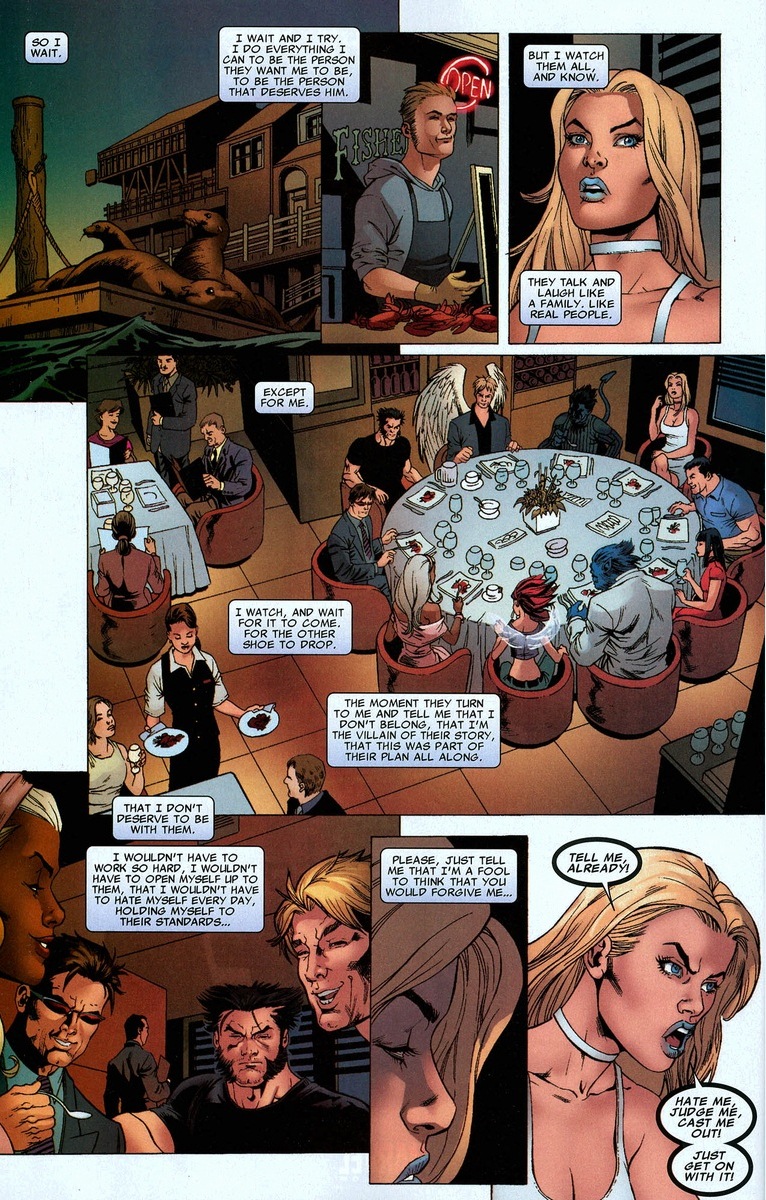
Wolverine meets her by the pier to discuss that weirdly awkward moment you just experienced.


I love nothing more that after the Marvel events Schizm and AvX, Wolverine currently stands as the moral center of the X-Men. Cyclops turned villain. Emma Frost fights alongside him. Professor X killed. Wolverine remains the sole leader attempting to bring the professor’s vision of peace and unity to fruition. Insane notion.
Anyway, Nightcrawler:

If you aren’t up to date on X-Men history, Nightcrawler’s currently dead. Killed while protecting Hope, the mutant savior and all that jazz. This takes place before that.

I love the idea of a superhero struggling to find his place in the superhero world. The search for identity and purpose always make fantastic, emotional stories.

Hawkeye and Nightcrawler actually have a fair bit in common. Especially after the next page:

For the Avengers, Hawkeye has certainly questioned his place a time or two. I mean, he’s a normal guy with good aim fighting alongside geniuses, super soldiers, and actual gods. How can he possibly contribute on the same level as the Hulk? Nightcrawler faces the same dilemma. His role on the team is better filled by another mutant and the X-Men only have so many uses for a world-class cartwheeler. Comics have always been more than just punching. Fighting self-doubt and inadequacies take up half the issues of most superheroes, and that’s part of the reason why comics appeal to the demographic that reads them.


One step at a time. Even for mutants.
Punisher and the Sentry chase
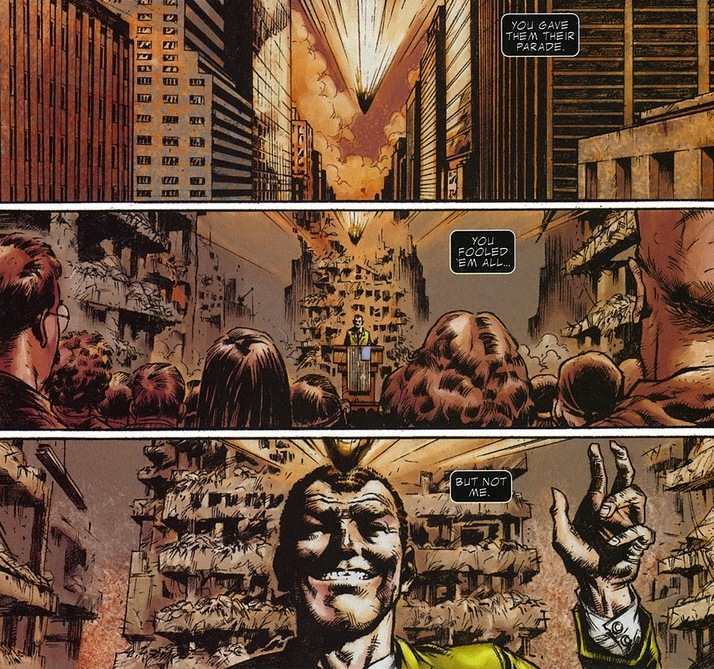
Posted: 02/12/2013 Filed under: Characters, Marvel 2 CommentsWhen Norman Osborn replaced Nick Fury as America’s top cop, our beloved superheroes immediately knew steps needed to be taken to remove this supervillain from power. Some tried speeches and sabotage. Others tried more conventional methods:
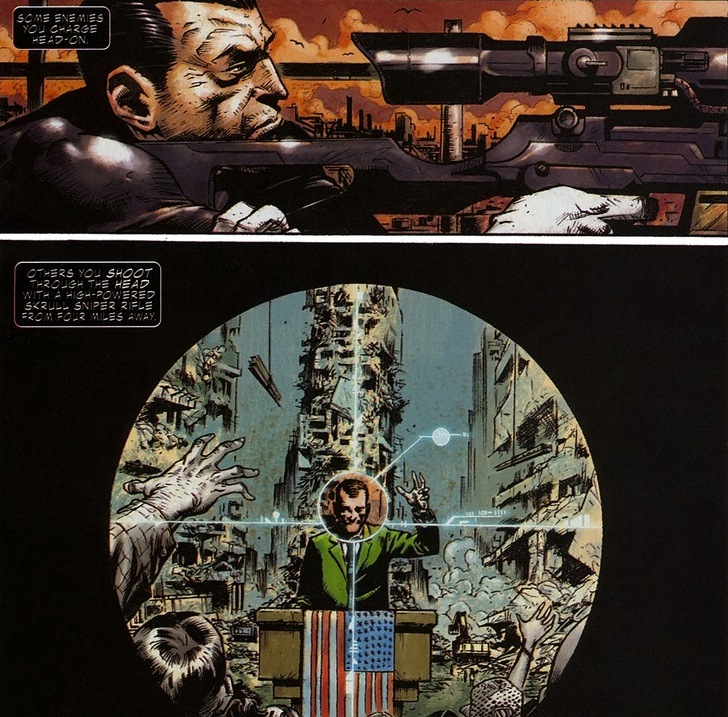
Today, we’re jumping right into the first few pages of Punisher #1, volume 7, written by Rick Remender and drawn by Jerome Opena. As you’ve probably realized, Norman Osborn won’t get assassinated at the beginning of his reign. And to be fair, in a superpowered world, the Punisher realizes that every mission he undergoes could backfire in every possible way. That’s why he’s survived for so long as a normal dude with guns and bullets. Unfortunately, this backfire has dire consequences.
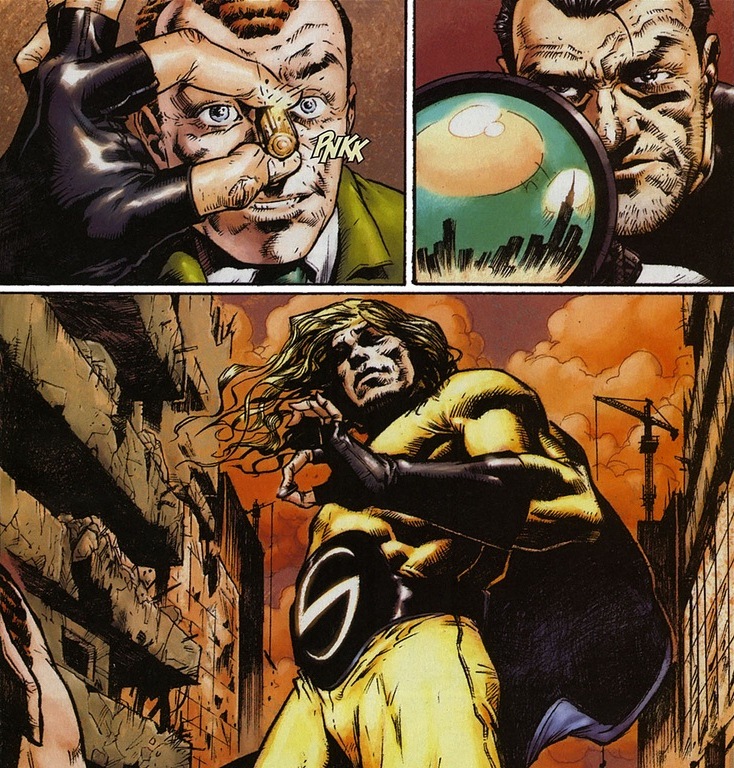
That’s the Sentry. Think of him as Marvel’s Superman, just with schizophrenia and none of the respect Superman gets. He literally has the power of a milli0n suns. Frank Castle’s screwed.


Seriously, the Sentry might as well be a god. Let the Punisher fight a tidal wave with just his fists. The Punisher, being the master tactician he is, makes the only possible choice.


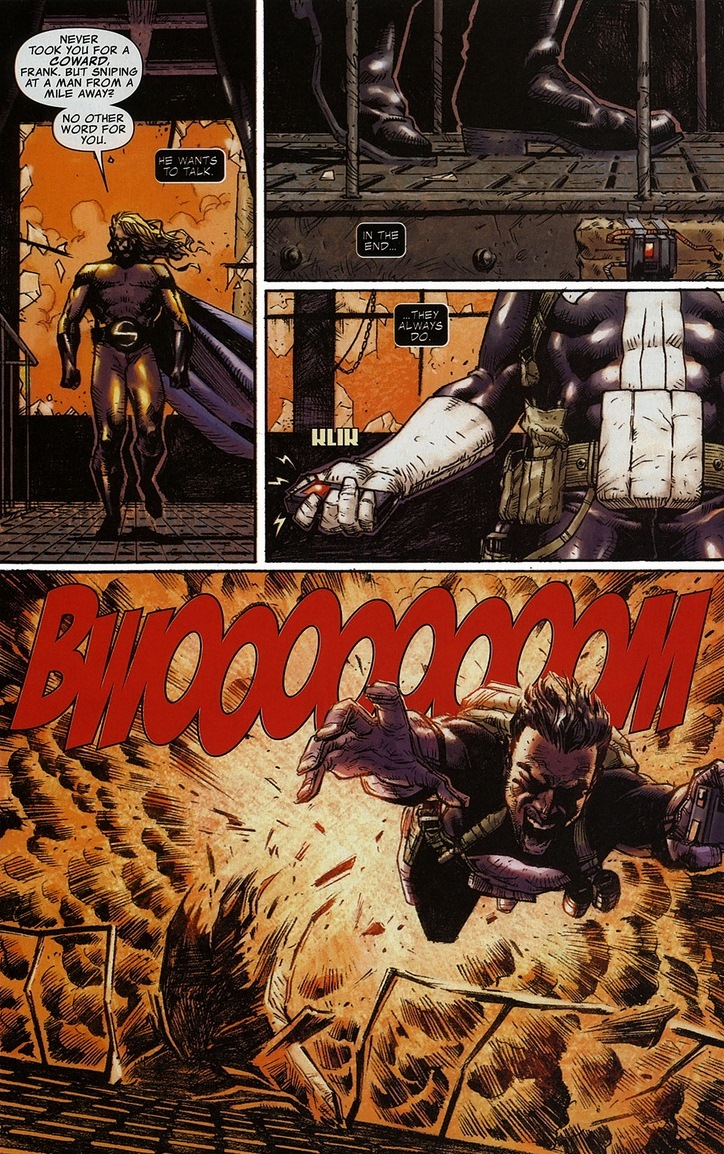
If you don’t read many Punisher stories, Castle doesn’t really do much talking. Noir narrating? You get that out the wazoo, just not a ton of dialogue. And he does bring up a good point. Both superheroes and supervillains love to talk. Love to argue or reveal. Love to insult or banter. Love to lecture or humiliate. And luckily for the Punisher, that love saved his life — for a few more seconds.
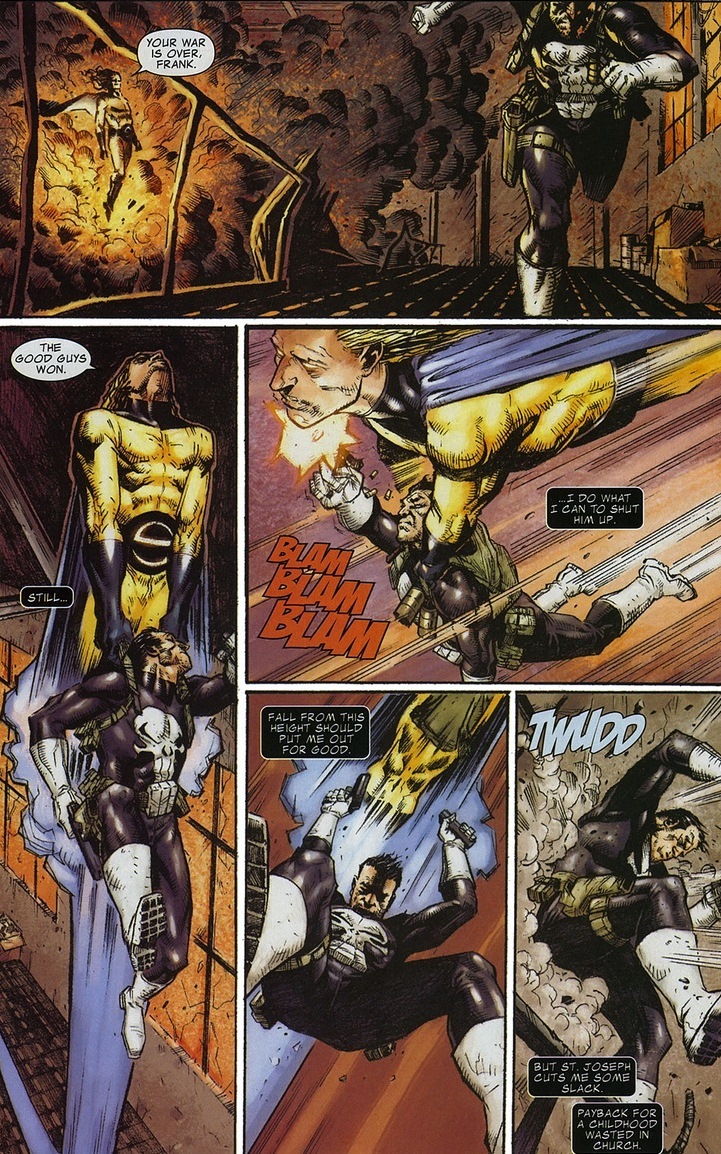
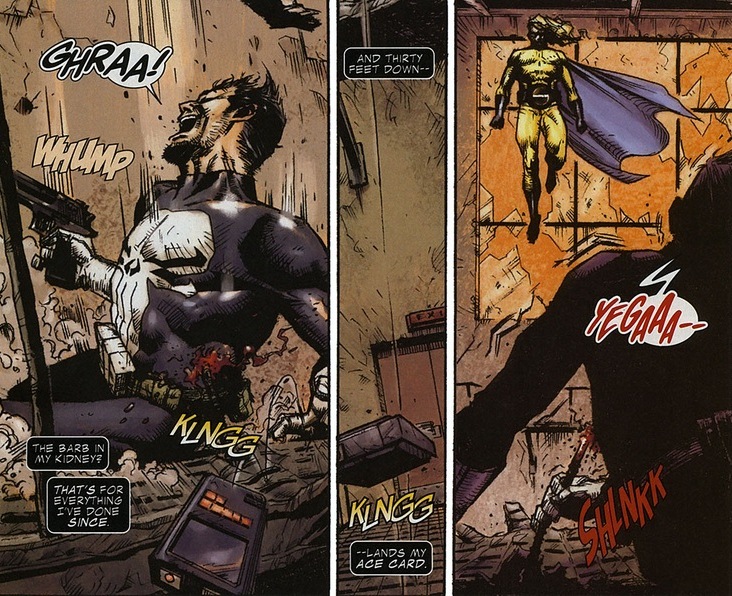
Ow. We know punches to the face are excruciating, but impalement by loose construction? Someone is going to be peeing blood for next month or so. Still, you must admire Castle for not breaking his stride after a pipe goes through half his body.

I understand superbeings like Sentry taking their time with goons like the Punisher. It’s almost cute to see how badly the prey scrambles to escape. Maybe the Sentry’s just confused that Castle actually thinks he can get away. Trust me, there’s not a hero alive who doesn’t know what the Sentry is capable of. Million suns and all that.


Ironically, no one takes more punishment in comics than the Punisher. I imagine if he takes off his shirt, his whole upper body has just turned into one giant scar. Time to bust out that trump card before Osborn’s attack dog flays him alive.
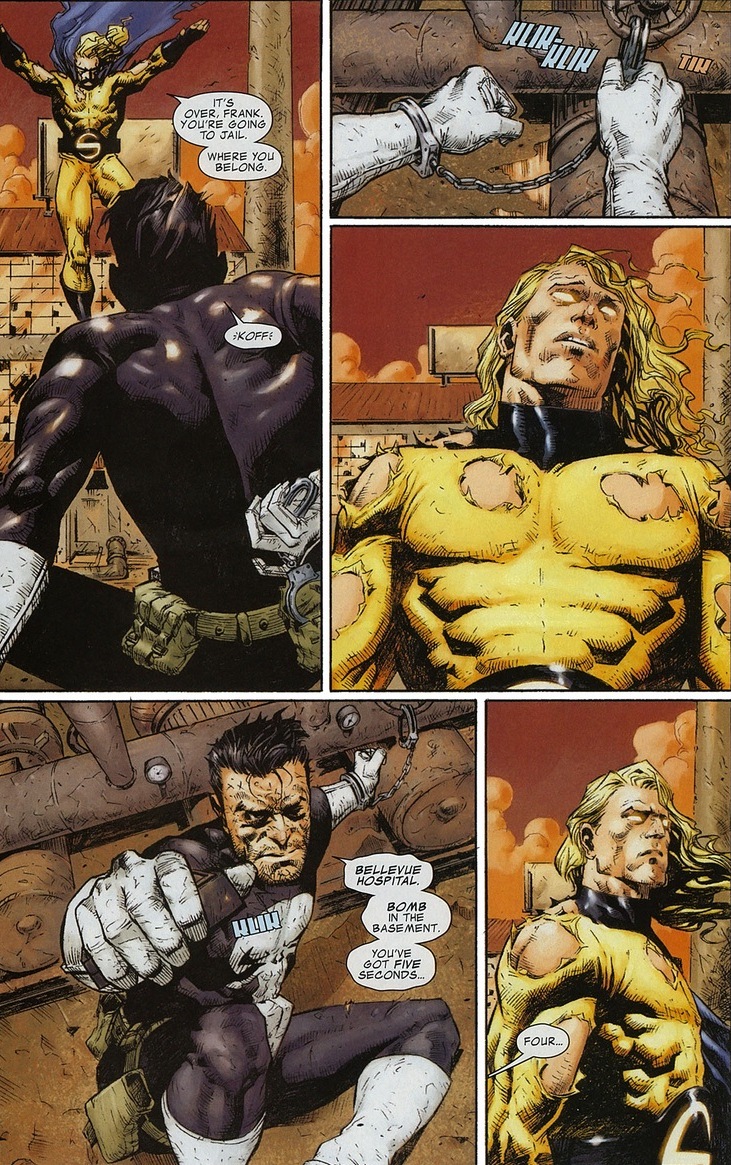
You know Castle doesn’t kill innocents. Sure, he tortures and brutally murders bad guys, but all the lovely law-abiding folks have nothing to fear. Sort of qualifications for being a superhero. But if the Punisher knows the Sentry can reach and diffuse the bomb in time? The game changes.
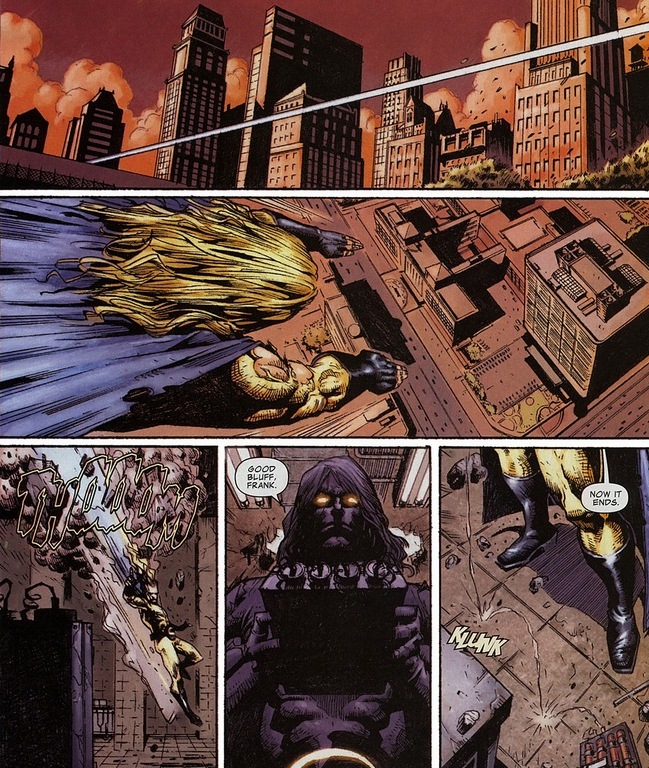
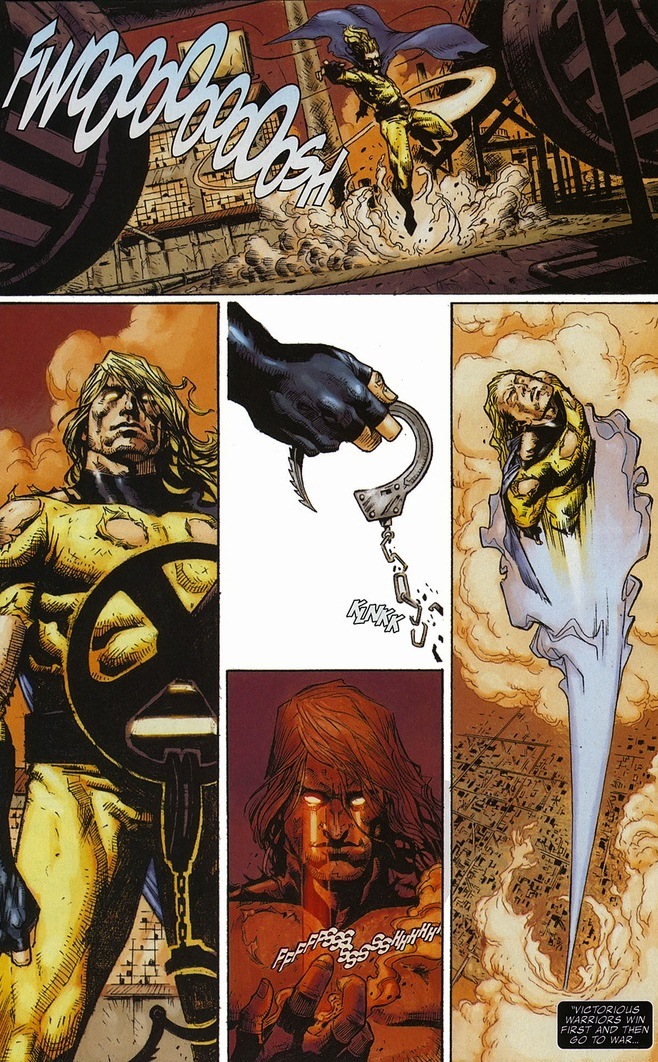
At the end of the Marvel event Siege, the Sentry finally met his defeat. Though it did take the entire Marvel roster of superheroes plus a dropped SHIELD Helicarrier. And the Punisher outran this monster. Not bad for a Vietnam vet.
The benefits of Alfred Pennyworth
Posted: 02/10/2013 Filed under: Characters, DC 1 CommentBatman’s butler. You know and love him. Since the oddsmakers for the upcoming Batman #17 have poor Alfred as the most likely fatality in the “Death in the Family” arc, we should totally talk about him before it’s too late.
Alfred, who’s been kickin’ since 1943, serves a much greater purpose than cleaning and cooking duty. I mean, he does all that, but Alfred’s also the only real father figure Batman has in his life. The one force that Bruce Wayne knows will always have his back — both emotionally and mentally. Plus, working for the world’s most dangerous vigilante obligates our dear elderly butler to pick up a few other useful skills. He’s an above average martial artist, skilled surgeon, classically trained actor, and talented computer programmer and engineer. Total Renaissance man. More importantly, Alfred’s a total badass.
Before we get into our story for today, you should get familiar with this scene from Detective Comics #838, written by Paul Dini and Ryan Benjamin:

And this gem from Detective Comics #849, written by Paul Dini and drawn by Dustin Nguyen:


Alfred’s earned his membership in the Batman family, and not just by changing baby Bruce’s diapers. In Batman: Legends of the Dark Knight #118, written by Greg Rucka and drawn by Jason Pearson & James A. Hodgkins, we’ll explore just how amazing the Dark Knight’s senior citizen servant is. Before we begin, we should briefly cover the Batman event No Man’s Land.
I’ve talked about it before, but to fully understand, think about DC as a business. You know what would sell a ton of issues? Batman in a post-apocalyptic wasteland. That’s a super awesome idea. But the only way that could happen is in an alternative dimension non-canonical story — and those just don’t attract viewers like the real deal. Well, what if Gotham City just so happened to be on a scary fault line and an enormous earthquake leveled the city? And then the government blocked off the city, forcing the citizens and cops left behind to fend for themselves among the dangerous supervillain gangs roaming Gotham? Totally awesome, right?
Unfortunately, Batman fled the city for a few months. We can get into why later. Commissioner Gordon and his policemen attempted to keep order, but you know how anarchy can be. Luckily, one brave soul stepped up to give his aid and support. And told as a delightful children’s story.

What’s a butler to do in the destroyed Gotham? Oh, he’ll find some ways to pass the time.


Alfred must be in his 60s. He accomplished significant success already as a stage actor in England before joining the Wayne household, and pre-reboot Bruce Wayne was in his late 30s around this time. I mean, I don’t think he’s at risk of heart disease or senility, but he’s also not parkour-ing off skyscrapers with a fistful of batarangs either. Which makes this next scene particularly noble:


Yes, Batman isn’t around, but Robin, Nightwing, Huntress, and others are certainly patrolling the city. Unfortunately, no electricity makes it difficult to alert the sidekick brigade. That and any carrier pigeons would have been eaten by this point.


It’s a fight, gentlemen. No backing down from this behemoth now.

How does this story end? Does Alfred get chopped into little crumpets? It concludes the only way it should: magnificently.


Spider-Girl & Hercules battle Hobgoblin
Posted: 02/07/2013 Filed under: Fights, Marvel 1 CommentA few years ago, the old Hobgoblin was killed. Well, his brother anyway who sometimes wore the costume in place of the original Hobgoblin. It’s complicated. But in Amazing Spider-Man #650, written by Dan Slott and drawn by Humberto Ramos, the new supervillain became Kingpin’s number one assassin.
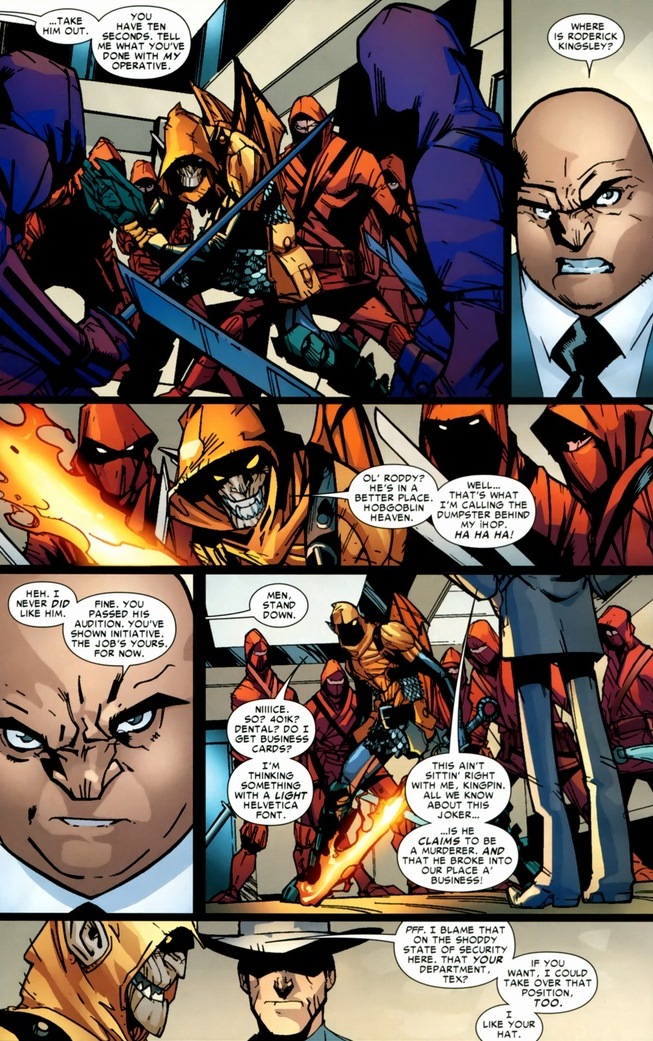
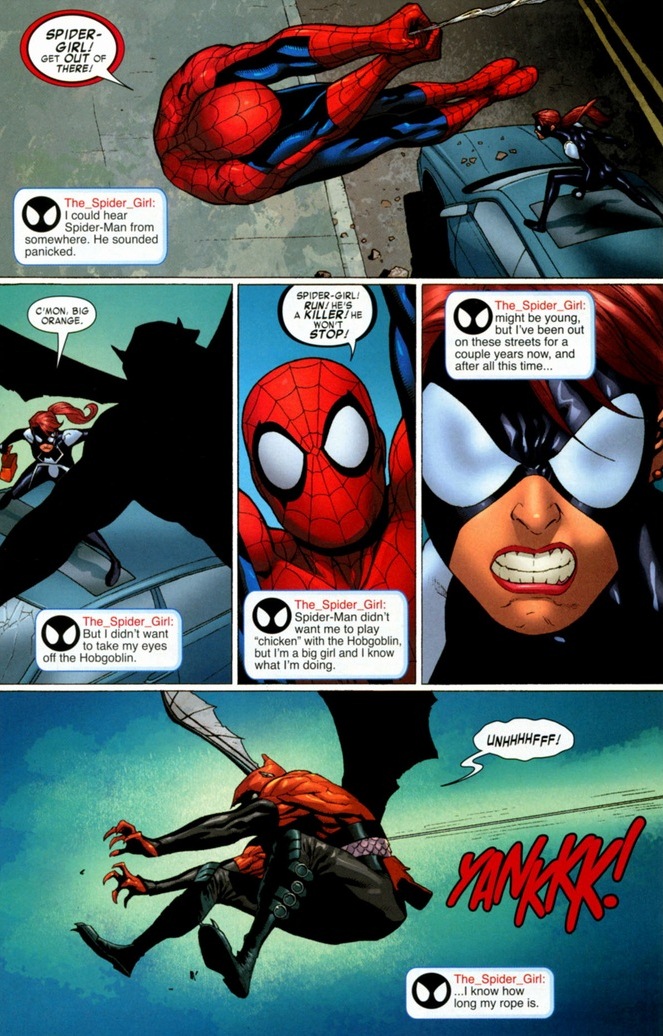
Unfortunately for New York’s local heroes, Hobgoblin spends most of his time trying to kill anyone who gave a dirty look to the world’s deadliest crime boss. He’s like Electra except far more annoying and showing far less skin. Today, we’re going to see our baddie battle some of New York’s finest. First up, Spider-Girl #6, written by Paul Tobin and drawn by Clayton Henry.

I’ve covered Spider-Girl before in a previous article. Imagine a normal, athletic 16 year-old girl. There, that’s Spider-Girl. While Hobgoblin isn’t exactly Hulk-level in terms of superpowers, he does have a bunch of cool gadgets and surprises.


Why’s this Hobgoblin so much deadlier than his predecessors? Turns out Phil Urich (his real name) ingested some Green Goblin juice back in the day, giving him the ability to paralyze his opponents by laughing. Spider-Man beat this by inventing a special suit that reflects sound waves or something. I don’t really do a large amount of science-related research. Poor Spider-Girl has to use less impressive methods.

Not exactly a master strategist, Hobgoblin finally decides to do something useful, like fly in the air. Most sixteen year-old girls can’t fly.
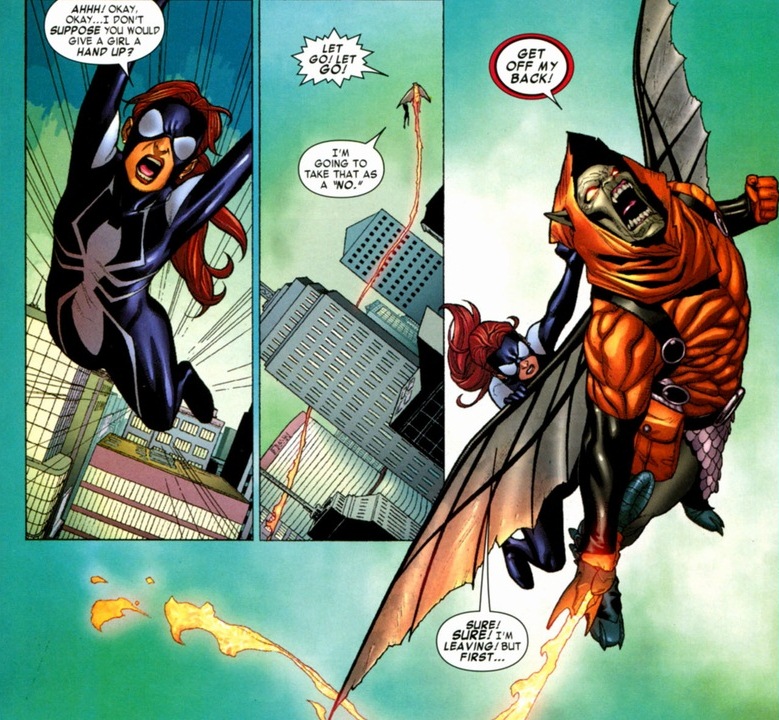
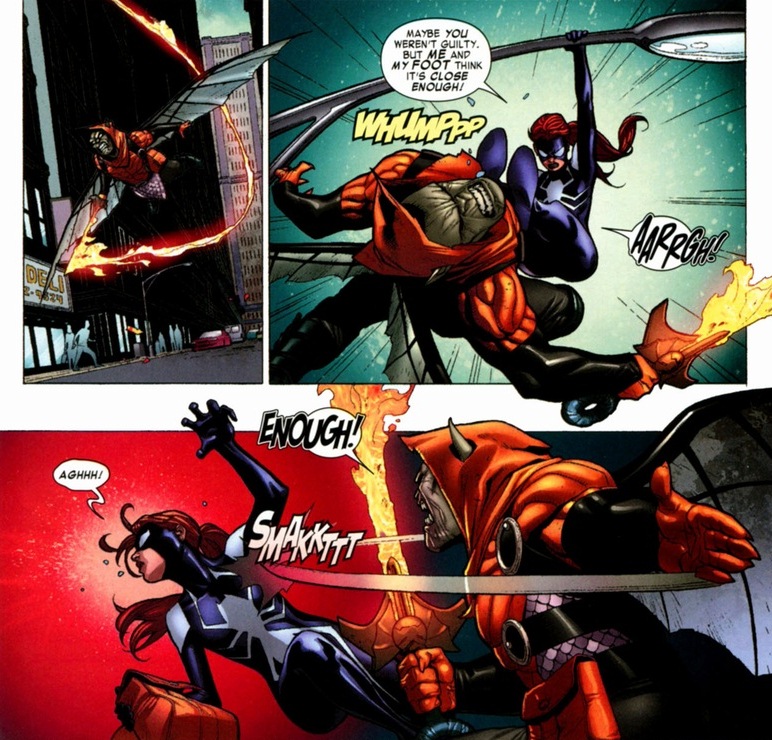
See that satchel our hero stole? Hobgoblin has to keep his gadgets somewhere. Supervillains don’t have the luxury of fanny packs. God only knows where he stores his flaming sword when not in use.
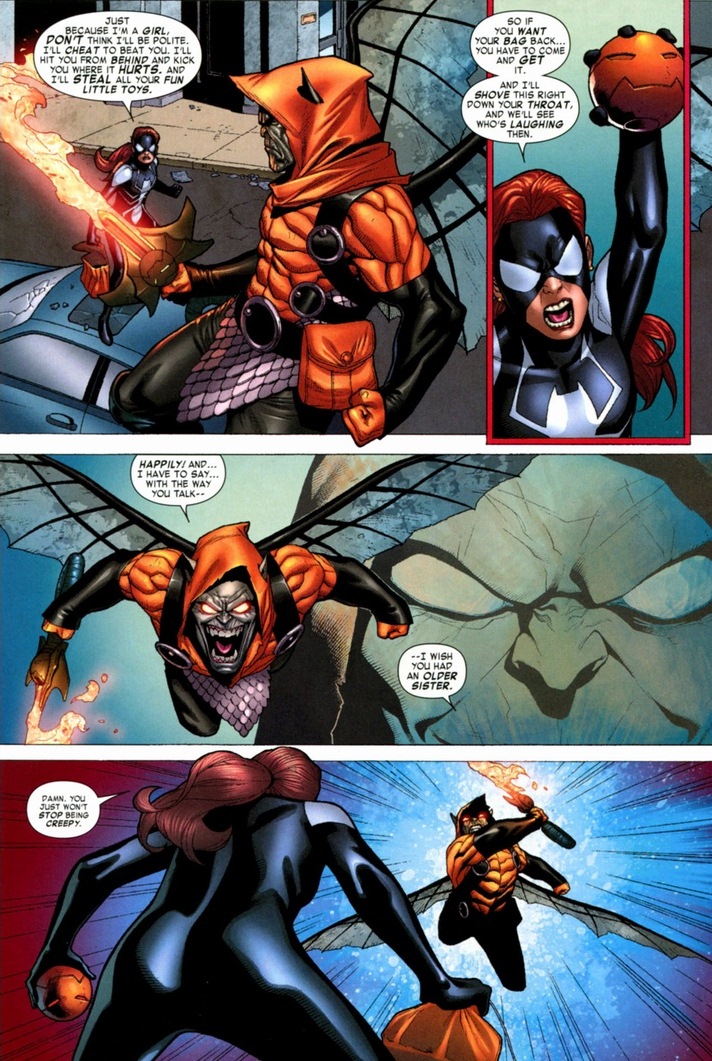
Remember what I said last article about non-powered superheroes? Without brute strength or crazy powers to rely on, they have to use intelligence and planning. Luckily, Spider-Girl’s gifted and talented. The spider-powered man she’s named after though? At least he means well.

Look, Urich can’t be arrested and sent to jail. The kid’s way too mouthy and good-looking. Also, certainly a pervert. Strangely, the Kingpin doesn’t have much patience for defeat seeing as how the fat guy’s beaten up and humiliated once a year or so. And that’s just by Daredevil.
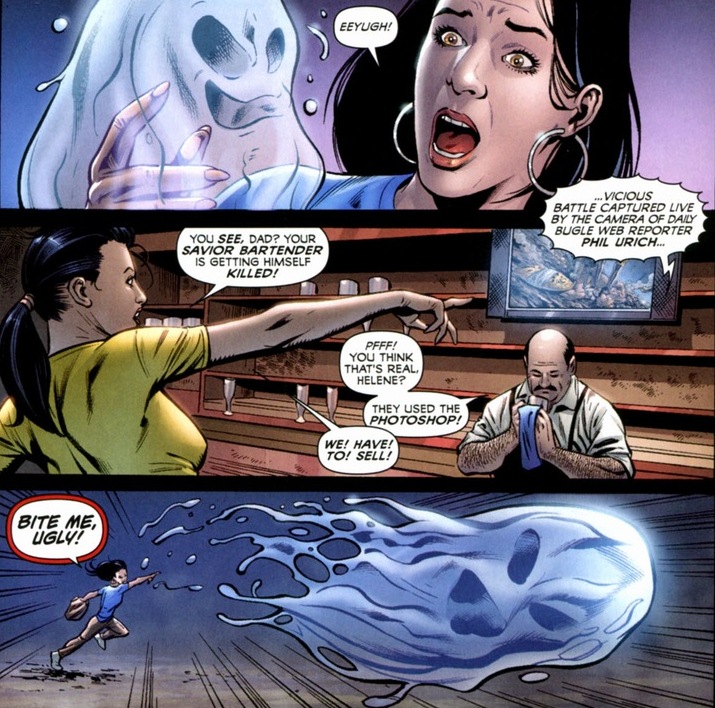
To redeem himself to his boss, Hobgoblin’s sent after a young woman next in Herc #2, written by Greg Pak & Fred Van Lente and drawn by Neil Edwards & Scott Hanna. Unfortunately, this isn’t the promiscuous, all-powerful Hercules you know and love. I mean, he’s still promiscuous, but he sacrificed his godlike powers to save the universe a while back. The guy’s just a normal man who fights crime in a loincloth.
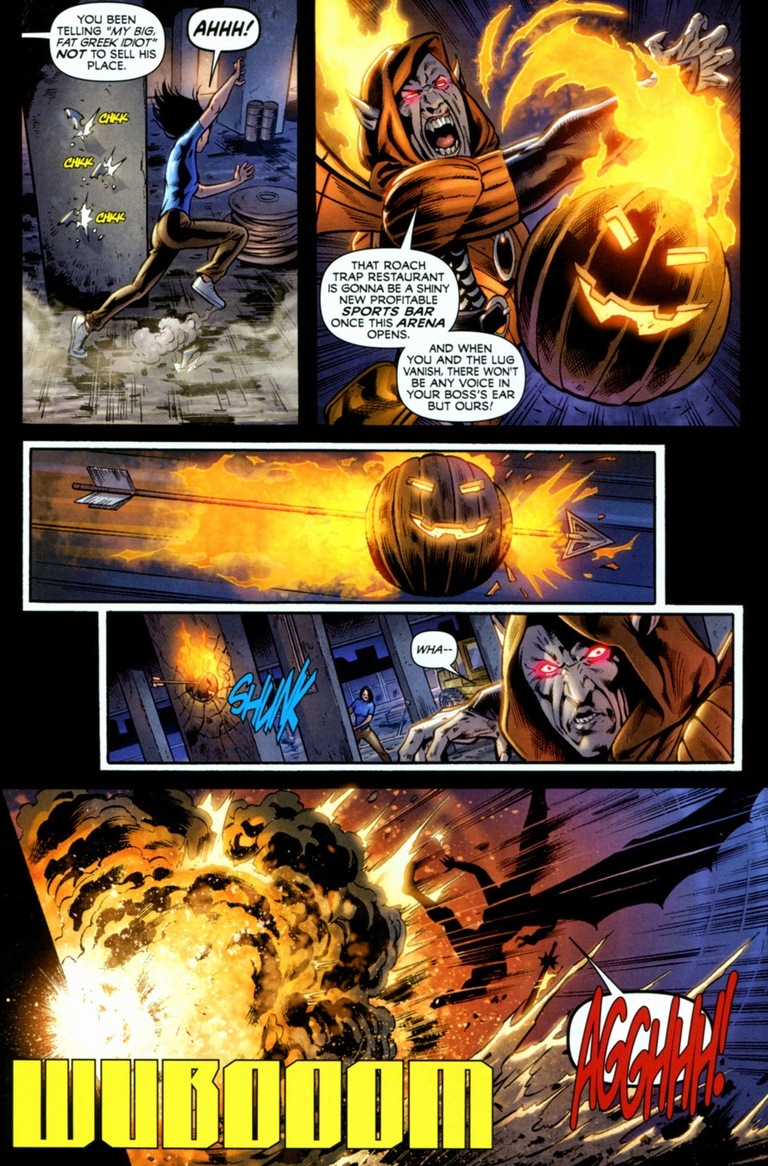

I love Hercules. Greg Pak has done such amazing characterization on this legendary figure in the past few years that I would place him in my top five or six favorite superheroes. Maybe seventh. Most importantly, how can you dislike anyone who just Hawkeye’d a major supervillain?
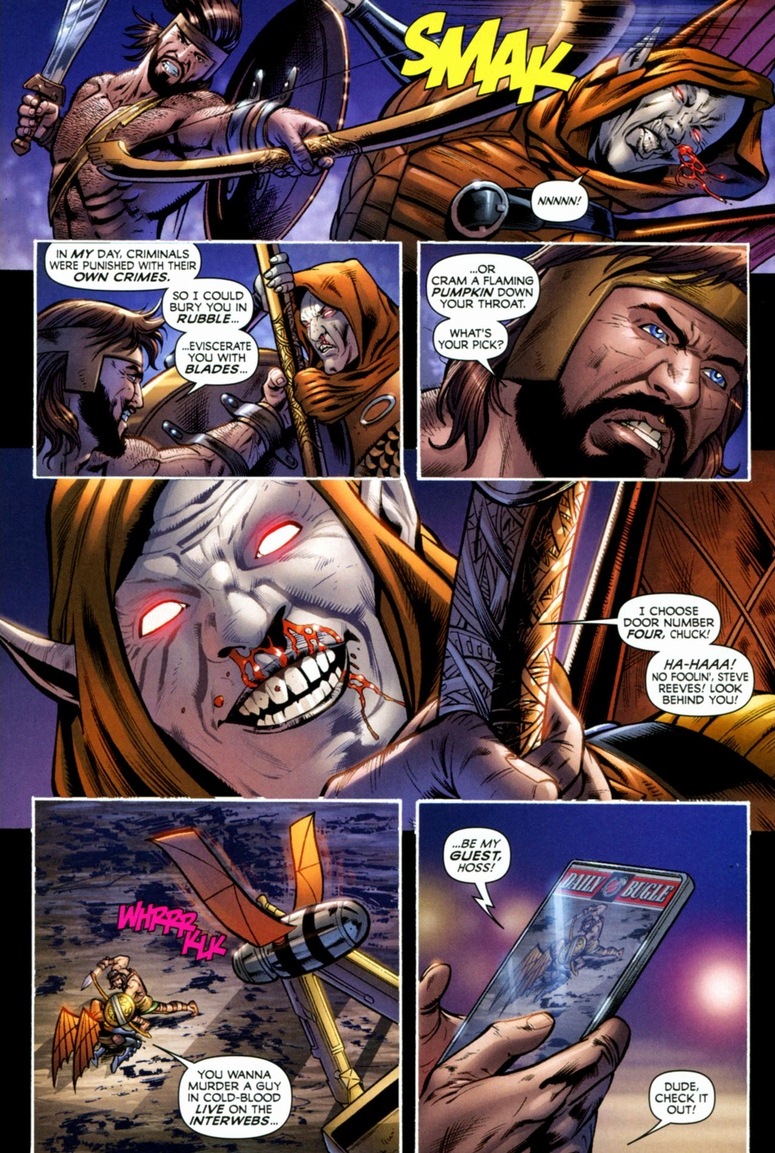
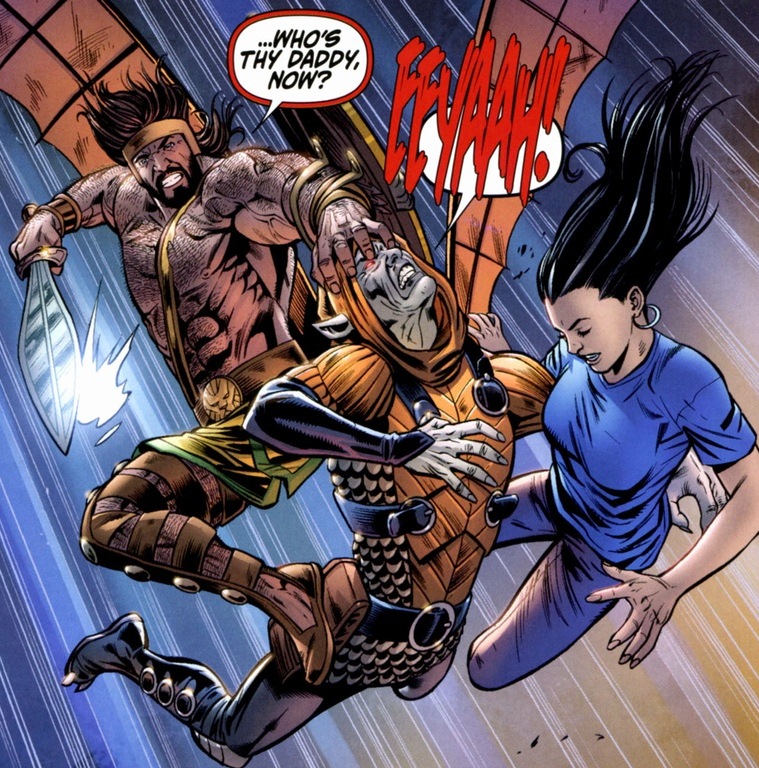
Recorded superhero fights should be happening more often than they do. In the digital age, how can a single punch thrown by anyone in spandex not be on YouTube? Now, Hercules has no problem chopping up supervillains, unfortunately his current opponent remains slippery — physically and personality-wise.
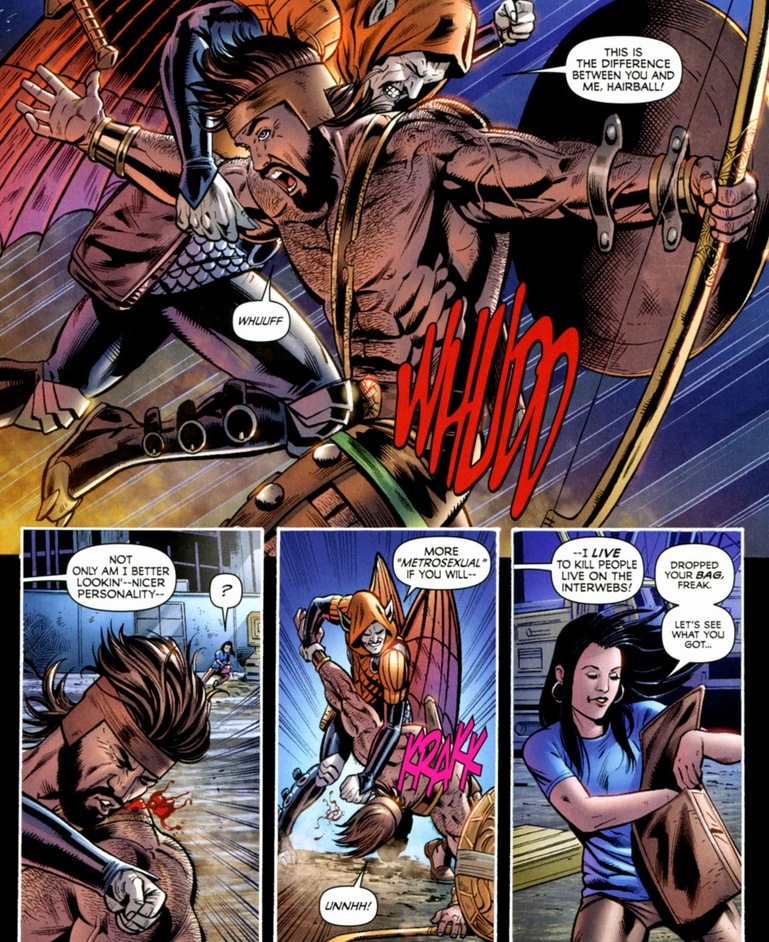
That’s the second time Hobgoblin’s bag of tech backfired on him. The guy should really find a better way to store his bombs and goo.

I think I just found your new computer wallpaper:
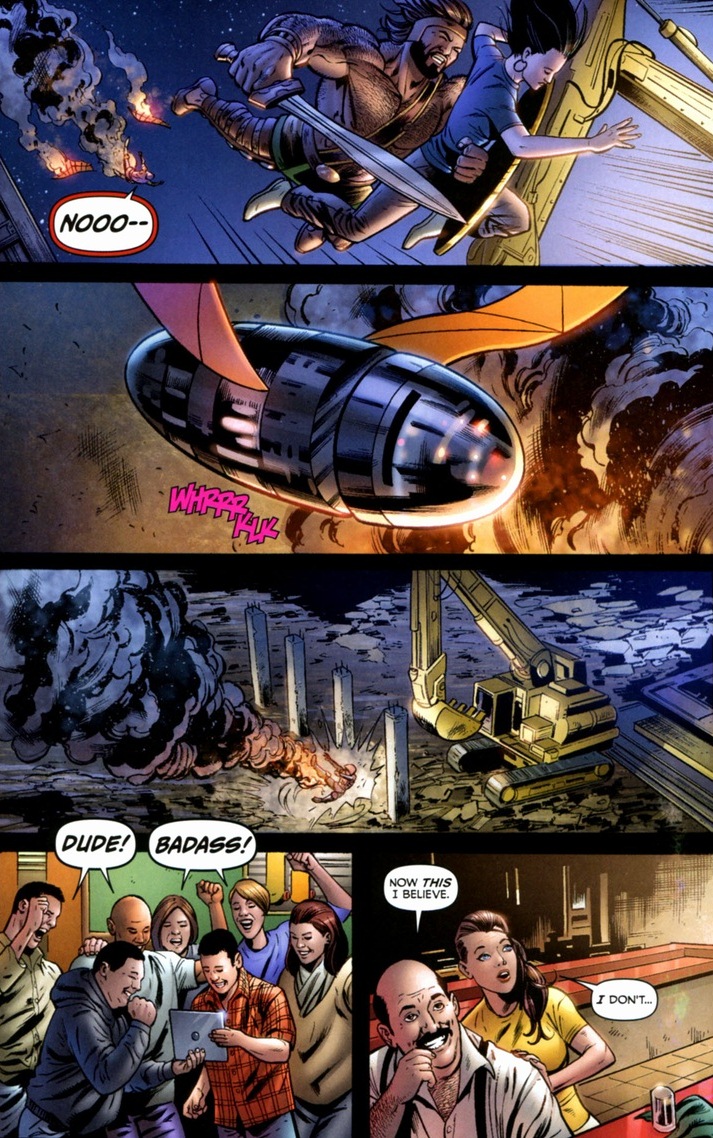
Two happy endings in one post. No better way to end the week.
 Arousing Grammar